
Guides · Tool reviews · Published November 21, 2026 · By Faizan Ahmad
Stop Guessing When to Water: The 4 Best Smart Soil Sensors That Report Your Beds to Your Phone
As an affiliate, YardSolver may earn a commission from qualifying purchases made through buttons on this page — it never changes the price you pay, and it never buys a place in these rankings.
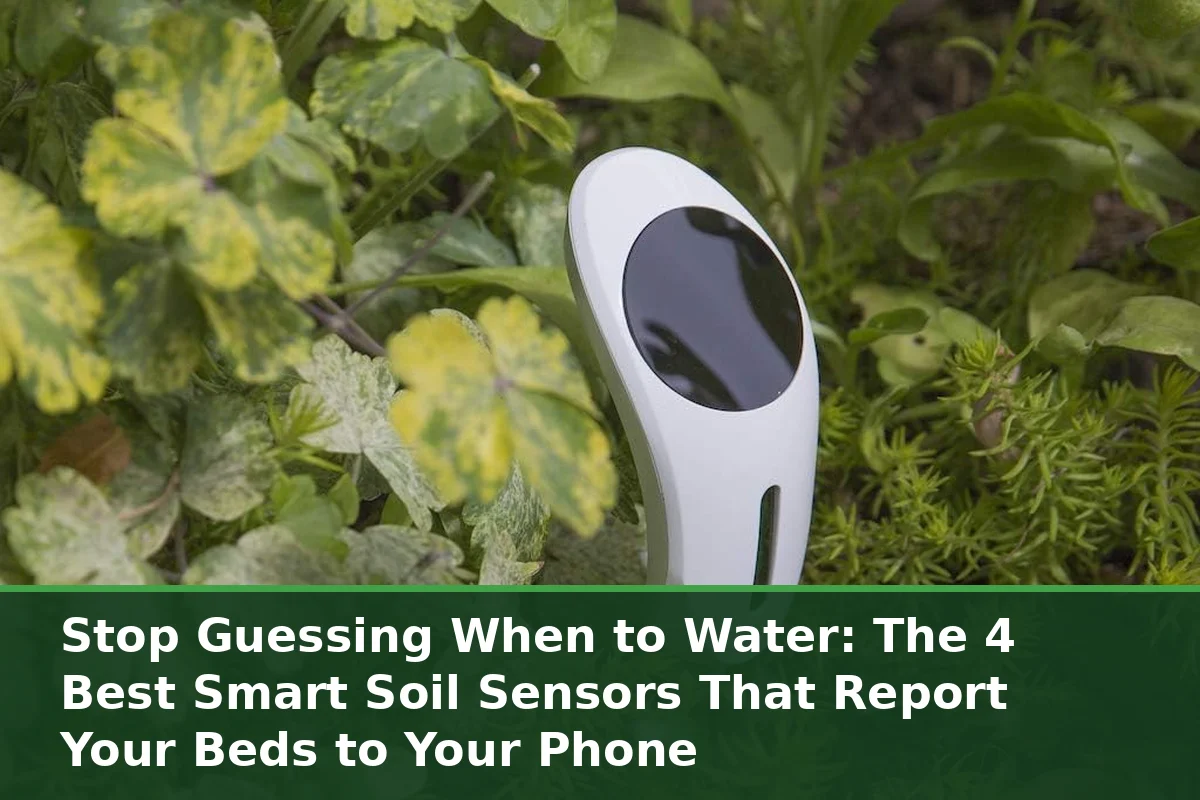
A smart soil moisture sensor lives in the soil and reports how wet it actually is to your phone, so watering is decided by the bed itself instead of by the calendar or a guess with a fingertip. The four sensors compared here range from a fast-reporting probe that can feed a whole multi-bed dashboard, to a solar sensor that never needs a battery change, to a budget stick whose app holds a database of thousands of plants.
The problem they solve is the most common watering mistake in gardening: overwatering kills more container and raised-bed plants than underwatering, because roots suffocate in soil that never dries between waterings. A live moisture readout — or an alert that only fires when the soil is genuinely dry — breaks the calendar habit that causes it, and turns watering from a routine into a decision.
The picks at a glance
| Sensor | Measures | Connection | Power | Known for |
|---|---|---|---|---|
| ECOWITT WH51 | Moisture | Radio to an Ecowitt gateway | 1× AA (about a year) | Reports every ~70 seconds; graphs, history, email alerts |
| Netro Whisperer 2nd Gen | Moisture, temperature, sunlight | WiFi direct, no hub | Solar | Never swap a battery; can steer Netro controllers |
| Xiaomi Mi Plant Monitor (Flower Care) | Moisture, light, temperature, fertility | Bluetooth | Coin cell (months) | 3,500+ plant database with ideal ranges per plant |
| RAINPOINT Meter Kit with WiFi Hub | Moisture | Sensor to included WiFi hub to app | Battery | On-sensor visual gauge plus phone alerts |
The picks, by how they report
Best for data and multi-bed setups — ECOWITT WH51 Soil Moisture Sensor
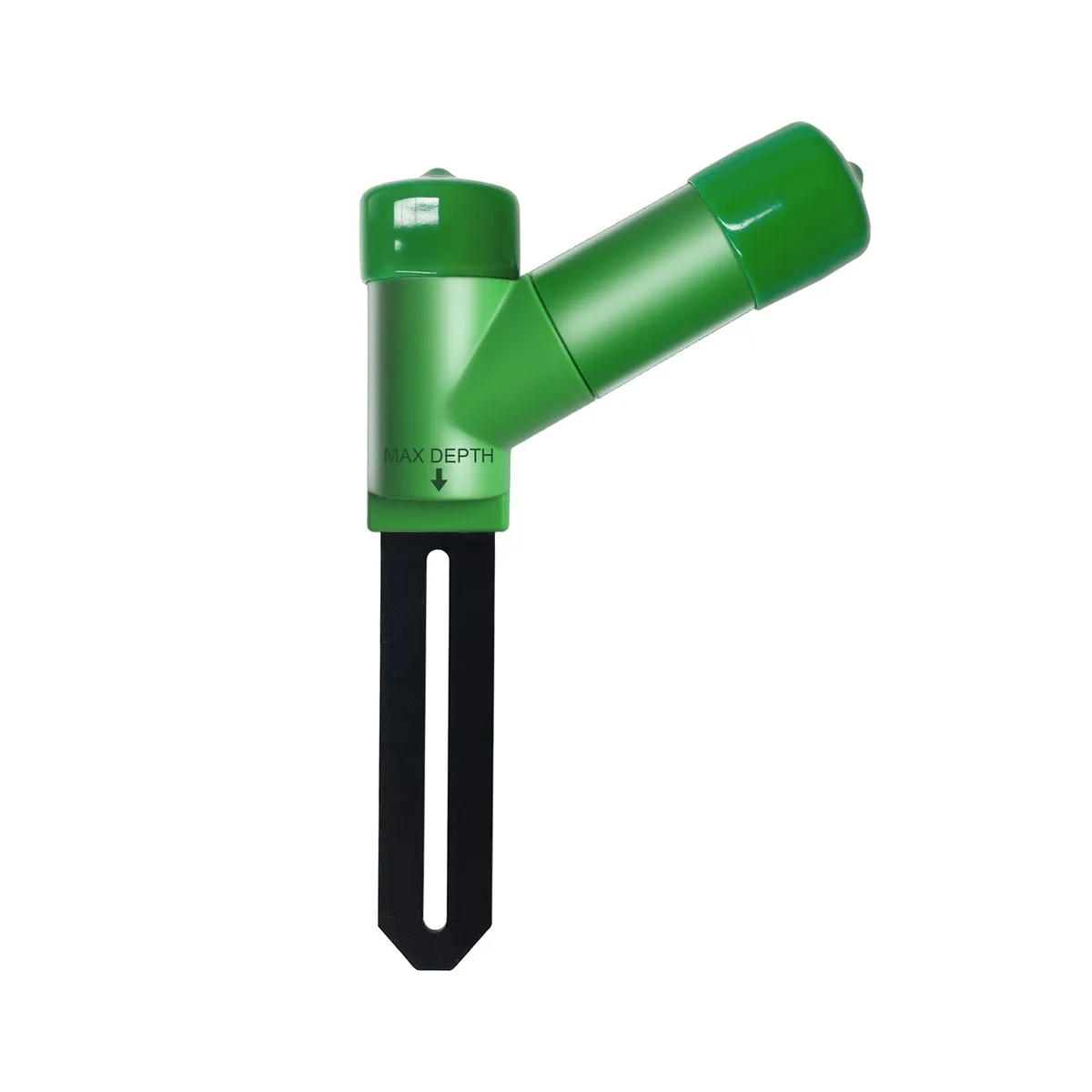
The WH51 is the data-lover’s sensor: a capacitive leave-in probe that reports soil moisture roughly every 70 seconds to an Ecowitt gateway, which feeds the app and web dashboard with live readings, graphs, history and low-moisture email alerts. One gateway can listen to many sensors — up to 8 on the common consoles, more on some gateways — so a whole set of raised beds can report to one screen, and the data can even drive automations in systems like Home Assistant. The probe is IP66-rated for life outdoors and runs about a year on a single AA. The catch is in the fine print: the sensor cannot work alone — a gateway or console is a required extra purchase — and that battery is not included.
Pros
- Fastest reporting here, at roughly every 70 seconds
- Multi-sensor graphs, history and email alerts
- IP66 weatherproofing and a huge compatible ecosystem
Cons
- Useless without a gateway — budget for both
- Battery not included, and the app is functional rather than beautiful
Who it suits: Raised-bed and greenhouse growers who want records, alerts and several beds on one dashboard.
Check Price on Amazon — USCheck Price on Amazon — Canada
Buttons open a search for the ECOWITT WH51 soil moisture sensor on each store, so you see today’s price and the current models — we never print prices here because they change daily.
Best set-and-forget — Netro Whisperer 2nd Gen Smart Plant Sensor
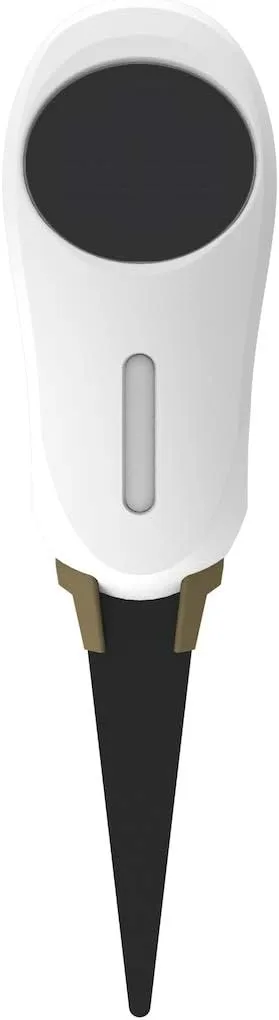
The Whisperer is the set-and-forget sensor: its top is a solar panel, so there is no battery to swap, ever — a day of sun carries it for weeks. It connects directly to your WiFi with no hub, and measures moisture, soil temperature and sunlight, building a picture of the bed rather than a single number. Inside a Netro system it can feed the brand’s sprinkler and hose controllers, closing the loop from sensing to watering. Per sensor it is the premium pick here; it needs a decent WiFi signal out in the bed, the slim probe blade deserves gentle handling when you push it in or move it, and some owners report occasional erratic temperature readings alongside the reliable moisture data.
Pros
- Solar power ends battery changes for good
- WiFi direct — no hub to buy
- Three measurements, not one, and can inform Netro controllers
Cons
- Premium price per sensor
- Needs WiFi coverage out in the bed, and the probe blade is delicate
Who it suits: One or two important beds or specimen plants, and Netro controller owners.
Check Price on Amazon — USCheck Price on Amazon — Canada
Buttons open a search for the Netro Whisperer 2 smart plant sensor on each store, so you see today’s price and the current models — we never print prices here because they change daily.
Best for houseplants and single pots — Xiaomi Mi Plant Monitor (Flower Care)
The Flower Care stick is the houseplant favourite: a small Bluetooth sensor that measures moisture, light, temperature and soil fertility, paired with an app holding a database of 3,500+ plants and their ideal ranges — stick it in a pot and the app tells you, in plain language, whether that fern is too dry, too dark or underfed. It runs for months on a coin cell. Its limits are range and precision: Bluetooth means you read it when you are near the plant rather than from across town, the fertility figure is a rough conductivity estimate rather than a lab test, and the app experience varies by region.
Pros
- Four measurements in one inexpensive stick
- The plant database turns numbers into plain advice
- Ideal for pots and houseplants
Cons
- Short Bluetooth range — no true remote alerts
- Fertility readings are approximate, and the app varies by region
Who it suits: Houseplants, balcony pots and beginners who want the app to interpret the numbers.
Check Price on Amazon — USCheck Price on Amazon — Canada
Buttons open a search for the Xiaomi Mi Plant Monitor Flower Care on each store, so you see today’s price and the current models — we never print prices here because they change daily.
Best with an at-a-glance gauge — RAINPOINT Smart Wireless Plant Moisture Meter Kit with WiFi Hub
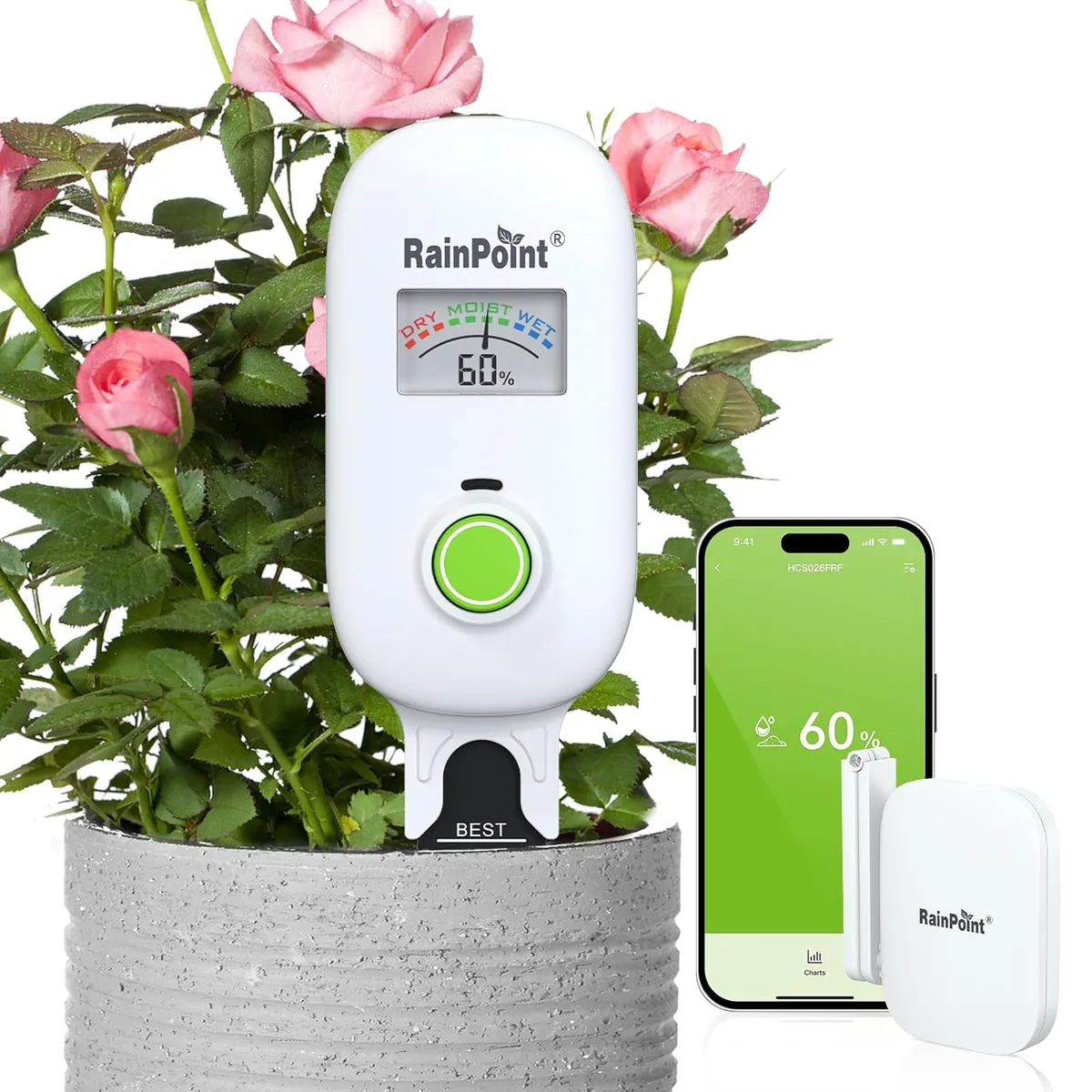
RAINPOINT’s kit pairs a capacitive leave-in sensor with a WiFi hub in the box, so unlike the Ecowitt there is no separate gateway decision to make. The sensor carries a visual moisture gauge you can read at a glance while walking the beds, and the hub relays readings to the app for history and low-moisture alerts when you are away. It is the newest name here, with a smaller track record and ecosystem than Ecowitt’s — but as a self-contained starter kit for a couple of beds, it is neatly judged.
Pros
- Hub included — nothing else to buy
- At-a-glance gauge on the sensor itself, plus app alerts
- Capacitive probe will not corrode like cheap resistive sticks
Cons
- Newer entrant with a smaller track record
- Ecosystem and long-term app support less proven than Ecowitt or Netro
Who it suits: A first sensor setup for one or two raised beds, bought as one complete kit.
Check Price on Amazon — USCheck Price on Amazon — Canada
Buttons open a search for the RAINPOINT smart moisture meter kit on each store, so you see today’s price and the current models — we never print prices here because they change daily.
The decisions that matter
1. Hub, direct or Bluetooth — decide your range first. Where will you read the numbers? From the sofa, any of the four works. From work or on holiday, you need a WiFi path: Netro direct, or a hub/gateway kit (RAINPOINT included, Ecowitt extra). Bluetooth (Xiaomi) only reports when your phone is nearby — fine for houseplants, useless for holiday alerts.
2. Capacitive beats resistive for leave-in sensors. All four picks are capacitive: they sense through the probe’s coating instead of bare metal electrodes, so they do not corrode away in wet soil the way the cheapest resistive sticks do within a season.
3. One sensor per watering zone, not per plant. Soil dries at the speed of its sun, soil type and watering line. Put one sensor in each zone that is watered together — check your soil first with How to Test Your Garden Soil, because clay and sand read and dry very differently — and place the probe in the root zone, fully inserted.
4. Act on the trend, not the number. An absolute percentage means little until you have watched one full dry-down cycle in your own soil. Water when the curve approaches the dry end for that crop, and sanity-check against the season’s needs in Garden Water Use: Gallons per Week. Planning new beds? The Raised Bed Soil Calculator works out the soil volume your sensors will be watching. More tool comparisons live on the Tools hub.
Keep going
The soil knowledge that makes sensor numbers meaningful starts with How to Test Your Garden Soil — texture, drainage and pH decide how fast a bed dries and what a moisture reading really means.
More comparisons and the full watering shelf live on the Tools hub.
Questions people ask
Do soil moisture sensors actually prevent overwatering?
They prevent the calendar habit that causes it. Most overwatering happens because watering day arrives while the soil is still wet from the last round; a live readout — or an alert that only fires when soil is genuinely dry — breaks that loop. Overwatering kills more container and raised-bed plants than underwatering, because roots suffocate in soil that never dries.
Capacitive or resistive sensor — which lasts longer?
Capacitive, by a wide margin. Resistive probes pass current through bare metal prongs, which corrode in moist soil within a season and drift as they decay. Capacitive probes sense through a sealed coating, so all four picks here can stay in the ground season after season.
Do I need a hub or gateway?
It depends on the sensor. The ECOWITT WH51 cannot work without an Ecowitt gateway or console; the RAINPOINT kit includes its WiFi hub; the Netro Whisperer connects to WiFi by itself; and the Xiaomi Flower Care talks Bluetooth directly to your phone, with no remote access. Count the hub in the price before comparing.
How deep should the probe go, and where?
Push the probe fully in, in the plant’s root zone — beside the plant, not against the stem, and inside the area your watering actually reaches. A sensor at the dry edge of a drip line will cry wolf, and one sitting in a persistently wet spot will never report dry.
Can a sensor water the garden by itself?
Indirectly, yes. Ecowitt data can trigger automations through gateways and smart-home systems, Netro sensors feed Netro controllers to adjust watering automatically, and any sensor with alerts pairs well with the automatic kits in our drip irrigation kit guide. The sensor is the eyes; a timer or controller is still the hands.
Read the curve, not the number — how gardeners actually use sensor data
A moisture percentage is only useful relative to your own soil. In the first week with any of these sensors, do nothing clever: note the reading an hour after a deep watering (your “full”), then watch the daily dry-down until the plants approach thirst (your “empty”). Those two personal landmarks — not any universal chart — are your watering thresholds for that bed, that crop and that season.
Soil type moves both landmarks a long way: sand can fall from full to empty in two hot days while clay holds water for a week, which is why How to Test Your Garden Soil is the natural companion to a sensor. Once your thresholds are set, the sensor’s job is simply to tell you the moment the curve arrives there — and the gardener’s job shrinks to believing it.
Sources
Specifications and owner experience cross-checked against Homestead Authority — best smart soil moisture sensors — independent roundup of app-connected sensors, Happy Hydro — ECOWITT WH51 product page — manufacturer specifications including the ~70-second update rate and IP66 rating, Smart Home Explorer — best smart garden plant monitors — Flower Care and Netro coverage, and Manuals Plus — Netro Whisperer manual and specifications.
Related page
Read next: How to Test Your Garden Soil — the readings behind the readings.
Comments & ratings
No comments yet.
Be the first to share your experience.