
Guides · Tool reviews · Published November 21, 2026 · By Faizan Ahmad
No More Boundary Wire: The 4 Best Wire-Free Robot Lawn Mowers That Mow by Satellite and Camera
As an affiliate, YardSolver may earn a commission from qualifying purchases made through buttons on this page — it never changes the price you pay, and it never buys a place in these rankings.
A wire-free robot lawn mower navigates by satellite positioning, cameras or LiDAR instead of a buried perimeter wire — so setup means drawing your lawn's boundaries in an app, not spending a weekend staking cable around every bed and tree. That single change removes the biggest reason homeowners put off buying a robot mower at all. The wire-free generation now comes in three flavours: RTK satellite systems that steer by centimetre-level GPS corrections, camera-vision systems that see obstacles and edges, and LiDAR systems that map the garden the way a robot vacuum maps a house. This guide compares the four models that do it best, matched to the yards they actually suit — small suburban lawns, steep banks, big acreage and tree-covered gardens. If you want the technology explained before the shopping starts, our Robot Lawn Mower explainer covers how robot mowers work, what they cost to run and who should skip them.
One honest note before the picks: wire-free does not mean work-free. You still site a small reference antenna, walk one mapping run, and keep a trimmer for the edges no robot can reach. What you delete is the wire — and the mowing itself, every week, on a schedule you set once.
The four picks, by yard
Best for most lawns — Segway Navimow i110N Robot Lawn Mower
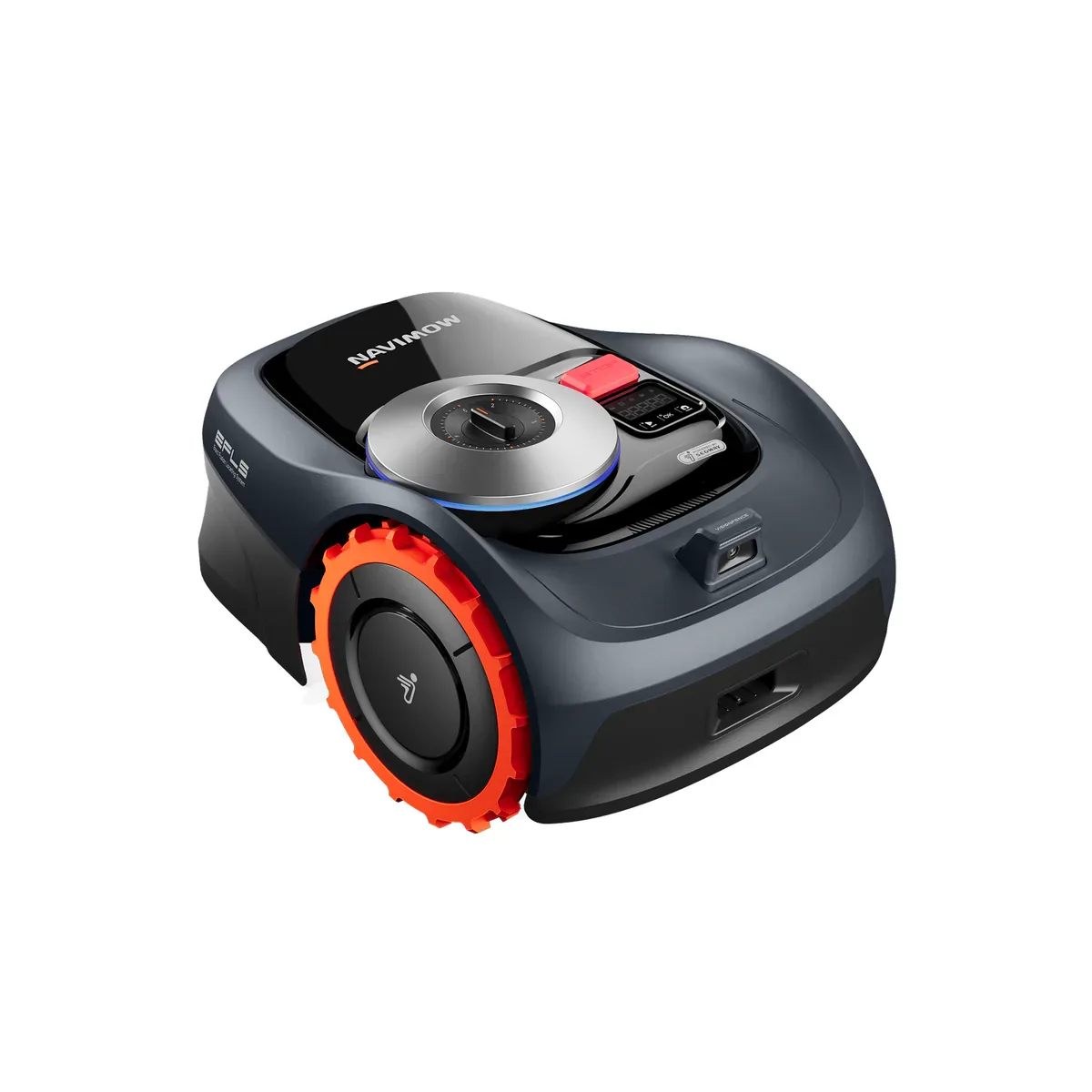
The Navimow i110N is the wire-free mower most suburban owners should look at first: a compact robot rated for lawns up to about a quarter acre, from the company behind the Ninebot scooters. It mows in tidy planned stripes rather than random bouncing, charges itself between sessions, and is controlled entirely from the Navimow app.
What is new and automated: It pairs RTK satellite positioning (Segway calls the system EFLS) with a front camera — the satellite gives it centimetre-level position, and the camera spots obstacles, pets and edges the satellite cannot see. Boundaries are virtual: you drive it around your lawn's edge once with the app, then edit the map on your phone whenever the garden changes. No wire, no stakes, no buried anything.
Pros: the simplest wire-free setup here; camera backup where satellite signal weakens; quiet enough to run in the evening; app mapping is genuinely easy to redo after landscaping changes.
Cons: RTK accuracy drifts under heavy tree cover, and the reference antenna still needs a spot with a clear view of the sky during setup; the quarter-acre ceiling rules out big properties.
Best for: small-to-mid suburban lawns up to roughly 1/4 acre with a reasonable view of the sky.
Check Price on Amazon — USCheck Price on Amazon — Canada
Buttons open a search for the Segway Navimow i110N on each store, so you see today's price and the current models — we never print prices here because they change daily.
Best for slopes and big yards — Mammotion LUBA 2 AWD 5000 Robot Lawn Mower
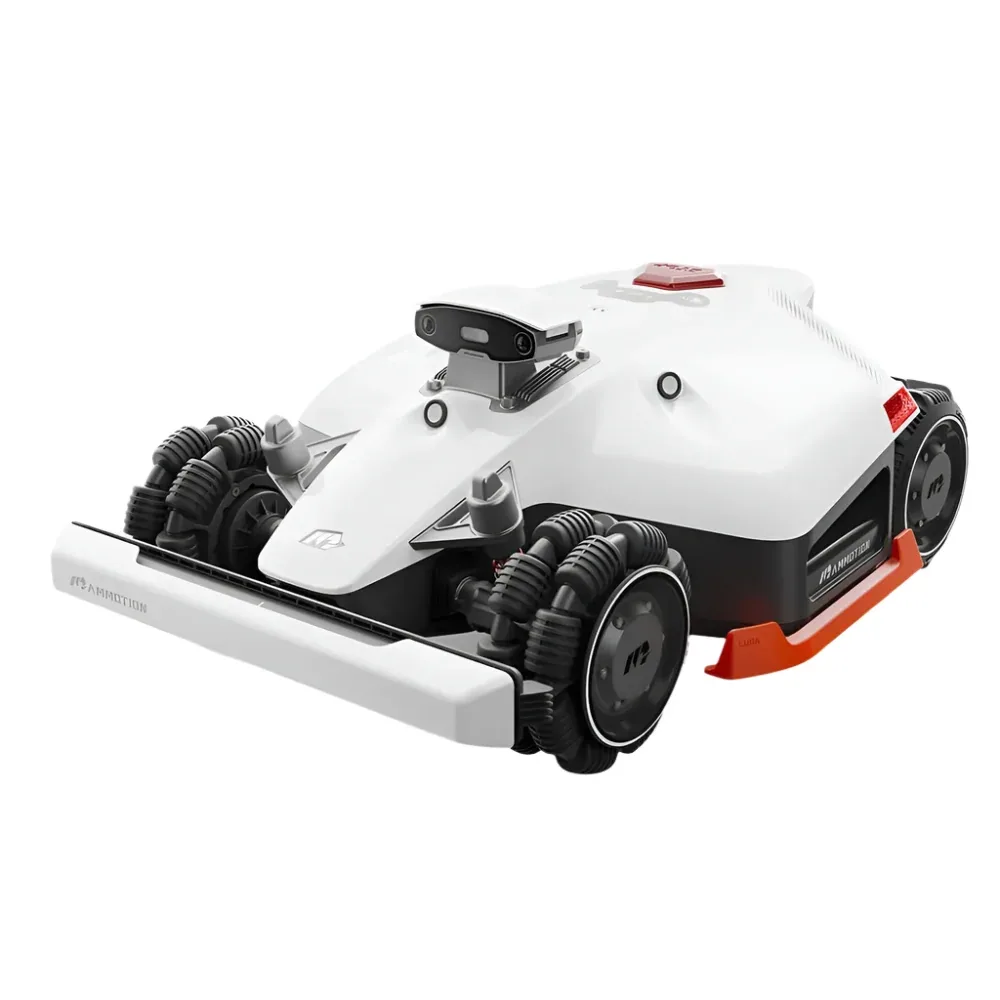
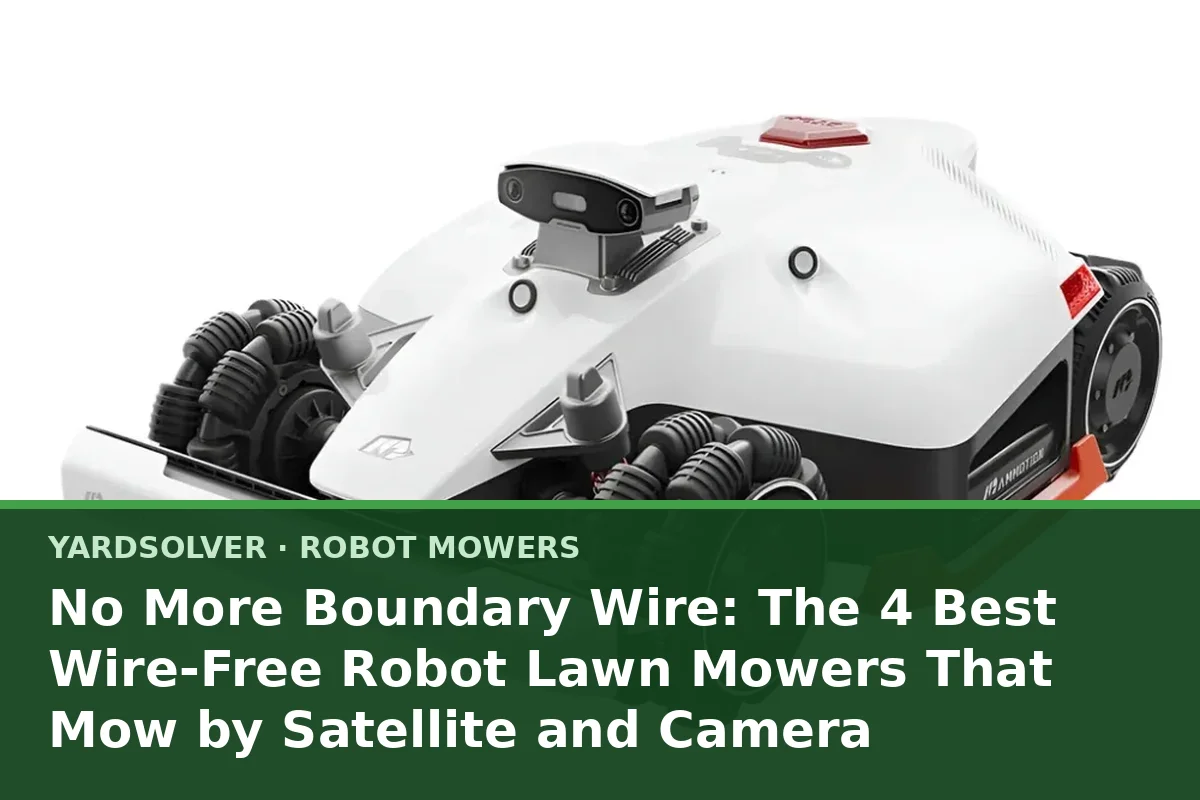
The LUBA 2 AWD 5000 is the heavy lifter of the wire-free world: an all-wheel-drive robot rated for up to about 1.25 acres, built less like a lawn appliance and more like a small off-road vehicle, with chunky treaded wheels at all four corners and a camera mast on top.
What is new and automated: All-wheel drive lets it climb slopes up to 80% — grades that stop every other robot here — while RTK satellite positioning plus AI vision handles navigation. The app supports many separate zones with virtual channels between them, so one robot can manage a front lawn, a back lawn and the strip down the side of the house without any wire linking them.
Pros: unmatched slope climbing; the largest coverage here; multi-zone mapping suits complicated properties; vision system helps in partial shade.
Cons: a premium price, and the app and firmware experience is less polished than Husqvarna's — expect more tinkering and more updates.
Best for: hilly properties, rural lawns and anyone whose yard is measured in acres rather than square feet.
Check Price on Amazon — USCheck Price on Amazon — Canada
Buttons open a search for the Mammotion LUBA 2 AWD 5000 on each store, so you see today's price and the current models — we never print prices here because they change daily.
Best for reliability and dealer support — Husqvarna Automower 420 iQ Robot Lawn Mower
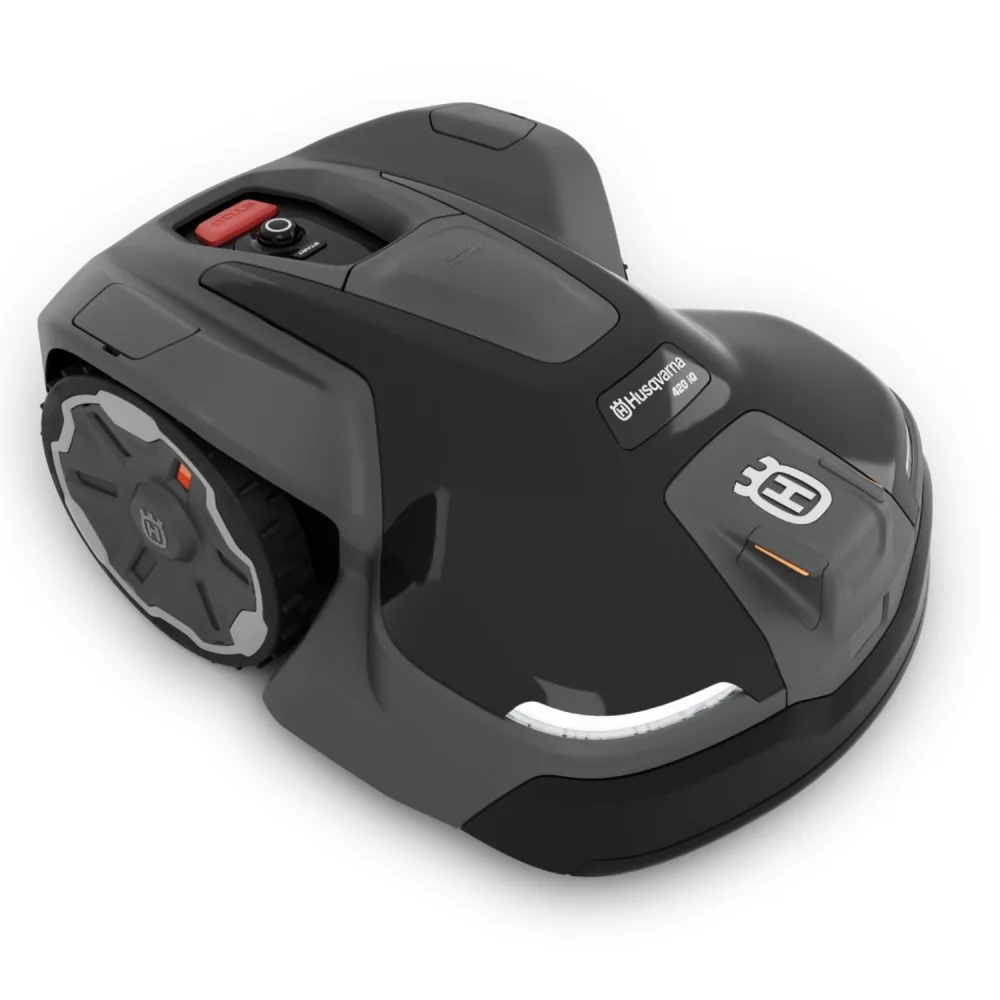
Husqvarna invented the robot mower category three decades ago, and the 420 iQ is its wire-free flagship for mid-to-large lawns: a satellite-navigated Automower with the brand's trademark near-silent running and a dealer network behind it — the only pick here you can also buy and service through local mower shops.
What is new and automated: The iQ models swap the traditional boundary wire for Husqvarna's EPOS satellite navigation, using RTK corrections to hold a virtual boundary, with radar and camera sensing for obstacles. You define mowing zones and stay-out areas in the Automower Connect app, and the mower works a schedule in almost any weather, day or night, at a noise level neighbours genuinely cannot hear indoors.
Pros: the longest track record in the business; exceptionally quiet; proven reliability and a real dealer/service network; excellent theft protection and app maturity.
Cons: the most expensive route per acre in this guide, and setup is more involved than the app-first rivals — this is the deliberate, engineered option, not the five-minute one.
Best for: buyers who plan to keep a mower for a decade and want local humans to service it.
Check Price on Amazon — USCheck Price on Amazon — Canada
Buttons open a search for the Husqvarna Automower 420 iQ on each store, so you see today's price and the current models — we never print prices here because they change daily.
Best under trees — ECOVACS GOAT A3000 LiDAR Robot Lawn Mower
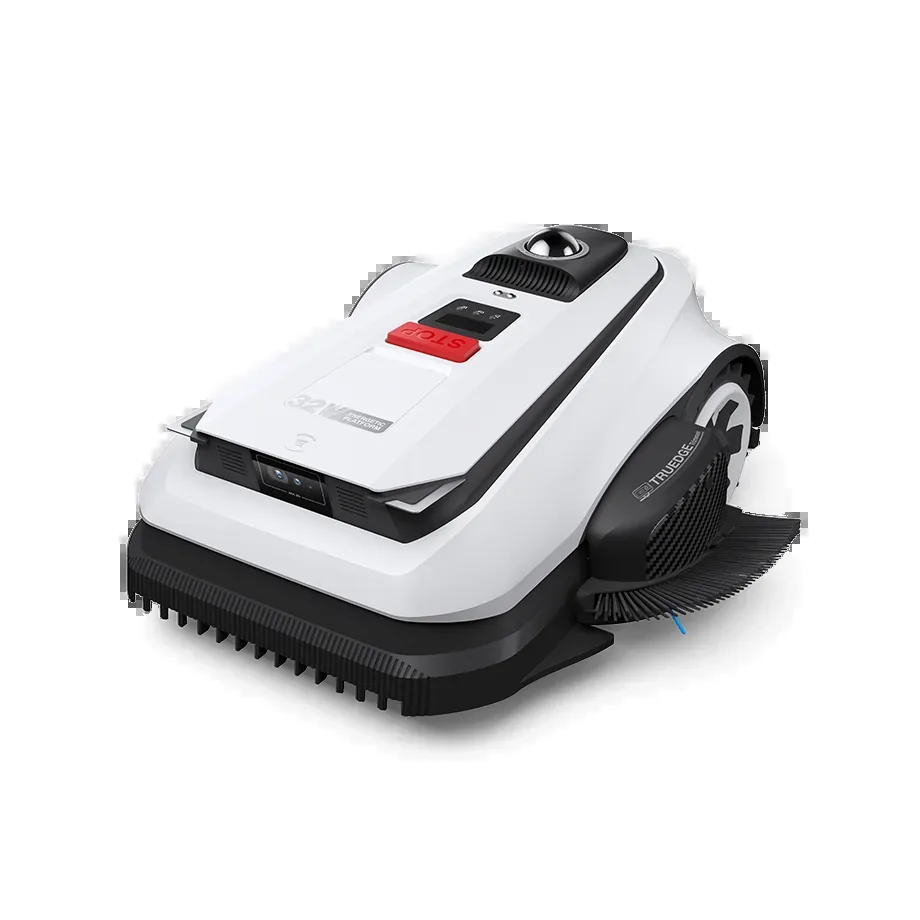
The GOAT A3000 is ECOVACS' answer to the satellite mower's one real weakness: shade. Instead of depending on a clear view of the sky, it navigates by dual LiDAR — spinning laser mapping borrowed from high-end robot vacuums — so it keeps its bearings under tree canopies, beside tall fences and in the shadow of the house.
What is new and automated: Dual LiDAR builds a precise map of the garden and re-localises from it on every run, so there is no RTK antenna to site and no signal to lose when clouds or branches intervene. Cutting height adjusts from the app, charging is fast, and the mower plans efficient routes across zones it mapped itself during a short auto-mapping run.
Pros: works where satellite mowers struggle — under trees and in enclosed gardens; no antenna siting at all; fast charging keeps big sessions moving; app-set cutting height.
Cons: a newer brand in mowers with a thinner service network than Husqvarna, and LiDAR models cost more than comparable RTK equivalents.
Best for: tree-covered, fenced or shadowed gardens where satellite signal is unreliable.
Check Price on Amazon — USCheck Price on Amazon — Canada
Buttons open a search for the ECOVACS GOAT A3000 LiDAR on each store, so you see today's price and the current models — we never print prices here because they change daily.
Side by side
| Pick | How it navigates | Coverage | Best for |
|---|---|---|---|
| Segway Navimow i110N | RTK satellite + camera vision | Up to ~1/4 acre | Most small-to-mid lawns |
| Mammotion LUBA 2 AWD 5000 | RTK + AI vision, all-wheel drive | Up to ~1.25 acres | Slopes and big, complex yards |
| Husqvarna Automower 420 iQ | EPOS satellite (RTK) + radar/camera | Mid-to-large lawns | Reliability and dealer support |
| ECOVACS GOAT A3000 LiDAR | Dual LiDAR mapping | Large lawns, incl. shaded | Gardens under heavy tree cover |
How to choose a wire-free robot mower
1. Your sky decides the technology. RTK satellite mowers need a clear view of the sky for both the mower and its small reference antenna. Open suburban lawns are perfect. If your garden sits under mature trees or between tall buildings, put the LiDAR GOAT at the top of your list and treat camera-vision backup (Navimow, LUBA) as the minimum.
2. Measure the lawn, not the lot. Ratings are for grass area, not property size — driveways, beds and the house itself do not count. The Square Footage Calculator turns your measurements into the grass number that decides which class you need, and buying one class up gives the mower shorter daily runs and a longer life.
3. Walk your slopes honestly. Most robots handle gentle grades; banks steeper than about 20 degrees narrow the field fast, and anything approaching an 80% grade is LUBA AWD territory alone. Check the steepest patch the mower must climb, not the average.
4. Think about year five, not week one. Blades are cheap consumables on all four. Batteries, wheels and service are the real long-term questions — which is Husqvarna's quiet advantage and the value brands' honest weakness. Whichever you choose, the mowing rhythm it replaces is the one in How Often to Mow (and How High): little and often is exactly what robots do best.
The honest catch: wire-free is not setup-free
Every wire-free mower trades the buried cable for a different half-hour of work: siting an RTK antenna where it can see the sky (Navimow, LUBA, Husqvarna), or walking one careful mapping run (GOAT). Firmware updates are part of ownership now, and the first week usually includes one rescued mower that found the one gap in your virtual fence. Budget for that learning week and the category delivers exactly what it promises.
And keep a trimmer. No robot edges against fences, paths or trunks, so the finishing tool from Best Cordless String Trimmers remains part of the kit — the robot deletes the mowing hour, not the ten-minute tidy-up. More tool comparisons live on the Tools hub.
Keep going
New to the category? Robot Lawn Mower explains how the machines work, what they cost to run and the yards they cannot handle.
More comparisons and the full Lawn Care shelf live on the Tools hub.
Questions people ask
Do wire-free robot mowers really work without a boundary wire?
Yes. RTK satellite positioning holds position to within a few centimetres, camera-vision models recognise edges and obstacles directly, and LiDAR models navigate from a laser map of the garden. In all three systems the boundary lives in the app as a virtual fence you draw and can redraw in minutes — nothing is buried.
What happens to a robot mower under trees?
Satellite (RTK) models can lose accuracy in deep shade because both the mower and its reference antenna need sky view. Camera-vision backup softens the problem, and LiDAR models like the ECOVACS GOAT avoid it entirely by navigating from their own map — which is why tree-covered gardens are the strongest case for LiDAR.
How much lawn can a wire-free robot mower handle?
The range here runs from about a quarter acre for the Segway Navimow i110N to roughly 1.25 acres for the Mammotion LUBA 2 AWD 5000. Ratings describe grass area, not lot size, and choosing one class above your measured lawn shortens daily run time and extends battery life.
Can a robot mower handle slopes?
Standard models manage gentle grades of roughly 15–25%. The Mammotion LUBA 2 AWD is the exception: its all-wheel drive is rated for slopes up to 80%, which covers banks that defeat every other robot in this guide. Always judge by the steepest patch the mower must climb, not the average slope.
Do I still need a regular mower or trimmer with a robot mower?
You still need a trimmer for edges, fences and around trunks — no robot cuts those. Most owners retire the walk-behind mower entirely, keeping it only for the first spring cut if the lawn got away from them over winter.
Sources
Key facts on this page cross-checked against Robotic lawn mower — Wikipedia — background on how robot mowers navigate and cut and Segway Navimow (official) — Navimow i-series RTK + vision system and coverage ratings and Husqvarna Automower (official) — EPOS wire-free navigation and the Automower range and Mammotion (official) — LUBA 2 AWD slope and coverage specifications.
Comments & ratings
No comments yet.
Be the first to share your experience.