
Guides · Seed starting · Published November 18, 2026 · By Faizan Ahmad
Do Seedlings Need a Heat Mat? Germination Temperatures, Explained (With Chart)
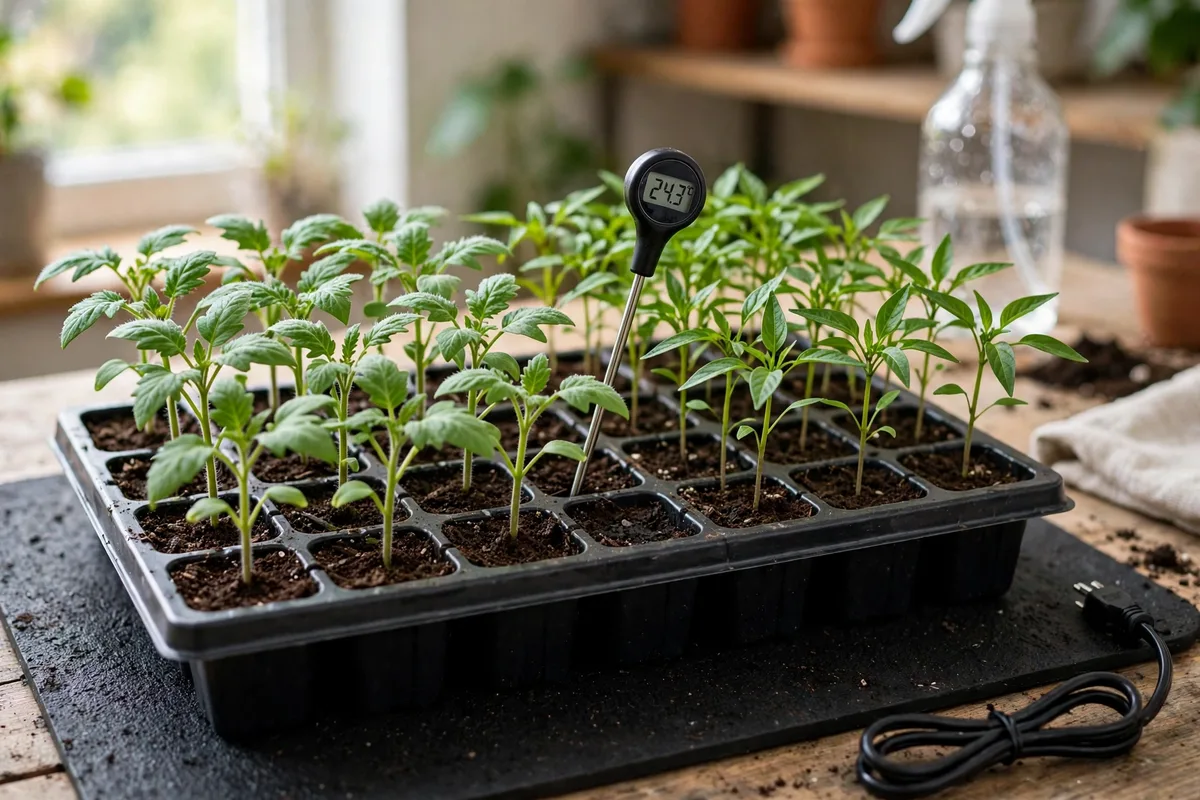
Seedlings do not all need a heat mat — only the warm germinators do: peppers, chillies, tomatoes and eggplant, which sprout fastest and most evenly at 75–90°F soil. In a typical winter home the soil in a seed tray sits at room temperature, around 65–70°F, where pepper seed can take three weeks and emerge patchily; on a mat at 85°F the same seed is up in about a week, together. Cool-season crops are the opposite story — lettuce and onions germinate best cool, and a mat can cut their germination. This guide gives you the germination temperature chart, the crops in each camp, how long the mat stays on (until germination, then off), and the mistakes that cook or dry out a tray.
The short answer, on one card
Use a heat mat for: peppers, chillies, tomatoes, eggplant, melons and cucumbers. Skip it for: lettuce, onions, peas, beans and brassicas. How: set soil to 75–85°F (up to 90°F for peppers), measure with a soil thermometer, keep the mix moist — and take seedlings off the mat the day they emerge, straight under strong light.
The germination temperature chart
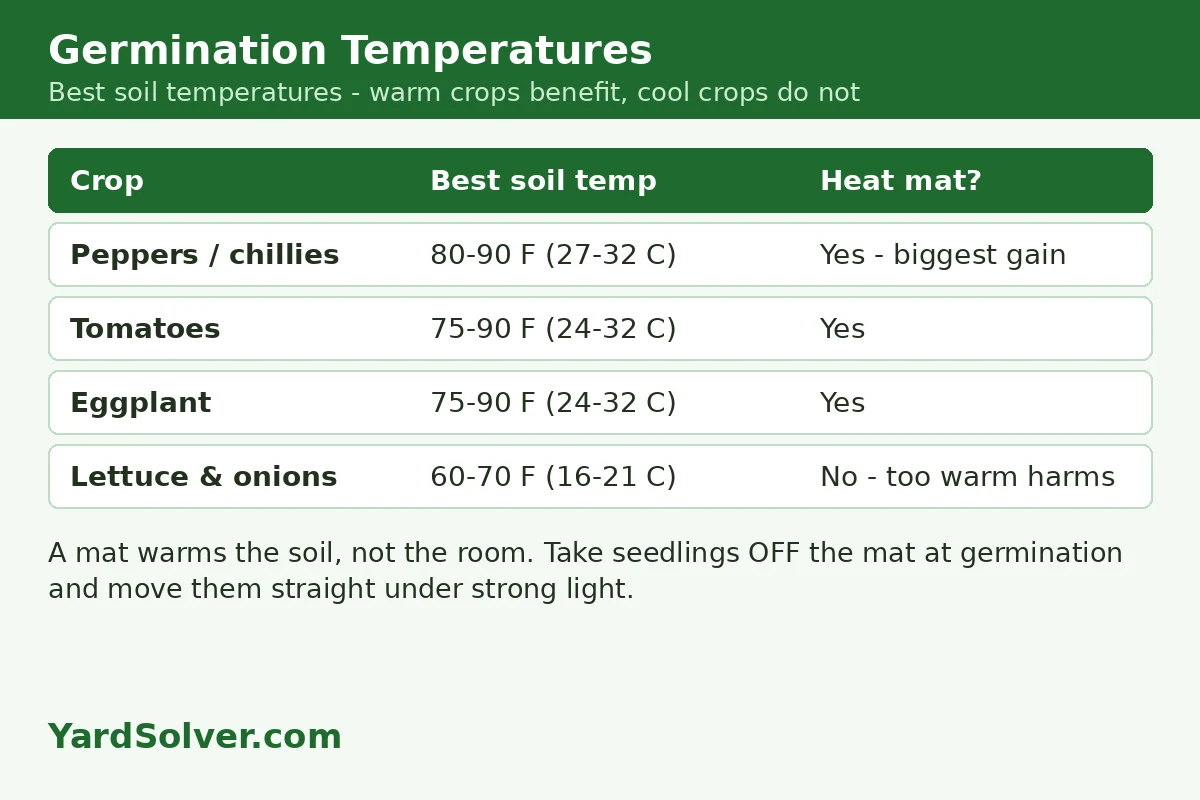
Every seed has a soil temperature range where germination is fast and complete, and the full chart for dozens of crops is our Seed Germination Temperature Chart. The headline rows for the heat-mat decision are these:
| Crop | Best soil temp | Days to sprout at best temp | Heat mat? |
|---|---|---|---|
| Peppers & chillies | 80–90°F (27–32°C) | 7–10 | Yes — the biggest gain of any crop |
| Eggplant | 75–90°F (24–32°C) | 7–14 | Yes |
| Tomatoes | 75–90°F (24–32°C) | 5–10 | Yes, unless the room is warm |
| Cucumbers & melons | 75–95°F (24–35°C) | 3–7 | Yes |
| Basil | 70–85°F (21–29°C) | 5–10 | Helps in cool rooms |
| Lettuce | 60–70°F (16–21°C) | 2–7 | No — heat above ~75°F blocks germination |
| Onions & leeks | 60–75°F (16–24°C) | 7–14 | No |
| Peas & brassicas | 55–75°F (13–24°C) | 5–14 | No |
Read the chart as two camps. Tropical-origin crops evolved to sprout in warm soil and stall in a cold tray. Temperate crops evolved to sprout in spring soil and some, lettuce above all, carry a built-in heat block: above the mid-70s the seed reads "summer" and refuses. A heat mat is a tool for the first camp only.
What a mat actually does (and the days it saves)
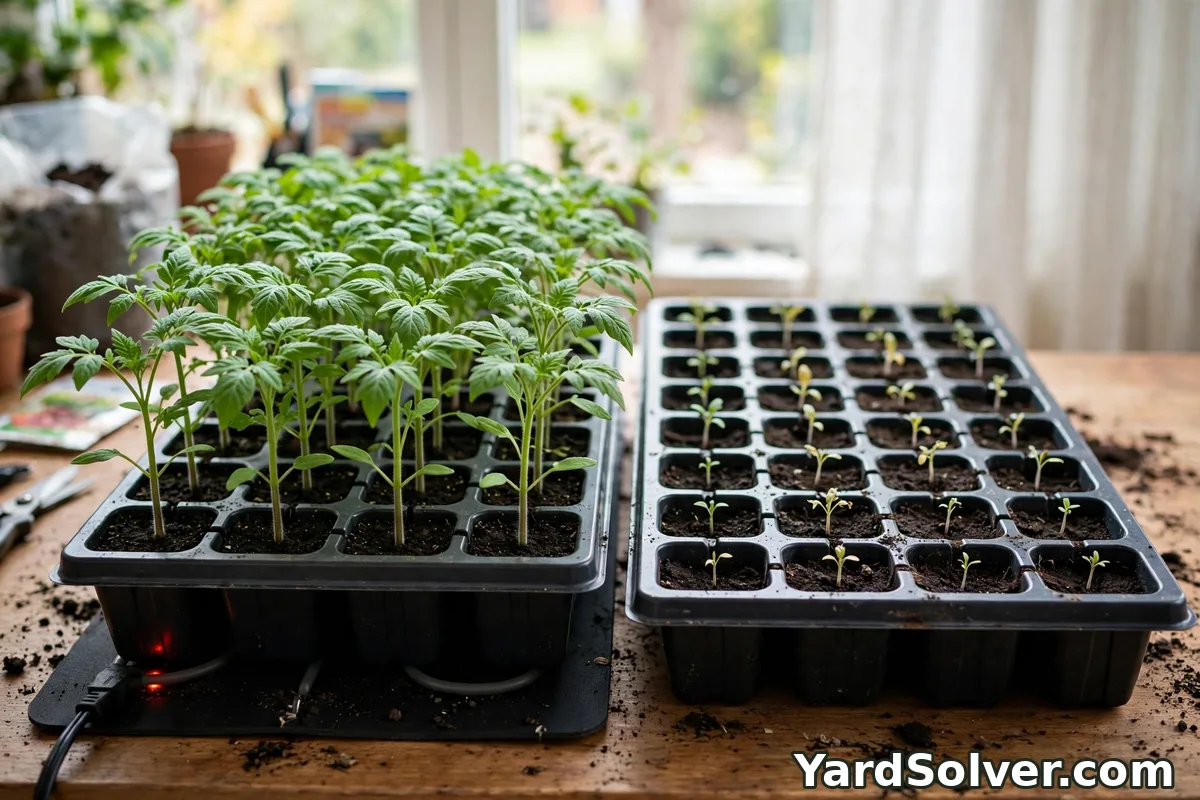
A seedling heat mat is a thin waterproof heating pad that sits under the tray and warms the soil — typically 10–20°F above the room around it. It does not warm the room, and it is not a light. Its whole value is time and evenness. Peppers at 65°F soil: germination drags over 2–3 weeks and the tray comes up in patches, so half the cells hold seedlings a week older than the rest. The same tray at 85°F: up in 7–10 days, all together, which means one potting-on date and one hardening-off date. For the Chilli Pepper grower racing a short season, those saved days are fruit. For Tomato growers in a warm house, they are a convenience. That difference is the honest answer to "is it worth it?" — it depends which camp your crops and your room are in.
How to use one properly, step by step
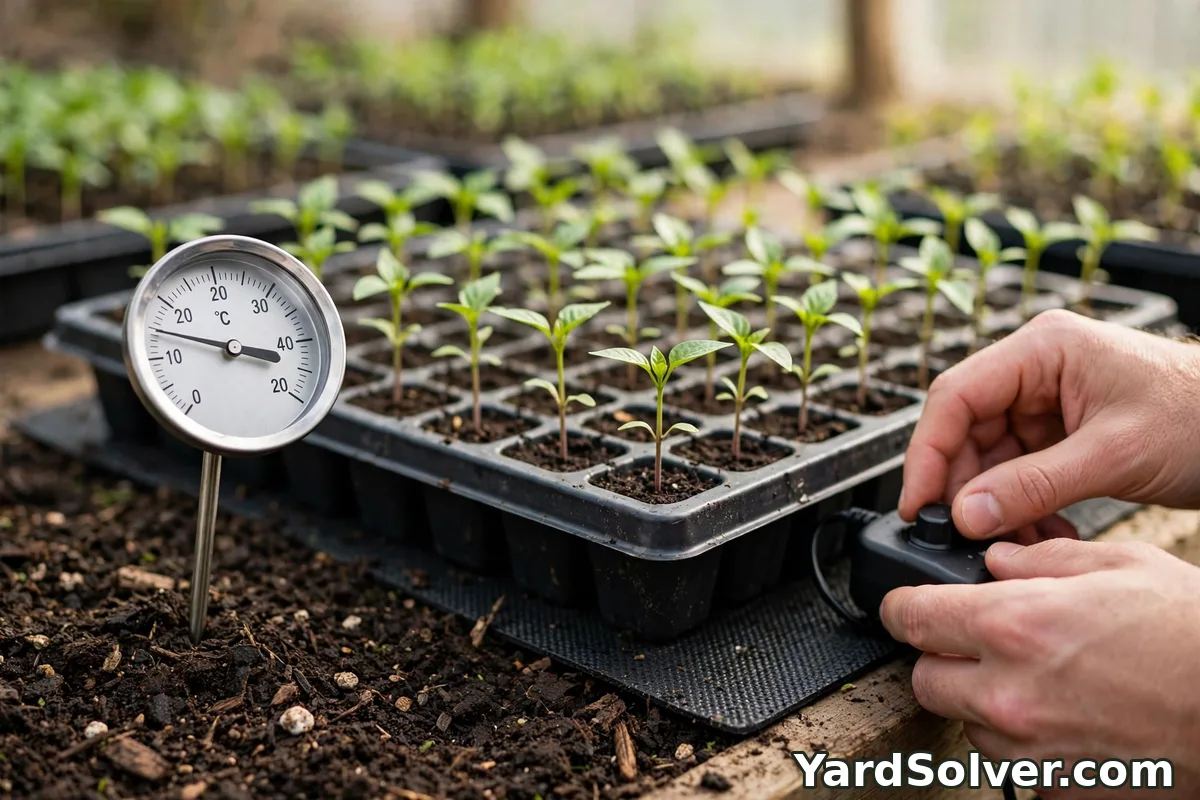
Step 1 — Set up on a safe surface. Mat on a flat, water-resistant surface, tray on the mat, humidity dome on the tray. Keep the mat dry at the edges and never fold or puncture it. Step 2 — Measure soil, not air. Push a soil thermometer (or a kitchen probe) an inch into the mix. You are aiming for the crop's band in the chart, most often 75–85°F. A thermostat-controlled mat with the probe in the soil is the precise setup; a basic mat in a 68°F room lands near the band on its own. Step 3 — Keep the mix moist. Bottom heat evaporates water fast. Check daily; the mix should stay evenly damp, and the dome comes off once seedlings emerge so air can move. Step 4 — Off at germination, into the light. The day most seedlings are up, the mat goes off (or the tray comes off it) and the tray goes under your strongest light — the pairing that matters is in our Grow Lights for Seedlings guide. Seedlings left on heat under weak light grow soft and leggy within days. Step 5 — Count your seeds like it matters. Warmth raises germination percentages, which changes the maths of how many to sow: the Seed Calculator works out seeds per tray with a germination allowance, so a mat's better rate becomes fewer wasted seeds rather than a crowd to thin.
The three ways a heat mat goes wrong
Cooking the seed. A basic mat in an already-warm room, or a tray left on a mat in a sunny window, can push soil past 95–100°F, where even pepper seed dies. The thermometer is not optional kit; it is the difference between a tool and a hazard. Drying the tray. Warm mix loses water daily. More seedlings are killed by a dry weekend on a mat than by cold — check every day, water from below, and never let emerging seedlings sit in dry mix. Forgetting to take them off. Emerged seedlings on bottom heat grow fast, soft and pale, and dry out at the roots while the tops look lush. Germination is the mat's whole job; the moment it is done, the mat's job is done.
No mat? The free warmth tricks
A mat is a convenience, not a requirement, and gardeners germinated peppers for generations without one. The top of a fridge radiates gentle, steady warmth close to the pepper band. A shelf above (not on) a radiator works if the soil thermometer confirms it is warm, not hot. An airing cupboard or the cupboard housing a water heater holds many trays through their germination days — check them twice a day, because the move to light must happen the day they emerge, and a forgotten tray in the dark stretches beyond saving in 48 hours. Whichever trick you use, the thermometer rule and the off-at-germination rule apply exactly as they do to a mat.
A worked example: one tray of peppers, with and without a mat
Same seed, same compost, same January windowsill room at 67°F — the comparison every pepper grower runs once. Without a mat, the soil sits at room temperature, about 67°F. The first seedlings appear around day 14, the last near day 24, and roughly 7 in 10 seeds come up at all. The tray holds three sizes of plant at once, so potting on stretches over two weekends. With a mat holding the soil at 85°F, the first seedlings appear on day 7, nearly all are up by day 10, and germination runs above 9 in 10. One potting-on session does the whole tray. That is the mat's entire case, in numbers: about ten days saved, a fifth more plants, and one even batch instead of three stragglers. Run the same comparison with lettuce and the result inverts — the cool tray at 65°F germinates in days while the matted tray sulks — which is why this guide's answer is a chart, not a yes.
Keep going
Plan the seed-starting station these seedlings grow into — dates, beds and successions — in the Garden Planner.
Go deeper with the full Seed Germination Temperature Chart and Grow Lights for Seedlings, size your sowing with the Seed Calculator, and read the two plant pages this guide serves: Chilli Pepper and Tomato.
Sources
Germination temperature ranges follow the university extension consensus summarised in YardSolver's germination chart (pepper optimum 80–90°F; lettuce germination inhibited above the mid-70s°F), with seed-starting practice cross-checked against the University of Illinois Extension's winter seed-starting guidance at Illinois Extension — Winter seed starting and smart seed storage. Seasonal demand context: seedling heat mat search interest peaks November–January (Google Trends, January 2026 maximum).
Questions people ask
Do seedlings need a heat mat?
Only the warm germinators do. Peppers, chillies, tomatoes and eggplant germinate fastest and most evenly at 75–90°F soil, which most homes cannot give a seed tray in winter — a heat mat closes that gap. Cool-season crops such as lettuce, onions, peas and brassicas germinate best at 55–70°F and a mat can actually reduce their germination.
What temperature should a seedling heat mat be?
Aim for soil at 75–85°F for most warm crops, and up to 90°F for peppers and chillies. A basic mat raises soil roughly 10–20°F above room temperature; a mat with a thermostat and a soil probe is more precise. Measure the soil with a thermometer — do not guess from the air temperature.
How long do you leave seedlings on a heat mat?
Until germination — then take them off. Most mats come off the day the majority of seedlings emerge. Leaving emerged seedlings on bottom heat grows soft, leggy plants and dries the mix out; what they need next is strong light, not more warmth.
Can a heat mat hurt seeds?
Yes, three ways: it can overheat cool-season seed (lettuce germination falls sharply above about 75°F), it can cook any seed if a mat runs unchecked in a warm room, and it dries trays out fast, so a missed watering kills seedlings that would have survived on a windowsill. Use it for the crops that need it, with a thermometer.
Do tomatoes need a heat mat?
They benefit but do not strictly need one. Tomatoes germinate at 60°F soil, just slowly — a week or more longer than at their 75–90°F best. In a warm room (above 70°F) skip the mat; in a cool house, a mat buys you days and a more even tray.
What can I use instead of a heat mat?
Any steady gentle warmth: the top of a fridge, a shelf above a radiator (check it is not hot), or a warm airing cupboard for the germination days only. Whatever you use, the rule is the same — measure the soil temperature, and move trays to light the moment seedlings emerge.
Comments & ratings
No comments yet.
Be the first to share your experience.