
Guides · Soil & feeding · Published November 18, 2026 · By Faizan Ahmad
How Much Lime Do I Need?
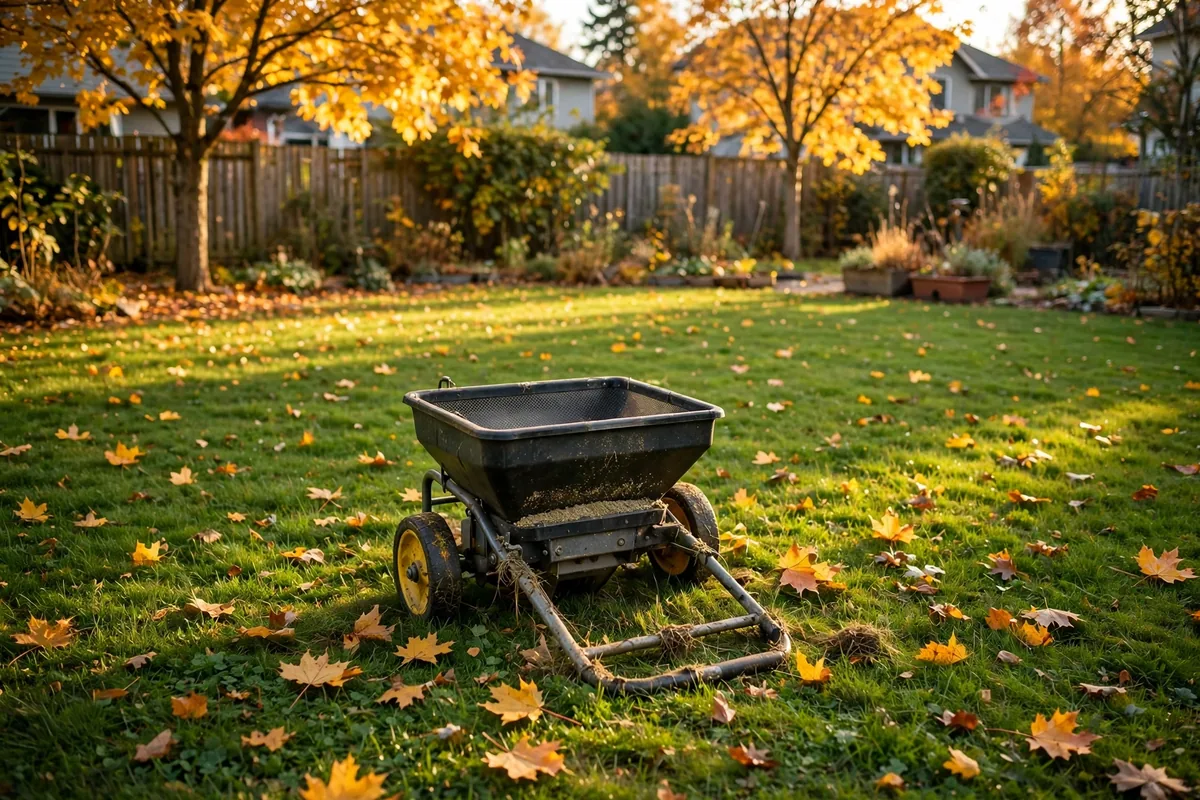
Lime is the one lawn job where guessing is genuinely expensive — not in money, but in time. Spread too little on truly acid soil and nothing changes; spread too much and you have created a problem that takes far longer to undo than the acidity ever would have. The honest answer to "how much lime do I need for my yard" is never a single number: it is a soil test, a goal, and then one short multiplication. That is exactly what our Lime Calculator runs for you. This guide shows how the calculator works, the two very different rates hiding behind the word "lime" — a light maintenance dressing versus an application strong enough to actually raise pH — and the timing, soil-type and plant exceptions that decide whether lime helps at all. By the end you will be able to check any bag label or neighbour's advice against your own numbers.
The short answer, on one card
- The formula: total lime = rate (lb per 1,000 sq ft) × area (sq ft) ÷ 1,000; bags = total ÷ 40 lb, rounded up
- Maintenance rate: 20 lb per 1,000 sq ft — a light dressing that holds pH where it is
- Raise-pH rate: 50 lb per 1,000 sq ft — the stronger application that actually moves acid soil
- Test first: lime follows a soil test and a goal, not a guess — clay needs more than sand for the same pH shift
- Fall is ideal, and lime works over months, not days — one accurate application beats repeated guessing
Step 1 — Test first: lime follows a soil test, not a guess
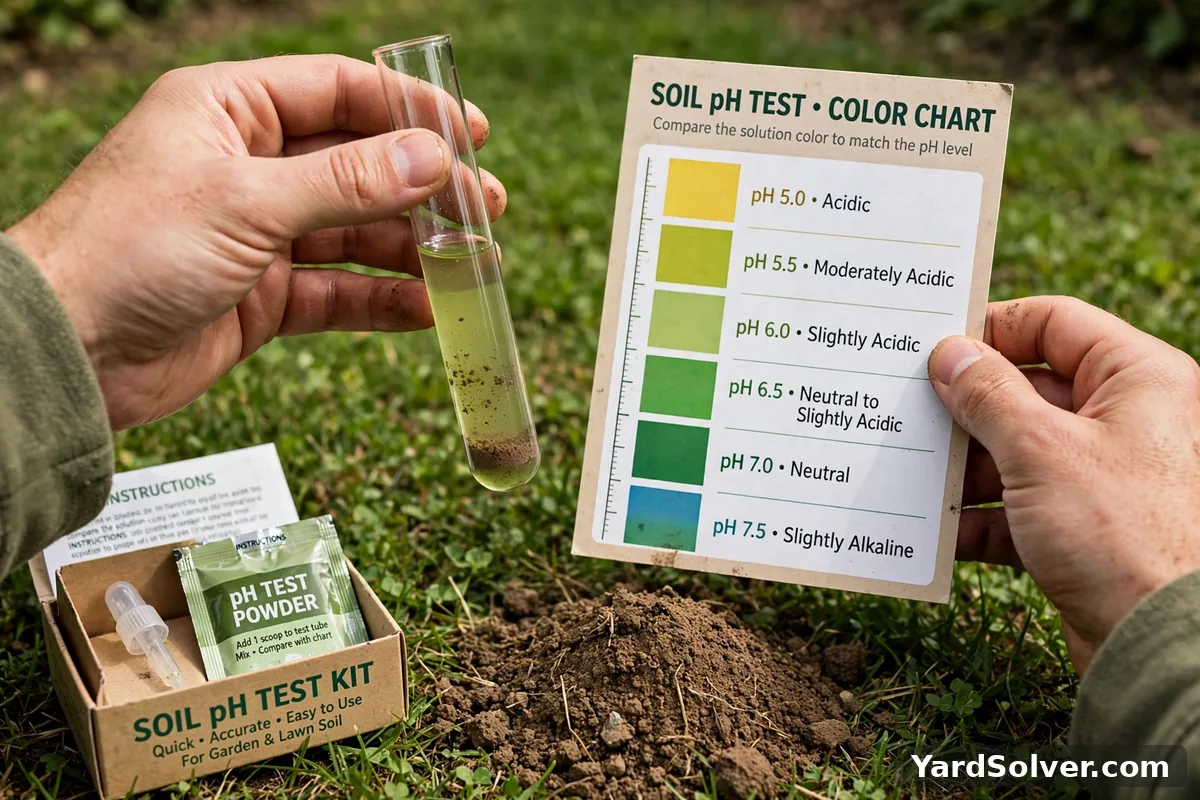
Most lawn grasses grow best in soil that is just slightly acid to neutral, roughly pH 6.0 to 7.0. Below that range the grass is not starving for fertilizer — it is locked out of it: in acid soil, nutrients you have already paid for become chemically unavailable to the roots, and lime is what unlocks them by gently raising the pH. But "gently" is the whole game, and it is why the test comes before the bags. A simple home kit or probe gives a usable pH reading in minutes; a lab test through a local extension service adds the detail that really sets the dose. Two facts from the test matter. The first is the pH itself: how far below target is the soil, if it is below at all? Liming a lawn that already sits at pH 6.8 does nothing useful. The second is soil type. Clay soils resist pH change — they are heavily buffered — so clay needs noticeably more lime than sand to achieve the same shift, while sandy soil moves easily and can be overshot just as easily. Same lawn size, same pH reading, different soil: different honest dose. That is also why this calculator is upfront that its raise-pH rate is a general estimate — only a soil test measures your soil. The full method, from taking samples to reading the result, lives in How to Raise Soil pH; this guide's job is the quantity once you know lime is warranted.
Step 2 — Pick your goal: maintenance is not the same job as raising pH
Open the Lime Calculator — pounds and 40 lb bags by goal and you will see the choice that most bag labels blur: your goal. The first option is a light maintenance dressing at 20 lb per 1,000 sq ft. Maintenance liming assumes your pH is roughly where you want it and simply replaces what rain, growth and fertilizer slowly take away, holding the line year to year. The second option is the stronger application at 50 lb per 1,000 sq ft, meant to actually raise the pH of soil a test has shown to be too acid. These are not two opinions about the same job — they are two different jobs, two and a half times apart in dose. Searching "how much lime per square foot garden" or "how much lime to put on my yard" returns both rates mixed together, which is how lawns end up with a maintenance dose on soil that needed correcting (nothing changes, lime gets blamed) or a corrective dose scattered as routine upkeep (pH climbs past target, and now iron and other nutrients lock up from the other side). Decide which job you are doing before you touch the spreader. Then measure the lawn — length times width for a rectangle, in feet or metres, the unit switch converts behind the scenes — choose Canada or the USA so the cost estimate uses typical store prices for your country, and the calculator returns total pounds and whole 40 lb bags.
Step 3 — The maths the calculator is doing
There is no hidden model here — the calculator runs the standard per-1,000-square-foot rate maths, and you can check it on paper. Total lime (lb) = rate (lb per 1,000 sq ft) × area (sq ft) ÷ 1,000. The ÷ 1,000 simply asks "how many thousands of square feet do I have?" and multiplies the rate by that count. From total pounds, one conversion finishes the job: ÷ 40, rounded up = bags, because pelletized lime is sold in 40 lb bags and you cannot buy a fraction of one. Sanity-check it against a lawn you can picture: 2,000 sq ft at the maintenance rate is 2 × 20 = 40 lb — exactly 1 bag. The table below is the same maths pre-run at both of the calculator's rates; it is worth a screenshot before any store trip.
| Lawn size | Maintenance — 20 lb / 1,000 sq ft | Raise pH — 50 lb / 1,000 sq ft |
|---|---|---|
| 1,000 sq ft | 20 lb — 1 bag | 50 lb — 2 bags |
| 2,500 sq ft | 50 lb — 2 bags | 125 lb — 4 bags |
| 5,000 sq ft | 100 lb — 3 bags | 250 lb — 7 bags |
| 7,500 sq ft | 150 lb — 4 bags | 375 lb — 10 bags |
| 10,000 sq ft | 200 lb — 5 bags | 500 lb — 13 bags |
Read the table the way the calculator thinks: the goal is the lever. The same 5,000 sq ft lawn needs 3 bags to maintain its pH and 7 bags to raise it — which is why "how much lime" can never be answered from lawn size alone, and why a bag's cheerful per-thousand rate means nothing until you know which job you are doing.
Step 4 — One lawn, worked start to finish at both rates
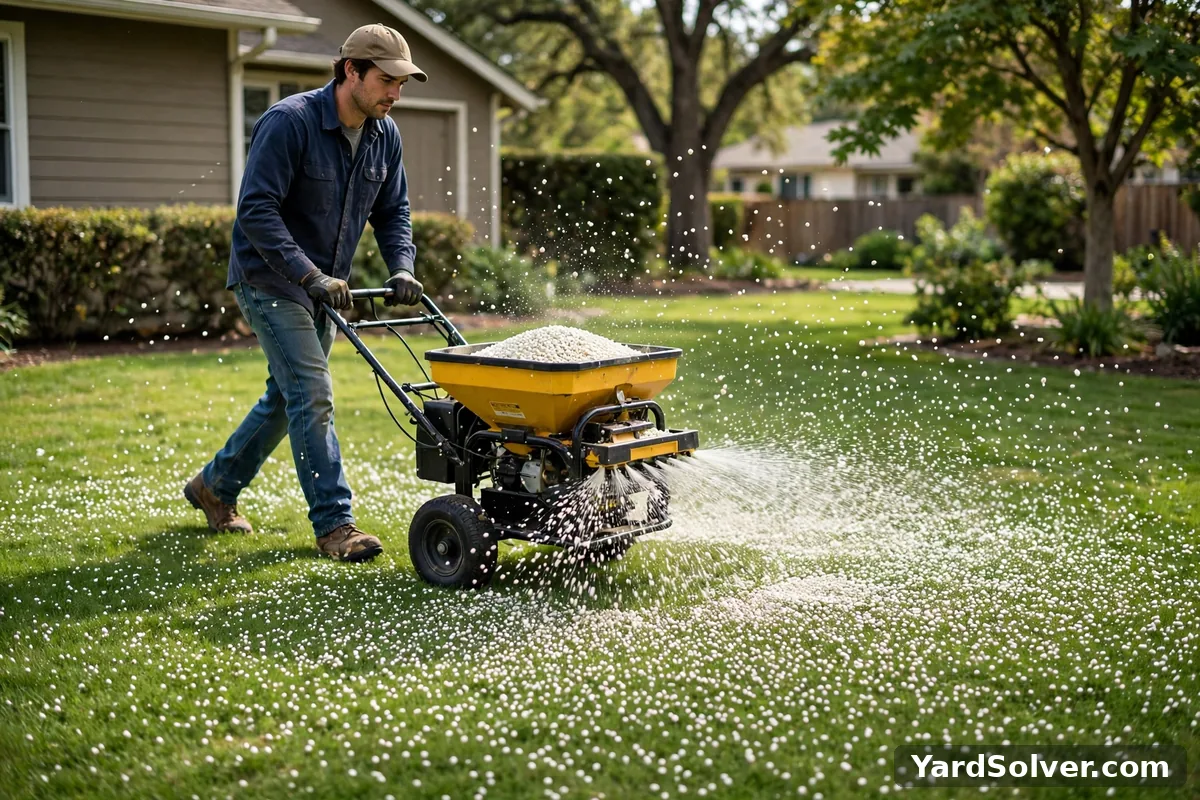
Here is the calculator's own example lawn, done both ways so the contrast lands. The lawn is 50 ft × 100 ft = 5,000 sq ft. At the maintenance rate of 20 lb per 1,000 sq ft, the maths is 5 × 20 = 100 lb of lime — 3 bags of 40 lb pelletized lime (120 lb in the bags, so a little is left over for the edges). Now the same lawn with a soil test showing genuinely acid soil and the goal set to raise pH: at 50 lb per 1,000 sq ft, the maths is 5 × 50 = 250 lb — 7 bags (6.25 bags of lime, rounded up to 7 whole bags). Same lawn, same spreader, more than double the lime — because the goal changed, not the grass. Spreading technique is simple but it decides whether the maths survives contact with the lawn: mow first, pick a calm, dry day, and apply in two passes at right angles, half the total each way, so thin stripes and double-dosed overlaps cancel out. Then water lightly to wash the pellets off the grass blades and start them dissolving. Pelletized lime earns its place here: it is the same ground limestone as powdered lime, pressed into pellets, so it pours through a normal broadcast spreader without the dust cloud, the drift, or the caked hopper that powdered lime is famous for. The chemistry once it dissolves is identical — pellets are a handling upgrade, not a different product.
Step 5 — Timing and patience: fall first, months not days
Fall is the ideal liming season, and the reason is mechanical as much as chemical: all winter, freeze and thaw cycles work the pellets down into the soil, rain carries the reaction along, and by spring the shift is already under way — with no conflict against the spring feeding and seeding rush. Spring works too, and honestly any season is fine except frozen or snow-covered ground, where pellets sit on top, wash unevenly, and never meet the soil they were bought for. What no season changes is the speed. Lime reacts slowly — months, not days. Expect a measurable pH shift over one season, not one weekend, which is exactly why the rhythm that works is test, apply once at the honest rate, then test again a year later before even thinking about another application. Garden beds follow the same maths at smaller scale — work the area in square feet, use the same rates per 1,000, and dig the lime into the top few inches of an empty bed where you can, since incorporation speeds the reaction. One caution that matters more than any rate: do not stack a raise-pH application year after year without a fresh test. Each application keeps working long after you have forgotten it, and the doses quietly add up.
The acid-lover exception — and what the calculator can't do
Everything above assumes plants that want near-neutral soil. Some of the best garden plants want the opposite. Blueberries, azaleas, rhododendrons and hydrangeas are acid-lovers: they evolved for sour soil and yellow, sulk and stop fruiting when lime pushes the pH up around them. So the rule is absolute — never lime the beds of acid-loving plants, and keep lawn lime from drifting or washing into them. If you grow blueberries, which need acid soil and must never be limed, their bed is a lime-free zone even while the lawn beside it gets its full corrective dose; spread up to the bed edge, not through it. Honesty about the calculator's other edges, so its number earns your trust: its raise-pH rate is a general estimate, not a lab prescription — a soil with heavy clay can honestly need more than 50 lb per 1,000 sq ft for a big shift, and a very acid soil may need the correction split across seasons rather than dumped at once, which only a lab test can tell you. The calculator cannot test your soil, judge your soil type, or see the acid-lover beds inside your lawn's rectangle — measure those beds out of the area if they sit inside it. And its cost figures are typical store-price ranges for your country, not quotes. What it does guarantee is the rate maths, checked above: get the test, the goal and the area right, and the bag count follows.
Keep going
Run your own lawn through the Lime Calculator, then work the full testing and correcting method in How to Raise Soil pH. Feeding comes after the pH is right — lime first, so the fertilizer you buy can actually reach the roots.
Planning the whole season's lawn and bed work? The Garden Planner lays out liming, feeding and planting in one calendar — put the fall lime application in now, while the soil test is fresh.
Questions people ask
How much lime do I need per 1,000 square feet?
It depends on your goal, which is why the calculator asks for it first. A light maintenance dressing is 20 lb per 1,000 square feet. A stronger application to actually raise pH is 50 lb per 1,000 square feet. Multiply the rate by your area in thousands of square feet, then divide by 40 to get bags, rounded up.
Do I really need a soil test before liming?
Yes, if you can manage one. Lime treats acidity, and only a test tells you whether your soil is acidic, how far the pH needs to move, and how your soil type changes the dose — clay needs more lime than sand for the same pH shift. Liming blind can push a healthy soil too far, and over-limed soil is harder to fix than acid soil.
When is the best time to apply lime?
Fall is ideal — freeze and thaw cycles work the pellets into the soil all winter. Spring works too. Any time is fine except on frozen or snow-covered ground.
Pelletized or powdered lime?
The chemistry is the same once it dissolves. Pelletized lime is ground lime pressed into pellets: far less dusty, spreads evenly in a normal spreader, and is what most homeowners should buy.
How long does lime take to change pH?
Months, not days — lime reacts slowly with the soil. Expect a measurable shift over one season, which is why a soil test before and a year after beats guessing.
Can I put on too much lime?
Yes. Over-limed soil locks up other nutrients and is harder to fix than acidic soil. Follow a soil test when you can, and never stack a raise-pH application year after year without one.
Lime amounts come from a soil test — pH and soil type together set the dose
Lime is not a tonic to sprinkle by habit; it is a measured correction to soil acidity, and the dose depends on two numbers only a test gives: how far the pH sits below target, and how strongly your soil resists change — clay and organic soils are heavily buffered and take considerably more lime than sands to move the same distance. Applying without a test either wastes money moving a pH that was already fine or under-doses a clay and concludes that lime does not work.
Apply ground limestone in autumn or winter where possible, giving it months of weather to react before the growing season, spread it evenly and water or rain it in, and retest rather than re-dose on a calendar. Keep lime away from acid-loving plants — blueberries, rhododendrons, azaleas — whose whole planting plan assumes the acidity you would be removing, and never mix the job with fertiliser applications: separate the passes so each does its own work measurably.
Sources
Key facts on this page cross-checked against Liming (soil) — Wikipedia — background on liming — applying lime to correct soil acidity and Soil pH — Wikipedia — background on soil pH and what it controls.
Related page
Read next: How to Lower Soil pH: Make Soil More Acidic, Step by Step.
Comments & ratings
No comments yet.
Be the first to share your experience.