
Guides · Containers & pots · Published November 22, 2026 · By Faizan Ahmad
How Much Potting Soil Do I Need? Pot Volumes Without the Guesswork
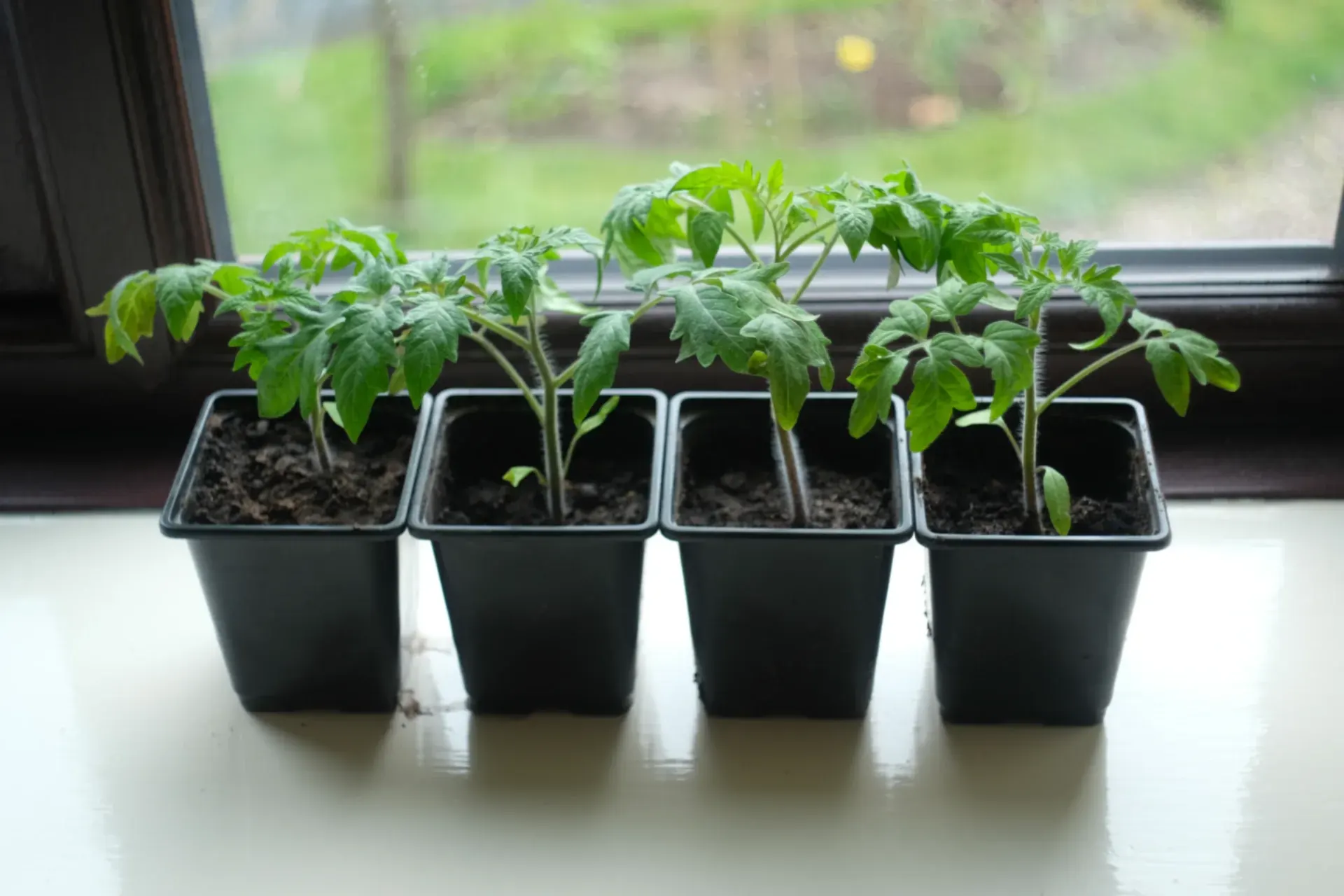
You need less potting soil than the pot’s label suggests — usually about a third less — because almost every flowerpot tapers, and volume follows the average width, not the top width. Our Potting Soil Calculator runs the real geometry for tapered, straight and trough pots. This guide explains the numbers, the settling allowance, and when last year’s mix only needs refreshing.
The short answer, on one card
- Tapered pots hold about two-thirds of what their top diameter suggests — the frustum formula, not the cylinder, is the truth
- A 12 in tapered pot (9 in base, 11 in deep) holds about 15.7 litres, not 20+
- Add 10% for settling: the first watering drops fresh mix visibly
- Measure inside, below the rim: wall thickness and headroom are not soil space
- Old mix usually needs a refresh, not a refill: replace a third, or top up and feed
On this page
Step 1 — Why the top diameter lies
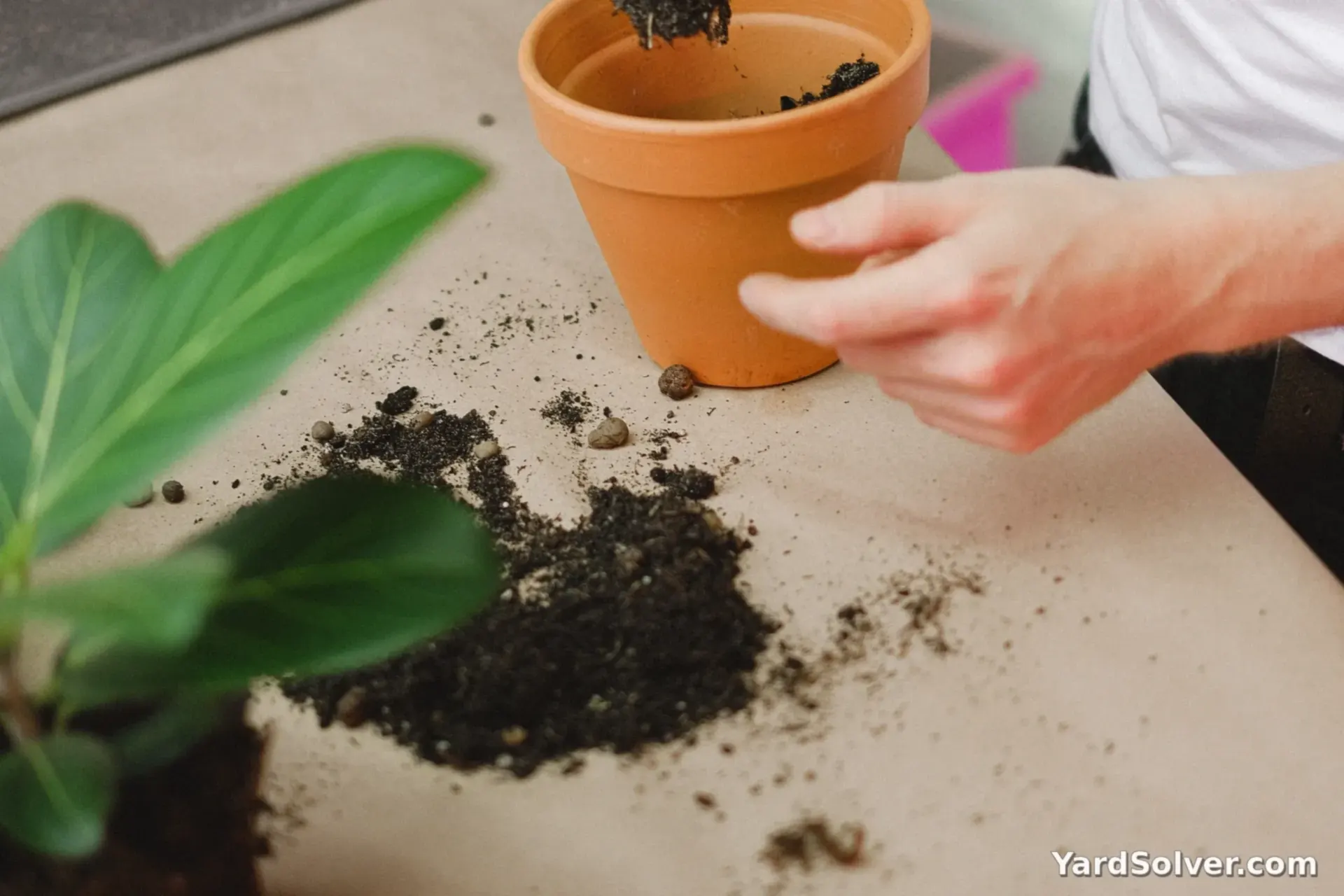
A pot’s stated size is its top diameter — a shopping label chosen because it is the biggest number on the pot. But soil fills the whole shape, and a typical flowerpot narrows by a quarter to a third from rim to base. Volume grows with the square of width, so that narrowing costs far more capacity than intuition says: the 12 in pot in our example holds 15.7 litres where the straight-cylinder guess promises over 20.
The honest shape is the frustum — a cone with its tip cut off — and its formula, π × height ÷ 3 × (R² + R×r + r²), weights the wide top and narrow base exactly. It is the formula the calculator runs, and the reason one bag so often fills "more pots than expected" for gardeners who have been quietly over-buying for years.
Step 2 — Common pots, real volumes
Worked with the frustum formula for tapered pots (base about three-quarters of the top, depth about equal to the top width — the standard flowerpot proportions), plus straight pots and a trough for contrast. Your own measurements go into the calculator for exact figures.
| Pot (top diameter) | Shape | Volume per pot | Six pots, with settling allowance |
|---|---|---|---|
| 8 in (base 6 in, 7 in deep) | Tapered | ≈ 4.6 litres | ≈ 30 litres |
| 12 in (base 9 in, 11 in deep) | Tapered | ≈ 15.7 litres | ≈ 104 litres |
| 16 in (base 12 in, 14 in deep) | Tapered | ≈ 34 litres | ≈ 224 litres |
| 12 in straight (12 in deep) | Cylinder | ≈ 22 litres | ≈ 146 litres |
| 24 × 8 in trough (8 in deep) | Box | ≈ 25 litres | ≈ 166 litres |
Bag sizes translate directly: a 1.5 cu ft US bag is about 42 litres; a Canadian 25 L bag is 25 litres. Match the calculator’s total against the shelf and the spare-bag pile in the shed stops growing. Filling beds rather than pots? The Raised Bed Soil Calculator runs the same honesty at bed scale.
Step 3 — The settling allowance and the rim rule
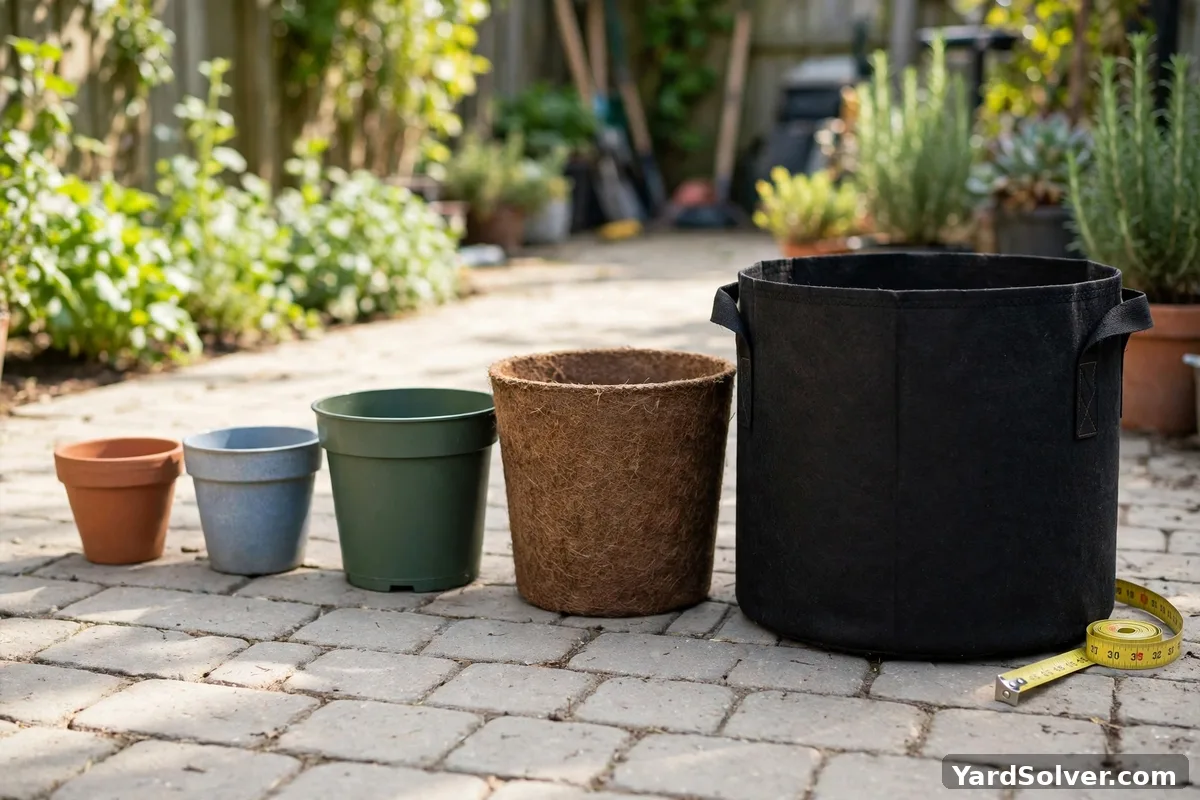
Fresh potting mix is mostly air by volume — that is what makes it good for roots — and the first thorough watering collapses it by roughly a tenth. Fill without the allowance and plants end the week sitting low, with crowns below where you set them and water pooling oddly at the surface. The calculator’s 10% is not padding; it is the difference between the volume you pour and the volume that stays.
The rim rule cuts the other way: measure depth to about an inch below the rim, not to the brim. That headroom is the watering reservoir — without it, every watering sheets straight off the surface and out of the pot, carrying the fine mix with it. Between the frustum, the allowance and the headroom, the calculator’s number is the one the pot actually drinks.
Step 4 — Refresh or refill? Last year’s mix, judged
Tipping every pot out every spring is the expensive habit the volumes above make tempting — and usually unnecessary. Mix that grew healthy plants needs its structure and feed renewed, not replaced: shake out the roots, break up the slab, and blend in about a third fresh mix, or simply top up the settled level and add a slow-release fertilizer. The roots of last year’s crop are not contamination; they are next year’s organic matter.
The exceptions are real: soil from a pot where a plant died of a soil-borne disease (wilt, root rot) should be binned, not reused or composted; mix that has collapsed into a water-repelling brick after several seasons has earned retirement to a garden bed, where soil life will rebuild it. Everything else is a refresh — cheaper, lighter, and better for the plants than sterile new mix every year.
Questions people ask
Why do bags list so many different units?
History and market: litres in Canada and Europe, quarts and cubic feet in the US, all describing the same volume. The calculator answers in litres, quarts and cubic feet at once so whichever unit your local shelf uses, one of the three numbers matches it.
How deep should soil be in a pot — to the very top?
To about an inch below the rim. That gap is where watering water pools and soaks in instead of sheeting off. Fill to the brim and the first month of waterings mostly run down the outside of the pot.
Does pot shape change which plants suit it?
Yes — depth matters more than width for most crops. A shallow wide trough suits lettuce and herbs; the same volume in a deep narrow pot suits carrots and tomatoes. Volume tells you how much soil; shape tells you whose roots it fits.
Can I mix old and new potting soil together?
That is exactly the refresh method: about two-thirds old to one-third new restores structure and drainage while keeping the old mix’s established biology. Add feed, since both fractions are low in nutrients by spring.
How much soil does a hanging basket take?
A typical 12–14 in basket is a hemisphere-ish frustum of roughly 8–12 litres — run it through the calculator as a tapered pot with its real depth. Baskets also dry fastest of all containers, so the settling allowance matters doubly: a settled basket holds measurably less water.
Sources
Key facts on this page cross-checked against Flowerpot — Wikipedia — background on pot forms, proportions and sizing conventions Container Gardening for Beginners — YardSolver — our companion guide to matching pots, mix and crops.
Related page
Read next: Container Gardening for Beginners: Pots, Mix and Honest Watering
Comments & ratings
No comments yet.
Be the first to share your experience.