
Guides · Watering & care · Published November 22, 2026 · By Faizan Ahmad
How Often Should I Water My Garden? A Schedule by Crop, Soil & Weather
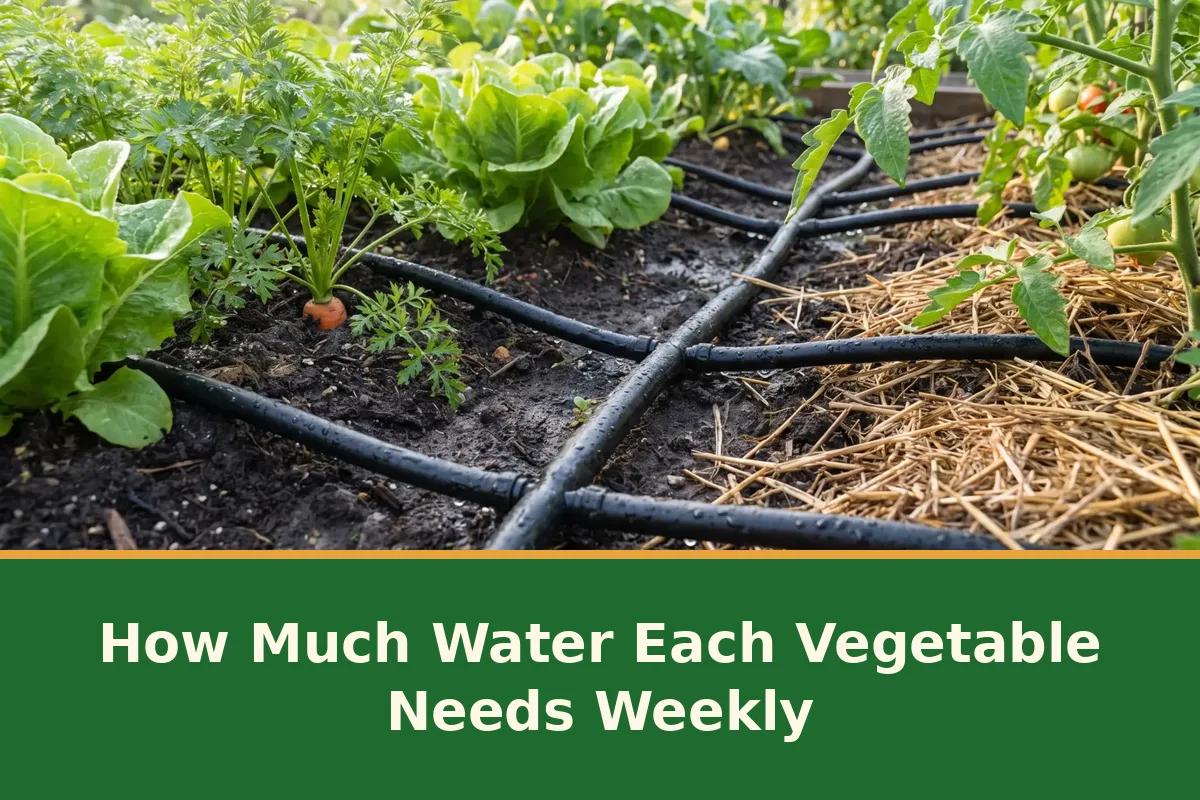
Water most fruiting vegetables deeply two to three times a week in warm weather — but the honest answer is a small calculation, not a habit: a crop’s peak need, scaled by its growth stage and the week’s temperature, then split into sessions no deeper than your soil can hold. That is exactly what our Watering Schedule Calculator runs. This guide shows the numbers behind it and works a tomato bed through both a mild week and a heatwave.
The short answer, on one card
- Peak need: fruiting vegetables 1–1.5 inches a week; greens and roots about 1 inch
- Stage scales it: seedlings ≈ half the peak rate, flowering/fruiting the full rate
- Heat scales it: a 95°F week drinks about a third more than a 70°F week
- Soil splits it: one useful watering is ~0.5 in on sand, ~1.0 in on loam, ~1.25 in on clay
- 1 inch over 1 sq ft = 0.623 gallons — the conversion behind every gallon figure
Step 1 — Start from the crop’s peak need
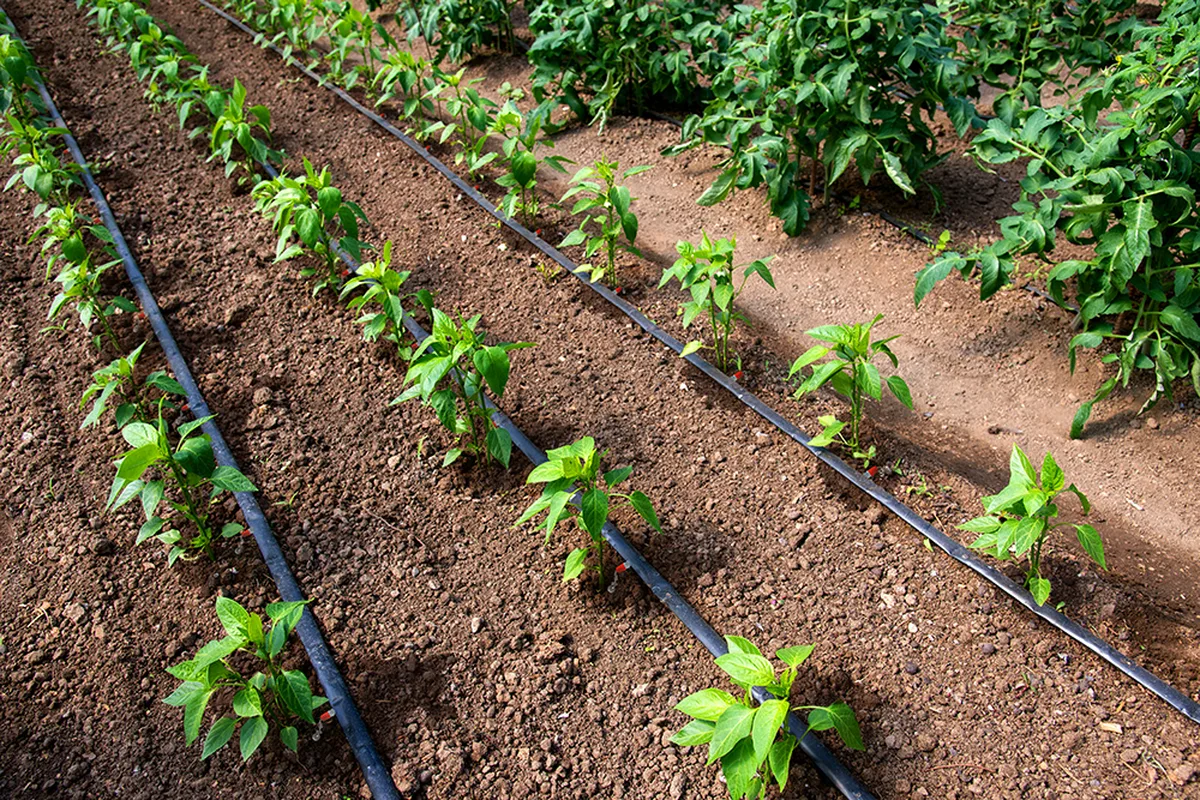
Every crop has a peak weekly water use — the amount a mature, fruiting plant drinks in warm weather. Tomatoes, cucumbers, squash and sweet corn sit at the thirsty end, around 1.5 inches a week. Peppers, beans, potatoes and lawns sit near 1.25 inches. Lettuce, carrots and herbs, with shallower roots and less leaf, manage on about 1 inch. These are the same figures used across YardSolver’s plant pages, and they are the first input of the calculator.
Peak is a ceiling, not a ration. A plant at half size, in a cool week, under mulch, drinks a fraction of it — which is why the next two steps scale the number before anyone touches a hose. Gardeners who water to the peak figure all season long are the ones with split tomatoes, bland fruit and fungal disease; gardeners who never reach it in a heatwave get blossom-end rot and stalled fruit. The schedule lives between the two.
Step 2 — Scale by stage and temperature
Two multipliers turn peak need into this week’s need. The stage coefficient follows the crop-coefficient pattern used in irrigation science: seedlings transpire about half the peak rate, leafy growth about three-quarters, flowering and fruiting the full rate, and ripening crops ease back to about four-fifths. Temperature then pushes the whole figure up or down.
| Daytime high | Temperature factor | What it means for a 1.5 in peak crop |
|---|---|---|
| 60°F (16°C) | × 0.65 | ≈ 1.0 in/week at full stage |
| 70°F (21°C) | × 0.85 | ≈ 1.3 in/week |
| 80°F (27°C) | × 1.0 | 1.5 in/week |
| 90°F (32°C) | × 1.18 | ≈ 1.8 in/week |
| 100°F (38°C) | × 1.35 | ≈ 2.0 in/week |
Multiply peak × stage × temperature and you have the week’s honest total. A fruiting tomato bed at 90°F: 1.5 × 1.0 × 1.18 ≈ 1.8 inches. The same bed with seedlings at 70°F: 1.5 × 0.5 × 0.85 ≈ 0.64 inches — a third of the water, which is why one fixed schedule cannot serve a whole season.
Step 3 — Let the soil decide the sessions
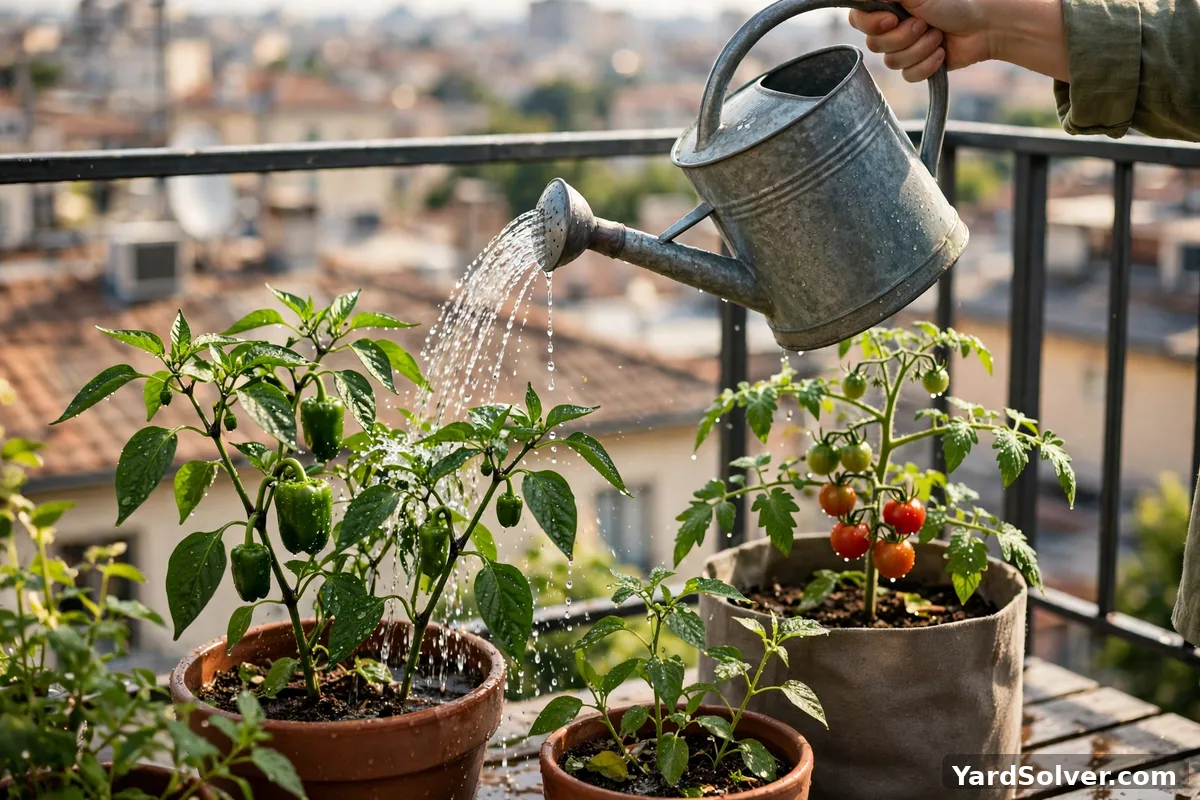
A weekly total is not an instruction to deliver it all at once. Soil holds only so much water in the root zone per watering: on sand, about half an inch goes in usefully before the rest drains below the roots; loam takes about an inch; clay, watered slowly so it does not run off, about an inch and a quarter. The Watering Schedule Calculator — sessions and gallons by soil divides the weekly total by that cap and rounds up to whole sessions.
So the heatwave tomato bed needing 1.8 inches waters twice at 0.9 inches on loam, four times at 0.45 on sand, twice at 0.9 on clay (clay’s cap would allow fewer, deeper drinks, but two sessions keep the top of the profile from staying saturated for days). Deep and spaced beats shallow and daily for everything except seedlings and containers, whose root zones are simply too small to bank water.
Step 4 — Convert to gallons, then check with a finger
Gallons make the schedule real for anyone on a meter, a well or a rain barrel: inches × area in sq ft × 0.623 = US gallons. The 200 sq ft tomato bed at 1.5 inches a week drinks about 187 gallons — a number that concentrates the mind wonderfully on mulch and drip lines. Rain counts against the schedule inch for inch: a gauge in the bed, not the airport’s figure, is the one to trust.
And the final authority is never the calendar. Before any scheduled session, push a finger or a screwdriver into the soil: moist at 4–6 inches down means the session can wait a day; dry at 2 inches means it cannot. The calculator gives the rhythm; the soil keeps the truth. That partnership — a computed schedule, checked against the ground — is the whole method.
Questions people ask
How many inches of water do vegetables need per week?
Fruiting vegetables peak at about 1–1.5 inches a week in warm weather; leafy greens and roots near 1 inch. Scale down for seedlings (about half) and cool weeks, up for heatwaves.
Is daily watering bad for plants?
For established plants in open ground, mostly yes: it keeps roots shallow and leaves wet. Deep sessions two or three times a week build deep roots. Seedlings, fresh transplants and containers are genuine exceptions.
How long should I run my sprinkler?
Measure it: set out straight-sided cans, run 30 minutes, read the depth, and double it for inches per hour. Then divide your session depth by that rate. Guessing runtime is how beds get half or double what the schedule says.
Does rain cancel a watering?
Inch for inch, yes — a quarter inch of rain against a half-inch session halves the session. A rain gauge in the garden beats any weather app, because summer rain is local.
Why do my tomatoes split even on a schedule?
Splitting follows swings: a dry spell then a heavy drink makes fruit swell faster than skin grows. The cure is evenness — the schedule held steady, mulch on the soil, and no heroic catch-up watering.
Sources
Key facts on this page cross-checked against Evapotranspiration — Wikipedia — background on how crops lose water to the air Crop coefficient — Wikipedia — the stage-coefficient method used to scale peak water need.
Comments & ratings
No comments yet.
Be the first to share your experience.