
Guides · Strawberries · Published October 31, 2026 · By Faizan Ahmad
How to Grow Strawberries in Pots
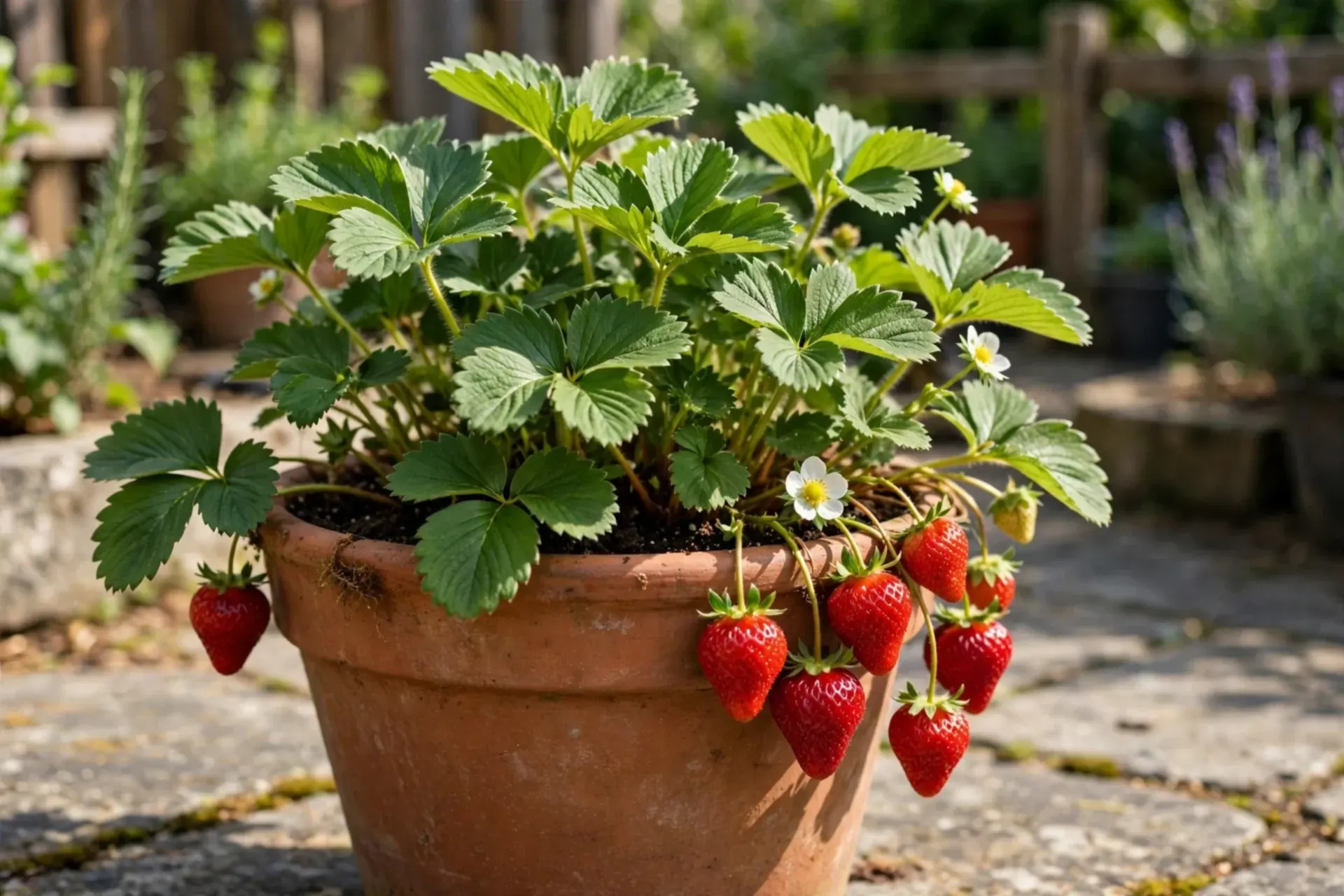
Strawberries may be the crop pots were invented for. Off the ground, the fruit hangs clean over the pot's edge — no soil splash, far fewer slugs, picking at standing height. A balcony with three good pots will not supply a jam factory, but it will supply the best strawberries you eat all year: fully ripe, because shop berries never are.
Choose your type first
- Everbearing / day-neutral: smaller flushes of fruit all season long — the right choice for pots and small spaces
- June-bearing: one big early-summer harvest — better suited to a garden bed
- Buy as plants or bare-root crowns in spring; both establish quickly in pots. Dates for your area are on the Planting Calendar
Step 1 — The pot: a gallon of soil per plant
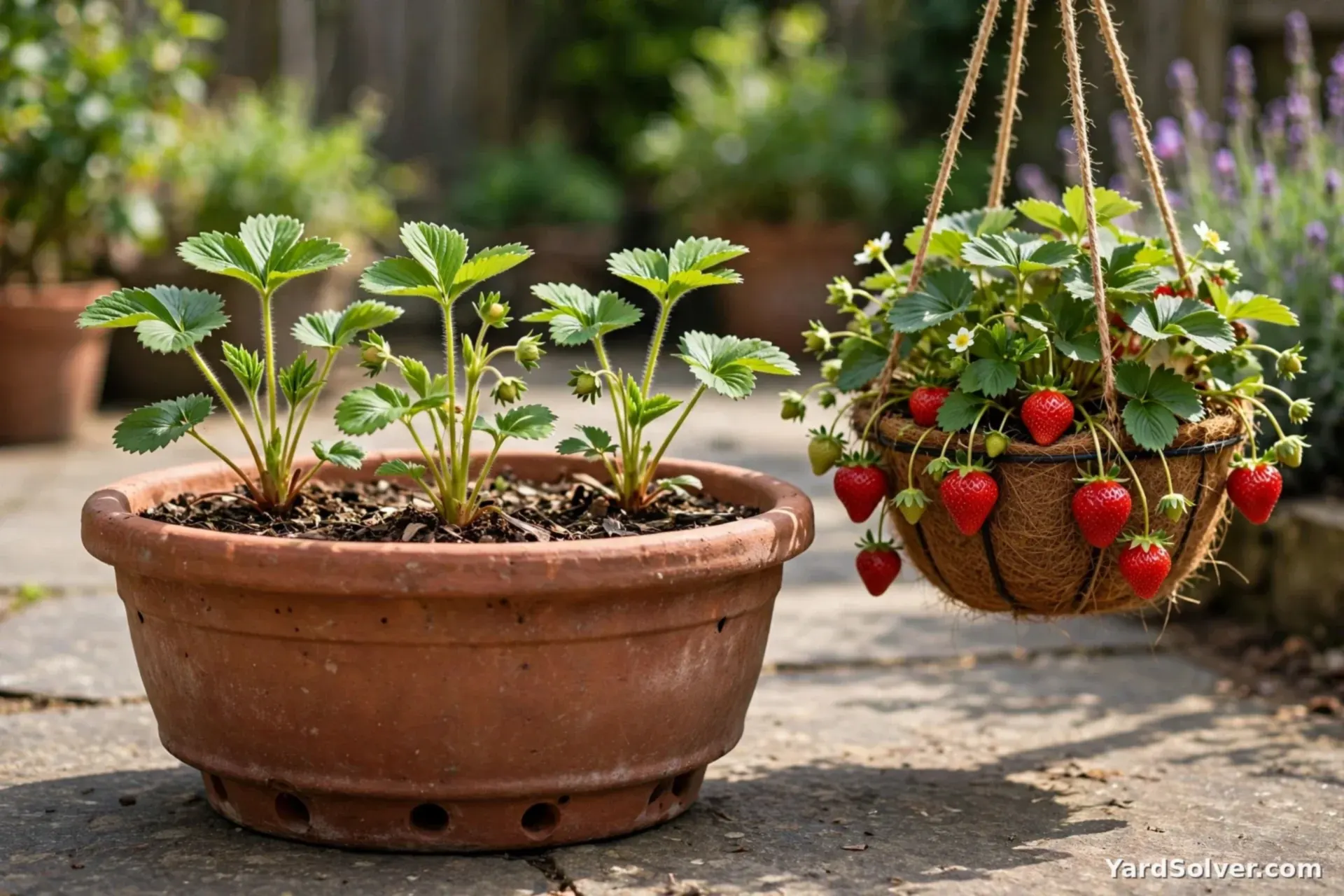
Plan on roughly 1 gallon (about 4 L) of soil per plant: a 10–12 inch pot holds 3 plants, a hanging basket 3–4, a long trough one plant every 8–10 inches — spacing confirmed by the Plant Spacing Calculator. Drainage holes are non-negotiable. Fill with good multipurpose compost-based mix; strawberries like it rich and free-draining. For several pots, the Compost Calculator helps size the soil order.
Step 2 — Plant at exactly crown height (the one fussy rule)
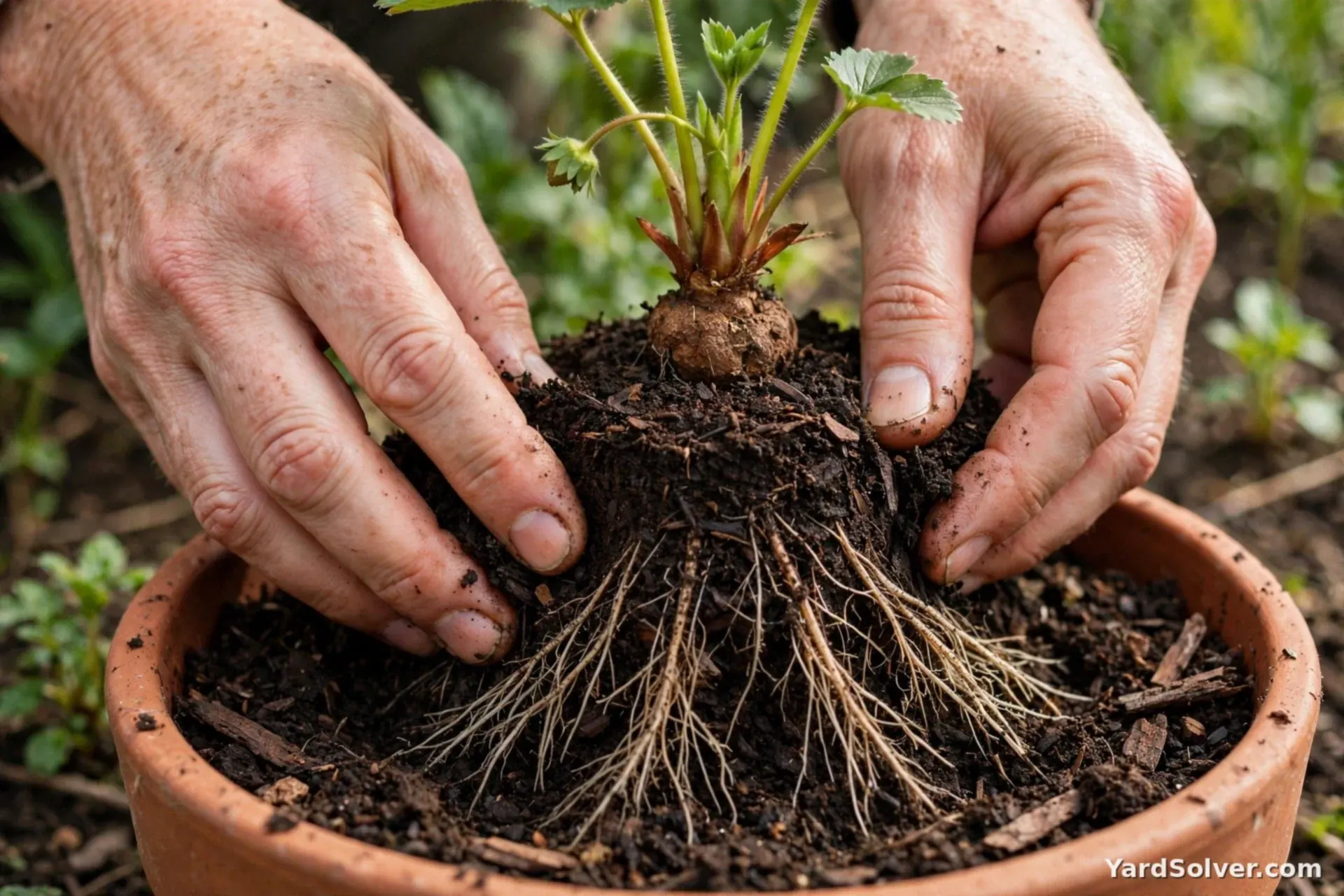
Set each plant so the crown — the knuckle where leaves meet roots — sits right at soil level. Buried crowns rot; crowns perched above the soil dry out and fail. This single detail decides most potted-strawberry successes and failures. Water in well and place in full sun: 6+ hours, more is better.
Step 3 — Water daily, feed weekly once flowering
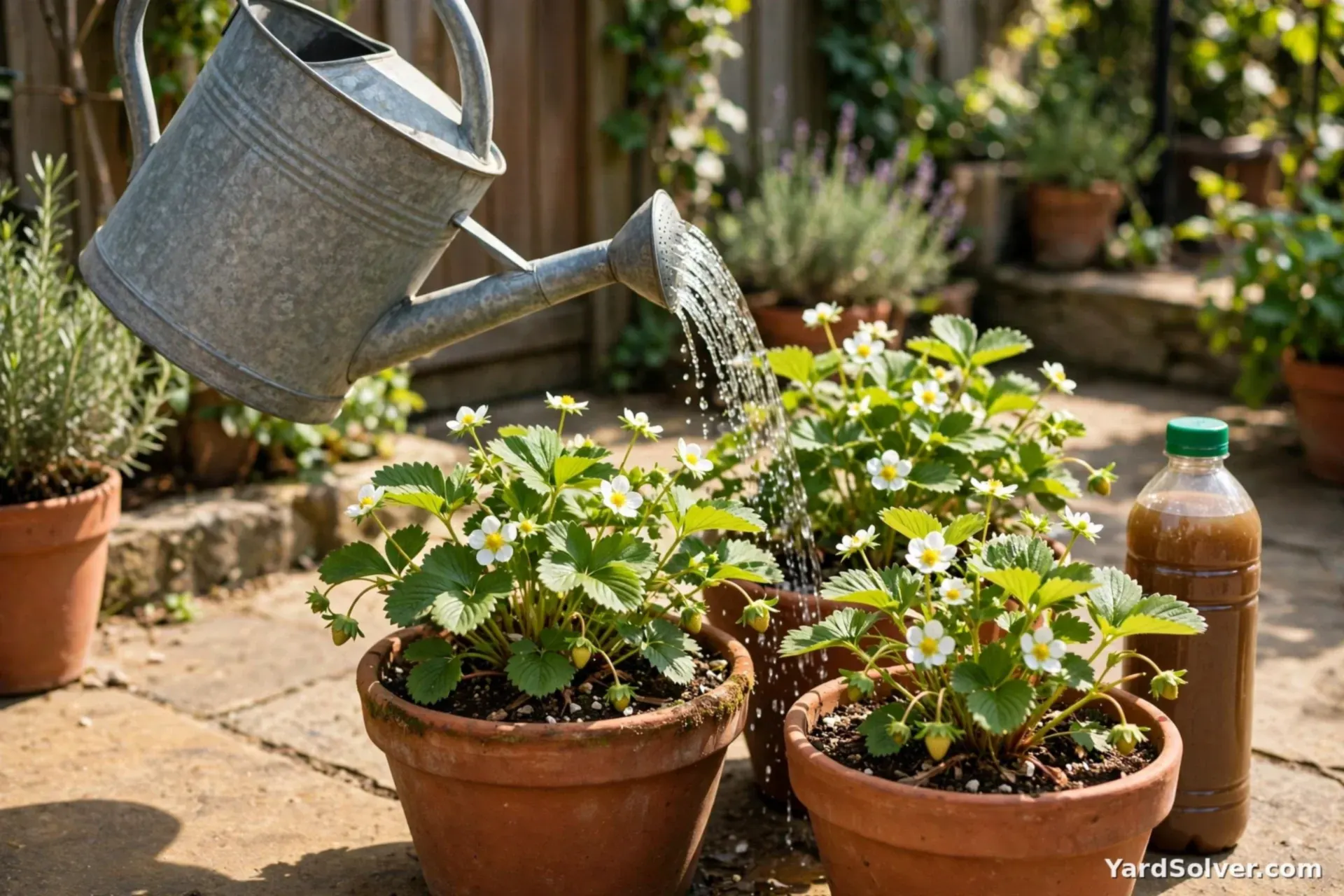
Pots dry fast, and strawberries fruiting are thirsty: in warm weather expect to water daily, keeping the mix evenly moist but never sodden. From first flowers, feed weekly with a tomato or fruit fertiliser at label strength — pot-grown plants cannot forage beyond their walls, so feeding is your job. Amounts for beds scale down in the Fertilizer Calculator.
Step 4 — Manage the runners
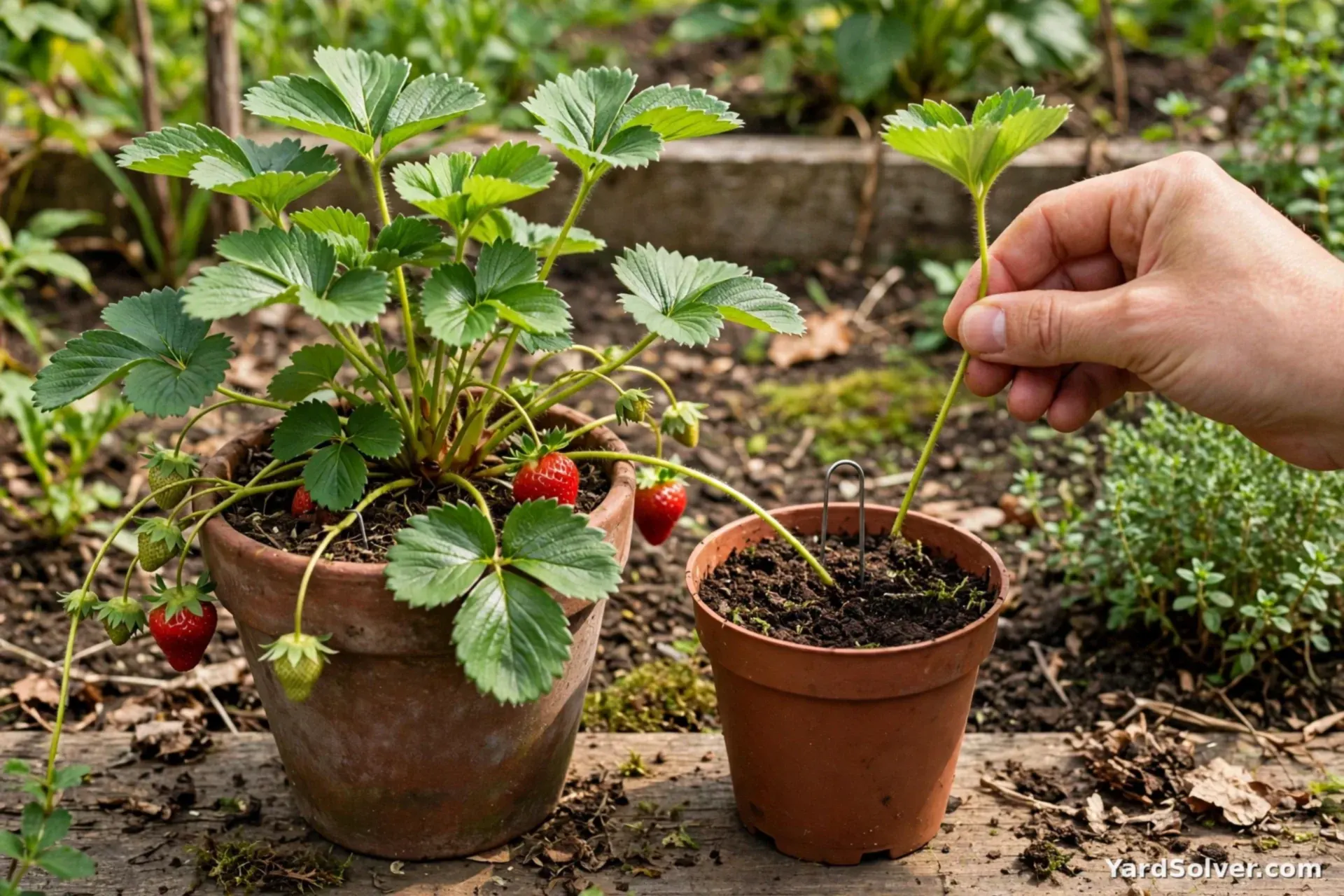
Strawberry plants throw runners — long stems ending in baby plants. In pots, runners steal the mother's strength: pinch most off for bigger fruit, or pin one or two into a small pot of mix to grow free replacement plants (strawberry plants tire after 3–4 years, so home-grown replacements keep the system young). Never let a pot turn into a tangle of daughters.
Step 5 — Protect the ripening fruit
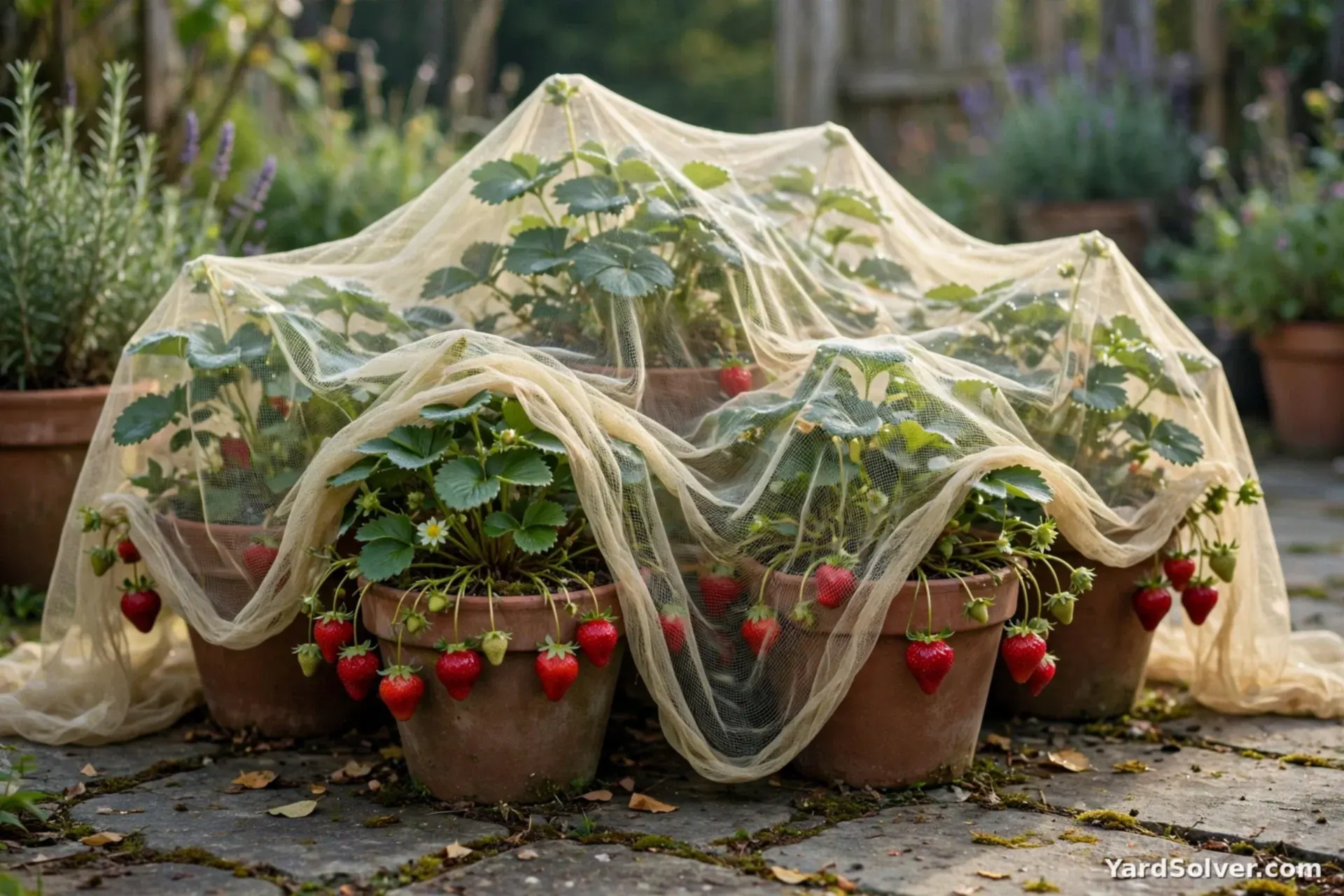
Birds find red berries as fast as you do: a light net draped over the pots from first blush is the reliable answer. Lift fruit trusses so berries hang over the pot edge or rest on the mix surface, not in wet soil against the rim. Pick fully red — strawberries do not ripen after picking — and pick in the morning, every day or two in season.
Step 6 — Winter care: the pot is the risk, not the plant
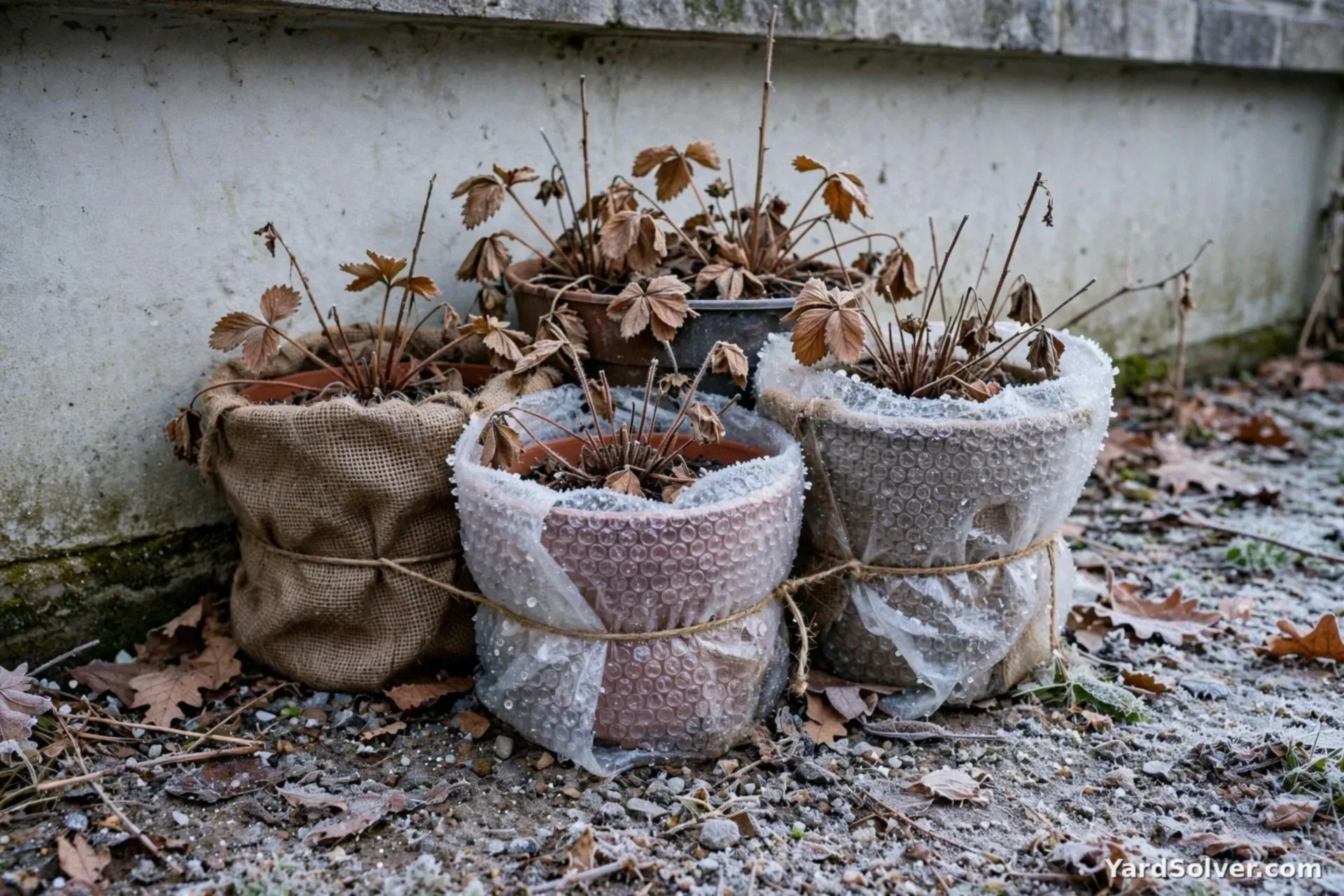
Strawberry plants themselves are tough perennials; their roots in a small frozen pot are not. In cold-winter areas, move pots to an unheated garage or a sheltered wall, cluster and wrap them, or plunge them into the ground for the winter. Water occasionally so roots never fully dry. More cold-season protection in How to Protect Plants From Frost. In spring, tidy dead leaves, top up the mix, and the same pots fruit again.
Keep going
Container and small-space growing: How to Grow Potatoes in Bags · Best Vegetables to Grow in a Small Garden.
Growing in the ground instead? The full method is in How to Grow Strawberries — runners, spacing and feeding for beds.
Questions people ask
How big a pot do strawberries need?
About a gallon (4 L) of soil per plant — a 10–12 inch pot holds 3 plants. Shape does not matter; soil volume and drainage do.
June-bearing or everbearing for pots?
Everbearing or day-neutral: fruit in smaller flushes all season suits a few pots. June-bearing gives one large harvest — wonderful from a bed.
Do potted strawberries survive winter?
The plants are hardy; pot roots are not. Shelter, wrap, cluster or plunge the pots for winter in cold areas, and never let roots fully dry.
Strawberries in pots fruit where beds cannot — the pot trades ground pests for watering duty
A strawberry's enemies mostly live at ground level — slugs, soil splash, rotting fruit resting on wet earth — and a pot lifts the whole plant out of their reach, which is why container strawberries so often out-yield a neglected bed. The trade is water: a pot holds a day or two of moisture at most in summer, so the grower's job moves from weeding to faithful watering and feeding, because a strawberry swelling fruit in a small volume of compost is hungry and thirsty at once.
Plant with the crown exactly at the surface — buried crowns rot, raised crowns dry — in a rich, free-draining mix, and feed weekly once flowers appear. Pin the first runners into small pots of compost while still attached to make next year's plants free, and net the ripening fruit or pick daily, because birds find a red strawberry on a patio as fast as in a field. Replace plants every three years; pot culture makes that renewal painless.
Sources
Key facts on this page cross-checked against Strawberry — Wikipedia — background on strawberries and their cultivation.
Related page
Read next: How to Grow Strawberries: Beds, Crowns & Runners.
Comments & ratings
No comments yet.
Be the first to share your experience.