
Guides · Planning & layout · Published November 22, 2026 · By Faizan Ahmad
How Wide Should Garden Rows Be? Spacings by Crop, Paths Included
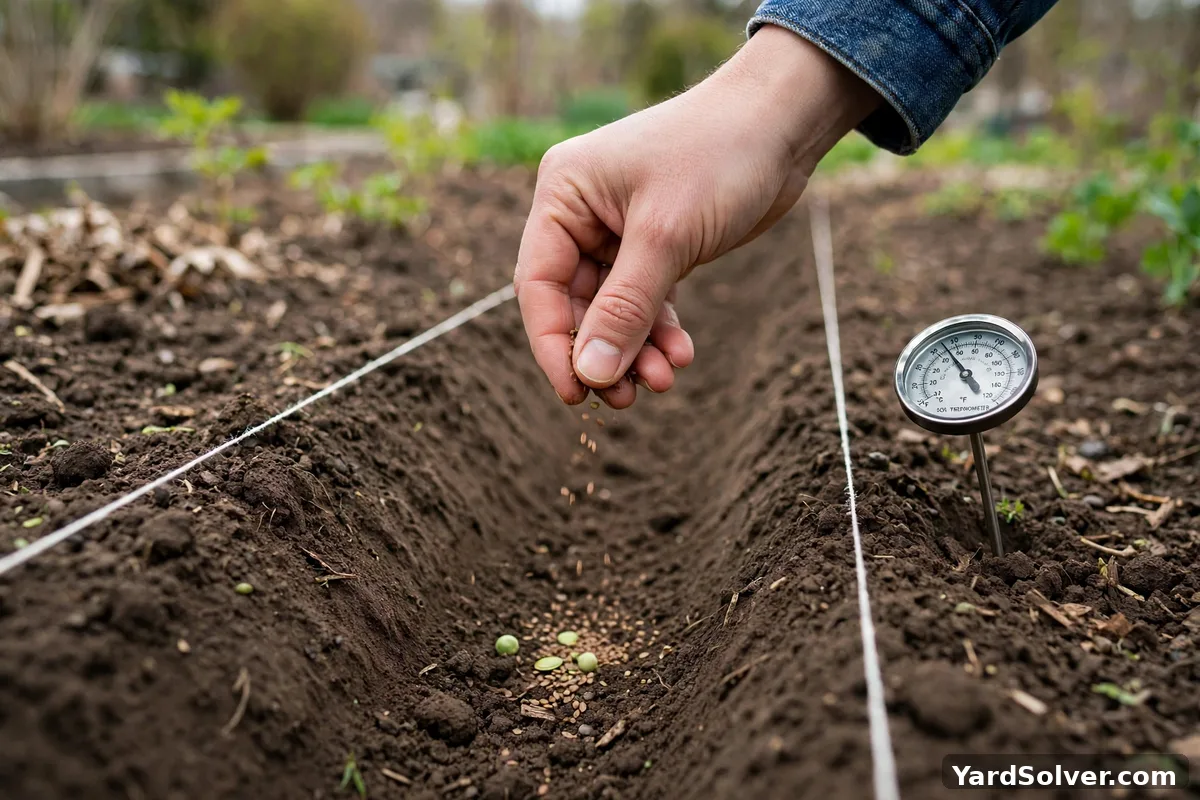
Garden rows should be as wide as the crop’s canopy plus your access demands — from 15 inches for lettuce to 48 for squash — and the aisle is not wasted space but the thing that makes the harvest possible. Our Row Spacing Calculator lays out rows, plants per row and totals for eleven crops. This guide explains where the numbers come from and when intensive beds may honestly narrow them.
The short answer, on one card
- Two spacings, two jobs: in-row is the plant’s space; between-row adds access, airflow and canopy spill
- The range: lettuce rows 15 in · beans 24 in · tomatoes 36 in · squash and cucumbers 48 in
- Paths are yield: a row you cannot reach into is a row you will not harvest properly
- Corn breaks the pattern: plant in blocks, not single rows — wind pollination needs neighbours on all sides
- Intensive beds may narrow rows to about two-thirds — rich soil and hand care replace the tractor aisle
On this page
Step 1 — The aisle is part of the crop

Field row spacings were set by machinery, but home gardeners who copy them keep the aisle for good reasons of their own. Between the rows is where you kneel, where the hoe swings, where air moves to dry foliage after rain, and where a zucchini plant’s canopy — which never read its spacing label — actually lives. Crops prone to mildew in still, wet air (squash, cucumber, tomato) carry the widest rows precisely because airflow is a fungicide that costs nothing.
The honest test of a row width is harvest day, not planting day. Beds are always plantable; the question is whether in August you can reach the middle row’s fruit without stepping on the outer row’s roots. Gardeners who narrow rows below access width do not gain the plants they added — they lose the ones they can no longer tend.
Step 2 — Spacings by crop
Standard published spacings — in-row (the plant’s personal space) and between-row (space plus aisle). The calculator loads these per crop and counts rows and plants for your bed.
| Crop | In-row | Between rows | Why that wide |
|---|---|---|---|
| Lettuce | 12 in | 15 in | Small canopy; rows narrow because heads stay compact |
| Carrots | 2 in | 16 in | Tops are slight; width is for the hoe and thinning access |
| Onions | 4 in | 15 in | Narrow rows; bulbs need light more than elbow room |
| Bush beans | 3 in | 24 in | Plants bush out and need picking access on both sides |
| Cabbage | 18 in | 24 in | Heads expand late; airflow fights clubroot-era diseases |
| Peppers | 18 in | 30 in | Bushy canopy, fragile branches, frequent picking |
| Tomatoes | 24 in | 36 in | Pruning, tying and airflow — the mildew budget is spent here |
| Sweet corn | 12 in | 30 in | Tall canopy and block pollination (see Step 3) |
| Potatoes | 12 in | 30 in | Hilling needs soil drawn from the aisle itself |
| Cucumbers | 12 in | 48 in | Vines travel; the row is a suggestion they ignore |
| Squash | 24 in | 48 in | The canopy of August bears no relation to the seedling of May |
Your bed and crop go into the Row Spacing Calculator — rows, plants and row-feet. Planting on a square grid inside a bed instead? The Plant Spacing Calculator is the grid counterpart.
Step 3 — Corn and the block exception
Corn is wind-pollinated: each silk strand must catch a grain of pollen drifting from a tassel, and pollen falls mostly within a few feet. A single long row is therefore a pollination desert at its middle — the classic cause of ears with patchy, gap-toothed kernels despite perfect spacing. The fix is geometry, not fertility: plant corn in blocks at least four rows wide and as square as the plot allows, so every plant stands downwind of several others.
The same logic, gentler, applies to other crops in miniature: short cross-rows in a raised bed pollinate and shade more evenly than one hero row, and succession sowings (a fresh short row every fortnight) spread both harvest and risk. Rows are a tool; blocks and strips are the same tool turned sideways.
Step 4 — When you may narrow the rows
Intensive beds — deep, rich, hand-tended, watered at the root — can run rows at roughly two-thirds of the table’s widths, because the tractor aisle and the hoe’s swing are genuinely gone and fertility is not limiting. Square-foot and biointensive systems build their whole method on this trade, and in a 4 ft raised bed tended from both sides it is honest arithmetic.
What may not shrink is the plant’s own claim: canopy diameter and root competition obey the crop, not the system. Narrow the aisle, never the plant’s personal space below its in-row figure — and expect intensive spacing to demand intensive feeding and watering to match, since more plants per bed drink and eat more per bed. Density is a budget, not a loophole.
Questions people ask
How wide should paths between beds be?
Two feet lets you kneel and carry a bucket; three feet takes a wheelbarrow without argument. Paths narrower than 18 in become stepping-on-beds paths by August. In the row calculator’s terms, paths are simply the widest rows you own — plan them as deliberately as the crops.
Do rows need to run north–south?
For tall crops in open ground, north–south rows share light most evenly across the day; east–west rows shade each other progressively. In small gardens the difference is modest and access usually matters more — but never plant a tall row where it shades a short crop all afternoon if a swap avoids it.
Can different crops share one row spacing plan?
They share beds happily when their spacings are cousins — carrots beside onions at 15–16 in rows is a classic pairing (and folklore says they confuse each other’s pests). The calculator is per-crop; run it per strip and lay the bed out as strips of compatible widths.
Why do my rows always end up crooked?
Because eyeballing is not a layout method. Two stakes and a string line per row — moved, not re-tied, as you sow — is the entire technology, and it pays for itself at thinning time when the row you can see is the row you can hoe.
Is square-foot gardening better than rows?
It is denser per square foot and kinder to small beds; rows are simpler to sow, thin and cultivate at scale. They are the same geometry wearing different clothes — the plant’s personal space is identical in both. Choose by bed size and temperament, and let the calculators arbitrate the counts.
Sources
Key facts on this page cross-checked against Planting a Vegetable Garden — University of Minnesota Extension — extension planting guidance including crop spacings Vegetable garden — Wikipedia — background on vegetable garden layouts and practice.
Related page
Read next: Vegetable Plant Spacing Chart: Every Crop on One Page
Comments & ratings
No comments yet.
Be the first to share your experience.