
Guides · Seeds & starting · Published November 22, 2026 · By Faizan Ahmad
Seed Germination Rate: Test It, Read the Percentage, Sow Enough Seed

A germination rate is one division — sprouted divided by tested — yet it quietly decides whether a bed fills or fails. Our Seed Germination Calculator runs the division, grades the lot, and answers the follow-up question gardeners actually ask: how many seeds do I sow to get the plants I want? This guide covers the test itself, what the percentage bands mean in practice, and why your own fresh test beats the number printed on the packet.
The short answer, on one card
- The test: counted seeds on a damp paper towel, warm and sealed, counted when root tips show
- Test size: 10 seeds for a rough read, 25 to plan on, 100 for saved seed you rely on
- The rate: sprouted ÷ tested × 100 — 20 of 25 is 80%
- Seeds to sow: plants wanted ÷ rate — 10 plants at 80% need 13 seeds
- The bands: 90%+ excellent · 75–89 good · 50–74 sow heavy · under 50 replace the lot
Step 1 — Run the test properly
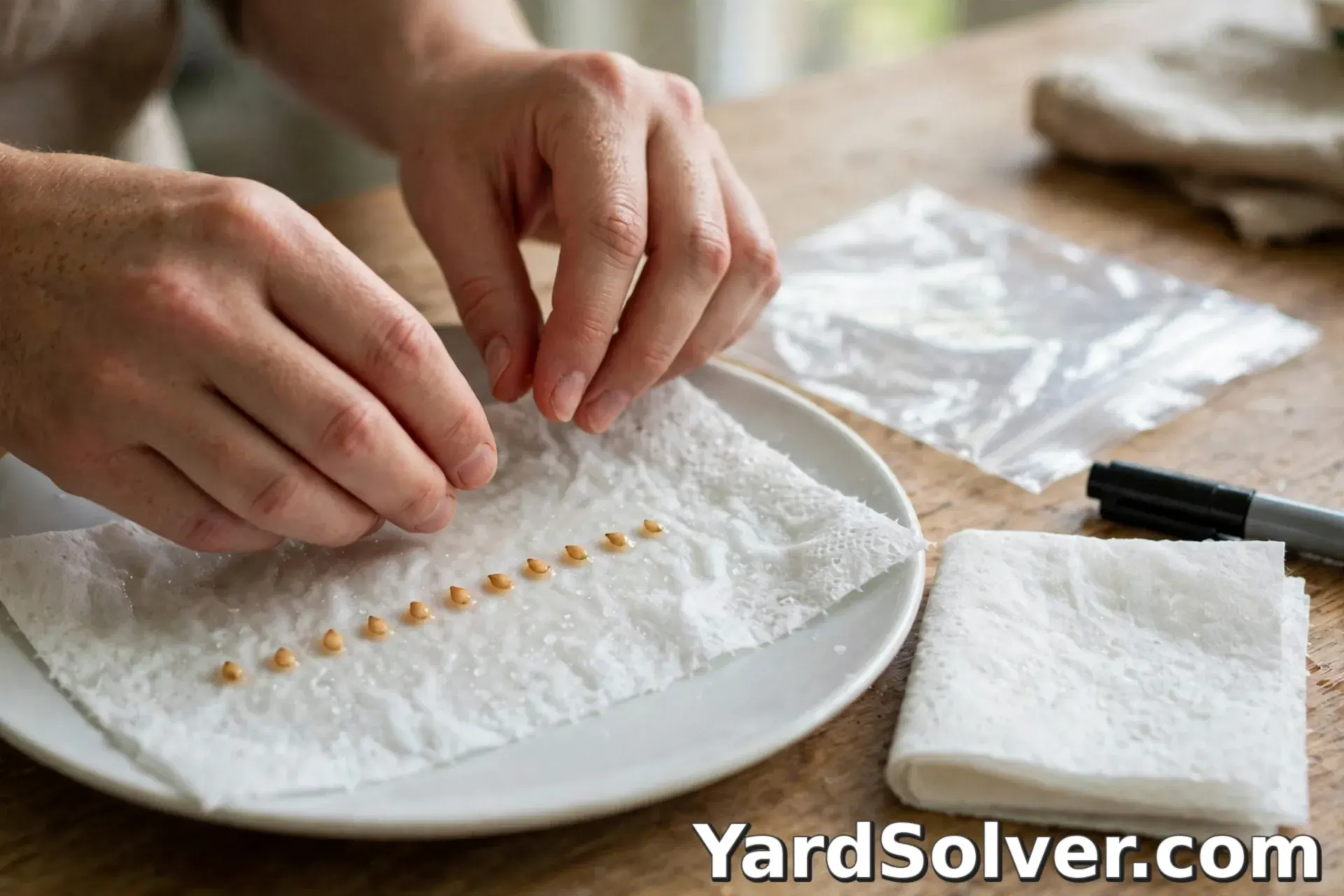
Count out the sample first — seeds drawn from across the packet, not skimmed from the top — and lay them on a paper towel dampened to the wetness of a wrung-out sponge. Roll or fold the towel, seal it in a bag or lidded box so it cannot dry, and keep it warm: the top of a fridge or a seedling heat mat’s neighbourhood, roughly room temperature or a little above. Most vegetable seed germinates best between about 65 and 85°F, and a cold windowsill will understate a good lot.
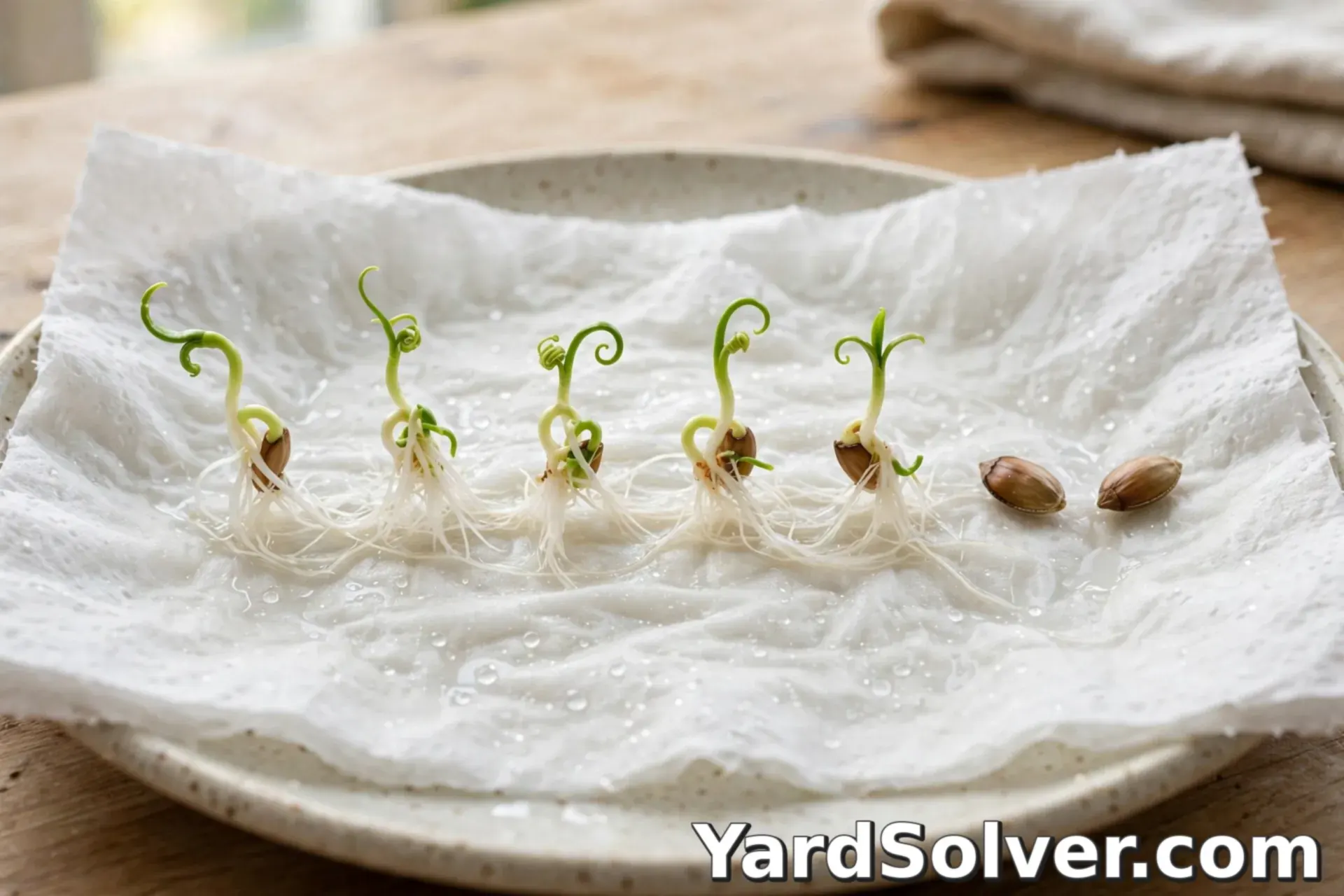
Check from day three, and count a seed as germinated when its root tip emerges — that is the definition seed laboratories use, and it matters: a seed that merely swells or splits its coat has woken up, not germinated. Most vegetables declare within 7–14 days; peppers, parsley and parsnips may take three weeks, and condemning them at day ten is the classic false verdict.
Step 2 — Read the percentage like a seed lab
The bands below are the working grades seed sellers and experienced seed-savers plan by. Note what changes down the table: not just how many seeds to sow, but whether the lot deserves the weeks of care a transplant demands.
| Germination rate | Grade | How to sow it |
|---|---|---|
| 90–100% | Excellent | Sow at the packet rate; thin normally |
| 75–89% | Good | Sow the adjusted number; reliable for transplants |
| 50–74% | Usable, with help | Sow heavy, expect gaps; fine for direct-sown rows |
| 25–49% | Poor | Replace for transplants; thick-sow for greens or microgreens at most |
| 0–24% | Dead or nearly | Compost the lot; do not spend bed space on it |
The adjusted number for any band comes from the Seed Germination Calculator — rate and seeds to sow: plants wanted ÷ rate, rounded up. Whether an old packet is worth testing at all is the prior question, answered by crop and age in Are Old Seeds Still Good?
Step 3 — Why your test beats the packet’s number
The percentage printed on a packet was true once — measured by the seed house on a large sample of that lot, in the year it was packed, under laboratory conditions. Since then the lot has lived your life: a hot garage summer, a damp drawer, three winters in an unheated shed. Germination falls with age and storage abuse at rates that differ by crop — onions and parsnips fade in a year or two, tomatoes and beans hold for four or more — so the printed number is a birth certificate, not a current diagnosis.
Your towel test is the diagnosis: same lot, this spring, your conditions. When the two disagree, plan with yours. The one courtesy to extend the packet is sample size — its 400-seed laboratory test is statistically steadier than your 10, which is why a borderline result deserves a second test of 25 before a favourite saved variety is condemned.
Step 4 — Sow the adjusted number, then record it
The arithmetic of sowing is the calculator’s second answer: seeds to sow = plants wanted ÷ rate. Ten tomato plants from an 80% lot need 13 seeds; from a 55% lot, 19 — and a gardener raising transplants for six weeks should hear the second case as the seed’s resignation letter and buy fresh. For direct-sown rows the same maths stretches a thinning budget instead: sow the adjusted count evenly and thin to the strongest, which is what the over-sow was always for.
Finish the job with a pencil: write the rate and the year on the packet. Next spring’s testing then starts from a trend — a lot falling 95 → 85 → 70 is telling you its remaining life — and the seed box becomes a record instead of a drawer of mysteries. The Seed Starting Calculator supplies the dates to sow them on.
Questions people ask
Why test 25 seeds instead of 10?
Resolution. In a 10-seed test each seed is worth 10 percentage points, so one sleepy seed swings the verdict; in a 25-seed test each is worth 4. For a rough 'alive or dead' answer 10 is fine — for a number you will sow by, 25 is the honest minimum.
Some seeds sprouted late — do they count?
Yes, if the root tip is out by the end of the crop’s normal window (allow three weeks for peppers, parsley, parsnips). But note the pattern: a lot that germinates slowly and unevenly usually grows slowly and unevenly too. The rate says how many; the speed hints at vigour.
Can I plant the test seeds that sprouted?
The towel sprouts, yes — handle them by the seed coat, root down, into mix or soil immediately; they are seedlings now and dry out in minutes. It is a satisfying way to waste nothing from a test of a treasured variety.
Does soaking or chitting change the rate?
Pre-sprouting (chitting) does not change the lot’s rate — it reveals it early and lets you plant only live seeds, which is exactly the towel test with the seeds then sown. For peas and beans many gardeners chit the whole sowing and skip the sample entirely.
My saved seed tests at 95% but the packet seed at 70% — believable?
Entirely. Fresh, well-dried, cool-stored home-saved seed routinely beats retail seed that has sat in warm shops. It is one of seed saving’s quiet rewards — and the test is how you find out you earned it.
Sources
Key facts on this page cross-checked against Germination — Wikipedia — background on germination, viability and seed testing Seed — Wikipedia — background on seed structure, dormancy and longevity.
Related page
Read next: Are Old Seeds Still Good? Viability by Crop and Age
Comments & ratings
No comments yet.
Be the first to share your experience.