
Guides · Fall cleanup · Published November 10, 2026 · By Faizan Ahmad
What to Do With Fallen Leaves: Leaf Mold, Mulch, Compost
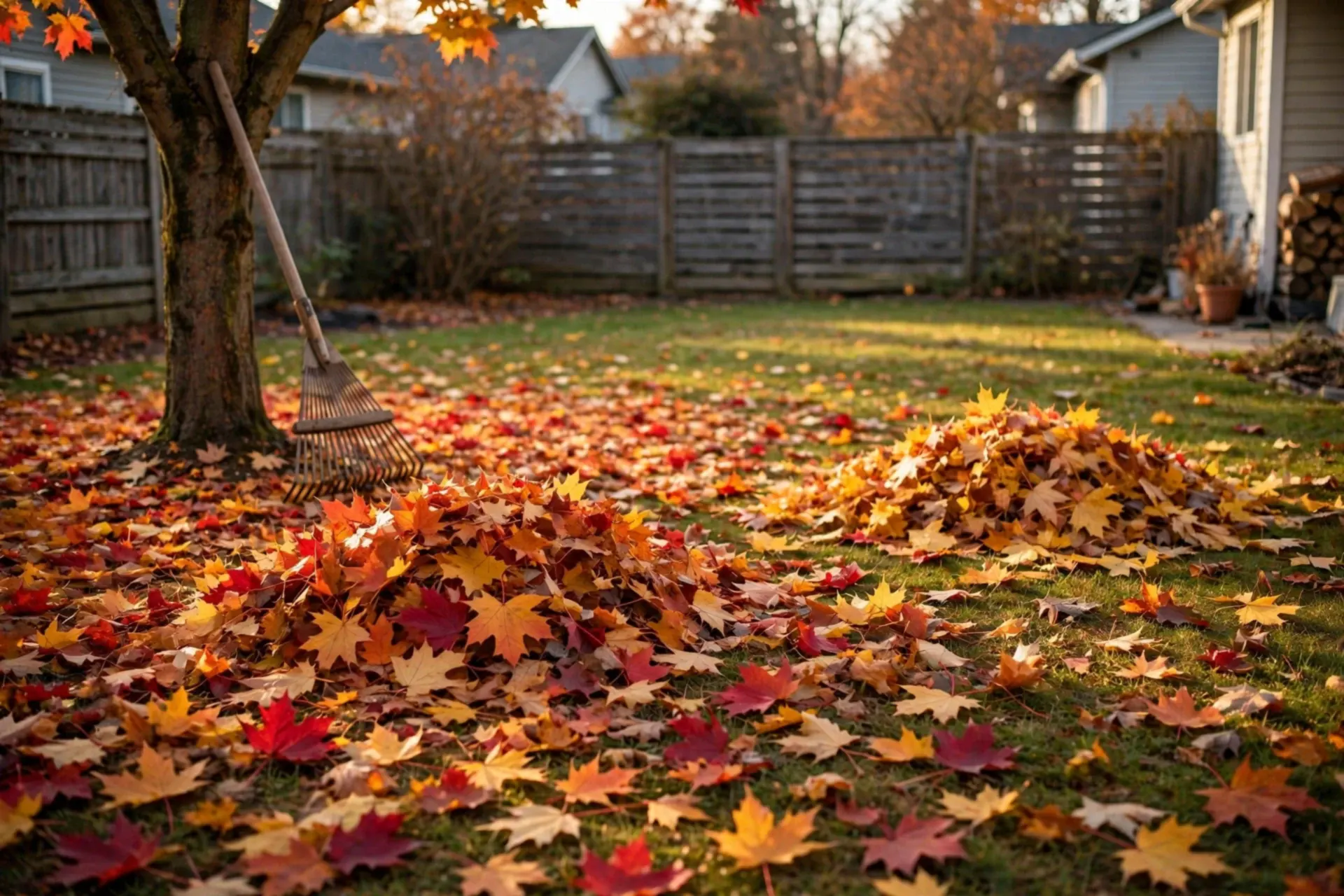
Every November the same thing happens: the trees drop a fortune in free soil food all over the yard, and most of it gets stuffed into bags and sent to the curb. Leaves are not rubbish. Shredded, they are mulch you did not pay for. Rotted down, they are the best soil conditioner a home gardener can make. Composted, they are the brown half of every good compost pile. There are four good answers for the leaf pile — and the right one depends only on how many leaves you have and where they landed.
Pick the move that fits your pile
| Your leaves | Best move | Why it works |
|---|---|---|
| A thin layer on the lawn | Mulch-mow in place | Chopped leaves fall between the grass and feed it free |
| Deep piles, plenty of beds | Shred for bed mulch | Free mulch that holds water and shelters the soil |
| A spare corner and some patience | Make leaf mold | The best conditioner of the lot — soft, dark, crumbly |
| Mixed garden waste all year | Compost them | Leaves are the carbon half every compost pile needs |
Most yards use two or three of these at once: mow the thin cover, bin the surplus for leaf mold, and keep a bag of shredded leaves by the compost pile all winter.
Step 1 — Decide by depth, honestly
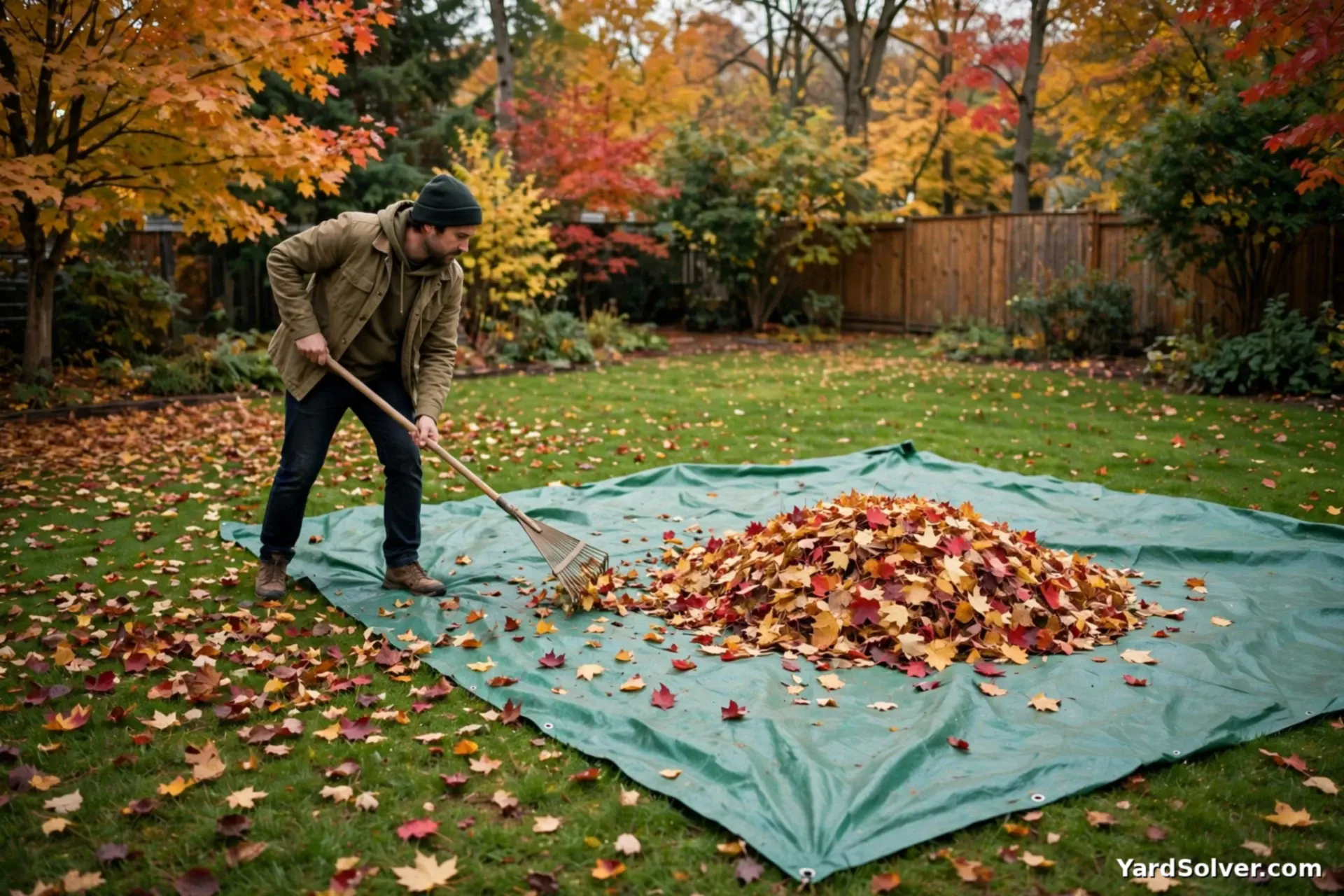
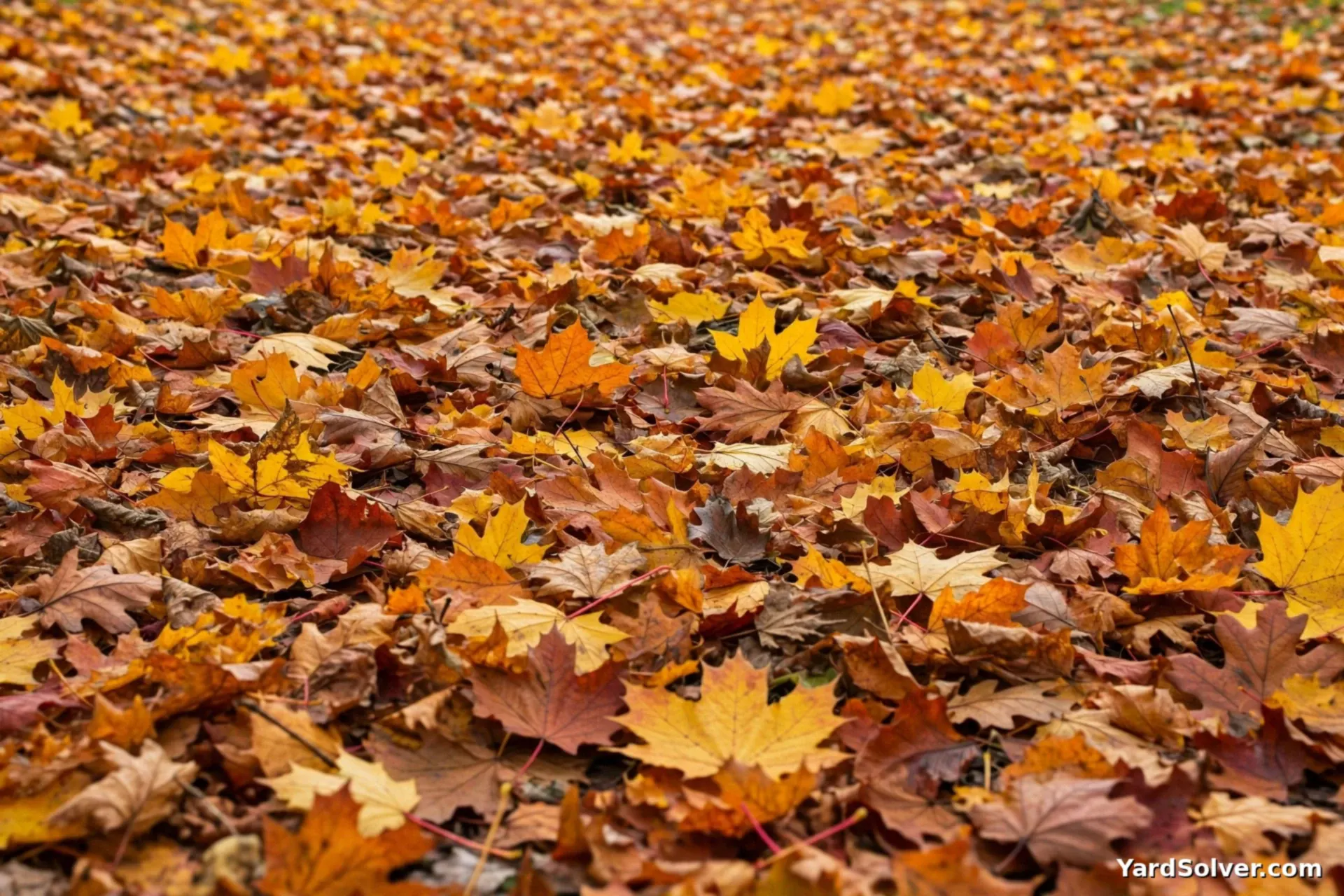
Walk the lawn and look down. If you can still see plenty of grass through the leaves, the mower alone can handle the whole job — go to Step 2. If the leaves form a solid mat and the grass has vanished under it, that mat has to come up: left all winter it blocks light, holds wet against the crown of the grass, and melts out dead patches by spring. Collected leaves are not a problem, though — they are the raw stock for Steps 3, 4 and 5. One sorting note before you start: leaves from a tree with a bad leaf disease are safest mulch-mowed onto the lawn or sent out with yard waste, rather than saved for beds.
Step 2 — Mulch-mow the thin layer where it lies
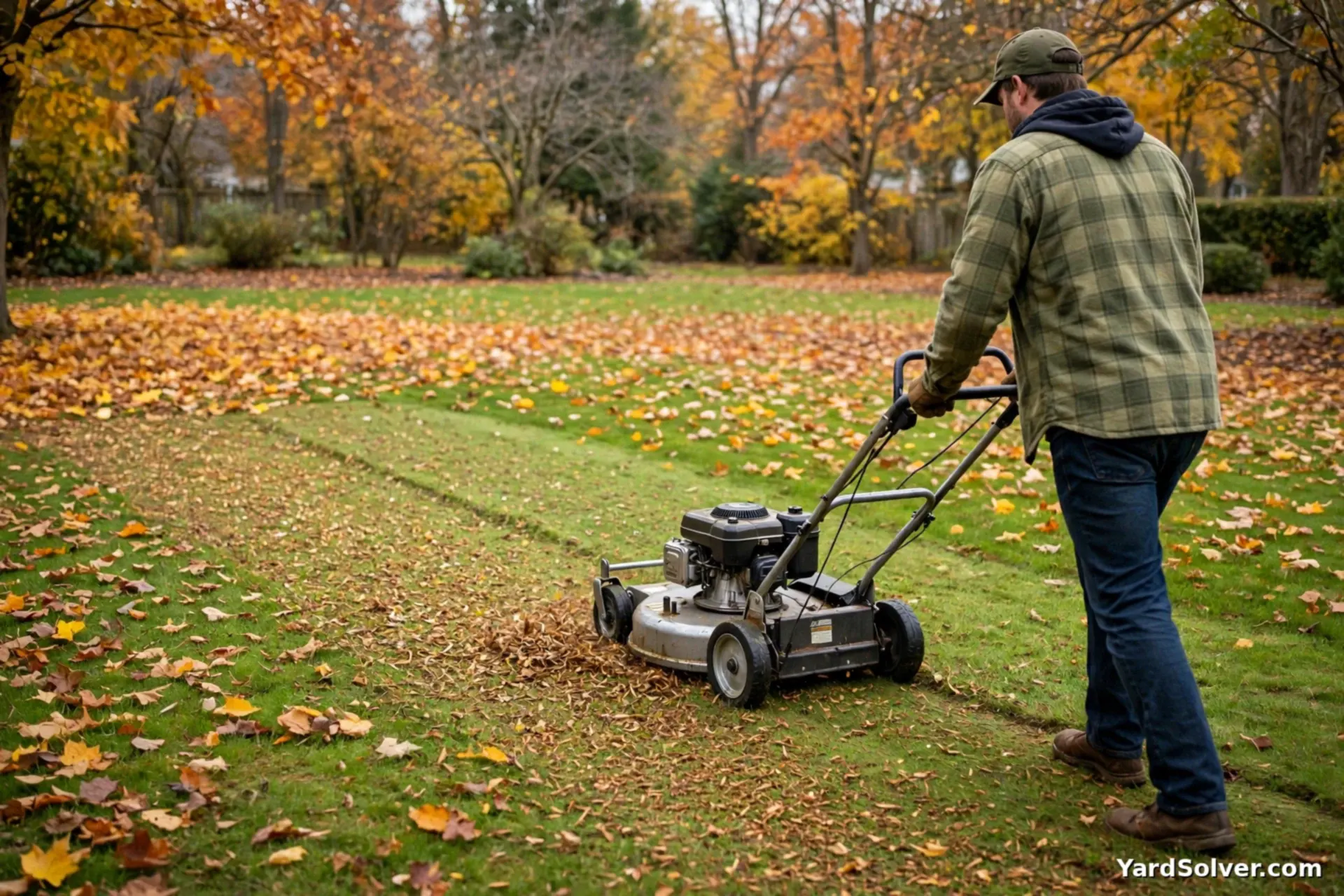
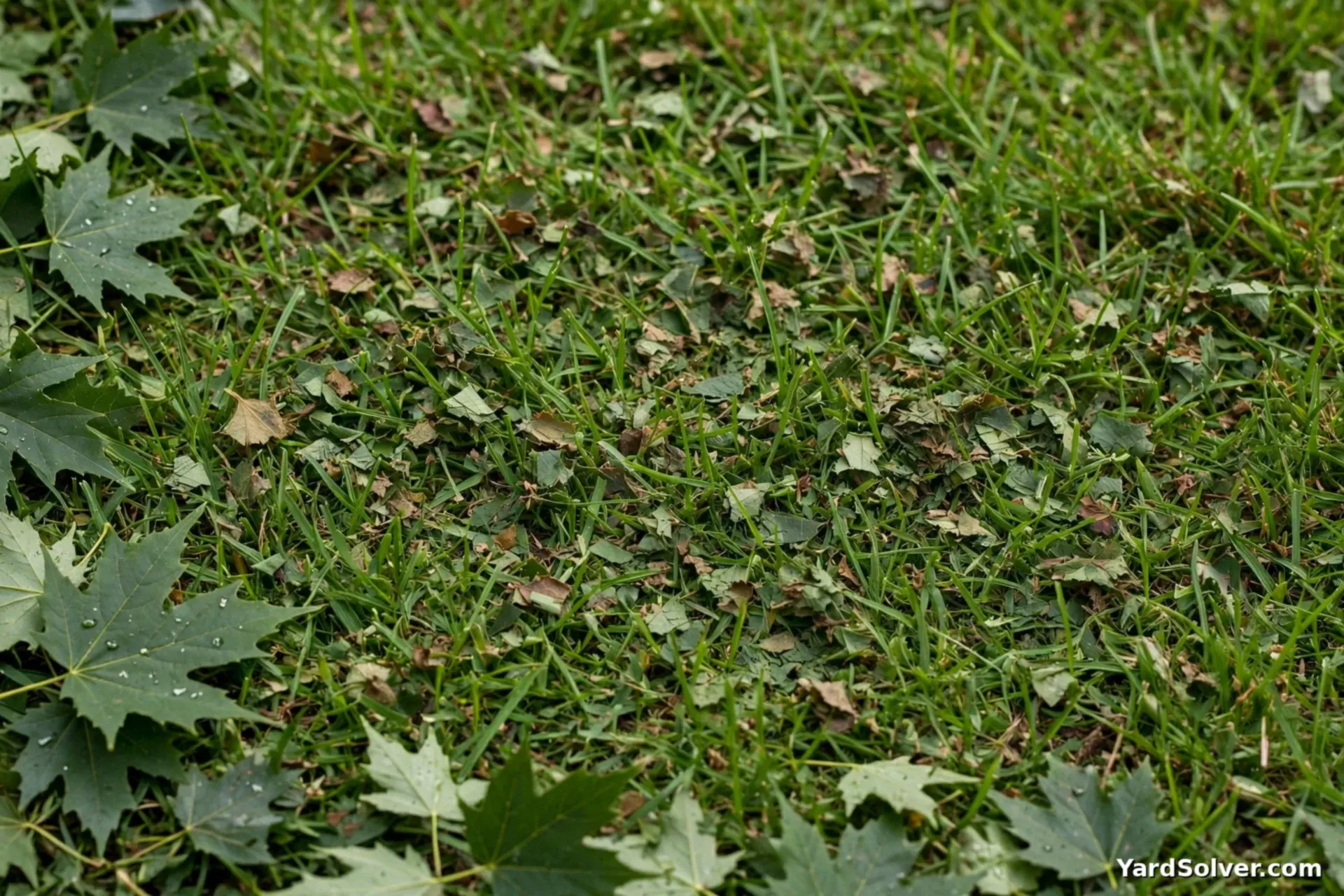
Set the mower a notch higher than usual and mow the leaves the same as you would mow grass, ideally with a mulching blade and the bag off. The test of a good pass is the size of what is left: pieces about as big as a dime, with grass clearly showing between them. Pieces that small fall down to the soil, rot over winter, and feed the lawn and the worms at the same time. If the pieces come out big and blanket-like, go over the same ground a second time, slower. Through the heavy weeks of leaf fall, one pass a week keeps you ahead of the drop — ten minutes now instead of one giant raking day later.
Step 3 — Turn the surplus into leaf mold
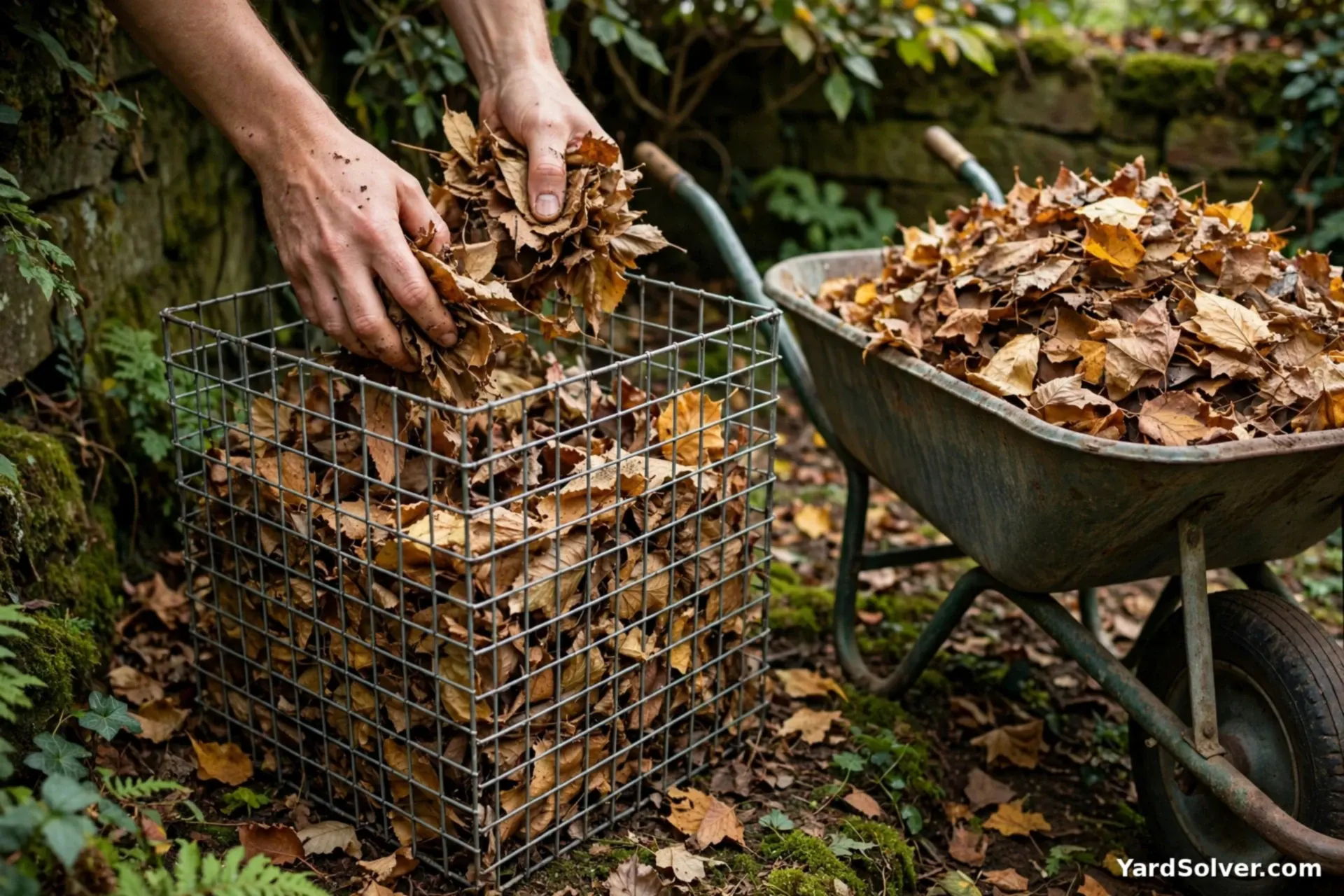
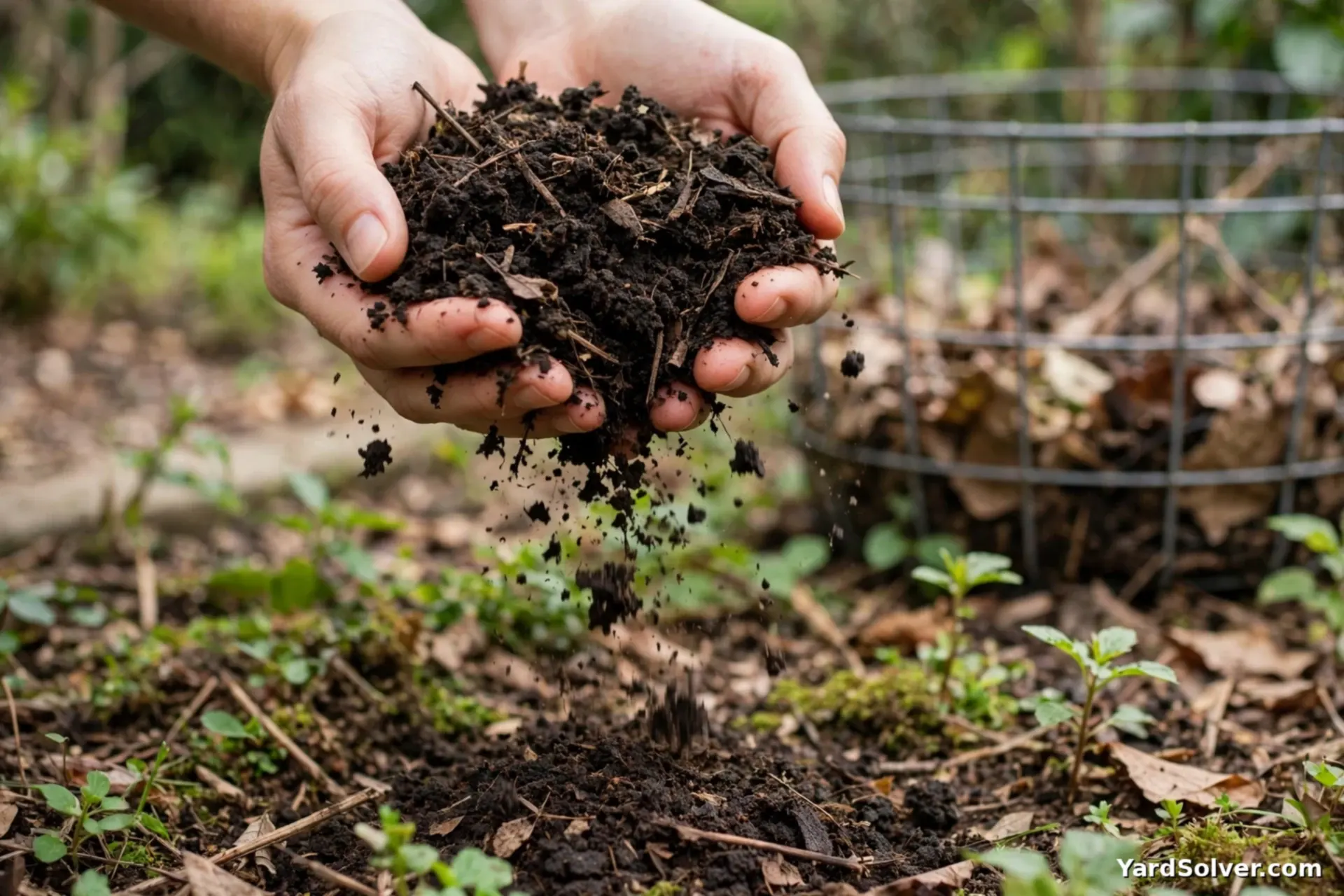
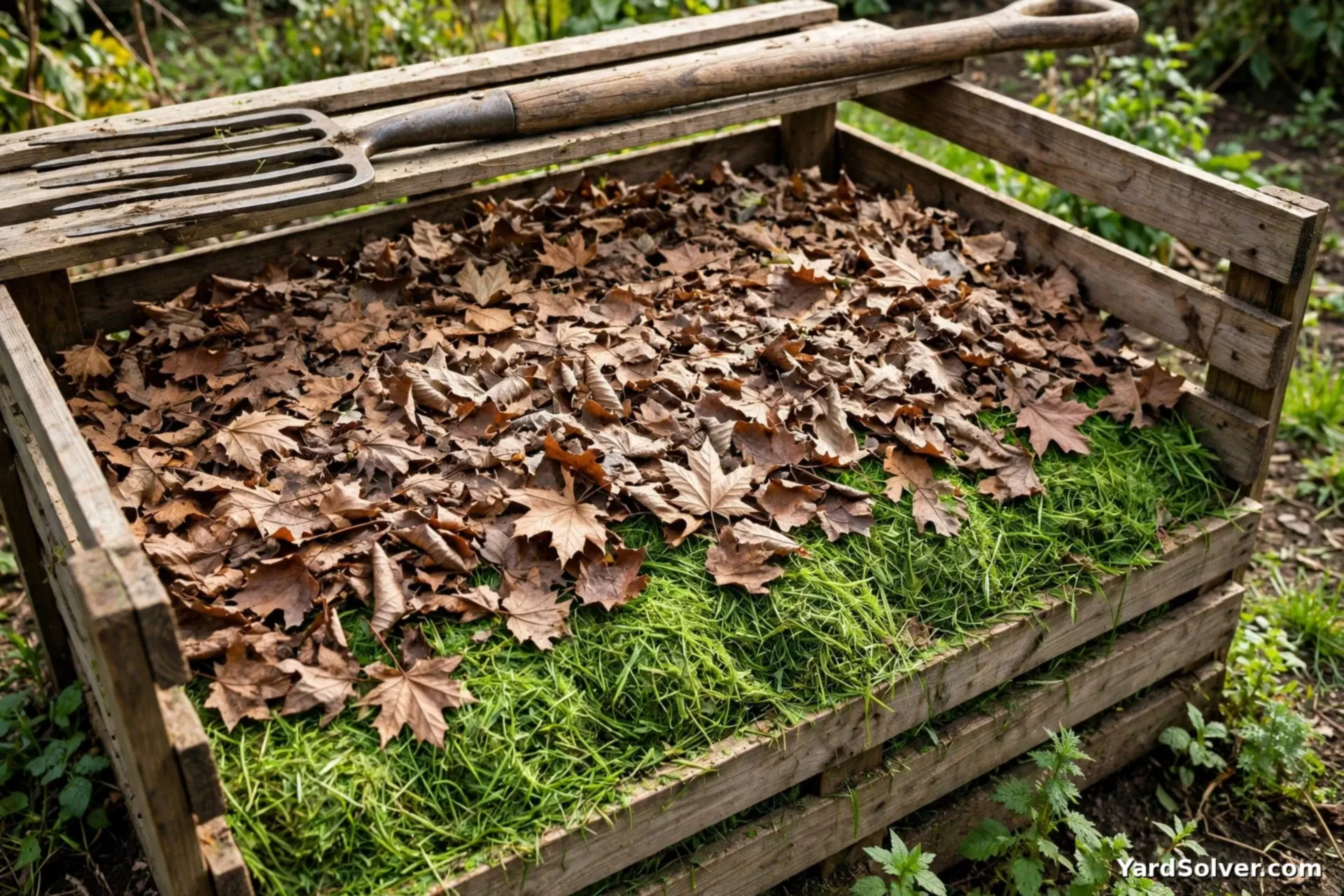
Leaf mold is what forest floors are made of, and it asks for almost nothing: a simple wire-mesh bin or a circle of fencing in a shady corner, filled with leaves and kept damp. Shredding first — run the mower over a pile on the lawn — roughly halves the wait. Dampen the bin as you fill it, aiming for the feel of a wrung-out sponge, and then leave it alone. In 6 to 12 months (up to two years for whole, dry oak leaves) the contents turn dark, soft and crumbly, with an earthy smell. That finished leaf mold is gold on beds: it holds water like a sponge, opens heavy soil, and feeds soil life without feeding weeds the way rich compost can. Dig it in, or lay it on top and let the worms do the digging.
Step 4 — Shred the rest for bed mulch
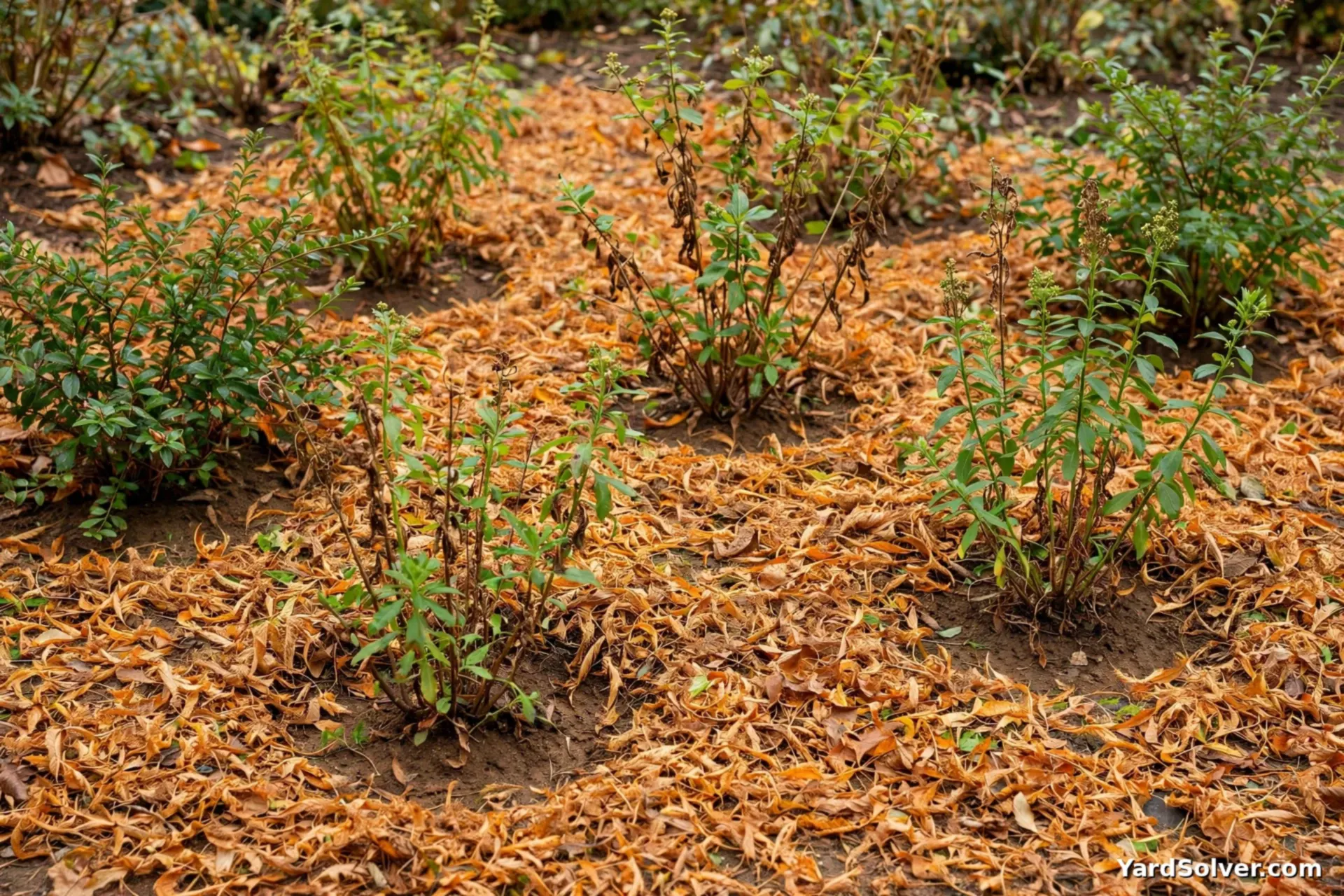
Whatever is left over makes fine mulch for flower and vegetable beds — with one rule: shred it first. Whole leaves, maple worst of all, knit into a flat mat that sheds rain and suffocates the soil under it. The same leaves run through a mower fall apart into flakes that let water straight through. Spread them 2–3 inches deep over beds once the ground has cooled, keeping a small gap around stems and trunks. The depth rules and the maths for topping up are in How Deep Should Mulch Be, and the Mulch Calculator works out how far your leaf stock will go compared with bought mulch — on a leafy lot, the answer is usually the whole garden, free.
Step 5 — Compost the remainder at the right mix
Leaves are the classic "brown" of composting — mostly carbon. On their own in a pile they rot slowly, which is exactly what leaf mold is. Mixed with "greens" like grass clippings and kitchen scraps, they rot fast and hot. The working mix is about 3 parts leaves to 1 part greens, by volume — a barrow of leaves to a bucket of scraps, roughly. Shredded leaves compost far better than whole ones, which clump into wet layers. The Compost Calculator balances the greens and browns for whatever bin size you run, and if you are new to the pile itself, How to Start Composting for Beginners walks the first build. Keep a dry bag or two of shredded leaves beside the pile all winter: every bucket of kitchen scraps you add needs its covering handful of browns, and leaves are the best of them.
Keep going
Not sure how deep any mulch should go? How Deep Should Mulch Be settles it once, for leaves and everything else.
Building the pile these leaves will join? How to Start Composting for Beginners starts from an empty corner.
Questions people ask
Can I just leave fallen leaves on the lawn all winter?
A thin layer, yes — especially if you mulch-mow it into small pieces first. A thick mat of whole leaves, no: it blocks light and air, holds wet against the grass, and you will find dead, matted patches under it in spring. If you cannot see grass through the leaves, they are too deep to leave as they lie.
Are oak leaves too acidic for the garden?
No. Fresh oak leaves are mildly acidic, but as they break down the result ends up close to neutral, and leaf mold made from oak is fine on any bed, including the vegetable garden. It is one of the oldest bits of garden folklore still doing the rounds.
How long does leaf mold take to make?
Shredded leaves in a damp bin are usually ready in 6 to 12 months. Whole, dry leaves can take up to two years. Keeping the pile as damp as a wrung-out sponge and shredding before binning are the two things that speed it up most.
Fallen leaves are a harvest, not a waste stream — leaf mould is the gardener's free soil
A deciduous tree drops, each autumn, roughly the value of the fertiliser its owner buys in spring — and the traditional response of bagging that harvest for removal is the garden economy's strangest habit. Leaves left where they fall under trees and shrubs mulch and feed exactly the soil that grew them; leaves gathered and rotted down for a year become leaf mould, the crumbly, low-nutrient soil conditioner that no shop sells as cheaply as a wire bin and a winter provide, and the finest seed-compost ingredient the home gardener can make.
The working rules are few: shred leaves with a mower where speed matters (whole leaves mat and rot slowly, shredded leaves vanish into soil life), keep them off lawns in thick layers that smother grass but on beds in exactly those layers, and give the tough, slow leaves — oak, beech, conifer — their own longer pile rather than judging the system by them. Diseased leaves are the honest exception, removed rather than composted cool. Wildlife votes for generosity: leaf piles are winter quarters for the beetles, frogs and hedgehogs that patrol next summer's garden, which is one more reason the tidiest autumn garden is rarely the most alive spring one.
Sources
Key facts on this page cross-checked against Leaf litter — Wikipedia — background on leaf litter and its role in soil and Compost — Wikipedia — background on composting leaves and leaf mould.
Related page
Read next: Mulch Types Compared: Which Mulch for Which Job.
Comments & ratings
No comments yet.
Be the first to share your experience.