
Guides · Soil and beds · Published November 10, 2026 · By Faizan Ahmad
Wood Ash in the Garden: Who Loves It, Who Hates It
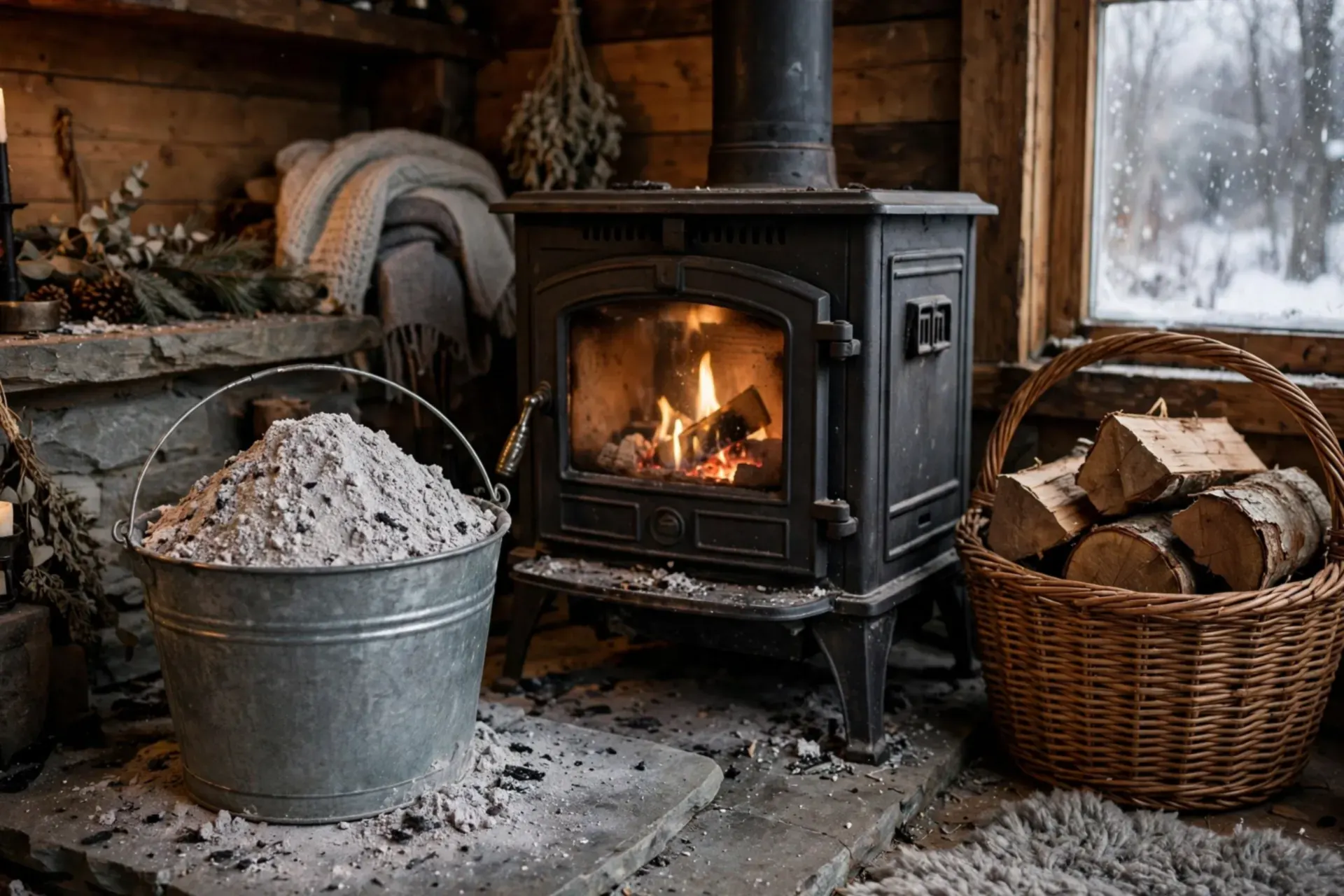
Every wood stove and fireplace makes the same quiet bargain all winter: a bucket of grey dust that most people throw away. That dust is real garden goods — the minerals the tree pulled out of the soil, left behind when the wood burned. But ash is not a gentle all-purpose feed. It raises soil pH like lime does, and it carries no nitrogen at all. Used on the right beds it is one of the best free things a garden gets. Used on the wrong ones, it causes the kind of damage that takes seasons to undo. Here is how to tell the difference.
What is actually in the bucket
| What | How much | What it does |
|---|---|---|
| Potassium (potash) | About 5–7% | Flowers, fruit, strong stems and roots — the main reason to use ash |
| Calcium carbonate (lime value) | About 25–45% | Raises soil pH — roughly half the liming power of garden lime, pound for pound |
| Phosphorus | About 1–2% | A small bonus for roots and seedlings |
| Nitrogen | None | It all went up the chimney. Ash is never a complete feed |
Hardwood ash (oak, maple, fruit wood) is richer than softwood ash. The handy rule from university extension work: about two pounds of ash does the pH work of one pound of lime.
Step 1 — Only clean ash counts
The rule is plain wood, nothing else. Ash from treated, painted or stained wood, plywood, coal, briquettes and fire logs with additives stays out of the garden — it can carry things you do not want in food soil. Let ash cool fully before it goes anywhere; it can hide a live ember for days. Store it dry in a metal can with a tight lid, because wet ash loses its potash to the rain and turns into a heavy grey sludge that is hard to spread evenly.
Step 2 — Test first, then work out the rate
Ash is a fix for acidic soil, full stop. If your soil already sits at pH 7 or above, skip it — more alkalinity only locks up nutrients. If you do not know your pH, find out before the bucket comes out: How to Test Your Garden Soil takes an afternoon. For soil that tests below pH 6.5, a safe general rate is about 15–20 lb of ash per 1,000 sq ft, once a year — roughly one full 5-gallon bucket. Want it tied to a real target pH instead? Run the Lime Calculator for your bed, then double the lime amount to get the ash amount. And if your soil needs to go the other way entirely, that opposite job — with sulfur, not ash — is How to Lower Soil pH.
Step 3 — Spread it thin, on a still day
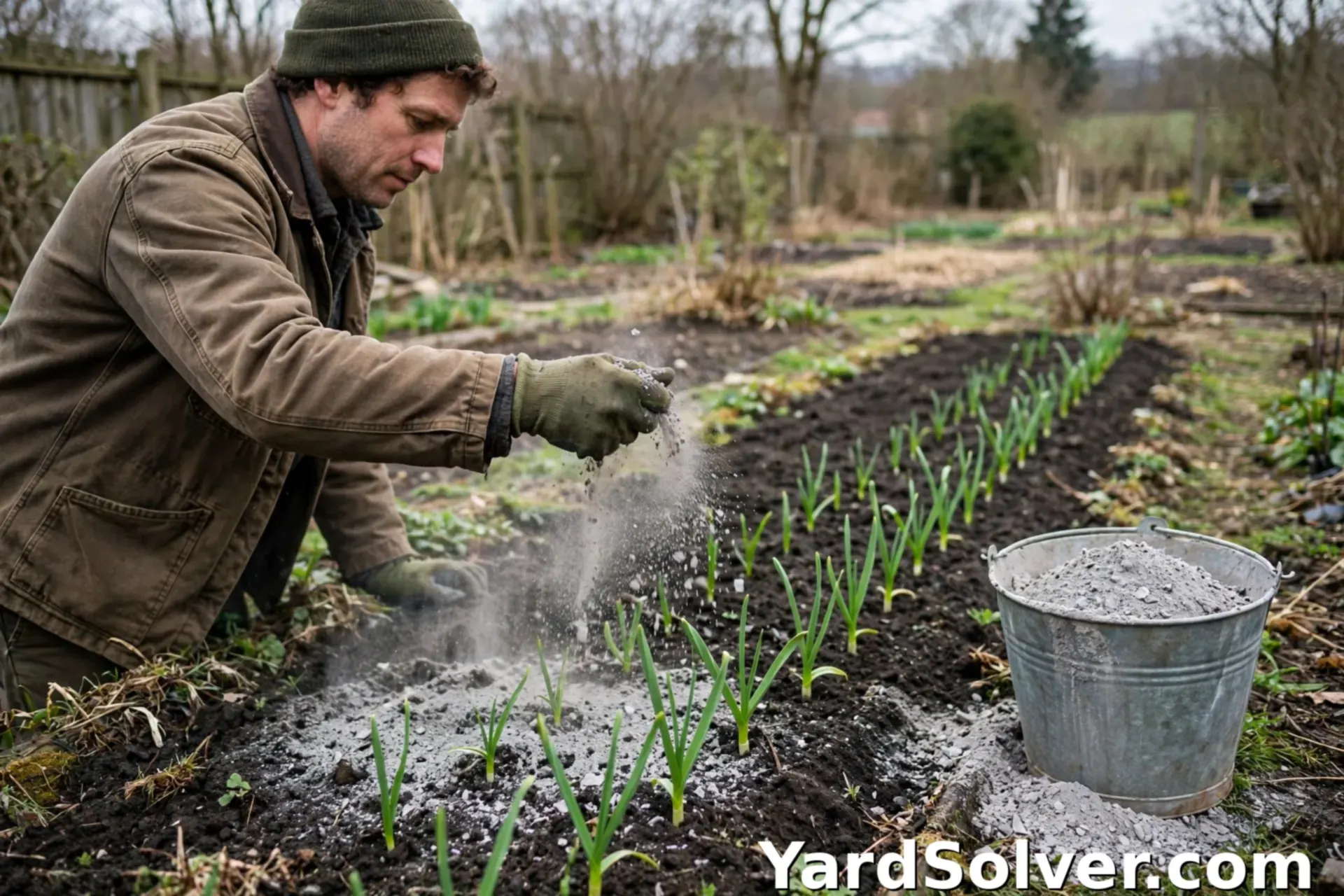
Wear gloves and pick a calm day — dry ash blows everywhere and it is not nice to breathe. Scatter it like icing sugar, not gravel: thin and even. Rake it into the top inch of soil and let rain or a watering wash it in. Two timing rules matter. First, keep ash off seedlings and young leaves; it is salty and strong while it is fresh. Second, never spread ash on the same day as a nitrogen fertilizer or fresh manure — the mix makes the nitrogen escape into the air as ammonia, and you lose the feed you paid for. Give them a few weeks apart.
Step 4 — Know the two lists by heart
Who loves it: garlic and onions, brassicas (cabbage, kale, sprouts), peas and beans, lettuce and greens, asparagus, most fruit trees and soft fruit, roses, lilac, and lawns that test acidic. These are plants that like their soil near neutral and enjoy the potash. Who hates it: anything that needs acid soil — blueberry above all, plus azalea, rhododendron, camellia and heather. The Blueberry page exists because that plant wants pH down near 5; one bucket of ash beside it can yellow it for seasons. Potatoes are the special case: the higher pH ash brings is exactly what potato scab likes, so keep ash off the potato bed even if the soil is acidic. One fun side effect: ash on hydrangea soil pushes the flowers pink — the care of that shrub is in When to Prune Hydrangeas. Small amounts, once a year, on the right list — that is the whole habit, and it is worth a line in the Garden Planner each winter so the bucket never lands on the wrong bed.
Keep going
Ash handles the "too acid" side. For soil that needs the opposite trip, How to Lower Soil pH is the matching guide.
Not sure where your soil stands? Start with How to Test Your Garden Soil — every rate on this page depends on that number.
Questions people ask
Can I put ash straight from the stove onto the garden?
Only once it is stone cold — ash can hold a live ember for days. Cool it, store it dry in a metal can with a lid, and spread it on a calm day so it lands on the soil instead of blowing over the yard. Never use ash from treated or painted wood, coal, or charcoal briquettes with additives.
My soil is already neutral. Should I still use wood ash?
No. On soil that is already at pH 7 or above, ash pushes it further the wrong way and starts locking up iron and other nutrients your plants need. Wood ash is a fix for acidic soil. If your pH is fine, give the ash a miss this year — or use a tiny dusting only where you want the potash, like around fruit trees.
Is ash from a pellet stove or fireplace inserts okay?
Yes, if the pellets or fuel are plain wood with nothing added. Plain wood pellets burn down to a fine, clean ash that works the same as log ash. Skip ash from briquettes, fire logs with additives, and anything that had paper with glossy ink or cardboard burned in it regularly.
Wood ash is a real fertiliser with a real pH punch — treat it like lime that also carries potash
Wood ash typically carries a useful dose of potassium (potash), calcium and trace minerals, and its liming effect is strong — roughly half the neutralising power of garden lime, weight for weight — which makes it genuinely valuable on acid soils and genuinely harmful where the soil is already neutral or alkaline. That dual nature is why the first rule is a soil test, not a handful: on acid ground, a thin scattering worked in before spring planting feeds and sweetens at once; on soil already at pH 7, the same scattering pushes pH up, locks out iron and manganese, and shows up as yellowing leaves gardeners then misdiagnose as hunger.
Keep ash away from acid-loving plants — blueberries, rhododendrons, azaleas and potatoes (where higher pH invites scab) — and never mix or store it with nitrogen fertiliser, because the alkalinity drives the nitrogen off as ammonia. Only ash from clean, untreated wood belongs on food beds; ash from painted, treated or composite wood has no place in the garden at all. Stored dry in a lidded metal bin it keeps its strength for years, and a little spread often beats a heavy dose once — the soil can only take up what the season's roots ask for.
Sources
Key facts on this page cross-checked against Wood ash — Wikipedia — background on wood ash composition and garden use and Potash — Wikipedia — background on potash and potassium in plant nutrition.
Related page
Read next: Fertilizer Numbers Explained: What NPK Means.
Comments & ratings
No comments yet.
Be the first to share your experience.