
Plant Library · Flowers · By Faizan Ahmad
🌼 How to Grow Marigold
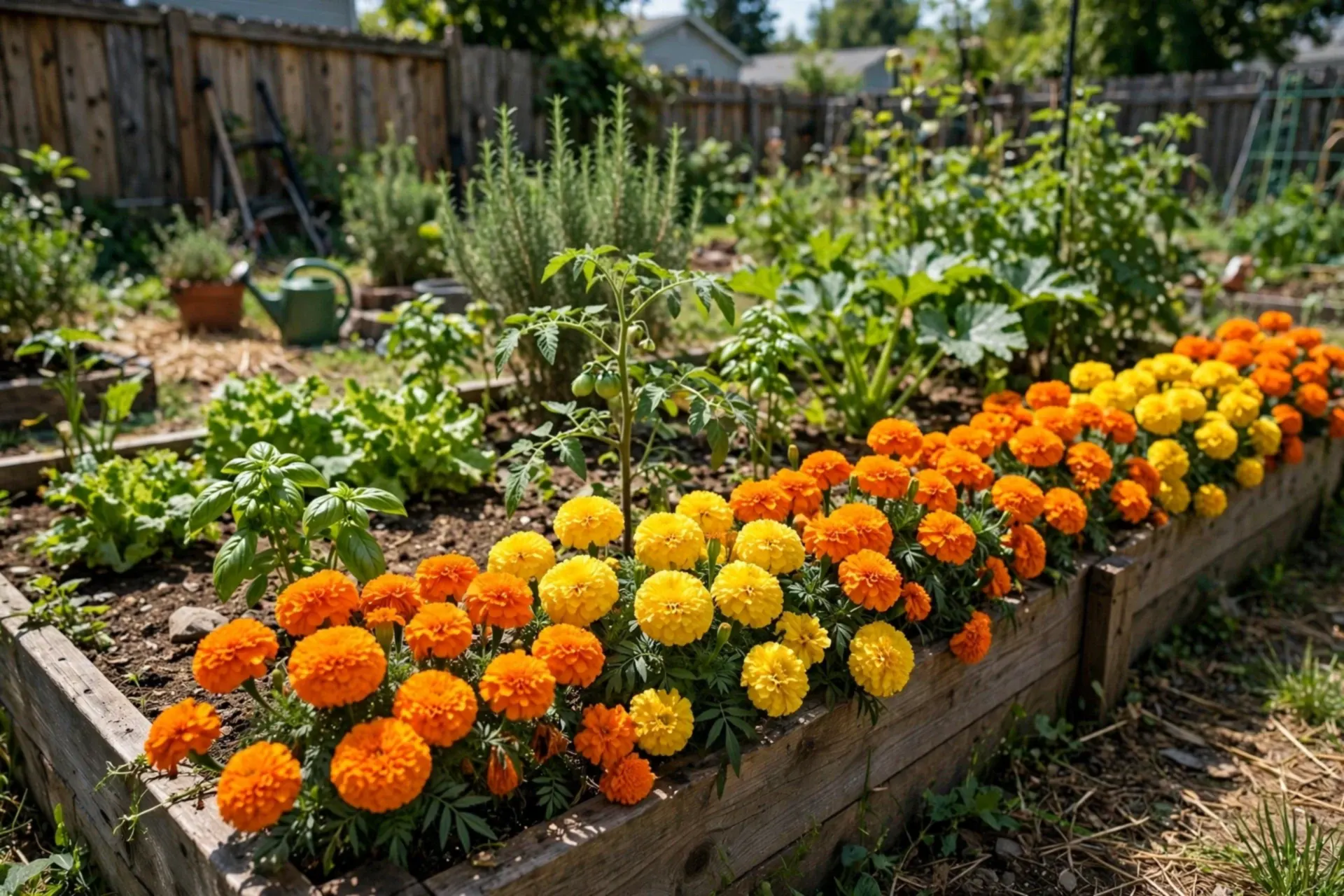
A classic companion flower — gardeners plant it beside vegetables; deadhead to keep blooms coming. Marigolds are warm-season annuals: start indoors about 6 weeks before your last frost or sow outside around it, and they will flower from about 50 to 60 days until frost — deadhead spent blooms to keep new ones coming.
Grow Marigold with us — step by step
Everything for this plant is written step by step below — what to do, and exactly when. Read it through first if you like: you can grow it entirely on your own with that guide. Or start with us here — tell us your planting day and we lay out your personal schedule on this page, every next step on its own day, counted from your planting date. No guessing, no forgetting.
Step 1 — today: Plant out your young Marigold plants today (hardened off first), spaced 8–12 in apart, and water them in deeply. Starting from seed instead? Sow indoors now, 1/4 in deep, and this same schedule counts from transplant day.
Marigold at a glance
Sow indoors: 6 weeks before last frost
Move outside: 1 week after last frost
Sow outdoors: 1 week after last frost
Spacing: 8–12 in · Seed depth: 1/4 in
Sun: Full sun
Water: Regular; avoid wetting the flowers
Harvest: Flowers from about 50–60 days until frost
Timing counts from your average last spring frost — get your own dates in the Planting Calendar. Guidance follows standard extension-service practice for Canada and the US.
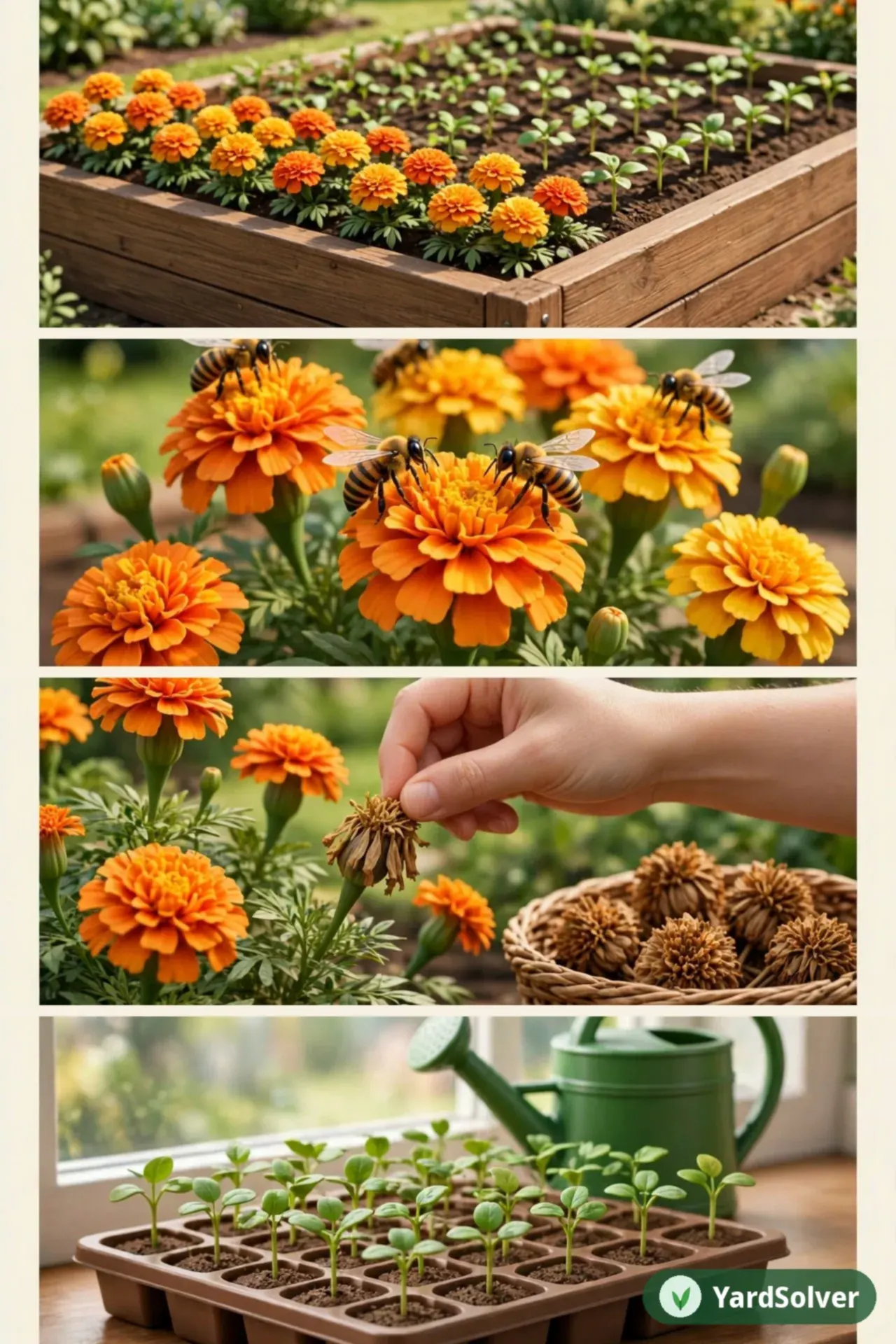
How to plant and grow marigold, step by step
Step 1 — Time it right
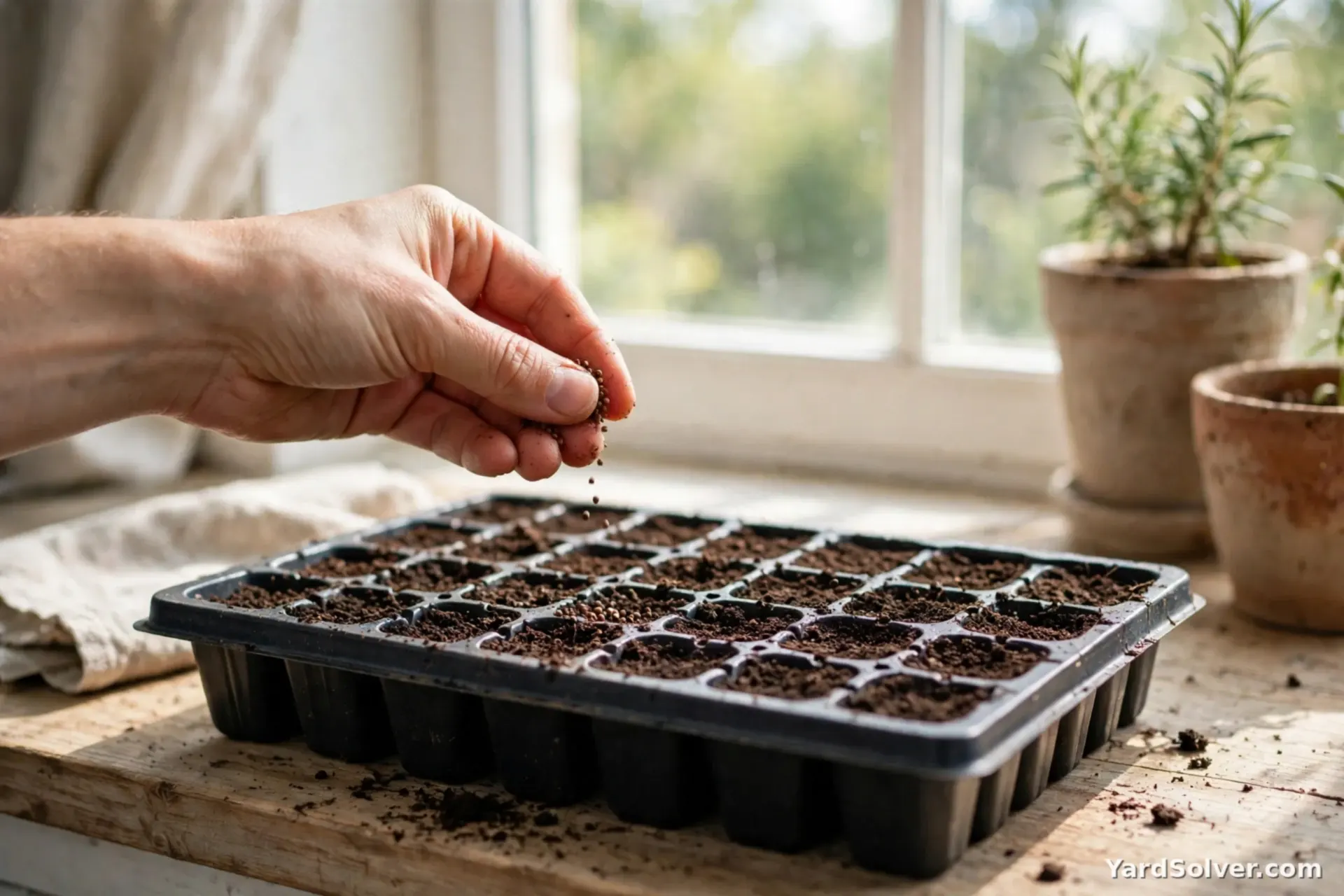
Sow indoors: 6 weeks before last frost; Move outside: 1 week after last frost; Sow outdoors: 1 week after last frost. All dates count from your average last spring frost — the Planting Calendar turns them into real dates for your garden. Marigolds are warm-season annuals: start indoors about 6 weeks before your last frost or sow outside around it, and they will flower from about 50 to 60 days until frost — deadhead spent blooms to keep new ones coming.
Step 2 — Prepare the spot
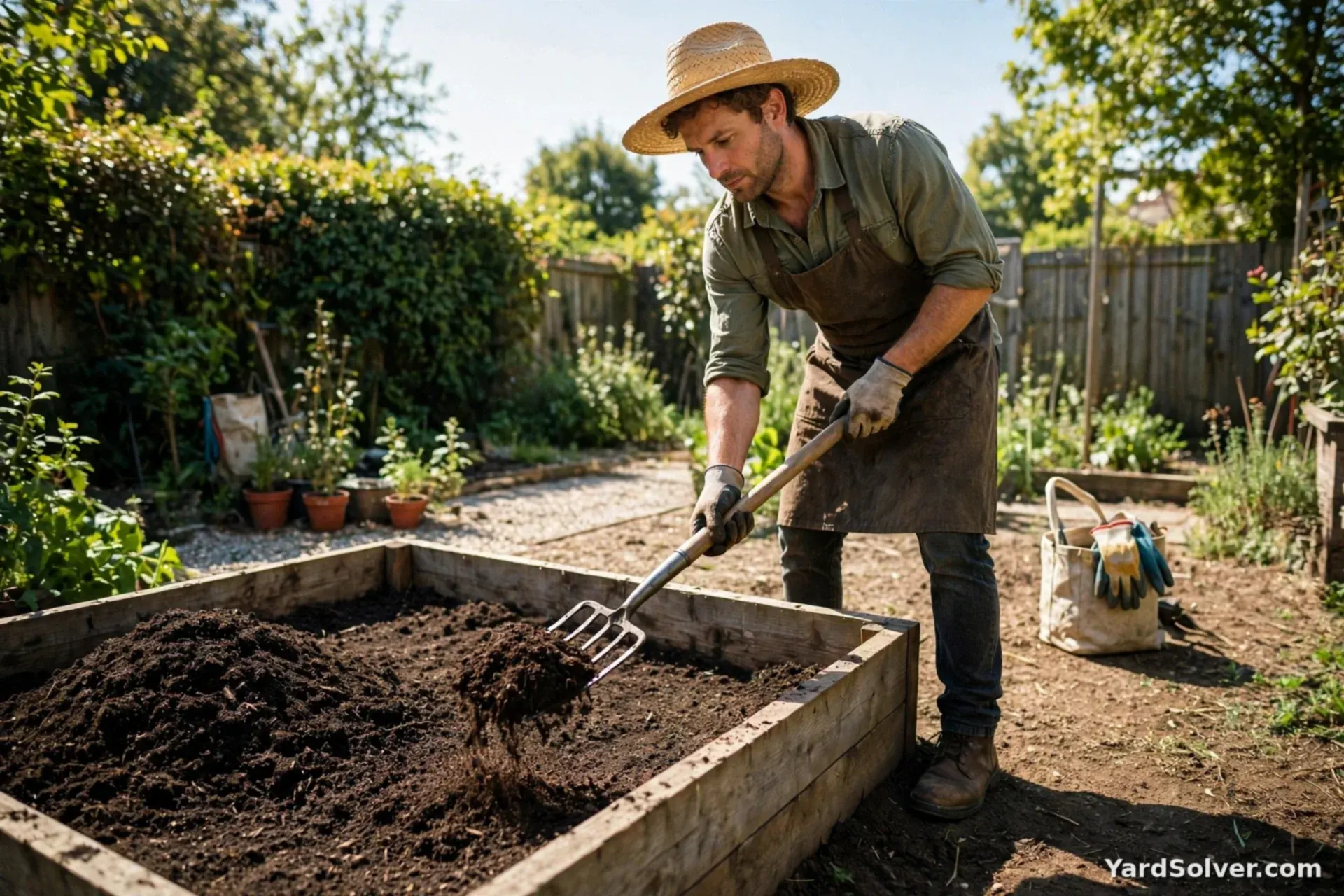
Sun: Full sun. Average garden soil, well drained. Most flowers resent being overfed; compost at planting time is enough. Work out how much you need with the Garden Mix Calculator or the Raised Bed Soil Calculator.
Step 3 — Sow and plant out

Start indoors 6 weeks before last frost at 1/4 in deep, or sow outdoors 1 week after last frost; plants finish spaced 8–12 in apart. Harden off indoor-started plants before they move out for good.
Step 4 — Water and feed
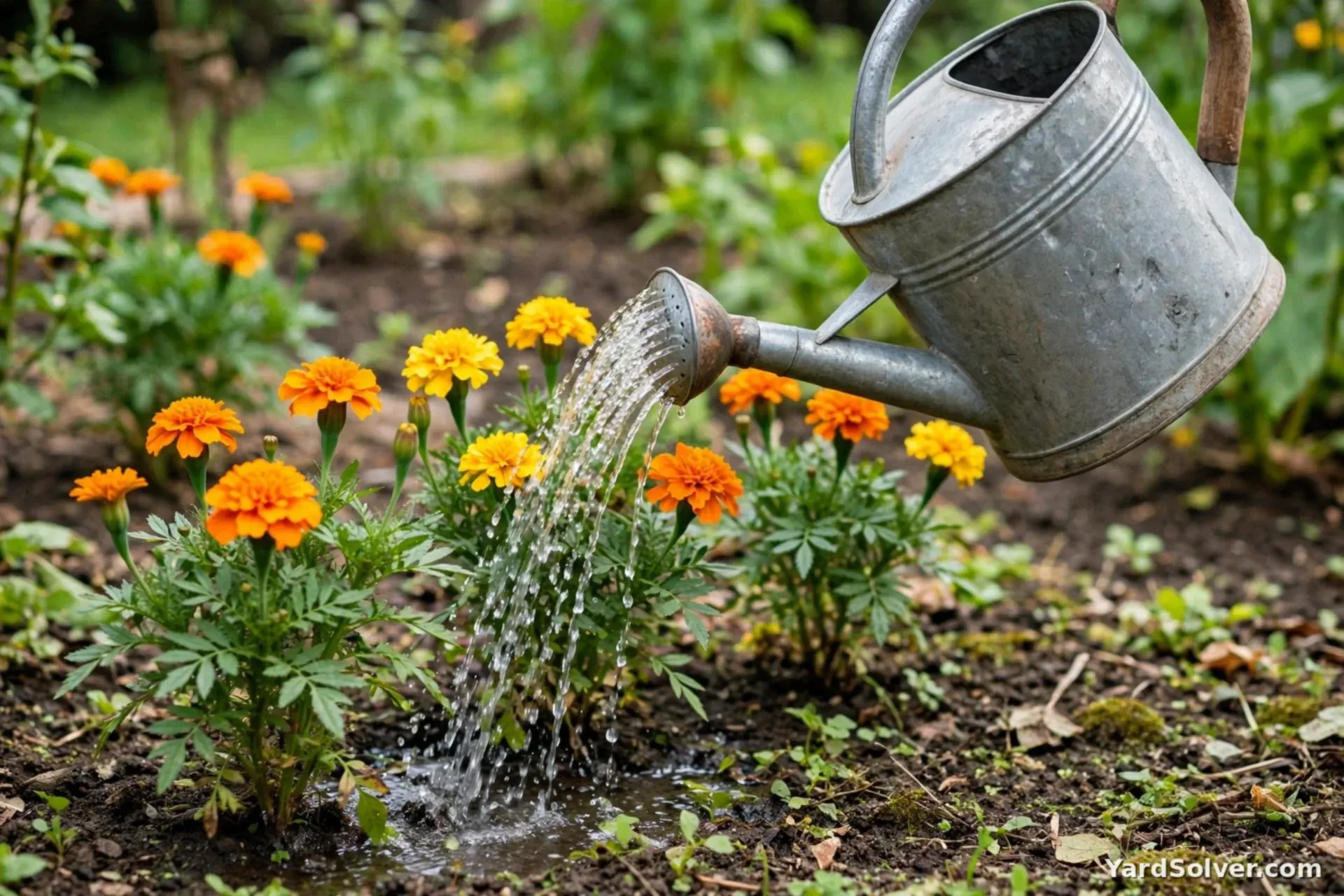
Water: Regular; avoid wetting the flowers. The Fertilizer Calculator turns a bed size into the right amount.
Step 5 — Care and the problems to watch for
- Slugs on young plants — protect seedlings.
- Spider mites in hot dry spells — mist plants.
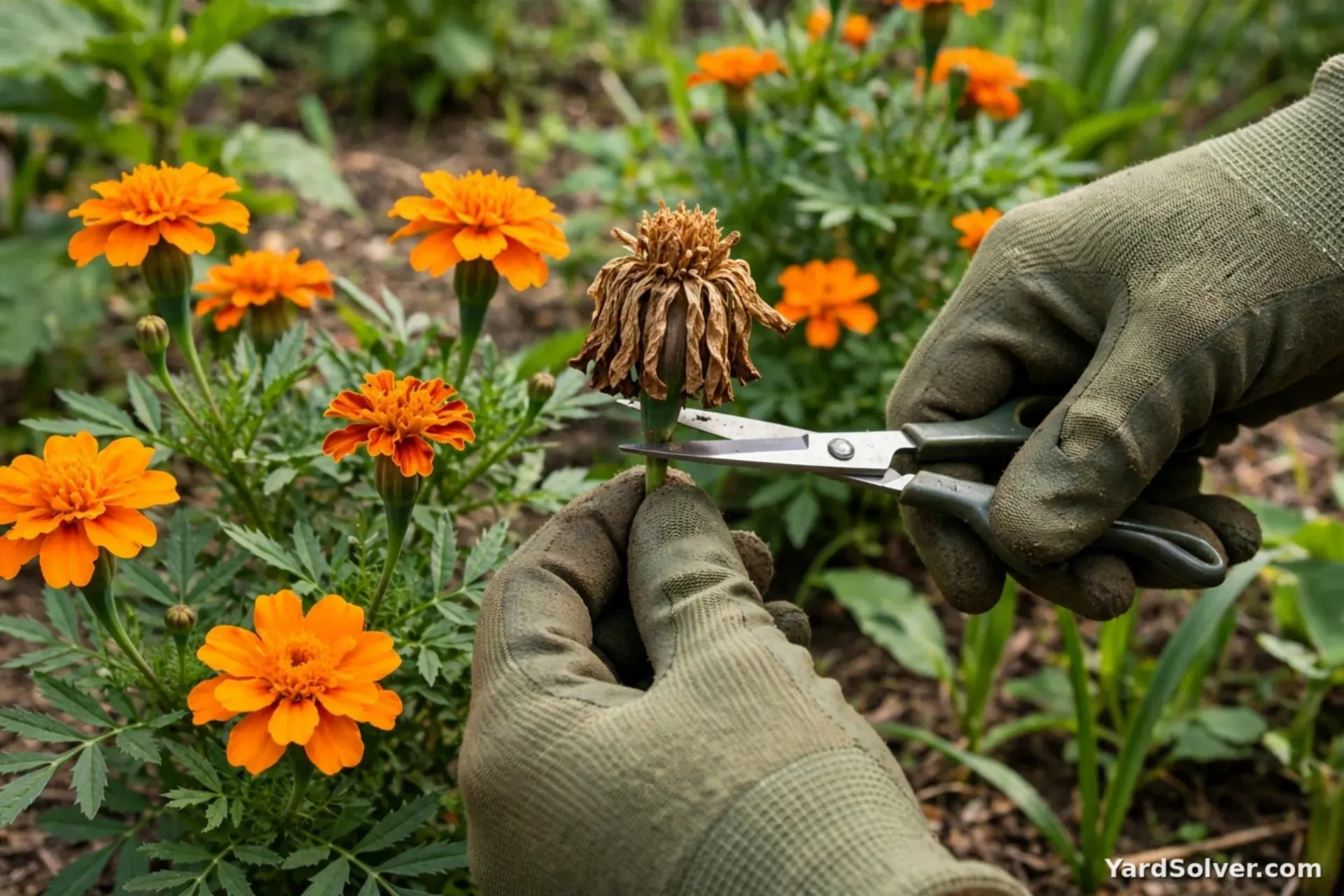
- Deadheading skipped — plants stop flowering; snip spent blooms weekly.
Take care: Some people find marigold sap irritates their skin while deadheading — wear gloves if your skin is sensitive. Only signet marigold petals are used as a garnish, and only from plants you grew yourself without sprays.
Step 6 — Harvest
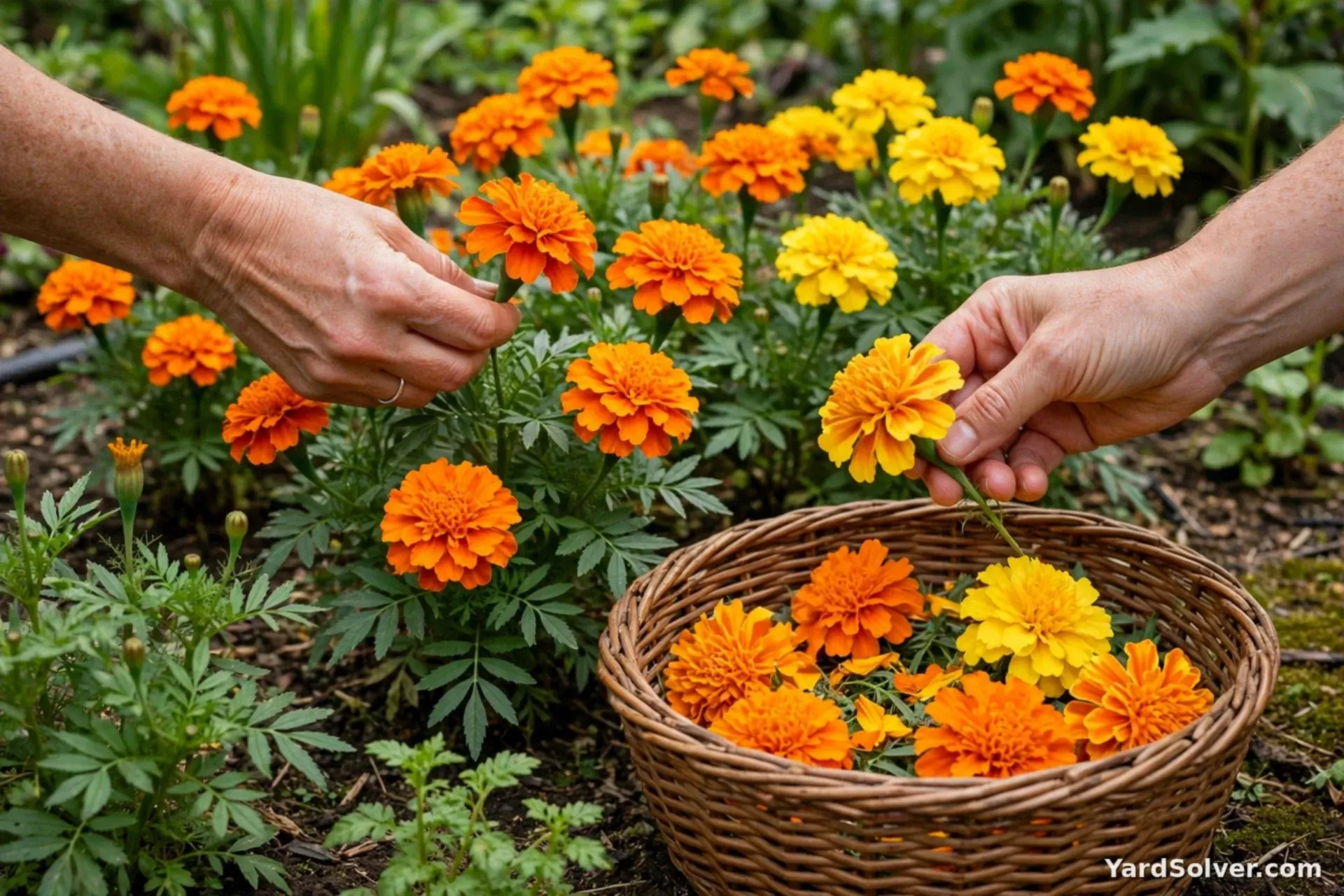
Ready in: Flowers from about 50–60 days until frost.
📅 Your personal Marigold schedule
Counted from your planting day — not a generic calendar. Day 0 is the day the seed went in the ground or the young plant went out.
Varieties worth growing
| Variety | Colour | Why gardeners like it |
|---|---|---|
| Bonanza | Orange and gold | A compact French marigold for edges and pots, covered in double blooms |
| Crackerjack | Orange and yellow | A tall African marigold with huge pompon flowers, good for cutting |
| Lemon Gem | Pale yellow | A signet marigold with masses of tiny blooms and edible, citrusy petals |
| Strawberry Blonde | Pink-orange | A French type whose flowers open pink and deepen in colour as they age |
Good for you — and take care
Benefits
- Bright blooms feed bees and other pollinators for months
- A classic companion flower — gardeners plant it all through the vegetable patch
- The roots of French marigolds are known to discourage some harmful soil nematodes, which helps nearby vegetables
- Flowers non-stop from early summer until frost with very little care
- The petals of signet marigolds are used as a colourful, edible garnish
Take care
- Some people find marigold sap irritates their skin while deadheading — wear gloves if your skin is sensitive
- Only signet marigold petals are used as a garnish, and only from plants you grew yourself without sprays
A little history — and one good fact
Marigolds come from Mexico and Central America, where they were grown for ceremonies long before they travelled to Europe and Asia in the 1500s. Despite their names, both the tall 'African' and the compact 'French' marigolds are really American plants. They became garden favourites everywhere because few flowers bloom so long with so little fuss.
Fun fact: In Mexico, marigolds are called flor de muertos — the flower of the dead — and their bright orange blooms cover graves and altars for the Day of the Dead.
Keep going
Guides: Companion Planting Basics · When to Start Seeds Indoors · Best Vegetables for a Small Garden
Calculators: Plant Spacing Calculator · Seed Calculator · Garden Mix Calculator
More flowers: Sunflower · Nasturtium
← Back to the Plant Library · Get your personal planting dates
Questions people ask
When do I plant marigold?
Count from your average last spring frost: sow indoors 6 weeks before last frost; move outside 1 week after last frost; sow outdoors 1 week after last frost. Marigolds are warm-season annuals: start indoors about 6 weeks before your last frost or sow outside around it, and they will flower from about 50 to 60 days until frost — deadhead spent blooms to keep new ones coming.
How far apart do I space marigold?
Space plants 8–12 in apart, with seed sown 1/4 in deep. Sun: full sun.
When is marigold ready to harvest?
Flowers from about 50–60 days until frost. A classic companion flower — gardeners plant it beside vegetables; deadhead to keep blooms coming.
Marigolds earn their keep below ground as well as above: the French types suppress nematodes while they flower
Marigolds (Tagetes species) are planted for non-stop summer colour, but the French marigold (Tagetes patula) does a second, invisible job: its roots release compounds that suppress root-knot nematodes, which is why vegetable gardeners have edged beds with them for generations. The effect builds while the plants grow all season — a few weeks of edging in autumn does far less than a full season in place.
Above ground the rules are simple and absolute: full sun, no rich feeding, and deadheading. Marigolds on a generous diet make leaves at the expense of flowers, and spent heads left on the plant divert energy into seed. They are also genuinely tender — the first real frost blackens them overnight — so they are sown or planted only once nights have settled.
The worked example: French marigolds grown all season through a vegetable bed, kept deadheaded, typically flower to the frost and leave measurably cleaner roots on the following crop. The same plants set out late for a few autumn weeks typically give colour only — the nematode work is a season-long shift, not a visit.
Sources
Key facts on this page — timing, spacing and care — cross-checked against NC State Extension Plant Toolbox — Tagetes — culture and care requirements and Marigold — Wikipedia — background on marigolds and their cultivation.
Related page
Read next: Companion Planting Basics: Good & Bad Neighbours.
Comments & ratings
No comments yet.
Be the first to share your experience.