
Guides · Houseplants · Published November 23, 2026 · By Faizan Ahmad
Are Poinsettias Poisonous to Cats and Dogs? What Vets Actually Say
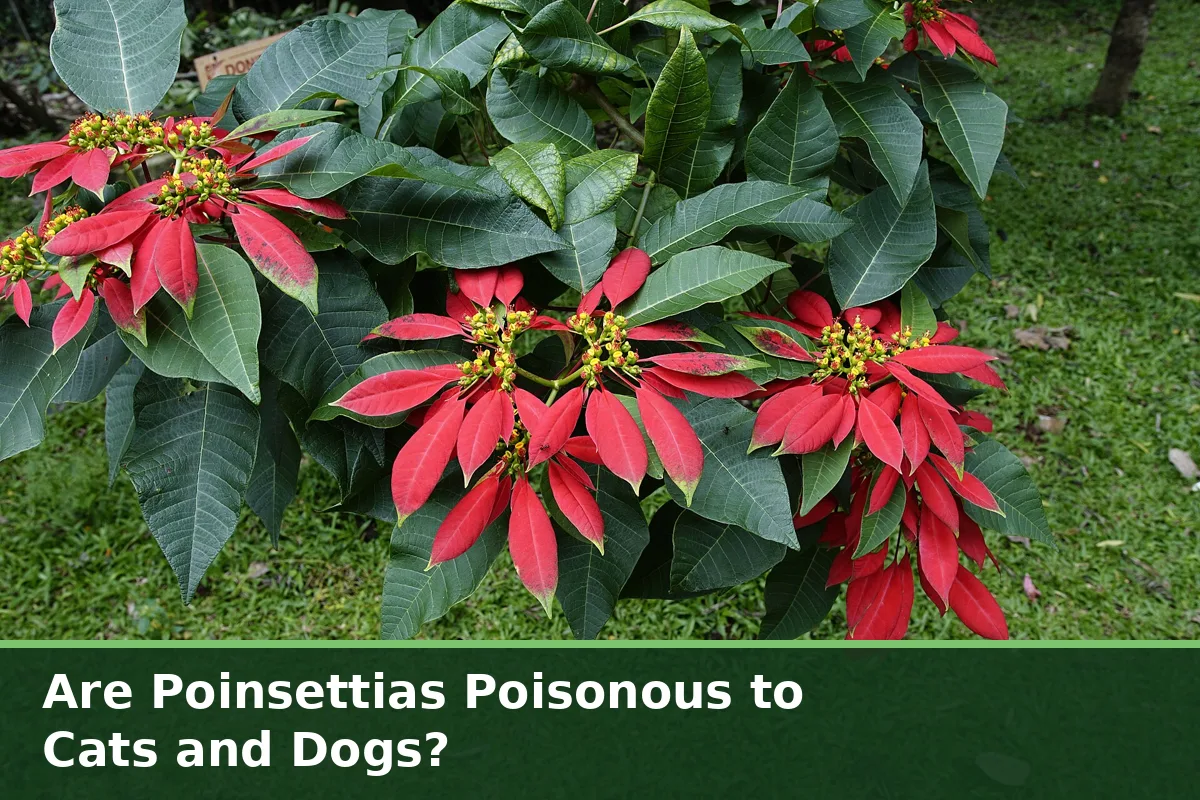
Poinsettias are only mildly toxic to cats and dogs: the ASPCA classifies the plant as “generally over-rated in toxicity.” The milky sap can irritate a pet's mouth and stomach — drooling, lip-licking and an occasional vomit are the typical signs — but serious poisoning is rare and most pets need no treatment at all.
The deadly reputation is a century-old myth. Here is where it came from, what the veterinary evidence actually says, and which holiday plants genuinely deserve the worry poinsettias get.
What actually happens if a pet eats poinsettia
The irritant is the milky white sap, which contains diterpenoid euphorbol esters. According to the Pet Poison Helpline, signs in cats and dogs are usually limited to drooling, licking the lips, and occasionally vomiting or diarrhoea from gastrointestinal irritation. The sap tastes unpleasant, which is its own protection: most animals take one bite and stop.
Serious outcomes are not expected. The Helpline notes that while a vet visit is sometimes suggested for comfort care, poinsettia exposure rarely requires medical treatment. Keep the plant out of reach anyway — a mildly upset stomach is still worth avoiding — but there is no need to banish poinsettias from a pet home.
Where the deadly myth came from
The story traces to 1919 in Hawaii, where the young child of an army officer was said to have died after eating a poinsettia leaf — a link that was never proven. The tale was repeated for decades until research caught up: an Ohio State University study feeding rats large amounts of poinsettia found no toxicity even at high doses.
Dose puts it in perspective: a 50-pound child would have to eat upward of 500 poinsettia leaves to reach a potentially toxic dose — and the bitter sap makes that a practical impossibility. The plant's fearsome name recognition is a triumph of repetition over evidence.
The holiday plants that really are dangerous
Two traditional holiday plants are rated genuinely more toxic than poinsettia: mistletoe and holly. Both can cause more serious gastrointestinal and other signs in pets, and both are common in wreaths and arrangements within pet reach — holly berries drop on the floor exactly where a dog finds them.
So the sensible holiday rule is not “no poinsettias” but “know your plants”: enjoy poinsettias on a table, keep mistletoe and holly arrangements up high or skip them, and check any new seasonal plant against the ASPCA toxic plants list before it comes home. If your poinsettia itself is ailing rather than ailing your pet, see our guide to why a poinsettia drops its leaves.
If your pet eats a poinsettia: the calm checklist
First, move the plant and offer fresh water; a small meal can help settle the stomach. Watch for drooling or a vomit or two over the next few hours — that is the usual extent of it. Call your veterinarian or a pet poison helpline if vomiting repeats, your pet seems lethargic, or a very small animal ate a large amount. Bring the plant's name with you: “poinsettia” gets a much calmer answer than “some red Christmas plant.”
Keep going
Keeping the plant itself thriving is the other half of the season: Poinsettia After Christmas has the month-by-month calendar to keep it alive and turn it red again next year, and if leaves are already falling, start with Why Is My Poinsettia Dropping Leaves?
Questions people ask
Can a poinsettia kill a cat?
Veterinary toxicology classifies poinsettia as mildly toxic: expect drooling, lip-licking or an upset stomach at most. Death is not an expected outcome, and most cats need no treatment after eating a leaf or two.
Are poinsettias poisonous to humans?
The same mild story applies: the sap can irritate skin and stomachs, but the deadly reputation is a myth dating to an unproven 1919 case. A child would need to eat hundreds of leaves to approach a toxic dose.
Is poinsettia sap dangerous on skin?
It can irritate sensitive skin, like many euphorbia saps. Wash it off with soap and water; gardeners with latex sensitivity should wear gloves when pruning poinsettias.
Which Christmas plants should pet owners actually avoid?
Mistletoe and holly are both more toxic than poinsettia and are the two to keep well out of reach or skip. When in doubt about any seasonal plant, check the ASPCA toxic and non-toxic plants list before buying.
The fact worth remembering
Poinsettias are “generally over-rated in toxicity” — the ASPCA's own words. The milky sap can irritate a pet's mouth and stomach, but serious poisoning is rare.
Sources
Key facts on this page cross-checked against Pet Poison Helpline — Poinsettia and The Old Farmer's Almanac — Are Poinsettias Poisonous to Cats?.
Researched and written by Faizan Ahmad for YardSolver. Photos: Wikimedia Commons contributors, CC-licensed.
Related page
Read next: Why Is My Poinsettia Dropping Leaves? 6 Causes and Fixes, Poinsettia After Christmas: Keep It Alive and Rebloom It and Houseplant Winter Care: The 5 Fixes That Work.
Comments & ratings
No comments yet.
Be the first to share your experience.