
Guides · Houseplants · Published November 20, 2026 · By Faizan Ahmad
Houseplant Winter Care: Why Your Plants Struggle (and the 5 Fixes That Work)
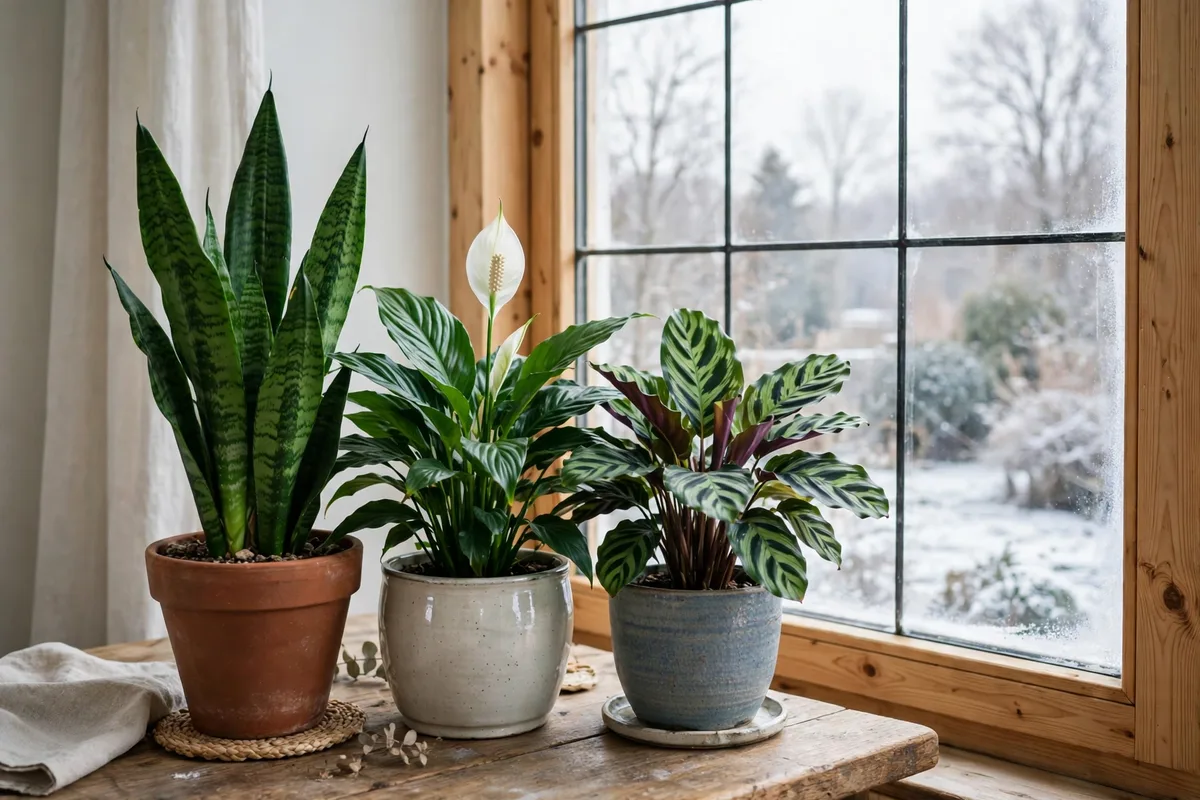
Houseplants struggle in winter for one combined reason: the room changes completely — light drops by half or more, growth slows to a stop, and heating dries the air — while the care routine stays on its summer settings. More winter houseplants are killed by watering than by cold: a plant that drank weekly in July may need water every three weeks in December, and the extra water sits in cold, dark soil and rots the roots. This guide is the winter reset — five fixes covering water, light, humidity, feeding and leaves — and it is the hub for our specialist pages: each fix links down to the deep guide for the plants that need more.
The short answer, on one card
Fix 1 — Water to the new pace: check the soil, not the calendar; most plants want the top half of the pot dry before water. Fix 2 — Chase light, not heat: move plants to your brightest spot, away from radiators. Fix 3 — Group for humidity: cluster plants and use pebble trays; heating air is desert air. Fix 4 — Stop feeding: no fertiliser until spring growth restarts. Fix 5 — Clean the leaves: dust blocks the little light there is; wipe leaves monthly.
Why winter is a different country for a houseplant
Three stresses arrive together, and every winter symptom is one of them wearing a disguise. Light collapses. At northern latitudes a December day offers a third of July's hours at a fraction of the intensity, and a plant two metres from the window lives in near-darkness by houseplant standards. Growth slows or stops — which is normal and survivable. Water use collapses with it. A plant that is not growing is not drinking, but the soil keeps receiving the summer schedule, so it stays wet, cold and airless. Root rot, fungus gnats and the slow yellow decline all start here. The air dries out. Central heating drags indoor humidity down to 10–20% — drier than most deserts — while most houseplants evolved for 40–60%. Crispy leaf edges, brown tips and spider mites are humidity symptoms, not watering symptoms, and watering more makes the first stress worse while doing nothing for the third. Hold those three apart and winter care becomes simple: each fix below treats exactly one stress.
Fix 1 — Water to the plant's new pace, not the calendar
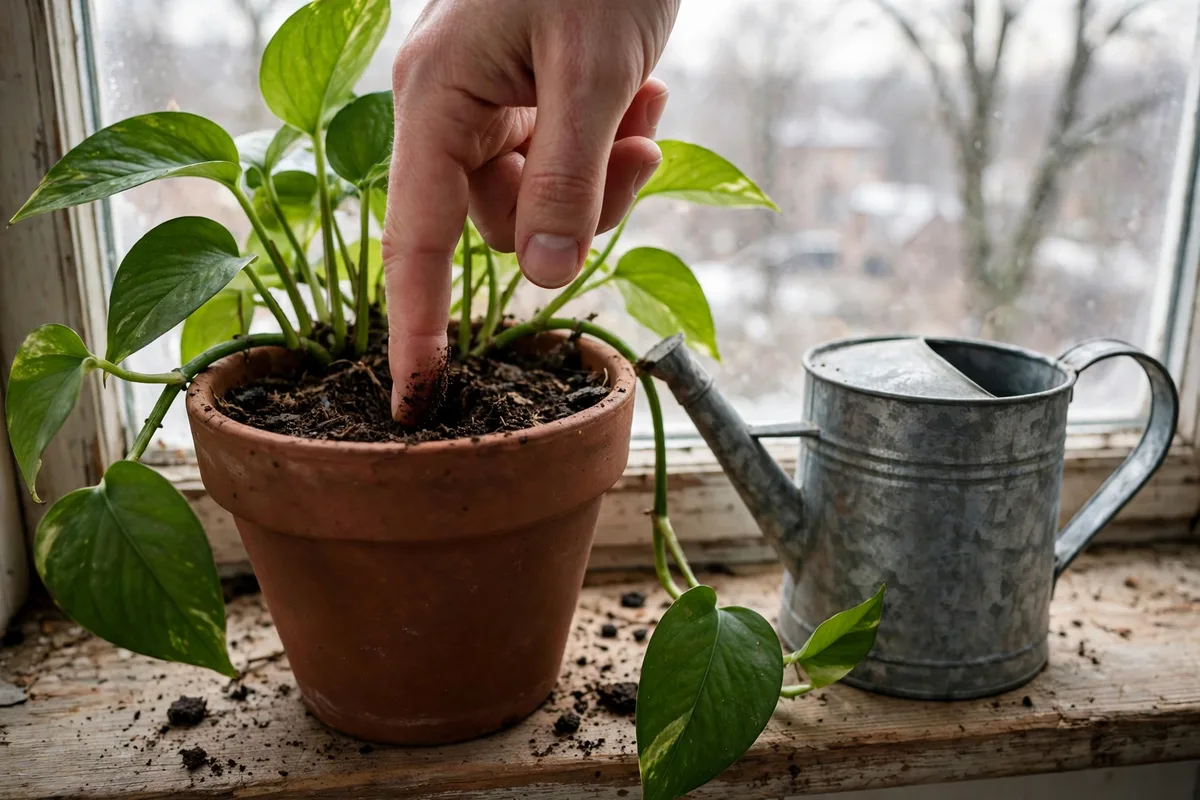
The winter watering rule is a test, not a timetable: push a finger into the mix and water only when the top half of the pot is dry for most plants (the top inch for the thirstier ones). Then water thoroughly, let the pot drain completely, and empty the saucer — a plant standing in its own runoff is being watered twice. Expect the interval to stretch by two or three times versus summer; a Snake Plant that took water every fortnight in July may need none for six weeks now, and our snake plant watering guide exists because that one plant drowns more than any other. If a plant has already gone too far — wilting in wet soil, yellowing from the base, a sour smell at the pot — it needs rescue, not routine: follow Overwatered Plant Rescue step by step. And if tiny black flies have moved in around the pots, that is the same story told by insects: fungus gnats breed in permanently wet topsoil, and the fix is the 3-week protocol in How to Get Rid of Fungus Gnats.
Fix 2 — Chase light, not heat
The instinct when a plant looks cold is to move it somewhere warm — onto the radiator shelf, beside the fire, into the warmest room. It is exactly wrong. Warmth without light tells the plant to grow; growth without light produces the pale, stretched, weak stems that collapse by February. What the plant needs is the brightest place you have: a south- or east-facing windowsill, the glass of a bright window, a spot that was "too bright" in summer and is merely adequate now. Keep leaves off cold glass on frosty nights and pull plants a few inches into the room after dark in very cold spells — that is the whole of the temperature story for most houseplants, which are comfortable anywhere people are, roughly 60–75°F. Rotate each pot a quarter turn weekly so the plant grows evenly instead of leaning into a permanent bow. For plants that cannot be moved near a window — the Calathea in the hall, the fern in the bathroom — a small full-spectrum LED run 12–14 hours a day replaces the missing window outright, and it is the one purchase that changes winter outcomes more than any other.
Check Price on Amazon — USCheck Price on Amazon — Canada
Buttons open a search on each store, so you see today's price and the current models — we never print prices here because they change daily.
Fix 3 — Group plants and raise the humidity locally
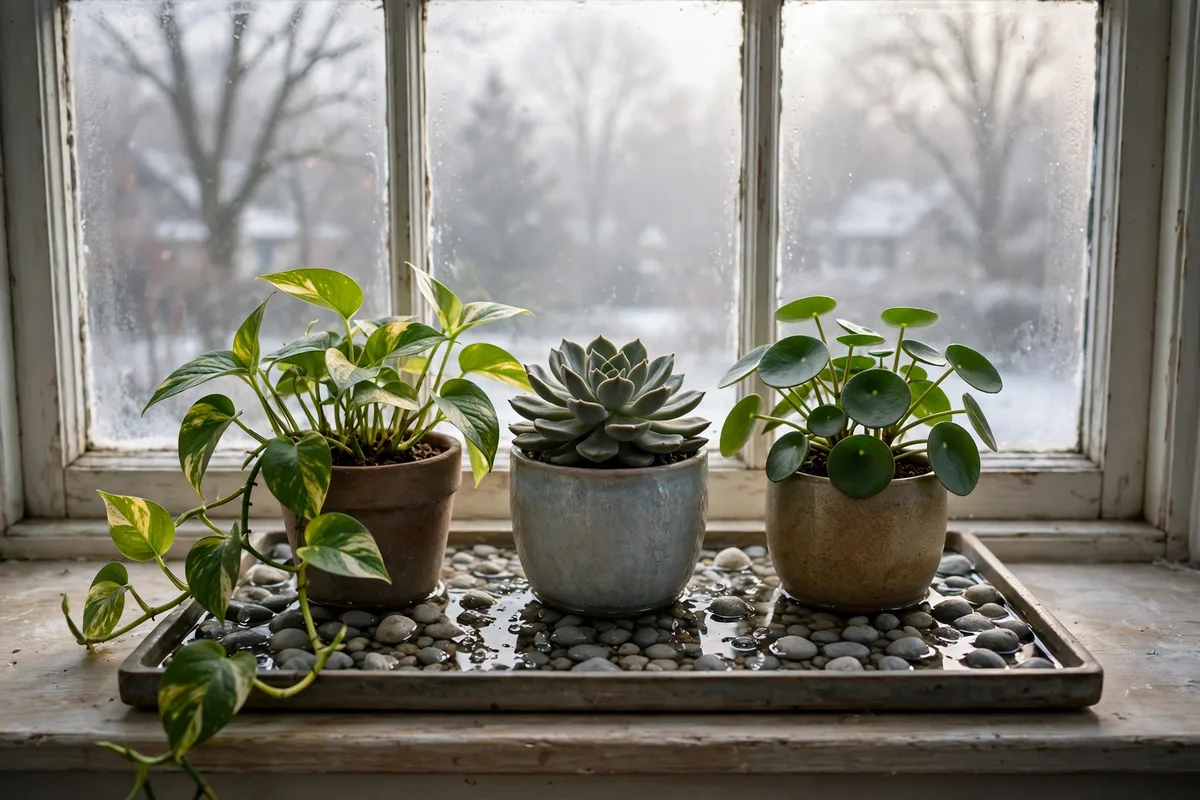
You cannot humidify a heated house with a spray bottle — misting raises humidity for minutes. What works is local and passive. Group the plants shoulder to shoulder in your brightest spot: each plant's leaves transpire moisture into the shared air, and a cluster holds a noticeably more humid pocket than a lone pot. Stand pots on pebble trays — a shallow tray of pebbles with water kept just below the pebble tops, the pot sitting on the stones, never in the water — for a steady local lift. Move the humidity-lovers to the bathroom if it has a window: a shower's daily steam does more than any gadget. The plants that complain first and loudest are the thin-leaved ones — calathea, ferns, prayer plants — while the thick-leaved drought-built plants (Snake Plant, ZZ plant) genuinely do not care. Our humidity guide has the full method set, including why a small humidifier beats every folk remedy for a serious collection.
Fix 4 — Stop feeding, and put the repotting away
Fertiliser is for growth, and a plant that is not growing cannot use it: unused feed accumulates in the mix as salts, which scorch roots and show up as brown leaf edges blamed on everything else. From the first short days until you see new growth in spring, the feed bottle stays shut — for every plant, without exceptions for the one that "looks hungry"; a resting plant that looks pale is usually short of light, not food. Repotting waits for the same reason: a winter-disturbed root ball in cold, wet, fresh mix is a rot invitation. The winter jobs are the gentle ones — the watering reset, the light move, the leaf clean — and the calendar jobs (feed, repot, propagate) all belong to spring, when the plant can actually respond to them.
Fix 5 — Clean the leaves, check for the winter pests
Dust is a light tax. A leaf filmed with household dust photosynthesises measurably worse, and in December light is the scarcest resource the plant has. Once a month, wipe leaves with a damp cloth — supporting the leaf from beneath — or take smooth-leaved plants to a lukewarm shower. The cleaning session doubles as pest inspection, because winter's dry air is spider-mite weather and scale insects spread quietly on resting plants: check leaf undersides and stem joints, and treat anything you find with the methods in Winter Houseplant Pests. If a plant's decline does not match any of the three stresses — spots, distortions, sticky leaves, sudden collapse — a photo diagnosis through the Plant Doctor will sort pest from disease from care faster than guessing. A Peace Lily drooping dramatically, for the record, is usually just thirsty and recovers within hours of water; it is the one winter drama that is rarely serious.
Winter triage: match the symptom to the stress
| Symptom | The stress | The fix |
|---|---|---|
| Yellowing from the base, wilting in wet soil | Water — roots rotting in a summer schedule | Rescue protocol; then the test-before-watering rule |
| Pale, stretched, leaning growth | Light — too little, too far from the window | Brightest spot or an LED; rotate weekly |
| Crispy edges, brown tips, fine webbing | Air — heating has dried the room out | Group plants, pebble trays; check for spider mites |
| Tiny black flies at the pots | Water again — wet topsoil breeds gnats | Dry the surface; 3-week trap-and-drench protocol |
| Brown edges on a plant you keep feeding | Food — salts building up in a resting plant | Stop feeding until spring growth; flush the pot once |
| Dramatic droop that recovers in hours | Usually just thirst (peace lily especially) | Water, watch it rise, adjust the interval slightly |
Work down the table before you change anything: one symptom, one stress, one fix — and give the fix two weeks before judging it, because a resting plant answers slowly. The winter mistake is rarely ignorance; it is three fixes at once, applied to the wrong stress, in a panic.
Keep going
Not sure whether a struggling plant is drowning, dark or dry? Run a photo through the Plant Doctor before you change anything else.
Go deeper with How to Increase Humidity for Houseplants, Overwatered Plant Rescue, How to Get Rid of Fungus Gnats and Winter Houseplant Pests — and the plant pages for Snake Plant, Peace Lily and Calathea.
Sources
The three-stress model (light collapse, slowed water use, heating-dried air) and the watering-first diagnosis follow the extension-consistent picture in Botanical Legacy — Fungus Gnats and Overwatering (winter problems peak as outdoor plants come inside and summer watering continues into low light) and the seasonal problem round-up at Garden UK — Houseplant Flies; winter preparation context from Gardens Illustrated — How to Prepare the Garden for Winter.
Questions people ask
Why is my houseplant dying in winter?
Usually not winter itself — it is a summer routine in a winter room. Light drops by half or more, growth stops, but watering continues on schedule, so roots sit in cold wet soil and rot. The second cause is heating-dried air (10–20% humidity), which crisps leaf edges and invites spider mites. Match the symptom to one of the three stresses and fix that one.
How often should I water houseplants in winter?
On the plant's new pace, not a schedule. Test the soil: most houseplants want the top half of the pot dry before watering again, which in winter can mean every two to six weeks instead of weekly. Always drain the pot fully and empty the saucer afterwards.
Should I fertilise houseplants in winter?
No. Fertiliser feeds growth, and a resting plant cannot use it — the salts build up in the mix and scorch roots, showing as brown leaf edges. Keep the feed bottle shut from the first short days until new growth appears in spring.
Do houseplants need a humidifier in winter?
Only serious collections do. Grouping plants together and standing pots on pebble trays raises humidity locally where it matters, and a bathroom with a window suits humidity-lovers. Misting, by contrast, lifts humidity for minutes and is not a real fix.
Why are there tiny flies around my houseplants in winter?
Fungus gnats — they breed in the top layer of permanently wet potting mix, which is what a summer watering schedule produces in winter. Let the top of the mix dry between waterings and follow a combined trap-and-drench protocol for three weeks to break the life cycle.
Can I repot a houseplant in winter?
Better not. A disturbed root ball in cold, wet fresh mix invites rot, and the plant has no growth energy to repair it. Unless the plant is in genuine emergency (a smashed pot, sour waterlogged mix), repotting belongs to spring when growth restarts.
Comments & ratings
No comments yet.
Be the first to share your experience.