
Plant Library · Houseplants · By Faizan Ahmad
🪴 How to Grow Snake Plant
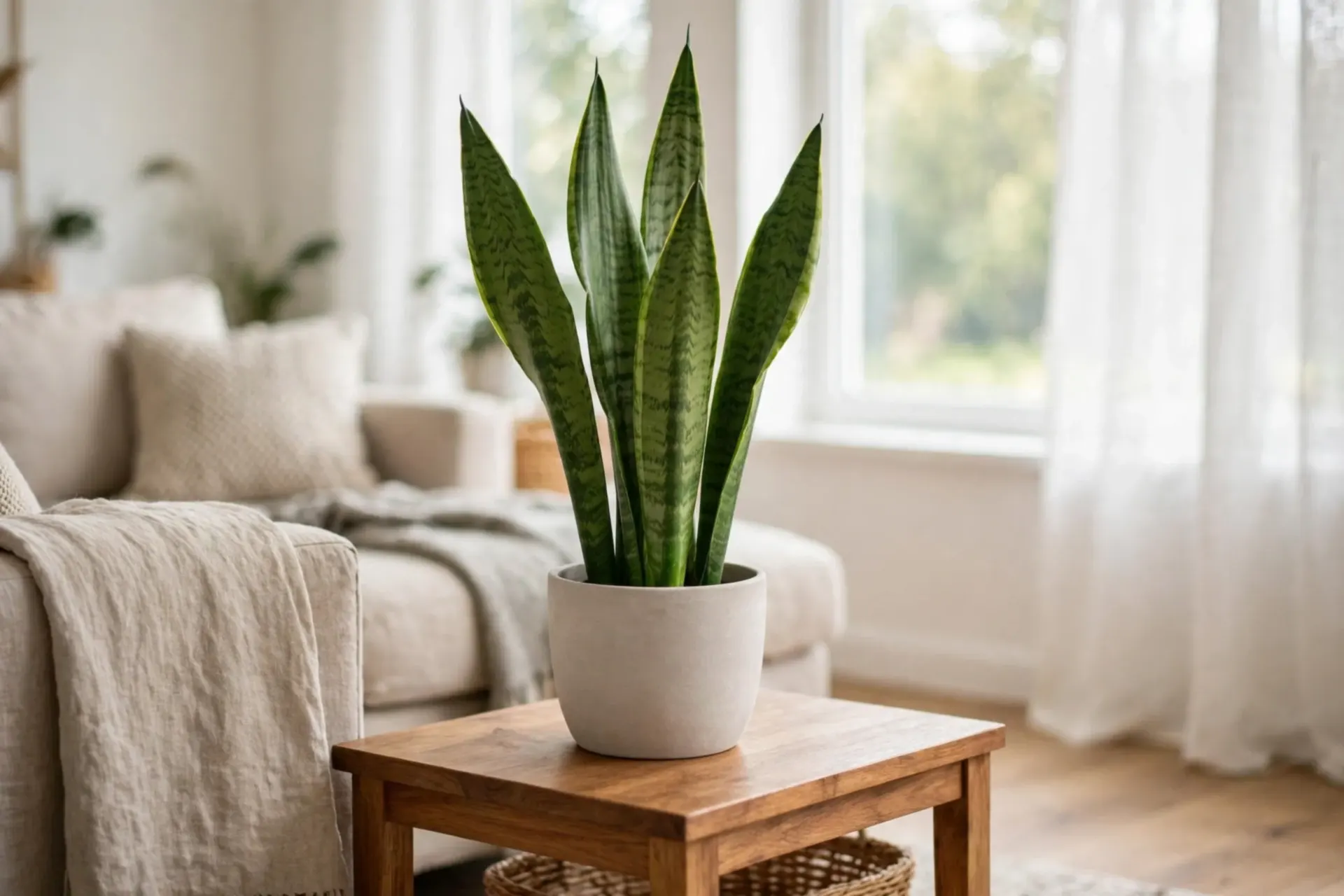
A houseplant for indoors year-round; overwatering is the one thing that kills it. Cold windowsills harm it in winter. Snake plant is a houseplant for indoors year-round: give it bright indirect light (it tolerates low light), water sparingly every few weeks, and keep it off cold winter windowsills.
Grow Snake Plant with us — step by step
Everything for this plant is written step by step below — what to do, and exactly when. Read it through first if you like: you can grow it entirely on your own with that guide. Or start with us here — tell us your planting day and we lay out your personal schedule on this page, every next step on its own day, counted from your planting date. No guessing, no forgetting.
Step 1 — today: Settle your Snake Plant into its spot today: a pot with drainage, the light it loves (bright indirect light; tolerates low light), and one good watering to settle the mix around the roots.
Snake Plant at a glance
Spacing: — (pot) · Propagation: Pups and division, not seed
Sun: Bright indirect light; tolerates low light
Water: Sparingly — every few weeks; never soggy
Harvest: Grown for foliage — no harvest
Timing counts from your average last spring frost — get your own dates in the Planting Calendar. Guidance follows standard extension-service practice for Canada and the US.
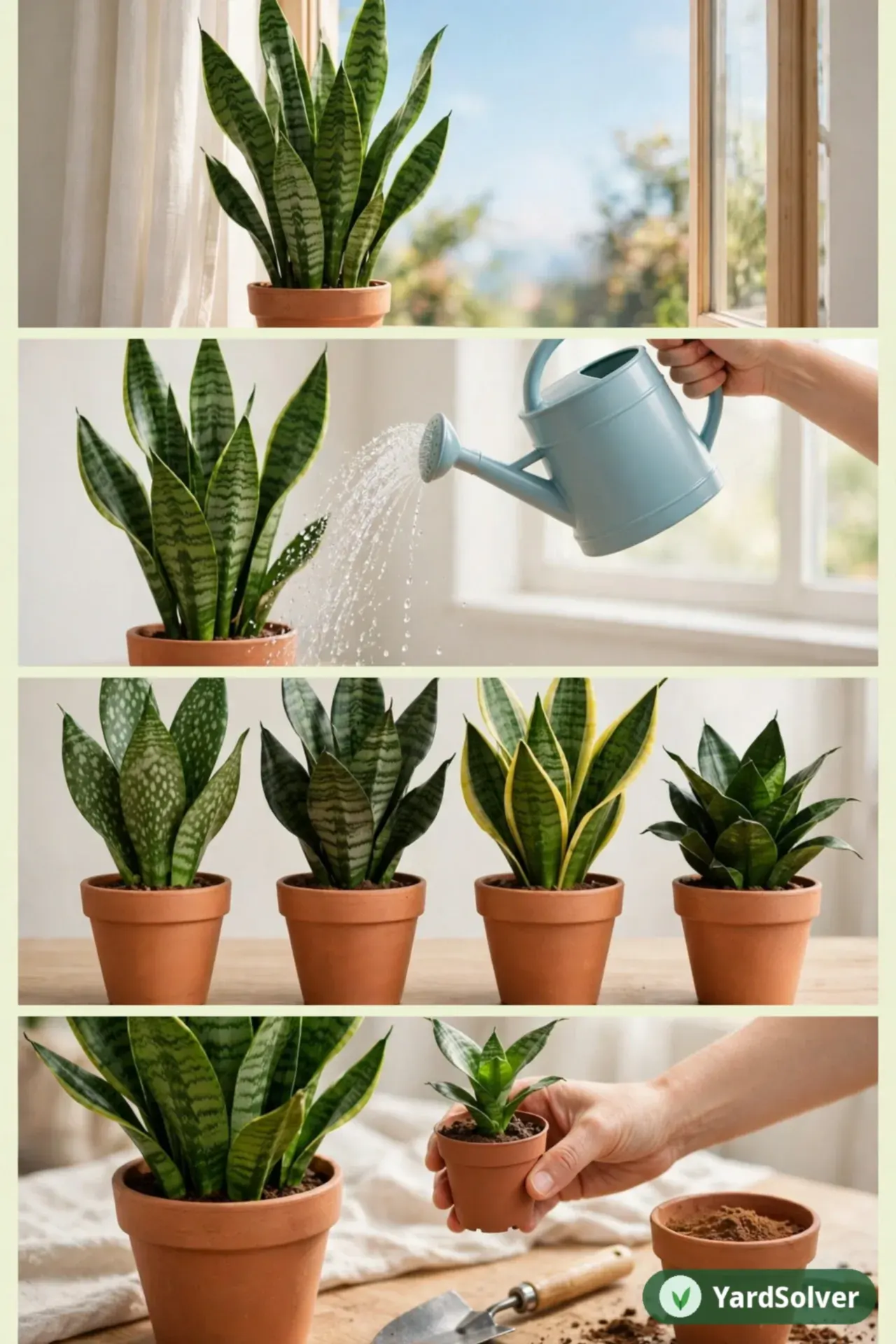
How to plant and grow snake plant, step by step
Step 1 — Choose its spot
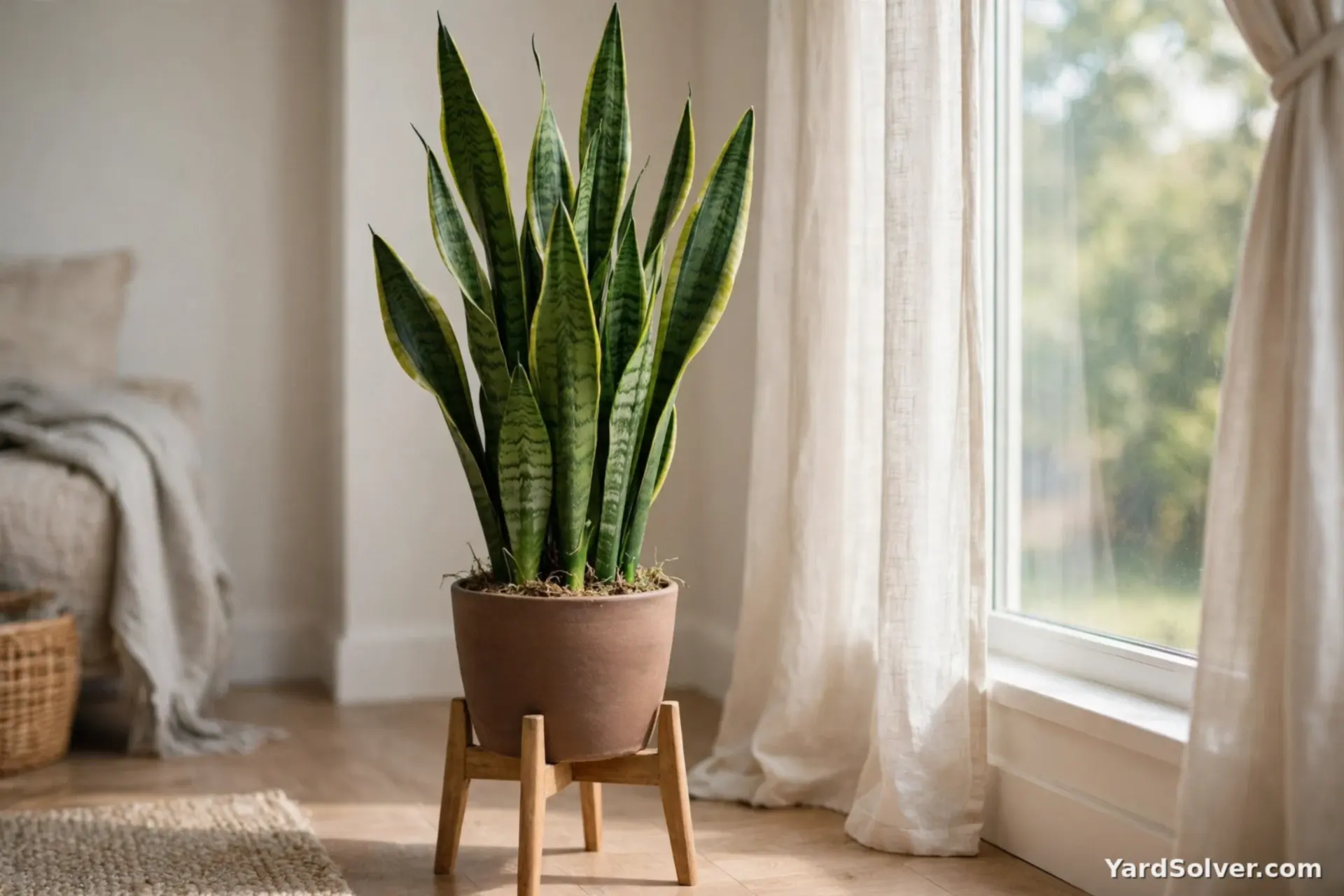
Bright indirect light; tolerates low light suits snake plant best. Keep it away from heating vents and cold drafts, and remember most houseplants would rather be a little dry than a little soggy. A houseplant for indoors year-round; overwatering is the one thing that kills it. Cold windowsills harm it in winter.
Step 2 — Pot it right
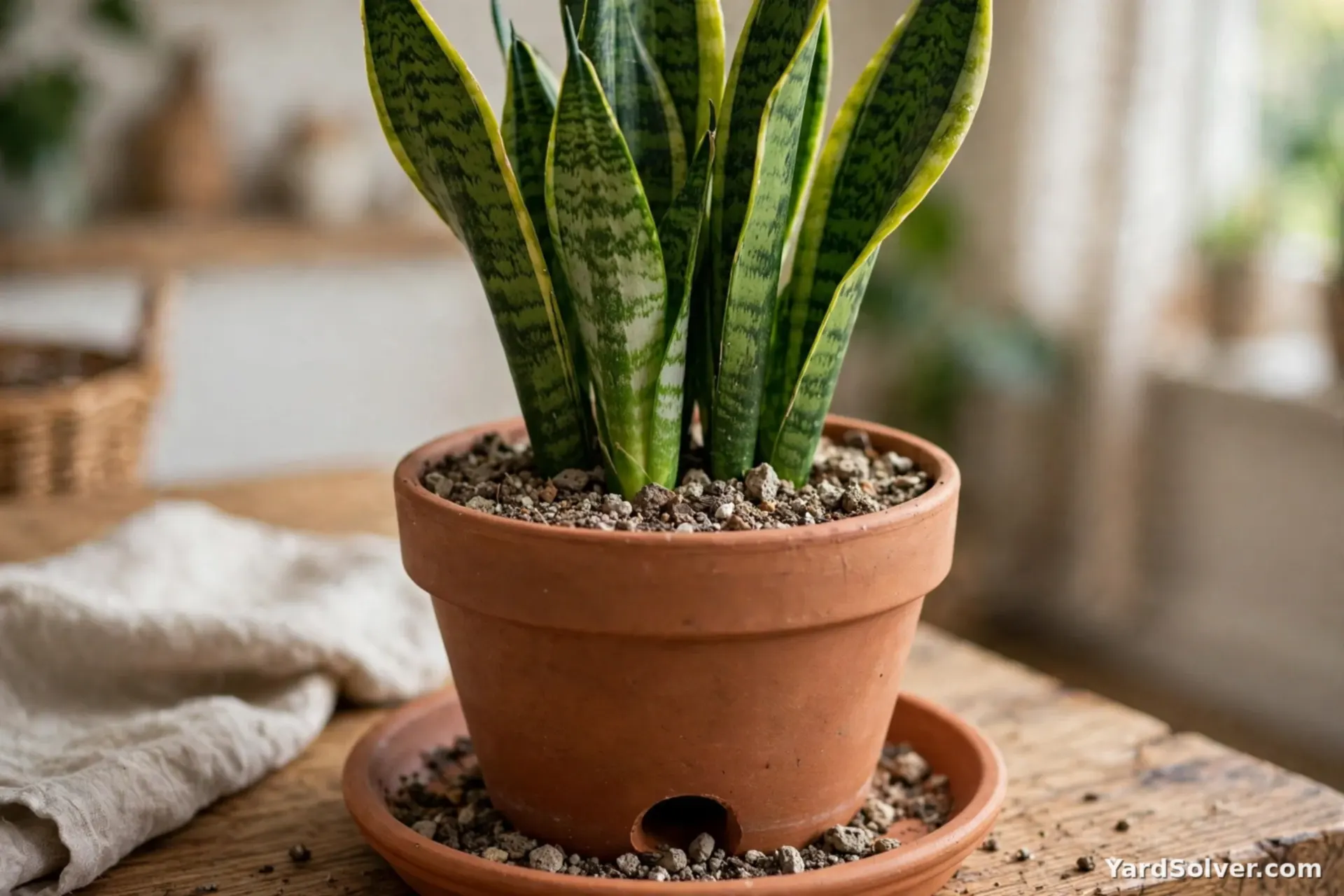
A pot with drainage holes and free-draining houseplant mix — never garden soil in a pot. Tip out any water that collects in the saucer. Water it in once after potting, then let the top of the mix dry before watering again — the rhythm in the care card below is the whole routine.
Step 3 — Water by feel, not by calendar
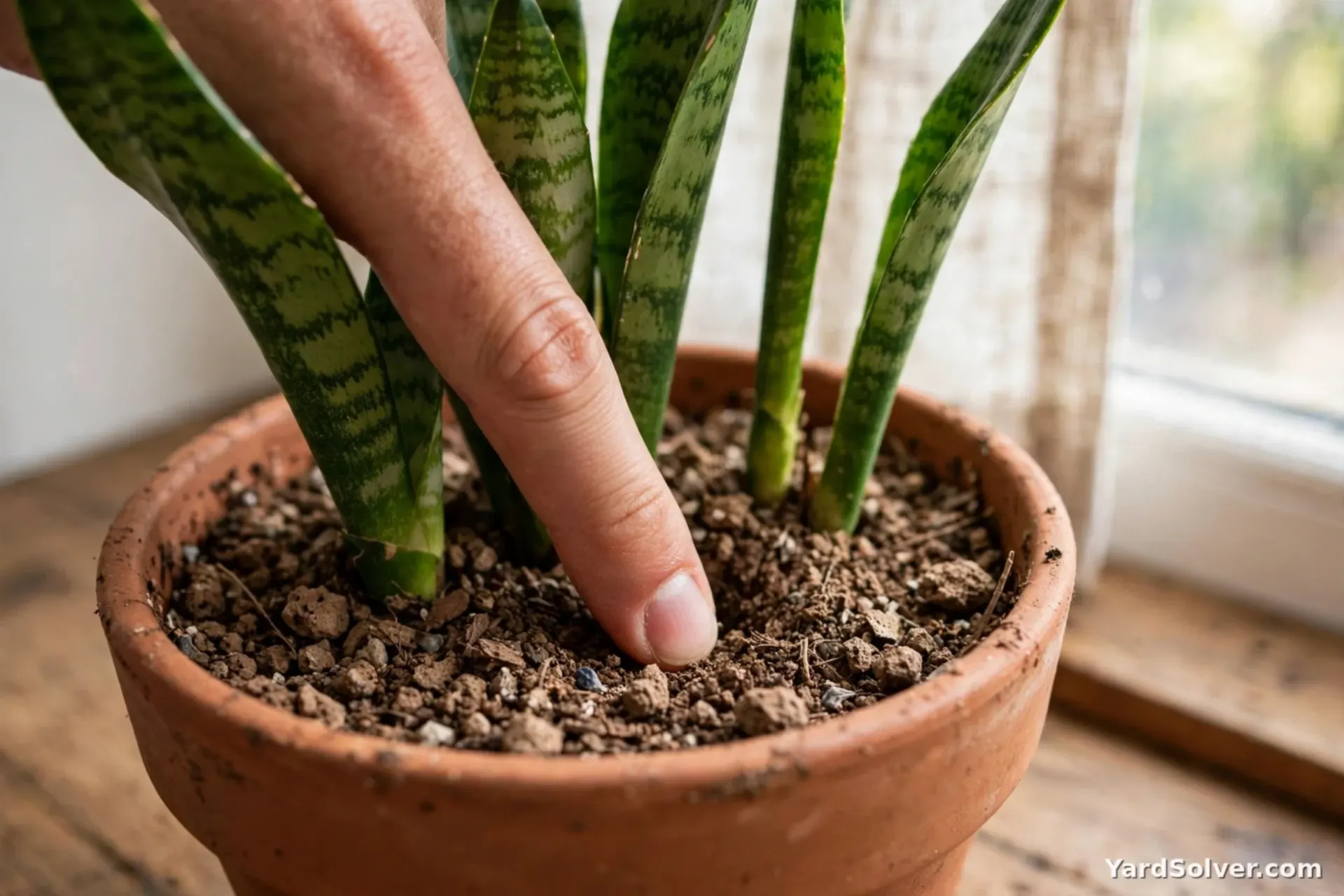
Sparingly — every few weeks; never soggy. Push a finger into the mix: dry on top means water, damp means wait. Empty the saucer after every watering — roots sitting in water rot quietly.
Step 4 — Feed lightly in the growing season
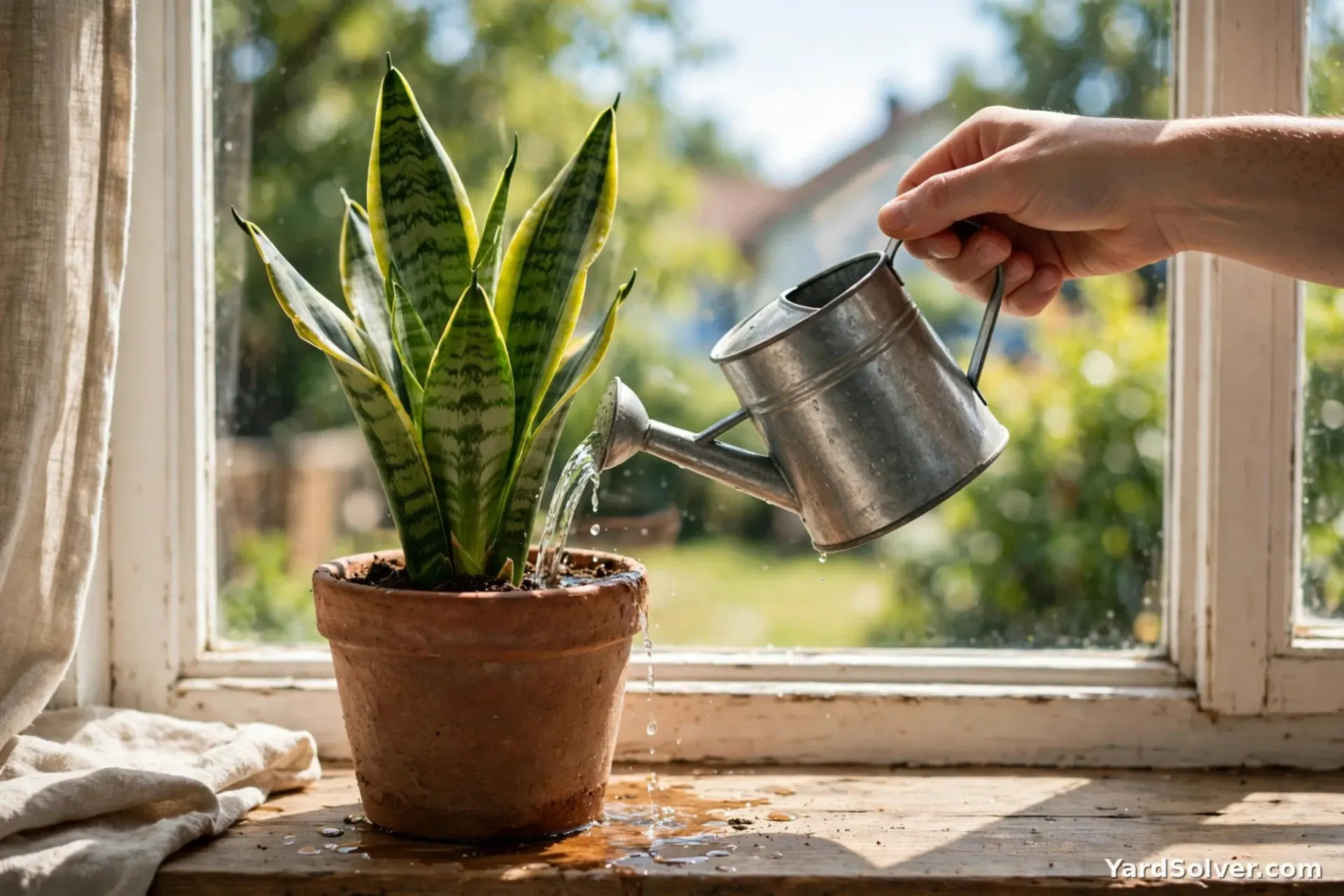
A half-strength general houseplant feed once a month in spring and summer is plenty. Stop feeding in winter, when growth slows and the plant is resting.
Step 5 — Watch for the usual problems
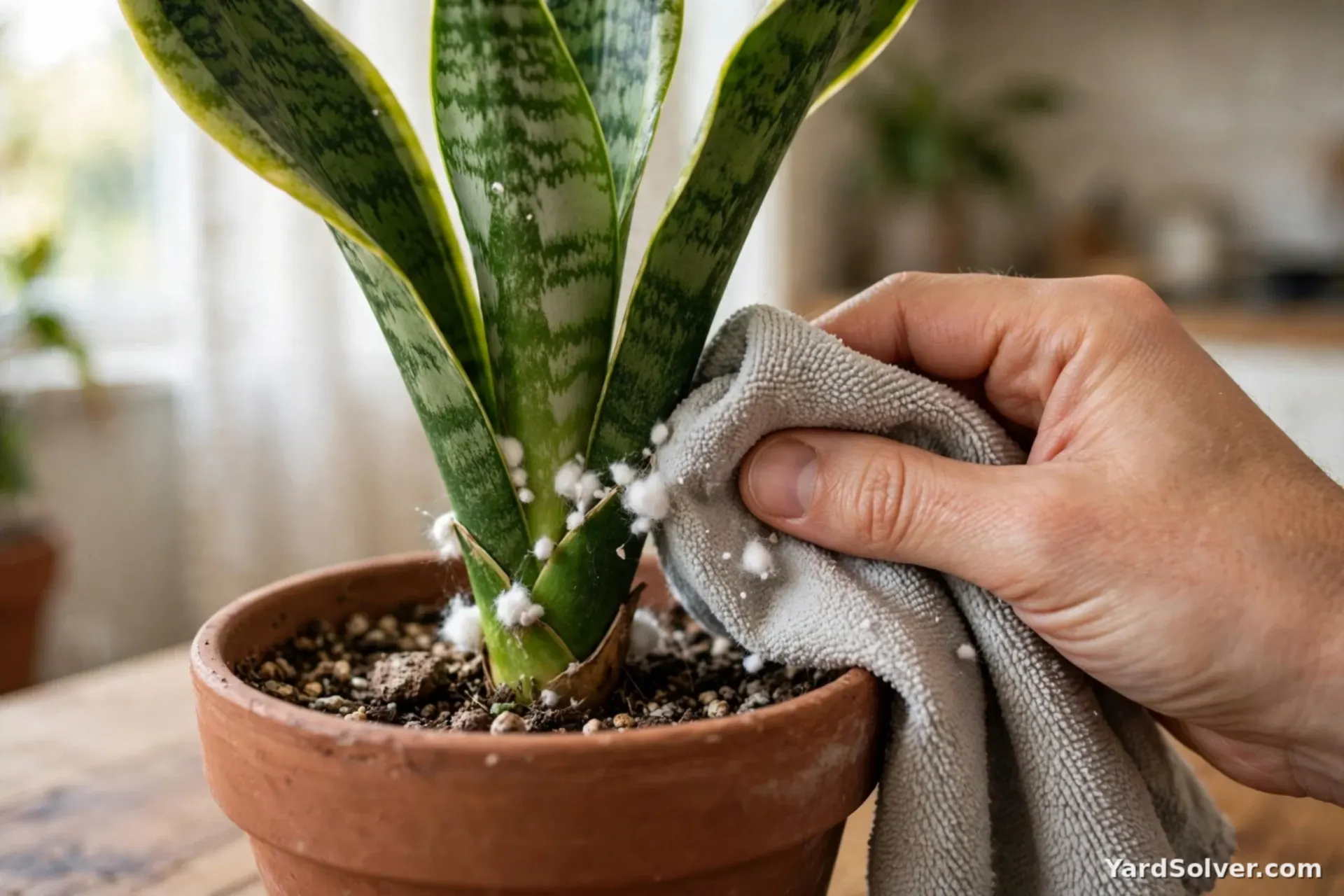
- Root rot — almost always overwatering; this plant prefers neglect.
- Mushy leaves at the base — a sign of rot; remove and dry the plant out.
- Mealybugs in leaf joints — wipe off.
Step 6 — What to expect
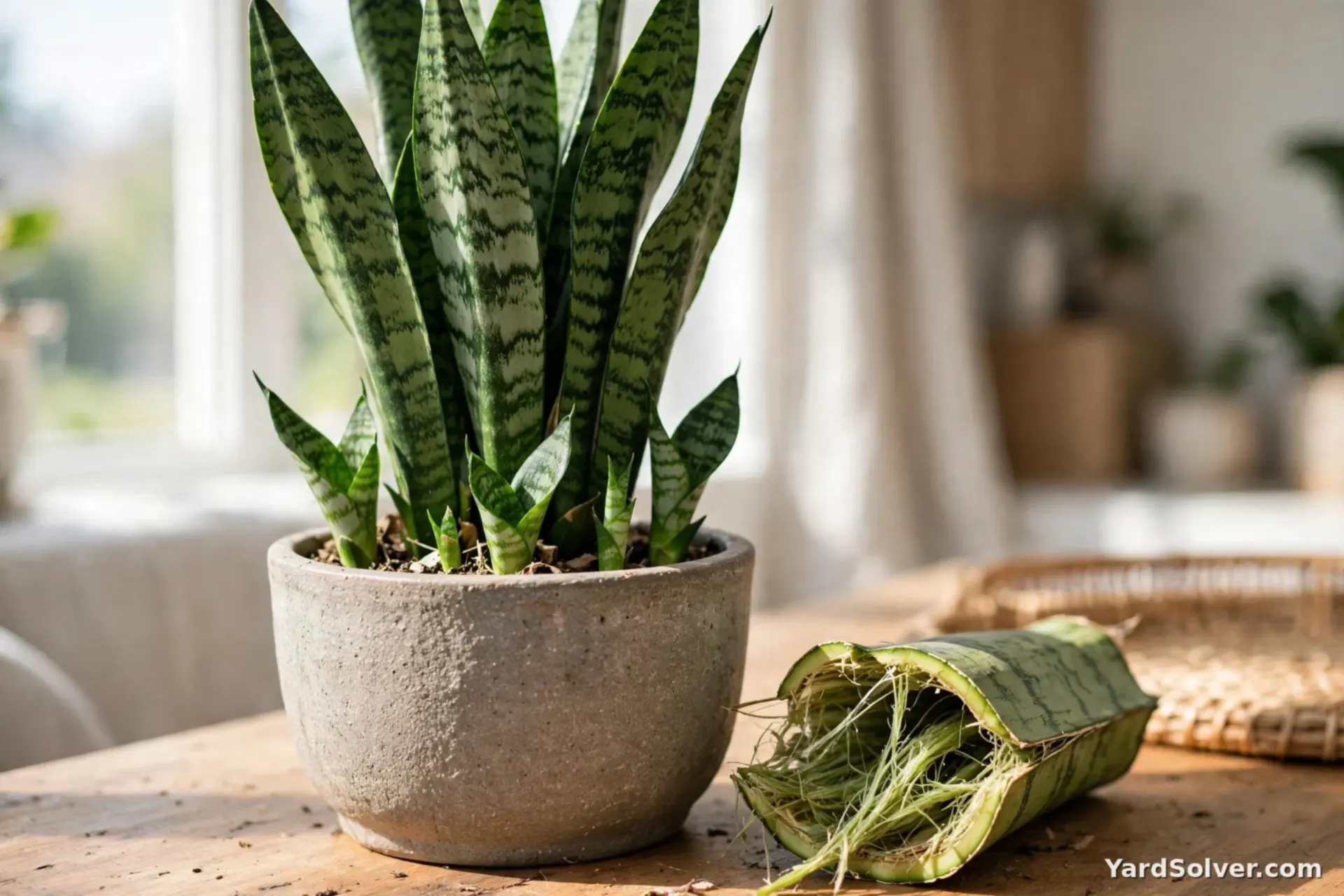
A snake plant is an indoor houseplant watered sparingly every few weeks when the soil is fully dry — overwatering, not the calendar, is what harms it, so it gets care tips instead of date reminders. In its African homeland, the tough fibres inside snake plant leaves were used to make bowstrings and rope — one of its old names is bowstring hemp.
How fast does a snake plant grow? Slowly, and honestly so: expect about 2–4 new leaves per rosette in a growing season and roughly 2–6 inches of new height a year indoors in decent light — less in low light. A pup takes around 2–3 years to become a full, pot-filling plant. Bright light and a warm room are the only real accelerators; extra feed and water cannot hurry it.
📅 Your personal Snake Plant schedule
This plant runs on rhythm and season rather than a day count — here is the honest version of its schedule.
Varieties worth growing
| Variety | Colour | Why gardeners like it |
|---|---|---|
| Laurentii | Green with yellow edges | The classic tall type most people picture — upright swords with golden margins |
| Moonshine | Silvery pale green | Wide, moonlight-pale leaves that brighten a dark corner |
| Hahnii (Bird's Nest) | Dark green with lighter bands | A short rosette type that stays small enough for a desk |
| Whale Fin | Green, single wide leaf | One enormous paddle-shaped leaf — slow growing and much prized by collectors |
Good for you — and take care
Benefits
- Often grown as a natural air-freshening houseplant for bedrooms and offices
- Famously tough — survives low light and forgotten waterings, so it builds a beginner's confidence
- Its stiff, upright leaves fit into narrow corners and small spaces
- One of the few plants that releases oxygen at night, while most plants rest
- Divides easily, so one plant becomes several for free
Take care
- Poisonous if eaten by pets — keep it where cats and dogs cannot chew the leaves
- Overwatering is the one thing that kills it: soggy soil rots the plant from the base, so water lightly and rarely
- Cold harms it — a frosty windowsill in a Canadian winter can damage the leaves
A little history — and one good fact
Snake plants come from dry, rocky country in West Africa, where their stiff leaves store water against long droughts. They were carried to Europe a few hundred years ago and survived dim Victorian parlours that killed fussier plants. That toughness made them a fixture of homes and offices ever since.
Fun fact: In its African homeland, the tough fibres inside snake plant leaves were used to make bowstrings and rope — one of its old names is bowstring hemp.
Keep going
Guides: How Often to Water a Snake Plant · Propagate Snake Plants · Repot a Snake Plant · Why Is My Snake Plant Dying?
Calculators: All calculators
More houseplants: Pothos · Spider Plant · Aloe Vera · Monstera · Fiddle Leaf Fig
← Back to the Plant Library · Get your personal planting dates
Questions people ask
How often do I water snake plant?
Sparingly — every few weeks; never soggy. Check the soil with a finger — dry on top means water, damp means wait. It is the rhythm, not a date on the calendar, that keeps this plant happy.
How much light does snake plant need?
Bright indirect light; tolerates low light. Keep it away from heating vents and cold glass, and turn the pot now and then so growth stays even.
What kills snake plant most often?
Overwatering, almost every time. A pot with drainage holes, free-draining mix, and an emptied saucer prevent the root rot that ends most houseplants.
How fast does a snake plant grow?
Slowly: about 2–4 new leaves per rosette in a growing season and roughly 2–6 inches of height a year indoors in decent light. A pup takes around 2–3 years to become a full plant.
Snake plants die of kindness, not neglect: the watering can is the only real threat they face
The snake plant (Dracaena trifasciata, long known as Sansevieria) stores water in its thick, upright leaves and carries a shallow, rot-prone rhizome below — a constitution built for drought. Indoors it tolerates low light, bright light, dry air and months without water; what it cannot tolerate is a wet pot. More snake plants are killed by weekly watering into cold, soggy compost than by every other cause combined.
The routine that works is almost no routine: a gritty, free-draining mix, a pot with drainage, water only when the compost is dry throughout, and none sitting in the saucer. Leaves that go soft and yellow at the base are the rot already happening — unpot, cut away everything soft, let the wounds dry, and repot into dry mix. Slow growth in winter is normal; the plant rests when light is low.
The worked example: a plant watered monthly in winter and kept in a draining pot typically stands unchanged and healthy for years. The same plant on a weekly watering round typically collapses at the base within a season — with snake plants, less is literally more.
Sources
Key facts on this page — timing, spacing and care — cross-checked against NC State Extension Plant Toolbox — Dracaena trifasciata — culture and care requirements and Dracaena trifasciata — Wikipedia — background on snake plants and their care.
Related page
Read next: How to Repot a Snake Plant: One Size Up, No Water After.
Comments & ratings
No comments yet.
Be the first to share your experience.