
Plant Library · Houseplants · By Faizan Ahmad
🌵 How to Grow Aloe Vera
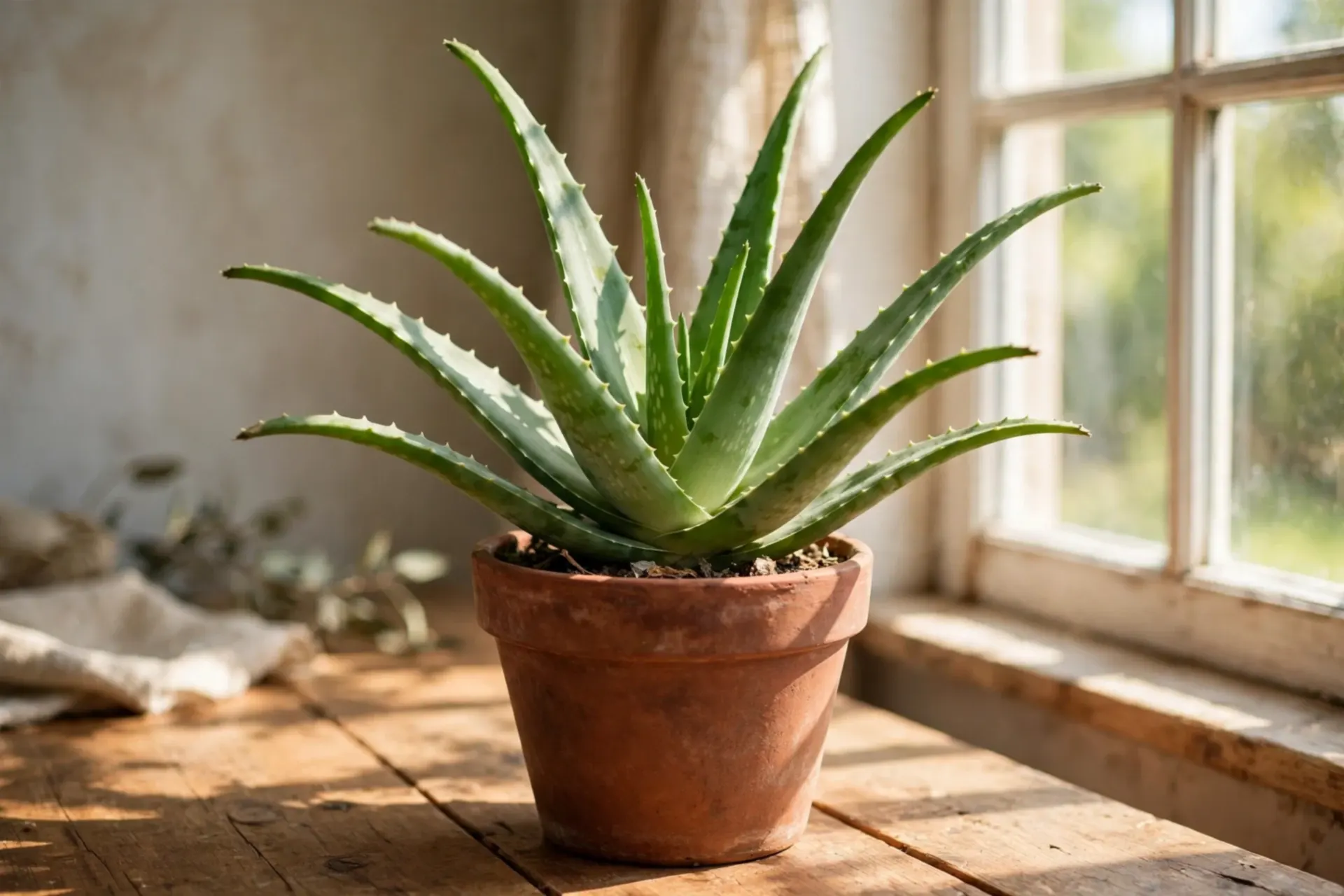
A succulent houseplant for a sunny windowsill indoors; it stores water in its leaves, so err on the dry side. Aloe vera is a succulent houseplant for indoors: keep it on a sunny windowsill, water rarely and let it dry out fully between waterings, and cut outer leaves only once the plant is mature.
Grow Aloe Vera with us — step by step
Everything for this plant is written step by step below — what to do, and exactly when. Read it through first if you like: you can grow it entirely on your own with that guide. Or start with us here — tell us your planting day and we lay out your personal schedule on this page, every next step on its own day, counted from your planting date. No guessing, no forgetting.
Step 1 — today: Settle your Aloe Vera into its spot today: a pot with drainage, the light it loves (bright light, some direct sun), and one good watering to settle the mix around the roots.
Aloe Vera at a glance
Spacing: — (pot) · Propagation: Pups (offsets), not seed
Sun: Bright light, some direct sun
Water: Sparingly — soak rarely, then let dry fully
Harvest: Outer leaves can be cut once the plant is mature
Timing counts from your average last spring frost — get your own dates in the Planting Calendar. Guidance follows standard extension-service practice for Canada and the US.
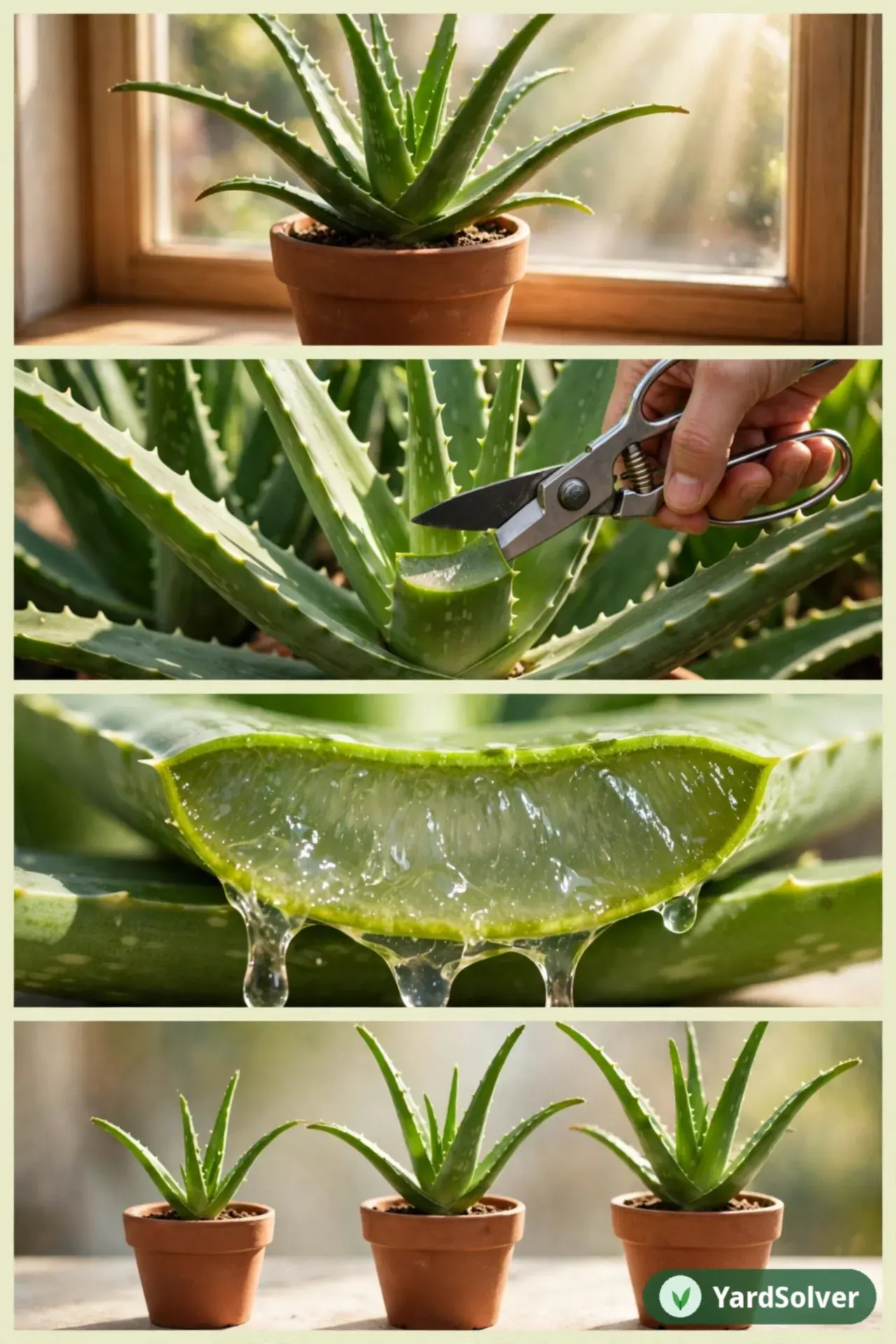
How to plant and grow aloe vera, step by step
Step 1 — Choose its spot
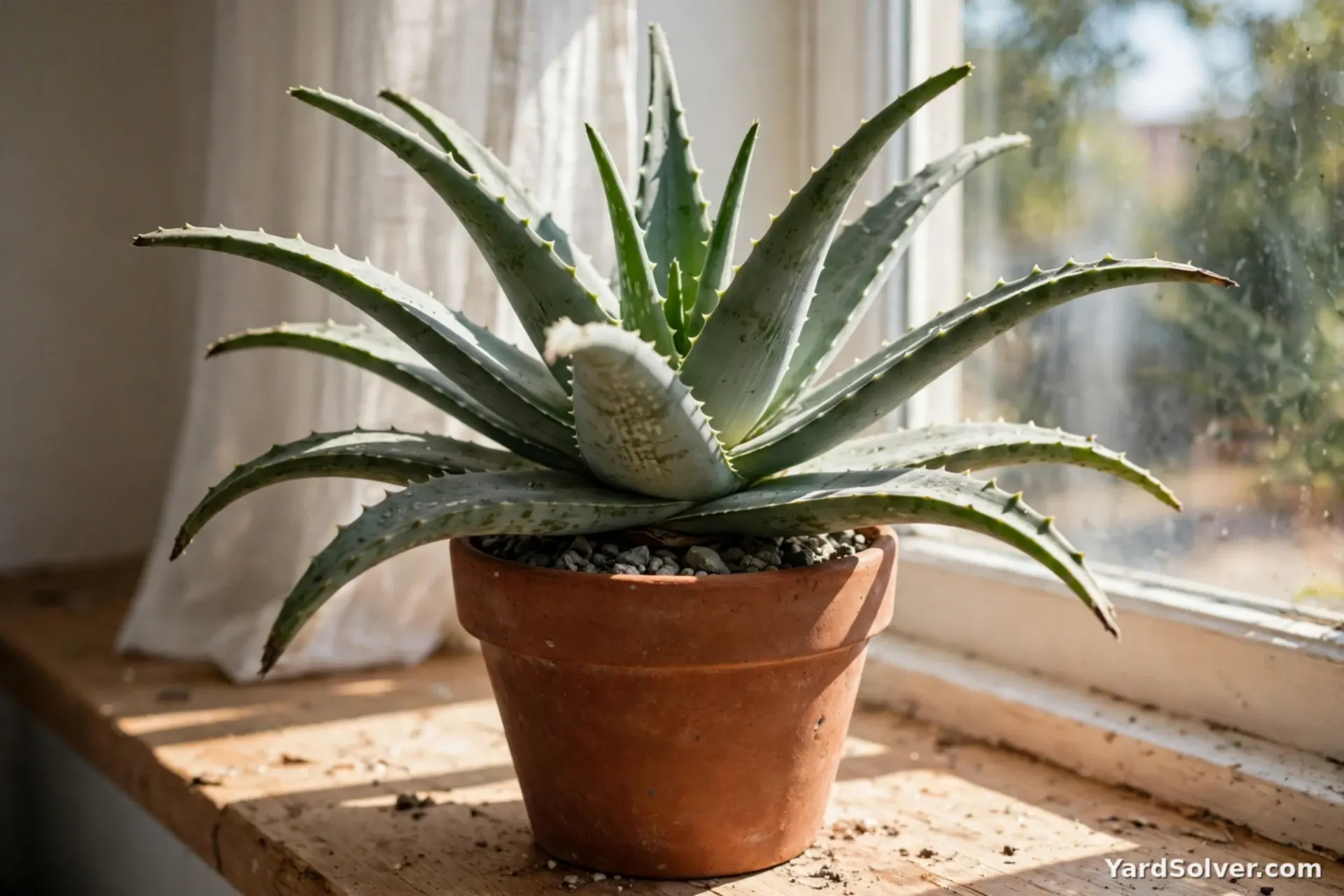
Bright light, some direct sun suits aloe vera best. Keep it away from heating vents and cold drafts, and remember most houseplants would rather be a little dry than a little soggy. A succulent houseplant for a sunny windowsill indoors; it stores water in its leaves, so err on the dry side.
Step 2 — Pot it right
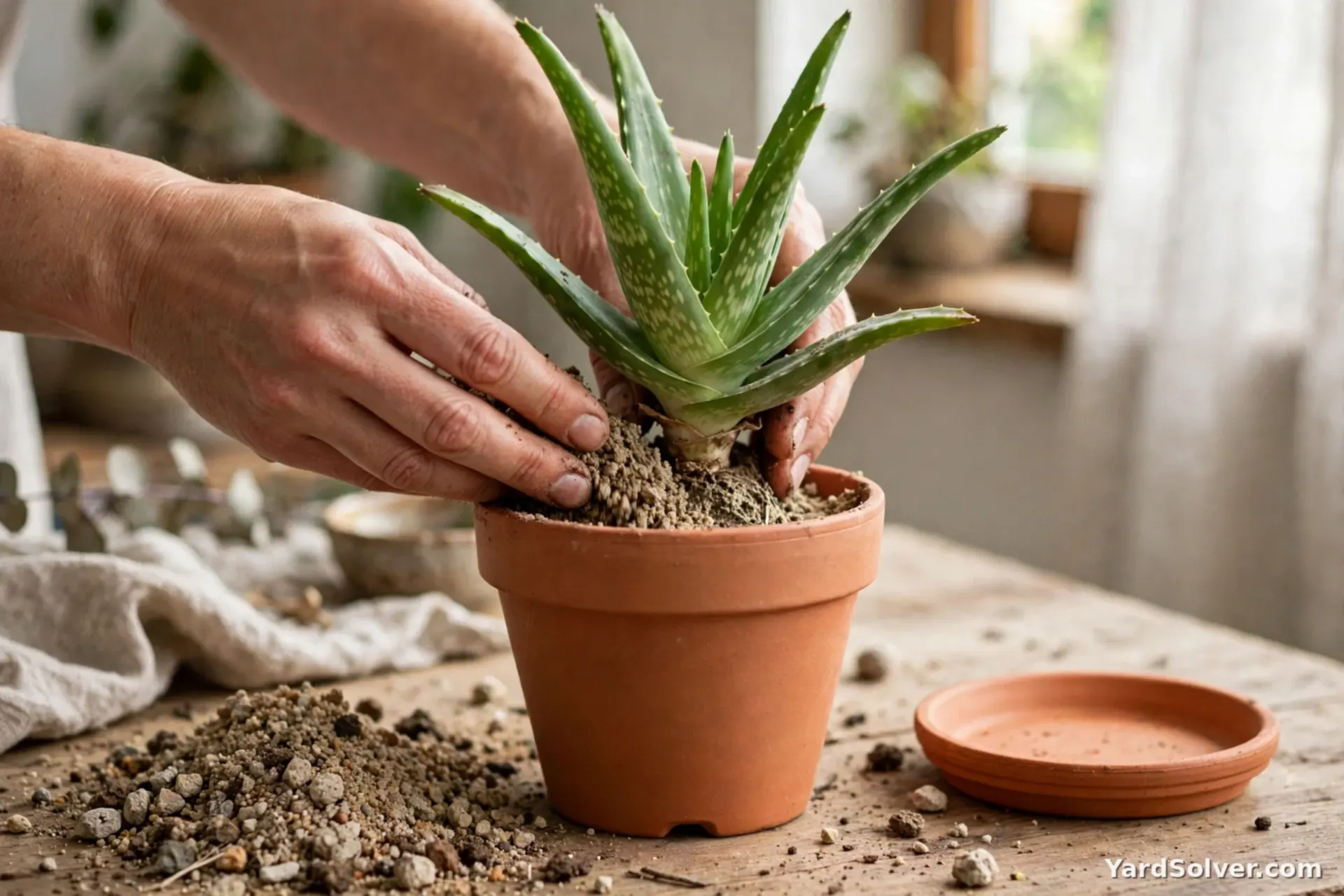
A pot with drainage holes and free-draining houseplant mix — never garden soil in a pot. Tip out any water that collects in the saucer. Water it in once after potting, then let the top of the mix dry before watering again — the rhythm in the care card below is the whole routine.
Step 3 — Water by feel, not by calendar
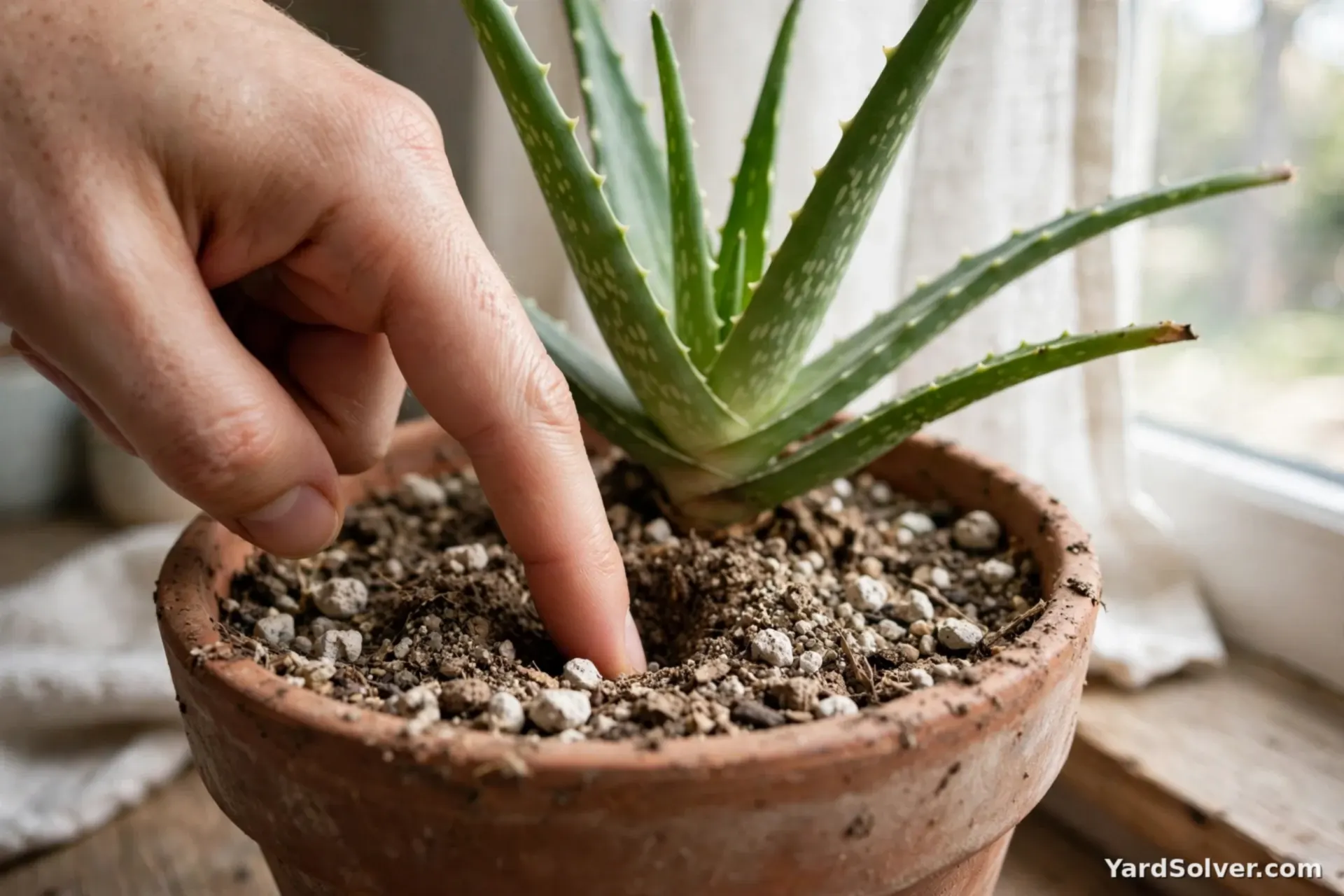
Sparingly — soak rarely, then let dry fully. Push a finger into the mix: dry on top means water, damp means wait. Empty the saucer after every watering — roots sitting in water rot quietly.
Step 4 — Feed lightly in the growing season
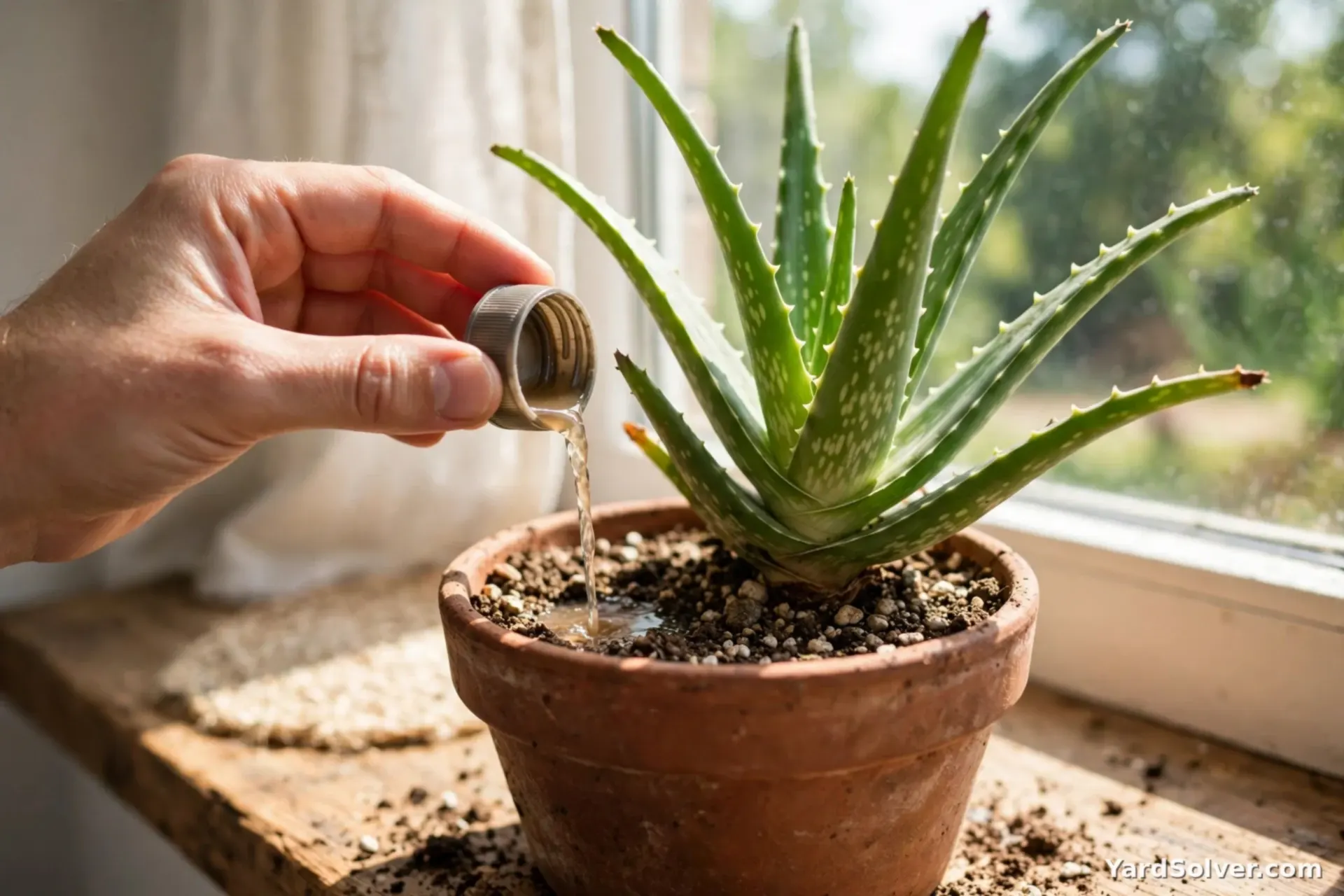
A half-strength general houseplant feed once a month in spring and summer is plenty. Stop feeding in winter, when growth slows and the plant is resting.
Step 5 — Watch for the usual problems
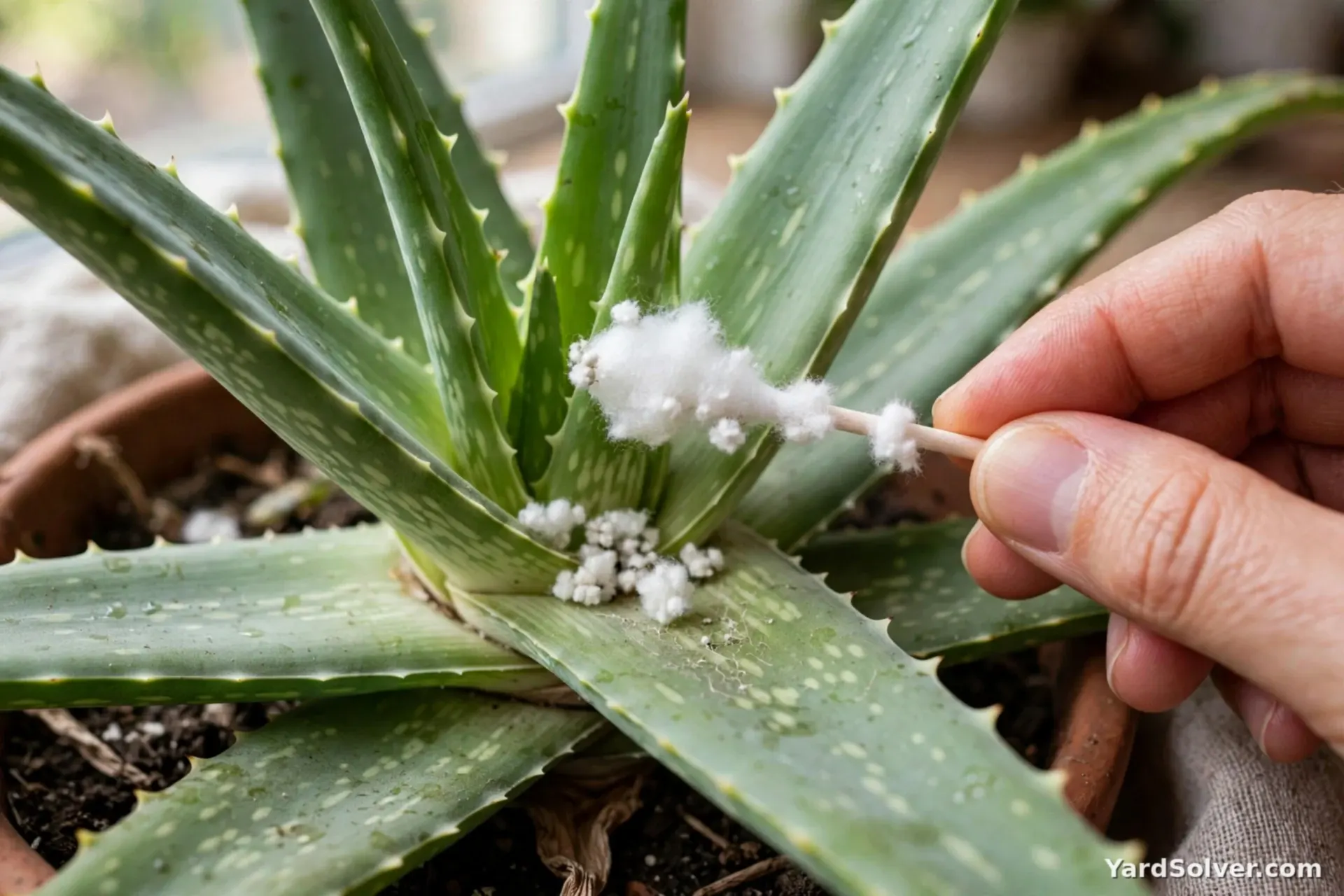
- Rot from overwatering — the most common killer; water rarely and drain fully.
- Sunburn — leaves turn brown-red if moved suddenly into harsh sun; acclimatise gradually.
- Mealybugs in the rosette — wipe off with a cotton bud.
Step 6 — What to expect
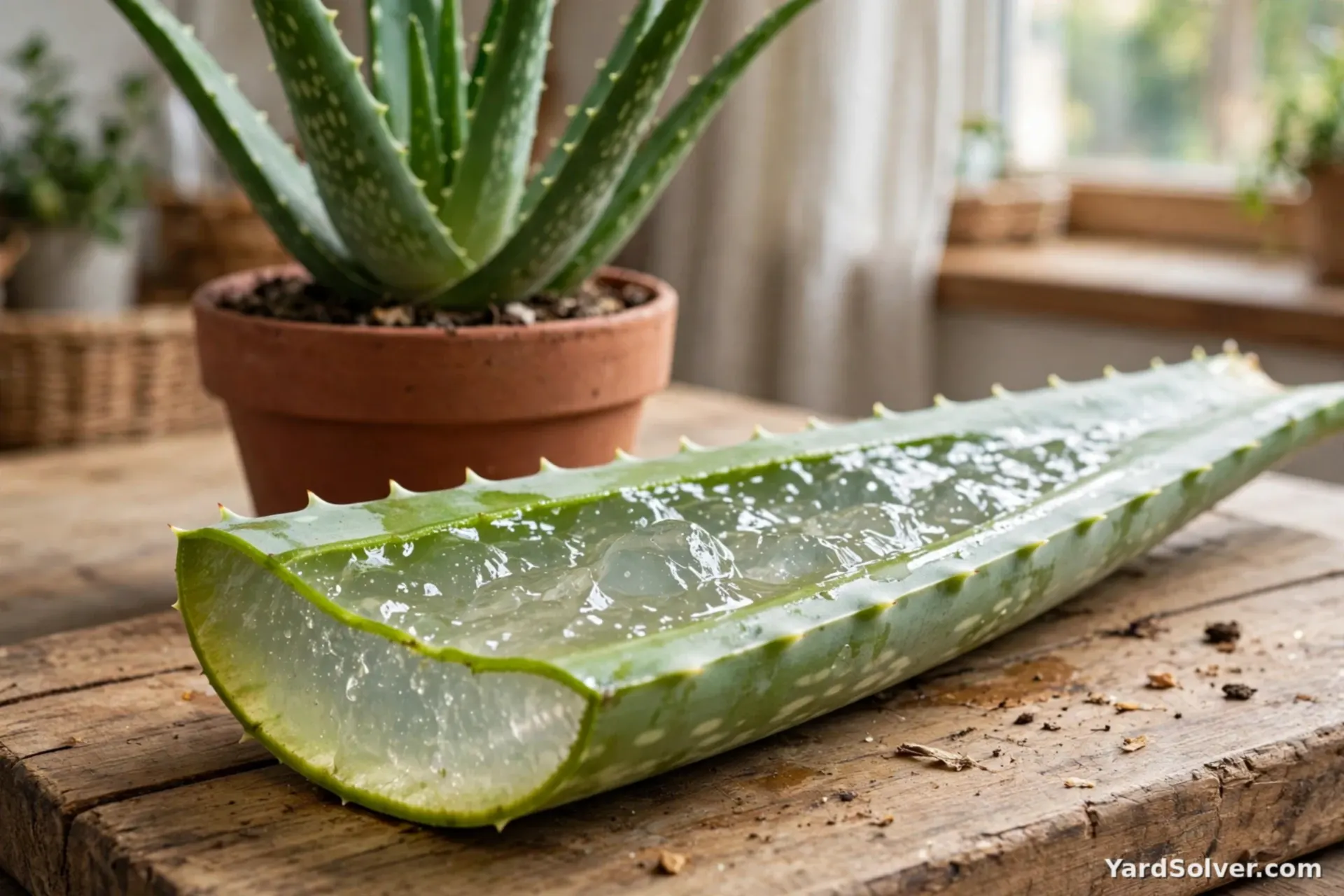
Aloe vera is a succulent houseplant that stores water in its leaves — soak it rarely and let it dry fully between waterings, so care follows the soil, not a day count from planting. An aloe leaf is about 99 percent water by the time it becomes gel — that stored water is how the plant survives desert drought.
Step 7 — Propagate it: how to plant and grow aloe vera from pups
A healthy aloe vera multiplies itself: small offsets called pups sprout around the base of the mother plant, each one a complete new plant waiting for its own pot. Dividing pups is by far the most reliable propagation method — unlike some succulents, aloe vera does not root reliably from leaf cuttings, which usually dry out or rot before they root, so do not waste good leaves on it. Here is how to plant and grow aloe vera pups, start to finish:
- Wait for the right size: separate a pup only when it is at least 2–3 inches (5–7 cm) tall, with several leaves of its own and the beginnings of its own roots. Smaller pups have too little stored water and energy to survive on their own. Spring and early summer, when the plant is actively growing, is the kindest season — and repotting time is the natural moment.
- Separate it gently: tip the mother plant out of its pot and shake or brush the mix off the roots so you can see where the pup joins. Many pups wiggle free with a gentle twist; if the connection is thick, cut it with a clean, sharp knife, keeping as many of the pup's own roots attached as you can. Repot the mother straight away.
- Let the cut callus — do not skip this: lay the separated pup in a dry, shaded spot for 2–3 days until the cut surface dries and seals over. This callusing step is the difference between success and rot: a fresh, wet cut buried in soil almost always rots.
- Pot it dry: set the callused pup in a small pot with a drainage hole and the same gritty, free-draining mix as the parent (Step 2), firming it in just deep enough to stand upright. Keep it in bright light out of harsh direct sun for the first few weeks.
- Watering-in — later, and lightly: do not water at potting. Wait about a week, so the callus finishes sealing and the pup starts pushing roots out in search of moisture, then give one light watering. After that, follow the plant's normal rhythm — soak rarely, let dry fully — and expect visible new growth from the centre within a few weeks. Once it is growing, move it gradually into the bright spot it will live in.
📅 Your personal Aloe Vera schedule
This plant runs on rhythm and season rather than a day count — here is the honest version of its schedule.
Varieties worth growing
| Variety | Colour | Why gardeners like it |
|---|---|---|
| True Aloe Vera | Grey-green | The classic type grown for its leaf gel — thick, upright, fleshy leaves |
| Tiger Tooth Aloe | Green with white spots | A small patterned aloe with toothed leaf edges, grown for looks |
| Blue Elf | Blue-grey | A compact hybrid with narrow blue-grey leaves, happy in a small pot |
| Tree Aloe (Aloe arborescens) | Green | A taller, branching cousin with red winter flowers — also a traditional gel plant |
Good for you — and take care
Benefits
- The clear gel inside the leaves is traditionally used to soothe sunburn and minor skin irritation
- Stores water in its thick leaves, so it survives a forgetful waterer
- A compact, handsome rosette for the sunniest windowsill
- Makes baby offsets (pups) around its base — free new plants to pot up and share
Take care
- Only the clear inner gel is the part used on skin — the yellow latex just under the leaf skin can irritate skin and is a strong laxative if swallowed, so aloe is not a food or a drink ingredient from a home plant
- Aloe is poisonous to cats and dogs if they chew the leaves — keep the pot out of their reach
A little history — and one good fact
Aloe vera comes from hot, dry country around the Arabian Peninsula and North Africa. People have used the clear gel from its leaves for thousands of years — it was treasured in ancient Egypt, where it was called the 'plant of immortality'. From there it travelled with traders around the world and onto sunny windowsills everywhere.
Fun fact: An aloe leaf is about 99 percent water by the time it becomes gel — that stored water is how the plant survives desert drought.
Keep going
Guides: How to Grow Aloe Vera · Why Is My Aloe Vera Turning Yellow? · How to Harden Off Seedlings
Calculators: All calculators
More houseplants: Pothos · Snake Plant · Spider Plant · Monstera
← Back to the Plant Library · Get your personal planting dates
Questions people ask
How often do I water aloe vera?
Sparingly — soak rarely, then let dry fully. Check the soil with a finger — dry on top means water, damp means wait. It is the rhythm, not a date on the calendar, that keeps this plant happy.
How much light does aloe vera need?
Bright light, some direct sun. Keep it away from heating vents and cold glass, and turn the pot now and then so growth stays even.
What kills aloe vera most often?
Overwatering, almost every time. A pot with drainage holes, free-draining mix, and an emptied saucer prevent the root rot that ends most houseplants.
How do I propagate aloe vera from pups?
Wait until a pup is at least 2–3 inches tall with roots of its own, then unpot the parent and wiggle or cut the pup free. Let the cut surface dry and callus for 2–3 days in shade, pot the pup in dry free-draining mix, and wait about a week before the first light watering. Leaf cuttings rarely root — pups are the reliable method.
The soak-and-dry rule: how to water aloe vera so the roots never rot
Almost every aloe vera that dies indoors dies of kindness — water offered on a schedule instead of on evidence. An aloe stores water in its leaves precisely so it can go weeks without a drink, and its roots begin to rot within days in soil that stays wet. The reliable method is soak-and-dry: water thoroughly until it runs from the drainage hole, empty the saucer, then do not water again until the potting mix is dry all the way down — push a wooden skewer to the bottom of the pot, and if it comes out with damp mix clinging to it, wait. In a heated winter room that can mean watering once a month; on a hot summer windowsill, every two to three weeks.
The pot and mix matter as much as the rhythm. Choose a pot with a drainage hole only one size wider than the plant, in a mix of half ordinary potting compost and half coarse sand, perlite or fine grit — a mix that pours water through rather than holding it like a sponge. Clay pots suit aloe well because they breathe and dry faster than plastic. If leaves turn soft, translucent and yellow from the base, that is rot already under way: unpot the plant, cut away every black or mushy root and leaf with a clean knife, let the cuts callus for two or three days in open air, then re-pot into dry mix and wait a week before the first light watering.
The worked example: a mature aloe on the soak-and-dry rhythm typically produces two to four offsets — pups — a year around its base. Left until each pup is about a fifth the size of the mother and has its own roots, they twist away cleanly and pot up as new plants, so one bought aloe becomes a windowsill row of spares and gifts within two years. The same plant watered weekly usually shows its first soft leaf within a single winter and rarely lives to pup at all.
Sources
Key facts on this page — timing, spacing and care — cross-checked against NC State Extension Plant Toolbox — Aloe vera — light, drainage and culture requirements and University of Florida IFAS — Aloe vera — indoor care and watering guidance.
Related page
Read next: How to Grow Aloe Vera: A Beginner's Step-by-Step Guide.
Comments & ratings
No comments yet.
Be the first to share your experience.