
Guides · Tool reviews · Published November 21, 2026 · By Faizan Ahmad
Fresh Herbs in January? The 4 Best Smart Indoor Gardens That Handle Light and Water Themselves
As an affiliate, YardSolver may earn a commission from qualifying purchases made through buttons on this page — it never changes the price you pay, and it never buys a place in these rankings.
A smart indoor garden grows herbs and salad greens with almost no daily work from you: the light runs on an automatic timer, the water sits in a reservoir, and the machine reminds you — or tells its app — when to refill or feed. That automation is the whole point. A countertop hydroponic garden can take basil from seed pod to first harvest in about three to four weeks, in the middle of a northern winter, on a kitchen counter. The four machines below are the ones worth buying in 2026, and they split cleanly by ambition: a foolproof first garden, the most pods for the money, the lowest-upkeep design piece, and a full AI-guided tower for people who want a real year-round harvest. If you are new to growing in water at all, start with Indoor Hydroponics for Beginners for how the method works, then come back here for the machines.
The honest frame before the picks: every system here grows in proprietary pods, so your running cost is refills, not electricity — the LED hoods sip power. And one brand below carries a genuine ecosystem risk, flagged plainly in its card rather than buried.
The 4 best smart indoor gardens, compared
Best first smart garden — AeroGarden Harvest 2.0 Indoor Garden Hydroponic System
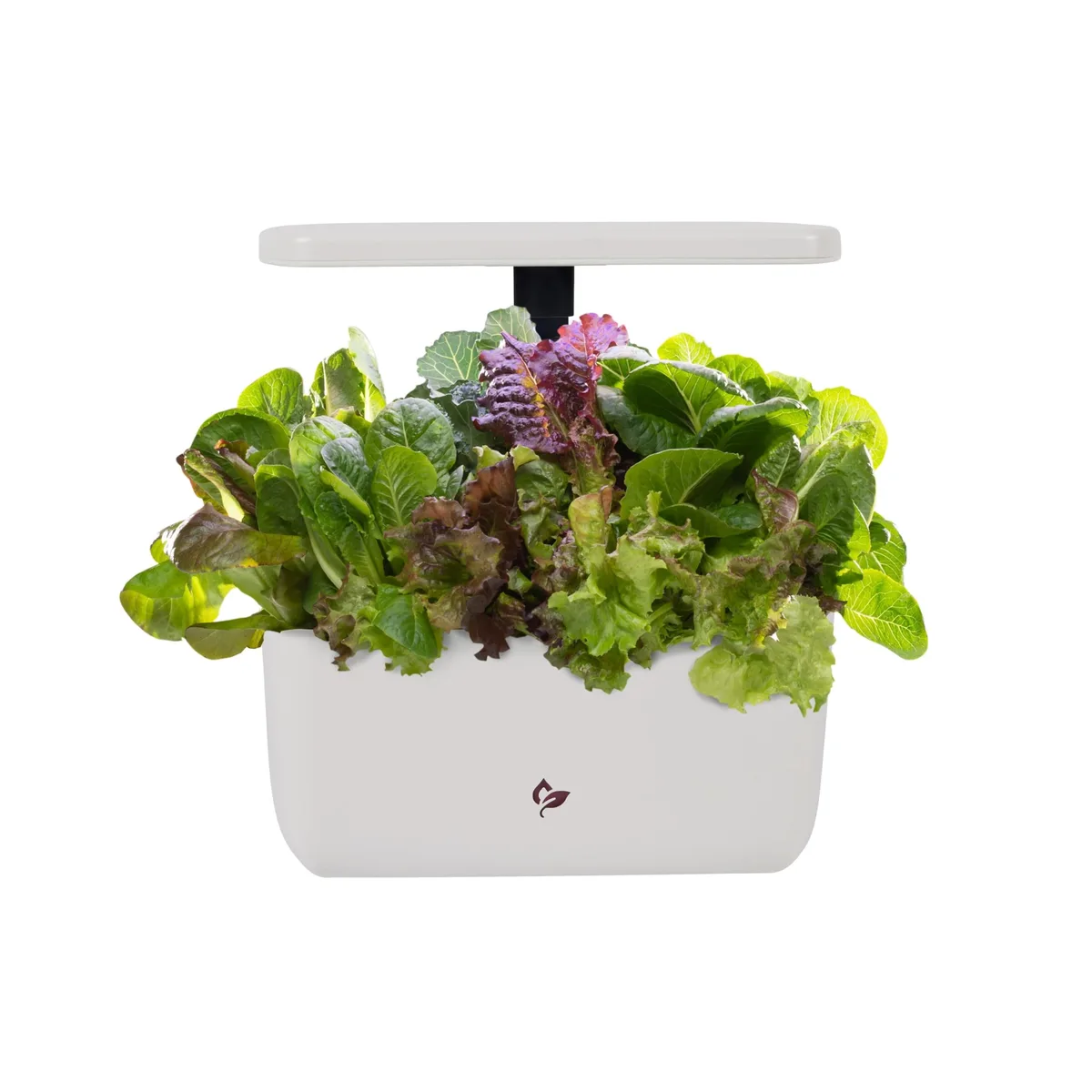
The Harvest 2.0 is the machine that made countertop hydroponics mainstream, and it is still the easiest first grow: drop in the pre-seeded pods, fill the tank, and the garden runs itself. The LED hood is on an automatic timer, the unit reminds you when water runs low and when plant food is due, and a vacation mode stretches the watering interval while you are away. Six pods is a herb-garden size — basil, mint, parsley and a couple of lettuces — rather than a salad factory, and that is exactly the right scale for a first season indoors.
What's new/automated: automatic light scheduling, water-level and feed reminders, and vacation mode in a compact countertop footprint. Pros: the most foolproof start in the category; pre-seeded pods remove the germination gamble; small enough for any counter. Cons: the closed pod ecosystem costs more over time than loose seed — and the brand itself paused operations in late 2025 before relaunching, which is a real ecosystem risk to weigh honestly: pods and support depend on the company staying healthy. Six pods also caps your harvest.
Who it suits: first-time indoor growers who want herbs with training wheels on.
Check Price on Amazon — USCheck Price on Amazon — Canada
Buttons open a search for the AeroGarden Harvest 2.0 on each store, so you see today's price and the current models — we never print prices here because they change daily.
Most pods for the money — LetPot LPH-SE 12-Pod Hydroponics Growing System
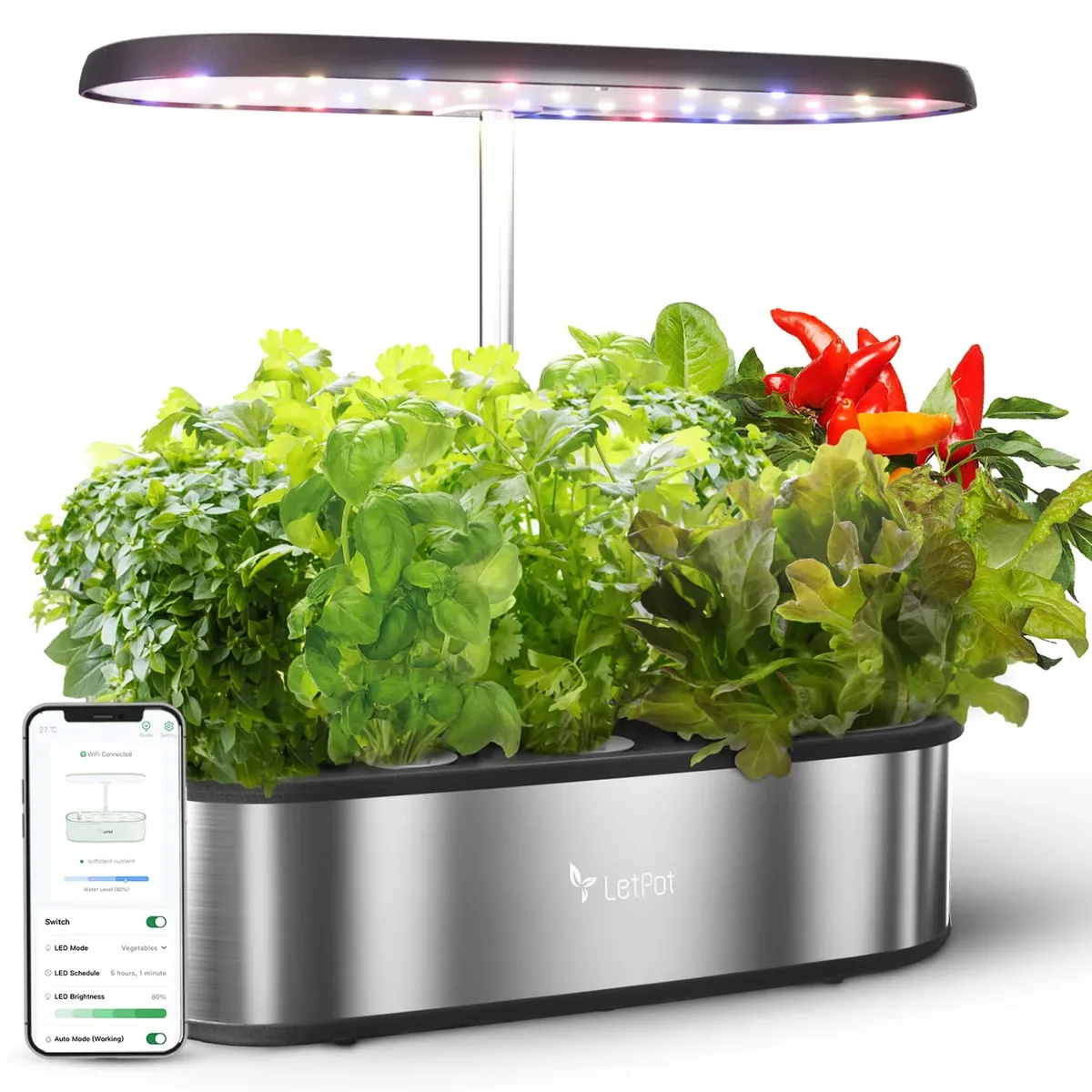
The LetPot LPH-SE doubles the planting slots of the AeroGarden class at a friendlier cost: twelve pods, a large 5.5-litre tank that stretches the time between refills, and a light that raises to roughly 30 inches so taller herbs and small fruiting plants get proper clearance. WiFi app control handles the light schedule and pushes watering and feeding reminders to your phone instead of a light on the unit — the automation lives where you actually look.
What's new/automated: WiFi app control and reminders, a 5.5L reservoir, and tall adjustable light height across 12 pods. Pros: the most growing capacity per dollar in this guide; big tank means fewer refills; sponges accept your own seed easily. Cons: seeds are not included, so your first planting is a separate purchase, and the app is functional rather than polished — it does the job without delighting anyone.
Who it suits: keen cooks who want a dozen herbs running at once and are happy bringing their own seed.
Check Price on Amazon — USCheck Price on Amazon — Canada
Buttons open a search for the LetPot LPH-SE on each store, so you see today's price and the current models — we never print prices here because they change daily.
Lowest upkeep, best looking — Click and Grow Smart Garden 9 PRO
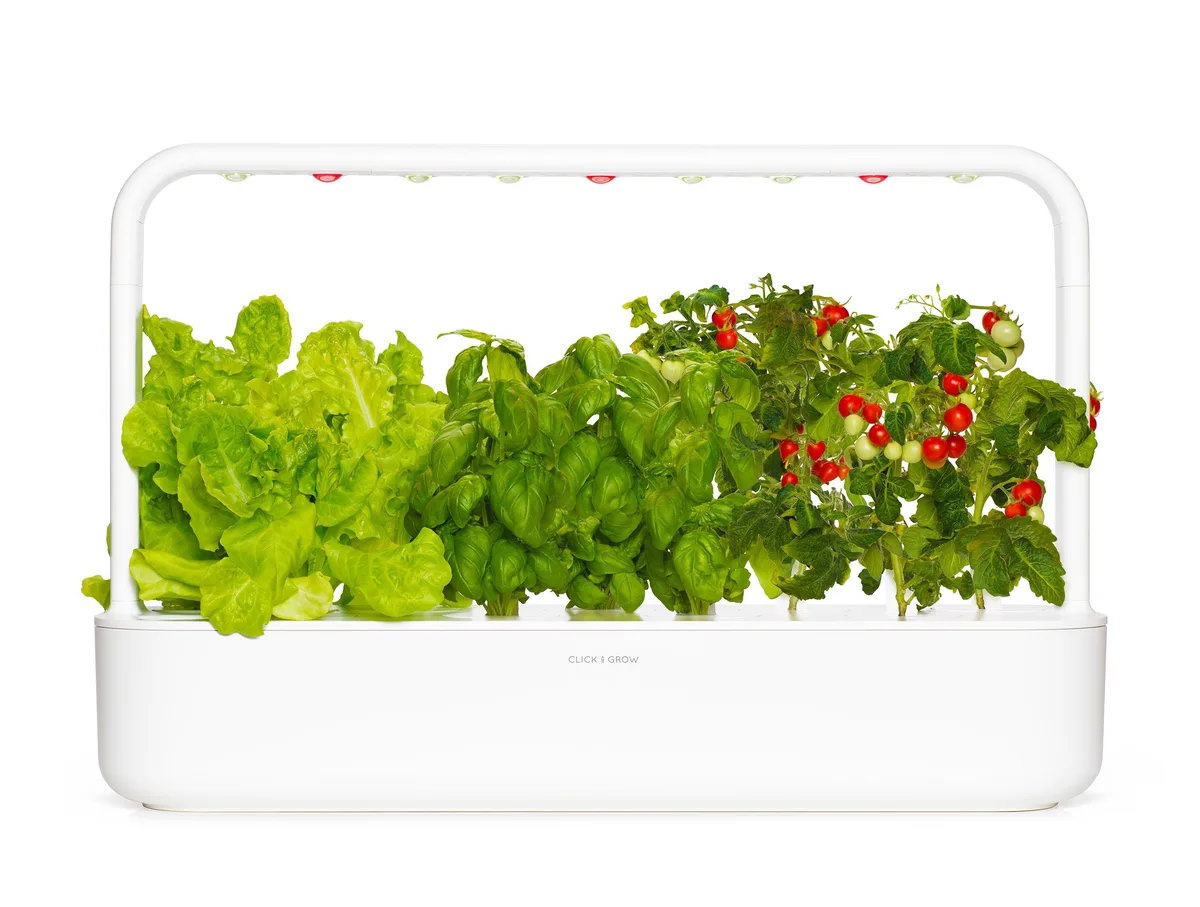
Click and Grow takes the other road: instead of roots in water, its plants grow in soil-based pods that wick water up from the reservoir by themselves, so there is no pump, no liquid food schedule and almost nothing to clean. The 9 PRO adds app connection for light control and plant care prompts, and the unit is designed like kitchen equipment rather than lab gear — it is the one garden here you would leave out when guests come. Growth runs a touch slower than true hydroponics; in exchange, a refill of the water tank every few weeks is close to the whole job.
What's new/automated: self-watering soil pods, automatic light, and app-connected care guidance for nine plants. Pros: the lowest-upkeep system in this guide; quiet, pump-free and genuinely handsome; excellent for herbs and greens with minimal attention. Cons: the most expensive per pod here, and refills are proprietary — you are buying into Click and Grow's capsule catalogue, and fruiting plants push its size limits.
Who it suits: apartment gardeners who want living herbs on the counter with the least possible fuss.
Check Price on Amazon — USCheck Price on Amazon — Canada
Buttons open a search for the Click and Grow Smart Garden 9 PRO on each store, so you see today's price and the current models — we never print prices here because they change daily.
The serious harvest — Gardyn Home Kit 4.0
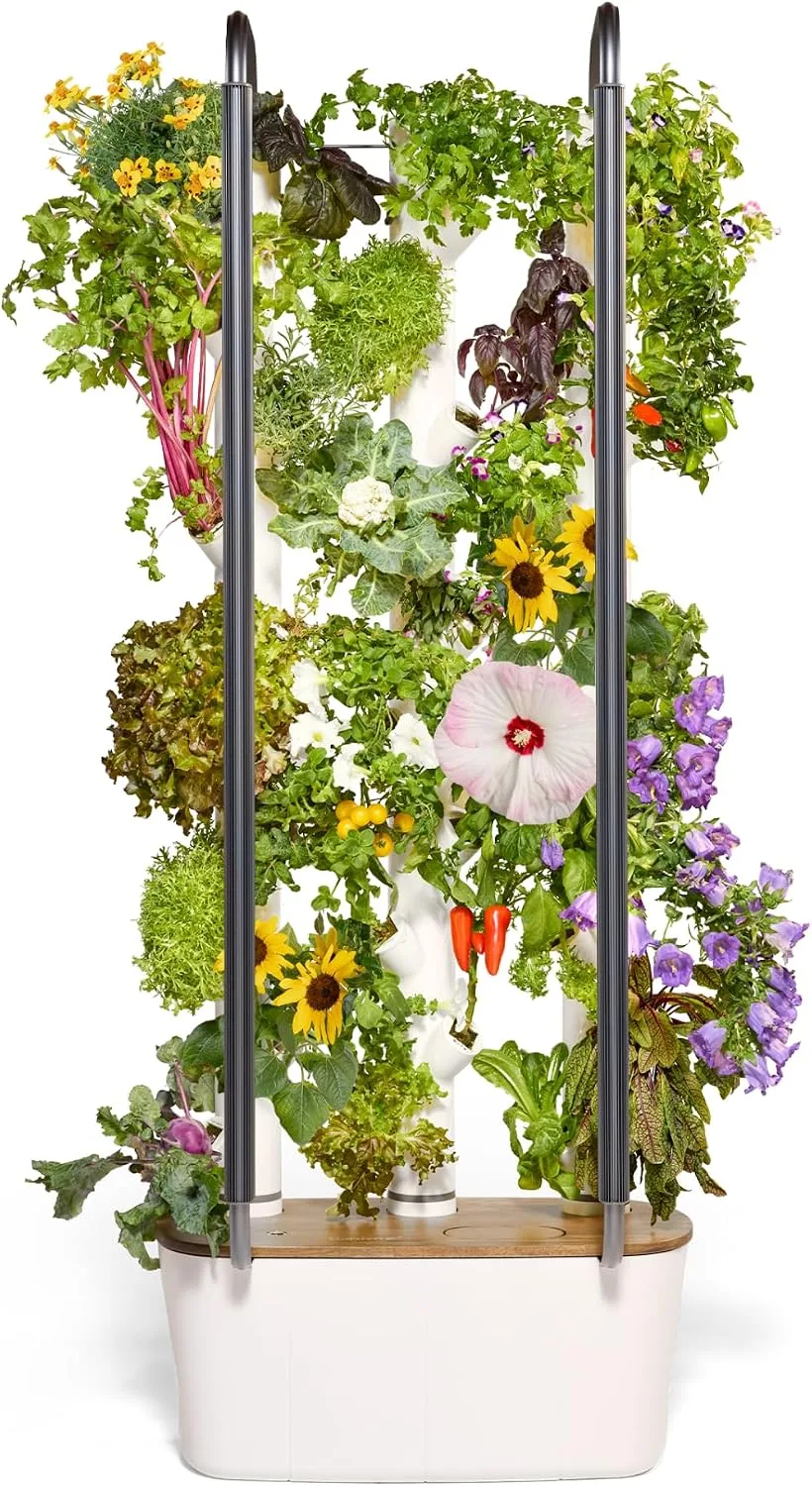
The Gardyn is not a countertop gadget; it is a vertical farm for a corner of your kitchen or living room, growing 30 or more plants in stacked columns under full-height LEDs. Cameras watch the plants and the Kelby AI assistant turns what they see into specific advice — thin this, harvest that, check this plant — which is the closest any home system comes to a gardener looking over your shoulder. For households that eat salad daily and buy herbs weekly, this is the only pick here that changes the grocery bill rather than decorating the counter.
What's new/automated: camera-monitored growing with AI-assisted guidance, automatic light and water management across 30+ plants. Pros: real volume — greens, herbs and even strawberries or peppers; the AI guidance genuinely helps beginners succeed at scale; striking piece of living furniture. Cons: a major purchase with a floor footprint to match, and the assistant's best features sit behind a membership, so the true cost includes an ongoing subscription decision.
Who it suits: committed year-round growers who want produce, not just garnish.
Check Price on Amazon — USCheck Price on Amazon — Canada
Buttons open a search for the Gardyn Home Kit 4.0 on each store, so you see today's price and the current models — we never print prices here because they change daily.
Side by side
| Garden | Plants | How it waters | Automation | Best for |
|---|---|---|---|---|
| AeroGarden Harvest 2.0 | 6 pods | Hydroponic reservoir | Light timer, feed/water reminders, vacation mode | First-timers |
| LetPot LPH-SE | 12 pods | 5.5L hydroponic tank | WiFi app control and reminders | Most pods for the money |
| Click and Grow 9 PRO | 9 pods | Self-watering soil pods | App-connected light and care prompts | Lowest upkeep, best looks |
| Gardyn Home Kit 4.0 | 30+ plants | Tower reservoir | Cameras + AI assistant | Serious year-round volume |
How to choose your smart indoor garden
Count pods against appetites, not counters. Six pods grow garnish; twelve grow a working herb shelf; thirty grow salads. Most disappointed owners bought the size that fit the counter instead of the size that fit the cooking. Measure both, but let the appetite win — an undersized garden becomes a ornament by February.
Hydroponic speed or soil-pod simplicity. Water-based systems grow fastest and ask for top-ups and liquid food; soil pods grow a little slower and ask for almost nothing. There is no wrong answer, only a wrong match for your tolerance for small chores. The mechanics behind the water-based route are explained in Indoor Hydroponics for Beginners, and if your real problem is a dark room rather than a short season, Best Low-Light Indoor Plants covers the unpowered alternative.
Price the ecosystem, not the box. Pods, plant food and memberships are the long-term cost of every system here, and they are proprietary — you cannot shop around later. The AeroGarden note in its card above is the honest version of this rule: a garden is a subscription to a company's health as much as a product. More tool comparisons live on the Tools hub.
Keep going
New to growing in water? Indoor Hydroponics for Beginners explains reservoirs, nutrients and light in plain terms before you spend anything.
More comparisons and the full tool shelf live on the Tools hub.
Questions people ask
Do smart indoor gardens actually save work?
Yes — they automate the two jobs that kill indoor plants: light timing and watering. The LED runs on a built-in timer, the roots sit in a reservoir or self-watering pod, and the machine reminds you when to add food or water. Your remaining work is a refill every week or two and harvesting.
How fast do herbs grow in a countertop garden?
Fast herbs like basil typically reach a first light harvest in about three to four weeks from pod to plate, and lettuce is similar. Fruiting plants such as cherry tomatoes take longer — usually eight to twelve weeks to ripe fruit — and need the taller light clearance of a bigger unit.
What does a smart indoor garden cost to run?
The electricity is minor — the LED hoods draw about as much as one or two household bulbs, run on a timer. The real running cost is refills: seed pods, plant food and, on some ecosystems, proprietary consumables. Budget for pods the way you would budget for seeds and compost outdoors.
Can I plant my own seeds in a smart garden?
Usually, yes. AeroGarden sells Grow Anything kits, LetPot sponges accept loose seed, and Click and Grow offers plant-your-own pods. What you cannot do is escape the pod format itself — every system here grows in its own baskets or capsules, which is the price of the automation.
Hydroponic or soil-pod indoor garden — which is better?
Hydroponic systems (AeroGarden, LetPot, Gardyn) grow fastest and give the biggest harvests, but ask for water top-ups and liquid food. Soil-pod systems (Click and Grow) grow a little slower with almost zero maintenance and no pumps. Pick speed or simplicity — both beat a windowsill in January.
Sources
Key facts on this page cross-checked against AeroGarden — the maker's Harvest 2.0 specifications and pod system — Click and Grow — Smart Garden 9 PRO specifications — Gardyn — Home Kit 4.0 and Kelby assistant details — and Hydroponics — Wikipedia — background on soilless growing.
Related page
Read next: Indoor Hydroponics for Beginners: How It Works and What to Grow First.
Comments & ratings
No comments yet.
Be the first to share your experience.