
Guides · Container growing · Published November 20, 2026 · By Faizan Ahmad
Best Vegetables to Grow in Containers: 12 Crops With Exact Pot Sizes
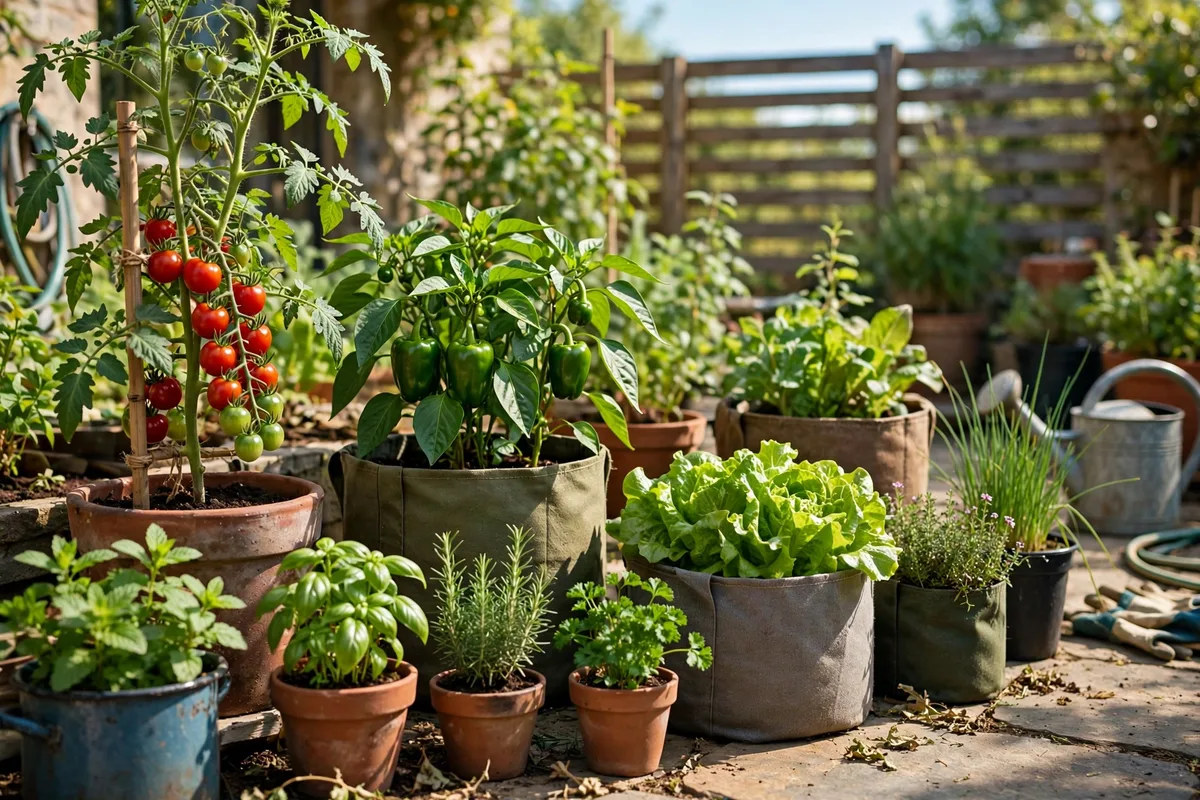
The best vegetables to grow in containers are the ones bred or born compact — cherry tomatoes, peppers, lettuce and salad greens, bush beans, kale, radishes, carrots, cucumbers, eggplant, zucchini, potatoes in grow bags, and herbs — and container success is decided less by the crop than by the pot: greens and herbs thrive in containers 6–8 inches deep, peppers and bush beans need 3–5 gallons, and fruiting crops like tomatoes, cucumbers and zucchini need 5–10 gallons per plant. Undersize the pot and no amount of feeding rescues the plant, because a small pot holds too little water to survive a hot afternoon and too little soil to feed a fruiting crop. This guide gives the twelve most reliable container vegetables with the minimum container for each, then covers the four things that actually run a container garden — soil, sun, watering and feeding — at the level of detail that decides harvests. If you are setting up your first pots, read it alongside our ground-up primer, Container Gardening for Beginners; if your containers live on a balcony, the weight, wind and rules version is Balcony Vegetable Gardening.
The short answer, on one card
- Easiest five: lettuce, radishes, herbs, bush beans, cherry tomatoes — in that order of forgiveness.
- Pot size is the master variable: 6–8 in deep for greens and herbs; 3–5 gal for peppers, beans and kale; 5–10 gal for tomatoes, cucumbers, eggplant and zucchini; 7–10 gal grow bags for potatoes.
- One plant per pot for every fruiting crop. Crowded pots are the beginner's tax.
- Use potting mix, never garden soil — soil in a pot compacts, drains badly and imports weed seed.
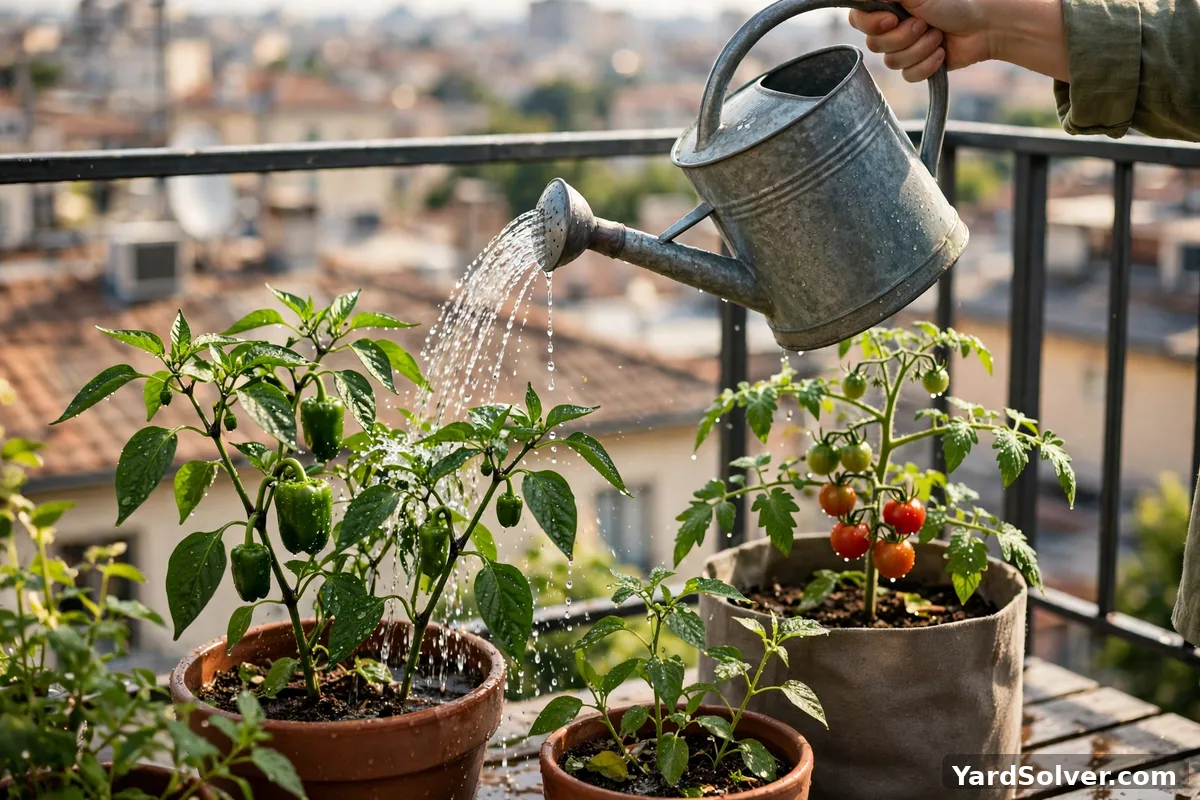
- Water daily in summer for fruiting crops; containers dry from all sides, not just the top.
- Feed little and often: a liquid feed every 1–2 weeks once flowering starts, because every watering washes nutrients out of the drainage holes.
- Choose container varieties: packets marked patio, bush, dwarf or determinate are bred for exactly this life.
The pot-size chart: minimum container per crop
| Crop | Minimum container | Depth | Sun | The note that matters |
|---|---|---|---|---|
| Cherry tomato (determinate / dwarf) | 5 gal (19 L); 10 gal is better | 14–18 in | 6–8 hrs | One plant per pot; cage at planting, not after |
| Peppers (bell and chilli) | 3–5 gal (11–19 L) | 12–14 in | 6–8 hrs | Pots suit peppers — warm roots, and they can overwinter indoors |
| Lettuce & salad greens | Wide box or pot, 1–2 gal shared | 6–8 in | 3–6 hrs | Cut-and-come-again; sow a fresh box every 2–3 weeks |
| Radishes | Wide, shallow pot | 6–8 in | 4–6 hrs | The fastest pot crop — ready in about a month |
| Bush beans | 3–5 gal (11–19 L) | 10–12 in | 6 hrs | Several plants per pot; no trellis needed |
| Kale & Swiss chard | 3–5 gal (11–19 L) | 10–12 in | 4–6 hrs | Harvest outer leaves and one plant feeds you for months |
| Carrots | Deep pot or bucket | 10–12 in | 6 hrs | Short, round varieties only; loose, stone-free mix |
| Beets | 2–3 gal | 8–12 in | 4–6 hrs | Two harvests in one pot: greens first, roots after |
| Cucumber (bush or trellised) | 5 gal (19 L) | 12–14 in | 6–8 hrs | A small trellis turns one pot into a wall of cucumbers |
| Eggplant (compact varieties) | 5 gal (19 L) | 12–14 in | 6–8 hrs | Feed generously from first flower; loves pot heat |
| Zucchini (compact bush) | 7–10 gal (26–38 L) | 14–16 in | 6–8 hrs | One plant per large pot — it will still try to take the patio |
| Potatoes | 7–10 gal grow bag | 14–16 in | 6 hrs | Plant shallow, hill soil up as stems grow, tip out to harvest |
| Herbs (basil, parsley, chives) | 1–2 gal per plant | 6–10 in | 4–6 hrs | Mint always alone in its own pot — it takes any space it shares |
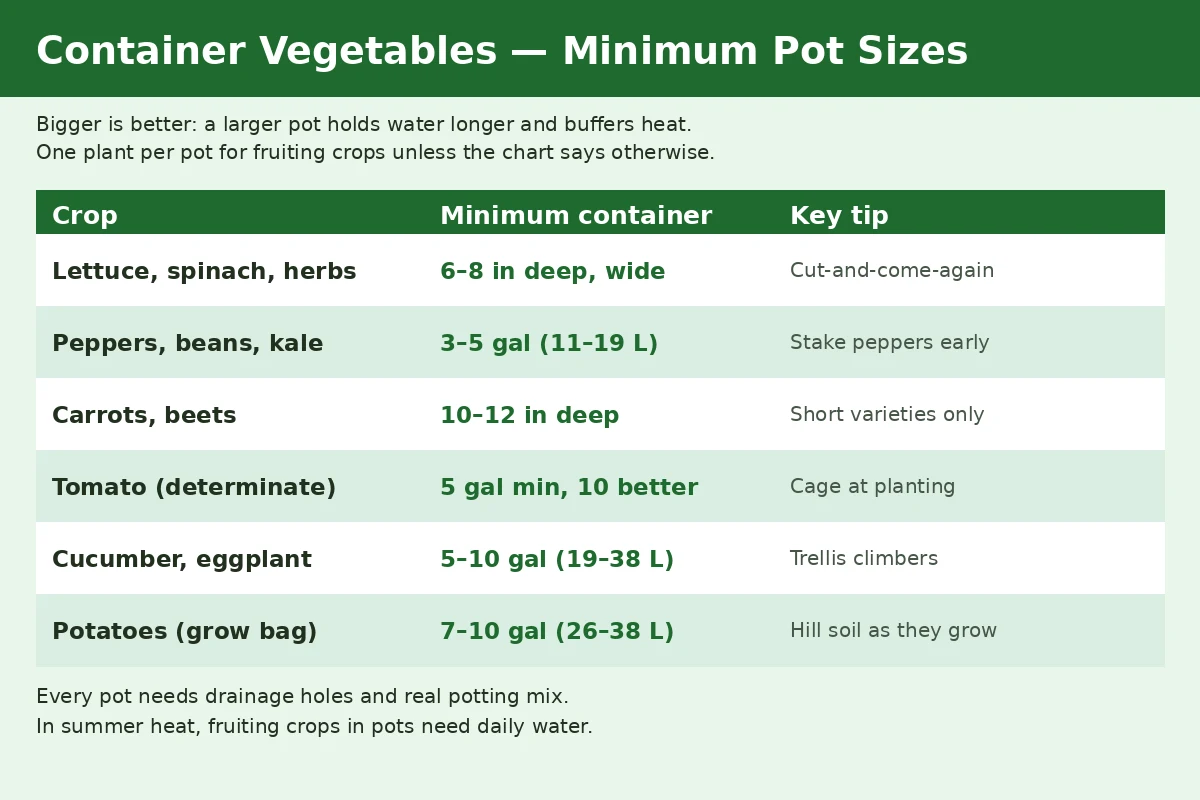
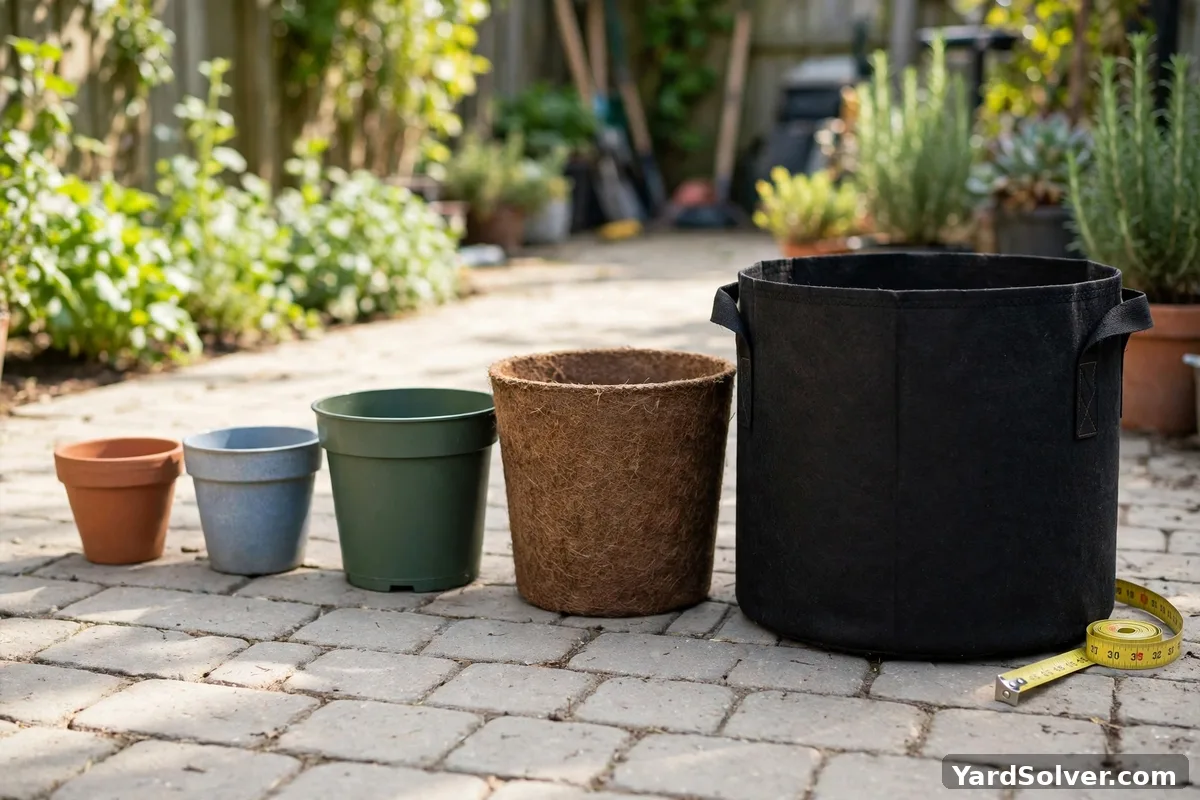
Read the chart as minimums, not ideals. A 5-gallon tomato survives and produces; a 10-gallon tomato thrives and forgives a missed watering. The pattern underneath the numbers is water: a container's soil volume is its reservoir, and fruiting crops in full leaf on a hot day can drink a small pot dry between morning and evening. When a bargain offers you a choice between a prettier pot and a bigger one, take the bigger one every time — and whatever the material (terracotta breathes and dries fastest, plastic holds water longest, fabric grow bags air-prune roots and are the budget champions), every pot needs drainage holes. A pot without drainage is not a planter; it is a bucket, and roots drown in buckets.
The twelve, and why each earns its pot
Cherry tomatoes are the container champion: a single determinate or dwarf plant in a 5–10 gallon pot produces handfuls of fruit for months, where a full-size slicing tomato in the same pot spends its energy on vine. Peppers may be even better suited to pots than to beds — the pot warms their roots, the harvest is heavy for the footprint, and a prized plant can come indoors to overwinter. Lettuce and greens are the fastest return on the smallest investment: a window box sown thick, cut leaf by leaf, re-sown monthly. Radishes are the confidence crop, ready in about a month in 6 inches of mix. Bush beans ask for nothing — no trellis, no staking — and fix their own nitrogen while they produce. Kale and chard are the marathon crops, harvested from the outside in for an entire season from one pot. Carrots work only with the rules obeyed: short varieties, deep loose mix, no stones. Beets pay twice, greens then roots. Cucumbers trellised up a railing give the most food per square foot of patio of anything on this list. Eggplant, in its compact varieties, fruits heavily in pot heat. Zucchini is the glorious exception to "compact" — one plant in a 10-gallon pot will still feed a household, which is exactly the right amount of zucchini. And potatoes in grow bags turn a square metre of patio into a sack of potatoes, harvested by tipping the bag onto a tarp — no fork, no missed tubers, no dug bed.
Soil, sun, water, feed: the four systems
Soil. Fill pots with a quality soilless potting mix — peat or coir, bark and perlite — never garden soil, which compacts in containers and drains poorly however good it is in the ground. Mix a slow-release fertilizer into the fill at planting, because a pot starts with no nutrient bank of its own. At season's end, pot soil can be refreshed with a third fresh mix and reused for undemanding crops, but soil that grew a diseased tomato should leave the rotation. Sun. Fruiting crops — tomato, pepper, eggplant, cucumber, zucchini — need 6–8 hours of direct sun; greens, herbs and roots manage on 4–6, which makes them the crops for the shadier half of the patio. The container advantage is mobility: pots can chase the sun across the season and retreat to shade in a heatwave, so put the biggest pots on casters or stands before they are filled and immovable. Water. Containers dry from every side, and the rule in summer is simple: check daily, water thoroughly until it runs from the drainage holes, and never let a fruiting crop wilt hard twice — irregular watering is the direct cause of blossom end rot in tomatoes and peppers. Self-watering pots and drip lines on a timer are not luxuries in a container garden; they are the difference between a harvest and a near-miss in any week you travel. Feed. Every thorough watering washes nutrients out of the pot, so container crops are fed little and often: a balanced liquid feed at half strength every week, or full strength every two weeks, from first flower to last harvest. Greens want nitrogen for leaves; fruiting crops want a tomato-type feed once flowers appear — too much nitrogen then grows a magnificent bush with three tomatoes on it.
What not to grow in pots (and the honest exceptions)
Sweet corn is the classic pot failure — it needs a block of plants for wind pollination and a depth of soil no patio pot offers. Pumpkins and winter squash vine beyond any container's charity, though a compact zucchini shows where the family's limit sits. Full-size indeterminate tomatoes can be done in 15–20 gallon containers with serious staking, but the determinate varieties give more fruit per litre of mix and per hour of care. Asparagus and rhubarb are perennials that want years in undisturbed ground; a pot is a short let on a long tenancy. Everything else on the standard vegetable list has a workable container version — the chart above is the honest dozen to start with, and the pattern to copy for any crop you add: match the pot to the root system, choose the compact variety, and never let the reservoir run dry.
Grouping, shelter and the second season
Three habits separate container gardens that thrive from ones that merely survive. Group the pots. Containers clustered together shade each other's walls, hold a pocket of humid air around the leaves and measurably slow the drying that kills more container crops than any pest — a lone pot in full sun on paving is the hardest life a plant on this page can be given. Use the microclimates you own. The warm wall that ripens a pepper in a cool summer is the same wall that bakes a lettuce in a hot one; containers are the one garden you can rearrange by weather, so move greens into afternoon shade in heatwaves and fruiting crops into the longest sun in a dull spell. Plan the pot's second season on the day you empty it. Peppers can be cut back and overwintered indoors to fruit months earlier next year; herbs divide and multiply; the mix itself, refreshed with a third new potting mix and a fresh charge of slow-release feed, grows a second year of undemanding crops before it retires to the flower beds. A container garden is not a lesser garden squeezed into pots — managed this way, with the right crop in the right volume and the pots moved like furniture as the season turns, it out-produces the same square metres of open ground, because every input it receives is aimed at a single plant.
Keep going
New to pots entirely? Container Gardening for Beginners walks the first setup end to end — pots, mix, drainage and the first planting — and Balcony Vegetable Gardening covers the balcony version: weight limits, wind, watering and building rules.
Growing the tomato from the chart? How to Grow Strawberries in Pots is the fruit companion to this guide, and potatoes in bags have their own step-by-step in How to Grow Potatoes in Bags.
Sources
Pot sizes and crop guidance cross-checked against Farmer's Almanac — 10 Easiest Container Plants, which compiles University of Minnesota and Penn State Extension container guidance (minimum depths by crop, one plant per pot for fruiting crops, determinate varieties for containers), the Canada-specific sizing in GrowersGuide.ca — Best Container Vegetables Canada: Pot Size Guide (litre-based minimums and recommended sizes for 20+ vegetables), and the crop-by-crop table at ToGardener — Best Vegetables to Grow in Containers. Where sources disagree, this guide prints the larger, safer minimum — in containers, the bigger pot is almost never the mistake.
Questions people ask
What is the easiest vegetable to grow in a container?
Lettuce and radishes, for opposite reasons: lettuce forgives shade, small pots and beginner watering, and radishes are harvested in about a month, before most mistakes matter. The easiest fruiting crop is a determinate cherry tomato in a 5–10 gallon pot — one plant, a cage, daily water, and handfuls of fruit for months.
How big a pot do tomatoes need?
Five gallons (19 L) is the working minimum for a determinate or dwarf cherry tomato, one plant per pot, and 10 gallons is noticeably better — more water reserve, steadier growth, fewer problems. Indeterminate (vining) tomatoes need 10 gallons at the very least and are happier at 15–20, with strong staking.
Can I use garden soil in pots?
No — soil that performs well in the ground compacts in a container, drains badly and brings weed seed with it. Use a soilless potting mix (peat or coir, bark, perlite), and mix in slow-release fertilizer at planting, because a pot has no nutrient bank of its own.
How often should I water vegetables in containers?
In summer, daily for fruiting crops — and twice a day in heatwaves for small pots. Water thoroughly until it runs from the drainage holes, in the morning where you can. Irregular watering is the main cause of blossom end rot in potted tomatoes and peppers; a timer-fed drip line is the reliable fix.
What vegetables grow in small pots?
Anything shallow-rooted: lettuce, spinach, arugula, radishes, green onions and most herbs thrive in containers just 6–8 inches deep, including window boxes. The trade is water — small pots dry fastest, so group them together and check them every day in warm weather.
Do container vegetables need fertilizer?
Yes — more reliably than bed vegetables, because every watering washes nutrients out through the drainage holes. A balanced liquid feed at half strength weekly (or full strength fortnightly) from first flower to final harvest, plus slow-release fertilizer mixed into the potting mix at planting, covers the season.
Comments & ratings
No comments yet.
Be the first to share your experience.