
Guides · Plant problems · Published November 22, 2026 · By Faizan Ahmad
Eggshells for Blossom End Rot: Fact Check — Why Shells Can't Fix a Watering Problem
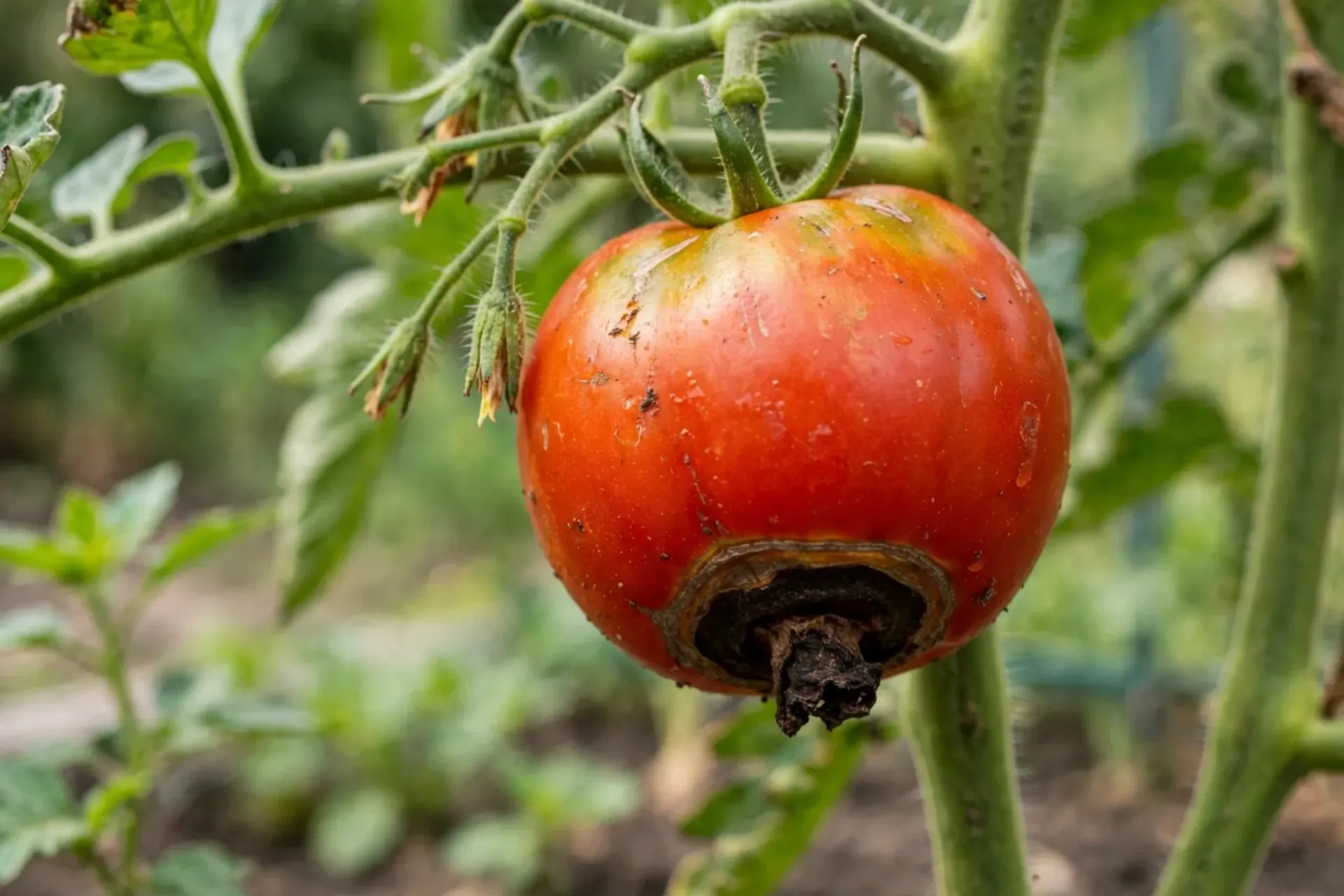
Eggshells do not prevent blossom end rot, because blossom end rot is rarely caused by a lack of calcium in the soil: Penn State and Mississippi State Extension both describe it as a delivery problem — uneven watering stops the plant moving the calcium it already has up into the fruit — and eggshells, which can take years to break down, cannot change that this season. The fix is steady moisture, mulch and undamaged roots. This guide checks the eggshell claims fairly: what shells really contain, the one form (fine powder) that behaves like lime, the planting-hole ritual, eggshell tea, and what to do instead when the black patch appears. For the full disorder walkthrough, see Blossom End Rot on Tomatoes.
On this page
- The verdicts, in one card
- First, the real cause — a delivery problem, not a shortage
- Claim 1 — “Shells in the planting hole prevent blossom end rot”
- Claim 2 — “Shells feed calcium to the plant”
- Claim 3 — “Eggshell tea or vinegar extract fixes it fast”
- What actually works — steady water, mulch, then a soil test
The verdicts, in one card
- “Shells in the planting hole prevent blossom end rot”: myth — the rot is a watering problem, and shells release calcium far too slowly to matter
- “Shells add calcium to soil”: true but on a timescale of years, unless ground to a fine powder
- “Eggshell tea fixes rot quickly”: unsupported — the calcium dose is tiny and the cause is usually transport, not supply
- What works: even soil moisture from flowering onward, mulch, and a soil test before adding any calcium
- The common thread: treat the delivery system (water), not the warehouse (soil calcium)
First, the real cause — a delivery problem, not a shortage
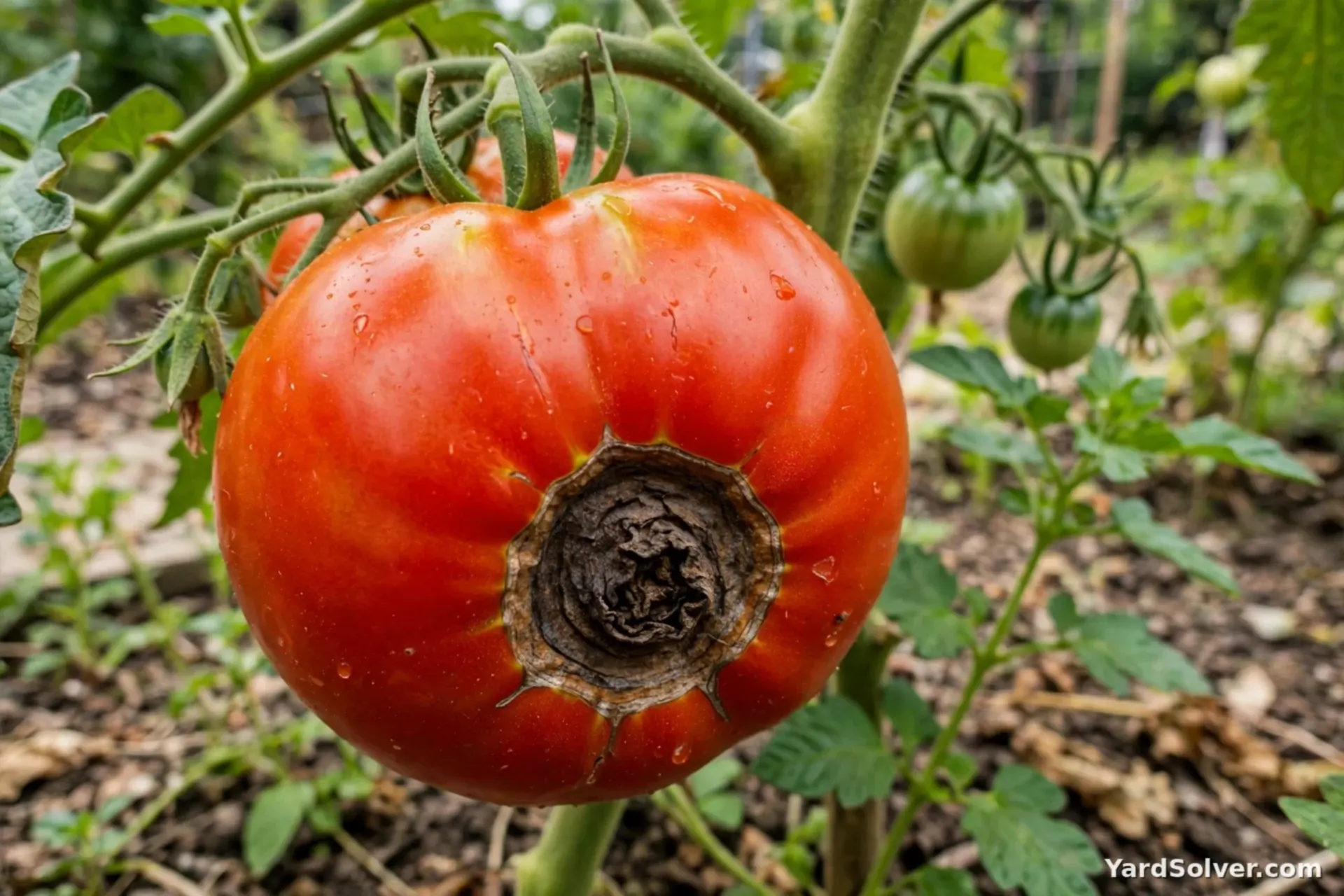
Blossom end rot is a physiological disorder, not a disease: the cells at the far end of the fruit collapse into a dark, leathery patch because they ran short of calcium while they were forming. The key fact — stated plainly by Mississippi State University Extension — is that the shortage is in the fruit, not usually in the soil. Calcium moves through a plant only dissolved in water, pulled up from the roots as leaves transpire. If the soil swings between dry and soaked, or roots are damaged by hoeing or drought, the delivery stalls, and the fruit — last in line, at the end of the longest pipe — is where the stall shows. Most garden soils hold plenty of calcium; the plant simply cannot ship it on an interrupted water supply.
That single mechanism explains why the folk cures cluster around calcium and still fail: they restock a warehouse that was never empty while the delivery truck sits idle.
Claim 1 — “Shells in the planting hole prevent blossom end rot”
Penn State Extension addresses this one directly: adding broken eggshells to the transplant hole is a widespread habit, and “neither of these methods is supported by research” — the other being starting tomato seeds inside a shell. Two independent problems sink the ritual. First, the cause: if the soil already has calcium and the failure is transport, adding more calcium at the roots changes nothing. Second, the timing: even where soil calcium genuinely is low, a shell buried in May is still recognisably a shell at harvest. Penn State notes eggshells can take decades to decompose fully — archaeologists recover them intact from century-old kitchen middens. A remedy that arrives years after the problem is not a remedy for this season's tomatoes.
Claim 2 — “Shells feed calcium to the plant”
This claim is chemically honest and practically misleading. Eggshells are roughly 94–96% calcium carbonate — the same compound as agricultural lime — so the calcium is really there. What folklore omits is the release rate, which is governed by particle size. In an Alabama Cooperative Extension comparison reported by Illinois Extension, coarsely crushed shells performed “not much better than nothing at all,” while shells ground to a fine powder performed as well as pure calcium carbonate. Between those two results sits the whole truth of the claim: powder your shells and you have a slow, weak lime; crush them with your hands and you have garden archaeology.
Used with that understanding, shells are harmless and mildly useful: washed, dried, baked briefly to sanitise (Penn State suggests 200–250°F for 10–20 minutes, since shells can carry Salmonella on their surfaces), ground fine and added to compost or soil, they contribute a little calcium over the long term. What they cannot do is rescue a fruiting tomato this summer.
Claim 3 — “Eggshell tea or vinegar extract fixes it fast”
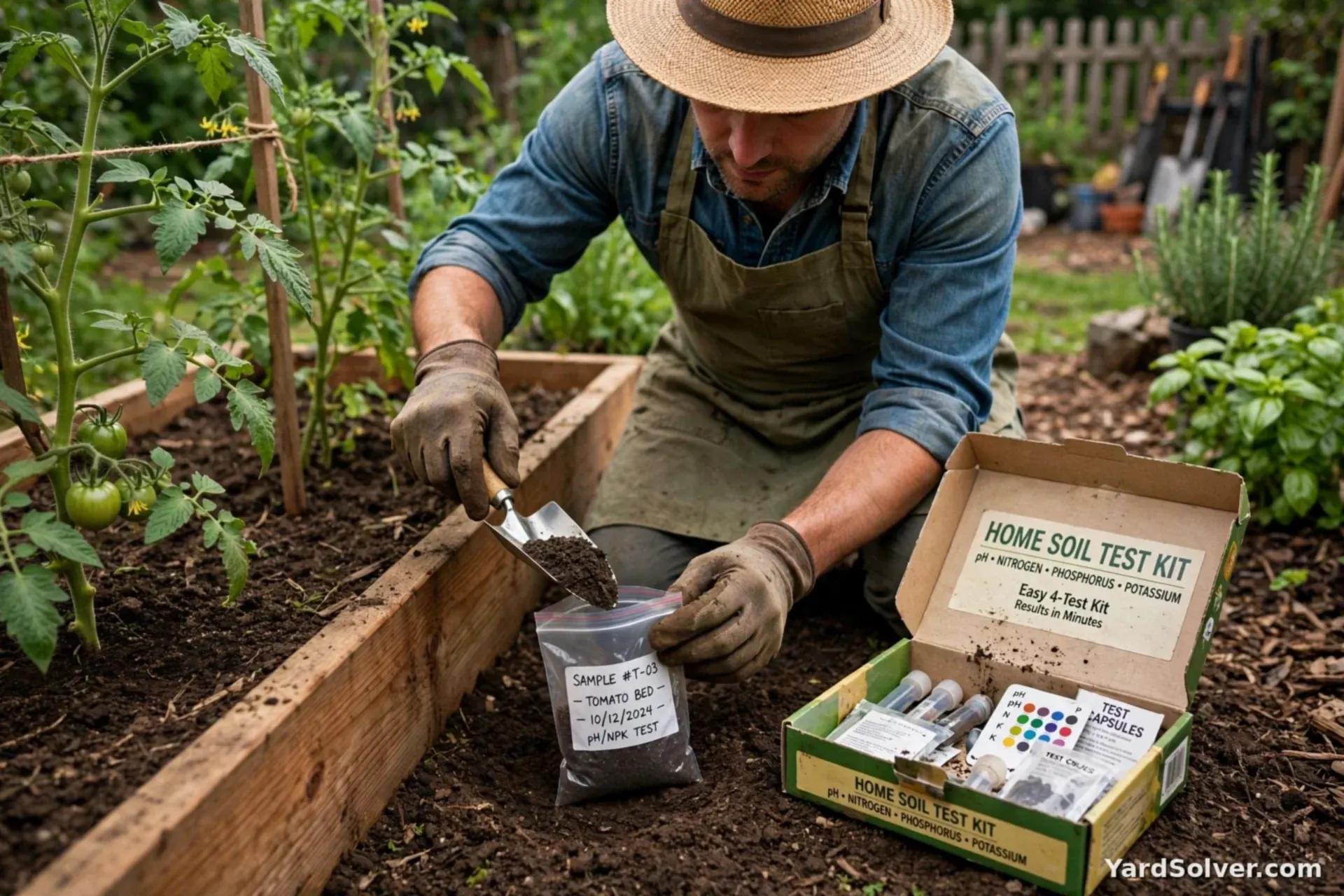
Steeping shells in water, or dissolving them in vinegar, does put some calcium into the liquid — the chemistry is real. The problem is scale and diagnosis. Each shell holds only a few milligrams of readily soluble calcium in these preparations, and if the plant's problem is interrupted transport, pouring calcium at the roots — in any form — still does not move it into the fruit. No extension source recommends eggshell tea as a blossom end rot treatment. Where a soil test (not a guess) shows genuinely low calcium, the effective corrections are lime or gypsum at test-based rates, worked out with the same soil-first method as our soil pH guide — materials whose dose you can actually measure.
What actually works — steady water, mulch, then a soil test
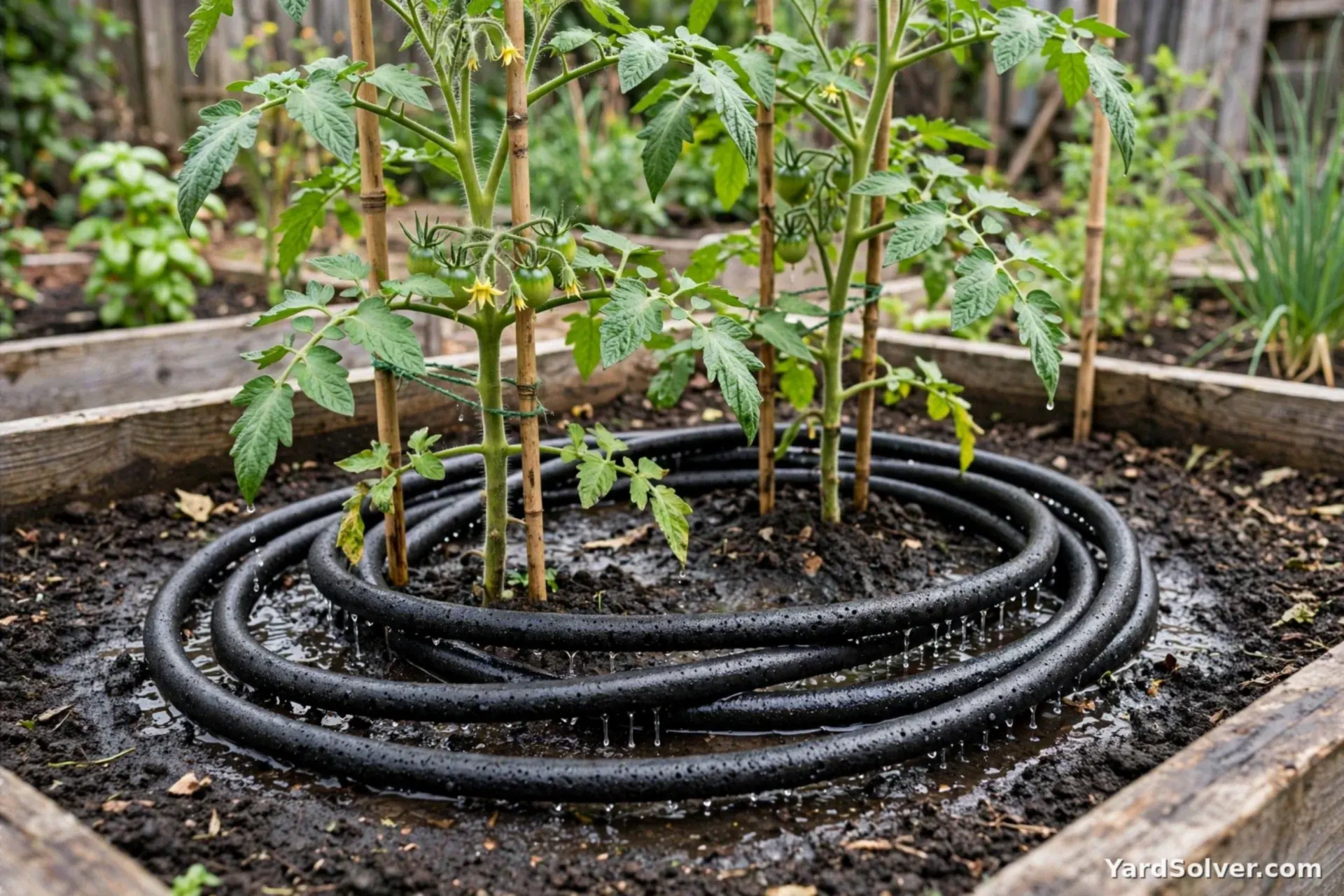
The extension prescription is unglamorous and effective. Keep soil evenly moist from flowering onward — deep, regular watering rather than feast-and-famine; our Watering Schedule Calculator turns that into a per-crop routine. Mulch the root zone to slow evaporation swings. Avoid tearing roots with deep hoeing beside the plants. Remove fruit that is already rotted — it will not recover — and expect later fruit to come clean once moisture steadies, which is also why so many “cures” appear to work: the remedy is applied, the watering quietly improves or the weather changes, and the next truss is fine anyway. Only if rot persists on a well-watered plant should calcium enter the conversation, and then through a soil test, not a shell. This is the same pattern as the Epsom salt chapter of our Garden Remedies Fact-Check: a calcium story attached to a water problem.
Questions people ask
Will eggshells stop blossom end rot on my tomatoes?
No. Blossom end rot is usually a calcium delivery problem caused by uneven watering, not a shortage of calcium in the soil — and eggshells break down far too slowly to add usable calcium in the season you plant them. Penn State Extension states the planting-hole method is not supported by research.
What actually causes blossom end rot?
Calcium reaches the fruit dissolved in the water the plant pulls up from its roots. When soil moisture swings between dry and soaked, or roots are damaged, that delivery stalls and the far end of the fruit collapses. Mississippi State Extension: keep soils evenly moist, especially once plants begin to bloom.
Are eggshells useless in the garden, then?
Not useless — just slow. Ground to a fine powder they behave like a weak lime and can contribute calcium over years, and they are a fine compost ingredient. Coarsely crushed shells, by contrast, performed little better than nothing in an Alabama Extension comparison.
Should I add calcium if I keep getting blossom end rot?
Only on evidence. If rot continues on plants that are watered evenly, take a soil test: it is the only way to know whether calcium (or pH) is genuinely the problem, and it gives you a real rate for lime or gypsum if it is.
Is eggshell tea a fast calcium feed?
It contains a little dissolved calcium, but the dose per shell is only a few milligrams and it does nothing for the transport problem that usually causes the rot. No extension service recommends it as a blossom end rot treatment.
Sources
Key claims cross-checked against Penn State Extension — “Coffee Grounds and Eggshells: Garden Myths vs. Facts” (planting-hole and seed-in-shell methods not supported by research; shells' very slow decomposition; sanitising shells before use) · Mississippi State University Extension — “Can Eggshells Prevent Blossom End Rot?” (uneven water availability as the usual cause; soil test before adding calcium). The particle-size result is the Alabama Cooperative Extension comparison reported by University of Illinois Extension.
Related page
Read next: Blossom End Rot on Tomatoes: the Full Fix, Step by Step
Comments & ratings
No comments yet.
Be the first to share your experience.