
Guides · Soil & feeding · Published November 22, 2026 · By Faizan Ahmad
How to Adjust Soil pH: Lime & Sulfur Rates by Soil Type
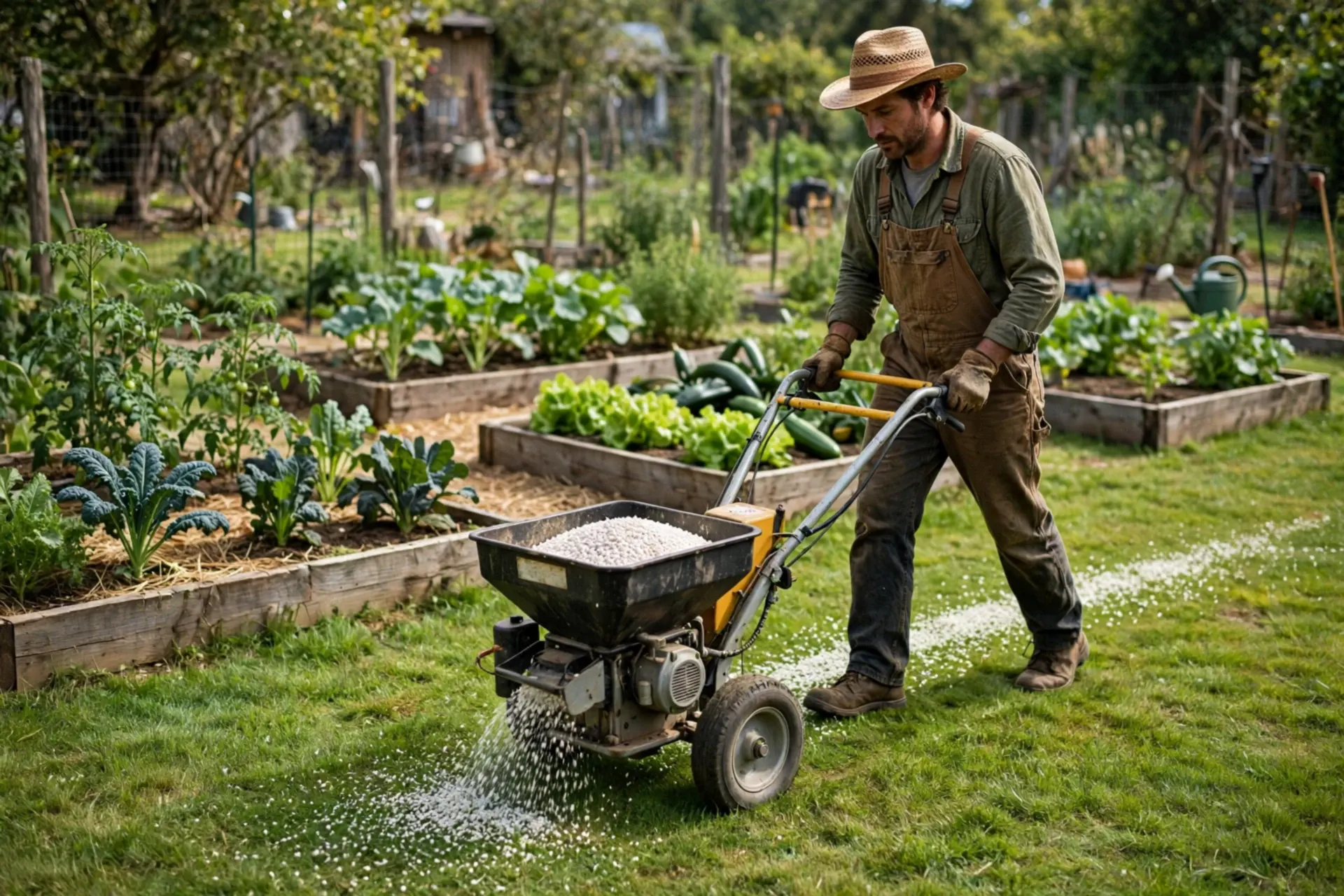
To adjust soil pH, you add lime to raise it or elemental sulfur to lower it — and the dose depends as much on your soil type as on the pH numbers, because clay resists change roughly twice as hard as sand. That single fact is why flat-rate advice fails, and it is the method built into our Soil pH Calculator: current pH, target pH and soil texture in, an honest dose out. This guide shows the tables behind it, how to read a soil test, and how to apply the correction without overshooting.
The short answer, on one card
- Raise pH with lime: per 1,000 sq ft per pH unit — sand ~46 lb, loam ~92 lb, clay ~115 lb
- Lower pH with sulfur: per 1,000 sq ft per pH unit — sand ~12 lb, loam ~17 lb, clay ~24 lb
- Soil type is the dose: the same pH move can take twice the material on clay as on sand
- Split big doses: lime over 50 lb per 1,000 sq ft, sulfur over 10 lb, go on in passes months apart
- Retest, don't re-dose: check again after 6–12 months before adding more
Step 1 — Test first, and know your soil type
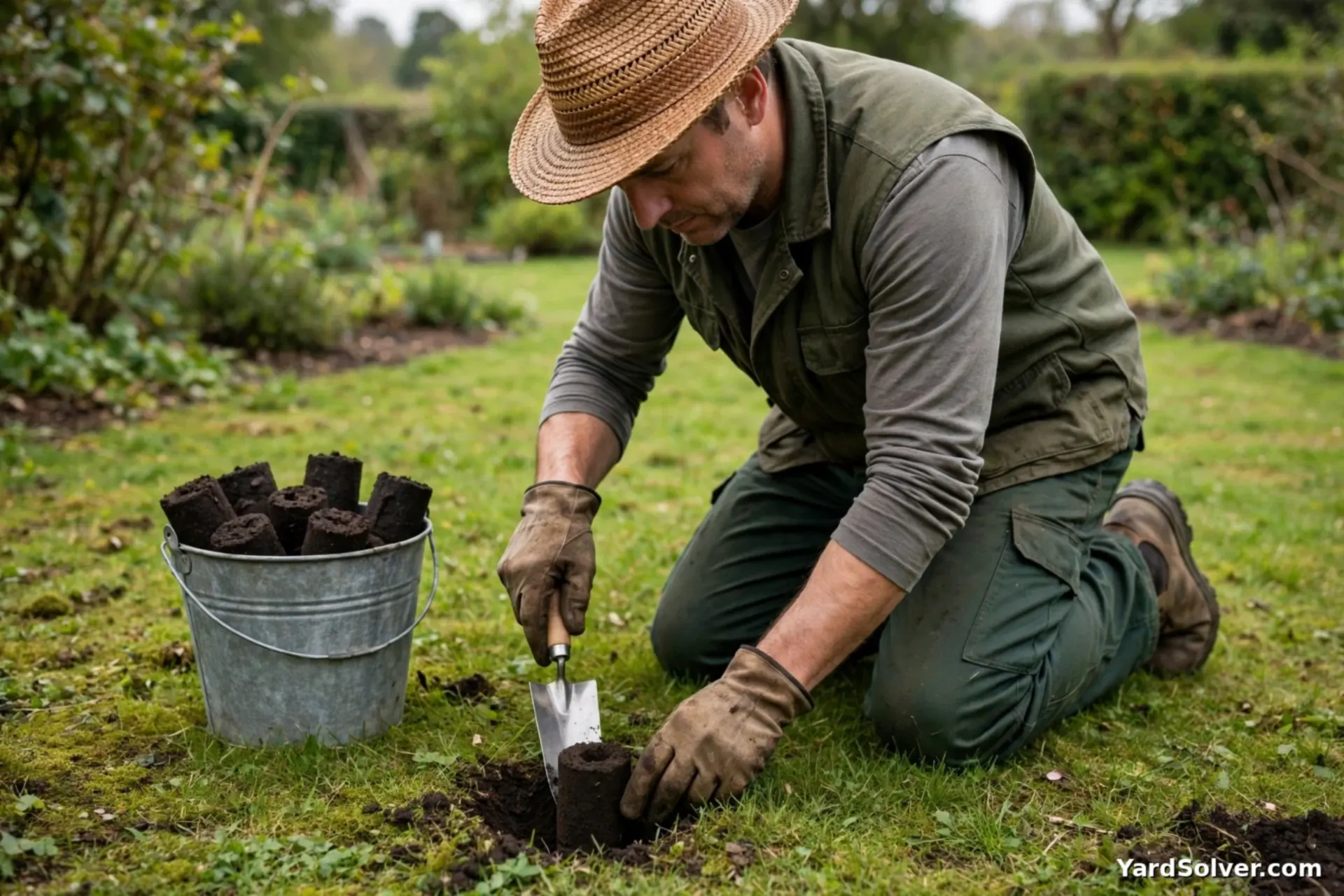
A pH number alone does not set a dose; a pH number plus a texture does. Take samples from several spots in the bed or lawn, mix them, and test the blend — one scoop from one corner can be a full unit away from the bed’s average. A probe or home kit reads within a few tenths, which is enough to choose a rate band. A lab test adds the decisive extra: buffer pH, a direct measure of how hard your soil will fight the change, and the figure professional lime recommendations are built from.
Texture you can judge by hand: sand feels gritty and will not ribbon; loam crumbles and holds a loose ball; clay ribbons between finger and thumb and stains the skin. Most garden soils sit somewhere on the loam band — when in doubt between two classes, choose the heavier one and split the dose, because under-dosing is correctable and over-dosing, especially with lime, is a season-long problem. The full testing method lives in How to Raise Soil pH and How to Lower Soil pH; this guide’s job is the quantity once you know a change is warranted.
Step 2 — The rate tables: lime and sulfur by soil type
These are the tables the calculator interpolates. Lime figures are pounds of ground limestone per 1,000 sq ft to raise pH by the stated amount; sulfur figures are pounds of elemental sulfur per 1,000 sq ft to lower it by the same amount. Read across your soil’s row and notice the spread — it is the whole lesson of this page in one grid.
| pH change | Sand — lime / sulfur | Sandy loam — lime / sulfur | Loam — lime / sulfur | Clay — lime / sulfur |
|---|---|---|---|---|
| 0.5 unit | 23 / 6 lb | 35 / 7 lb | 46 / 8.5 lb | 58 / 12 lb |
| 1.0 unit | 46 / 12 lb | 69 / 14 lb | 92 / 17 lb | 115 / 24 lb |
| 1.5 units | 75 / 18 lb | 105 / 21 lb | 140 / 25 lb | 175 / 36 lb |
| 2.0 units | 105 / 24 lb | 145 / 28 lb | 190 / 34 lb | 240 / 48 lb |
Two patterns matter. First, the requirement grows faster than the pH change itself — the second unit costs more than the first, because the soil’s buffer strengthens as you push against it; any tool that multiplies a flat rate by the pH gap understates big corrections. Second, sulfur is far more potent per pound than lime, which is why its split-dose limit is lower.
Step 3 — Run your own numbers on the calculator
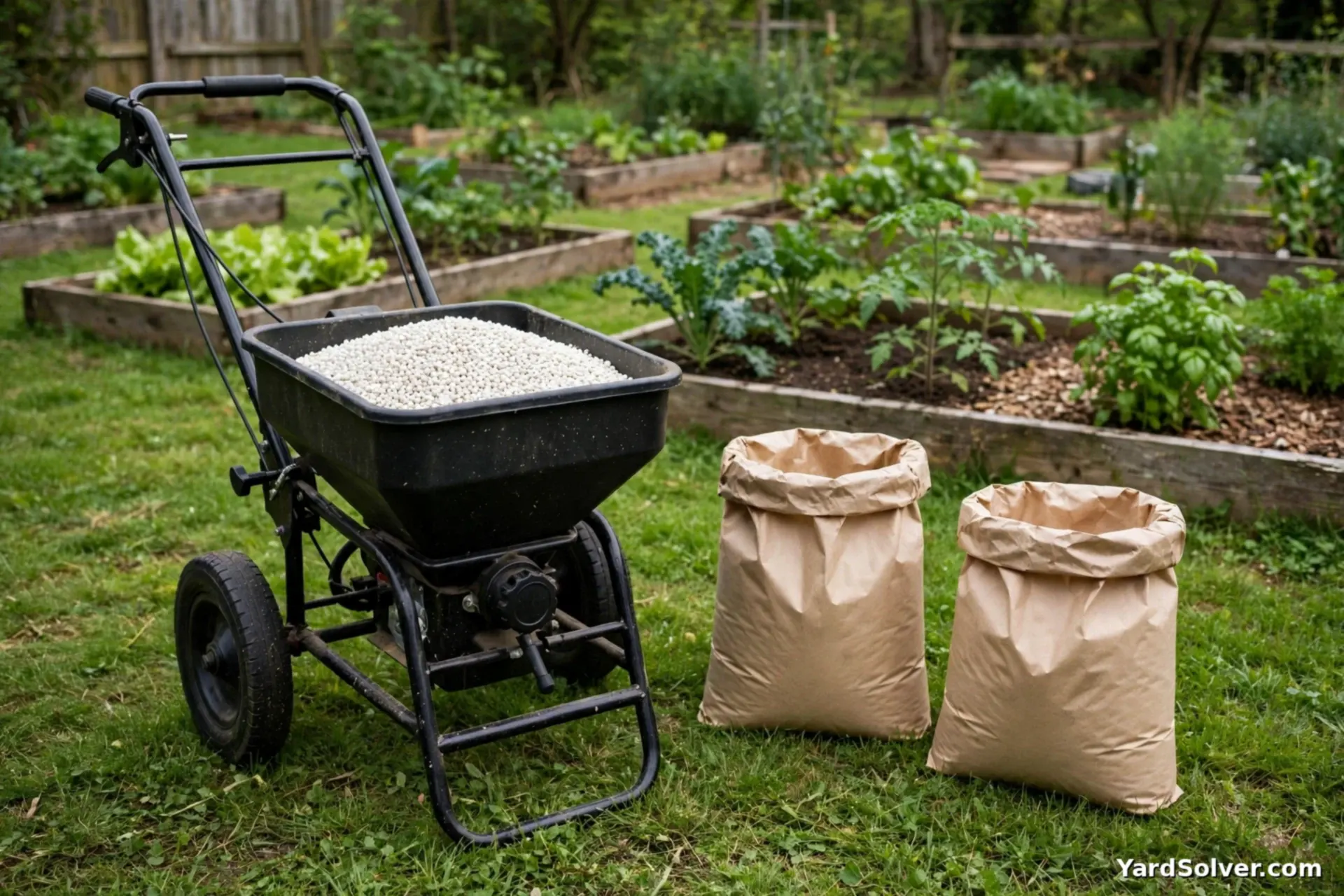
Open the Soil pH Calculator — lime and sulfur by soil type and enter the three facts: current pH, target pH, soil type, plus the area. If the target sits below the current reading, the answer switches to sulfur on its own. Worked honestly: a 2,000 sq ft loam bed at pH 5.5 aiming for 6.5 needs 92 lb per 1,000 sq ft, so 184 lb of lime — five 40 lb bags. Run the same bed as clay and the answer is 230 lb; as sand, 92 lb total. Gardeners who have limed a sandy bed on clay rates have created the classic overshoot: pH a full unit past target, iron locked up, leaves yellowing on plenty of everything.
Choose the target for what you actually grow. Lawns and most vegetables want 6.0–7.0. Blueberries, azaleas and rhododendrons want 4.5–5.5 — for them the “correction” runs the other way, with sulfur, and a lawn-target liming beside their bed is a slow way to kill them. Potatoes sit happily a touch lower, around 5.5, which also discourages scab.
Step 4 — Apply it in passes, then wait
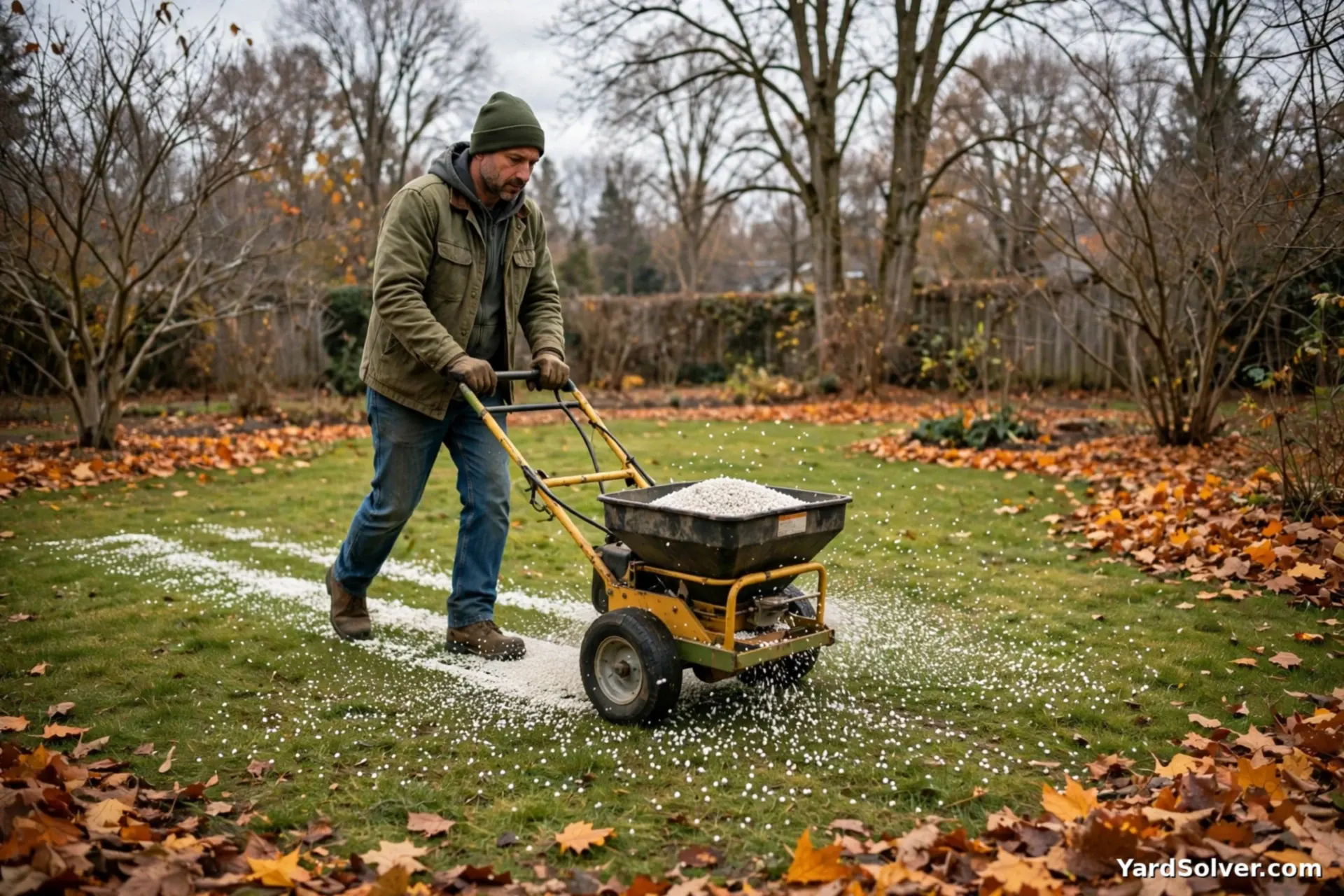
Lime goes on any time the ground is not frozen — fall is ideal, giving winter weather months to work it in. Spread half the amount walking one way and half across it, water lightly, and let chemistry take its season. Sulfur needs living soil: bacteria convert it to acid, and they work in warm months, so a spring or early-summer application changes pH by fall while a late-autumn one mostly waits for spring.
Respect the split limits. More than about 50 lb of lime per 1,000 sq ft in one pass is a lot for turf to take evenly, and elemental sulfur above roughly 10 lb per 1,000 sq ft can scorch. A two-unit correction is a two-season project on clay — that is not the method failing, it is the method being honest. Retest before each new pass and stop the moment you land on target.
What the calculator cannot do — and what to do instead
A calculator interpolating texture tables gives a sound planning dose, not a laboratory prescription. Three things it cannot see: your soil’s organic matter (high-organic soils buffer like clay), the fineness and purity of the actual product you buy (coarse or impure limestone works slower and weaker per pound), and any existing nutrient imbalance — a soil short of magnesium wants dolomitic lime, which a plain rate cannot tell you. For a big correction on valuable ground, send the sample to a lab, read the buffer pH line, and let it refine the number the calculator gave you. The two figures should land close; if they do not, trust the lab.
Questions people ask
How much lime does it take to raise pH by 1 unit?
Per 1,000 sq ft, roughly 46 lb on sand, 69 lb on sandy loam, 92 lb on loam and 115 lb on clay. The soil type matters as much as the pH gap — that is the buffer effect, and it is why single-rate advice so often disappoints.
How much sulfur lowers pH by 1 unit?
Per 1,000 sq ft, roughly 12 lb of elemental sulfur on sand, 17 lb on loam and 24 lb on clay. Split any dose over about 10 lb per 1,000 sq ft into passes a few months apart to avoid scorching.
Why is the second pH unit more expensive than the first?
Buffering strengthens as you push: the soil’s exchange sites absorb more of each added pound before the pH itself moves. Honest tables curve upward; a flat rate per unit understates large corrections.
Can I change pH quickly with aluminium sulfate or vinegar?
Aluminium sulfate acts in weeks but takes about six times the weight of sulfur and risks aluminium toxicity if overdone. Vinegar and similar home remedies change the pH of the watering can, not the soil — the effect is gone in days.
How soon can I plant after liming or sulfuring?
Vegetables and lawns can go in as usual once the material is watered in — neither lime nor sulfur at table rates is a planting barrier. The pH itself will keep drifting toward target over the following months.
Sources
Key facts on this page cross-checked against Soil pH — Wikipedia — background on soil pH and what it controls Liming (soil) — Wikipedia — background on liming to correct soil acidity.
Related page
Read next: How to Lower Soil pH: Make Soil More Acidic, Step by Step
Comments & ratings
No comments yet.
Be the first to share your experience.