
Guides · Winter growing · Published October 31, 2026 · Updated November 17, 2026 · By Faizan Ahmad
How to Grow Herbs Indoors in Winter
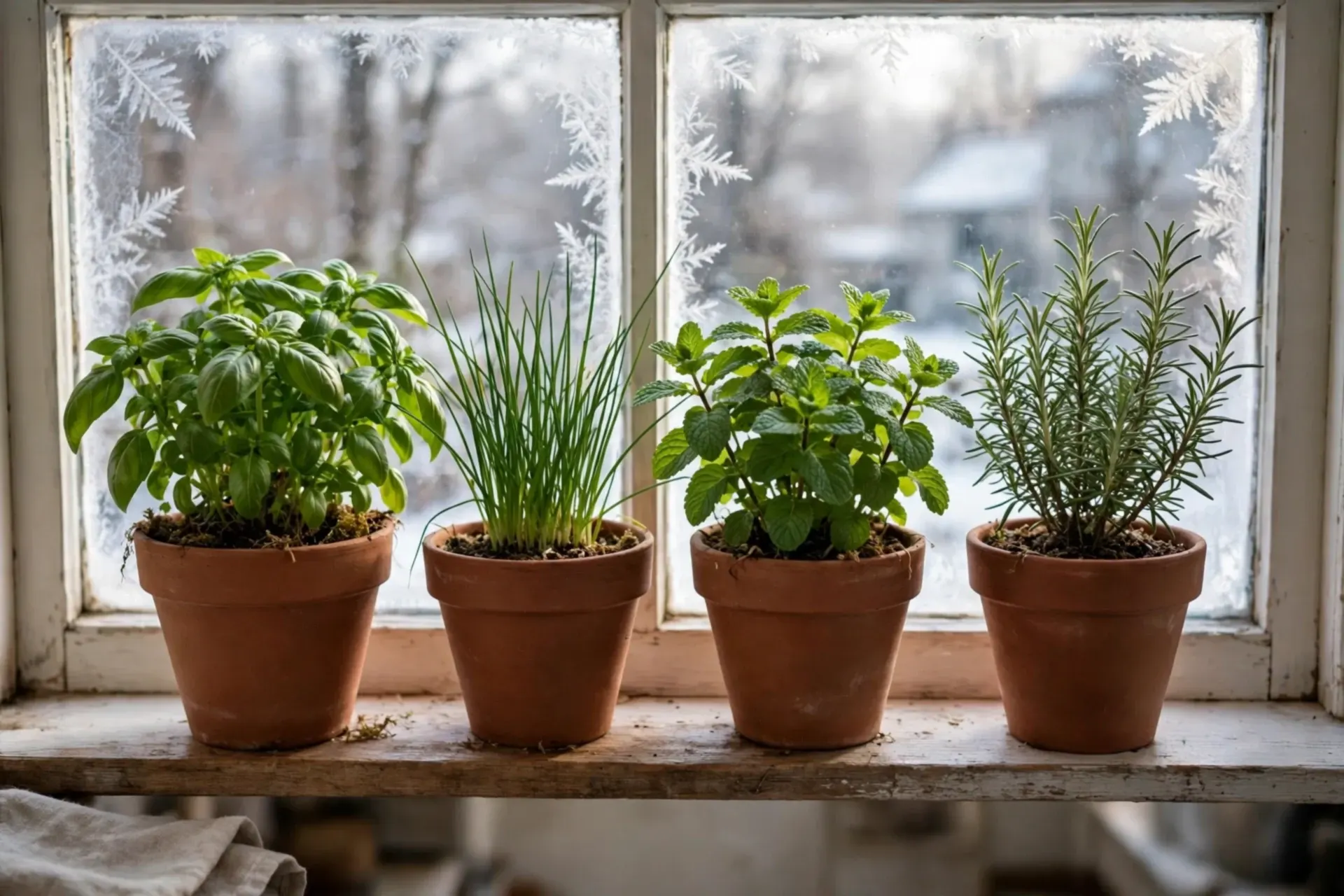
Fresh herbs in January are completely possible — if you respect the one rule that decides everything indoors: light. Winter daylight through a window is a quarter of what summer gives, and most indoor herb failures are just quiet light starvation. Solve light, and the rest is easy.
Start with the herbs that actually thrive indoors
- Easiest: chives, mint (its own pot — it takes over), parsley, thyme, oregano
- Worth it with good light: basil (warmth-loving; keep it off cold glass), cilantro (cool and fast; sow a pinch every 3 weeks)
- Slow but steady: rosemary — sparing water, brightest spot you have
Buy small plants or sow seed; parsley is slow to sprout (2–3 weeks), so start it first. Profiles for each herb are in the Plant Library.
Step 1 — Give them real light
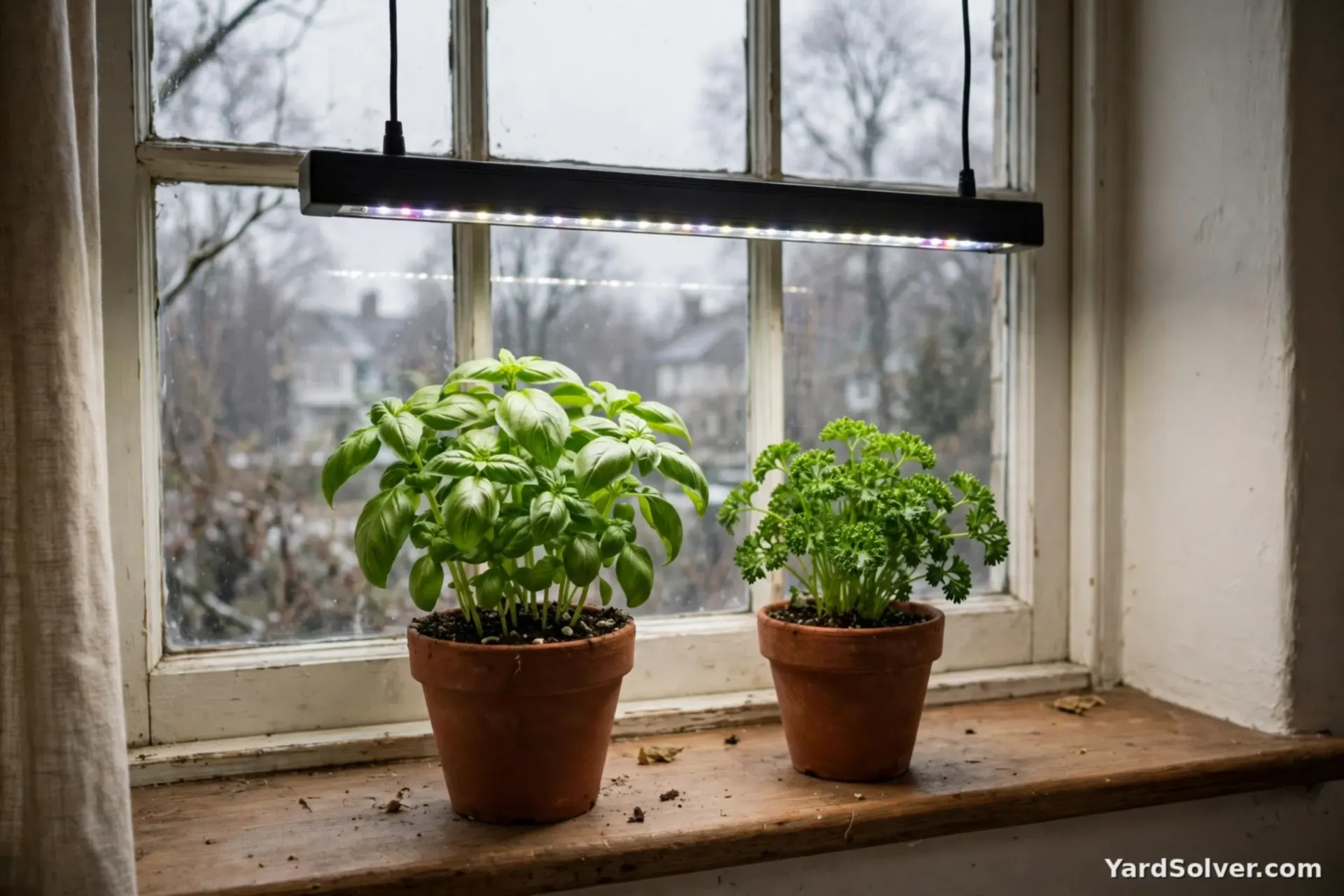
Best: an unobstructed south-facing window. Better and reliable anywhere: a simple LED grow light or shop light hung 2–4 inches above the plants, on a timer for 12–16 hours a day. Raise the light as the plants grow. Leggy, pale, stretching stems are the plant asking for exactly this.
Step 2 — Pots with drainage, ordinary potting mix
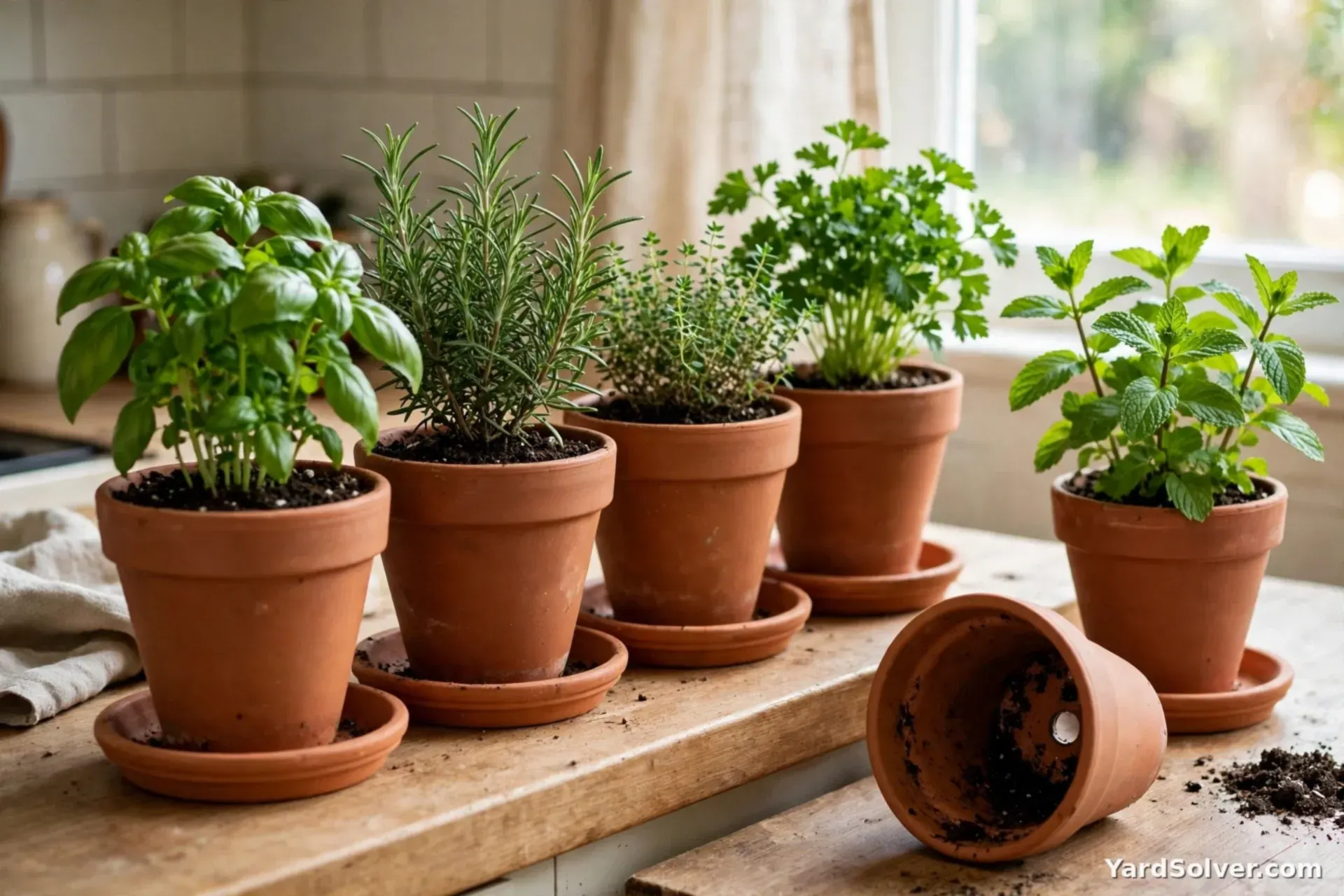
Every pot needs a drainage hole — herbs in a sealed decorative pot drown slowly. One herb per 6–8 inch pot (mint always alone). Standard indoor potting mix is right; garden soil is too dense and brings pests indoors.
Step 3 — Water the indoor way
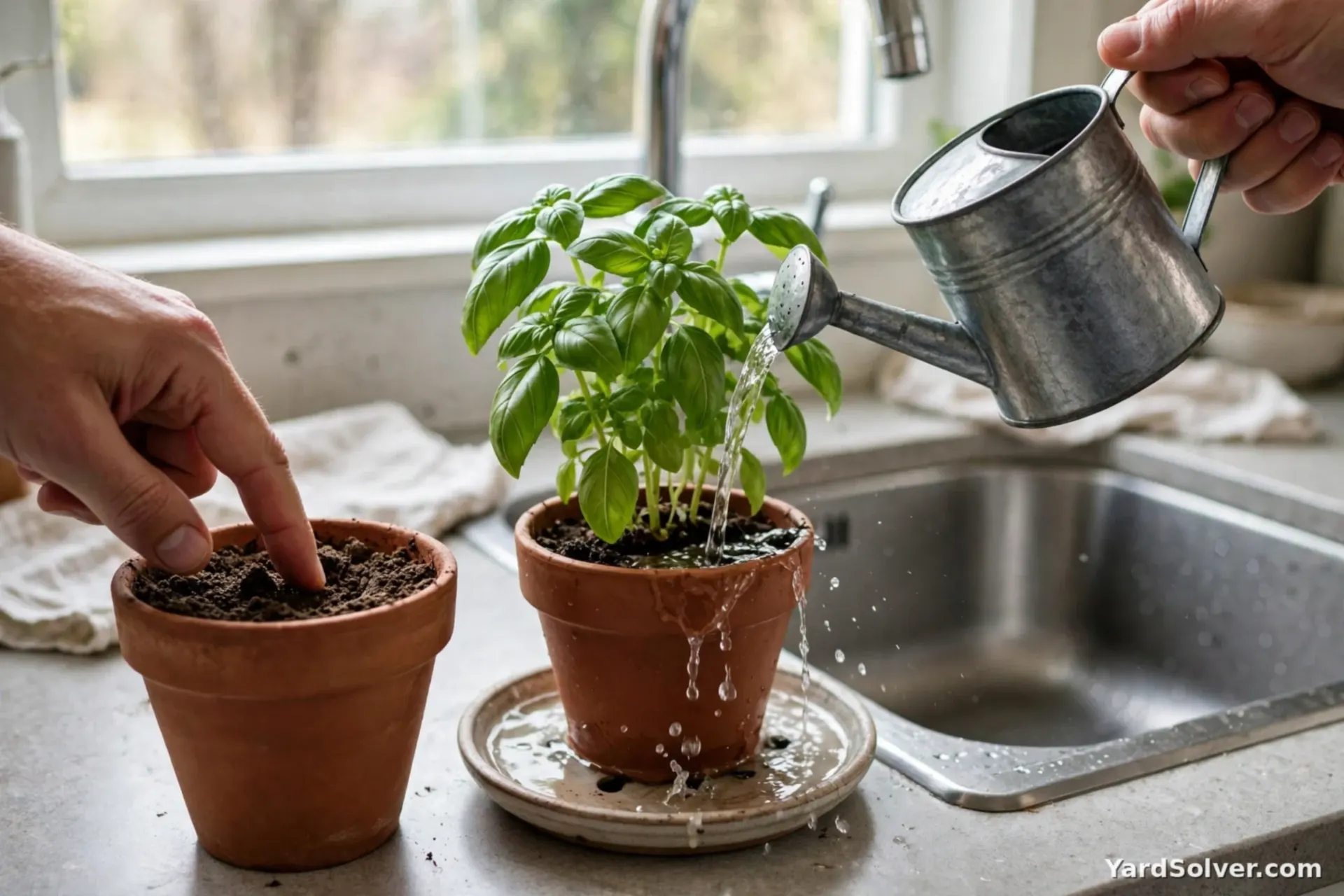
Water when the top inch feels dry, then soak until it drains and empty the saucer. Heating vents dry pots fast — check twice a week in deep winter. Constantly soggy soil (root rot) kills more indoor herbs than drought ever will.
Step 4 — Keep them off cold glass and away from heat blasts
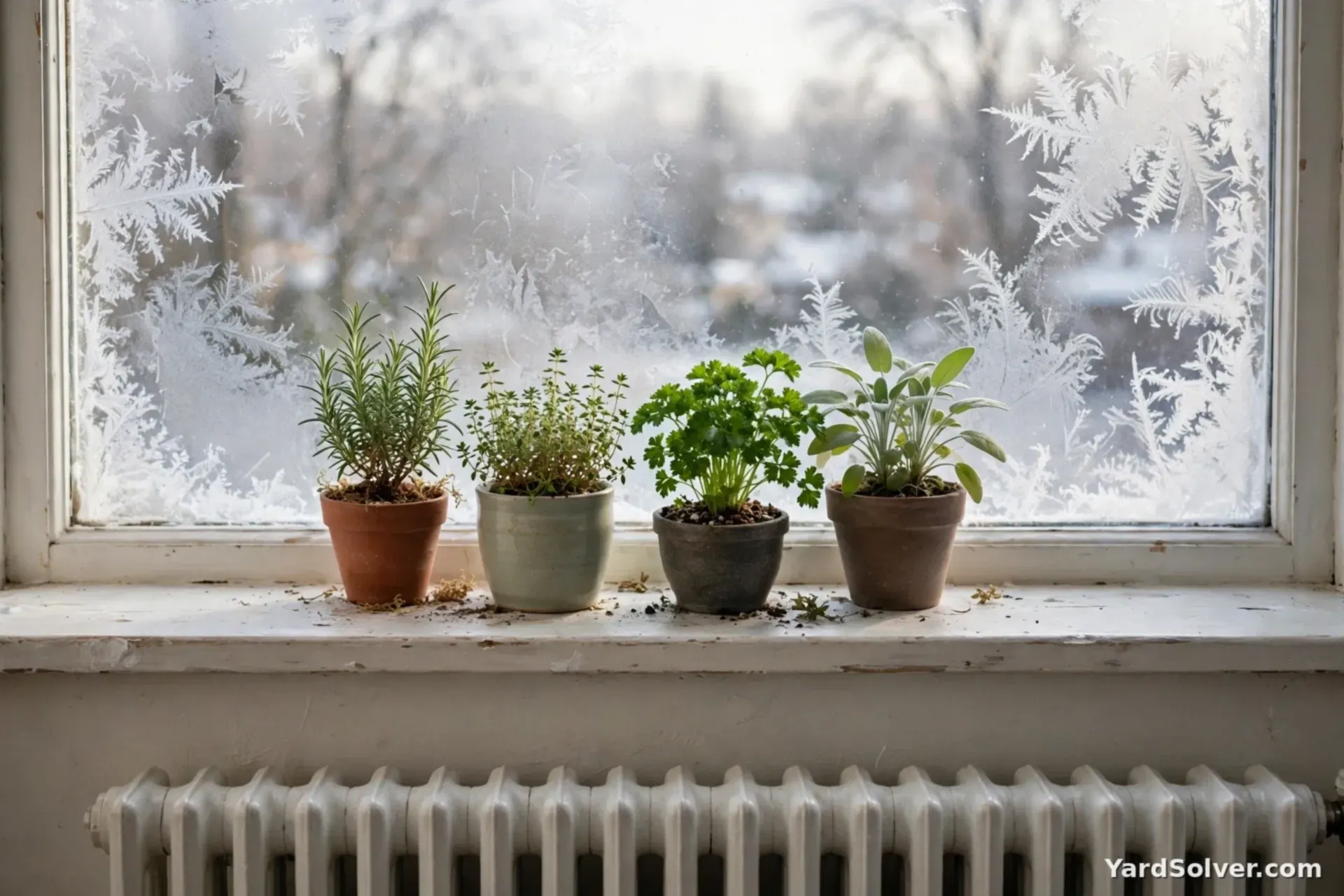
Leaves touching a freezing window get damaged on the coldest nights; an inch of clearance fixes it. Directly above a radiator is the opposite problem — hot dry air and aphid parties. A small gap and decent air movement keep both troubles away.
Step 5 — Harvest so they grow more
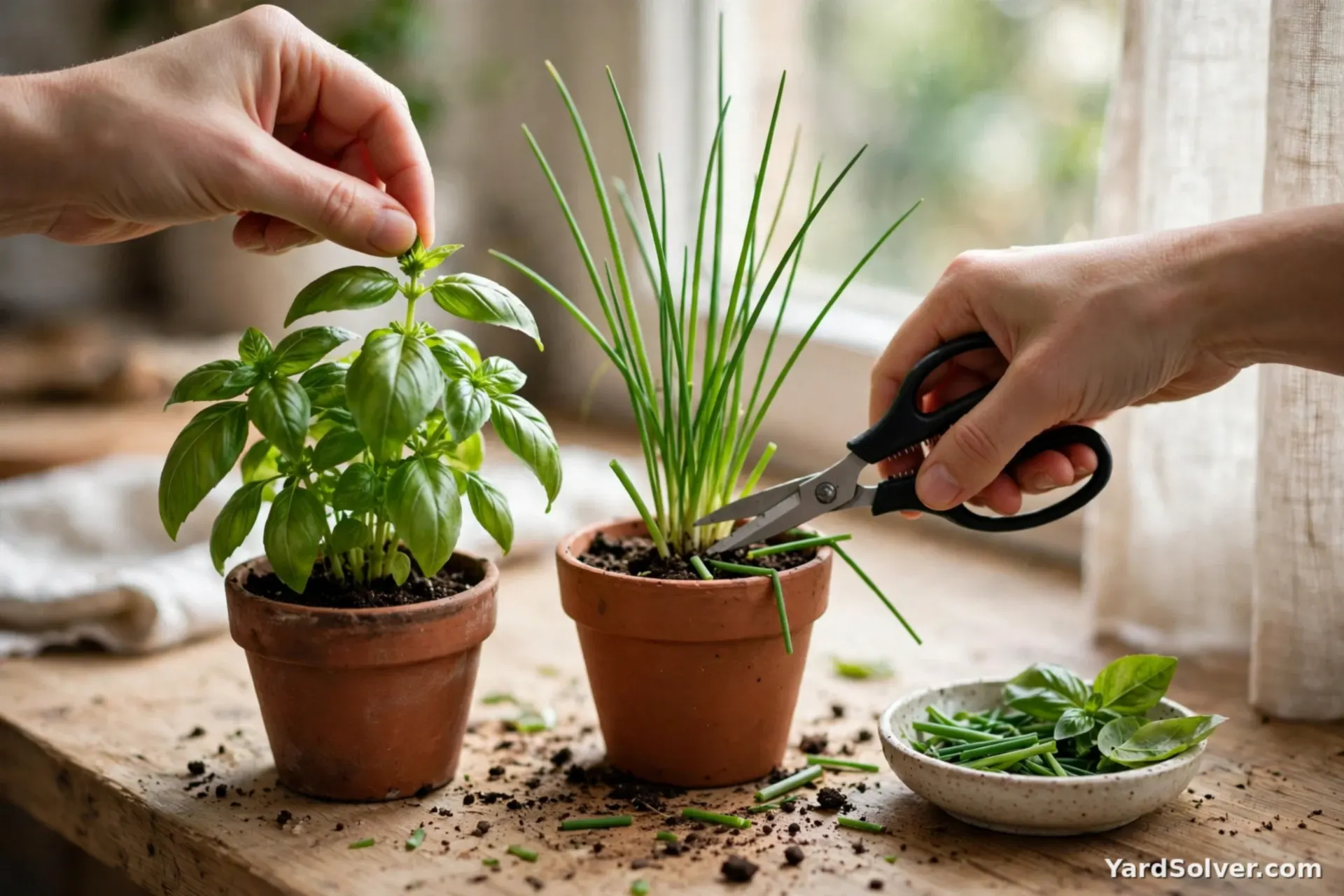
Little and often beats one big strip: never take more than a third of the plant at once. Pinch basil just above a pair of leaves and it branches double. Snip chives at the base of a few blades. Regular pinching is what keeps the windowsill bushy instead of bald.
Light hours, herb by herb
The 12–16 hour rule in Step 1 is the blanket version. Herbs differ, so use this table as the starting point for each pot — then judge by the plant: compact, deep-green growth means enough light; pale stretching means move the lamp closer or add hours.
| Herb | Light per day | Window only? | Notes |
|---|---|---|---|
| Basil | 14–16 hours | South window only — and only just | The hungriest herb on the sill; keep it warm and off cold glass — it sulks below about 50°F (10°C) |
| Cilantro | 12–14 hours | A bright window is often enough | Prefers cool rooms and bolts less in winter than in summer heat; sow a fresh pinch every 2–3 weeks |
| Parsley | 12–14 hours | A bright window works | Slow and patient; flat-leaf types handle indoor life a little better than curly |
| Mint | 12–14 hours | The easiest window herb | Forgiving of lower light; keep its pot away from others — roots escape drainage holes and invade |
| Chives | 10–12 hours | A bright window works well | The lowest-light herb here; cut it back hard every few weeks and it regrows like grass |
| Rosemary | 14–16 hours | Rarely enough in deep winter | Wants the brightest spot plus moving air; more rosemary dies from soggy soil than from darkness |
Window versus grow light, honestly: a clean, unobstructed south-facing window can carry chives, mint and parsley through winter in most homes. East and west windows usually need a lamp’s help for everything except mint and chives. A north window grows almost nothing edible without a light — treat it as lamp territory and you will not be disappointed.
Feeding: little, weak and regular
Indoor herbs grow slowly in winter light, so they need far less fertilizer than the same plant outdoors in June. A half-strength balanced liquid feed every 3–4 weeks is plenty for basil, parsley and cilantro; chives, mint, thyme and oregano do well on even less. Rosemary barely needs feeding at all in winter. A white crust on the soil surface, or leaf tips browning at the edges, usually means feed salts are building up: flush the pot with plain water until it runs freely from the drainage hole, let it drain fully, and skip the next feed. Never feed a bone-dry or wilting plant — water first, feed a day later.
The three indoor pests, and what actually works
Warm, still indoor air suits pests as well as herbs. Aphids cluster on soft new growth — blast them off under a tap or shower every few days until they stop returning. Fungus gnats, the tiny flies hovering around the soil, mean the surface stays wet: let the top inch dry between waterings and cover the surface with a thin layer of coarse sand or fine gravel. Spider mites arrive with hot, dry radiator air and show as faint stippling and the finest webbing under leaves; raising humidity and showering the plant weekly usually ends them. Check the undersides of leaves once a week while you water — two minutes of looking beats any spray.
Keep the rotation going — and move them out in spring
Cilantro and basil are short-lived indoors no matter what you do, so treat them as a relay: keep a small pot of seed, sow a pinch every 2–3 weeks, and retire the oldest plant as the new one sizes up. The perennial herbs — rosemary, thyme, oregano, mint, chives — are not houseplants for life. Once nights stay above about 40–45°F (5–7°C), harden them off over a week like seedlings and move them back outside or into bigger pots; a summer outdoors rebuilds the strength winter spent. Bringing the same rosemary through three or four winters this way is entirely normal.
Keep going
Winter projects that pair well: Winter Sowing in Milk Jugs and Composting in Winter.
Dill deserves a pot of its own in the winter herb lineup — How to Grow Dill covers sowing, light and cutting it so it keeps coming.
Questions people ask
Why do my indoor herbs always get leggy and die?
Almost always light. Winter window light is a fraction of summer sun, so herbs stretch toward it and weaken. A simple LED grow light 2 to 4 inches above the plants, on 12 to 16 hours a day, fixes most indoor herb failures outright.
Can I dig up outdoor herbs and bring them in?
Yes for chives, mint, parsley and oregano — pot a division, cut it back by half, and expect a sulky week while it adjusts. Basil usually refuses the move; start fresh basil seed indoors instead.
How often should indoor herbs be watered?
When the top inch of soil feels dry — then water deeply until it drains, and empty the saucer. More indoor herbs die from constant soggy soil (root rot) than from thirst.
Do indoor herbs need fertilizer in winter?
Very little. A half-strength liquid feed every 3–4 weeks suits faster growers like basil and parsley; rosemary, thyme and oregano need less. If you see a white crust on the soil, flush the pot with plain water and skip a feed.
Why is my basil turning black at the base?
Usually cold damage or stem rot from soggy soil — basil is a warm-weather plant. Keep it off cold glass and away from frosty windows, water at the base in the morning, and let the top of the soil dry between waterings.
Can I grow herbs in a window with no direct sun?
Mint and chives manage in bright indirect light; most other herbs stretch and fade. A small LED grow light on a timer for 12–16 hours a day turns a sunless window into a reliable herb spot.
Indoor winter herbs live or die on light — a bright sill beats a warm dark kitchen
Herbs moved indoors for winter face a tenth of the light they grew in, at the season when days are shortest, so the windowsill is not a detail but the whole crop: a south or west window, plants turned weekly, and foliage kept off cold glass. The Mediterranean herbs — rosemary, thyme, sage — want that light with cool air and lean watering; the soft herbs — basil above all — want warmth and will sulk below the mid-teens Celsius however bright the sill.
Pot up outdoor plants a month before frost so roots settle before the move, wash aphids off before they come inside to a predator-free paradise, and harvest by pinching little and often rather than stripping. Where no bright sill exists, a small LED grow light on a timer turns a failing shelf into the most reliable herb garden of the year — winter herbs are a lighting project with leaves.
Sources
Key facts on this page cross-checked against Herb — Wikipedia — background on herbs and their culinary use and Basil — Wikipedia — background on basil — the most cold-sensitive of the common kitchen herbs.
Related page
Read next: Grow Lights for Seedlings: LED vs Fluorescent.
Comments & ratings
No comments yet.
Be the first to share your experience.