
Guides · Winter sowing · Published October 31, 2026 · Updated November 17, 2026 · By Faizan Ahmad
Winter Sowing in Milk Jugs, Step by Step
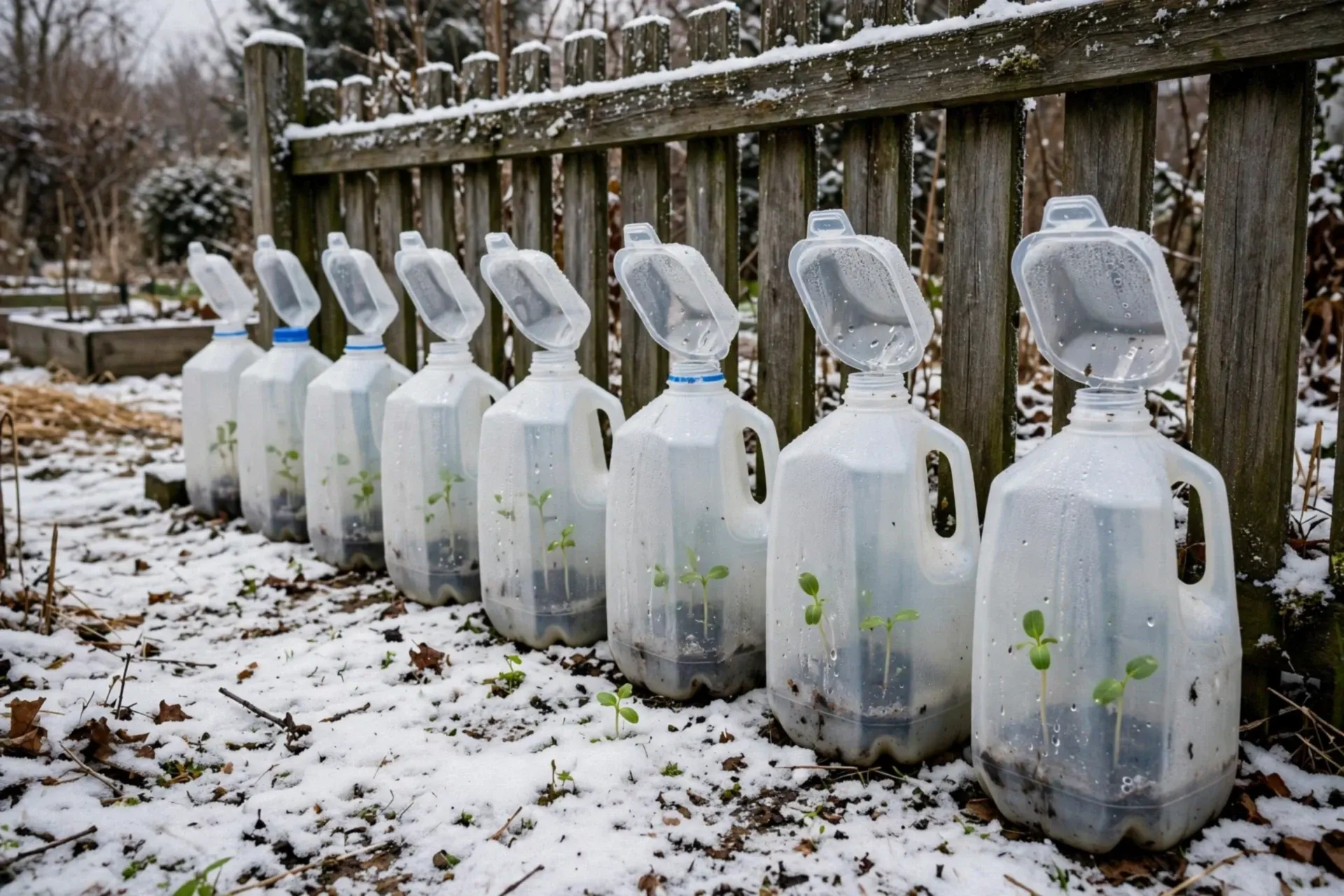
Winter sowing is the seed-starting method for people with no windowsill and no grow lights: you sow seeds in translucent milk jugs, set them outside in the snow, and let winter do the schedule. The freeze-thaw cycle wakes seeds exactly when nature intends — and the seedlings that emerge are already hardened to real weather.
What winter sowing is for (and what it is not)
- Perfect for: hardy perennials and wildflowers (many need cold to germinate), plus cold-tolerant vegetables — kale, broccoli, cabbage, onions, leeks, spinach, hardy herbs
- Not for deep winter: tomatoes, peppers, basil and other warmth-lovers — use the same jugs in spring for them, or start them by the Planting Calendar indoors
Step 1 — Build the jug
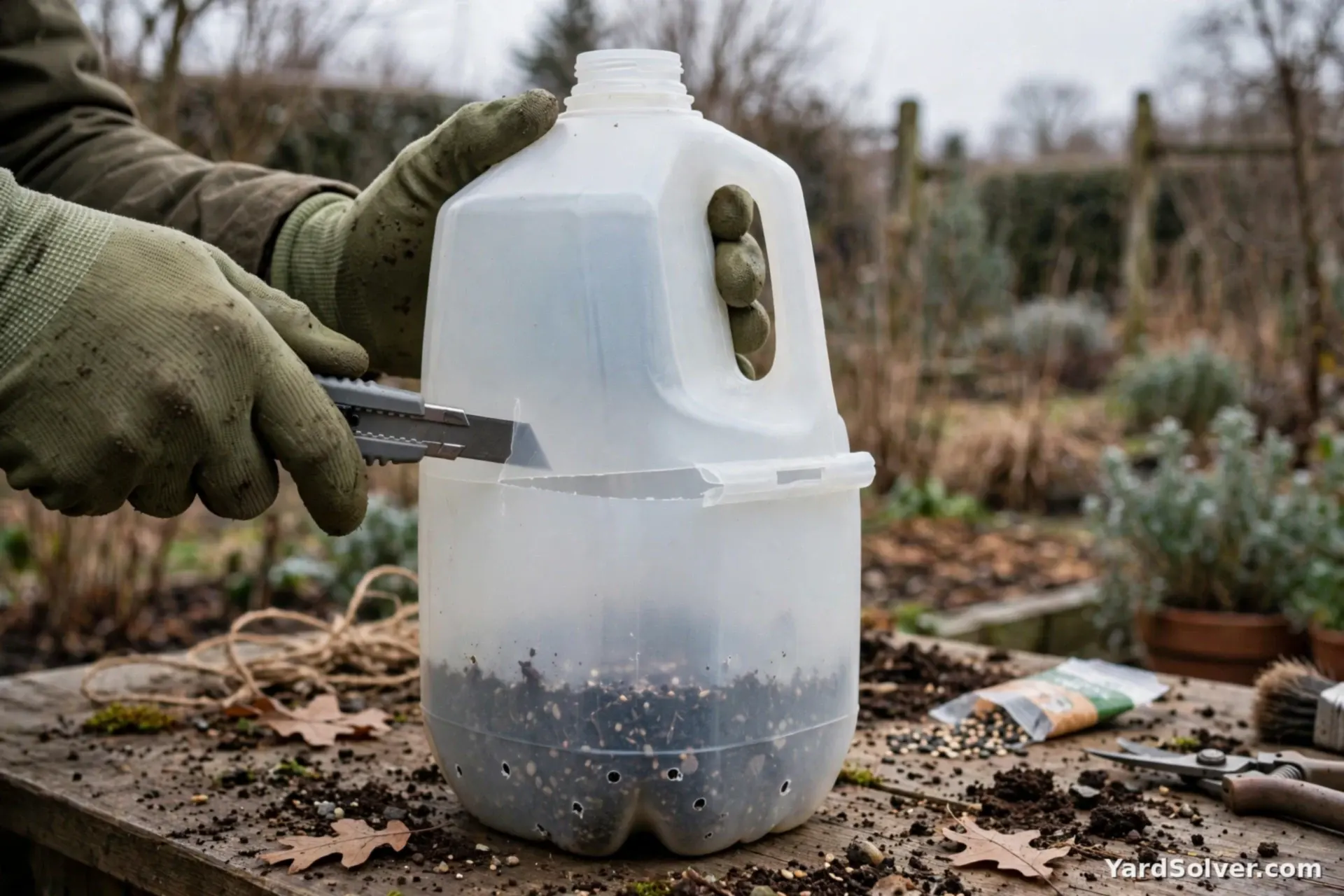
Use a translucent 4 L / 1 gallon milk or water jug. Cut around the middle, leaving a hinge under the handle. Poke or melt several drainage holes in the bottom. Throw the cap away — the open neck is the rain door and vent.
Step 2 — Fill and sow
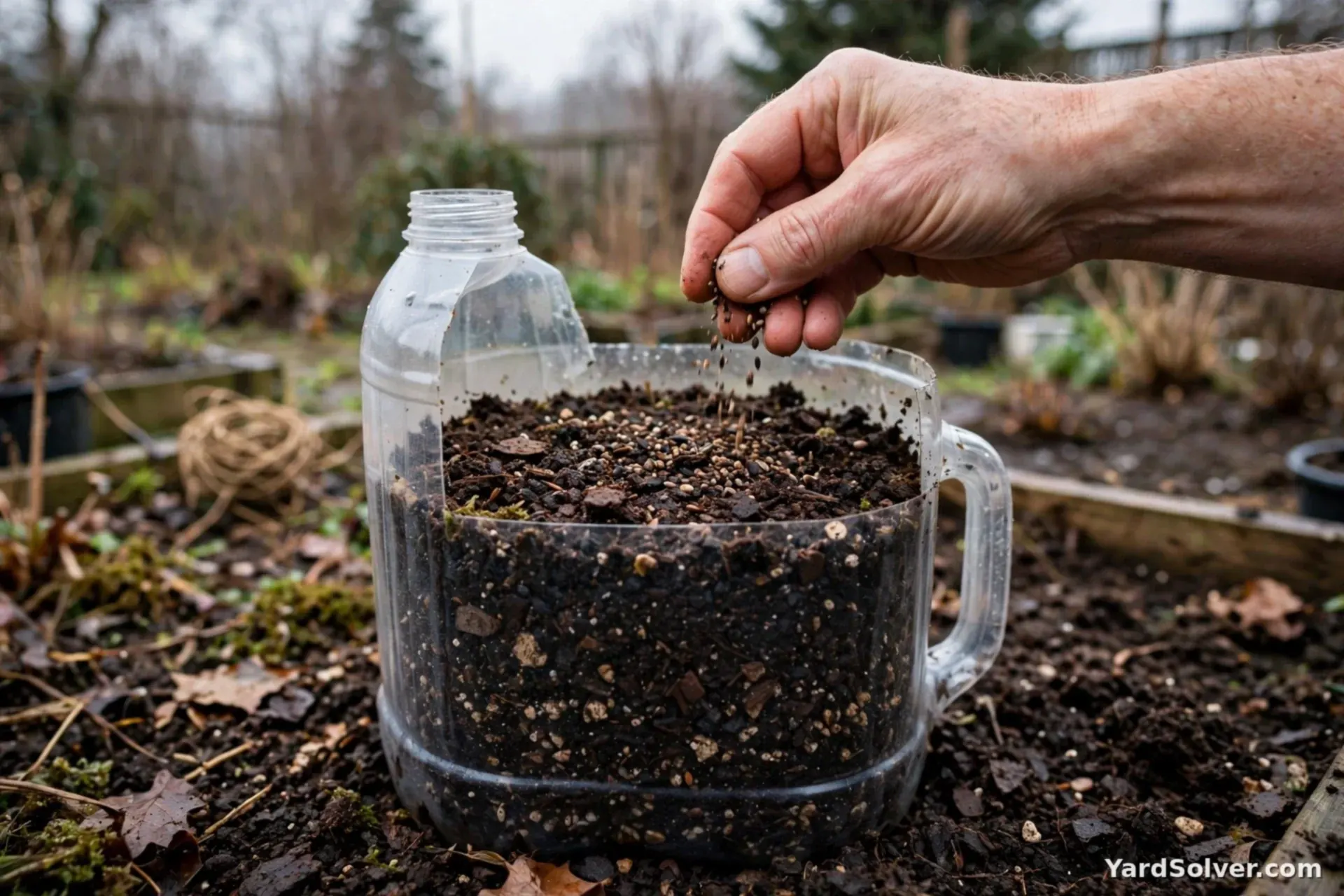
Add 3–4 inches of moist potting mix. Sow at the depth on the packet (when in doubt, about twice the seed's width), a little generously — winter takes a share. Water it in well.
Step 3 — Tape it shut and label twice
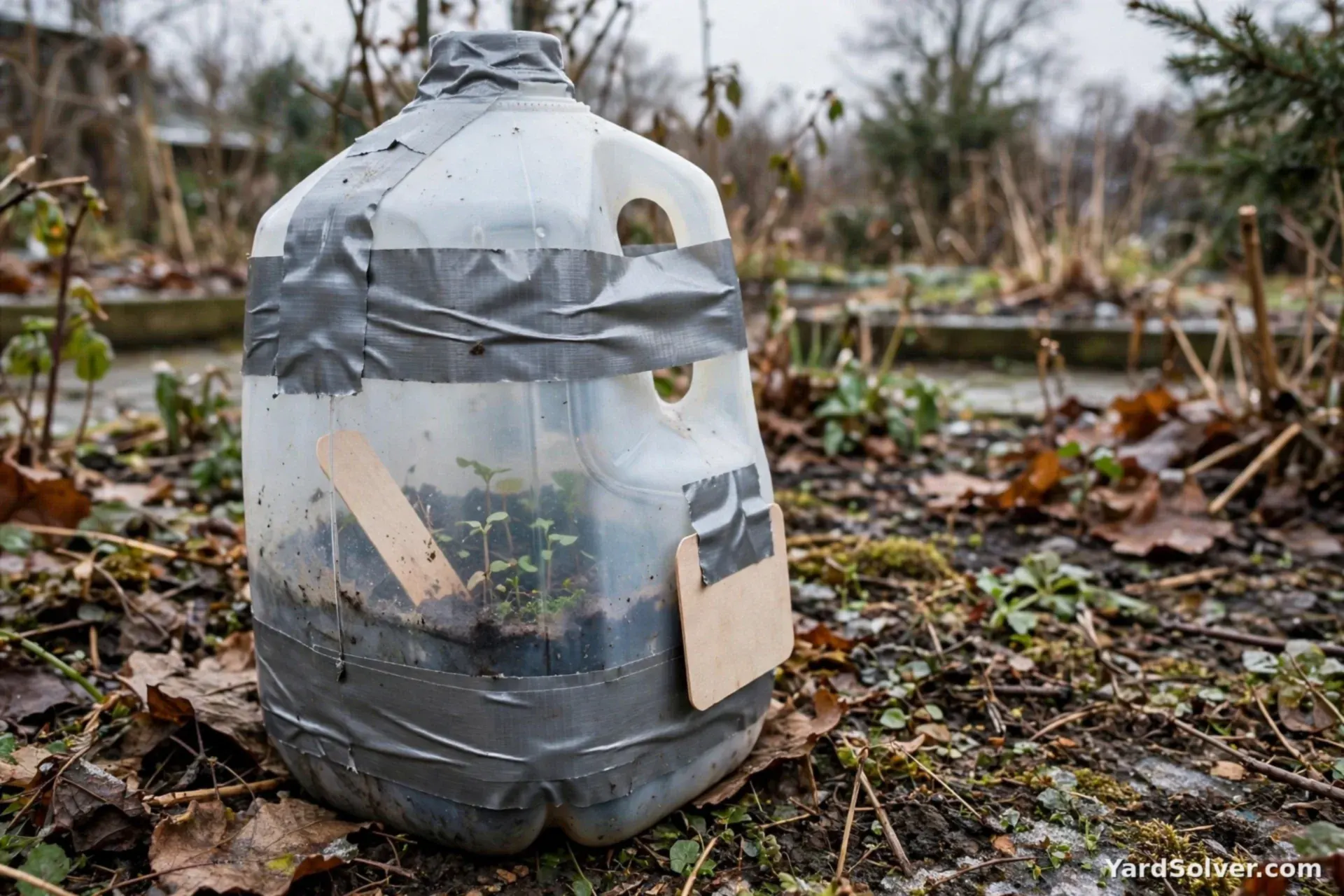
Tape the cut seam all the way around. Label with a paint pen on the outside and a second label buried inside — sun fades outside ink by spring, and a jug of mystery seedlings is a classic.
Step 4 — Set them outside and walk away
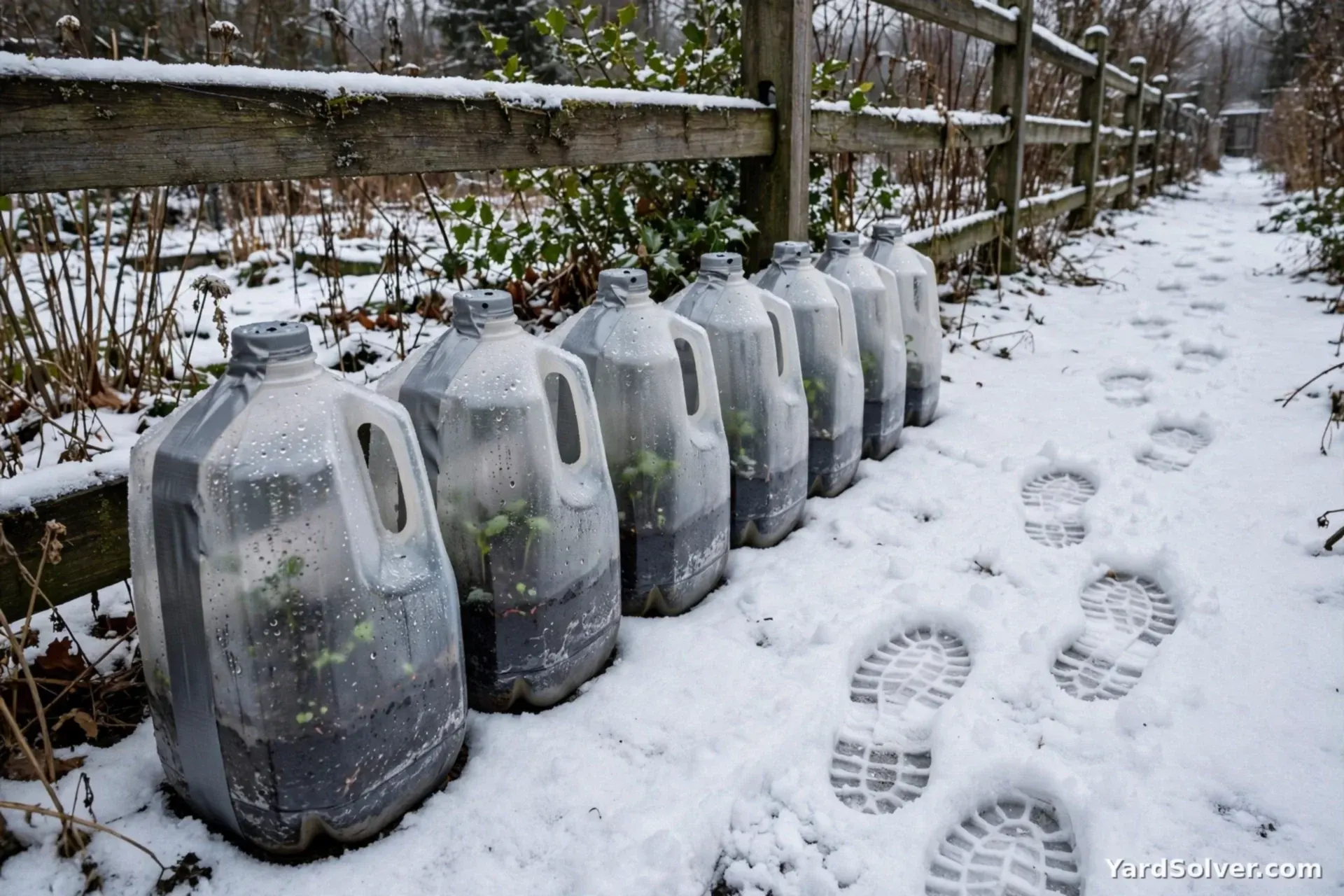
Put the jugs outdoors where rain and snow reach them, out of the way of shovels and snowplows. Any time from the winter solstice onward works. Then do nothing — winter waters, chills and stratifies for you.
Step 5 — Spring: watch, vent, water if dry
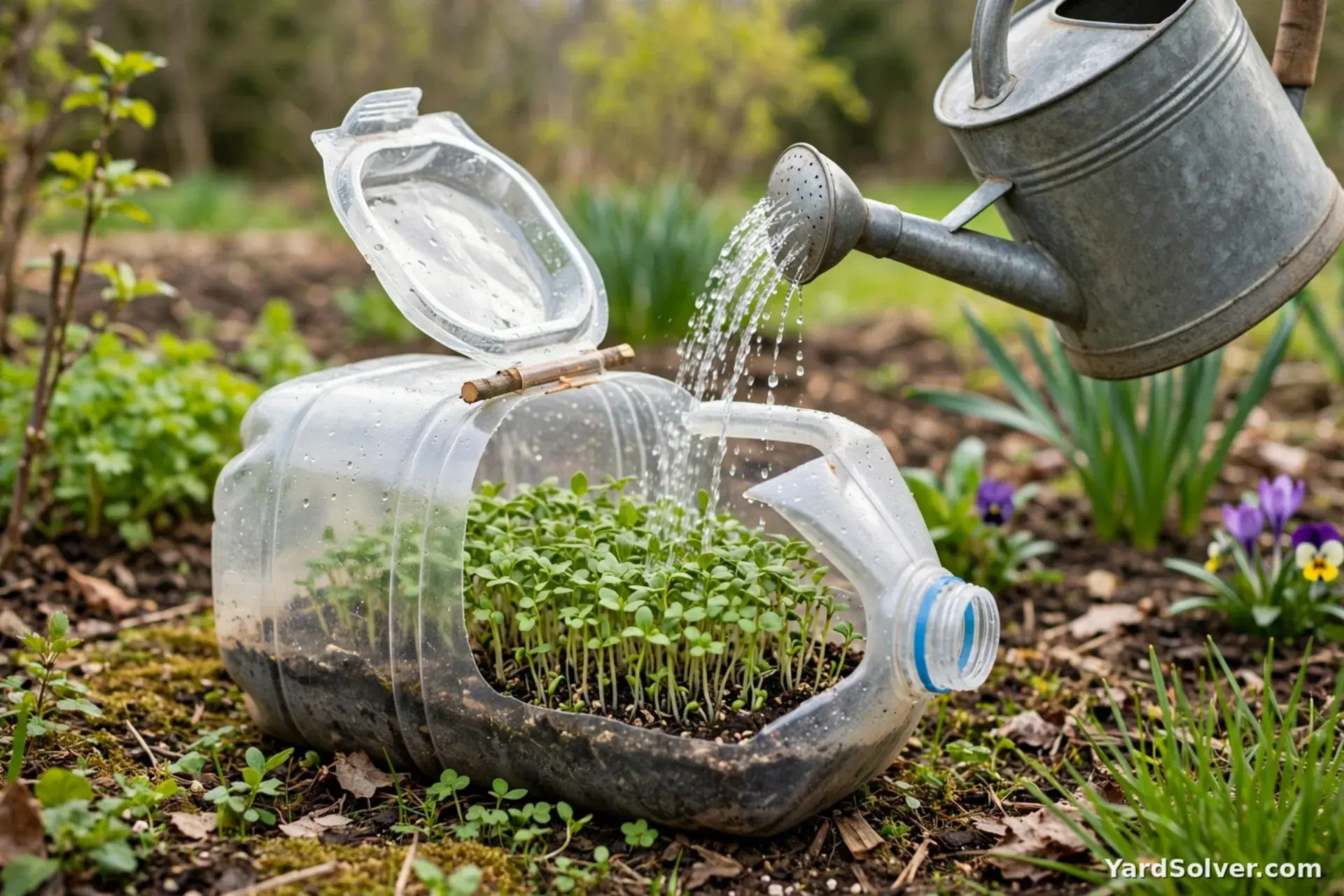
Seeds sprout when their moment comes — early ones on the first warm spell, perennials sometimes weeks later. On warm days as seedlings grow, open the tops; close them again on cold nights. If a dry spring spell leaves the soil dusty and the jug light, water gently through the neck.
Step 6 — Transplant the whole clump or divide
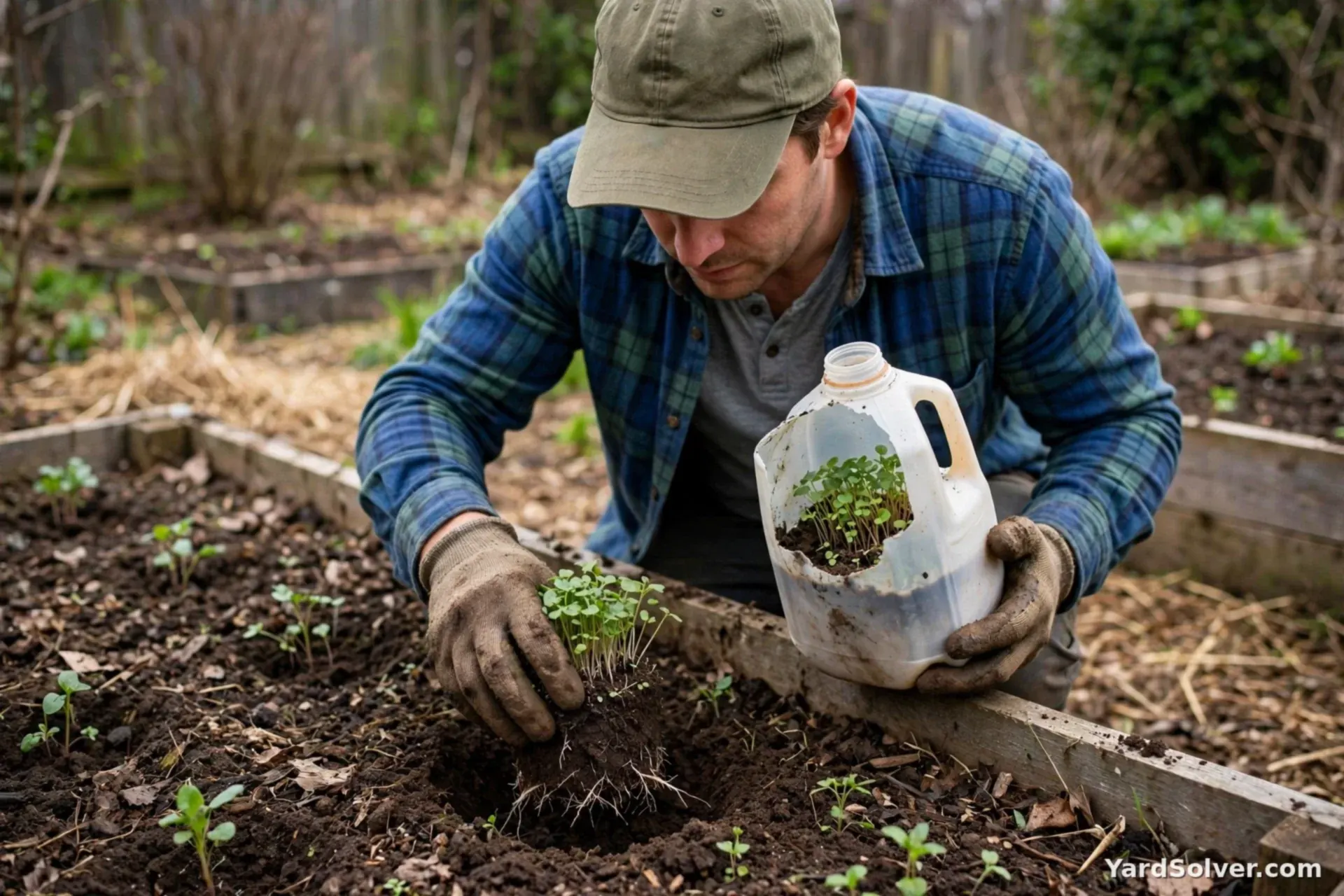
When seedlings show true leaves and the weather suits the plant, plant them out — either teased apart or as small clumps ("hunk-o-seedling" planting works well for flowers). They need no hardening off: they were born outside. Check spacing with the Plant Spacing Calculator.
Which seeds suit winter sowing — seed by seed
The deciding question is whether the seed — and the young seedling — tolerates freezing. Hardy perennials and cold-season vegetables evolved to germinate after winter; tender annuals did not. Work through this table before you fill a single jug:
| Seed | Winter sow? | Why | When to sow in the jug |
|---|---|---|---|
| Sweet peas | Yes — a classic | Seedlings shrug off frost, and cold improves germination | Mid to late winter |
| Kale, cabbage, broccoli | Yes | Cold-season crops; seedlings tolerate hard frosts | Mid-winter onward |
| Spinach and lettuce | Yes | Germinate in cold soil and grow cool | Spinach any time; lettuce from late winter |
| Onions and leeks (from seed) | Yes | Slow growers that benefit from the earliest possible start | Mid-winter |
| Parsley, chives, thyme, oregano | Yes | Slow, cold-tolerant germinators | Mid to late winter |
| Wildflowers and hardy perennials (echinacea, black-eyed Susan, columbine) | Yes — the best use of the method | Many need weeks of cold, moist stratification to germinate at all | Early to mid-winter, so they get the full chill |
| Sunflowers | Wait until spring | The seed survives, but seedlings are frost-tender | A few weeks before last frost, same jug method |
| Tomatoes, peppers, basil, cucumbers, squash | No — not in winter | Tropical origins; one hard freeze kills emerged seedlings | Start indoors by the calendar, or jug-sow in frost-free spring weeks |
Venting by temperature: the spring routine that saves seedlings
A jug is a greenhouse, and a sealed greenhouse in spring sun can cook seedlings within an hour. The open neck vents a little; once seedlings are up, you manage the rest by temperature:
| Daytime temperature | Jug tops | Notes |
|---|---|---|
| Below 40°F (4°C) | Closed | Leave them be — cold is what these seedlings are built for |
| 40–55°F (4–13°C) | Closed; check moisture | Most germination happens in this band; water only if the soil looks dry |
| 55–70°F (13–21°C) | Open on sunny days, close at night | Prop the top back or untape one side; closing at night still protects against frost |
| Above 70°F (21°C) | Fully open | Seedlings are now simply outdoor plants in a pot — water as for any container; give light shade if heat spikes |
| Hard freeze forecast after a warm spell (below about 28°F / –2°C) | Close everything | Group jugs together against a wall — a late hard freeze is the one event that can still hurt, and grouping blunts it |
When seedlings have two sets of true leaves and fill the jug, the tops can come off for good in all but frosty weather — from then on the jug is simply a labelled nursery pot.
No milk jugs? Other containers that work
The jug is popular because it is free, translucent and lidded — not because it is magic. Any container that is translucent (not clear, not opaque), at least 4 inches deep, and can be given drainage holes and a vent will work: 2-litre soda bottles cut the same way, large clear salad tubs with lids, translucent storage totes holding several inches of soil for a whole flat of one variety, even deep foil roasting pans set inside a clear tote. Two rules decide success: light must reach the soil (opaque buckets fail), and rain must get in while slugs and curious birds stay out. If you sow several varieties in one big tote, label each section — mixed sowings are hard to transplant cleanly.
How many seeds per jug, and how deep
Overcrowding is the quiet failure of winter sowing: a whole packet in one jug gives you a wrestling mat of seedlings. As a guide, sow about 8–12 seeds of larger plants (kale, broccoli, sweet peas), and a short row or pinch of 15–20 for small-seeded flowers and herbs — then thin or divide at transplant. Jug seedlings divide surprisingly well, because their roots grew up together in cool soil. Depth follows the packet, but the field rule holds outdoors too: roughly twice the seed’s width, and surface-sow anything the packet calls light-dependent. Press seed into firm contact with the moist mix rather than burying it loosely.
Keep going
More winter projects: How to Grow Herbs Indoors in Winter · Composting in Winter.
Questions people ask
Can I winter sow tomatoes and peppers?
Not in deep winter — they are warmth-loving and a hard freeze kills the seedlings. Sow tender plants later, in spring, using the same jugs during frost-free weeks, or start them indoors. Winter sowing shines with hardy perennials, wildflowers and cold-tolerant vegetables.
Do the jugs need watering?
Mostly no — rain and melting snow enter through the open cap hole and keep the soil moist. In a dry spring spell, water gently through the opening. If the jug feels light and the soil looks dry, it is time.
Why did none of my seeds sprout?
The usual causes: sowing too deep, letting the jug dry out in spring, or giving up too early — many perennials wait for exactly the right warmth and sprout weeks after the first ones. Keep jugs moist and wait before composting a ‘failed’ jug.
When is the best time to start winter sowing?
Any time after the winter solstice for hardy perennials that need a long chill; mid to late winter suits most vegetables and herbs. The seeds wait for their own weather cue, so sowing a few weeks early or late rarely matters.
My jugs have green algae on the soil. Is that a problem?
A light green film is normal in a moist, lit container and does not harm seedlings. If it becomes a thick slime, open the tops more often for air flow and let the surface dry slightly between rains.
Do winter-sown seedlings need hardening off?
No — that is the method’s biggest saving. They germinated and grew outdoors, so they are already used to sun, wind and cold nights. Transplant them straight into the garden when they are big enough to handle.
The complete method
This page is the jug technique. The full method — which seeds suit winter sowing, any container that works, timing by climate, and spring care through transplanting: Winter Sowing: The Complete Guide.
The milk jug is a better greenhouse than most bought ones — because it vents, drains and costs nothing
A cut milk jug works as a miniature greenhouse for reasons that are easy to miss: the translucent plastic diffuses light so seedlings do not scorch or stretch toward one side, the cap becomes an adjustable vent — on for cold nights, off on mild days — and the hinged top opens fully for the spring warm spells when a sealed container would cook its contents in an hour. Drainage holes punched in the base matter as much as the lid: winter rain must pass through, because seeds sitting in a flooded jug rot long before they stratify.
Technique is mostly restraint. Fill with moist compost, sow at the depth the packet says, tape the cut closed, label inside and out, and put the jugs somewhere they get weather but not the full force of wind — against a fence or wall is ideal. Then leave them alone: opening jugs to check is the beginner's main error, breaking the humidity seal and inviting the one dry-out that kills a batch. When seedlings press the lid in spring, cut the top away entirely and treat the jug as a pot until transplanting at two true leaves.
Sources
Key facts on this page cross-checked against Cold frame — Wikipedia — background on cold frames and small protective growing structures and Cold stratification — Wikipedia — background on cold stratification and why some seeds need winter chill.
Related page
Read next: Winter Sowing: Start Seeds Outdoors in Winter.
Comments & ratings
No comments yet.
Be the first to share your experience.