
Guides · Climate & timing · Published November 22, 2026 · By Faizan Ahmad
Growing Degree Days Explained: The Calendar Crops Actually Keep
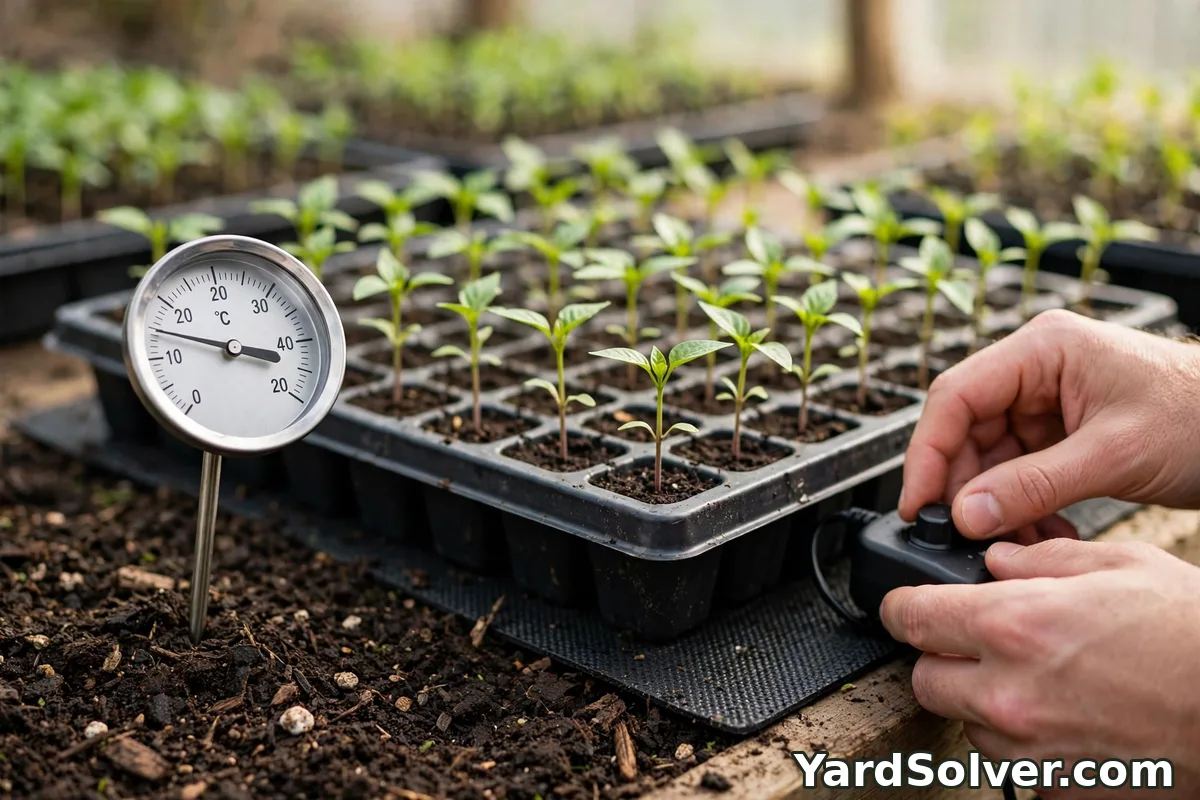
Crops keep a thermal calendar: development advances in proportion to accumulated warmth above a base temperature, and the growing degree day is its unit of account. Our Growing Degree Days Calculator runs the standard modified method and projects days to any target. This guide explains the method, the base temperatures by crop family, and the two working uses — stage prediction and pest timing.
The short answer, on one card
- Daily GDD = (high + low) ÷ 2 − base — with highs capped and lows floored at the base
- Bases: 50 °F for warm-season crops (corn, beans, tomato) · 40 °F for cool-season (peas, lettuce)
- The cap matters: at 86 °F in the corn method, hotter afternoons stop adding development
- Stages repeat in GDD: the same variety flowers at the same total in a cold year or a warm one
- Pests keep the same calendar: extension services publish GDD triggers for scouting and treatment
On this page
Step 1 — Why the calendar lies and the thermometer doesn’t
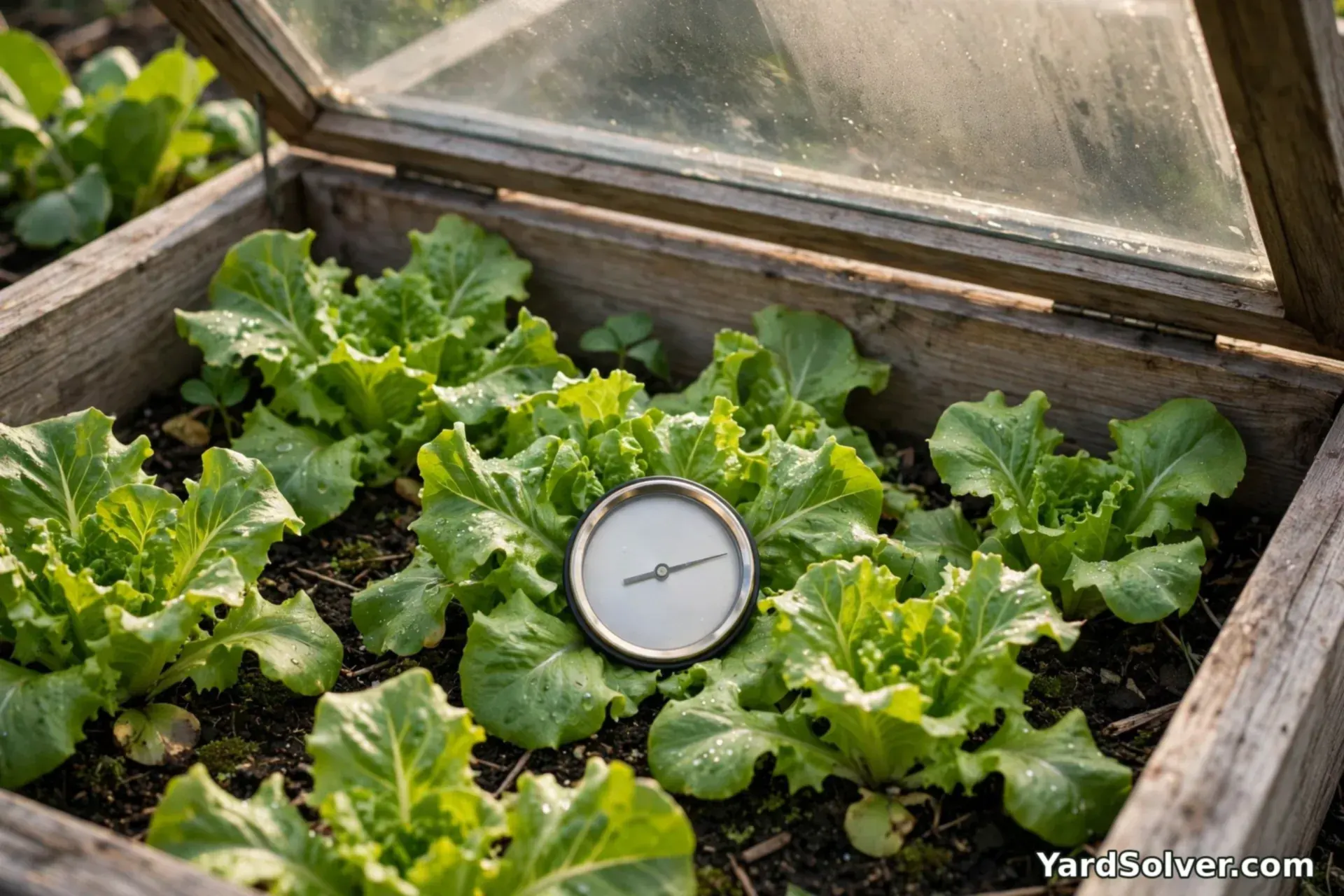
Plant development is chemistry, and chemistry runs at the speed temperature sets. A bean sown into a cold May may take three weeks to emerge; the same bean in June’s warmth takes one — not because the plant changed its mind but because emergence requires a fixed sum of warmth, and May pays it slowly. Gardeners feel this as "everything is late this year"; agronomists measure it, in growing degree days, and find nothing is late at all — the crop is exactly on its thermal schedule.
That is the whole idea: replace dates with accumulated warmth and the season becomes legible. Planting records in GDD transfer between years and between gardens in a way "June 10th" never can — the same variety, the same total, whatever the calendar said.
Step 2 — The modified method, and bases by crop
The daily sum with its two corrections: highs above the cap count as the cap (heat past the optimum adds stress, not development), and lows below the base count as the base (cold nights pause the clock without rewinding it). Days that average below the base contribute zero.
| Crop family | Base | Cap | A warm day (86/60) yields | A hot day (100/70) yields |
|---|---|---|---|---|
| Warm-season (corn, beans, tomato, squash) | 50 °F | 86 °F | (86+60)/2 − 50 = 23 GDD | (86+70)/2 − 50 = 28 GDD — capped, not 35 |
| Cool-season (peas, lettuce, brassicas) | 40 °F | None usual | (86+60)/2 − 40 = 33 GDD | Cool crops in such heat are bolting, not developing — the method assumes a crop in its season |
| Intermediate | 45 °F | 86 °F | (86+60)/2 − 45 = 28 GDD | (86+70)/2 − 45 = 33 GDD — capped, not 40 |
Your own averages go into the Growing Degree Days Calculator — accumulation and days-to-target. Winter’s mirror image — the cold a fruit tree must accumulate — is the Chill Hours Calculator.
Step 3 — Targets: stages, harvests and pests
A GDD figure becomes useful when it meets a target. Seed catalogues increasingly print them (GDD to harvest for sweet corn hybrids, typically 1,100–1,400 at base 50 to silking and beyond); extension tables publish them for crop stages; and your own log creates them — note the running total at first flower and first ripe fruit this year, and next year those stages are forecastable from any spring’s weather.
The pest application is the quiet professional secret: many insects hatch and emerge at published GDD totals, so scouting and protective timing keyed to GDD lands on the pest’s actual schedule in early and late springs alike, where calendar-keyed timing misses by the whole difference between the years. If you keep one number from this guide, keep a running total by the back door — it is the garden’s true date.
Step 4 — Your garden is not the weather station
Official GDD totals come from an instrument in an open field at an airport. Your garden — walled, sheltered, south-facing, or pooled with cold air at a slope’s foot — runs its own climate, commonly several degrees adrift in both directions. A max-min thermometer at crop height, read each morning and reset, converts the method from a regional statistic into your garden’s account.
Keep the log with the planting record and the two together become the most transferable knowledge a gardener owns: variety, date, GDD at each stage. Move house, change climate, and the GDD column still tells the truth that the date column no longer can.
Questions people ask
Why not just use the simple average without caps and floors?
You can — it is the original method and fine in mild weather. The corrections earn their place at the extremes: uncapped, a heatwave week credits development the crop never made; unfloored, a cold snap appears to erase progress, which plant physiology does not do. The modified method is the standard because it tracks real crops better.
Where do I find my crop’s GDD target?
Start with the seed packet and catalogue — GDD-to-harvest figures are increasingly printed, especially for corn and melons. Extension crop guides publish stage tables. Failing both, build your own: one season of logging the total at each stage creates targets tuned to your variety and your garden, which no table can beat.
Does GDD work for germination in soil?
A close cousin does — soil-temperature sums govern emergence, which is why the same sowing emerges in 7 days in warm soil and 21 in cold. Air-temperature GDD approximates it loosely; a soil thermometer at seed depth gives the real figure, and the pattern of the method is identical.
Can GDD predict my harvest date exactly?
Within days, not to the day — it cannot see drought stress, a shading tree’s growth, or the gardener’s thinning hand. Treat the projection as the crop’s intended schedule: remarkably reliable for planning successions and market days, honest about its own error bars.
What is a 'GDD unit' versus a 'growing degree day'?
The same thing wearing regional dress — degree days, heat units and GDD all name the accumulated degrees above base. What matters is never the label but the base and cap the figure was counted with: a total without its base is a number without a unit.
Sources
Key facts on this page cross-checked against Growing degree-day — Wikipedia — background on degree-day methods, bases and caps Chill hour — Wikipedia — the winter counterpart — cold accumulation for dormancy.
Related page
Read next: When Is the Last Frost? Dates, Safer Dates and What They Mean
Comments & ratings
No comments yet.
Be the first to share your experience.