
Guides · Home projects · Published November 18, 2026 · By Faizan Ahmad
How Many Bricks Do I Need?
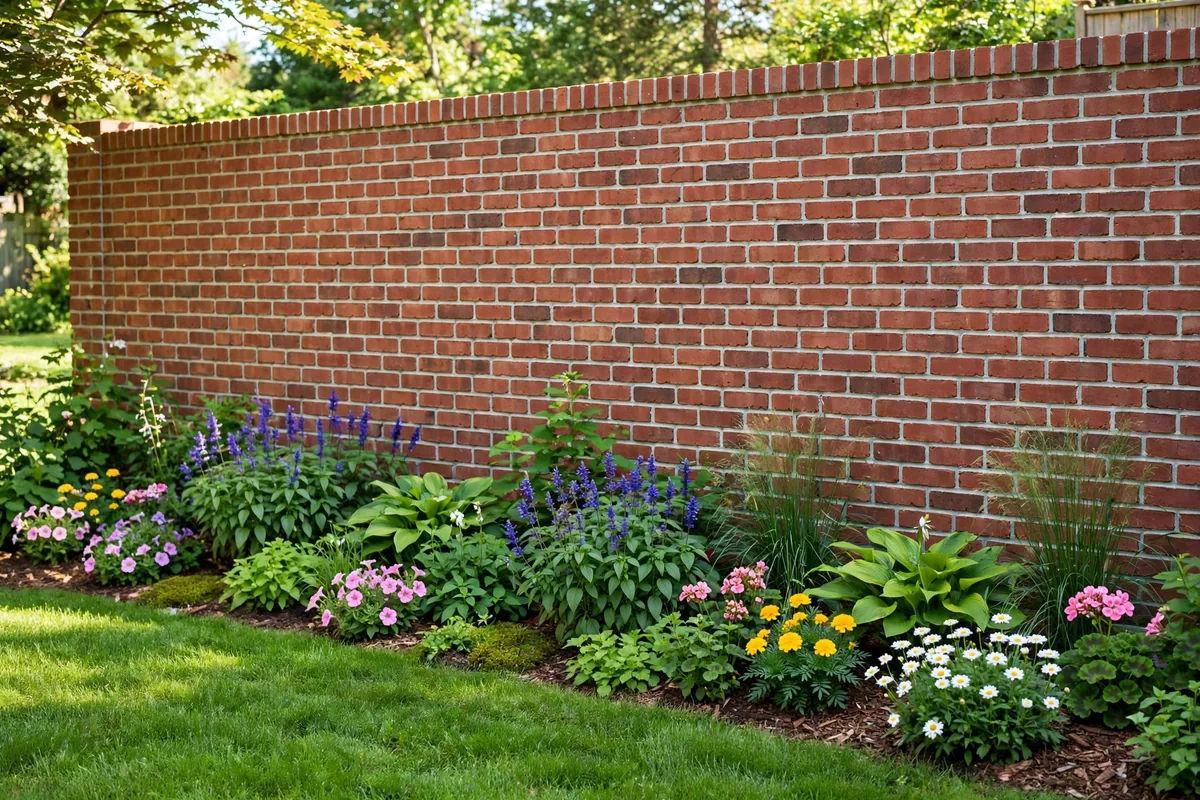
Bricks look countable — until you stand in front of a wall and try. A garden wall that "can't be more than a few hundred" routinely runs past five hundred, because bricklayers never count bricks one by one: they count by the square foot, at a published rate for the brick size, with the mortar joint already inside the number. That rate is exactly what our Brick Calculator — bricks and mortar bags for your wall runs for you, and it goes one step further than most counters: it counts the mortar too, in 60 lb bags, so the second order everyone forgets is on the same list as the first. This guide shows how the calculator works, the maths underneath it, why the joint lowers the count below the raw face area, and the cases a single rate does not cover — openings, double-thickness structural walls, veneer extras, and the patio question that needs a different count entirely. By the end you will be able to check any supplier's quote against your own numbers.
The short answer, on one card
- The formula: bricks = wall area (sq ft) × the rate for your brick, then add 10% for cuts and breakage
- Modular brick (7.625 × 2.25 in face) runs 6.55 per sq ft — 655 per 100 sq ft, mortar joints included
- Standard brick (8 × 2.25 in face) runs 6.1 per sq ft — 610 per 100 sq ft
- Mortar: one 60 lb bag lays roughly 35 modular bricks — bags = bricks ÷ 35, rounded up
- Rates are single-wythe (one brick thick). A double-wythe structural wall takes twice the count
Step 1 — Measure the wall, and leave the openings out
The calculator needs the area of brickwork, not the area of the elevation drawing. Run a tape along the wall for the length and from footing to top for the height, and multiply the two — that is the gross area. Then walk the wall and subtract every opening: a gate gap in a garden wall, a door or window in a veneer, a recess for a meter box. Each opening is its own small rectangle, width × height, and it comes off the gross area before any rate is applied. On a plain garden wall there may be nothing to subtract, but on a house veneer the windows and doors are easily a fifth of the face, and paying for bricks to fill a window hole is the most expensive rounding error in the whole job. One more measurement habit matters: measure the wall you are actually building, in the units the calculator is set to. It switches between feet and metres behind the scenes, but a height paced off at "about eight feet" and entered as exact will quietly move the order by dozens of bricks either way. A normal walking pace is roughly 2.5 feet if no tape is handy — honest pacing beats a confident guess.
Step 2 — Run the calculator: what each input does
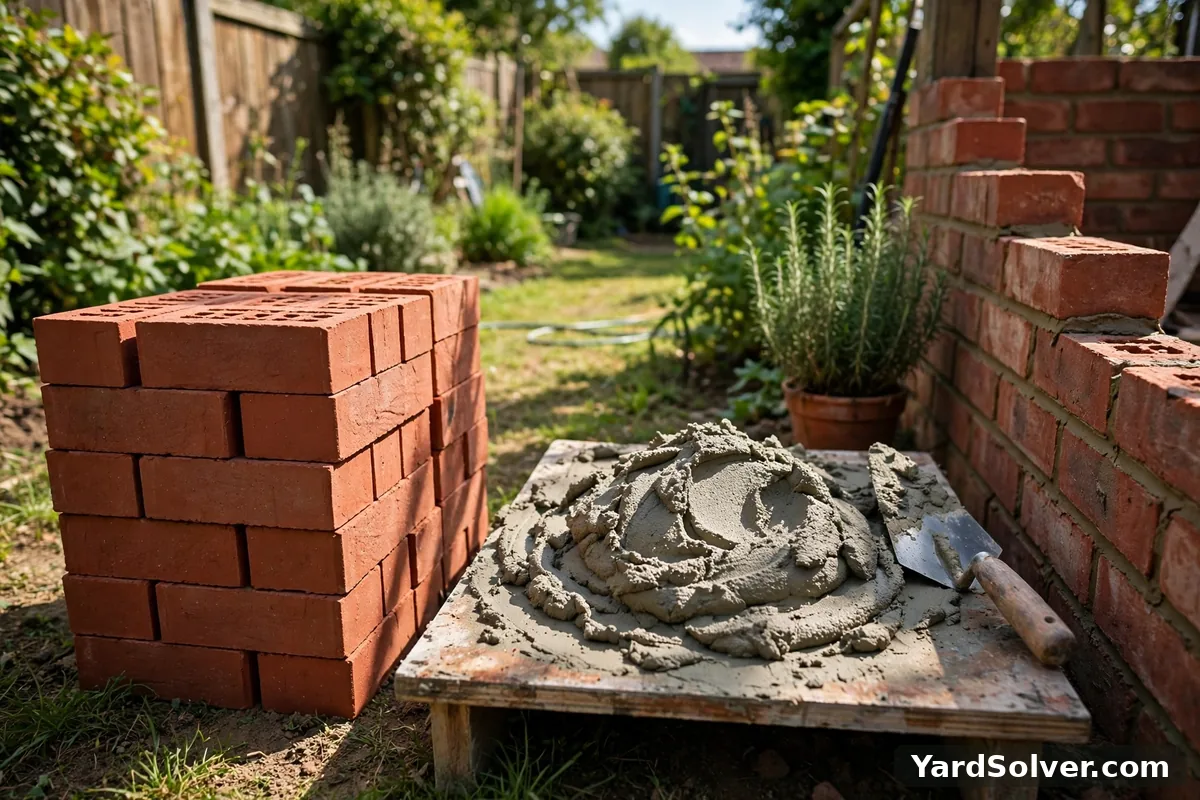
Open the calculator and type in the length and height from Step 1, in feet or in metres — the unit switch converts everything behind the scenes. Next, the brick: modular or standard. That single choice sets the rate for the whole wall, because the calculator holds the published per-square-foot count for each size, mortar joint included — 6.55 for modular, 6.1 for standard. Modular is the common modern size in Canada and the US, and it is the one to pick unless the brick you are actually buying is labelled standard. Then pick your country, Canada or the USA: the counts are identical everywhere, but typical store prices differ, so the calculator prices the answer with a realistic range for your country instead of a number in a currency you do not use. The answer comes back as a pair, not a single number — bricks with the 10% allowance for cuts and breakage already included, and 60 lb mortar bags worked out from that same brick count. Press the print button and you have the shopping list: both orders, in the units the store sells them in.
Step 3 — The maths the calculator is doing
There is no hidden model here — the calculator runs the same count a bricklayer runs, and you can check it on paper. Bricks = wall area × rate, then × 1.10 for waste. The interesting part is the rate itself, because it is lower than the brick's face suggests. A modular brick's face is 7.625 × 2.25 inches — 17.16 square inches — so bare faces alone would need 144 ÷ 17.16 ≈ 8.4 bricks to cover one square foot. The published laid rate is 6.55, not 8.4, because a laid brick does not cover the wall with its face alone: it also claims its share of the mortar joint along one side and across the top. The joint is part of the wall's face, and it is brick-free — so every square foot of finished wall holds fewer bricks than the raw face area promises, and the difference is exactly the mortar you stand in. That is also why the rate is published rather than derived on the spot: it already folds in the standard joint and coursing, so you multiply and move on. The table below is the calculator's own rates, pre-run per square foot and per 100 square feet; it is worth a screenshot before any store trip.
| Brick type | Face size | Bricks per sq ft | Bricks per 100 sq ft |
|---|---|---|---|
| Modular brick, single-wythe | 7.625 × 2.25 in | 6.55 | 655 |
| Standard brick, single-wythe | 8 × 2.25 in | 6.1 | 610 |
| Modular brick, double-wythe | 7.625 × 2.25 in | 13.1 | 1,310 |
Read the table the way the calculator thinks: the brick size moves the answer by about 7% between modular and standard, but the wall's thickness doubles it outright. A standard brick is slightly longer in the face than a modular, so fewer of them fill a square foot — 610 against 655 per hundred. Pick the wrong size in the calculator and a 500-brick wall drifts by 35 bricks or so; build a double-wythe wall on a single-wythe count and you are short by half the wall. Size first, thickness second, area third — in that order.
Step 4 — A whole wall, worked start to finish
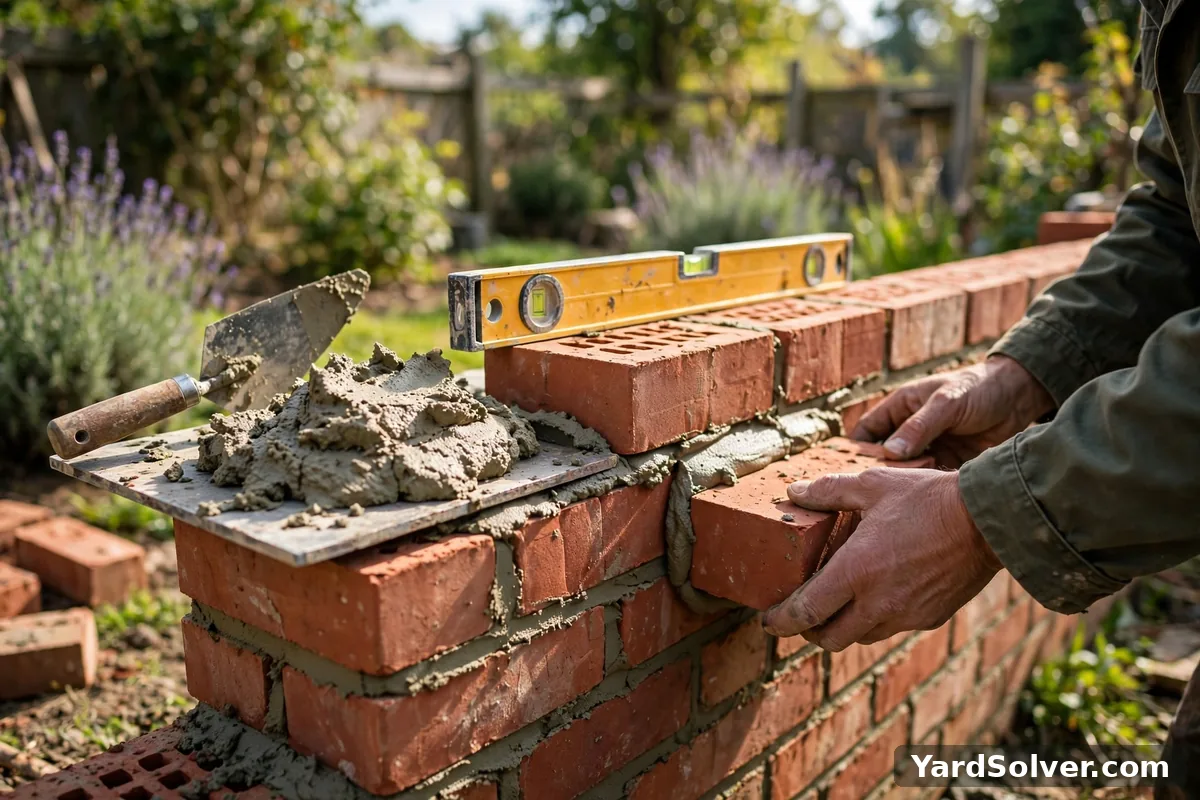
Here is one complete wall, done the way the calculator does it — the same example the calculator page itself uses. The wall is 10 ft long × 8 ft high, with no openings, so the measured area is 10 × 8 = 80 sq ft. In modular brick: 80 × 6.55 = 524 bricks in the finished wall. Add the 10% allowance for cuts and breakage: 524 × 1.10 = 576.4, which the calculator rounds up to 577 bricks to order. Now the second order, the one most counters leave you to guess at the store: mortar at roughly 35 bricks per 60 lb bag gives 577 ÷ 35 = 16.5, rounded up to 17 bags. Three multiplications and two round-ups, and the whole job is a list: 577 bricks, 17 bags. Run the same wall in standard brick instead and the count falls to 80 × 6.1 = 488, plus 10% = 537 bricks, and 537 ÷ 35 rounds to 16 bags — the brick choice from Step 2 is worth 40 bricks and a bag of mortar on a wall this size. Notice, too, what the allowance is doing: the 53 extra modular bricks are not padding for its own sake. The end bricks of every course get cut, a few in every delivery arrive chipped, and brick colour varies between batches — running short near the top of the wall and finishing with a different batch is how a wall ends up two-tone. One batch, ordered once, with the allowance inside it, is the professional habit this calculator copies.
Step 5 — Mortar: the second order most counters skip
Search for a brick count and most tools stop at the bricks. Then the wall stops too — halfway up, on a Sunday, with an empty mortar board. Mortar is not a garnish on the brick order; at roughly 35 modular bricks per 60 lb bag, a 577-brick wall drinks 17 bags of it, and the bags are heavy, cheap and miserable to fetch mid-job. The calculator's mortar maths is deliberately simple: bags = bricks ÷ 35, rounded up, worked from the order count (allowance included), because the cut and broken bricks still consumed mortar on the courses they were laid in before they failed — and because rounding up on mortar is the cheapest insurance on the list. Treat the 35 as what it is, a mason's rule of thumb: wide joints, a heavy hand with the trowel and mortar dropped and wasted on the ground all pull the real number of bricks per bag down, while tight, even joints stretch it. If your wall has chunky rustic joints, order a bag or two past the calculator's number. And mix it a bag at a time — mortar has about a two-hour working life, so a mountain mixed at dawn is a mountain wasted by lunch. The calculator counts bags of pre-mixed mortar; if you are batching your own from cement and sand, the count of bricks per bag still tells you the scale of what to have on site.
Step 6 — Veneer extras, double walls, and the patio trap
Three cases sit outside the single rate, and each one catches people out. First, veneer extras. The rates count a single-wythe wall — one brick thick — which is what a garden wall and a house veneer both are. But a veneer is not freestanding brickwork: it is tied back to the structure behind it, and the brick ties, the lintels that carry it over windows and doors, and the flashing that keeps water out of the cavity are all separate items. They are not bricks and they are not mortar, so they are in neither count — the calculator says so on its own page, and your list needs them added by hand. Second, thickness. Older structural brick walls are often double-wythe — two bricks thick, bonded together — and a double-wythe wall takes twice the bricks and roughly twice the mortar of the single-wythe count for the same face. If you are matching or extending an old structural wall, double the calculator's answer before you order, as the third row of the Step 3 table shows. Third, the patio trap. "How many bricks for a 10×10 patio?" is one of the most-asked versions of this question, and the wall rate is the wrong tool for it: paving lays bricks flat, so each brick covers the ground with its full flat face instead of its narrow wall face, the joints are swept sand rather than mortar, and the bricks rest on a prepared gravel-and-sand base rather than a footing. A patio is a paver job wearing brick clothing — size the base and the laying pattern with Paver Patio Base: How Deep, and How Much Gravel & Sand, and count flat-laid units the paver way, not at 6.55 per square foot.
What the calculator can't do
Honesty about the edges, so the number earns your trust. The calculator assumes a flat, rectangular, single-wythe wall laid to a standard joint: a stepped wall on a slope, a curved wall (which eats cuts at a rate no flat allowance predicts), and decorative bonds with heavy cutting all drift from the rate, and the drift is always upward. It cannot see your openings — the subtraction in Step 1 is yours to measure, and a forgotten window is 40-odd bricks ordered for nothing. Its mortar figure is a rule of thumb, not a yield guarantee: joint width and the mason's hand move it more than any other number on the page. And its cost figures are typical store-price ranges for your country, not quotes — brick is a heavy, local material, and delivery distance moves its price more than the brick itself. It also draws a firm line at structure: a garden wall and a veneer are counting exercises, but a load-bearing or retaining wall is an engineering question, and no brick count substitutes for proper footings and, where your area requires it, a permit. What it does guarantee is the count itself, checked above: get the area net of openings, the brick size and the thickness right, and the order follows.
Building the wall in concrete block instead of brick? Blocks cover the same face far faster per unit — the Concrete Block Calculator — blocks and mortar for the same wall runs the same area through block rates.
Keep going
Run your own wall through the Brick Calculator, then compare the block route with the Concrete Block Calculator. Laying brick flat instead of upright? Start with Paver Patio Base: How Deep, and How Much Gravel & Sand — the base decides whether a patio stays flat.
Planning the whole season's garden building? The Garden Planner lays out wall-building, planting and feeding in one calendar.
Questions people ask
How many bricks are in a square foot of wall?
About 6.55 modular bricks or 6.1 standard bricks per square foot, with the mortar joint counted. The joint is why the count is lower than the raw face area suggests: the bare faces alone would need about 8.4 modular bricks to cover a square foot, but each laid brick also claims its share of the joint around it. Per 100 square feet that is 655 modular bricks or 610 standard bricks, before the 10 percent allowance for cuts and breakage.
How many bricks does one bag of mortar lay?
Roughly 35 modular bricks per 60 lb bag of mortar mix — a mason's rule of thumb. Wide joints, deep walls and waste all pull the number down, so treat it as an estimate. The calculator divides your brick count by 35 and rounds up, so a 577-brick wall needs 17 bags.
What does single-wythe mean?
One brick thick. House veneer and garden walls are single-wythe; older structural brick walls are often double (two bricks thick) and need twice the count here. Every rate in this guide and in the calculator assumes a single-wythe wall unless you double it yourself.
How many bricks do I need for a 10×10 patio?
Not at the wall rate. A patio lays bricks flat as paving, so each brick covers the ground with its full flat face instead of its narrow wall face, the joints are swept sand rather than mortar, and the bricks sit on a prepared base rather than a footing. A 10×10 ft patio is 100 square feet of paving, and it should be counted with the paver method, not this wall count — our paver patio base guide works through the base and the laying pattern that a patio actually needs.
Why does the calculator add 10% extra bricks?
End bricks get cut, a few arrive chipped, and colours vary between batches — running short mid-wall risks a visible mismatch when the next batch arrives. The 10 percent is already included in the calculator's answer, so the number it shows is the number to order, not the number that ends up in the finished wall.
Do I need to count mortar separately from the bricks?
Yes — bricks and mortar are two separate orders, and most simple counters only give you the first one. This calculator returns both: bricks with the 10 percent allowance included, and 60 lb mortar bags at roughly 35 bricks per bag, rounded up. Brick ties, lintels and flashing for a veneer wall are separate items again and are not in either count.
Brick counts are area divided by brick-plus-joint — the mortar joint is part of the module
A brick wall is not bricks touching; it is bricks on a module that includes a mortar joint of about ten millimetres, so the count comes from the wall's area divided by one brick's face plus its share of joint. Forget the joint and a long wall runs short by a tenth or more; forget the pattern and cuts and the waste allowance — five percent for straight work, ten where cuts multiply — leaves you a course short on a Sunday.
Work the guide's calculator with your wall's true length and height, the brick size in your region (brick dimensions differ honestly between countries), and single or double skin stated plainly, because a double-skin wall doubles the count, not the area. Order the waste in the same delivery: a second delivery of a different batch can arrive a shade different, and a wall remembers a colour change forever.
Sources
Key facts on this page cross-checked against Brick — Wikipedia — background on bricks, their sizes and their use.
Related page
Read next: How Many Pavers Do I Need? Base Gravel & Sand Included — How the Calculator Works.
Comments & ratings
No comments yet.
Be the first to share your experience.