
Guides · Climate & timing · Published November 22, 2026 · By Faizan Ahmad
How Many Chill Hours Do Fruit Trees Need? Requirements by Fruit
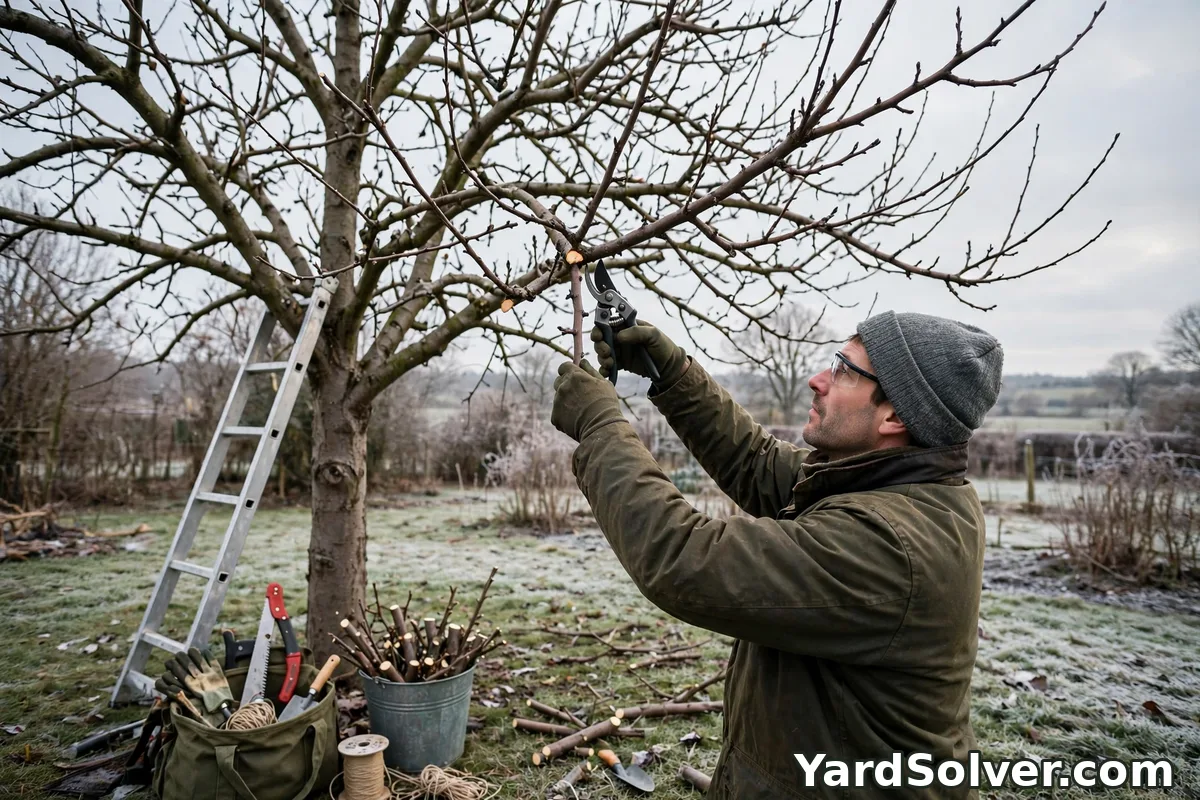
Fruit trees need between about 100 and 1,400 chill hours depending on fruit and variety — hours between 32 °F and 45 °F in the classic model — and a tree planted outside its chill range fails in ways that masquerade as disease for years. Our Chill Hours Calculator estimates your winter’s supply from daily averages. This guide gives the requirements, the three counting models, and the symptoms that tell you a tree is under-slept.
The short answer, on one card
- A chill hour (classic model) is one hour between 32 °F and 45 °F
- Requirements: fig 100–300 · peach 150–1,200 · apple 200–1,000+ · sweet cherry 700–1,400
- Variety beats species: the range inside one fruit is wider than the gap between fruits
- Too little chill looks like illness: strung-out bloom, bare buds, patchy leafing — it is insomnia, not infection
- Plant with a margin: choose for the warm winter in ten, not the average winter
On this page
Step 1 — Why a tree must sleep
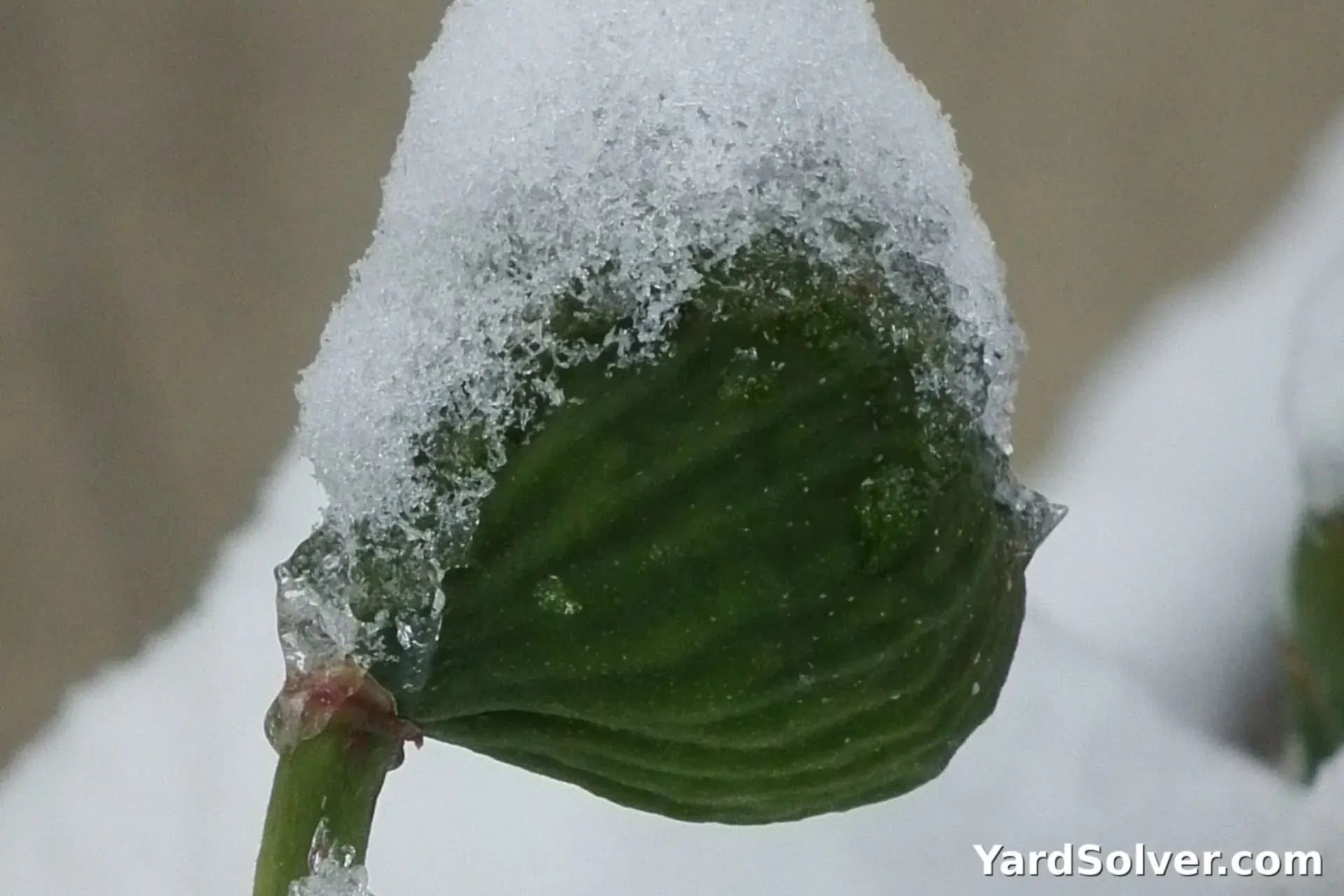
Temperate fruit trees evolved where winter is reliable, and they use cold as a safety lock: buds set in autumn will not open — whatever a warm January week promises — until a counted quota of chill has passed. The lock protects the blossom from false springs, and it is chemical, not metaphorical: chill accumulation dismantles the growth inhibitors that hold the bud shut, and warmth can then do its work.
Remove the winter and the lock half-opens. That is the entire problem of chill deficiency, and why the fix is never a spray or a feed: the tree is not lacking a nutrient, it is lacking evidence that winter happened. Gardeners in mild climates are not fighting their trees’ health — they are negotiating with their trees’ calendars.
Step 2 — Requirements by fruit
Published ranges across varieties — deliberately wide, because the variety is the unit that matters. Low-chill breeding (varieties selected for mild-winter regions) occupies the bottom of each range; traditional northern varieties the top.
| Fruit | Published chill range (hours) | Character |
|---|---|---|
| Fig | 100–300 | The mildest-winter fruit of the list |
| Grape | 100–500 | Forgiving; variety decides |
| Peach / nectarine | 150–1,200 | The widest range — low-chill breeding is most advanced here |
| Apple | 200–1,000+ | From coastal low-chill types to northern heirlooms |
| Pear | 200–1,500 | Asian pears low; European pears span the whole scale |
| Plum | 300–1,000 | Japanese types lower than European |
| Apricot | 300–900 | Moderate chill, but blooms dangerously early |
| Blueberry (northern highbush) | 800–1,200 | A genuinely northern plant; southern types need far less |
| Sweet cherry | 700–1,400 | The demanding one — mild-winter gardeners, read twice |
Your winter’s supply goes into the Chill Hours Calculator — estimate against any fruit on this table. Summer’s counterpart accounting is the Growing Degree Days Calculator.
Step 3 — Three models, one winter
The classic model counts flat hours between 32 °F and 45 °F. The Utah model refines it: hours just below freezing earn partial credit, the prime band earns full credit, and — the important difference — warm hours above about 60 °F subtract, because warmth genuinely undoes some accumulated chill. The Dynamic model, used in the warmest fruit regions, counts in "chill portions" through a two-step biochemical process and predicts best where winters are marginal.
Practical consequence: figures are only comparable within a model. A station publishing 800 Utah units and a catalogue demanding 800 classic hours are not speaking the same number, and in a warm winter the Utah total can fall while the classic total holds — the subtraction is the story. Match model to model when you compare your climate with a variety, and prefer your extension service’s station totals, in whichever model they publish.
Step 4 — Reading an under-chilled tree
The symptoms arrive as a pattern, not an event: budbreak straggles over weeks, some buds never open at all, bloom is thin and prolonged, leafing is patchy with bare stretches along the shoots, and fruit set disappoints on a tree that looks otherwise fed and watered. Because each symptom alone mimics disease or deficiency, mismatched trees collect years of wrong treatments — the diagnosis is in the calendar, and it is made by matching the variety’s requirement against the winter’s measured supply.
The remedies are honest but slow: at replanting, choose varieties your warmest winters still satisfy; in marginal spots, use shade and north-facing placement to keep buds cold longer and delay bloom past late frosts; and for a beloved container tree, winter it in an unheated garage where the band hours accumulate longer than in the open garden. There is no spray for insomnia — there is only planting the tree whose sleep your winter can provide.
Questions people ask
How do I find my area's actual chill hours?
Your state or provincial extension service publishes station totals each winter in one of the standard models — that is the authoritative figure. Failing that, the calculator’s estimate from your winter averages gives the order of magnitude, and a season of your own hourly or max-min records sharpens it.
Can a tree get TOO much chill?
Essentially no — once the requirement is met, extra chill does the tree no harm; the risk flips to the other side of spring, when a fully chilled tree blooms at the first warmth and meets a late frost. High-chill gardeners manage frost timing; low-chill gardeners manage sleep. Different problems, opposite ends of the same calendar.
My winters are warming. When should I switch varieties?
At natural replanting moments — a tree’s productive life is the planning unit. Track your station’s totals for a few winters: if the warm years now fall below your variety’s requirement, its replacements should be chosen a step lower in chill. The orchard industry is making exactly this migration, one row at a time.
Do low-chill varieties taste worse?
That was the old trade and it is fading: modern low-chill breeding (especially in peaches and apples) has closed most of the quality gap. What low-chill varieties still risk in cold gardens is the opposite failure — blooming too early and losing the crop to frost. Match the tree to the winter you have, in both directions.
Does a cold frame or garage really add chill for a potted tree?
It adds band hours, yes — an unheated space hovers in the 32–45 °F band through nights when the open garden dips far below freezing (where classic credit stops) and through days when a mild spell would push the garden above the band. For a marginal variety in a pot, it can be the difference between sleep and insomnia.
Sources
Key facts on this page cross-checked against Chill Hours of Utah — Utah State University Extension — extension research on chill accumulation and the Utah model Chill hour — Wikipedia — background on chill requirements and counting models.
Related page
Read next: Growing Degree Days Explained: The Calendar Crops Actually Keep
Comments & ratings
No comments yet.
Be the first to share your experience.