
Guides · Soil & feeding · Published November 18, 2026 · By Faizan Ahmad
How Much Compost Do I Need?
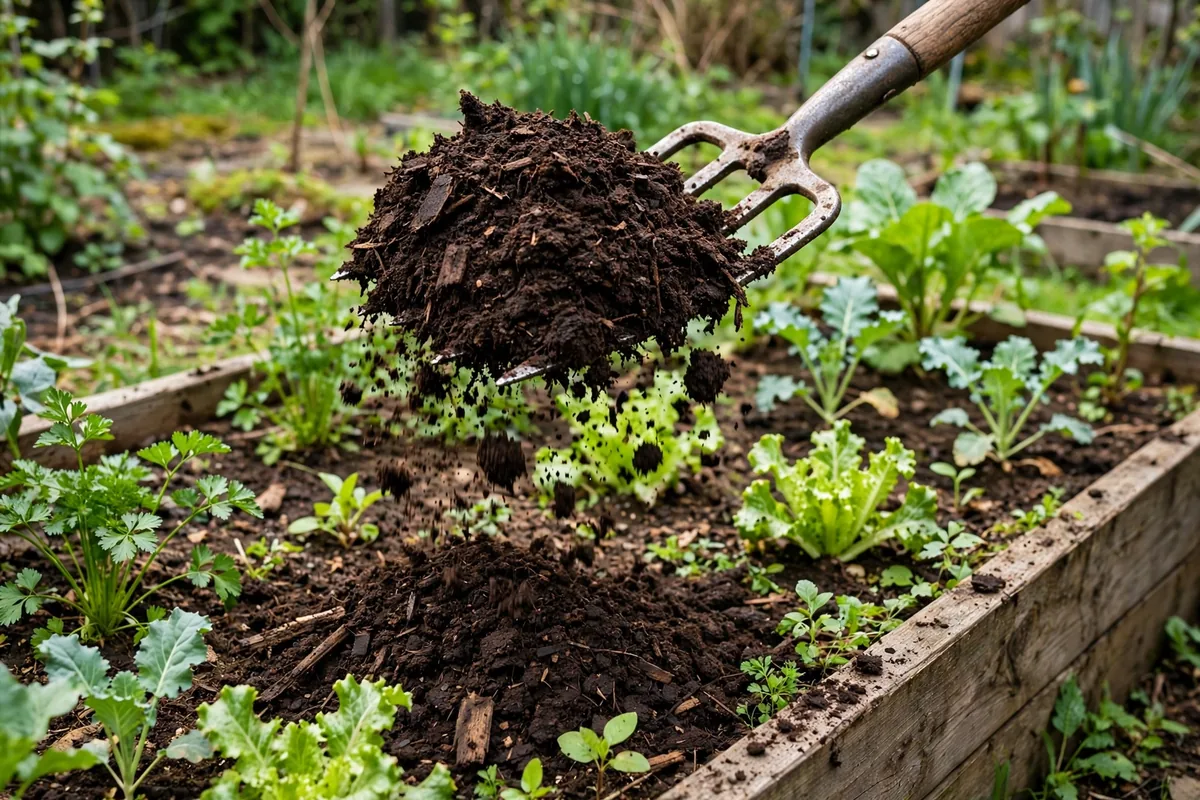
Compost is the one garden material where the honest answer to "how much?" swings eightfold on a single decision. The same dark, crumbly compost goes on a lawn as a whisper — a quarter inch brushed down into the grass — and into a vegetable bed as a working layer two full inches thick. Same material, same garden, eight times the volume. That is why guessing in the store aisle fails so reliably, and it is exactly the decision our Compost Calculator is built around. This guide shows how the calculator works, the simple volume maths underneath it, and the cases that trip people up: top-dressing a lawn without smothering it, feeding raised beds without filling them with pure compost, the point where a bulk delivery beats bags, and how the same number becomes the production target for a home compost pile. By the end you will be able to check any bag count — ours included — on the back of an envelope.
The short answer, on one card
- The formula: length × width × depth = volume. In feet and inches: sq ft × depth (in) ÷ 12 = cubic feet; ÷ 27 = cubic yards
- Depth by job: 1/4 inch to top-dress a lawn, 1–2 inches worked into beds each spring, up to 3 inches for a new bed on poor soil
- The 8× rule: 2 inches over a bed needs eight times the compost of 1/4 inch over the same area of lawn
- Bags differ by country: Canada sells compost mainly in 25 L bags (about 0.883 cu ft); US bags are usually 1 cu ft
- Compost is an amendment, not a growing medium — never fill a bed with pure compost; blend it at roughly a quarter to a third of the mix
Step 1 — Pick the depth for the job, not the material
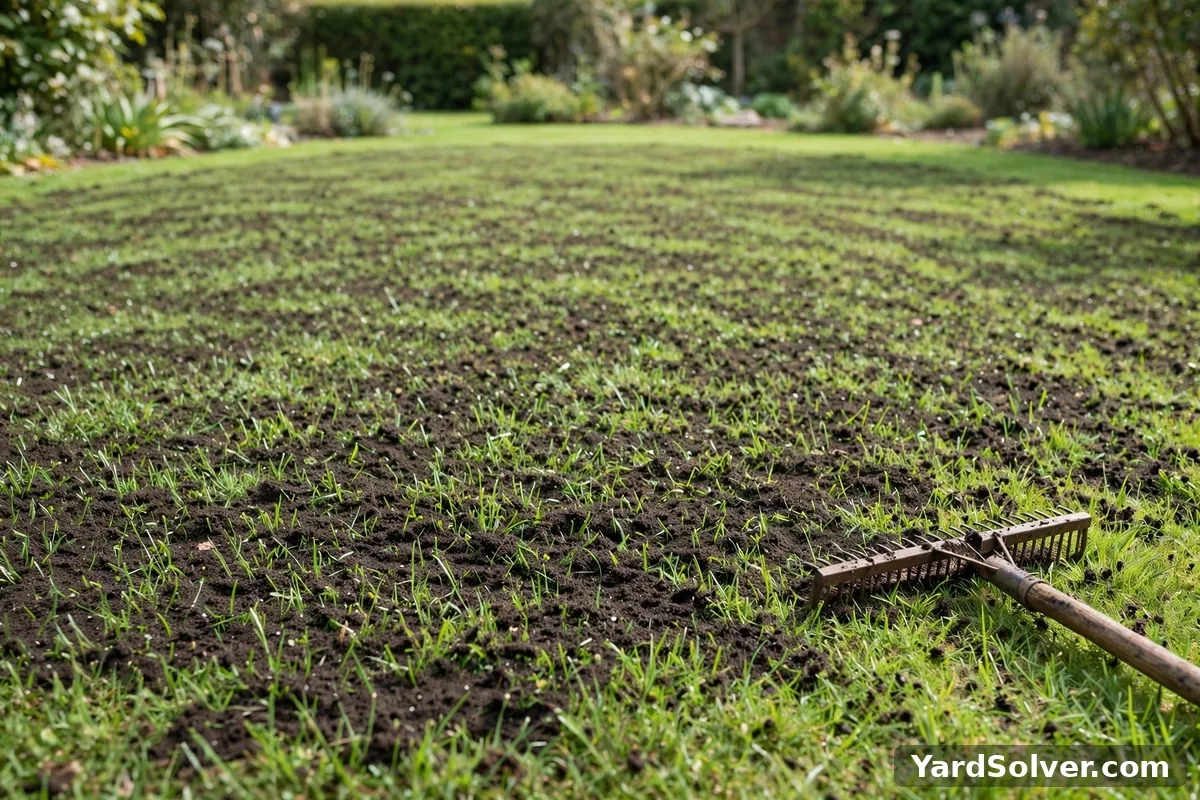
Every compost question is really a depth question. Top-dressing a lawn: 1/4 inch, up to 1/2 inch at most. The layer has to disappear down between the grass blades to the soil surface; spread it thicker and it sits on top of the leaves, shading and smothering the very grass you are feeding. Screen or sieve lawn compost fine first — lumps sit on top, fine particles fall through — then brush or rake it in and water. It vanishes into the soil within a few weeks. Amending a bed: 1–2 inches worked into the top few inches of soil is the standard spring top-up, the classic annual rhythm. Building a new bed on poor soil: up to 3 inches worked in deep gives the structure a head start — then drop back to the 1–2 inch annual rhythm. Hold those three numbers against each other and the eightfold swing stops being a surprise: depth, not area, is the lever in every compost calculation, which is why the calculator asks for the job before it asks for the tape measure.
Step 2 — Run the calculator: what each input does
Open the Compost Calculator — volume, bags and yards for beds and lawns and type in the length and width of the area, in feet and inches or in metres and centimetres — the unit switch converts everything behind the scenes. Then the depth, chosen from Step 1: a quarter inch for the lawn, two inches for the beds you are feeding before planting heavy feeders like tomatoes. Then pick your country, Canada or the USA. That toggle decides the bag maths: the calculator divides your volume by 25 litres (about 0.883 cubic feet) per bag in Canada and by 1 cubic foot per bag in the USA, and prices the answer with a typical store range for your country. The answer comes back in three units at once — cubic feet (the raw volume), bags rounded up to whole bags, and cubic yards for a bulk order — with an estimated cost. Press the print button and you have the shopping list. One warning the calculator cannot give you: it is a volume calculator. If a search led you here looking for a browns-to-greens or carbon-to-nitrogen recipe calculator for building a pile, that is a different tool for a different job — this one sizes how much finished compost a job needs, and Step 6 shows how to run it backwards for your pile.
Step 3 — The maths the calculator is doing
There is no hidden model here either — compost is thin-layer volume maths, the same sum a landscape yard runs. Cubic feet = length (ft) × width (ft) × depth (inches) ÷ 12. The ÷ 12 turns inches of depth into feet so all three dimensions match. From cubic feet, two conversions finish the job: ÷ 27 = cubic yards, and ÷ your country's bag size, rounded up = bags. Sanity-check it against the bed everyone asks about: a 4 × 8 ft raised bed is 32 sq ft; at 2 inches deep that is 32 × (2 ÷ 12) = 5.3 cubic feet — 7 Canadian 25 L bags or 6 US 1-cubic-foot bags. Because the layers are so thin, small depth changes swing the answer hard — half an inch either way on a lawn is a different order entirely — so set the depth deliberately from Step 1 and let the arithmetic follow. The table below is the same maths pre-run for the jobs people actually search for; it is worth a screenshot before any store trip.
| Job | Area | Depth | Volume | Cubic yards | Bags — Canada (25 L) | Bags — USA (1 cu ft) |
|---|---|---|---|---|---|---|
| Top-dress a lawn | 1,000 sq ft | 1/4 in | 20.8 cu ft | 0.77 yd³ | 24 bags | 21 bags |
| Top-dress a lawn, heavier | 1,000 sq ft | 1/2 in | 41.7 cu ft | 1.54 yd³ | 48 bags | 42 bags |
| Feed one raised bed | 4 × 8 ft (32 sq ft) | 1 in | 2.7 cu ft | 0.10 yd³ | 4 bags | 3 bags |
| Feed one raised bed | 4 × 8 ft (32 sq ft) | 2 in | 5.3 cu ft | 0.20 yd³ | 7 bags | 6 bags |
| Feed two raised beds | 2 × (4 × 8 ft) | 2 in | 10.7 cu ft | 0.40 yd³ | 13 bags | 11 bags |
| Feed a bed area | 100 sq ft | 2 in | 16.7 cu ft | 0.62 yd³ | 19 bags | 17 bags |
| New bed on poor soil | 100 sq ft | 3 in | 25.0 cu ft | 0.93 yd³ | 29 bags | 25 bags |
Read the first and last rows together: the lawn's whisper-thin quarter inch over a big area and the new bed's three inches over a small one land in the same neighbourhood of volume. Area alone never answers this question — area times the right depth does.
Step 4 — Two beds and a lawn, worked start to finish
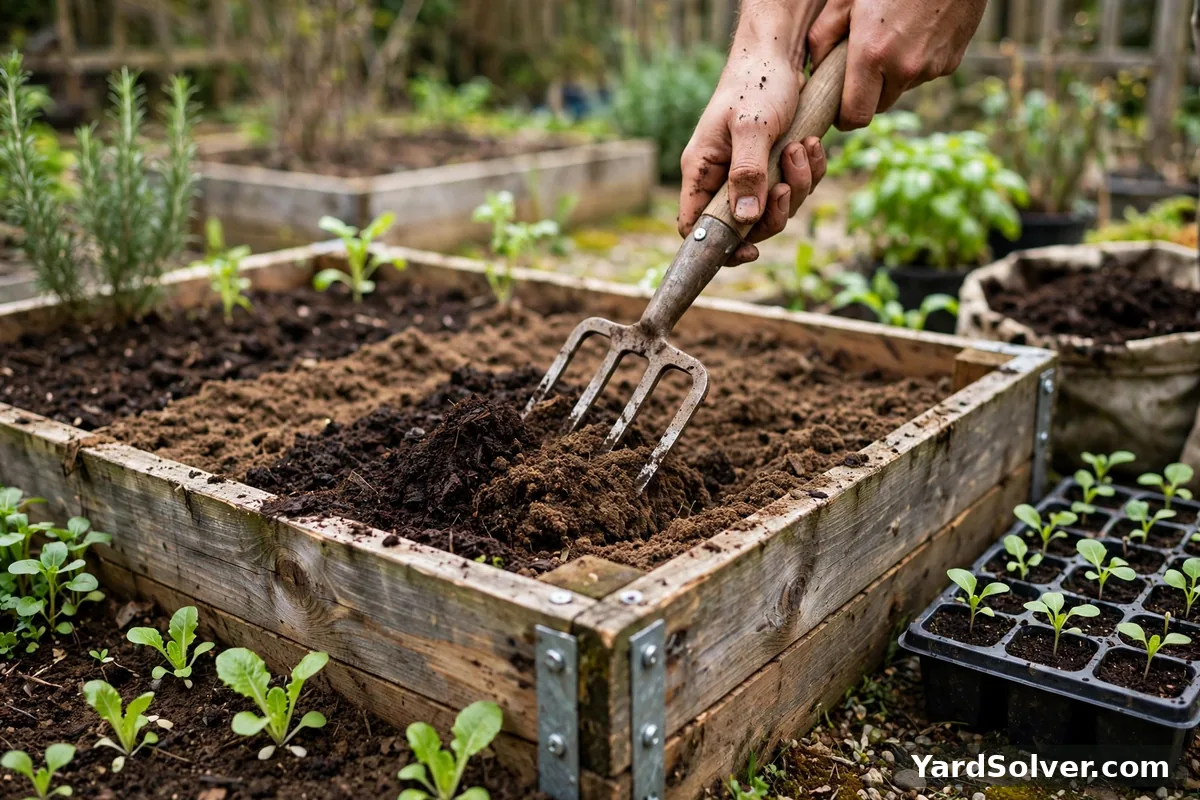
Here is the calculator's own worked example, done the way it does it. You are feeding two raised vegetable beds, each 8 ft by 4 ft, with a 2 inch layer of compost worked into the top of the soil — the standard spring amendment before the season's planting. One bed's area: 8 × 4 = 32 square feet. Turn the depth into feet: 2 ÷ 12 = 0.167 ft. One bed's volume: 32 × 0.167 = 5.3 cubic feet. Double it for two beds: 10.7 cubic feet in total. Now the country split. In Canada, at 0.883 cubic feet per 25 L bag: 10.7 ÷ 0.883 = 12.1, so 13 bags. In the USA, at 1 cubic foot per bag: 11 bags. And in bulk: 10.7 ÷ 27 = about 0.4 cubic yards — below the minimum most landscape yards will deliver, so bags win this round by default. Notice the habit that saves money on every multi-area job: add the volumes first, then convert to bags once. Rounding each bed up separately would have you carrying home an extra bag.
Now the contrast, same garden, same material. Top-dress 1,000 square feet of lawn at 1/4 inch: 1,000 × (0.25 ÷ 12) = 20.8 cubic feet, about 0.77 cubic yards — nearly double the two-bed job, from a layer so thin it is hard to see once it is brushed in. At 24 Canadian bags or 21 US bags, this is the edge of bulk territory: past roughly a cubic yard a delivery usually beats bags, and a full lawn at the heavier 1/2 inch rate (41.7 cubic feet, 1.54 yards) is firmly a bulk order. The lesson the two jobs teach together: never quote compost by area. A quarter inch over a lawn and two inches over beds are different products in volume terms, and the calculator's depth field is where that difference lives.
Step 5 — Bags or bulk? Compare per cubic foot
The calculator shows both worlds on purpose, because the break-even is a real number and it sits right where home gardens live. Below about half a cubic yard, bags win — no delivery fee, no pile on the driveway, no barrow relay, and bags carry into a back garden far more easily. Past about a cubic yard, bulk usually wins on price even after delivery. Between the two sits the awkward middle — our two-bed job at 0.4 yards — where most yards will not deliver at all, so the decision makes itself. Whichever side you land on, compare honestly: cost per cubic foot, not cost per bag or per yard. A 25 L bag and a 1-cubic-foot bag differ by about 13% in volume, so the cheaper-looking bag is sometimes the dearer compost; the calculator's volume total is the number to divide by. Two more honest caveats. A bulk yard is a bigger pile than most people picture, so choose the tarp spot before the truck arrives. And bagged compost is the cleaner choice for lawn top-dressing, where you want a fine, screened, consistent material that falls through grass — bulk loads vary more, and a lumpy one will sit on the lawn in clumps.
Step 6 — Making your own? The calculator is your production target
Here is the use nobody expects: run the calculator even if you never buy a bag. The volume it returns is exactly what your compost pile needs to produce. Add up your spring jobs — say the two beds at 10.7 cubic feet, a flower border at 8, and a modest lawn top-dress at 12 — and the pile's target is roughly 30 cubic feet of finished compost. Then respect the shrinkage: a pile cooks down as it decomposes, often to around half its starting volume, so hitting a 30-cubic-foot target means building roughly 60 cubic feet of raw material across the season — every bucket of kitchen scraps, bag of leaves and barrow of grass clippings is a deposit against a number you now actually know. Home-made compost also changes the maths in two practical ways. It is free, so the bags-vs-bulk question disappears — but it is variable: richer or weedier depending on what went in, and unfinished material can rob nitrogen from the soil while it completes, so spread only what smells earthy and looks like soil, and keep doubtful batches for the flower beds rather than the seed rows. And because it costs nothing but time, the honest move is to top up a little more often — a 1-inch spring layer and a light autumn one — rather than stretching a small pile into one heroic, too-thick application.
Common mistakes — and what the calculator can't do
Treating compost as soil. This is the big one, and the calculator page says it plainly: compost is an amendment, not a growing medium. Fill a raised bed with pure compost and you get a mix that is too rich, holds too much water, and shrinks dramatically as it continues to break down — the bed level drops away under your plants by midsummer. Work 1–2 inches into existing soil, or blend compost as roughly a quarter to a third of a new bed's fill, with soil making up the rest. If you are filling a new bed from empty, size the soil first with How Much Topsoil Do I Need? and let this guide size the compost share on top of it.
Believing more is always better. More than about 3 inches at once can overload soil with phosphorus, and a very thick layer of fresh, manure-based compost can carry enough salts to scorch seedlings; unfinished material can also rob nitrogen while it completes. Two inches worked in beats four inches dumped on top — and if a bag smells strongly of ammonia, let it sit and mature before it goes near young plants. Forgetting the volume shrinks. Compost keeps decomposing after you spread it, so a bed topped up in spring sits lower by autumn. That is success, not a short bag — plan the light annual top-up instead of one heroic layer. Top-dressing a lawn with lumpy compost. Unscreened material sits on the grass in clumps instead of falling to the soil; sieve it fine, brush it in, and water. And the calculator's own limits, honestly: it assumes a flat area spread to an even depth, its cost figures are typical store ranges rather than quotes, and it cannot judge the compost itself — a mature, earthy-smelling cubic foot and a sour, unfinished one hold the same volume on paper and behave very differently on the bed. What it does guarantee is the volume maths, checked above: get the area and the depth-by-job right, and the bag count follows.
Keep going
Run your own beds and lawn through the Compost Calculator, then fill a new bed properly with How Much Topsoil Do I Need? — soil for the bulk of the fill, compost blended in as the amendment, never the other way round.
Planning the whole season's feeding? The Garden Planner lays out compost top-ups, planting and feeding in one calendar, so the spring amendment lands before the crops that need it most.
Questions people ask
How much compost to top-dress a lawn?
A thin layer — about 1/4 inch spread evenly over the lawn and brushed down into the grass. At that depth, 1,000 square feet needs about 20.8 cubic feet, roughly 0.77 cubic yards — 24 bags of the Canadian 25-litre size or 21 US 1-cubic-foot bags. Go thicker and you risk smothering the grass; if you want more, do a second 1/4 inch in another season instead.
Can I fill a raised bed with pure compost?
No. Compost is an amendment, not a growing medium: pure compost is too rich, holds too much water, and shrinks noticeably as it keeps breaking down, so the bed level drops under your plants. Blend it as roughly a quarter to a third of the mix and let topsoil or garden soil make up the rest — or work 1 to 2 inches into the soil that is already there.
How much compost for a 4x8 raised bed?
It depends entirely on depth. At 1/4 inch for a light top-dress the bed needs about 0.7 cubic feet — a single bag. At the standard 2 inches worked in, it needs 5.3 cubic feet: 7 Canadian 25-litre bags or 6 US 1-cubic-foot bags. At 3 inches for a new bed on poor soil, 8 cubic feet — 10 Canadian bags or 8 US bags.
Bags or bulk — which is cheaper?
Compare cost per cubic foot, not cost per bag or per yard. Below about half a cubic yard, bags usually win — there is no delivery fee and no pile to move. Past about a cubic yard, a bulk delivery usually beats the same volume bagged even after delivery. The awkward middle is a job like two raised beds at 0.4 cubic yards: below most yards' delivery minimum, so bags win by default.
Can you use too much compost?
Yes. More than about 3 inches at once can overload soil with phosphorus, and a thick layer of fresh, manure-based compost can carry enough salts to scorch seedlings. A steady 1 to 2 inches a year, worked into the top of the soil, is the classic rhythm — compost keeps breaking down, so a light annual top-up beats one heroic layer.
How much compost does my home pile need to produce?
Work backwards from the calculator's volume. If your beds and lawn need 30 cubic feet of finished compost, your pile must produce 30 cubic feet — and a pile shrinks as it cooks, often to around half its starting volume, so plan to build roughly 60 cubic feet of raw material across the season. The calculator's answer is the production target, not the pile size.
Compost amounts are a depth over an area — an inch over a bed is a known volume
Compost is ordered by volume, and the volume is set by the depth you intend to spread: a one-inch dressing over a bed, a three-inch layer worked into a new bed, or a half-inch top-up on a lawn each convert, through the bed's area, into cubic feet, bags or a bulk load. Guessing by the bag at the garden centre almost always under-orders for new beds and over-orders for dressings, because a bag looks bigger than the fraction of an inch it actually spreads.
Measure the beds honestly, decide the depth by the job — new soil building takes depth, maintenance takes a dressing — and allow for compost settling and being worked in, which loses roughly a quarter of the loose volume. Bulk delivery beats bags once the total passes a cubic yard or so, and any genuine surplus keeps: compost spread thin on the next bed or held for potting mixes is never wasted, unlike the second delivery run for the half-yard you were short.
Sources
Key facts on this page cross-checked against Compost — Wikipedia — background on compost and how it is made and used.
Related page
Read next: How to Start Composting for Beginners (Simple First Pile).
Comments & ratings
No comments yet.
Be the first to share your experience.