
Guides · Lawn care · Published November 18, 2026 · By Faizan Ahmad
How Much Grass Seed Do I Need?
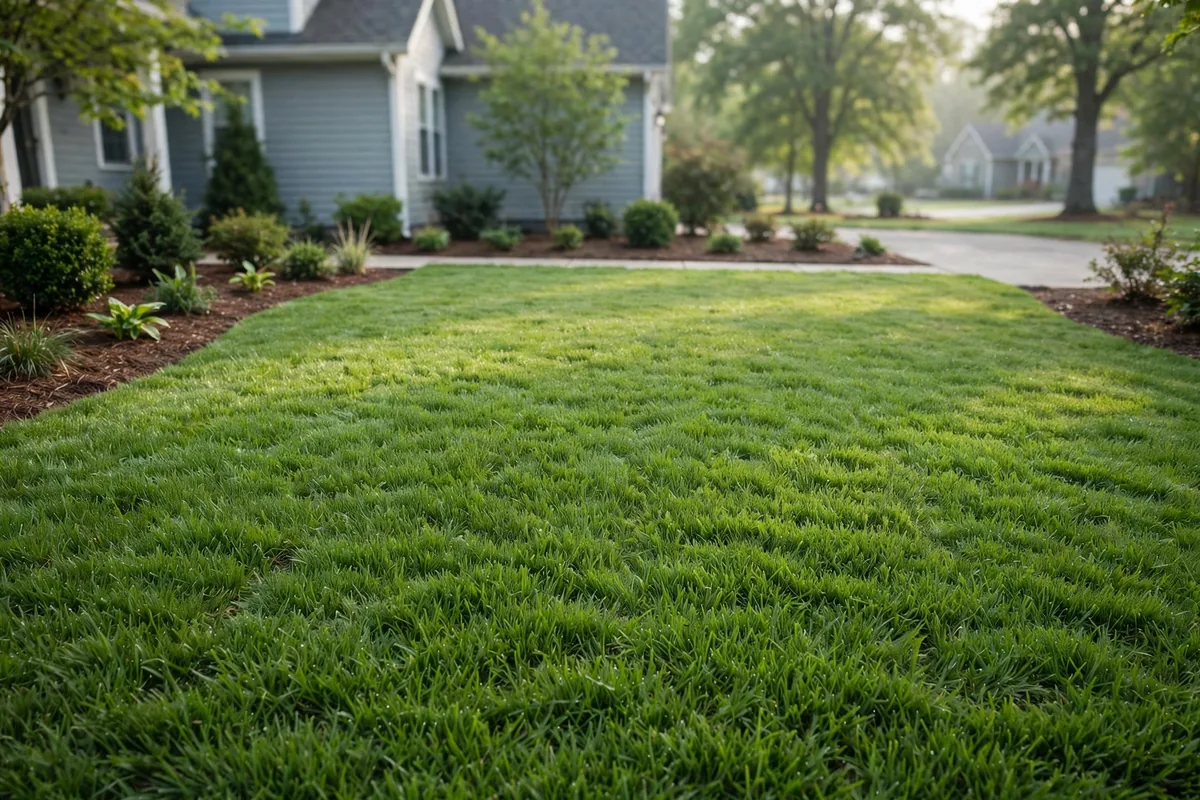
Grass seed looks simple until you are standing in the store in front of bags that range from 3 lb to 50 lb, all promising coverage in numbers that do not agree with each other. The confusion has two causes. First, there is no single seeding rate: a pound of Kentucky bluegrass holds millions of tiny seeds, while a pound of tall fescue holds far fewer, much larger ones — so the right weight per lawn is completely different. Second, the job matters as much as the grass: seeding bare soil takes roughly double the seed of overseeding a lawn that is already there. Get either half wrong and you buy twice what you need, or half. The fix is one multiplication, and it is exactly what our Grass Seed Calculator runs for you. This guide shows how the calculator works, the real rates it uses for each grass type, and the new-lawn versus overseeding split that changes the answer more than anything else.
The short answer, on one card
- The formula: area (sq ft) ÷ 1,000 × the rate for your grass type = pounds of seed
- New-lawn rates per 1,000 sq ft: Kentucky bluegrass 2.5 lb · perennial ryegrass 7 lb · tall fescue 7 lb · fine fescue 4.5 lb
- Overseeding is half: the same lawn, thickened instead of started, needs exactly half the new-lawn rate
- One acre is 43,560 sq ft — multiply the per-1,000 rate by 43.56 (a new tall fescue acre takes about 305 lb)
- Spread in two passes at right angles, half the seed each way, and keep the seed moist until it sprouts
Step 1 — Measure the lawn you will actually seed
The calculator needs one number to start: the area, in square feet. For a rectangular lawn that is length × width, paced out if you have no tape — a normal walking pace is roughly 2.5 feet, and the answer only needs to be honest, not surveyed. Two refinements matter. First, seed only what you will seed: subtract the patio, the driveway strip, the flower beds and the part of the yard under the trampoline that you are not touching. On a patchy overseed job, you may only be treating the thin two thirds of the lawn, and measuring the whole thing inflates the order by half. Second, split odd shapes into rectangles and add them: a side strip plus a back lawn plus a front lawn, each measured once. For a round patch, measure the diameter, square it, and take 0.785 of that area — a circle is 0.785 of the square drawn around it. Write the total down before you open the calculator; every rate in this guide is quoted per 1,000 sq ft, so an area like 5,000 sq ft turns into the tidy multiplier 5.
Step 2 — Run the calculator: grass type and job type
Open the Grass Seed Calculator — pounds and bags by grass type and type in the length and width from Step 1, in feet or in metres — the unit switch converts behind the scenes. Then make the two choices that set the rate. The first is your grass type: Kentucky bluegrass, perennial ryegrass, tall fescue, or fine fescue for shade. Each choice loads that grass's new-lawn rate, because seed size differs so much between species that one shared rate would be wrong for all of them. The second choice is the job: new lawn on bare soil, or overseeding an existing lawn. Overseeding simply halves the rate — the calculator applies a factor of 0.5 — because the grass already standing covers part of the ground and only the gaps and thin areas need new plants. The answer comes back as pounds of seed, the number of 25 lb bags that covers it, and an estimated cost range for Canada or the USA, whichever country toggle you set. If you are overseeding rather than starting over, the full method — mowing low, raking, and getting seed down into the canopy — lives in How to Overseed Your Lawn; this guide's job is the quantity.
Step 3 — The maths, and the rate table the calculator uses
There is no hidden model here. Pounds of seed = area (sq ft) ÷ 1,000 × rate (lb per 1,000 sq ft). The calculator's own worked example shows it at its smallest: Kentucky bluegrass at 2.5 lb per 1,000 sq ft on a 2,000 sq ft lawn is 2 × 2.5 = 5 lb of seed. The rates below are the calculator's actual presets — the exact numbers loaded when you pick each grass type — with the overseeding column at half, exactly as the calculator applies it. Bags are then pounds ÷ 25, rounded up, because you cannot buy a fraction of a bag.
| Grass type | New lawn (lb per 1,000 sq ft) | Overseeding (lb per 1,000 sq ft) | New lawn, per acre | Sprouts in |
|---|---|---|---|---|
| Kentucky bluegrass | 2.5 lb | 1.25 lb | about 109 lb | 14–21 days |
| Perennial ryegrass | 7 lb | 3.5 lb | about 305 lb | about 7 days |
| Tall fescue | 7 lb | 3.5 lb | about 305 lb | 7–14 days |
| Fine fescue (shade) | 4.5 lb | 2.25 lb | about 196 lb | 7–14 days |
Read the table the way the calculator thinks: the grass type sets the scale, and the job type halves it. Bluegrass seed is so small that 2.5 lb plants the same ground that needs 7 lb of tall fescue — which is why a bag that looks identical on the shelf can honestly claim three times the coverage of the bag beside it. It is also why blends sit between the single-species rates: if your bag is a bluegrass–ryegrass mix and its label prints its own rate, the label wins, as the calculator itself warns. For acreage, the same table scales cleanly — one acre is 43.56 thousands of square feet, so a new tall fescue acre is 43.56 × 7 ≈ 305 lb, and overseeding it is about 152 lb.
Step 4 — Spread it in two passes, half each way

The right amount of seed, spread badly, still gives a striped lawn. The calculator's own how-to gives the method that prevents it: sow half the seed walking one direction, and the rest walking across at right angles. Each pass covers the other's thin lines, and the total on the ground is still exactly the rate you calculated — two passes is about evenness, not about doubling. Set the spreader to about half its usual opening for each pass, walk at a steady pace, and overlap each strip by a few inches rather than leaving a gap you will see for a year. On bare soil, rake the seed in very lightly or roll the area afterwards so seed touches soil — seed sitting on top of loose dirt dries out and fails even at the perfect rate. On an overseed job, mow short and rake hard first, so seed falls through the canopy to the soil instead of resting on leaves where it can never root.
Step 5 — One lawn, two jobs: the worked example
Here is the split that surprises almost everyone, on a lawn size you can picture: 5,000 sq ft of tall fescue. Overseeding it — thickening a lawn that is already there — uses the overseeding rate of 3.5 lb per 1,000 sq ft: 5 × 3.5 = 17.5 lb of seed, so one 20 lb bag covers the job with a little left for the worst patches. Now seed that identical 5,000 sq ft as a brand-new lawn on bare soil, at the new-lawn rate of 7 lb per 1,000 sq ft: 5 × 7 = 35 lb — exactly double, two 20 lb bags with 5 lb to spare. Same lawn, same grass, same day: the job type alone doubled the shopping list. Run the same contrast in Kentucky bluegrass and the numbers shrink but the shape holds — 6.25 lb to overseed 5,000 sq ft, 12.5 lb to seed it new. This is why "how much seed for my lawn?" can never be answered from the lawn's size alone, and why the calculator asks about the job before it gives you a number. If your project mixes both — a new extension patch beside an old lawn you are thickening — measure and run each part separately, then add the pounds before you convert to bags, so you round up once instead of twice.
Step 6 — Cover it whisper-thin, time it for fall, and keep it moist
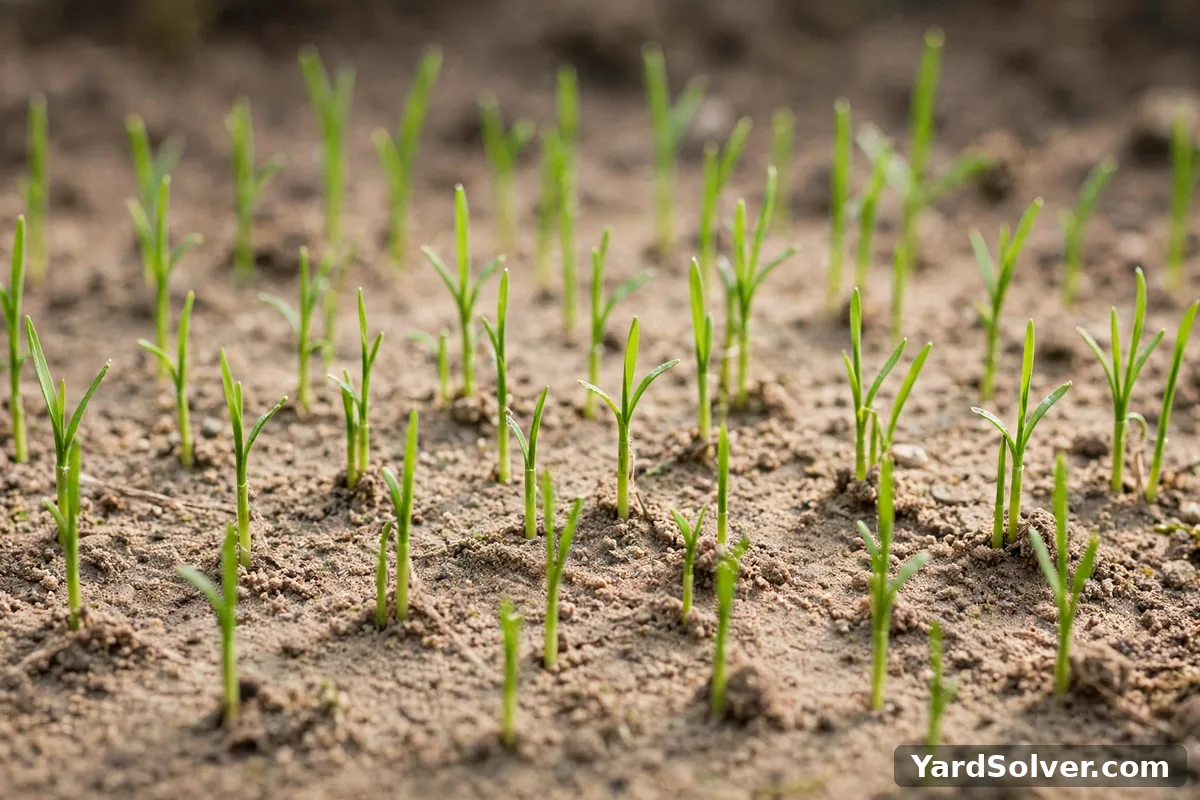
Three finishing rules decide whether the seed you measured so carefully actually becomes a lawn. Cover: a whisper-thin cover — a dusting of soil, compost or straw, no more than about a quarter inch — keeps seed moist and hides it from birds. Anything thicker buries it; grass seed needs light and firm contact with soil, not darkness. Timing: early fall is the best window in most of Canada and the northern US — warm soil for fast germination, cool air that does not scorch seedlings, and far fewer weeds competing. Spring works as the second choice if you seed early enough to be established before summer heat. Water: keep the seedbed constantly moist until the grass sprouts — light watering once or twice a day, never letting it dry out, because a seed that starts germinating and then dries can die outright. Then set your expectations by type from the table: perennial ryegrass is the fastest at around 7 days, tall fescue and fine fescue follow at roughly 7 to 14 days, and Kentucky bluegrass is the slow, patient one at around 14 to 21 days. A bluegrass lawn that shows nothing at day 10 is not failing — it is just bluegrass. First mow when the new grass reaches about 3 inches, with a sharp blade, and keep foot traffic off until then.
What the calculator can't do
Honesty about the edges, so the number earns your trust. The calculator applies the standard rate for the grass type you pick, but seed blends vary and the rate printed on your bag's label wins whenever it differs — coated seed and seed sold mixed with mulch or fertilizer cover less ground per pound, because part of the bag's weight is not seed at all. It cannot judge seed quality: an old, cheap bag with low germination puts fewer live plants on the ground per pound than a fresh premium bag at the same rate. It assumes the seed reaches the soil — seed spread onto thick thatch, or left unwatered on a hot week, fails at any rate, and no calculator can rescue it. And its cost figures are typical 25 lb bag price ranges for your country, not quotes. What it does guarantee is the rate maths, checked above against its own presets: get the area and the job type right, and the pounds follow.
Starting a new lawn on ground that needs levelling first? Soil comes before seed — How Much Topsoil Do I Need? sizes the layer to spread and rake level before a single seed goes down.
Keep going
Run your own lawn through the Grass Seed Calculator, then follow the full overseeding method in How to Overseed Your Lawn if you are thickening an existing lawn rather than starting one.
Planning the whole season's lawn work? The Garden Planner lays out seeding, feeding and planting in one calendar, so the fall seeding window does not slip past you.
Shaded areas break the standard rate rules — pair the calculator with Best Grass Seed for Shade for the blends and rates that work under trees.
Questions people ask
How much seed per 1,000 sq ft?
It depends on the grass type. In the calculator, a new lawn takes 2.5 lb of Kentucky bluegrass, 7 lb of perennial ryegrass, 7 lb of tall fescue or 4.5 lb of fine fescue per 1,000 sq ft. Overseeding uses half those rates — 1.25, 3.5, 3.5 and 2.25 lb — because the existing grass already covers part of the ground. Always let the rate on your seed bag win if it differs.
How much grass seed do I need for 5,000 square feet?
Multiply the per-1,000 rate by 5. Overseeding 5,000 sq ft with tall fescue at 3.5 lb per 1,000 sq ft needs 17.5 lb — one 20 lb bag covers it with a little spare. Seeding the same 5,000 sq ft as a new lawn at 7 lb per 1,000 sq ft needs 35 lb, exactly double. Kentucky bluegrass needs far less: 12.5 lb new or 6.25 lb overseeded for the same area.
When is the best time to seed?
Early fall is best in most of Canada and the northern US — the soil is still warm so seed germinates fast, the air is cool so seedlings do not scorch, and weed pressure is low. Spring is the second choice: seed early enough that the new grass is established before summer heat. Avoid the middle of summer, when watering becomes a daily fight you will eventually lose.
Should I cover grass seed?
Yes — but only a whisper-thin cover. A dusting of soil, compost or straw, no more than about a quarter inch, keeps seed moist and hides it from birds. Thick cover buries it: grass seed needs light and firm seed-to-soil contact, not darkness. Raking lightly or rolling after spreading gives the same contact on bare soil.
How long does seed take to sprout?
About 7 to 21 days if the soil stays constantly moist. Perennial ryegrass is fastest at around 7 days, tall fescue follows at roughly 7 to 14 days, fine fescue is similar, and Kentucky bluegrass is the slow, patient one at around 14 to 21 days. If the seed dries out mid-germination, the clock effectively restarts — steady moisture matters more than extra seed.
Can I put down too much grass seed?
Yes. Seed sown far above the rate makes thousands of seedlings compete for the same water and light, and the lawn comes in thin, weak and disease-prone — more is not better. Stick to the calculator rate for your grass type, spread it in two passes at right angles with half the seed each way, and save any leftover for patching thin spots later.
Grass seed is weighed by area and purpose — new lawns take roughly double an overseeding rate
Seed rates exist because a lawn is a plant population: too few plants leave gaps that weeds colonise, and too many compete so fiercely that the sward stays thin and disease-prone. A new lawn typically takes around 35 to 50 grams per square metre, while overseeding an existing lawn takes about half that, because half the population is already there. The calculator turns your measured area and your job — new or repair — into a weight to buy, which is the only honest way to shop for seed sold in mixed bag sizes.
Measure the lawn rather than pacing it, subtract beds, paths and the shed, and sow in two passes at half rate in opposite directions so no strip is missed or doubled. Buy fresh seed of a mix suited to your shade and wear, keep a small reserve of the same mix for the inevitable patch, and remember that seed kept cool and dry holds its germination far better than seed wintered in a damp shed.
Sources
Key facts on this page cross-checked against Lawn — Wikipedia — background on lawns and the grasses they are made from and Germination — Wikipedia — background on germination and what triggers it.
Related page
Read next: How Long Does Grass Seed Take to Germinate? Times by Type.
Comments & ratings
No comments yet.
Be the first to share your experience.