
Guides · Seed starting · Published November 22, 2026 · By Faizan Ahmad
How Much Light Do Seedlings Need? DLI Targets & the Legginess Diagnosis
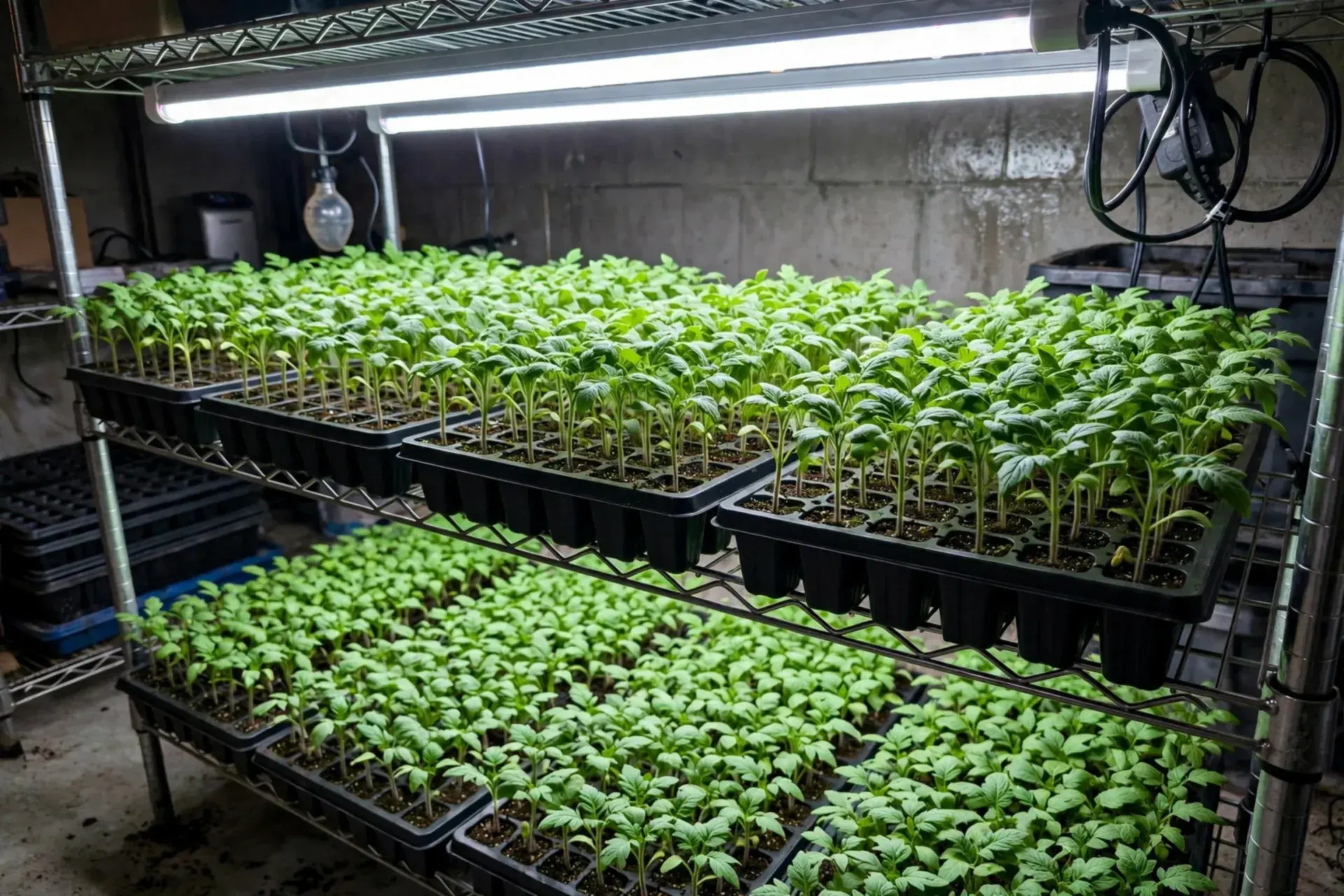
Seedlings need a daily light integral of about 8–12 mol/m²/day — the total photons accumulated across the day — and a bright-looking windowsill typically delivers a third of that, which is why windowsill seedlings stretch. Our Grow Light Calculator computes your DLI from PPFD and hours, or estimates it from fixture watts. This guide explains the measure, the targets, and the two levers that fix a shortfall.
The short answer, on one card
- DLI = PPFD × hours × 0.0036 — the daily photon total is the number plants keep
- Targets: seedlings 8–12 mol · lettuce 12–17 · fruiting tomato 20–30 · microgreens 6–12
- A winter windowsill gives 3–6 mol — half a seedling’s need, whatever it feels like to your eyes
- Hours are the free lever: 12 → 16 hours raises DLI by a third for the price of a timer setting
- Legginess is a DLI reading: the stem reports the total before any meter does
On this page
Step 1 — Photons are a daily ration
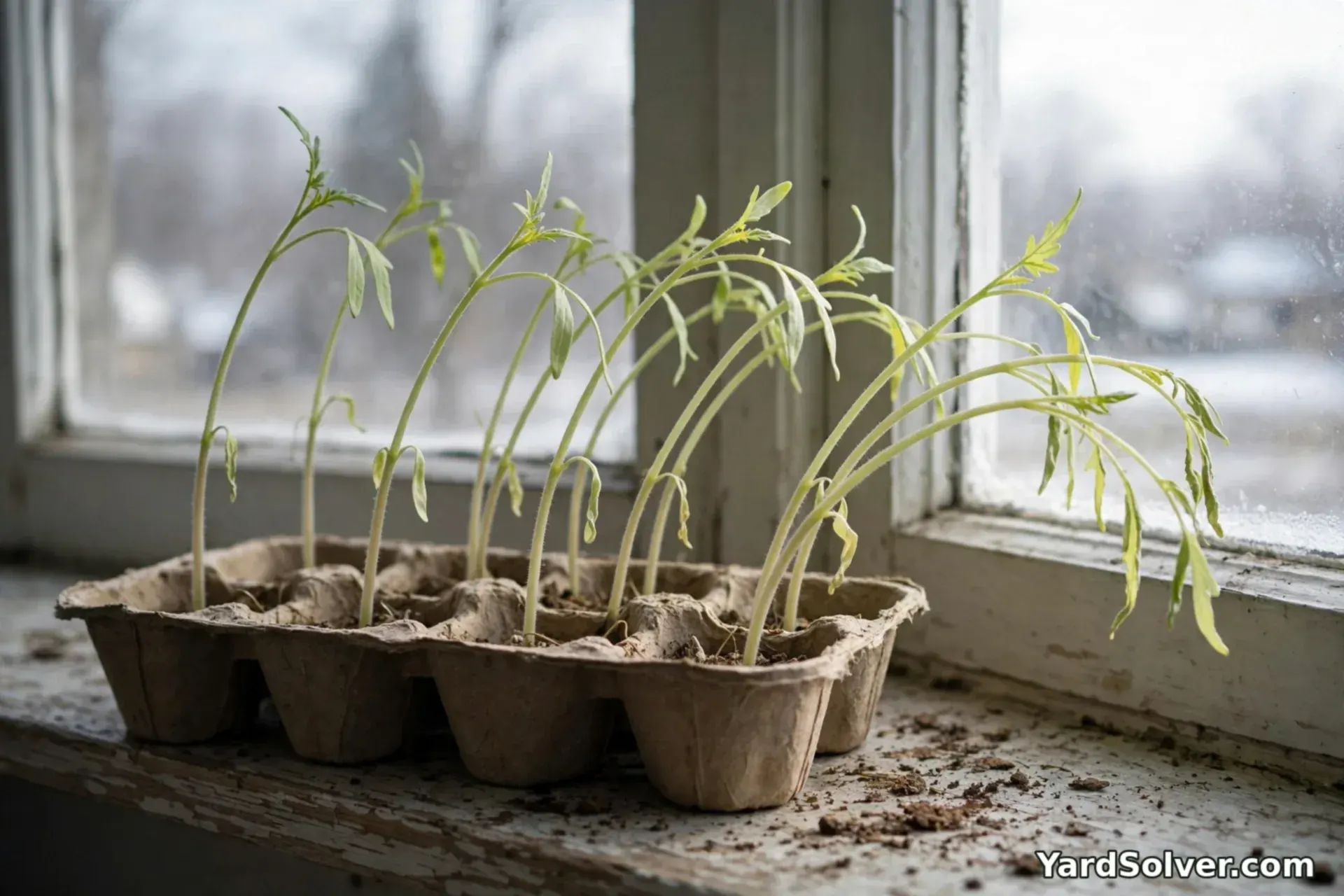
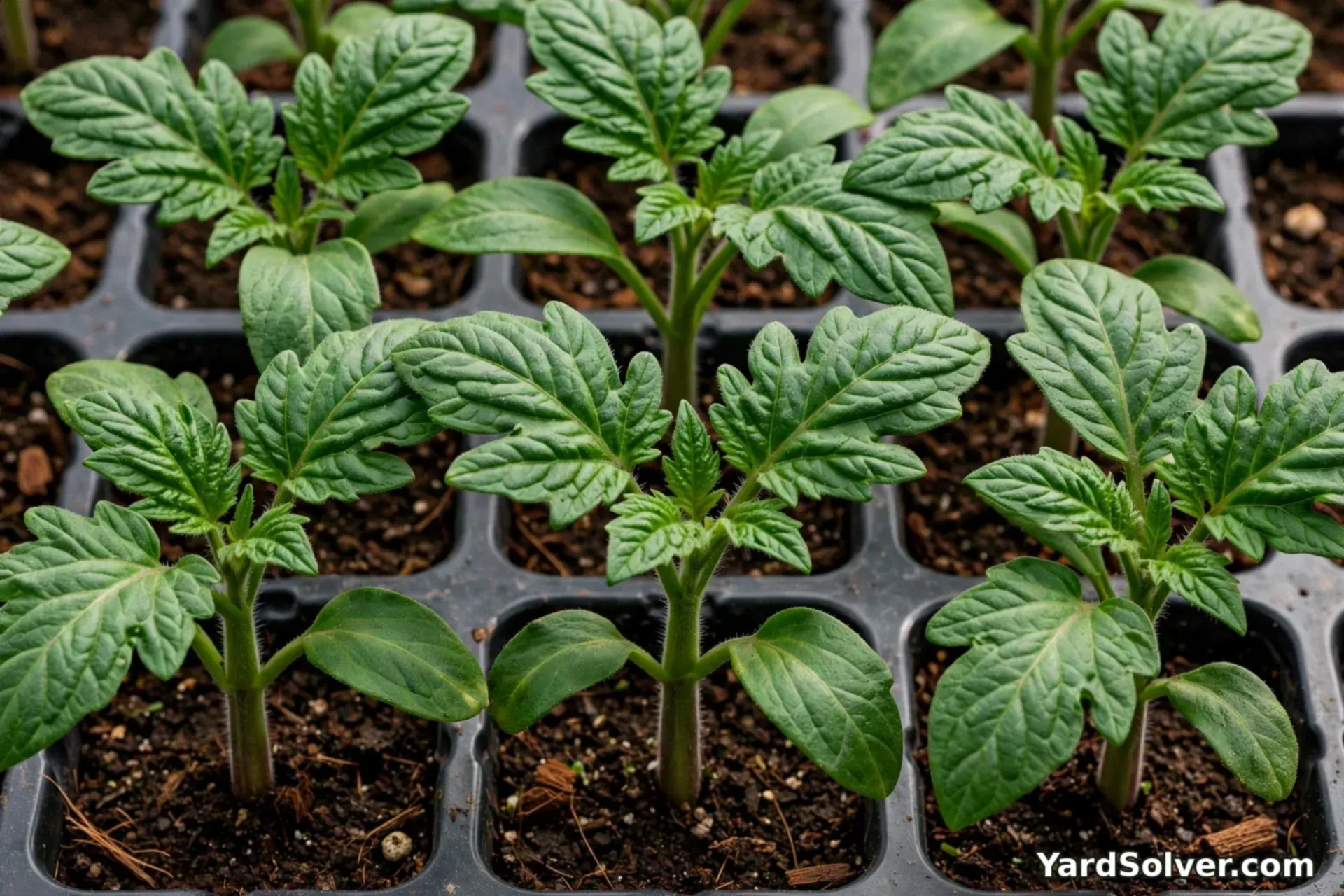
A plant’s light life is bookkeeping: photosynthesis accumulates in proportion to the photons received, and the day’s total — the daily light integral, in moles of photons per square metre — predicts growth better than any description of brightness. Human eyes are useless judges here; they adapt, they favour green wavelengths plants ignore, and they cannot integrate over hours. The seedling’s stem keeps the honest ledger: fed its 8–12 mol it grows stocky and dark; starved at 4 it stretches pale and thin, spending its seed reserves hunting for light that the windowsill advertises and does not deliver.
DLI also explains the two classic surprises of indoor growing: that a modest light run long outperforms a fierce light run briefly (the products are equal; the plant prefers the gentler day), and that the same fixture transforms when lowered — intensity falls with the square of distance, so halving the gap to the canopy roughly quadruples the ration at the leaf.
Step 2 — Targets by crop
Published greenhouse and indoor-growing DLI ranges. Seedlings sit modestly on the scale — which is why a simple shelf light, run long and close, satisfies them completely while fruiting crops demand real fixtures.
| Crop | DLI target (mol/m²/day) | A working recipe |
|---|---|---|
| Microgreens | 6–12 | 100–170 µmol for 12–16 h |
| Seedlings & transplants | 8–12 | 150–200 µmol for 14–16 h |
| Lettuce & leafy greens | 12–17 | 200–250 µmol for 16–18 h |
| Herbs | 12–18 | 200–280 µmol for 16 h |
| Fruiting tomato & pepper | 20–30 | 350–450 µmol for 16–18 h — real fixtures, honestly hung |
| Low-light houseplants | 2–4 | A bright room, no fixture |
| Medium-light houseplants | 4–8 | Near a window or a small light |
Your own fixture’s verdict comes from the Grow Light Calculator — DLI from PPFD, hours or watts. Setting the shelf up from scratch? Our grow lights for seedlings guide reviews the fixtures themselves.
Step 3 — The two levers, in the right order
Hours first: extending the photoperiod from 12 to 16 hours raises the daily total by a third and costs a timer. Seedlings thrive at 14–16 hours with a genuine night of 6–8 — darkness is when they translocate and build, and near-continuous light disorders several crops. Distance second: because intensity falls with the square of distance, moving a fixture from 24 in to 12 in above the canopy is worth more than most upgrades — check the maker’s PPFD map for the height they intend, and hang there.
Fixtures last: only when hours are long and distance is honest does the shortfall indict the lamp itself. And judge the whole tray, not its centre — PPFD maps peak in the middle and fade at the edges, so rotate trays weekly or accept two classes of seedling from one shelf.
Step 4 — Reading the tray like an instrument
Before any meter, the tray reports: stocky, dark-green, closely-spaced leaves mean the ration is right; long pale internodes mean it is short; leaves cupping away or bleaching at the centre mean the middle of the map is fierce while the edges starve. Each is a DLI statement, and the calculator converts the statement into the number that fixes it — raise hours, close distance, or spread the light.
Keep the recipe that worked, written down: fixture, height, hours, and the transplant quality it produced. Seed starting is an annual experiment with a one-year feedback loop; the gardener with a logbook runs it with data while everyone else runs it on memory and hope.
Questions people ask
Can seedlings get too much light?
Yes, though it takes determination: DLI far above target with high intensity bleaches leaves, cups them away from the light and stalls growth — the centre of an over-hung map is the usual scene. The remedy is the same levers in reverse: raise the fixture or shorten the day. Seedlings sunburn faster than they starve under most home setups, so change one lever at a time.
Is a south window plus a small light a good combination?
Often the best budget answer: the window contributes its 3–6 mol free, the fixture tops up the difference on a timer, and the seedlings get real sun spectrum as a bonus. Run the light for the hours the window is weak (morning, evening, grey days) and the calculator’s target is met from two modest sources.
Why 16 hours and not 24?
Because plants keep a night shift: respiration, translocation and, in many species, flowering decisions run in darkness, and continuous light visibly disorders tomatoes among others. Sixteen on, eight off is the standard because it maximises the ration inside a rhythm the plant recognises.
My fixture box says '2000 watts' — what do I enter?
Not 2000. Marketing 'equivalent watts' describe a fiction; the true draw is on the label’s small print or a plug meter (commonly 100–200 W for such fixtures). Enter true watts and the honest efficacy class, or better, find the maker’s PPFD map and use PPFD mode — the estimate is only as good as its inputs.
When do seedlings stop needing the light shelf?
At transplant, after hardening off — the move outdoors is a light shock as much as a temperature one, since full sun delivers 40–60 mol a day. A week of graduated exposure (the transplant calculator plans the dates) lets the leaf rebuild for the real sky without scorching.
Sources
Key facts on this page cross-checked against Daily light integral — Wikipedia — background on DLI, its measurement and crop targets Grow light — Wikipedia — background on grow-light types, efficacy and use.
Related page
Read next: Grow Lights for Seedlings: Fixtures, Heights and Schedules
Comments & ratings
No comments yet.
Be the first to share your experience.