
Guides · Soil & feeding · Published November 22, 2026 · By Faizan Ahmad
How Much Manure Does a Garden Need? Tons by Source & the Safety Clock
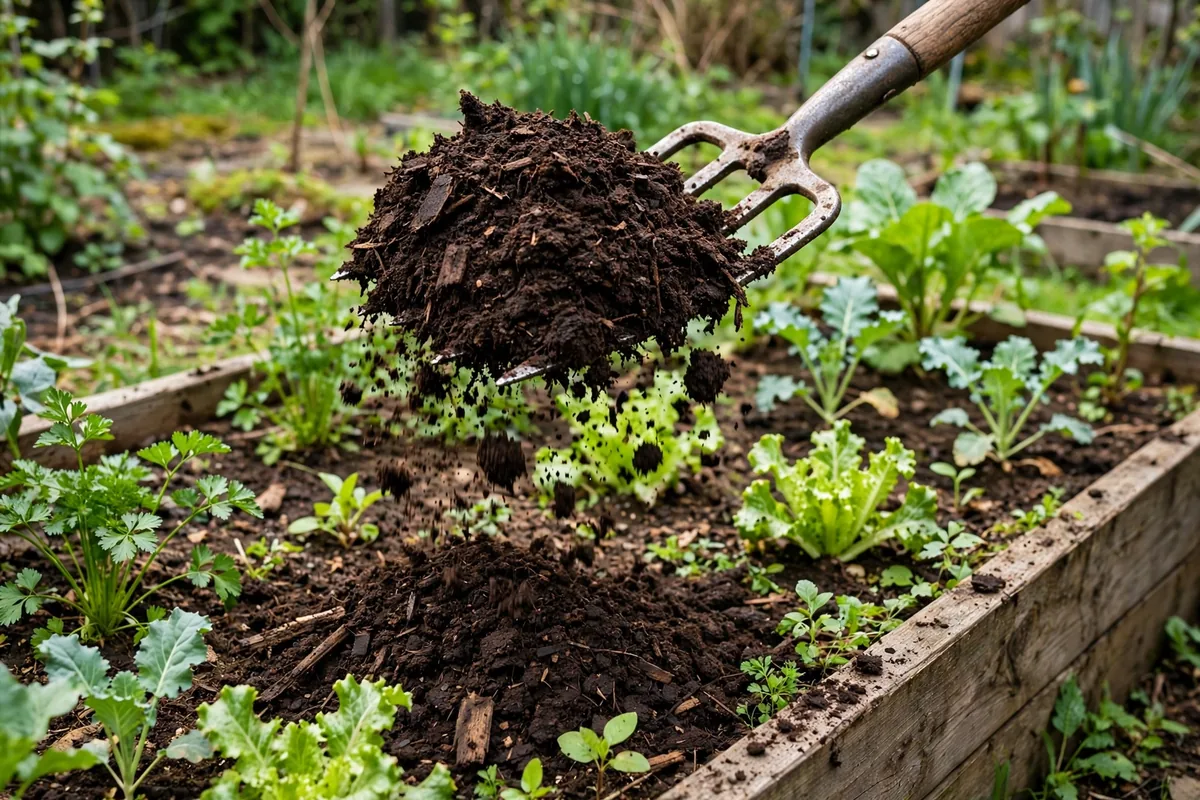
A garden needs far less manure than folklore suggests when the dose is set by available nitrogen — and far more of the weak sources than of the strong ones. Our Manure Calculator works from published analyses and first-year availability factors for seven sources. This guide explains the method, the phosphorus that rides along, and the harvest-safety clock every fresh-manure user must respect.
The short answer, on one card
- Dose by available nitrogen: total N × first-year availability (35–60% fresh, ~12% composted)
- Poultry is the outlier: ~26 lb N per ton — a ton feeds like four tons of horse manure
- Standard bed target: 1 lb of available N per 1,000 sq ft — about half a ton of horse manure
- The safety clock: fresh manure 120 days before harvest for soil-contact crops, 90 for others
- Phosphorus rides along at nearly full availability — manure-only feeding banks P year after year
On this page
Step 1 — Available nitrogen: the only honest dose
A manure analysis prints total nitrogen, but crops in year one can only spend the fraction that soil microbes mineralise — for fresh solid manures worked in promptly, roughly 35–50%; left sitting on the surface, much of the readily available share escapes to the air as ammonia within days. Composted manure inverts the picture: richer per ton on paper, but its nitrogen is stabilised, paying out only about a tenth in year one. It is a soil builder that feeds gently, not a feed that builds soil quickly.
This is why "a load per bed" fails as a rule: loads differ, sources differ four-fold in strength, and availability halves or doubles the effect again. The calculator’s method — target nitrogen ÷ (total N × availability) — is the same one extension manure tables use, and it is the only version of the question with a defensible answer.
Step 2 — Sources on one scale
Published typical analyses (lb per ton) with the first-year availability this guide and the calculator use. Real manure varies with bedding, storage and weather — a $20 manure test replaces every number in this table with your own, and for poultry litter it is money well spent.
| Source | Total N (lb/ton) | Available in year 1 | Available N per ton | Also delivers (P₂O₅ / K₂O per ton) |
|---|---|---|---|---|
| Dairy, fresh | 10 | 40% | 4.0 lb | 5 / 8 lb |
| Beef, fresh | 11 | 40% | 4.4 lb | 7 / 10 lb |
| Horse, with bedding | 12 | 35% | 4.2 lb | 5 / 9 lb |
| Sheep / goat | 14 | 40% | 5.6 lb | 5 / 12 lb |
| Swine, fresh | 10 | 50% | 5.0 lb | 9 / 8 lb |
| Poultry, fresh | 26 | 60% | 15.6 lb | 22 / 17 lb |
| Composted (any) | 20 | 12% | 2.4 lb | 12 / 16 lb |
Your area and target go into the Manure Calculator — tons and cubic yards for your source. Feeding the same bed with bagged organics instead? The Organic Fertilizer Calculator runs the identical nitrogen logic on meals and blends.
Step 3 — The safety clock is not a suggestion
Fresh manure carries the microbes of the animal it left, and some of them — E. coli, Salmonella, Listeria — are human pathogens. The standard that organic certification and US food-safety rules share is built on how long those organisms survive in soil: raw manure goes on at least 120 days before harvest when the edible part touches the soil (lettuce, carrots, potatoes, melons on the ground) and 90 days when it does not (trellised tomatoes, corn, tree fruit). Properly hot-composted manure — held at pathogen-killing temperatures through the pile — is exempt.
The calendar makes fall the natural manure season for vegetable beds: spread in October, and the 120-day clock expires before spring planting even begins, while winter soil life starts the mineralisation the spring crop will spend. Spring application of fresh manure to a bed that will carry salad in June is the one pattern to simply never run.
Step 4 — The phosphorus ledger
Manure’s quiet side effect is its nutrient ratio: it carries phosphorus in a higher proportion than crops remove it, and phosphorus — unlike nitrogen — barely leaves. A garden fed exclusively with manure at nitrogen rates banks phosphorus steadily, and within years many manure-rich gardens test very high in P, where the surplus suppresses root fungi and threatens waterways when soil erodes.
The management is rotation, not abstinence: soil-test every few years, and when P climbs, shift some feedings to phosphorus-free nitrogen (blood meal, or the nitrogen-only side of the Fertilizer Calculator) and let harvests spend the bank down. Manure remains one of the finest soil builders a garden can get — the ledger just has to be read.
Questions people ask
Can I use manure from my own animals without testing it?
You can use the calculator’s published averages, which describe typical manure of each type. What no table knows is your bedding ratio and storage losses — a pile rained on for a year may hold half the nitrogen of the same pile under cover. A manure analysis is cheap and settles it for seasons at a time.
Why does composted manure show more nitrogen but deliver less?
Composting concentrates nutrients per ton (the pile shrinks) while converting nitrogen into stable organic forms that release slowly. Year one sees about a tenth; the rest pays out over following years. Composted manure is bought for structure, biology and safety — its feeding is a bonus, spread over years.
Is bagged 'manure' from the garden centre the same thing?
Usually it is composted and screened manure — closer to the composted row of the table than to fresh. It is safe around food crops without the waiting clock, mild in nitrogen, and priced by convenience. The calculator’s composted source is the right row for it.
Does manure bring weed seeds into the garden?
Fresh manure can — horses especially pass viable seeds. Hot composting kills most; cold piles and fresh spreading do not. If the source is a horse barn and the manure is fresh, either compost it hot yourself or accept a weeding season as part of the price.
How often should a bed get manure?
At nitrogen rates, most vegetable beds do well with an application every year or two, rotated with other feeds and checked against a soil test. The phosphorus ledger, not the nitrogen, is what eventually says 'enough for now'.
Sources
Key facts on this page cross-checked against Manure — Wikipedia — background on manure types, nutrient content and handling Cornell Waste Management Institute — compost science — Cornell’s compost and manure research resources Soil Testing for Lawns — MU Extension — soil-test interpretation — how the phosphorus ledger is read.
Related page
Read next: How Much Compost Do I Need? Depths and Volumes by Job
Comments & ratings
No comments yet.
Be the first to share your experience.