
Guides · Soil & feeding · Published November 22, 2026 · By Faizan Ahmad
How Much Nitrogen Does My Lawn Need? Rates, Products & Timing
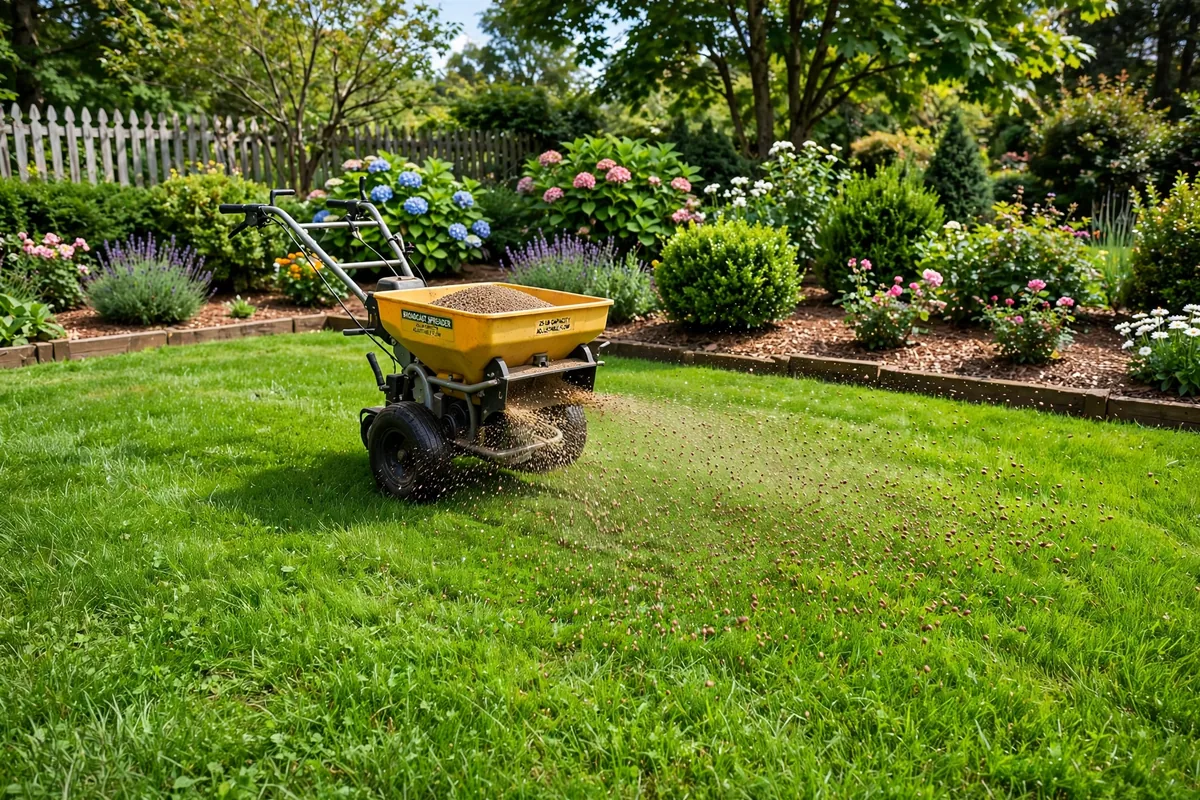
A lawn needs about 2–4 lb of nitrogen per 1,000 sq ft per year, delivered in separate feedings of roughly 1 lb each — and the product you spread to deliver that pound ranges from 2.2 lb of urea to 8.3 lb of blood meal, because only the percentage differs. That conversion is the whole skill, and it is what our Nitrogen Calculator runs. This guide covers the yearly budget, the per-application ceiling, product maths, and timing.
The short answer, on one card
- Yearly budget: 2–4 lb of nitrogen per 1,000 sq ft (cool-season lawns), split into feedings
- Per application: about 1 lb of N per 1,000 sq ft — the standard feeding and the fast-release ceiling
- The conversion: product lb = nitrogen lb ÷ (N% ÷ 100)
- Urea (46%): 2.2 lb of product per lb of nitrogen · Blood meal (12%): 8.3 lb
- Timing: feed growth, not the calendar — spring and early fall for cool-season lawns
Step 1 — The yearly budget comes first
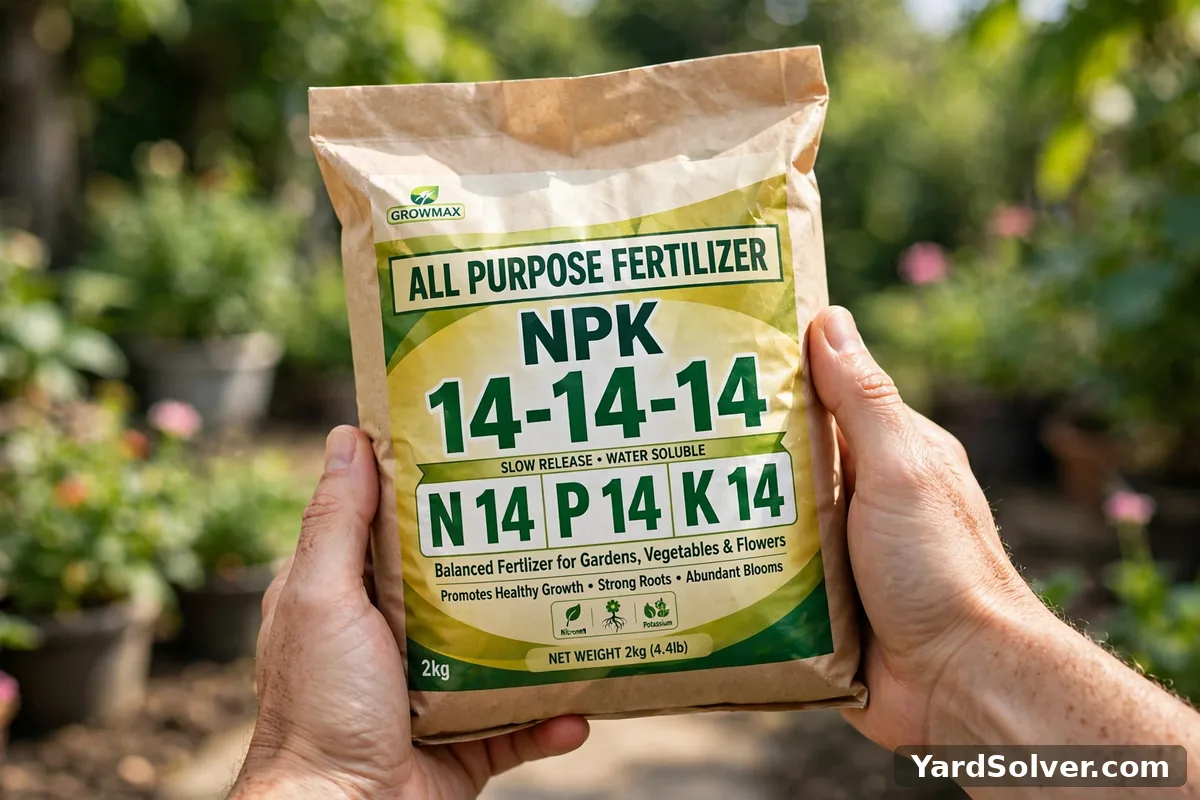
Nitrogen planning starts with the year, not the bag. A typical cool-season lawn — bluegrass, fescue, ryegrass — thrives on 2–4 lb of nitrogen per 1,000 sq ft across the season; a low-input lawn does respectably on 2, a showcase lawn takes 4, and almost nothing justifies more. Warm-season lawns run 2–5 lb inside their growing season and nothing outside it. Every feeding is then a withdrawal from that budget: four feedings of 1 lb, or three of 1 plus lighter ones — the arithmetic is yours, the budget is the discipline.
Lawns that blow the budget show it: surge growth and twice-weekly mowing, thatch building faster than microbes clear it, disease pressure in humid spells, and nitrogen washing toward drains with every storm. The greenest lawn on most streets is a correctly fed one, not the most fed one.
Step 2 — Product maths: one pound of nitrogen, five products
The single-nutrient method the calculator runs: product needed = nitrogen needed ÷ (N% ÷ 100). Worked for the standard feeding — 1 lb of actual nitrogen per 1,000 sq ft — the products differ only in concentration, and the piles differ accordingly.
| Product | N % | Product per 1,000 sq ft for 1 lb N | Character |
|---|---|---|---|
| Urea | 46% | 2.2 lb | Strongest common source; water in well |
| Ammonium sulfate | 21% | 4.8 lb | Also acidifies slightly; good on alkaline soil |
| Lawn fertilizer 32-0-10 | 32% | 3.1 lb | Blended with potassium; the typical lawn bag |
| Balanced 10-10-10 | 10% | 10 lb | Feeds all three nutrients at once |
| Blood meal (organic) | 12% | 8.3 lb | Slow, soil-feeding; the pile looks huge because it is dilute |
| Milorganite-type 6-4-0 | 6% | 16.7 lb | Slow-release organic; light-and-often is its pattern |
The Nitrogen Calculator — exact pounds for your product multiplies this by your real area and counts bags. Feeding with a full NPK product instead? The Fertilizer Calculator runs the same engine with all three numbers at once.
Step 3 — Timing: feed growth, not dates
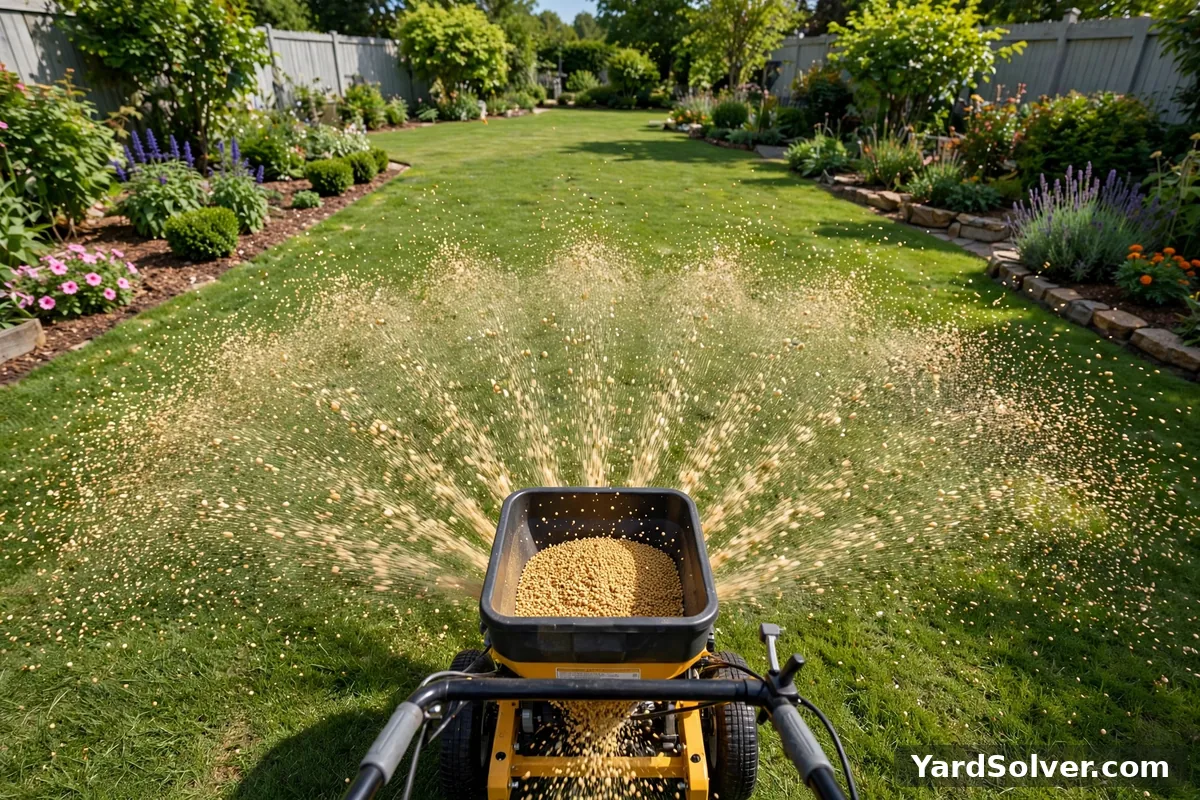
Nitrogen only works when roots are growing and can take it up. Cool-season lawns take their main feedings in spring and early fall — fall is the professional’s favourite, building roots and reserves rather than a flush of blade. Warm-season lawns feed from late spring through summer and stop as they slow. Feeding dormant, frozen or drought-stressed grass wastes the product to runoff and can burn what it touches.
Two safety rules ride with every feeding. Fast-release nitrogen caps at about 1 lb per 1,000 sq ft per application — more risks burn and leaching. And urea-based products get watered in the same day: left on the surface, urea loses nitrogen to the air within days.
Step 4 — When nitrogen is not the answer
A lawn can be pale for reasons nitrogen cannot fix: soil too acid for roots to use what is already there (the Soil pH Calculator addresses that first), iron deficiency on alkaline soil, drought, shade, or disease wearing a hunger costume. Feeding a lawn whose real problem is pH is the classic wasted bag — the nitrogen sits locked out while the bill arrives.
A soil test every two or three years is the audit that keeps the budget honest: it reads pH, phosphorus and potassium, and tells you whether this year’s money belongs in nitrogen at all. Spend on the test before the third bag, not after the fifth.
Questions people ask
How much nitrogen per 1,000 sq ft per year?
Cool-season lawns: 2–4 lb, split into feedings of about 1 lb. Warm-season lawns: 2–5 lb within their growing season. More than that buys mowing and disease risk, not health.
What happens if I apply 2 lb of nitrogen at once?
With fast-release product: likely fertiliser burn (scorched stripes), a growth surge, and losses to leaching. Slow-release products forgive more, which is their purpose — but the label rate still rules.
Is organic nitrogen weaker than synthetic?
Not weaker — slower and more dilute. Blood meal at 12% delivers the same pound of nitrogen as urea once mineralised; it just takes 8.3 lb of product and more time to do it, while feeding soil biology on the way.
Should I fertilise before rain?
Light rain after application is helpful — it waters granules in. Heavy rain is the enemy: it carries product off the lawn before roots see it. Aim for a dry day with light rain or irrigation following, not a storm.
My lawn is yellow but I fed it last month — why?
Check the other suspects first: pH locking nutrients out, iron deficiency, drought stress, or disease. A soil test distinguishes them in one step; another bag of nitrogen distinguishes none.
Sources
Key facts on this page cross-checked against Fertilizer — Wikipedia — background on fertilizer types and nutrient content Urea — Wikipedia — background on urea as a nitrogen source.
Related page
Read next: Fertilizer Numbers Explained: Read Any Bag in Seconds
Comments & ratings
No comments yet.
Be the first to share your experience.