
Guides · Soil & feeding · Published November 22, 2026 · By Faizan Ahmad
How Much Phosphorus Does My Garden Need? Soil-Test Rates & Product Maths
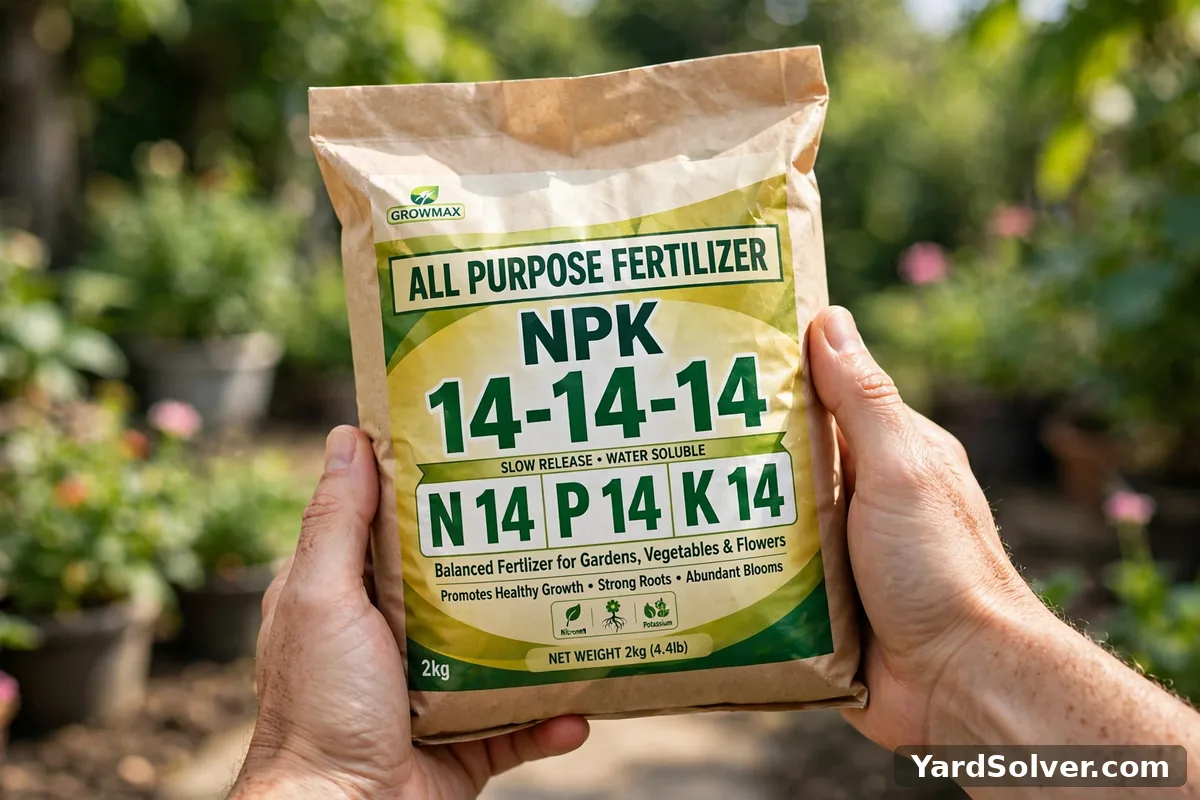
Most gardens need less phosphorus than their gardeners apply — often none at all — because phosphorus accumulates in soil and barely leaves. The gardens that genuinely need it are new beds, sandy soils and heavily cropped plots, and the only way to know which garden you have is a soil test. Our Phosphorus Calculator turns the test’s rate into exact product pounds. This guide covers the test-first logic, the rates, and the sources.
The short answer, on one card
- Start with a soil test: phosphorus is applied to a measured deficit, never on a schedule
- Typical correction: 0.25–1.0 lb of P₂O₅ per 1,000 sq ft, set by the test result
- The conversion: product lb = P₂O₅ lb ÷ (middle number ÷ 100)
- Superphosphate (46%): 1.1 lb per lb of P₂O₅ · Bone meal (15%): 3.3 lb
- Excess is harmful: surplus P suppresses root fungi and feeds algae in waterways
Step 1 — The soil test decides, not the calendar
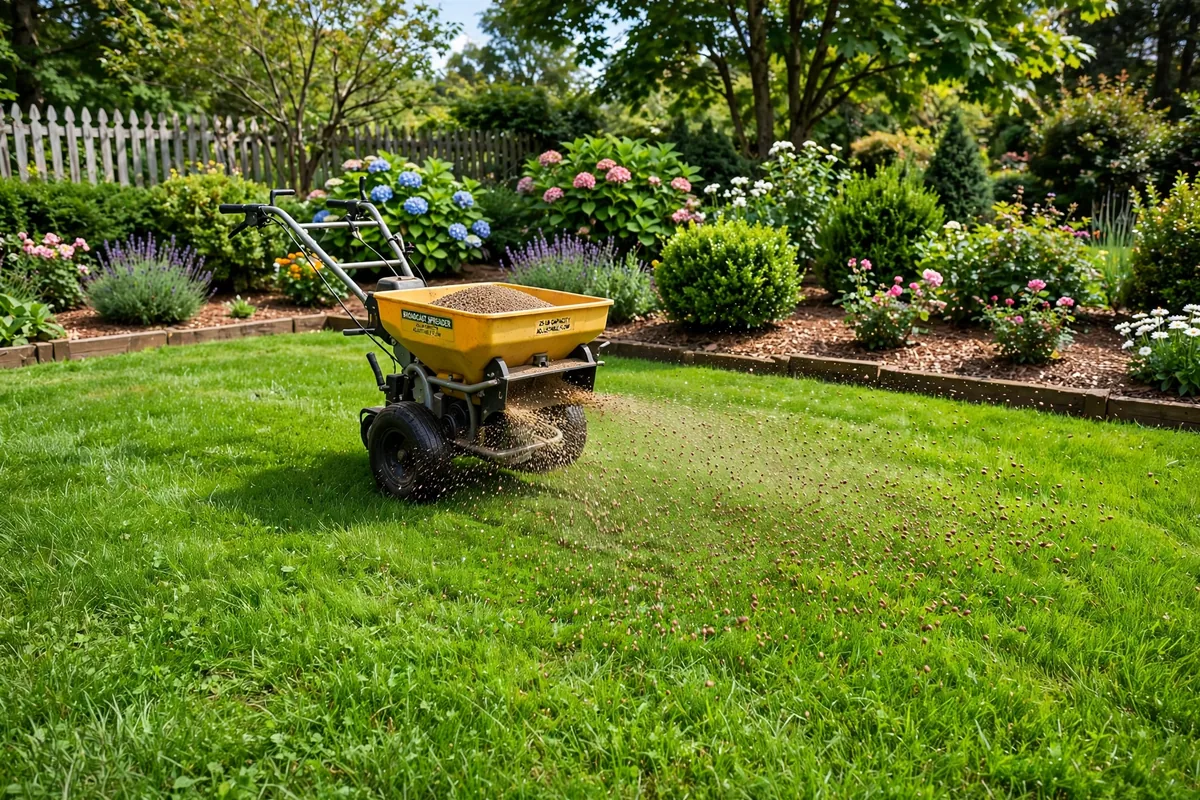
Nitrogen is spent in a season and potassium leaks from sand, but phosphorus mostly stays where it lands — bound to soil particles, released slowly, removed mainly in harvested crops. A garden fed with compost, manure or a balanced fertilizer for years has been banking phosphorus the whole time, and banked phosphorus does not expire. This is why extension services are blunt about it: test first, and expect the answer for an established bed to be "none needed" as often as not.
The test reports phosphorus as a level (low, optimum, high) with a rate to apply when it is low. Those rates — typically 0.25 to 1.0 lb of P₂O₅ per 1,000 sq ft — are what the calculator’s target menu mirrors. If your report gives pounds per acre, divide by 43.56 to get the per-1,000-sq-ft figure.
Step 2 — Product maths: one pound of P₂O₅, four sources
The single-nutrient method the calculator runs: product needed = P₂O₅ needed ÷ (P₂O₅% ÷ 100). Worked for a standard correction — 0.5 lb of P₂O₅ per 1,000 sq ft — the sources differ in concentration and speed, and the piles differ accordingly.
| Source | P₂O₅ % | Product per 1,000 sq ft for 0.5 lb P₂O₅ | Character |
|---|---|---|---|
| MAP | 52% | 1.0 lb | Most concentrated; also carries nitrogen |
| Triple superphosphate | 46% | 1.1 lb | The standard correction source; fast availability |
| Bone meal | 15% | 3.3 lb | Organic and slow; suits long-term bed building |
| Rock phosphate | 3% | 16.7 lb | Very slow; releases best in acid soil, over years |
Your own area and rate go into the Phosphorus Calculator — exact pounds for your product. Feeding with a complete NPK product instead? The Fertilizer Calculator counts all three numbers at once — and shows how much phosphorus rides along with a nitrogen feeding, which is how most gardens got surplus P in the first place.
Step 3 — Placement: phosphorus barely moves
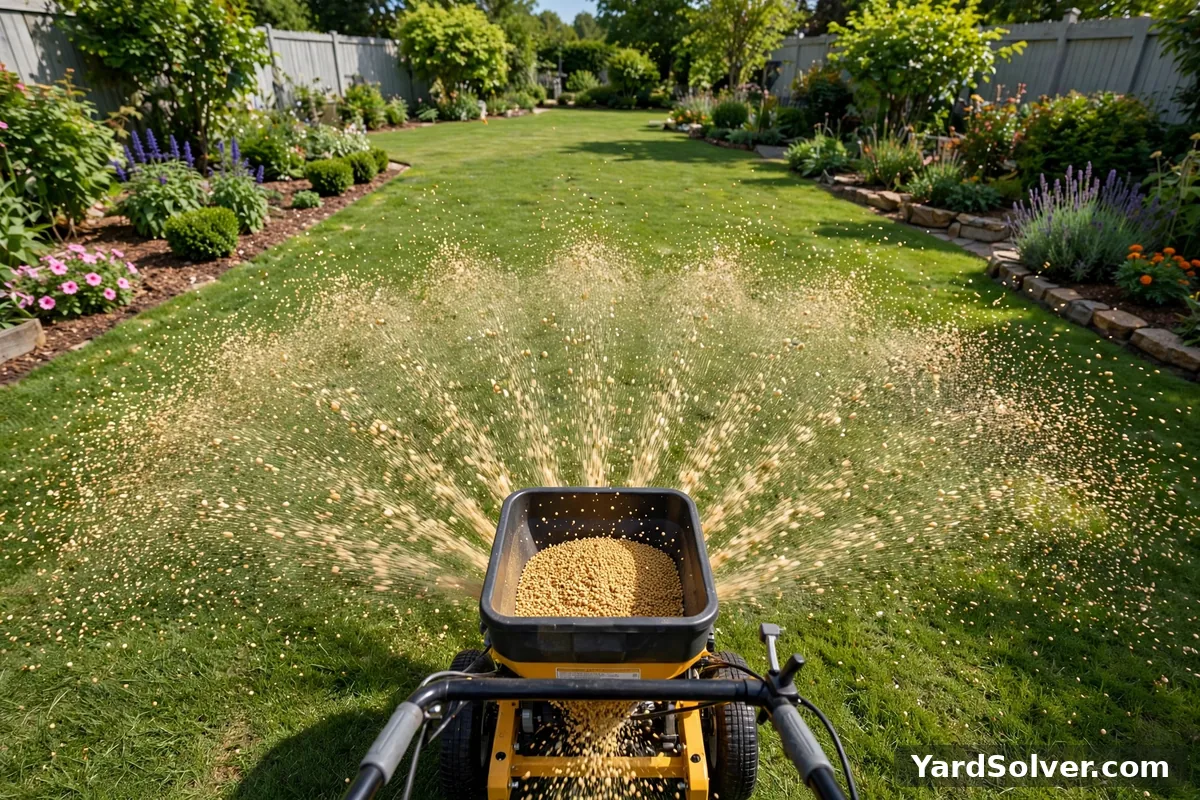
Of the three main nutrients, phosphorus is the least mobile in soil — it travels millimetres per year, not feet. A surface dressing on an established bed can sit above the roots it was bought for, which is why phosphorus belongs in the root zone: forked into a bed at preparation time, banded beside a seed row, or placed in the planting hole for transplants and trees.
The same immobility is the environmental point. What does move is soil itself — eroded particles and granules washed off hard surfaces carry phosphorus to drains and streams, where it feeds algal blooms. Work it in, keep it off paths, and never spread it on frozen or saturated ground: three habits that keep the nutrient in the garden and out of the watershed.
Step 4 — When phosphorus is not the answer
Slow, stunted, purple-tinged seedlings in spring are usually cold soil, not phosphorus hunger — roots take up P poorly in the cold and the colour clears as the soil warms. True deficiency shows on a test as low P, and in the plant as stunting with dull, dark foliage. The other false trail is pH: in strongly acid soil, phosphorus locks onto iron and aluminium; in alkaline soil, onto calcium. Either way the fix starts with the Soil pH Calculator, not with a bigger P dose poured into a locked pantry.
Retest every two or three years. A garden that needed phosphorus once will not need it forever — the bank refills — and the gardener who keeps applying on the old prescription is how a low-P soil becomes a high-P problem.
Questions people ask
How do I know if my soil needs phosphorus?
A soil test — it is the only honest way. Phosphorus gives few reliable visual symptoms, and the commonest 'symptom' (purple spring seedlings) is usually cold soil. Labs report P as low, optimum or high with a rate to apply when low.
Why do bags print P₂O₅ instead of phosphorus?
A fertilizer-trade convention over a century old: analyses are expressed as the oxide equivalents P₂O₅ and K₂O. Soil tests recommend in the same units, so all the maths in this guide and the calculator compares like with like.
My compost-heavy garden tests high in phosphorus — now what?
Stop adding it: switch nitrogen feeding to P-free sources (blood meal, urea, composted bark rather than manure), and let harvests draw the level down over years. High P harms waterways more than plants, so the fix is patience, not treatment.
Is rock phosphate worth using?
As a long-term soil builder in acid soil, yes; as a correction for a tested deficiency this season, no — it releases over years and barely at all in neutral or alkaline soil. Match the source to the timescale of the problem.
Do flowering plants need extra phosphorus to bloom?
The 'bloom booster' idea is mostly marketing. Flowering is driven by light, maturity and overall health; a soil at optimum P blooms fully. Extra phosphorus on a sufficient soil adds cost and runoff risk, not flowers.
Sources
Key facts on this page cross-checked against Soil Testing for Lawns — MU Extension — soil-test interpretation and nutrient-rate guidance from the University of Missouri Phosphorus — Wikipedia — background on phosphorus in soils and plants Bone meal — Wikipedia — background on bone meal composition and use.
Related page
Read next: Fertilizer Numbers Explained: Read Any Bag in Seconds
Comments & ratings
No comments yet.
Be the first to share your experience.