
Guides · Lawn care · Published November 18, 2026 · By Faizan Ahmad
How Much Sod Do I Need?
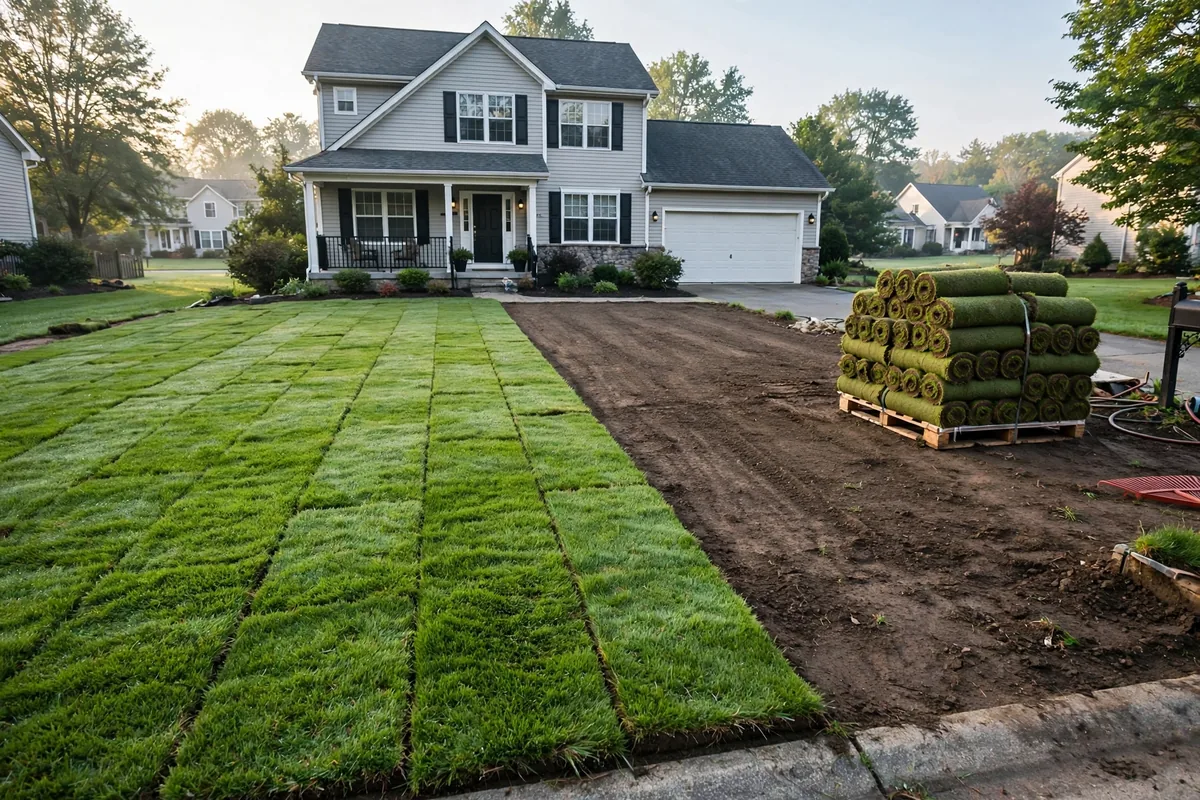
Sod is the one garden material you cannot afford to guess. Order too little and the last strip of your lawn sits bare while a second delivery is arranged — by which time the first rolls are already rooted at a different height. Order too much and the spare rolls quietly cook on the pallet, because cut sod is perishable and will not wait for next weekend. The good news is that the count is simple arithmetic once you know your true lawn area, and it is exactly what our Sod Calculator runs for you. This guide shows how the calculator works, the maths underneath it, and the two judgement calls that decide whether the number is right: measuring a lawn that is not a rectangle, and choosing the cutting allowance honestly. By the end you will be able to turn any lawn — rectangle, L-shape or curve-edged — into an exact order of rolls and pallets.
The short answer, on one card
- One standard roll is 2 ft × 5 ft = 10 sq ft of lawn
- One pallet holds about 50 rolls (≈500 sq ft) — some yards load 60, so confirm near a boundary
- The formula: rolls = lawn area × (1 + allowance) ÷ 10, rounded up; pallets = rolls ÷ 50
- Cutting allowance: add 5% for a plain rectangle, 10% for curves and beds
- Measure around beds and patios, never through them — the calculator wants lawn area only
- Sod is perishable: order a morning delivery and lay it the same day
Step 1 — Measure the lawn (and only the lawn)
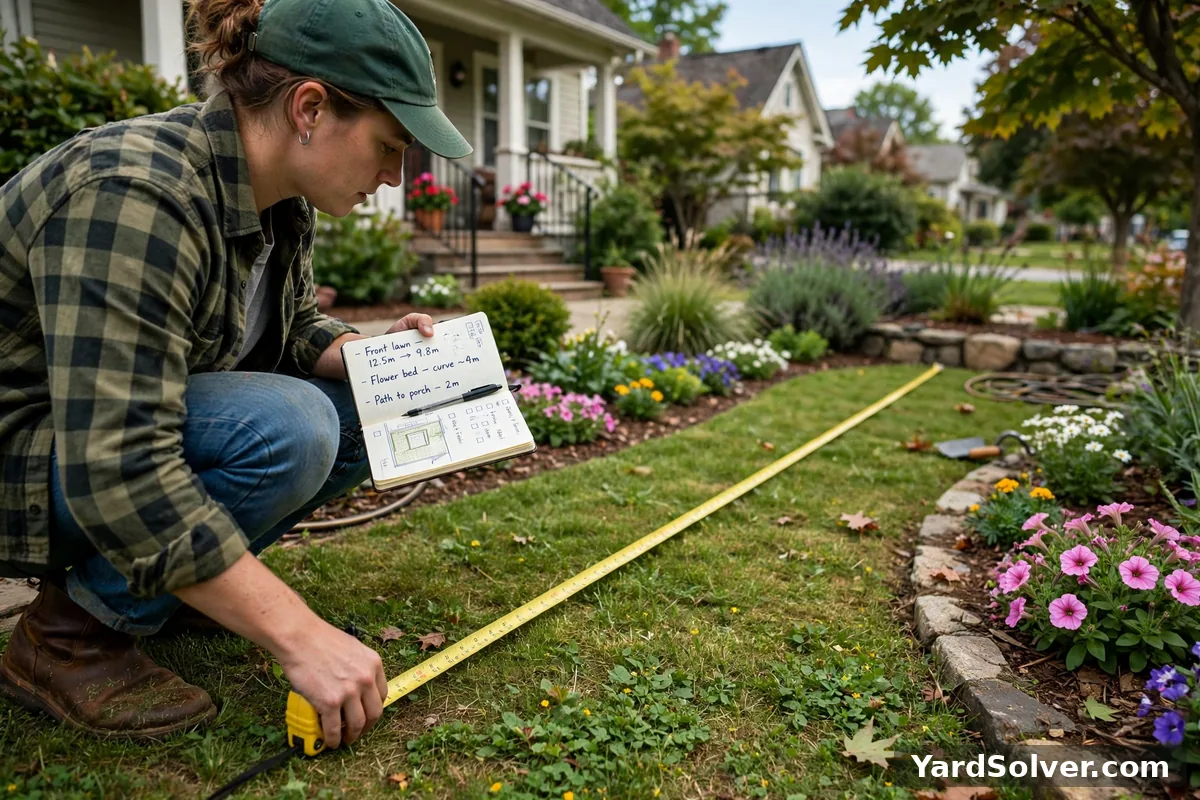
For a plain rectangle this is one tape along the length and one across the width, multiplied together. Most real lawns are not plain rectangles, and that is where orders go wrong — people measure the whole yard outline and pay for sod that lands under flower beds, patios and paths. Work around those instead: measure only the ground that will actually be grass. The reliable method is split-and-add. Break the lawn into two or three rectangles that step around the bed or patio, measure each one, and add the areas together. An L-shaped lawn is just two rectangles sharing a corner; a lawn wrapping a curved bed is a rectangle minus a rough half-circle you can estimate and subtract. If measuring is new to you, How to Measure Your Yard's Square Footage walks through every shape slowly. Precision matters less than honesty here: a pace is roughly 2.5 feet, and a paced measurement with the right allowance beats a laser measurement of the wrong area every time.
Step 2 — Run the calculator: what each input does
Open the Sod Calculator — rolls and pallets by lawn size and enter the lawn area from Step 1 in square feet — or enter the length and width of each section and let it add them for you. Next comes the decision the whole order hangs on: the cutting allowance. Choose 5% if your lawn is a plain rectangle with straight edges and few cuts. Choose 10% if the lawn wraps curved beds, trees or a winding path, because every curve is cut from a straight roll and the offcuts shrink as the edge curves more. Then set your country, Canada or the USA. That toggle does not change the roll maths — a roll is 10 sq ft on both sides of the border — but it changes the prices and buying conventions the calculator shows, so the cost estimate and the way rolls and pallets are sold match the yards near you. The answer comes back as rolls, rounded up (you cannot buy part of a roll), the same count expressed in pallets, and an estimated cost range. Press the print button and you have the order itself: rolls, pallets, and the allowance you allowed for, ready to read to the yard.
Step 3 — The maths the calculator is doing
There is no hidden model here either — the calculator runs the same count a sod farm runs when it loads your pallet. A standard roll is 2 ft × 5 ft = 10 sq ft, so the raw count is simply your area divided by 10. Before dividing, the calculator grows the area by your allowance: rolls = area × 1.05 (or × 1.10) ÷ 10, rounded up. Rounding up is not padding; the last partial roll is still a whole roll you have to buy and carry. Pallets are the second conversion: pallets = rolls ÷ 50, because a pallet holds about 50 rolls and covers roughly 500 sq ft. One caution lives inside that "about": some yards load 60 rolls to a pallet, so if your count lands near a pallet boundary, confirm the load size when you order — Step 6 shows how to use the boundary instead of fearing it. The table below is the same maths pre-run for common lawn sizes; it is worth a screenshot before you phone the yard.
| Lawn size | Rolls at 5% (rectangle) | Rolls at 10% (curves & beds) | Pallets (50 rolls each) |
|---|---|---|---|
| 200 sq ft | 21 rolls | 22 rolls | Under half a pallet |
| 500 sq ft | 53 rolls | 55 rolls | Just over 1 pallet |
| 1,000 sq ft | 105 rolls | 110 rolls | About 2.1–2.2 pallets |
| 2,000 sq ft | 210 rolls | 220 rolls | About 4.2–4.4 pallets |
Read the table the way the calculator thinks: the allowance is a small tax on honesty. On a 1,000 sq ft lawn the difference between the two columns is just 5 rolls — far cheaper than a second delivery, and far cheaper than a pallet of spares you cannot use. When in doubt between the two, look at your edges, not your hopes: straight edges earn 5%, curved edges earn 10%.
Step 4 — Odd shapes, and the timing that matters more than the count
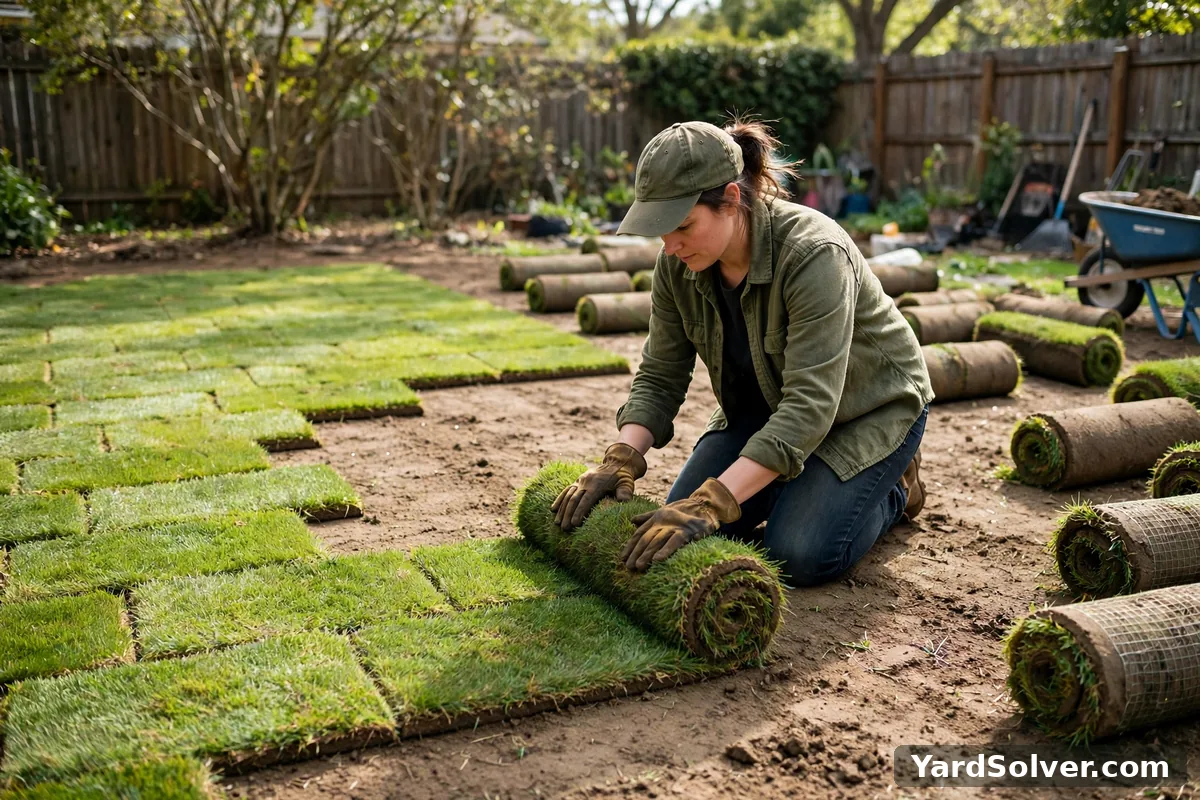
Odd shapes stop being odd once you split them. The L-shape gets two rectangles; a lawn with a round patio gets the rectangle minus the circle's area (the circle is 0.785 of the square around it, the same trick used for tree rings); a tapering side strip gets measured at its average width. Add the sections first, apply the allowance once to the total, then divide by 10 — applying the allowance section by section and rounding up each time quietly buys you extra rolls you do not need. Timing is the other half of this step, and it is stricter than the maths. Sod is cut to order, stacked, and from that moment it is heating: in warm weather a pallet of sod yellows from the inside within about a day. So prepare everything before delivery day — old grass stripped, soil levelled and firmed, edges cut — book the truck for the morning, and plan to lay every roll the day it arrives, watering each finished section as you go. The full laying method, seam by seam, lives in How to Lay Sod; this guide's job is making sure the right number of rolls is waiting when you start.
Step 5 — A whole lawn, worked start to finish
Here is one complete front lawn, done exactly the way the calculator does it. The lawn is L-shaped. The main section measures 24 ft × 15 ft = 360 sq ft. The side section, running down past the house, measures 10 ft × 8 ft = 80 sq ft. Split-and-add gives the true lawn area: 360 + 80 = 440 sq ft — noticeably less than the full rectangle the yard outline suggests, because the corner where the two sections would overlap is a curved flower bed, not grass. That curve also settles the allowance: the lawn wraps the bed, so use 10%. The maths: 440 × 1.10 = 484 sq ft → 49 rolls (484 ÷ 10 = 48.4, rounded up). Now the pallet sense-check. A pallet is 50 rolls, so the honest order is one pallet — 500 sq ft — with a roll to spare for patching a seam or a thin corner, rather than 49 loose rolls handled one by one. Compare the same lawn treated as a plain rectangle at 5%: 440 × 1.05 = 462 sq ft → 47 rolls. Two rolls is the whole price of the curved bed — and running two rolls short at the last row, in front of that bed, is exactly the failure the 10% exists to prevent. Put the laying day in the Garden Planner a few days out, so the soil prep lands before the delivery, not after it.
Step 6 — Ordering and delivery day: landing on a sensible count
The calculator gives you a count; ordering well means landing that count on how sod is actually sold. Three decisions cover almost every order. First, the pallet boundary. If your count lands just under a whole pallet — 47, 48, 49 rolls — take the full pallet: the spare rolls are your patching stock, the pallet is loaded and delivered as one unit, and the price difference is usually trivial. If your count lands just over a pallet — 52 or 53 rolls — do the opposite: order the pallet plus the few loose rolls, because most yards sell individual rolls, and a second pallet means roughly 45 spare rolls with nowhere to go. Second, confirm the load. Most pallets hold about 50 rolls, but some yards load 60; a one-line question when you order protects you exactly at the boundary where it matters. Third, protect delivery day. Book a morning slot, have the soil fully prepared and lightly watered before the truck comes, keep the pallet in shade while you work from it, and lay and water in sections rather than unrolling everything at once. Sod you lay the same morning it was cut roots fast; sod that spends a warm afternoon stacked is already declining before it touches soil.
What the calculator can't do
Honesty about the edges, so the number earns your trust. The calculator cannot measure your lawn — the split-and-add work in Step 1 is yours, and measuring through a bed instead of around it inflates the order by exactly the bed's area. It cannot see your edges, so the 5% or 10% choice is your judgement call; it only applies the one you pick. It assumes flat ground spread with standard 2 ft × 5 ft rolls: a steep slope needs a little more care and sometimes pegging, and a yard selling a different roll size changes the divisor — check the roll dimensions on the quote if they are printed there. And its prices are typical ranges for your country, not quotes: delivery distance moves real prices more than roll prices do. What it does guarantee is the count maths, checked above: get the true grass area and the honest allowance, and the rolls and pallets follow.
Still deciding whether new turf is worth it at all? Run the same area through the Grass Seed Calculator — the seeding alternative priced by area and compare: seed costs a fraction of sod and takes a season to thicken, while sod is an instant lawn at pallet prices. Many lawns end up a honest mix — sod where it shows, seed where it can wait. Whichever you choose, size the job once with the Sod Calculator before you phone anyone, and let the yard's quote argue with your number instead of replacing it.
Keep going
Run your own lawn through the Sod Calculator, then follow How to Lay Sod on delivery day, seam by seam. If your lawn is an awkward shape, How to Measure Your Yard's Square Footage covers every split-and-add case in detail.
Planning the whole season's lawn work? The Garden Planner lays out turfing, feeding and overseeding in one calendar.
Questions people ask
How many rolls of sod for 500 square feet?
A standard roll covers 10 square feet, so 500 square feet is 50 rolls exactly — one full pallet. Add the 5 percent cutting allowance for a plain rectangle and the honest order is 53 rolls: the pallet plus 3 loose rolls, which most yards will sell you.
Do I measure around flower beds or straight through them?
Around them. Sod laid under a flower bed, patio or path is wasted money, and it has to be cut away anyway. Measure only the area that will actually be grass and enter that lawn area in the calculator — split the lawn into sections that step around the bed and add the sections together.
Why 5% extra for a rectangle but 10% for curves?
Every curve is cut from a straight roll, and the offcut from a curved edge is rarely reusable elsewhere. A rectangle needs only a few straight end cuts, so 5 percent covers it. The more the edge curves — around beds, trees and winding paths — the more each cut shrinks the usable piece, and 10 percent keeps you from running short on the last row.
My answer is just over one pallet — buy loose rolls or a second pallet?
Buy loose rolls. Most yards sell individual rolls alongside pallets, so order the pallet plus the few rolls you need over it. A second pallet only makes sense if you have a real use for roughly 45 spare rolls — a side strip still to do, or known patching — because leftover sod cannot be stored and will not survive the week.
How far in advance should I order sod?
Book the delivery for the morning of the day you will lay it, and order a few days ahead so that morning slot is yours. Sod is cut fresh for the order, but once stacked on a pallet it heats up and yellows fast — within about a day in warm weather — so the soil should be fully prepared before the truck arrives, not after.
Sod is measured in area — order the lawn's true area plus cutting waste, and lay it the day it comes
Sod (turf) is sold by area — rolls or slabs of stated dimensions — so the order is the lawn's measured area divided into those units, plus roughly five to ten percent for cuts at curves and edges. Measure in rectangles and triangles rather than pacing the whole plot as one shape, subtract beds and paths, and round up: a lawn finished a roll short shows the seam of the second delivery, in a slightly different green, for a full season.
Timing is part of the quantity decision: sod is a living, perishable product that heats and yellows in the stack, so the order must land on a prepared, levelled, raked bed with help available the same day. Water it in as you lay, not after the last roll, keep the seams tight and staggered, and hold the spare rolls only a day or two in shade — beyond that, gift them to a neighbour's patch rather than watching them cook.
Sources
Key facts on this page cross-checked against Sod — Wikipedia — background on sod — turf — and how it is produced and laid and Lawn — Wikipedia — background on lawns and the grasses they are made from.
Related page
Read next: How to Lay Sod: Prep, Laying Pattern & Watering Schedule.
Comments & ratings
No comments yet.
Be the first to share your experience.