
Guides · Summer growing · Published November 20, 2026 · By Faizan Ahmad
How to Protect Vegetables From Summer Heat: Watering, Mulch and Shade That Work
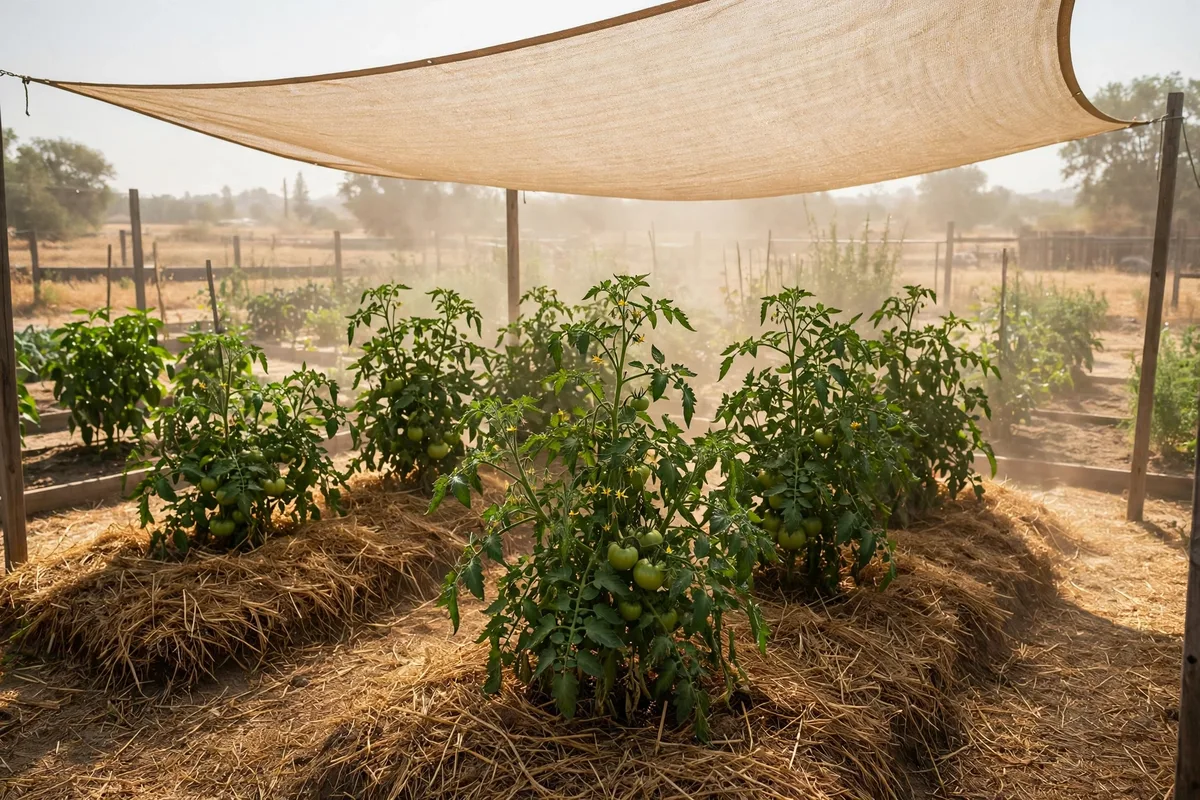
Vegetables survive summer heat when you defend the soil, not the leaves: mulch every bed 5–7 cm deep, water deeply two or three times a week at the base of the plants in the morning, and shade tender crops with 30–50% shade cloth through the afternoon. Those three moves — in that order — handle the great majority of heat damage, because heat kills through hot, dry roots and scorched fruit far more than through hot air. This guide gives the full protocol with the numbers sized: mulch thickness by material, watering depth by crop, shade timing by plant, the feeding change nobody makes, and the setup that keeps the garden alive while you are on holiday. It is written metric-first for Australian summers and pairs with our December planting guide.
The short answer, on one card
Mulch: 5–7 cm of straw, sugarcane or bark over every bed, kept a hand's width off stems. Water: deeply, 2–3× a week, morning, at the base — a soak that wets the top 20–30 cm, not a daily sprinkle. Shade: 30–50% cloth over tomatoes, capsicum, lettuce and seedlings from late morning through the afternoon heat. Stop: high-nitrogen feeding (it grows leaves, not fruit) and midday watering on foliage. Away: deep-soak, mulch, and put pots and wicking beds on a timer or a neighbour rota.
Defence 1 — Mulch: the 5–7 cm blanket
Bare soil in an Australian January can pass 50°C at the surface while the air reads 35°C — and roots live in the top of that soil. A mulch layer breaks the chain three ways: it shades the surface, it stops the wind-and-sun evaporation that empties a bed between waterings, and it keeps the soil temperature swing gentle enough for roots and soil life to keep working. The working depth is 5–7 cm for straw and sugarcane mulch, up to 10 cm for coarse bark on paths and around fruit trees, settled — measure after it has settled, not as it falls from the bale, because fluffy straw halves in a week. Keep it a hand's width clear of stems and trunks: mulch against a stem in wet heat is a rot collar. If your beds are bare now, mulch this week, before the heatwave, not during it — mulching hot dry soil seals the dryness in, so water deeply first, then blanket. The Mulch Calculator converts bed sizes and your chosen depth into bags or bales, and it is the difference between one trip to the supplier and three.
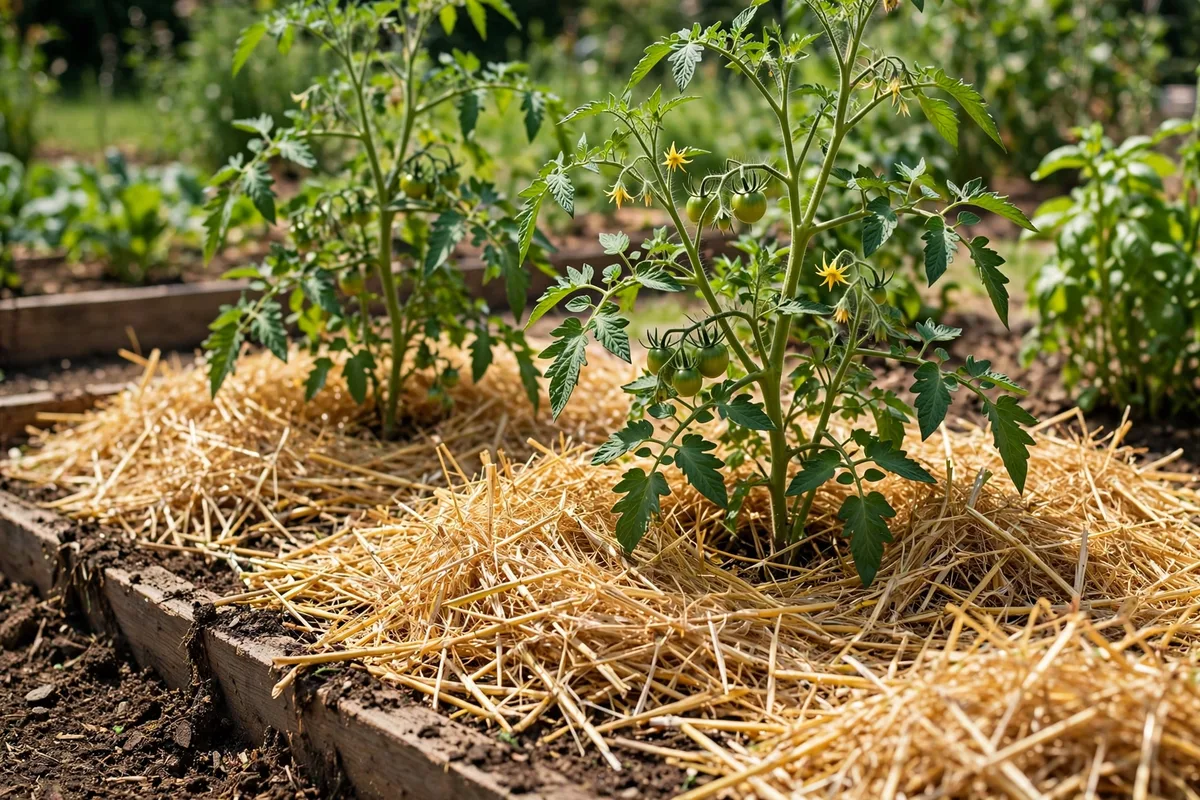
Defence 2 — Water deeply, at the base, in the morning
The summer watering mistake is frequency: a daily light sprinkle wets the top centimetre, trains roots to live there, and leaves them in the hottest, driest layer of the bed. The heat protocol inverts it — fewer, deeper drinks. Aim to wet the top 20–30 cm of soil each time (check with a trowel or a moisture probe after watering; the surface tells you nothing), which for most beds means a long soak two or three times a week, adjusted up in heatwaves and down after rain. Water in the morning: the plants take it up before the heat, the foliage dries fast (wet leaves overnight are a disease invitation), and almost nothing is lost to evaporation compared with a midday session. Water at the base — a soaker hose, a drip line, or a can without its rose — because water on foliage in fierce sun is wasted and, on the hairy leaves of pumpkins and zucchini, an open door to mildew. Drip users can time their runs precisely with our drip irrigation run-time guide, which gives minutes-per-session by crop and emitter. New seedlings and pots are the honest exceptions: they live in small volumes of mix and may need daily water until roots reach the bed's moisture — shade them and water them, and do not let the deep-and-rare rule kill the youngest plants in the garden.
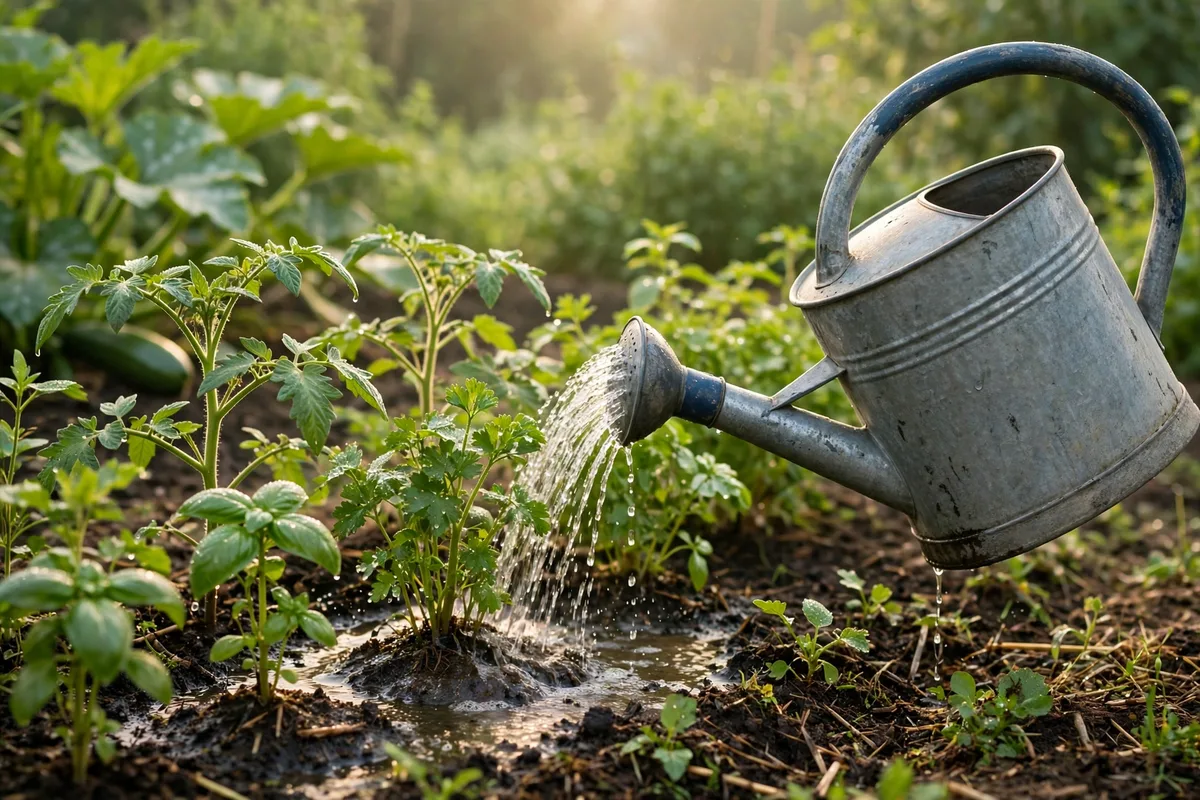
Defence 3 — Shade that is timed, not total
Vegetables want sun — the trick is which sun. Morning sun is growth; the 2–5 pm blast in a heatwave is damage: sunscald on capsicum and tomato fruit, bolting in lettuce and coriander, wilted transplants that never catch up. The professional answer is 30–50% shade cloth over the tender crops from late morning through the afternoon, rigged on hoops or a simple frame so air still moves beneath it — a cloth tent with no airflow cooks what it shades. Tomatoes and capsicum keep their morning sun and lose the scorch; leafy greens and seedlings live under lighter cloth for more of the day; the hard cases (zucchini, pumpkin, sweet corn, okra) need no shade at all in most districts and resent the light loss. Choosing and fitting the cloth itself — percentages, colours, frames — is our shade cloth guide; this guide's rule is the schedule: shade is a heatwave tool and an afternoon tool, not a permanent roof.
Check Price on Amazon — USCheck Price on Amazon — Canada
Buttons open a search on each store, so you see today's price and the current sizes — we never print prices here because they change daily.
The feeding change, and the crops finishing now
Heat changes what feed does. A high-nitrogen feed in mid-summer pushes soft leafy growth that wilts faster, shades fruit, and draws aphids — feed fruiting crops for fruit instead: a balanced or potassium-leaning feed for tomatoes, capsicum and zucchini once flowering is underway, as our Tomato page sets out. Just as important is knowing what to stop tending: garlic and onions are finishing — as their tops yellow and fall, stop watering them entirely so the bulbs cure in dry soil; a December watering regime that saves the tomatoes will rot the garlic bed next door. Heat management is per-crop, not per-garden, and the finishing crops want drought while the fruiting crops want a soak.
The holiday-away setup
Summer holidays and vegetable gardens collide every year, and the gardens that survive an absence are set up, not lucky. The sequence, a week out: deep-soak every bed, then mulch or top up mulch everywhere (the blanket is worth three waterings). Group the pots in the shade of a fence or under the shade-cloth frame, standing them in shallow trays — pots are the first casualties of any absence. Put irrigation on a timer if you have it, set for the deep morning soak two or three times a week; if you do not, a neighbour rota with one named job (the deep soak, twice) beats a daily pop-in that sprinkles. Harvest hard before you leave — zucchini and beans picked young do not turn into marrows and stringy pods demanding water while you are gone — and cut back the thirstiest annual flowers entirely. A garden set up this way holds for two weeks in serious heat; a garden left on daily-sprinkle habits is in trouble by day four.
Heatwave triage: the 40-degree day
When the forecast crosses 40°C, the protocol compresses into one morning. Water everything deeply before 9 am, including the beds you watered yesterday — a heatwave day is not a day for the schedule. Throw the shade cloth over the tomato and capsicum rows and the seedling bed. Move every pot into shade, no exceptions, and stand the precious ones in water trays. Then stop: no feeding, no transplanting, no pruning (cut surfaces and disturbed roots are liabilities in heat), and no guilt about the lettuce — some crops bolt in a 40-degree week whatever you do, and the succession sowing you plant when it breaks will replace them in a month. The garden that comes through a heatwave is the mulched, deep-watered, shaded one; triage just tops it up.
Keep going
Plan the summer beds — mulch quantities, shade frames, irrigation runs — in the Garden Planner before the first heatwave, not during it.
Go deeper with Shade Cloth for Vegetable Gardens, the Drip Irrigation Run Time guide and What to Plant in December in Australia. Size the blanket with the Mulch Calculator and new beds with the Raised Bed Soil Calculator.
Sources
Protocol numbers follow the Australian summer references cross-checked for this guide: Plant Journal — December Garden Jobs: NZ & Australia (water deeply 2–3 times a week in the morning; mulch every bed 5–7 cm before the heat; feed for fruit, not leaves), shade ranges per Soil2Bloom — Raised Bed Beginner Guide, Australia (30–50% afternoon shade cloth for December–February) and seasonal notes from Stratco — December Garden Notes.
Questions people ask
How do I protect my vegetable garden from extreme heat?
Defend the soil in three moves: mulch every bed 5–7 cm deep, water deeply two or three times a week at the base of the plants in the morning, and shade tender crops (tomatoes, capsicum, lettuce, seedlings) with 30–50% shade cloth through the afternoon. Mulch first — it does more than the other two combined.
How thick should mulch be for summer vegetables?
5–7 cm of straw or sugarcane mulch, measured after it settles, and up to 10 cm of coarse bark around fruit trees and on paths. Keep it a hand's width away from stems. If the soil is dry, water deeply before mulching — mulch seals in whatever moisture state it covers.
Should I water vegetables every day in hot weather?
No — deep and less often beats shallow and daily. A soak that wets the top 20–30 cm of soil, two or three times a week, trains roots downward where moisture lasts. Daily sprinkling keeps roots at the hot surface. The exceptions are seedlings and pots, which live in small volumes and may need daily water.
What shade percentage is best for vegetables?
30–50% for most vegetables in heatwave afternoons. Leafy greens and seedlings sit at the 50% end for more of the day; tomatoes and capsicum use 30–40% from late morning; zucchini, pumpkin, sweet corn and okra usually need no shade at all.
Why are my tomatoes wilting in the afternoon but recovering by morning?
That is normal heat behaviour, not necessarily thirst — the leaves lose water faster than the roots can replace it at peak heat, then catch up overnight. Check the soil before watering: if it is moist at 10 cm deep, the plant is fine. Persistent morning wilt is the real water signal.
How can I keep the garden alive while on summer holiday?
Deep-soak and mulch everything a week out, group pots in shade on trays, put irrigation on a timer set for deep morning soaks two or three times a week (or arrange a neighbour rota with that one named job), and harvest beans and zucchini hard before you leave. Set up this way, a garden holds about two weeks in serious heat.
Comments & ratings
No comments yet.
Be the first to share your experience.