
Guides · Soil & feeding · Published November 22, 2026 · By Faizan Ahmad
How to Raise Soil Organic Matter — and What a Good Percentage Is
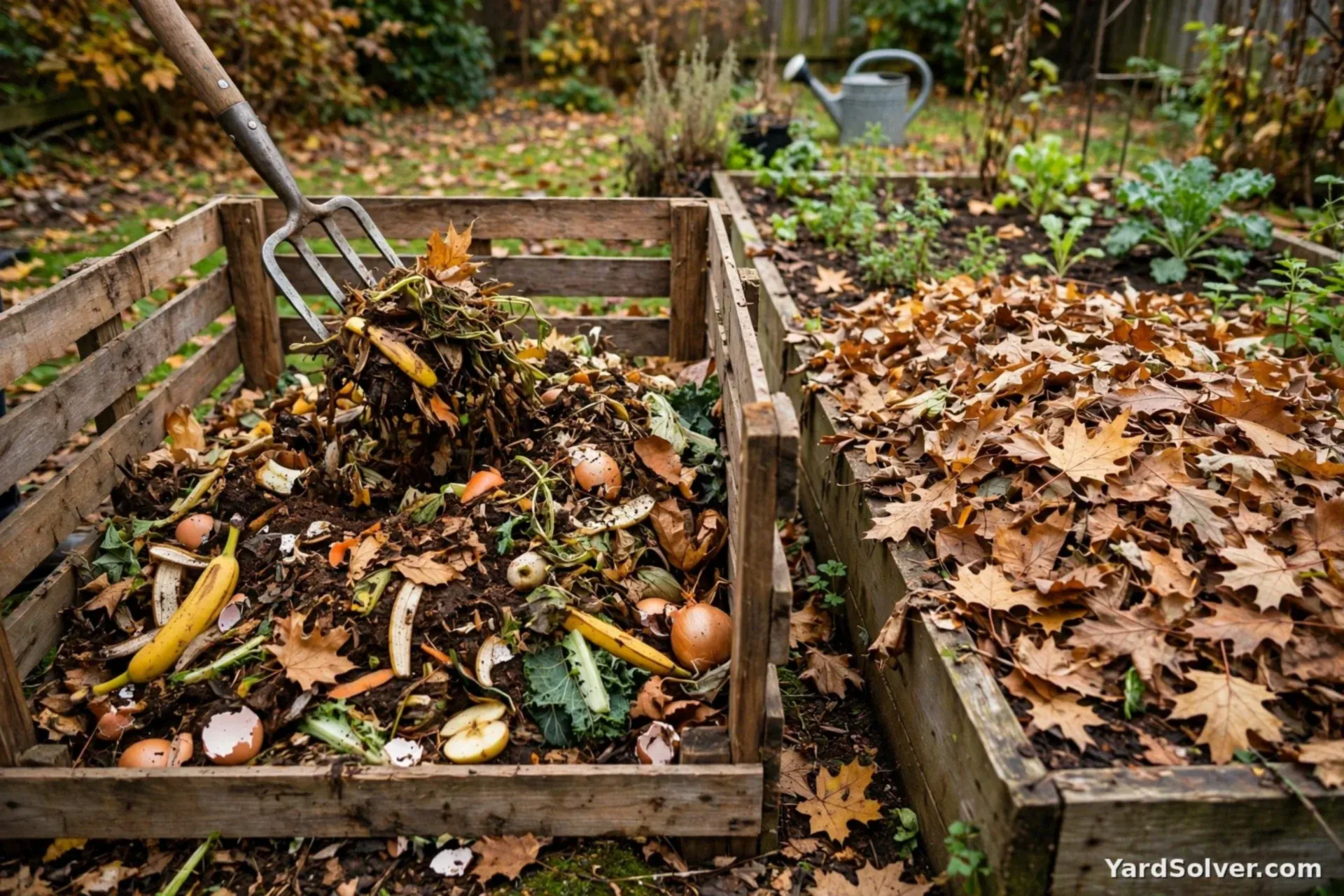
Raising soil organic matter by one percentage point in the top 6 inches takes about 459 lb of organic matter per 1,000 sq ft — roughly 1.5 cubic yards of finished compost — because the soil itself weighs about 45,900 lb and the percentage is a share of that mass. Our Soil Organic Matter Calculator runs the mass balance for your area, depth and material. This guide explains what the percentage on your soil test actually measures, what a good one is for your soil, why the level leaks away every year, and which routes genuinely bank it.
The short answer, on one card
- The % is a share of soil weight — measured by loss on ignition; organic carbon × 1.72 converts to it
- Good targets: most garden soils sit at 2–4% · vegetable beds aim for 4–6% · over ~10% is excessive in mineral soil
- One point costs 459 lb of OM per 1,000 sq ft at 6 in — about 1,530 lb (1.53 yd³) of finished compost
- Fresh material counts at a fraction: only ~10–20% of residue organic matter stabilises into the pool
- The level leaks: soil life mineralises roughly 1–3% of the pool yearly — holding 5% takes ~153 lb of compost per 1,000 sq ft a year
- Each point banks water too: roughly 16,500–20,000 extra gallons held per acre
On this page
Step 1 — What the percentage actually measures
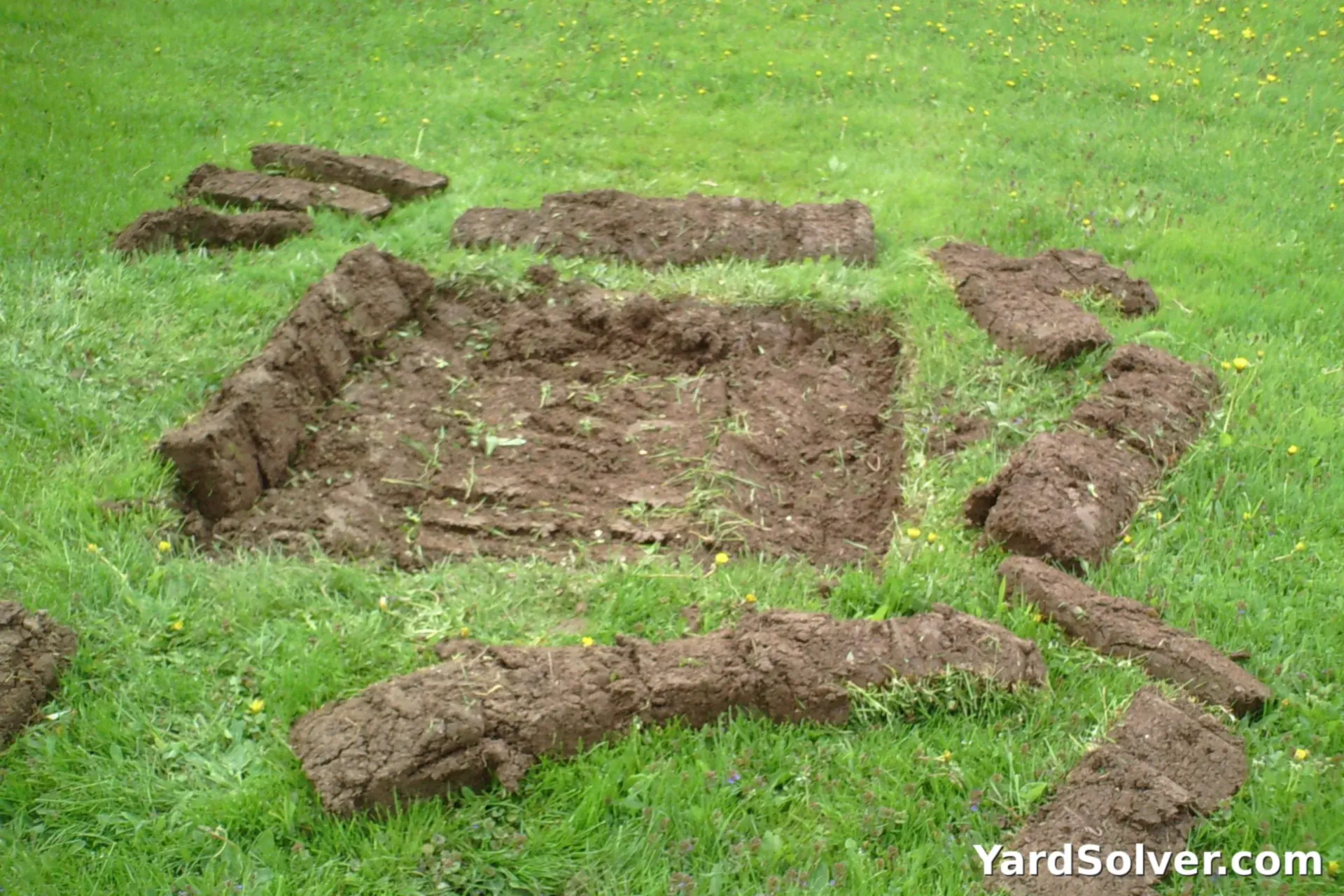
A soil test’s organic matter line is a weight share, not a vibe. Most labs measure it by loss on ignition: a dried sample is burned, and the share that burns away is reported as organic matter. That share bundles three pools — the living microbes and roots, the fresh dead residues still recognisable as plant, and humus, the dark, stabilised end-product that persists for years. Only the third pool is truly banked; the first two are traffic through it.
Some reports print soil organic carbon instead. The two convert by the Van Bemmelen factor: organic matter is about 58% carbon, so organic matter ≈ carbon × 1.72. A test reading 2.3% carbon is a 4.0% organic matter soil. Whichever figure your lab prints, it is a share of the soil’s dry weight — which is why every honest calculation about changing it starts by weighing the soil, and why the next step’s numbers are bigger than most gardeners expect.
Step 2 — What a point costs: the worked numbers
The mass balance at the standard 6-inch depth, per 1,000 sq ft of bed (soil mass 45,900 lb). Finished compost converts at 0.30 lb of organic matter per wet lb; composted manure at 0.22. Your own area, depth and percentages go into the calculator — these rows are its arithmetic, not rules of thumb.
| Goal | OM to bank | Finished compost | Composted manure | Compost layer |
|---|---|---|---|---|
| +1 point (e.g. 3% → 4%) | 459 lb | 1,530 lb · 1.53 yd³ · 42 bags | 2,086 lb · 1.74 yd³ | ~0.5 in |
| +2 points (3% → 5%) | 918 lb | 3,060 lb · 3.06 yd³ · 83 bags | 4,173 lb · 3.48 yd³ | ~1.0 in |
| +3 points (2% → 5%) | 1,377 lb | 4,590 lb · 4.59 yd³ · 124 bags | 6,259 lb · 5.22 yd³ | ~1.5 in |
Two honest warnings ride on this table. First, depth is a multiplier: mix to 12 inches instead of 6 and every figure doubles, because the stock is a share of twice the soil. Second, a soil test taken the same autumn usually credits less than the full gap — the labile share of what you added is still being processed. The maths states what must arrive; the retest a year later states what stayed. Both numbers are worth having. Your figures: the Soil Organic Matter Calculator — your stock, gap and material.
Step 3 — Why the level leaks, and the yearly top-up
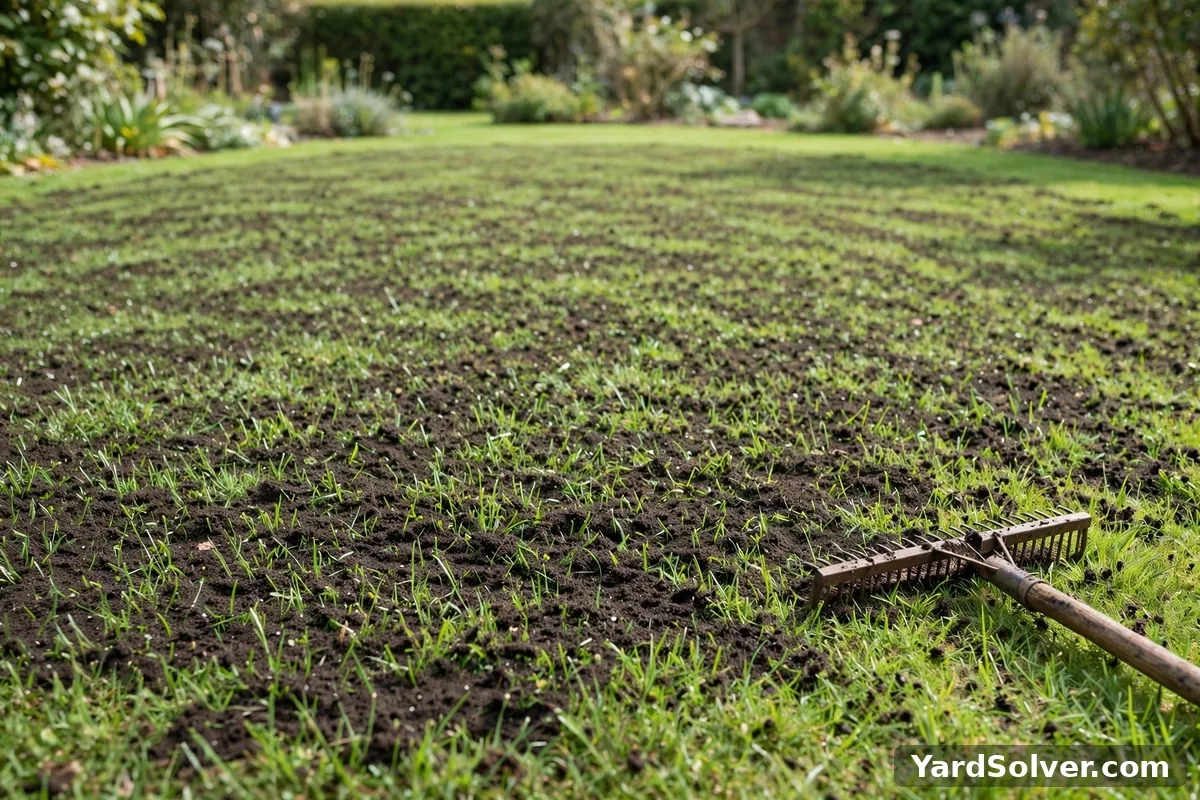
Soil organic matter is not a fixture; it is a stock with a leak. Microbes mineralise a share of the pool every year — a few percent of it in tilled soil, less under mulch and no-dig — releasing its nitrogen and carbon as they go. That leak is precisely why the percentage settles at an equilibrium set by your habits: add material faster than the leak and the level climbs; stop adding and it drifts back down over years. Building Soils for Better Crops models exactly this balance, with tilled-soil decomposition running at several percent of the pool per year.
The practical consequence is a maintenance line, and it is smaller than the build-up line by an order of magnitude. Holding a 5% stock on 1,000 sq ft at 6 inches — a pool of 2,295 lb — against a 2% yearly leak means replacing about 46 lb of organic matter a year: roughly 153 lb of finished compost, a couple of barrow-loads, or a standing habit of mulching and cover cropping that quietly covers it. Gardeners who budget the top-up keep their gains; gardeners who treat organic matter as a one-time renovation watch the soil test drift home.
Step 4 — The routes, honestly compared
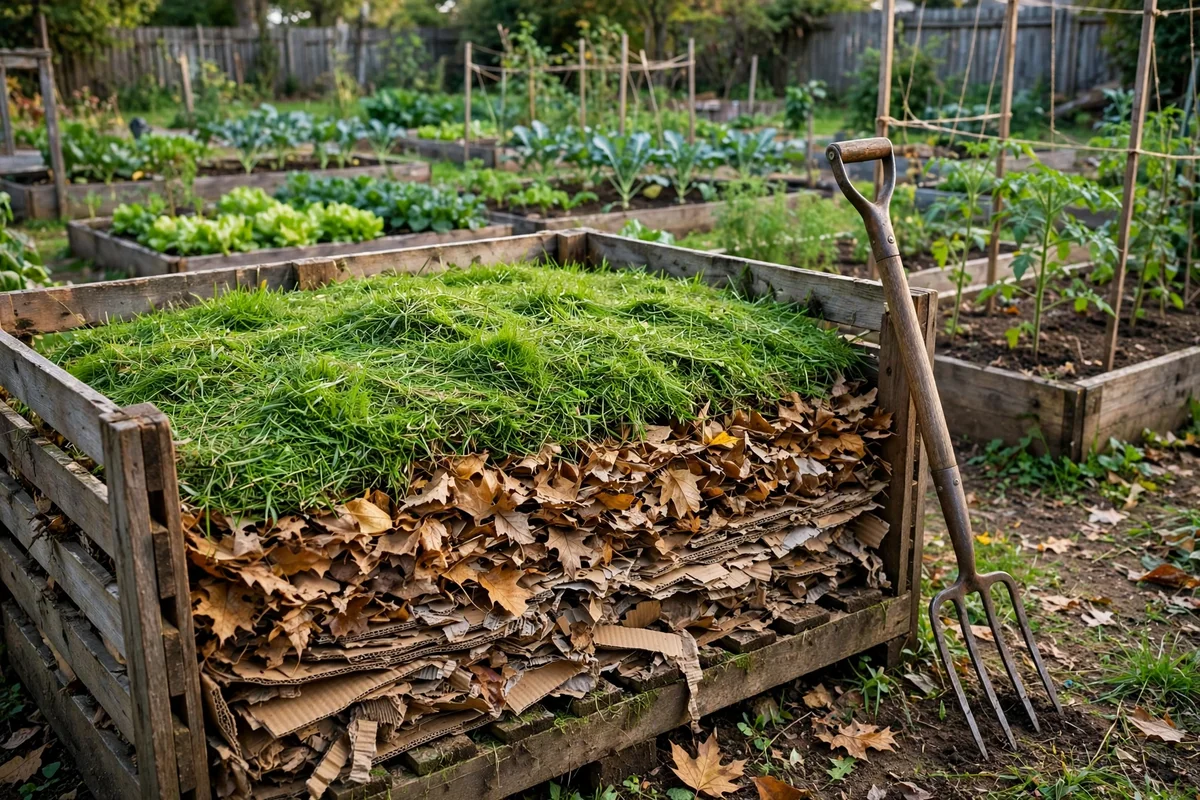
Finished compost is the fast route: its labile share was already spent at the pile, so most of its organic matter counts on arrival, and a season can bank a point or two. Its costs are money and, repeated heavily for years, phosphorus — compost carries P in proportion to its OM, and beds fed heroically can test excessive in phosphorus while still “needing” organic matter by percentage. Composted manure is the cheaper bulk cousin: a weaker conversion per pound, more variable, and worth a salts-and-sourcing pause near harvest.
Cover crops and roots are the slow route and the deep one. A strong stand grows roughly 700 lb of fresh biomass per 1,000 sq ft in a season, with roots adding about as much again below ground — but only 10–20% of residue organic matter stabilises, so the banked gain runs near a tenth of a point a year. What the slow route buys that compost cannot is depth and structure built in place, for free, while the bed rests. Biochar sits apart from both: most of its carbon persists for centuries, but it arrives with almost no nutrients or biology — a vault, not a meal. The gardens that climb steadily use all of it in proportion: compost for the jump, covers and mulch for the hold.
Questions people ask
What is a good soil organic matter percentage for a vegetable garden?
Aim for 4–6%. Most unimproved garden soils test at 2–4%, lawns do well at 3–5%, and sandy soils naturally run lower than clays at the same quality of management — a well-run sand at 3% is not a failing soil. Cornell’s soil-health guidance manages most soils toward at least 4–5%. Above roughly 8–10% in a mineral soil the returns fade and phosphorus often tests excessive.
How long does it take to raise organic matter by 1%?
With compost, the material for a point can be spread in a day — but a soil test credits the gain only as the material integrates, and the labile share is spent within the first seasons, so measured climbs usually lag the arithmetic. By cover crops and residues alone, expect about a tenth of a point a year: a decade per point. The realistic plan is a compost jump followed by yearly top-ups that hold it.
Can you have too much organic matter?
Yes. Beyond about 10% in a mineral garden soil, beds turn spongy and hold water excessively, phosphorus and salts accumulate from the very compost that built the level, and the percentage stops buying structure. Organic matter is a target with a ceiling, not a score to maximise — which is why the calculator asks for a target instead of cheering you upward.
Does no-dig raise organic matter faster?
It changes where the gain sits and how fast the old stock leaks. Surface-applied compost and mulch are worked downward by worms and weather, so no-dig beds concentrate organic matter near the surface — where most feeder roots are — and skip the mineralisation spike that tillage triggers. Weighed through the full 6 inches the climb is comparable; measured where roots feed, it is often ahead.
Why did my soil test barely move after I added compost?
Three usual reasons: the layer amended a shallower depth than the lab samples, so the gain diluted into the report; the labile fraction of the compost was still in transit and had not joined the measured pool; or the starting percentage was estimated rather than tested, so the “before” was wrong. Retest at the same lab, same depth, same season — organic matter accounting only works on consistent books.
Sources
Key facts on this page cross-checked against Building Soils for Better Crops (Magdoff & van Es), ch. 3.9 — the furrow-slice maths, the ~20% stabilisation of added material, and decomposition rates of the pool Cornell Cooperative Extension Suffolk — Pocket Guide to Landscape Soil Health — the 4–5% management goal, 20,000 lb of humus per point per acre, and garden soil over 10% as excessive Cornell Waste Management Institute — Compost Use Guidelines (turf spec) — finished compost at 50–60% organic matter and 27–37 lb/ft³ density Washington State University — What Does Compost Analysis Tell You? — compost organic matter at 40–60% of dry weight and moisture at 40–60% as received Soil organic matter — Wikipedia — background on the pools of soil organic matter and the carbon conversion.
Related page
Read next: How Much Compost Raises Soil Organic Matter by 1%? The Soil-Mass Maths
Comments & ratings
No comments yet.
Be the first to share your experience.