
Guides · Soil & feeding · Published November 22, 2026 · By Faizan Ahmad
How Much Compost Raises Soil Organic Matter by 1%? The Soil-Mass Maths
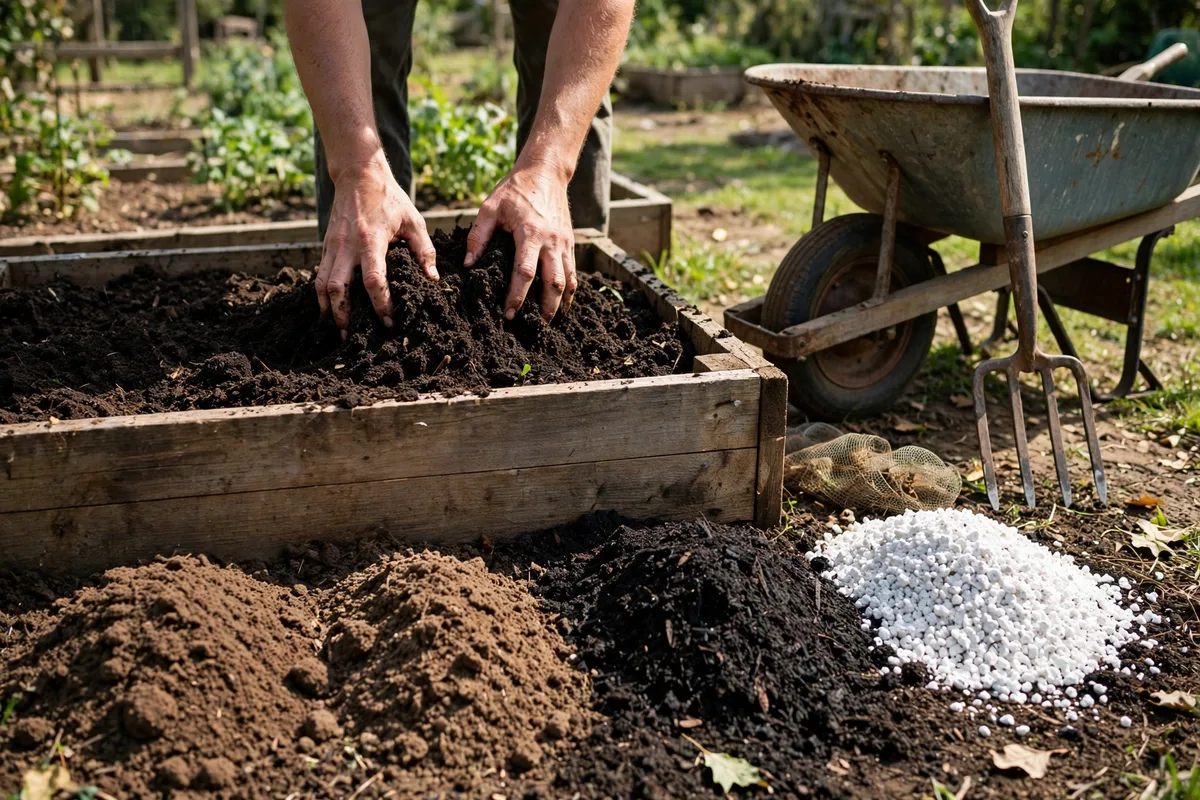
About one and a half cubic yards of compost per 1,000 sq ft raises soil organic matter by roughly one percentage point — the famous "spread half an inch" rule. It sounds like folklore until you run the soil-mass maths underneath it, which our Soil Amendment Calculator does for your bed, your depth and your soil test. This guide derives the rule, states its assumptions honestly, and explains why organic matter is a budget you top up yearly rather than a level you set once.
The short answer, on one card
- The rule: ~½ inch of compost worked into 6 inches raises organic matter by ~1%
- The soil mass: the top 6 inches of 1,000 sq ft weigh about 45,900 lb
- 1% of that is 459 lb of actual organic matter
- Compost carries ~0.30 lb of OM per wet lb (≈50% OM dry, ≈40% moisture) — so ≈1,530 lb, or 1.5 yd³
- Target range: 4–6% for vegetable beds; soil life spends OM every year, so top up annually
Step 1 — Soil is heavier than the plan assumes
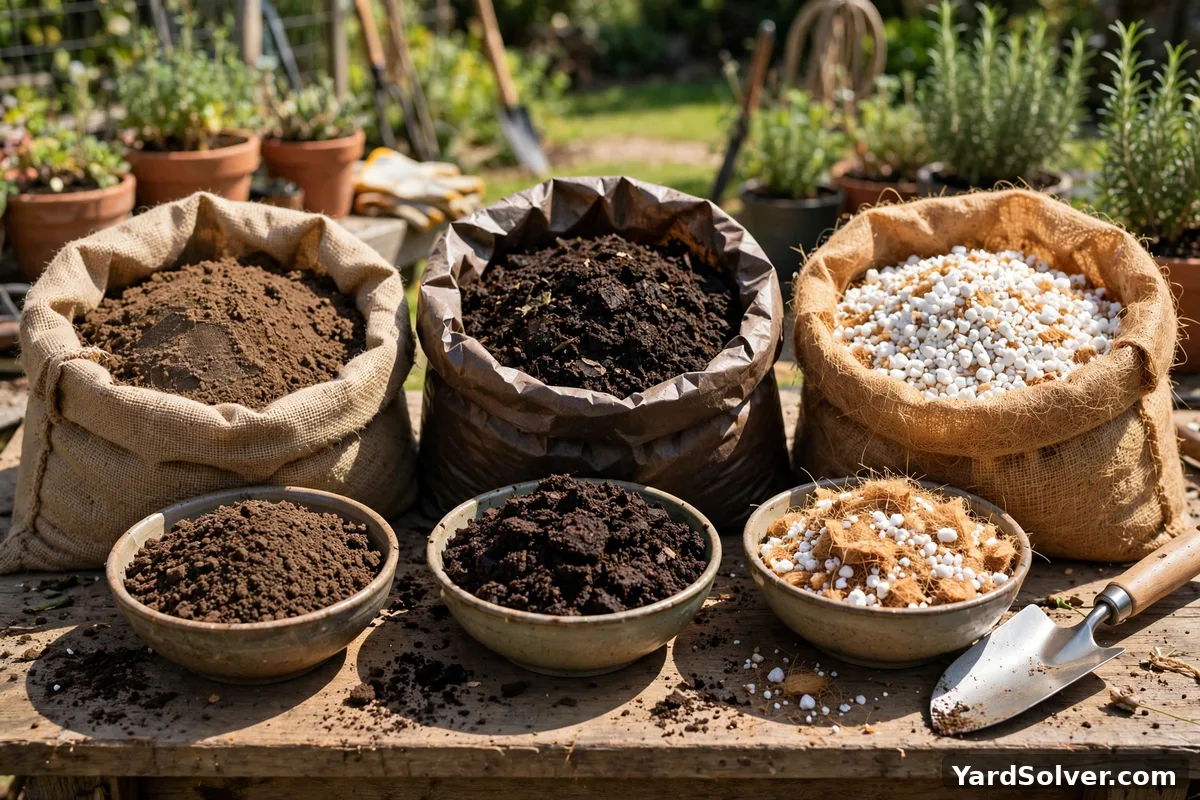
Every disappointing compost calculation starts by underestimating the soil. The top 6 inches of an acre — the "furrow slice" soil science has used for a century — weighs about 2,000,000 lb. Scale that to a real garden: 1,000 sq ft at 6 inches deep is roughly 45,900 lb of soil. One percentage point of that mass is 459 lb. So when a soil test says a bed sits at 3% organic matter and the target is 4%, the gap is not a dusting — it is 459 lb of organic matter that must physically arrive and be mixed in.
Depth is the lever gardeners forget: the same percentage gap at 12 inches of mixing depth doubles the soil mass and doubles the compost. This is why the calculator asks for the depth you will actually fork to — amending the top 4 inches of a bed is a legitimate, cheaper strategy, as long as the plan admits that is what it is doing.
Step 2 — The conversion: from organic matter to compost
Compost is not pure organic matter. As sold it is roughly 40% water, and its dry matter is roughly half organic matter, half mineral ash — so each wet pound delivers about 0.30 lb of organic matter, at a bulk density near 1,000 lb per cubic yard. Run the chain for common gaps at the standard 6-inch depth:
| OM gap to close | OM to add (per 1,000 sq ft) | Compost as sold | Volume & spread depth |
|---|---|---|---|
| +0.5% | 230 lb | 765 lb | 0.77 yd³ · ~¼ inch |
| +1% | 459 lb | 1,530 lb | 1.53 yd³ · ~½ inch |
| +2% | 918 lb | 3,060 lb | 3.06 yd³ · ~1 inch |
| +3% | 1,377 lb | 4,590 lb | 4.59 yd³ · ~1½ inches |
Your own bed, depth and percentages go into the Soil Amendment Calculator — yards, depth and bags. Making the compost rather than buying it? The Compost Calculator balances the greens and browns that become it.
Step 3 — Applying it so the percentage actually moves
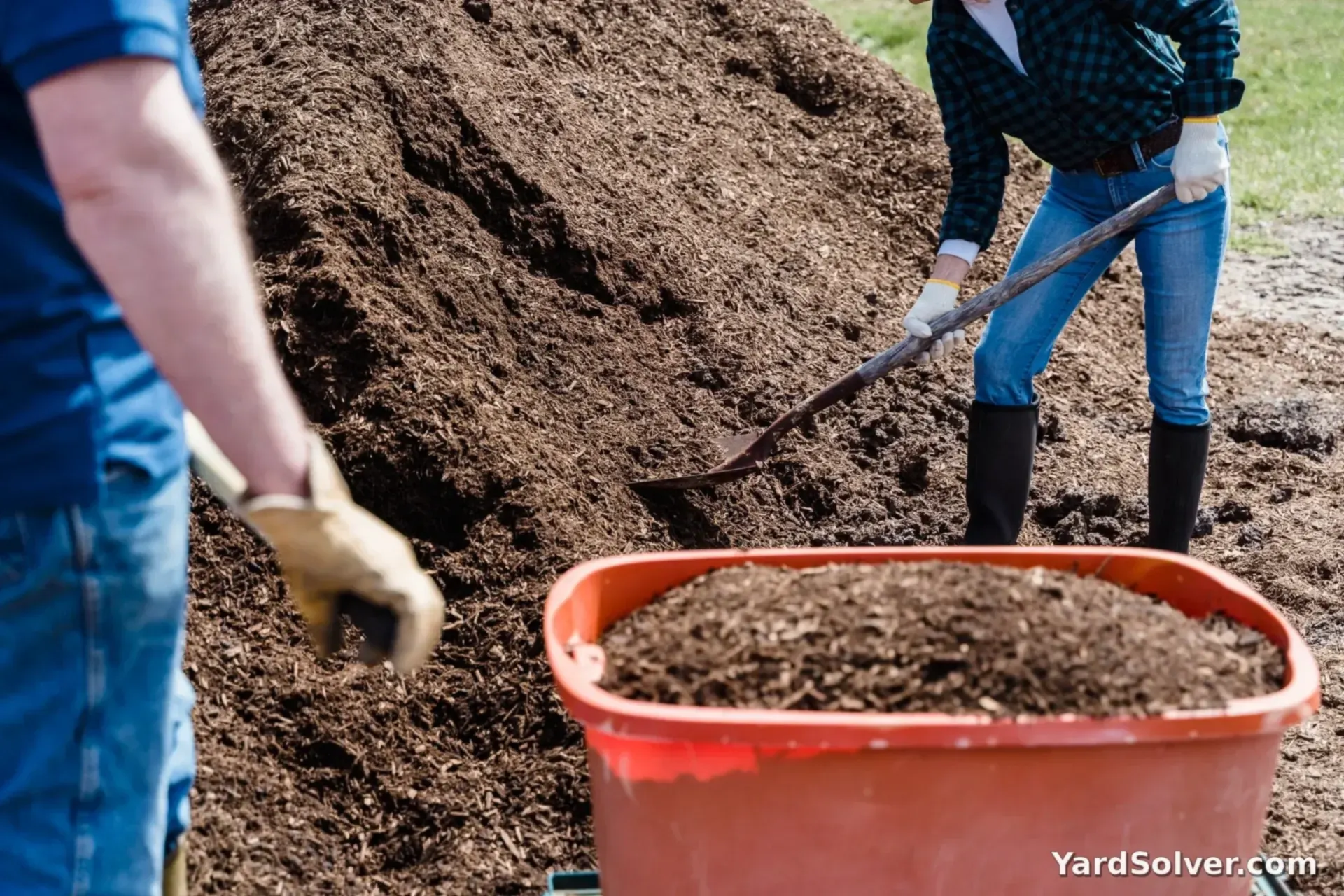
Spread the measured depth evenly across the whole bed before any forking starts — the depth is the dose, and eyeballing after the fact is how one end of a bed gets amended and the other gets a rumour of compost. Then fork or till it through the full mixing depth in the calculation. A half-inch left lying on the surface amends the top inch handsomely and the root zone barely at all; the same half-inch worked through 6 inches moves the tested percentage the plan promised.
One season rarely closes a big gap, and should not try to: more than about an inch worked in at once can tie up nitrogen while the material settles and can overload phosphorus (compost carries it — see the phosphorus guide). A gap of 2–3 points is honestly a two- or three-year programme of annual dressings, which happens to match how soil life prefers to be fed anyway.
Step 4 — Organic matter is a budget, not a renovation
Soil organisms eat organic matter — that is the point of it — and a warm, worked vegetable bed spends a noticeable fraction of its stock every year. This is why a bed lifted to 5% does not stay there, and why the sustainable pattern is a yearly top-up: a quarter to half inch of compost, or a mulch that becomes one, roughly replacing what the year consumed. Gardeners who internalise this stop asking "how do I fix my soil" and start asking "what is this year’s deposit" — the second question is the one productive gardens are built on.
Retest every year or two and watch the trend rather than any single number; lab organic-matter results wobble by a few tenths with sampling and season. A rising trend at 4–5% with good crops is success. Chasing 8% in a mineral soil buys phosphorus surplus and diminishing returns — the ceiling in the short card is real.
Questions people ask
Why does the half-inch rule work for almost every bed?
Because it is arithmetic in disguise: half an inch of compost over 1,000 sq ft is about 1.5 cubic yards, about 1,530 lb as sold, about 459 lb of organic matter — and 459 lb is 1% of the 45,900 lb of soil in the top 6 inches. Any bed near those standard dimensions inherits the rule.
My compost is homemade — does the maths change?
Somewhat. Home compost is often wetter and less finished than commercial, so its organic-matter delivery per pound can run lower — plan on the generous side of the estimate and rely on the retest. The calculator’s stated assumptions (about 50% OM dry, 40% moisture) are the commercial-compost middle of the road.
Can I raise organic matter too much?
Yes. Very high organic matter in a mineral soil usually arrives with excessive phosphorus and salts from years of heavy compost or manure, and the structure gains flatten out past about 6%. The target is a range, and the soil test — not enthusiasm — marks its top.
Does mulch count toward organic matter?
Eventually. Surface mulch decomposes into the soil over seasons and feeds the same budget from the top down, which is how undisturbed soils build organic matter naturally. It is slower than forking compost in, and it does not register quickly on a soil test — but as the yearly maintenance deposit, it is the cheapest one there is.
How soon will a retest show the change?
Sample again after a full season of cropping, at the same time of year and the same depth as the original test. Organic-matter percentages move in tenths per year, so judge the trend over two or three tests rather than celebrating or mourning a single decimal.
Sources
Key facts on this page cross-checked against Cornell Waste Management Institute — compost science — Cornell’s compost research and calculation resources Soil organic matter — Wikipedia — background on soil organic matter content, function and measurement.
Related page
Read next: Best Soil Mix for Raised Garden Beds
Comments & ratings
No comments yet.
Be the first to share your experience.