
Guides · Tomatoes · Published October 31, 2026 · By Faizan Ahmad
How to Start Tomato Seeds Indoors, Step by Step
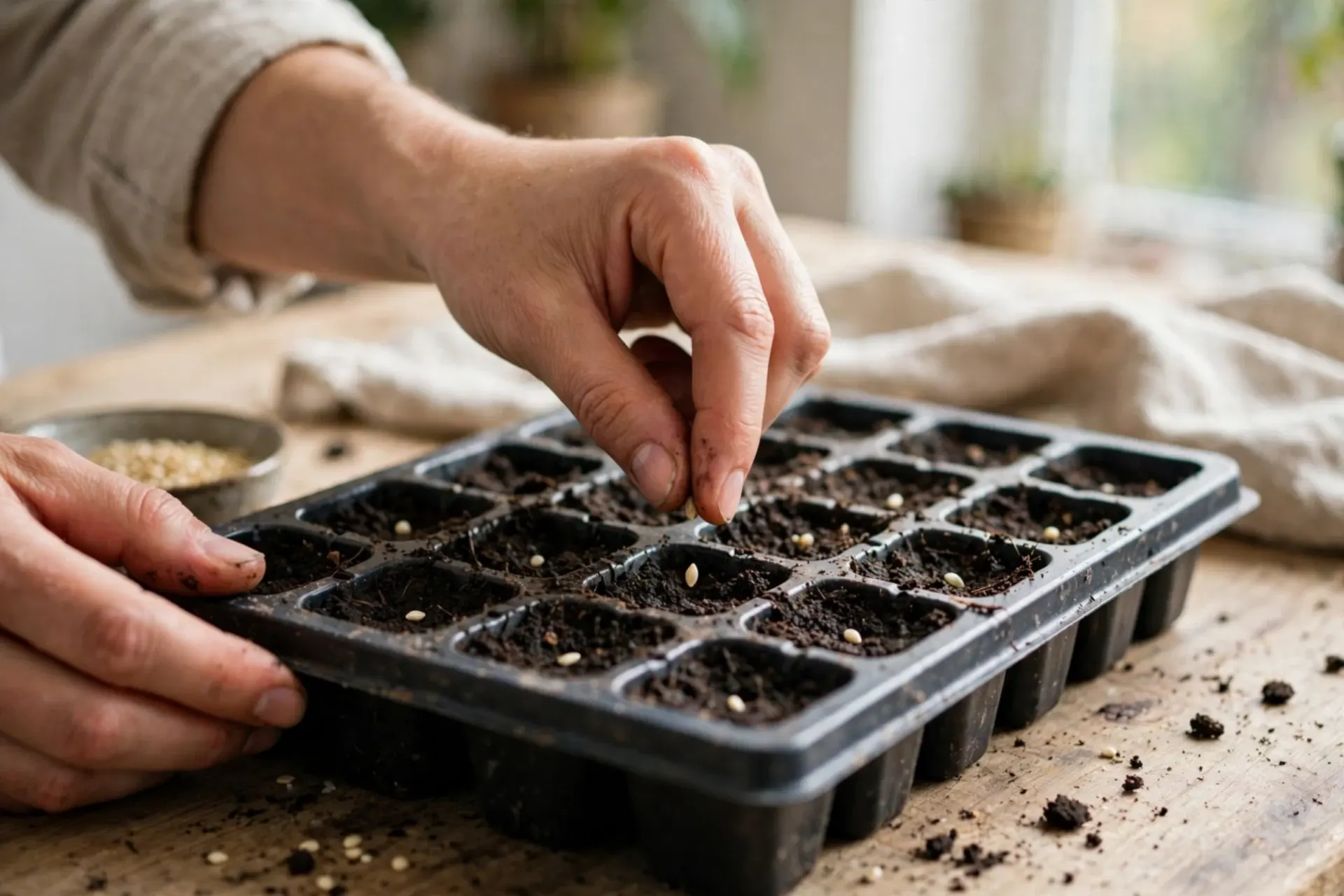
Tomatoes are the seed most gardeners start indoors — and the one that most often goes wrong. The fix is a short routine: right week, warm soil to sprout, fierce light afterwards, and one move into a bigger pot. Follow it and you will have short, dark-green, sturdy plants on transplant day instead of pale vines.
Before you sow: the timing rule
- When: 6–8 weeks before your average last frost date — check your dates on the Planting Calendar and the full chart in When to Start Seeds Indoors
- Why not earlier: tomatoes grow fast; a plant started 10 weeks early is a leggy problem by transplant day
- What you need: seed-starting mix (not garden soil), clean trays or small pots with drainage, labels, a clear cover, and a real light source
Step 1 — Fill, moisten, then sow
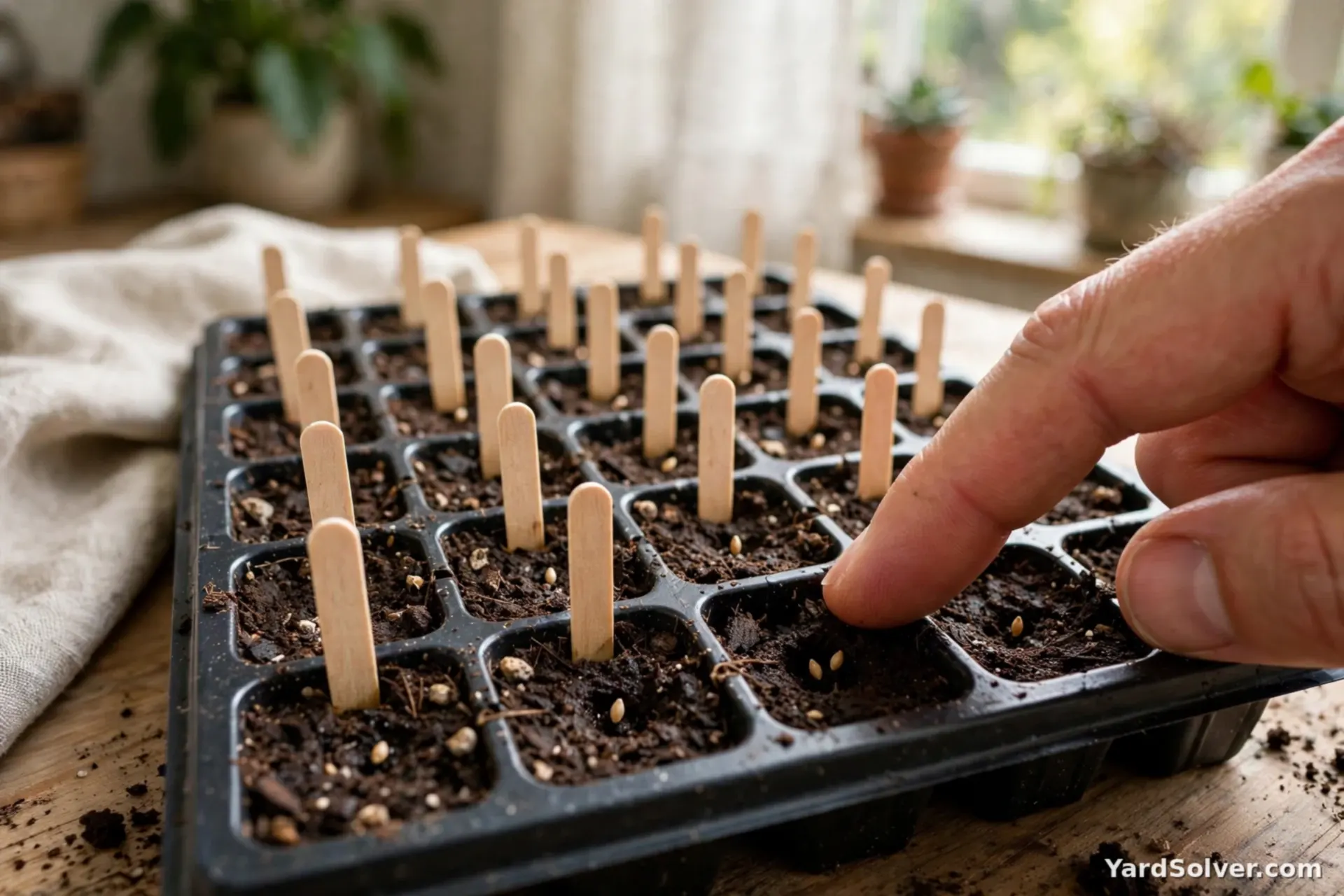
Moisten the mix before filling the tray — it should feel like a wrung-out sponge. Sow seeds about 1/4 inch deep, 2 seeds per cell as insurance, and label the variety and date immediately. Later, snip the weaker seedling at soil level; never pull it, which tears the keeper's roots.
Step 2 — Warmth for sprouting (not light)
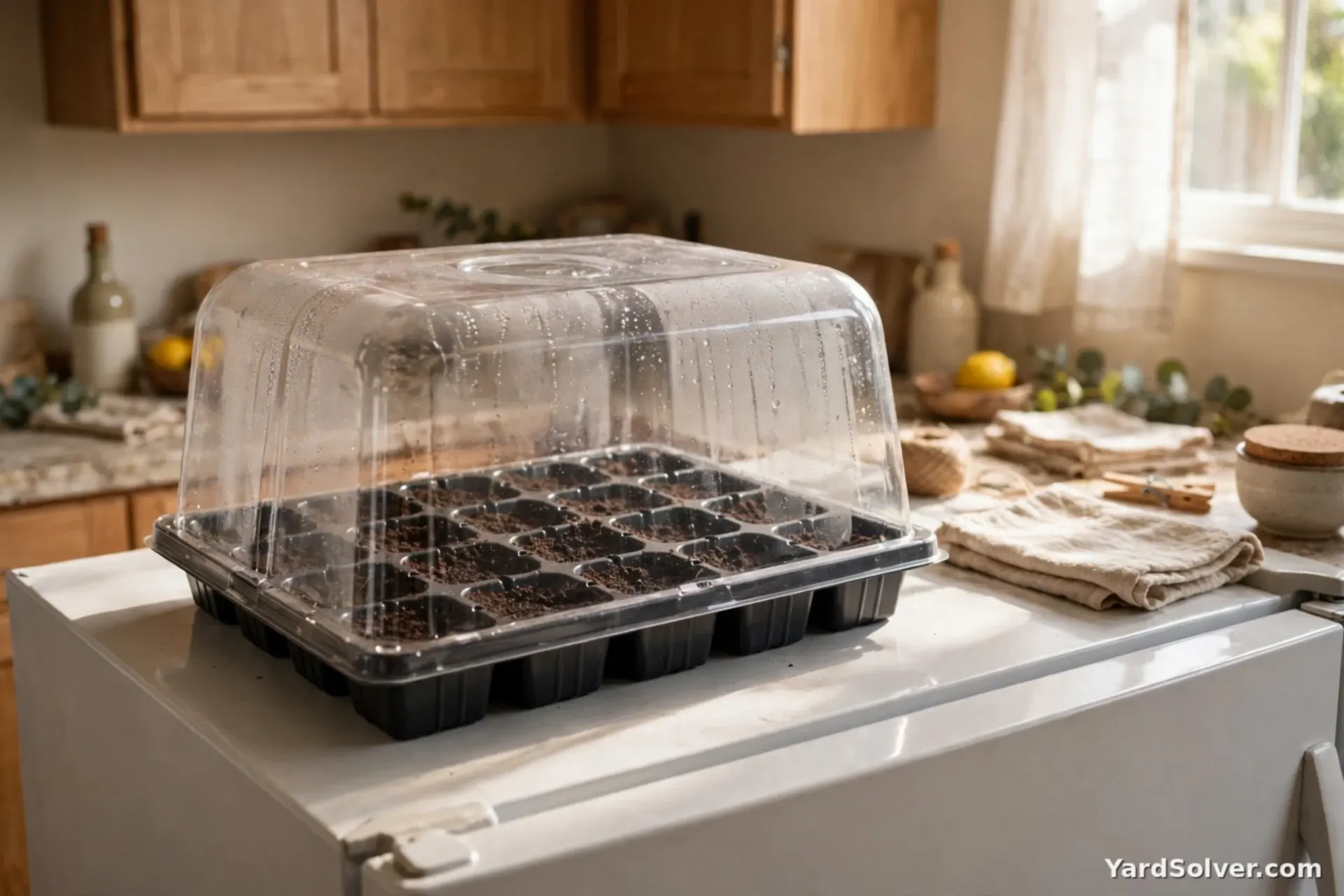
Cover the tray to hold moisture and put it somewhere warm — 75–90°F (24–32°C) is ideal: a heat mat, or on top of a fridge or water heater. Tomatoes sprout in 5–10 days at that warmth, and can take two weeks in a cool room. Check daily; the day you see green, the cover comes off and light takes over.
Step 3 — Light, close and long, from day one of green
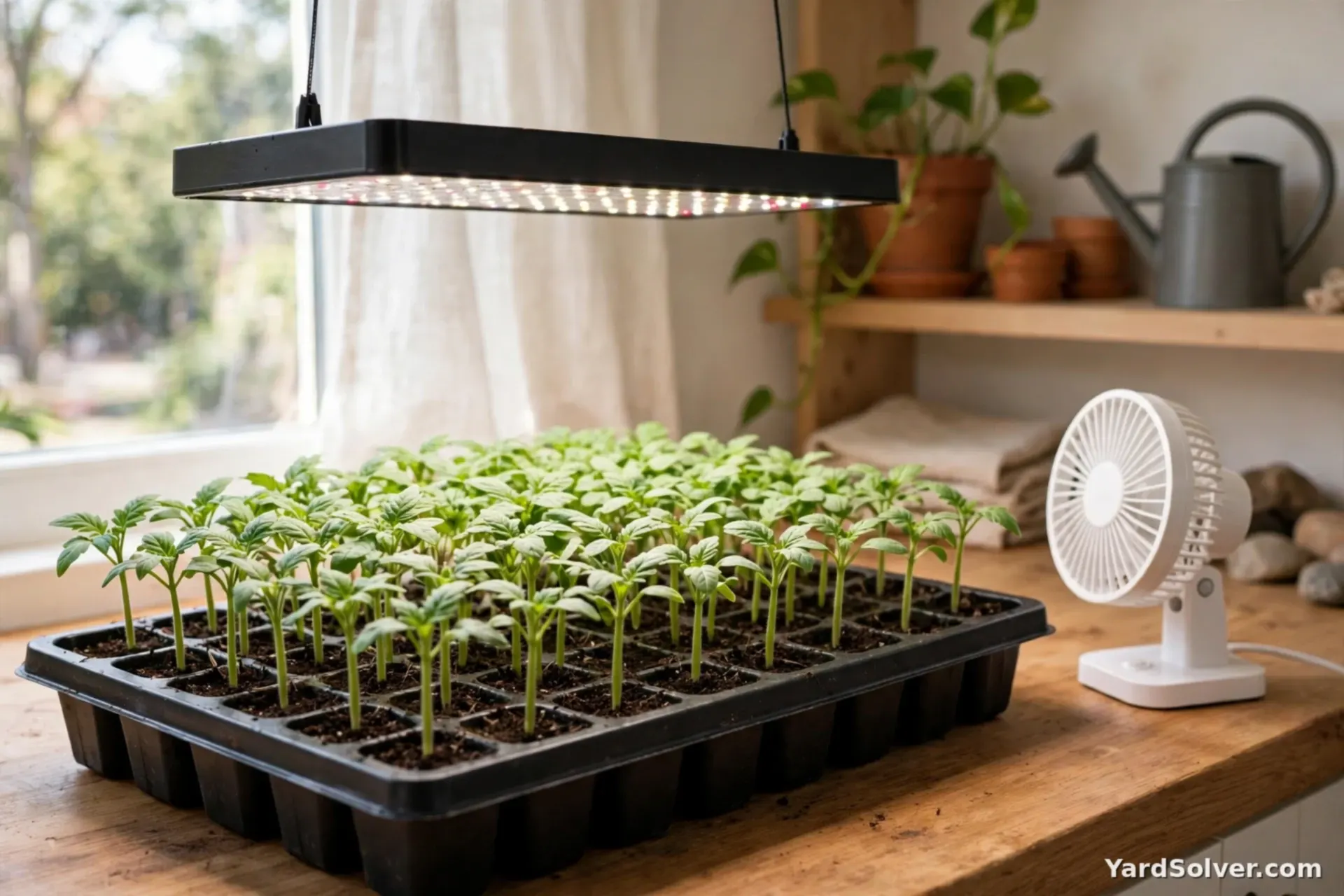
This step decides everything. Hang an LED or fluorescent light just 2–4 inches above the leaves and run it 14–16 hours a day, raising it as the plants grow. A small fan on low nearby, moving the stems gently, builds thicker stalks. If seedlings still stretch, the light is too far or too short a day — the diagnosis guide is Why Are My Seedlings Leggy?
Step 4 — Water from below, feed lightly
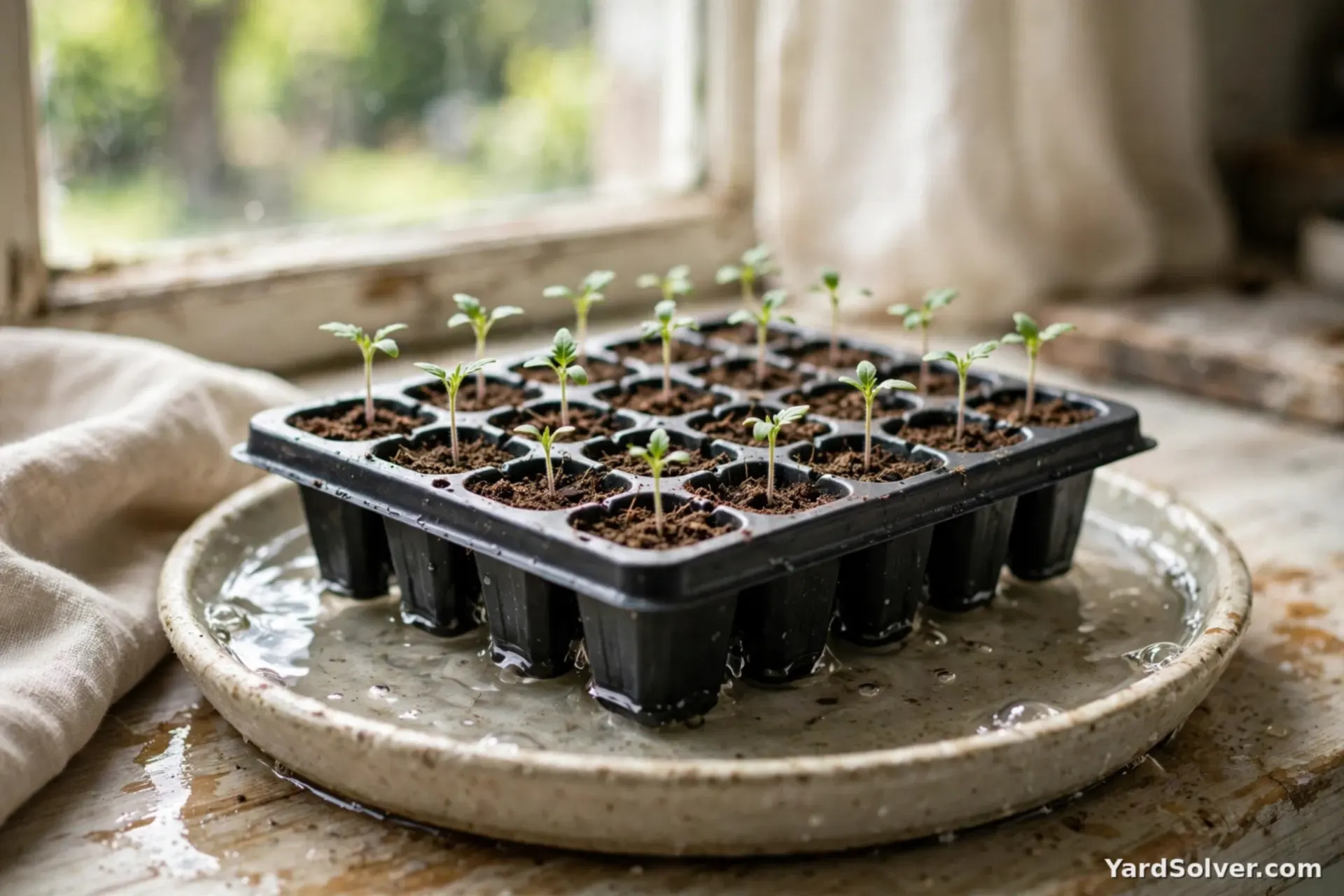
Water by setting the tray in a shallow dish so moisture wicks upward — dry-ish surfaces discourage the mould that causes seedlings to collapse (damping off). Once true leaves appear, feed weekly at quarter strength with a general liquid fertiliser.
Step 5 — Pot up once, burying the stem
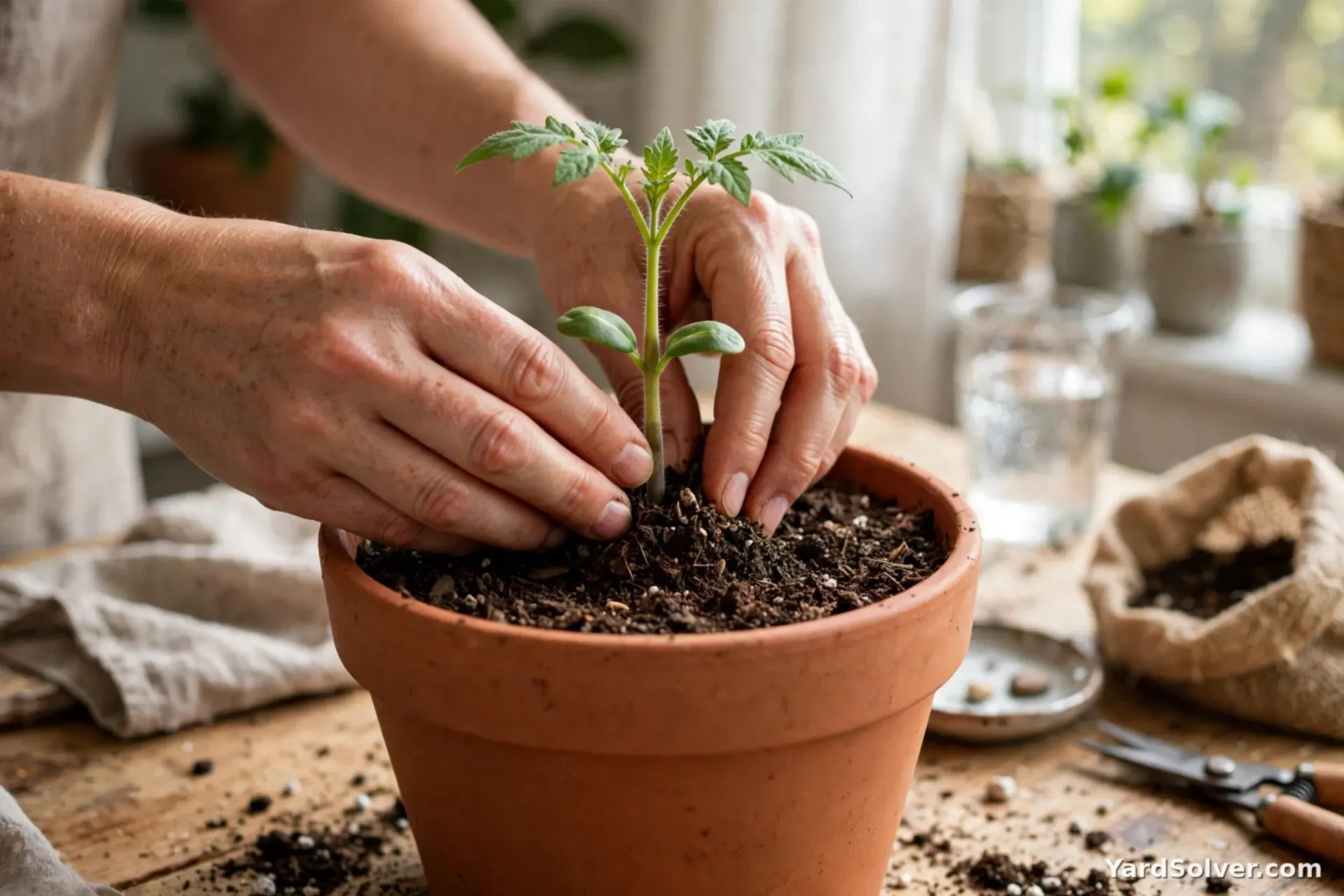
At 2–3 weeks, with true leaves growing, move each plant into a 3–4 inch pot — and plant it deeper than it was, burying the stem up to the first leaves. Tomatoes root along buried stems, so this one trick builds the strong root system the season runs on. Keep the light close after the move.
Step 6 — Harden off before transplant day
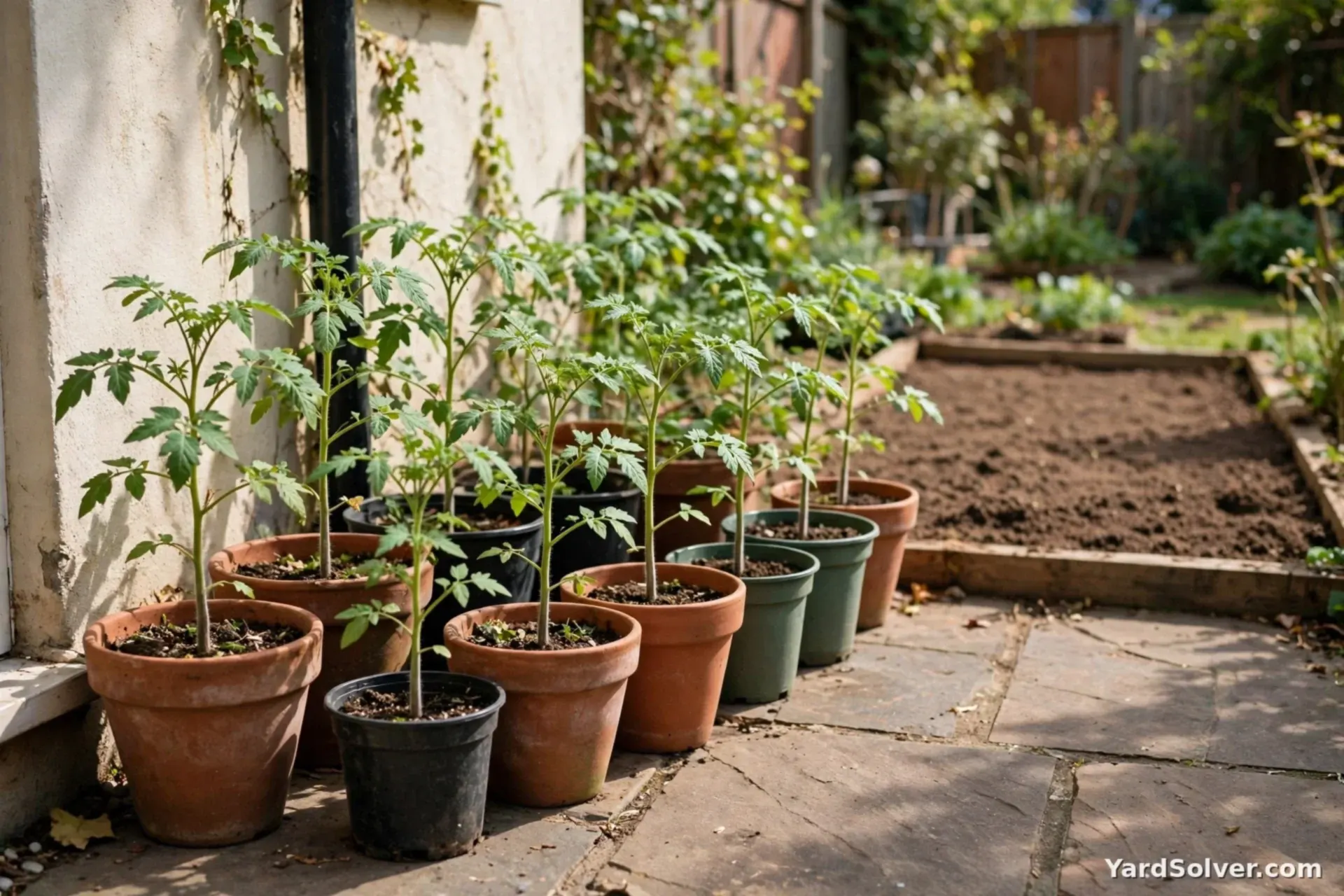
Indoor plants sunburn and wilt if they go straight into the garden. Over 7–10 days, give them increasing hours outdoors, starting with shade — the full routine is in How to Harden Off Seedlings. Transplant after your safer frost date, into soil prepared with the Compost Calculator's rates, and space plants with the Plant Spacing Calculator.
Keep going
The season, in order: When to Start Seeds Indoors · How to Harden Off Seedlings.
Questions people ask
Why are my tomato seedlings tall and floppy?
Not enough light, almost every time. A light 2–4 inches above the leaves for 14–16 hours a day, a gentle fan, and starting no more than 8 weeks before transplant day fixes it.
Do tomato seeds need light to germinate?
No — they sprout in the dark. They need warmth, around 75–90°F (24–32°C); expect sprouts in 5–10 days. Light matters from the moment green appears.
When do I move seedlings into bigger pots?
When the first true leaves are growing well, about 2–3 weeks after sprouting. Bury the stem up to the first leaves — tomatoes root along buried stems.
Tomato seedlings are a light problem — sow late enough, light them close, pot them deep
More tomato seedlings are ruined by enthusiasm than neglect: sown too early, they spend weeks outgrowing a windowsill's weak light and arrive at planting day leggy, pale and rootbound, while a seedling sown six to eight weeks before the last frost — no earlier — grows stocky and overtakes them within a fortnight outdoors. Light is the lever: a bright sill supplemented by a simple lamp a few centimetres above the leaves, raised as they grow, produces the short, dark-green, thick-stemmed plant that transplants without a sulk.
Pot on once, burying the stem up to its first leaves — a tomato roots along buried stem, converting legginess into root system — keep seedlings brushed by a small fan or a hand daily (movement builds stem strength, the indoor substitute for wind), and harden off properly before the move. Feed weakly only after the first true leaves. The calendar discipline in this guide — count back from your own last frost, not from a magazine's spring — is the difference between a seedling and a project.
Sources
Key facts on this page cross-checked against Tomato — Wikipedia — background on tomatoes and their cultivation and Germination — Wikipedia — background on germination conditions.
Related page
Read next: How to Grow Tomatoes from Seed to Harvest, Step by Step.
Comments & ratings
No comments yet.
Be the first to share your experience.