
Guides · Soil & feeding · Published November 22, 2026 · By Faizan Ahmad
How to Test Soil Drainage: The Perc Test, Done Honestly
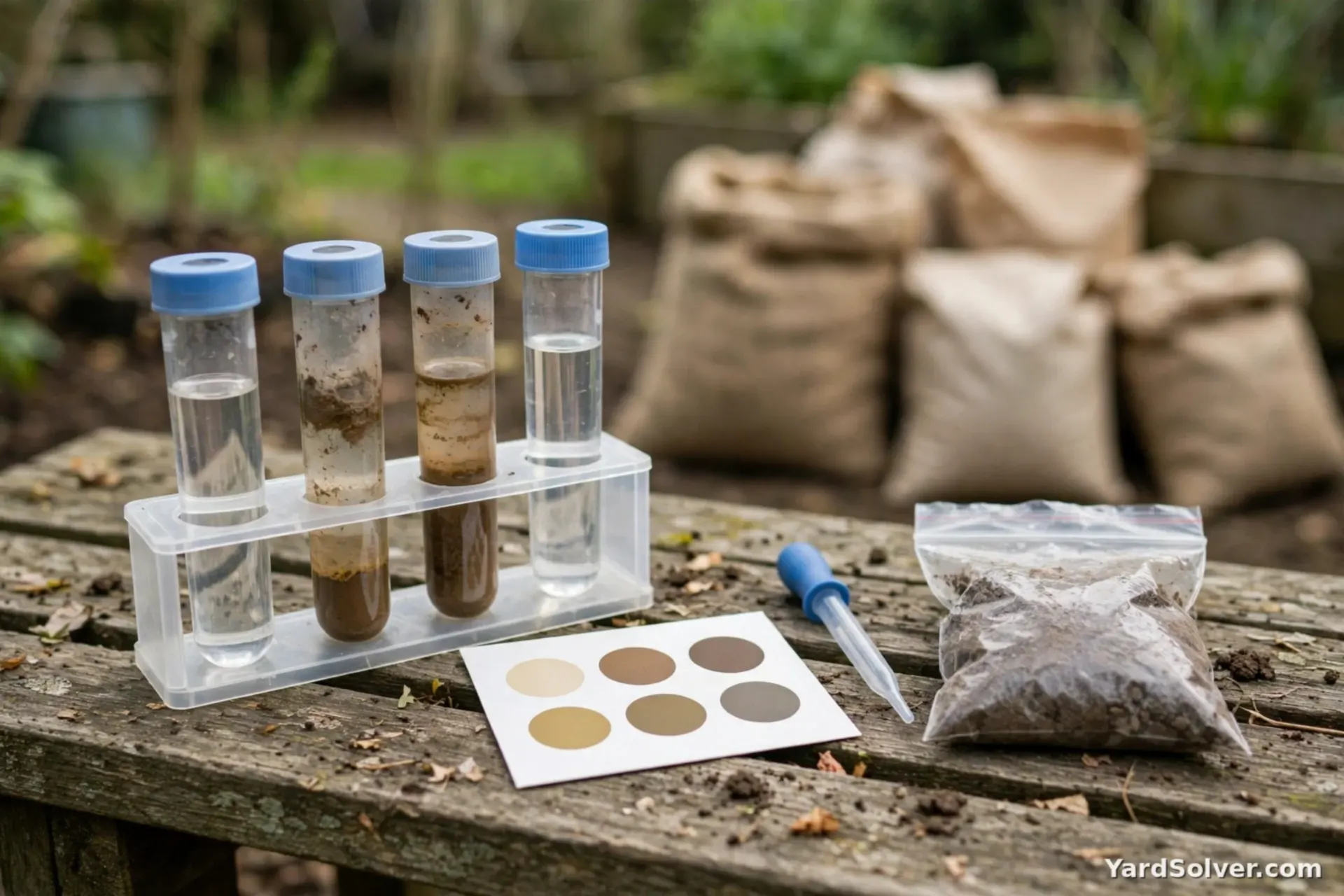
Test soil drainage with a percolation test: dig a hole at root depth, pre-soak it, refill, and time how far the water falls — under 0.25 inches per hour is very slow, 0.75 to 3 is the gardener’s sweet spot, over 6 is droughty. Our Soil Drainage Calculator converts your drop and time into the rate and verdict, and sizes French drain gravel. This guide covers the technique that makes the number true, and what each verdict asks you to do.
The short answer, on one card
- The test: hole ~12 in deep at root depth, pre-soaked, refilled, drop timed
- Skip the pre-soak and the test lies — dry soil drinks the first fill itself
- Verdicts: under 0.25 in/hr very slow · 0.75–3 good · over 6 droughty
- Two holes minimum — drainage varies across a yard more than within one hole
- Match the fix to the verdict: drains need an outlet; where none exists, raised beds win
On this page
Step 1 — The test, step by step
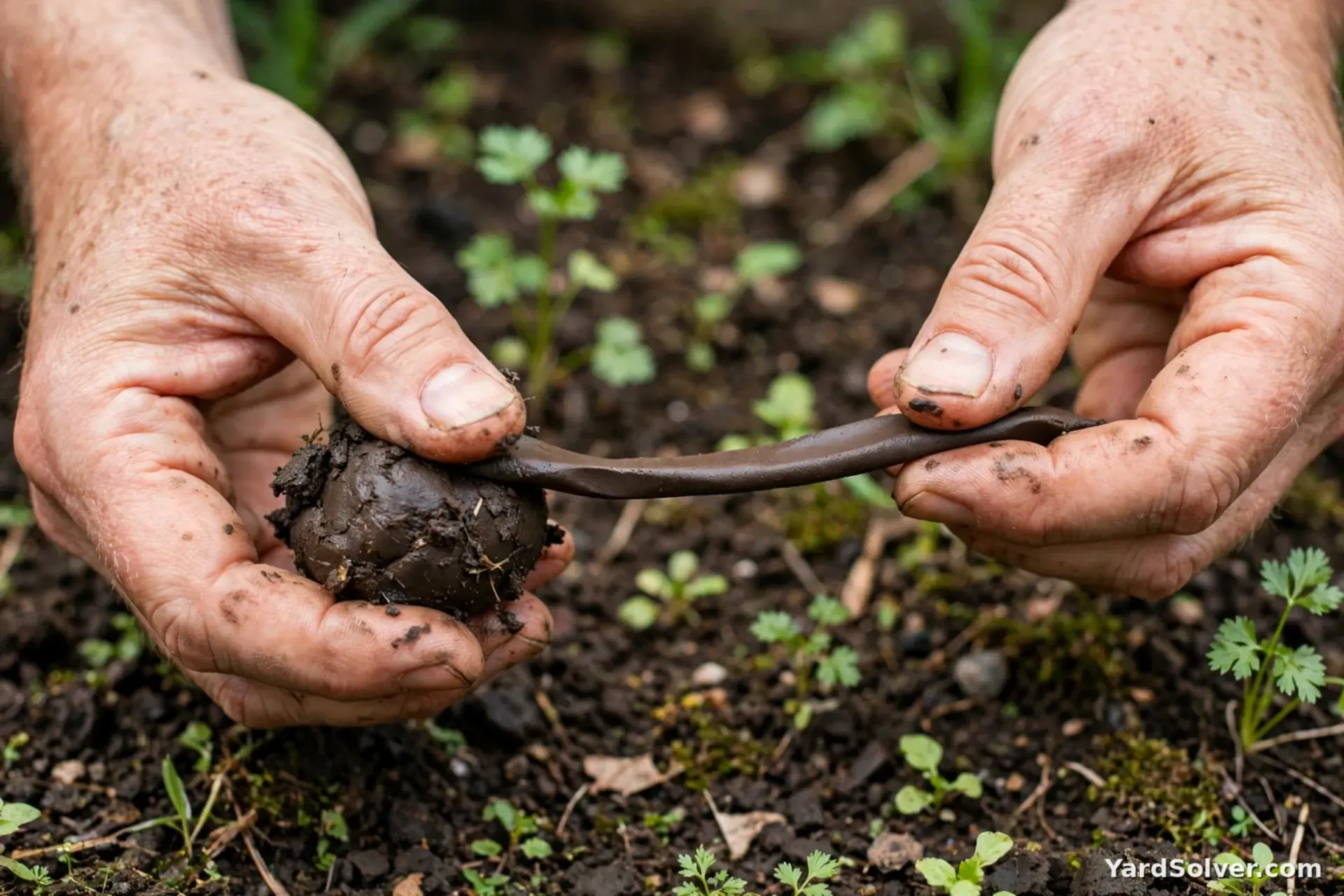
Dig a hole about a foot deep and six inches across where the planting will go, at the depth the roots will occupy — drainage at the surface is not drainage at the root zone. Fill it with water and let it drain completely away: this pre-soak saturates the hole’s walls, and it is the step whose omission invalidates more home perc tests than every other error combined, because dry soil absorbs the timed fill into its own pores and reports thirst as drainage.
Refill to a measured mark — a ruler against the hole’s side, a noted depth — start the clock, and record the drop over a set time: fifteen minutes on fast soil, an hour or more on slow. Inches divided by hours is the rate; the calculator does the conversion and the verdict. Then dig a second hole across the yard, because the difference between two holes is usually larger than the error in either.
Step 2 — Reading the verdict
Garden interpretation bands — deliberately not septic-code bands, which answer a different question. These answer the planter’s question: what will roots experience in a wet week?
| Rate | Verdict | What it means | The honest response |
|---|---|---|---|
| Under 0.25 in/hr | Very slow | Water stands after rain; roots suffocate in wet seasons | Drainage works with an outlet — or raised beds |
| 0.25–0.75 in/hr | Slow | Workable for many plants; wet winters stress the thirsty and the crowned | Organic matter, careful plant choice, drains for prized spots |
| 0.75–3 in/hr | Good | The range most garden plants ask for | Plant; spend the drainage budget elsewhere |
| 3–6 in/hr | Fast | Drains freely; moisture retention becomes the work | Organic matter and mulch; water deeply |
| Over 6 in/hr | Very fast | Droughty — water passes roots by | Organic matter is the whole game; consider soil replacement in beds |
Your drop and time go into the Soil Drainage Calculator — rate, verdict and drain gravel. Texture explains the rate: classify yours with the Soil Texture Calculator.
Step 3 — When the hole disagrees with the plants
Sometimes the test says "good" over a bed where plants drown every spring. The hole told the truth about its own foot of soil; the plants live in the whole profile. A compacted pan or clay layer below test depth can perch water above it like a saucer, and the surface foot drains into the pan and stops. The diagnostic is one deeper pit in the problem spot, dug after rain: look for the grey, mottled layer (soil that lives wet shows it in rust and ash colours) and water standing on it.
The fix follows the depth of the problem: a shallow pan can be broken by deep digging or a broadfork in dry weather; a true clay stratum wants drainage or elevation. Either way, the deeper pit — not a second shallow test — is what separates a drainage problem from a profile problem.
Step 4 — Drains, beds, and the outlet question
A French drain is a gravel trench with a perforated pipe that collects water and conducts it somewhere lower. Its entire virtue is the destination: a drain that ends in flat, slow soil is a gravel pond with extra steps. Before trenching, answer "where does the water go?" with a place — a ditch, a slope’s foot, a dry well in better soil — and let the calculator size the gravel (trench volume minus the pipe’s, fabric-wrapped, or silt retires it early).
Where no outlet exists, raised beds are not the consolation prize but the correct engineering: they lift the root zone bodily out of the water table’s reach, warm earlier, and never ask the subsoil’s permission. Many a "drainage project" quoted in thousands resolves as three beds and a Saturday — the test’s verdict, honestly read, is what chooses between them.
Questions people ask
How deep should the test hole be?
At the depth the roots will live — about 12 in for beds and lawns, deeper (18–24 in) where trees and shrubs are planned. Drainage is depth-specific: a free-draining topsoil over a clay pan tests fine at 6 in and drowns roots at 18.
When is the best time of year to test?
When the soil is at its most honest — moist, not drought-dry and not frozen. A test in a dry August overstates drainage (cracks and thirst); the wet-season rate is the one roots must survive, so test again after sustained rain if the first result flatters.
My test is slow but my neighbour's garden thrives — why?
Soil changes across fence lines more than gardeners expect — a filled lot, a old driveway bed, a slope’s foot. And thriving may mean different plants: the neighbour’s willows and irises are drinking what your roses are drowning in. The test describes your hole; plant choice does the rest.
Can I improve a slow rate without drains?
Partly: organic matter and avoiding compaction improve structure and can move a borderline soil a band upward over seasons; gypsum helps specifically sodic clays. What amendment cannot do is repeal a 0.1 in/hr subsoil — for genuinely very slow ground, elevation (beds) or conduction (drains) are the honest tools.
How is this different from a septic perc test?
Same physics, different stakes and standards: septic tests follow a regulated procedure and pass/fail bands set by code, because effluent disposal is public health. The garden test borrows the method and applies planting bands. Never offer a garden perc result where a code test is required — and never plant by septic bands, which would condemn good garden soil.
Sources
Key facts on this page cross-checked against Percolation test — Wikipedia — background on percolation testing method and interpretation USDA Web Soil Survey — the USDA’s mapped soil drainage classes for your parcel — compare with your hole.
Related page
Read next: How to Fix Clay Soil: The Five Steps That Actually Work
Comments & ratings
No comments yet.
Be the first to share your experience.