
Guides · Garden planning · Published November 18, 2026 · By Faizan Ahmad
Succession Sowing: Small Sowings, All Season Long
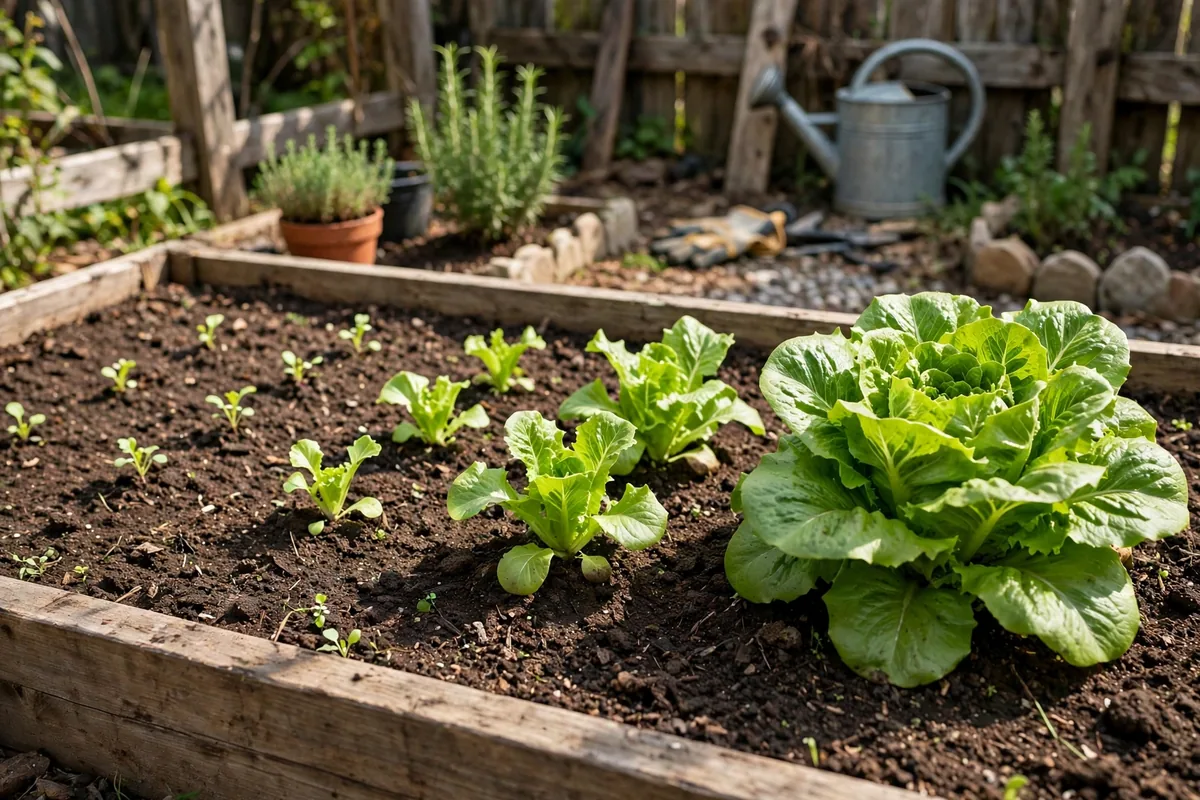
Every gardener knows the glut-and-famine trap. You sow one generous row of lettuce in April, and for one glorious week in June you have forty lettuces — more salad than a family can eat — and then, for the rest of the summer, none. Radishes do the same trick faster: a whole row ready in the same few days, turning woody while you work through them. The cure is not a bigger bed or a stronger will; it is smaller sowings, made on a schedule. Sow a short row, then another short row every 10 to 14 days, and each one matures in turn, so the harvest arrives as a steady flow instead of a flood. The only hard part is keeping the dates straight — which sowing is due, and when to stop so the last row still finishes before frost. That is exactly what our Succession Sowing Calculator — your dated sowing schedule works out for you. This guide shows how the calculator works, the real interval it uses for each crop, and two complete seasons worked through date by date, so you can check its schedule against your own calendar before you trust it with yours.
The short answer, on one card
- The idea: sow the same crop little and often — a short row every 7 to 21 days — so harvests follow each other instead of landing all at once
- The calculator's presets: radish and spinach every 10 days, most crops every 14 days, carrots every 21 days — all editable, from 3 to 60 days
- The schedule: sowings fall on your first date, then every interval days, up to and including your last date — both dates count
- The last sowing is worked back from fall frost: frost date minus the crop's longest days-to-harvest, so the final row still has time to finish
- Each sowing shows its harvest window, and the finished schedule prints for the shed wall or downloads as a calendar (.ics) file with a reminder on each sowing day
Step 1 — Pick the crop, and the interval fills itself in
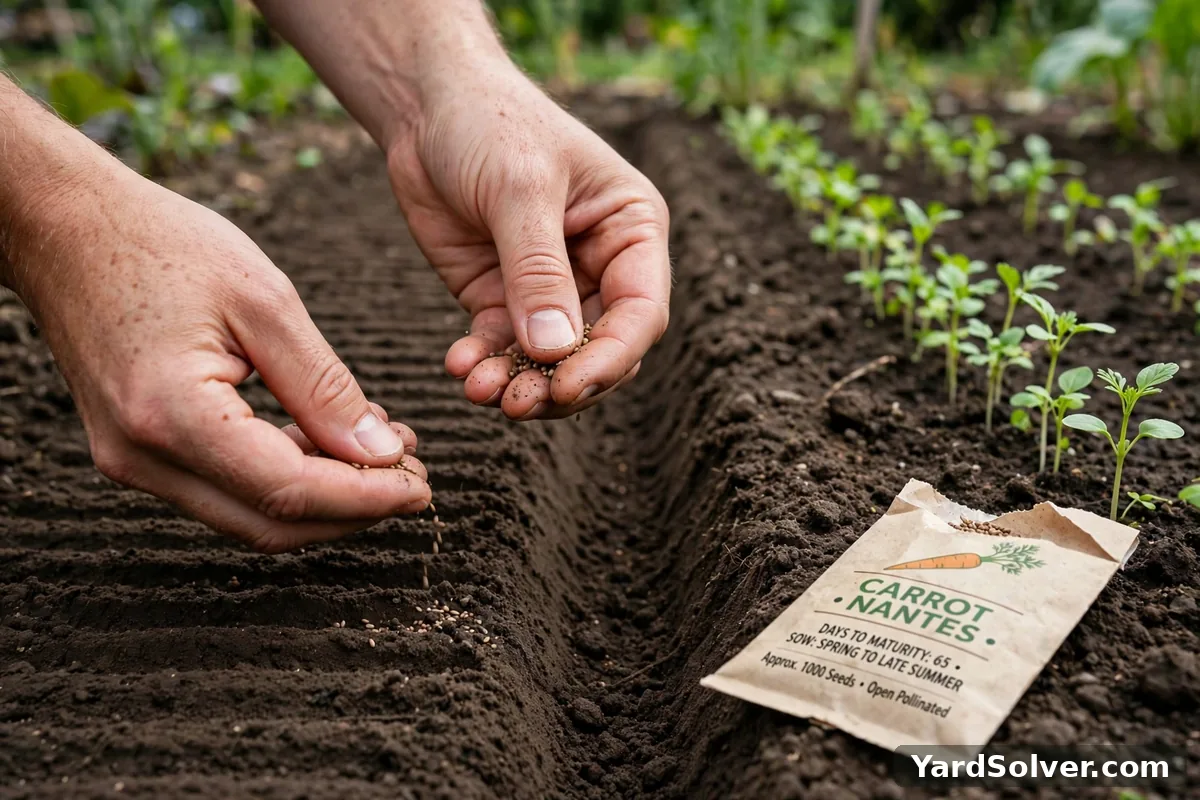
Open the calculator and pick your crop first. The moment you do, the days between sowings box fills in with that crop's usual spacing — the researched default gardeners actually use for it, not a one-size guess. Fast, bolt-prone crops get short intervals because each sowing is only good for a brief picking window; slower crops get longer ones because a carrot row feeds you for weeks. The full preset list, exactly as the tool holds it, is in the table below — this is the asset worth screenshotting, because it answers the question every succession chart is really about: how often do I sow this crop? Two things to notice. First, the preset is a starting point, not a rule: you can type any interval from 3 to 60 days, and a small household that eats less salad may honestly prefer lettuce every 21 days. Second, the calculator also shows the crop's days-to-harvest under the form — that number does double duty, setting both the harvest windows in your schedule and, in Step 2, your last sowing date.
| Crop | Calculator preset | Usual range |
|---|---|---|
| Radish | Every 10 days | 7–10 days |
| Spinach | Every 10 days | About 10 days |
| Lettuce | Every 14 days | 10–14 days |
| Bush beans | Every 14 days | 10–14 days |
| Peas | Every 14 days | 10–14 days |
| Beets | Every 14 days | 10–14 days |
| Turnip | Every 14 days | 10–14 days |
| Arugula | Every 14 days | 7–14 days |
| Cilantro | Every 14 days | 14 days |
| Kale | Every 14 days | 14 days |
| Carrot | Every 21 days | 14–21 days |
Read the table the way the calculator thinks: the interval is matched to how long one sowing keeps picking. Radishes are ready 25 to 35 days after sowing and go woody soon after, so a fresh row every 10 days keeps a new batch arriving just as the last one finishes. Carrots take 60 to 80 days and stand in the ground happily for weeks, so every 21 days is plenty. If your interval is longer than one sowing's picking span, a gap opens in the harvest — that gap, not effort, is what most first succession plans get wrong.
Step 2 — Set the first date, and let frost set the last one
Next, the two dates. The first sowing date is yours to choose — the day you want to start, usually as soon as the soil can be worked for cool-season crops, or after your last spring frost for tender ones. The last sowing date is where gardeners go wrong, because the natural instinct is optimism: keep sowing while the weather feels warm. The honest method works the other way — backwards from frost, not forwards from hope. Your last sowing must leave the crop its full growing time before the average first fall frost arrives, so: last sowing = frost date minus the crop's longest days-to-harvest. The calculator does this subtraction for you. Type your average first fall frost date into the optional box, press Set my last sowing from my fall frost, and the last date fills in. For lettuce, with its 30 to 55 days to harvest, an October 15 frost gives a last sowing of August 21 — 55 days earlier. Sow lettuce on August 25 instead and you are betting the whole row on a mild fall. You can still type any last date by hand if you garden under cover or in a mild climate; the frost button is a guardrail, not a lock.
Step 3 — Read the schedule: two seasons, worked in full
The maths is plain enough to check on a calendar, and you should: sowings fall on the first date, then every interval days after that, for as long as the date lands on or before your last date — both dates counting. Here is the calculator's own example first. Radishes from May 1 to June 15, every 10 days: May 1, then May 11, May 21, May 31, June 10 — and the next would be June 20, past the last date, so the schedule stops at 5 sowings. Under each date the calculator adds the harvest window from the crop's Plant Library page: radish runs 25 to 35 days, so the first row is ready from about May 26 to June 5, and the last from about July 5 to July 15. Five small rows, six weeks of fresh radishes, one packet — instead of one overwhelming week.
Now a full lettuce season, built the way Step 2 describes. First sowing April 15, interval 14 days, average first fall frost October 15, so the frost button sets the last sowing to August 21. Stepping 14 days at a time from April 15 gives 10 sowings: April 15, April 29, May 13, May 27, June 10, June 24, July 8, July 22, August 5 and August 19 — the next, September 2, falls after the last date and is correctly left off. The first sowing's harvest window opens about May 15 (30 days on) and the last sowing, made August 19, is ready from about September 18 to October 13 — finishing, as designed, just before the October 15 frost. One honest caution the schedule itself cannot give you: lettuce sown into real midsummer heat can bolt — run to seed — before it hearts up. Many gardeners pause the June and July sowings, or sow them in light shade with a heat-tolerant variety, and let the spring and late-summer rows carry the season. The dates are the skeleton; the weather still gets a vote. The thinking behind which crops to run this way, and how succession differs from simply planting a second crop after the first, is covered in Succession Planting: a steady harvest from the same bed.
Step 4 — Sow less than you think, and let failures fail small
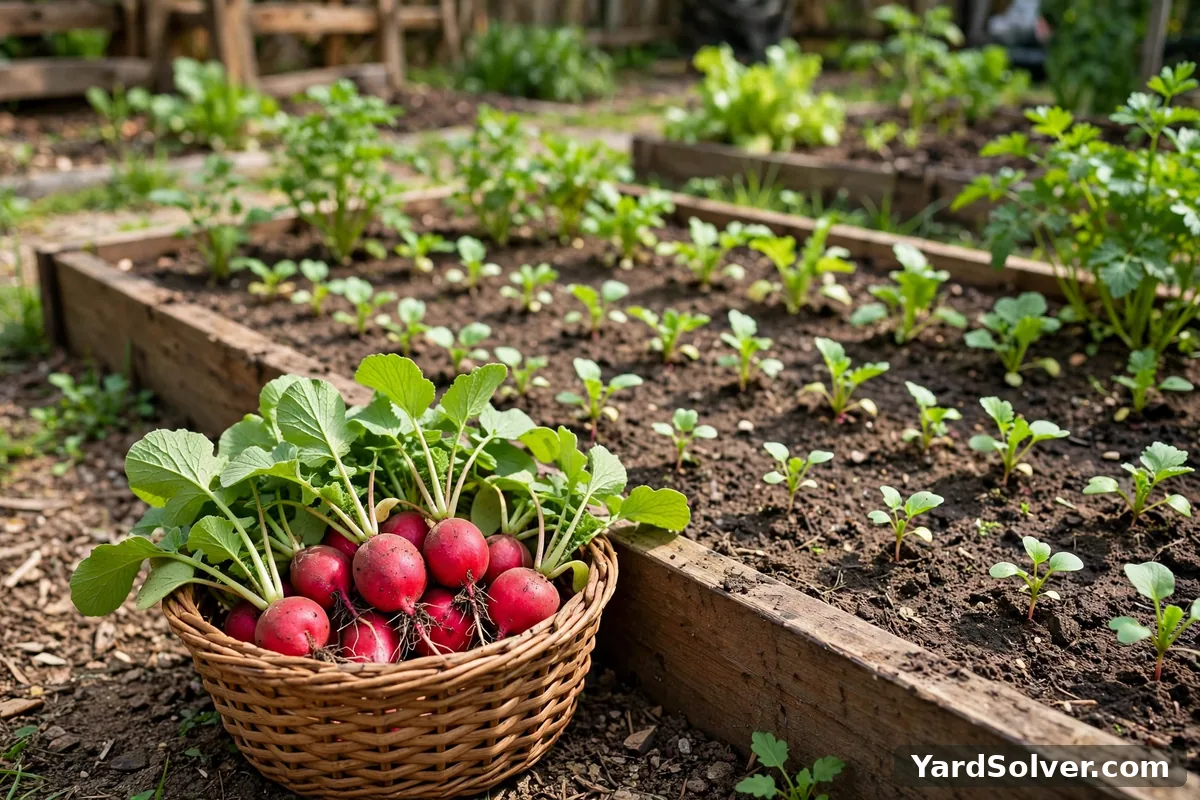
The most common beginner mistake is treating each succession sowing like a normal sowing — a full packet, a long row — which rebuilds the glut in instalments. Resist it. Each sowing only has to feed you until the next one is ready, so sow what your household eats in one interval: a short row, often just a metre or two for salads and roots, a pinch of seed rather than a palmful. The bed holds every stage at once — seedlings, half-grown plants and the row being picked — so small sowings are also what make the space work. Succession also changes what a failure costs. In a one-big-sowing garden, a row lost to slugs, a dry week or a bad packet is the crop gone for the year. In a succession garden, a failed sowing is a small hole: the sowing before it is still picking, the sowing after it is already in the ground and coming, and you can slip an extra short row in at the next date if the gap bothers you. Label every row with its sowing date as you go — in three weeks, two rows of lettuce 14 days apart look deceptively alike, and the label is what tells you which one to pick from and which one to leave.
Step 5 — Warm-season and cool-season crops stop at different times
One schedule per crop matters because crops run on different clocks at both ends of the season. Cool-season crops — lettuce, spinach, peas, radish, arugula, cilantro — start early, often before the last spring frost, sulk or bolt in midsummer heat, then come back for a fall run; their last sowings are set by counting back from fall frost, exactly as Step 2 does, and crops like spinach and kale will shrug off the first light frosts when they arrive. Warm-season crops — bush beans above all in the calculator's list — cannot start until the soil is warm and frost is past, grow happily through the heat that ruins lettuce, and are cut down by the very first frost, so their last sowing needs the full days-to-harvest clear before that date with no shrug factor at all. And some crops are not succession crops in the first place: tomatoes, peppers and winter squash are planted once and produce for months, so the calculator does not offer them. Run each crop on its own schedule — beans starting later and stopping harder, lettuce starting earlier and finishing softer — rather than forcing one calendar on the whole bed.
What the calculator can't do
Honesty about the edges, so the schedule earns your trust. The calculator works in averages: days-to-harvest comes from the Plant Library and assumes a reasonable season, so a cold spring slides every harvest window later and a hot spell can bolt a lettuce sowing the arithmetic counted as safe. It does not know your soil, your variety — a 30-day baby-leaf lettuce and a 55-day heading lettuce share one preset — or your household's appetite, which is the real test of how much to sow each time. Its frost maths uses your average first frost; an early frost can still catch the last sowing, which is why the final row is a bonus, never the row you are counting on. And it cannot make you sow: the schedule only works if the dates reach you, which is what the printout and the calendar reminders are for. What it does guarantee is the date arithmetic, checked above: pick the crop, set the first date honestly, let frost set the last, and the sowings in between cannot drift.
Keep going
Build your own dates with the Succession Sowing Calculator, read the method behind it in Succession Planting, and check each crop's spacing and depth on its Plant Library page, starting with Lettuce.
Laying the whole season out — sowings, transplanting and bed work together? The Garden Planner puts every crop's dates into one calendar you can follow week by week.
Questions people ask
What is succession sowing?
Sowing the same crop little and often — a short row every week or two instead of one big row all at once. Each sowing matures in turn, so the harvest keeps coming in small, usable amounts instead of arriving in one glut and then stopping. It suits fast crops you eat fresh, like radish, lettuce and bush beans.
How do I know my last sowing date?
Work back from your average first fall frost: last sowing = frost date minus the crop's longest days-to-harvest, so the final sowing still has time to finish. In the calculator, type your frost date and press the button and it sets the last date for you — for lettuce (up to 55 days) an October 15 frost gives a last sowing of August 21.
Which crops suit succession sowing best?
Fast, small or cut-and-come-again crops: radish every 10 days, lettuce, spinach, bush beans, peas, beets, turnips, kale, cilantro and arugula every 14 days, and carrots every 21 days in the calculator's presets. Slow, one-harvest crops like tomatoes, peppers and winter squash are planted once — succession does not apply to them.
What if I miss a sowing date?
Sow as soon as you notice — a few days late barely matters, because the next sowing in the schedule is still coming and the harvest windows overlap. Do not double up to catch up; just rejoin the schedule at the next date, or shift the remaining dates by the same few days.
How much should I sow each time?
Less than you think: one short row — a metre or two for salads and roots — is plenty for most households, because the next row is coming in 10 to 14 days. Sow what you can eat in the gap between harvests, not what fills the bed; the bed space is shared by every stage at once.
Can I change the interval between sowings?
Yes. The interval is prefilled with the usual spacing for the crop you pick, and you can type any interval from 3 to 60 days. Shorter intervals mean smaller, more frequent harvests; longer intervals mean bigger batches with gaps between them.
The succession calculator turns appetite into dates — how much, how often, until when
Succession sowing fails in the head before it fails in the ground: the gardener knows lettuce should be sown 'little and often' but not how little, how often, or when to stop — so the calculator works backwards from the plate. Start with the household's real weekly consumption of the crop, translate it into plants (allowing honestly for losses), set the sowing interval from the crop's speed — fast salads weekly or fortnightly, beans and peas in blocks a few weeks apart — and count the batches forward to the last useful sowing date, which the first frost and the crop's days-to-maturity decide together.
That last date is the one home gardeners most often miss: a sowing made too late does not fail dramatically, it simply never matures, occupying a bed and a conscience for weeks. The calculator's dates also expose the midsummer trap — sowings of cool-season crops into hot soil that will not germinate or that bolt on sight — and answer it with the shade and variety choices in the succession guide. Kept as a one-page plan and ticked off as each batch goes in, the arithmetic becomes the easiest part of the system; the system itself remains a ten-minute habit repeated all season.
Sources
Key facts on this page cross-checked against Succession planting — Wikipedia — background on succession planting intervals and Sowing — Wikipedia — background on sowing practice and timing.
Related page
Read next: Succession Planting Guide: Sow Little and Often.
Comments & ratings
No comments yet.
Be the first to share your experience.