
Guides · Seeds & starting · Published November 22, 2026 · By Faizan Ahmad
When to Transplant Seedlings Outside: Safe Dates and Hardening Off
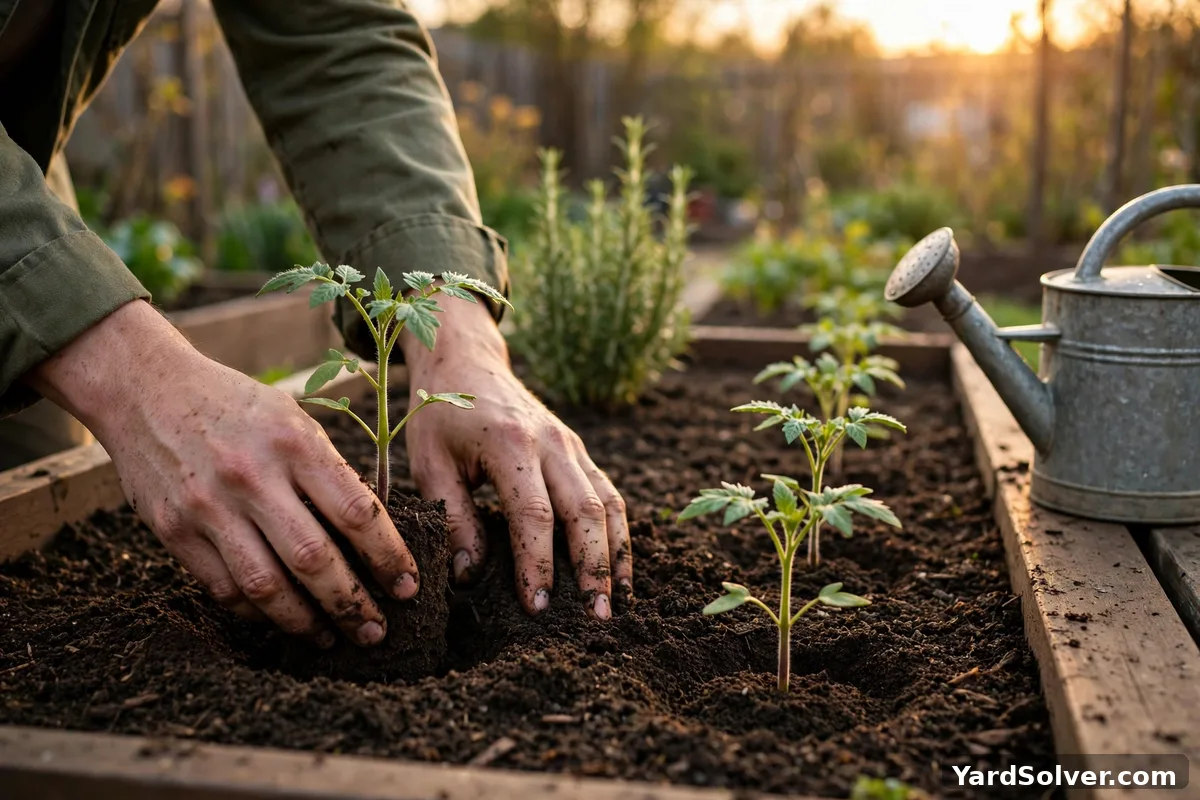
Seedlings go outside on a date counted from your last frost — plus or minus the crop’s own offset — and they survive the move because the week before it was spent hardening off. Our Transplant Date Calculator produces all three dates per crop from the plant library. This guide explains the counting, the difference between the standard and safer dates, the seedling ages that handle moving best, and the hardening-off week itself.
The short answer, on one card
- The count: transplant date = last frost + the crop’s offset (tomatoes +2 weeks, peppers +3, brassicas before frost is even past)
- Hardening off starts 7 days before the move — shade and an hour first, building to full days
- Tender crops get a safer date, 2 weeks later — the average frost date is beaten in half of all years
- Seedling age matters: tomatoes move best at ~8–9 weeks from sowing, peppers at ~12–13
- Some crops never transplant: carrots, beans and peas are direct-sown — their date is a sowing date
Step 1 — Count from the last frost, by hardiness
The last frost date is the hinge of the spring calendar because crops hang on it at different distances. Hardy crops — cabbage, broccoli, onions, lettuce — tolerate frost and transplant before the average last frost has even arrived. Half-hardy crops move around it. Tender crops — tomatoes, peppers, cucumbers, squash — are killed by a single frost and hang weeks after it: tomatoes at +2 weeks in the plant library’s timing, peppers at +3, because peppers stall in cold soil even when no frost falls.
This is why a single "planting day" for the whole garden is a fiction that costs seedlings. The calendar that works is a procession spread over six or eight weeks, each crop moving on its own date — the procession the Planting Calendar lays out in full, and the calculator extracts for one crop at a time.
Step 2 — Worked dates from one frost date
Take one average last frost — April 14, a typical Zone 6 spring — and run the library’s offsets across a bench of crops. The spread is the season’s opening shape.
| Crop | Transplant date | Harden off from | Seedling age at move |
|---|---|---|---|
| Cabbage | March 31 (2 weeks before frost) | March 24 | ~5 weeks |
| Tomatoes | April 28 | April 21 | ~9 weeks |
| Peppers | May 5 | April 28 | ~13 weeks |
| Tomatoes — safer date | May 12 | May 5 | ~11 weeks |
| Carrots | No transplant date | — | Direct sow March 24 |
Your own frost date drives your own table in the Transplant Date Calculator — dates for your crops. The sowing dates that produce seedlings of these ages come from the Seed Starting Calculator.
Step 3 — The hardening-off week
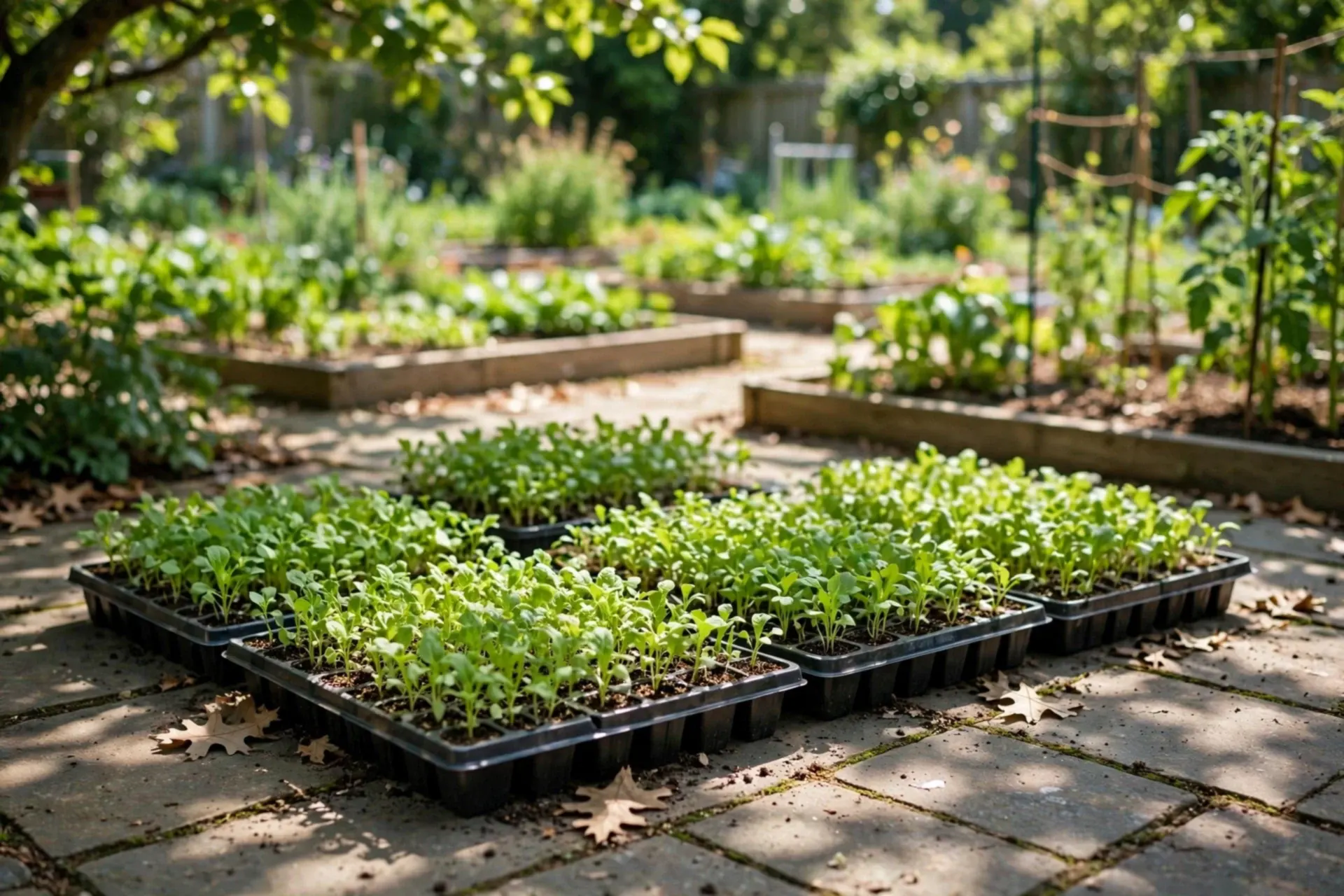
A seedling raised indoors has lived in a world without wind, ultraviolet or temperature swings, and its leaves are built accordingly — thin cuticle, soft tissue. Put it straight into a May afternoon and it scorches and wilts in hours, not from frost but from exposure. Hardening off is the graduated introduction: day one in shade for an hour or two, then morning sun, then full days, then a night outside, across seven to ten days. The plant responds by thickening its cuticle, lignifying its stem and adjusting its water economy — visible as stockier, darker, tougher growth.
The full hour-by-hour routine, including the rescue protocol for a forgotten tray, is in How to Harden Off Seedlings. The point for the calendar is that hardening off is dated, like everything else: it starts 7 days before the transplant date, and a transplant date chosen without it is a plan with a hole in the middle.
Step 4 — The move itself, and when to break the plan
Transplant in the late afternoon or on a cloudy day, into soil watered the day before, at the same depth the seedling grew — tomatoes alone among common vegetables are planted deeper, rooting along the buried stem. Water in immediately, and keep fleece or cloches within reach for the first week: the plan’s dates are averages, and the forecast outranks them. A hard frost warning inside the first nights means cover the hardy, and for tender crops not yet moved, simply wait — the safer date exists precisely for springs that turn.
Age is the last check. A seedling near the age in the table moves willingly; a much older, root-bound one should be potted on and still moved near schedule rather than held longer, because a checked plant in the ground recovers faster than a strangled one on the windowsill. The calendar serves the plants, not the other way round — but it serves them best when its dates were computed before impatience got a vote.
Questions people ask
What exactly is the 'safer date'?
Two weeks after the standard transplant date, offered for tender crops. The average last frost is a statistical middle — a later frost arrives in about half of years — so the safer date trades a little season for a large reduction in the chance of losing plants in their first nights.
My seedlings are ready but the date is a week away — move them early?
If the forecast is mild and stable, hardy and half-hardy crops can move a few days early under fleece. Tender crops should not: one clear, still night can drop a frost into a warm week, and the plant cannot be un-frosted. Pot them on and wait.
Why do peppers transplant later than tomatoes?
Peppers are the more tropical crop: below about 50°F (10°C) soil they essentially stop growing and can be set back for weeks, even without frost. Their extra week in the library’s timing is about soil warmth, not just frost risk.
Can I skip hardening off if the weather is cloudy?
Cloud cover removes the sun-scorch risk but not the wind and temperature shock — and the first sunny day then does the damage anyway. A shortened 3–4 day version in a genuinely dull, calm week is a reasonable compromise; zero days is the gamble that fills compost bins with seedlings.
How deep should transplants be set?
At the depth they grew, as a rule — burying a stem invites rot. The famous exception is tomatoes, which root along buried stem and are planted deep on purpose. Leggy brassicas can also be set a little deeper to steady them.
Sources
Key facts on this page cross-checked against Transplanting — Wikipedia — background on transplanting practice and hardening off Hardening off — Wikipedia — background on the hardening-off process in plants.
Comments & ratings
No comments yet.
Be the first to share your experience.