
Guides · Harvest & kitchen · Published November 22, 2026 · By Faizan Ahmad
When Will My Vegetables Be Ready to Harvest? Days to Maturity, Explained
Your vegetables will be ready to harvest in a window you can compute today: the planting date plus the crop’s days to maturity — counted from the right anchor, because tomatoes count from the day they are transplanted and carrots from the day they are sown. Our Harvest Date Calculator holds each crop’s range and anchor from the plant library. This guide explains the counting, works real crops, and covers the ripeness signs that settle the exact day.
The short answer, on one card
- The formula: harvest window = planting date + days to maturity (a range, never one day)
- The anchor matters: transplanted crops count from transplant day; direct-sown crops from sowing day
- Tomatoes: 60–85 days from transplant · Carrots: 60–80 days from sowing
- Weather bends the count: cool, shaded or dry seasons stretch the window later
- The plant has the final say: size, colour and feel decide the actual morning you pick
Step 1 — Days to maturity is a range with an anchor

Every packet prints a number like “70 days”, and two gardeners can count it honestly and land three weeks apart — because one counted from sowing and the other from transplanting. The convention the plant library follows, and the calculator applies per crop: crops normally transplanted (tomatoes, peppers, brassicas, onions from sets) count from the day the plant goes outside; crops direct-sown (carrots, beans, corn, peas) count from the day the seed goes in. A tomato’s indoor weeks are real growth, but they are not in its number.
And the number is a range wearing a point estimate’s clothes. Variety, soil warmth, sun hours and water all move it, so the library stores a span — tomatoes 60–85 days — and the calculator returns a window. Treat any tool that names a single harvest day with the suspicion it has earned.
Step 2 — Worked windows from one planting day
Take a single date — May 6, a safer-date transplanting and sowing day in a Zone 6 spring — and run the library’s ranges across a typical bed. The spread is the season’s shape: radishes before the tomatoes have even settled, carrots closing the summer.
| Crop | Anchor | Days | First-harvest window |
|---|---|---|---|
| Radish | Sowing | 25–35 | May 31 – June 10 |
| Lettuce | Planting out | 30–55 | June 5 – June 30 |
| Beans | Sowing | 50–60 | June 25 – July 5 |
| Tomatoes | Transplant | 60–85 | July 5 – July 30 |
| Carrots | Sowing | 60–80 | July 5 – July 25 |
| Peppers | Transplant | 60–90 | July 5 – August 4 |
| Sweet corn | Sowing | 60–90 | July 5 – August 4 |
Your own dates come from the Harvest Date Calculator — windows from your planting date, which also takes custom packet numbers for varieties the library does not carry.
Step 3 — Reading ripeness: the signs no calendar gives
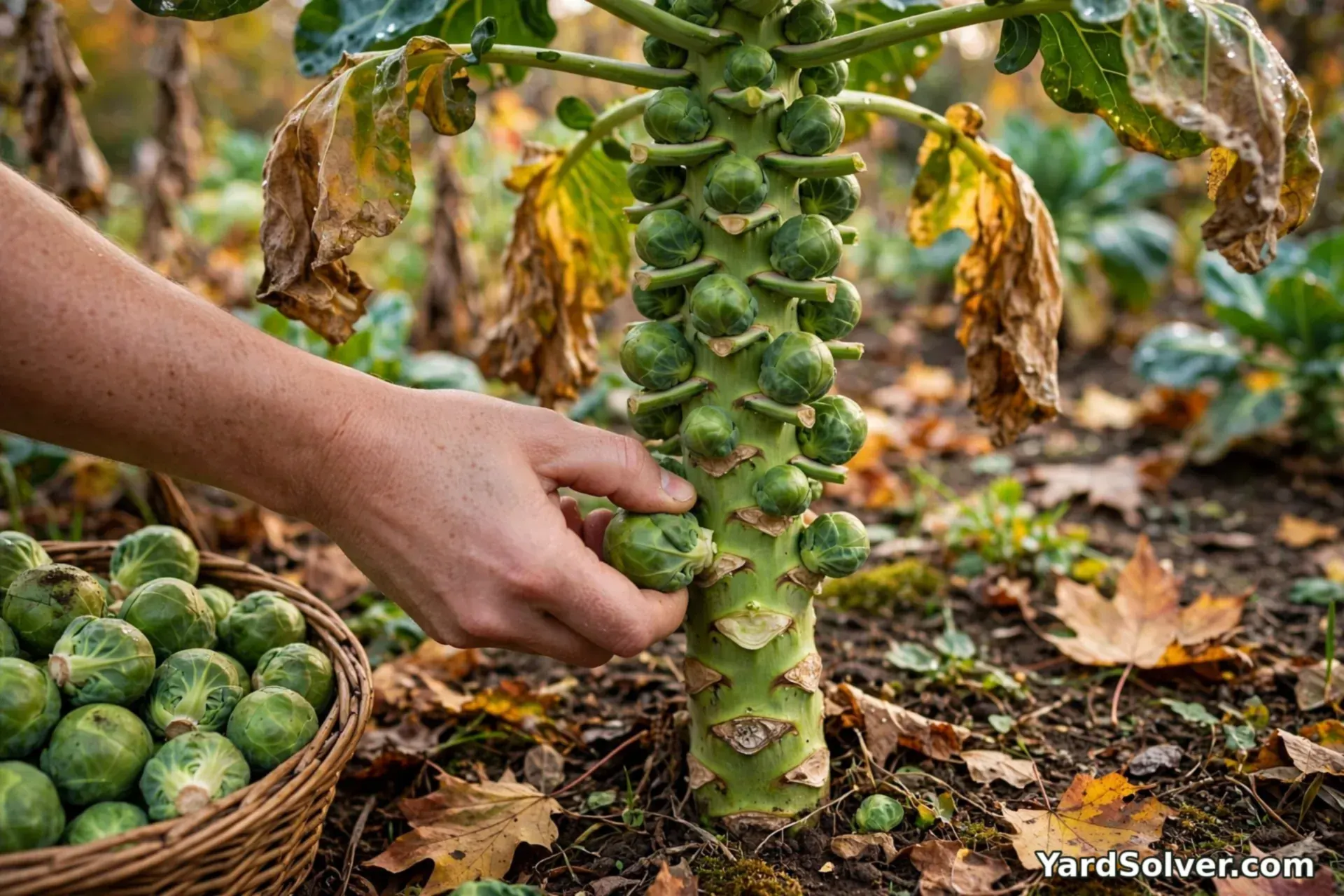
The window tells you when to start looking; the plant tells you when. Tomatoes pick at full colour with a slight give — or at breaker stage, half-coloured, to ripen indoors ahead of pests. Beans pick young and often, before the seeds bulge in the pod. Zucchini pick at 6–8 inches, daily in high summer, because the plant’s whole strategy is to make a marrow and stop. Carrots are judged by shoulder width at the soil line — pull one and let it testify for the row.
Sweet corn is read by its silk (brown and dry at the tip) and a thumbnail in a kernel: milky juice means ready, watery means wait, doughy means you are late. Peppers can be picked green at full size or left to colour — both are harvests; only the flavour changes. These signs are why the honest answer is a window: ripeness is an event in the plant, not on the calendar.
Step 4 — Bend the window on purpose
Once the counting is understood, it becomes a planning tool. Sow fast crops in succession — a row of beans or radishes every two weeks — and the windows tile into continuous harvest instead of one glut. Count backwards from a wanted date (a family visit, a preserving weekend) and the calculator’s arithmetic inverts: harvest date minus days to maturity is the sowing date, checked against the frost dates to confirm the season allows it.
Keep notes. The actual first-pick date for each crop, written beside the predicted window, is the data that sharpens next year’s garden beyond any library — your soil, your sun, your weather, in your numbers. Libraries, this one included, are where a garden starts; records are where it gets good.
Questions people ask
Why did my packet say 70 days but it took 90?
Almost always the anchor: packet days for transplanted crops count from transplanting, and a cool or shaded season stretches the rest. Count from the right day and judge by the plant, and the packet usually turns out honest.
Can I harvest earlier than the window?
For many crops, yes and better: beans, zucchini, cucumbers and greens are picked young on purpose. For ripening fruit — tomatoes for full flavour, peppers for colour, corn for sweetness — the window’s signs rule.
What does 'days to maturity' mean for potatoes?
It classes the variety (early, mid, late) rather than promising a date: earlies lift from about 10–12 weeks after planting once flowering passes and skins set. The library’s range for potatoes follows the same plant/sow anchoring as other crops.
Does succession sowing change the maths?
Each sowing gets its own window — that is the point. Stagger sowings by the interval you want between harvests, and check the last sowing’s window still lands before the first frost ends the crop.
My crop is in window but looks unripe — wait or pick?
Wait, and watch the signs. The window opens the inspection season; colour, size, firmness and (for corn) the kernel test close it. A week of patience inside the window is normal gardening, not a failed prediction.
Sources
Key facts on this page cross-checked against Vegetable — Wikipedia — background on vegetable crops and their cultivation Harvest — Wikipedia — background on harvest timing and methods.
Comments & ratings
No comments yet.
Be the first to share your experience.