
Guides · Plant problems · Published November 1, 2026 · By Faizan Ahmad
Why Are My Bean Leaves Turning Yellow?
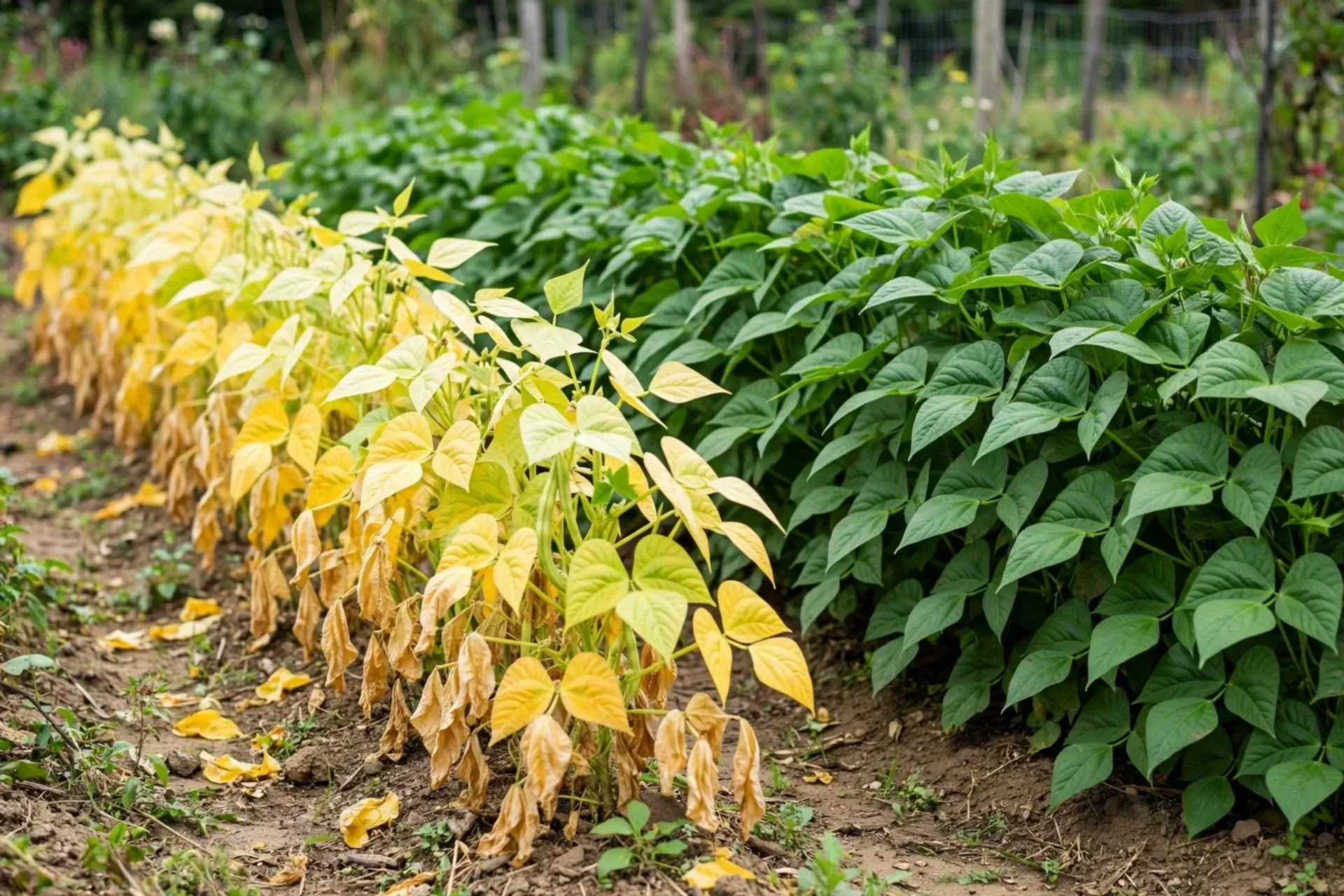
Beans are supposed to be the easy crop, so yellow leaves feel like a betrayal. The causes are few and each paints a recognizably different picture on the plant — where the yellow starts, and what pattern it makes, is the whole diagnosis. Confusing them wastes a season: feeding a virus does nothing, and watering a hungry plant harder makes things worse. Read the pattern first.
The pattern sort: where and how the yellow shows
- Oldest, lowest leaves yellow evenly first, whole plant pale and slow → hunger, usually nitrogen or general poor soil
- Yellow between the veins while veins stay green, often on older leaves → a mineral lockout (magnesium or iron), frequently a pH problem underneath
- Mottled light-and-dark green mosaic, leaves distorted and puckered → virus (bean common mosaic), spread by aphids — no cure
- Yellowing plus wilting, worst in wet weather or low spots → waterlogged roots and root rot
- Uniform yellowing of the whole plant late in the season → simple old age: the crop is finishing, and beans are not long-lived
Step 1 — Check water before food (the free test)
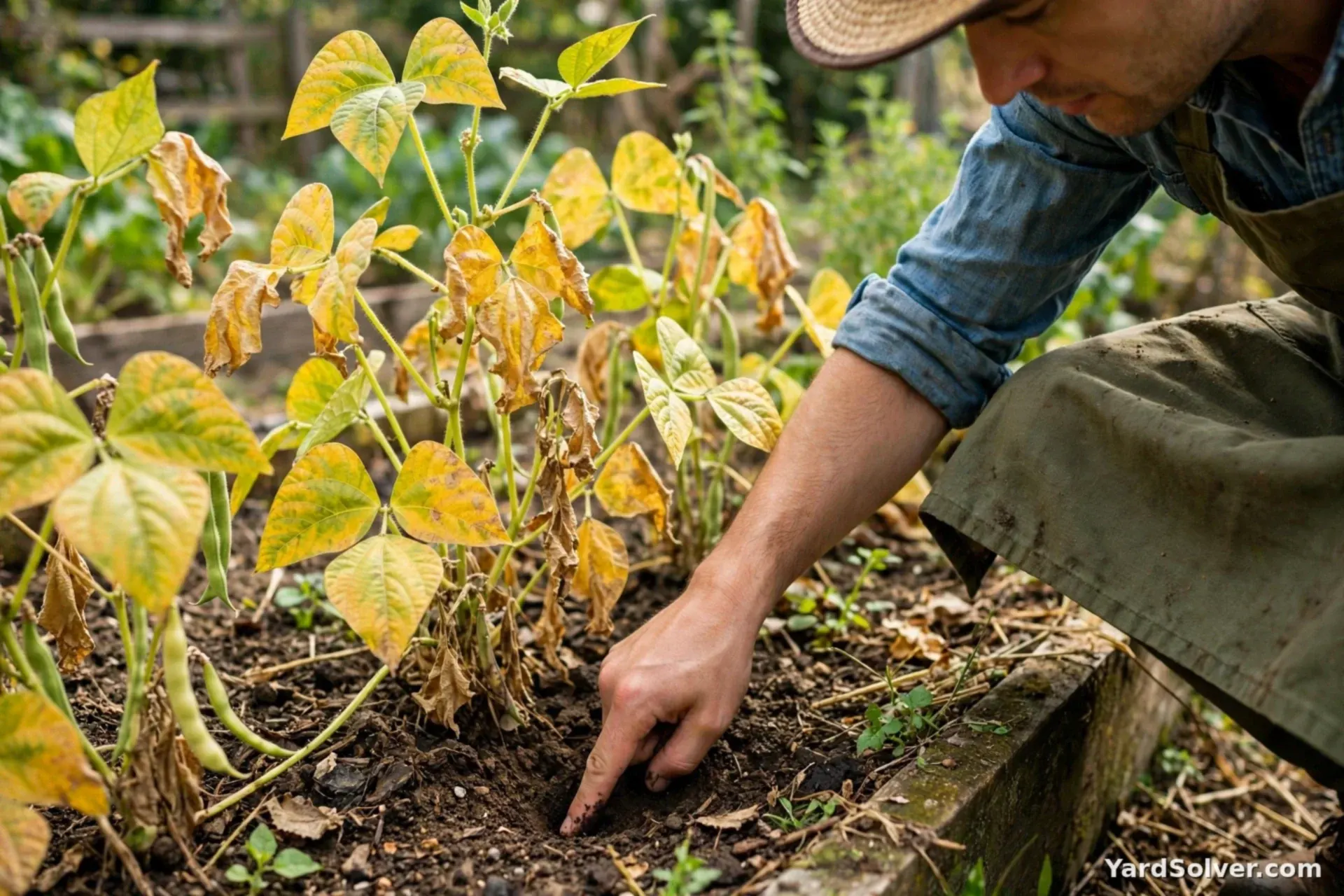
Push a finger into the soil: dry and dusty in a dry spell means water is the first medicine — deep watering, then mulch to hold it. Soggy and sour-smelling in a wet patch points the other way: roots are drowning, and the answer is drainage and patience, not feed. More bean yellowing is settled in this ten seconds than by any product.
Step 2 — Feed a hungry plant the bean way
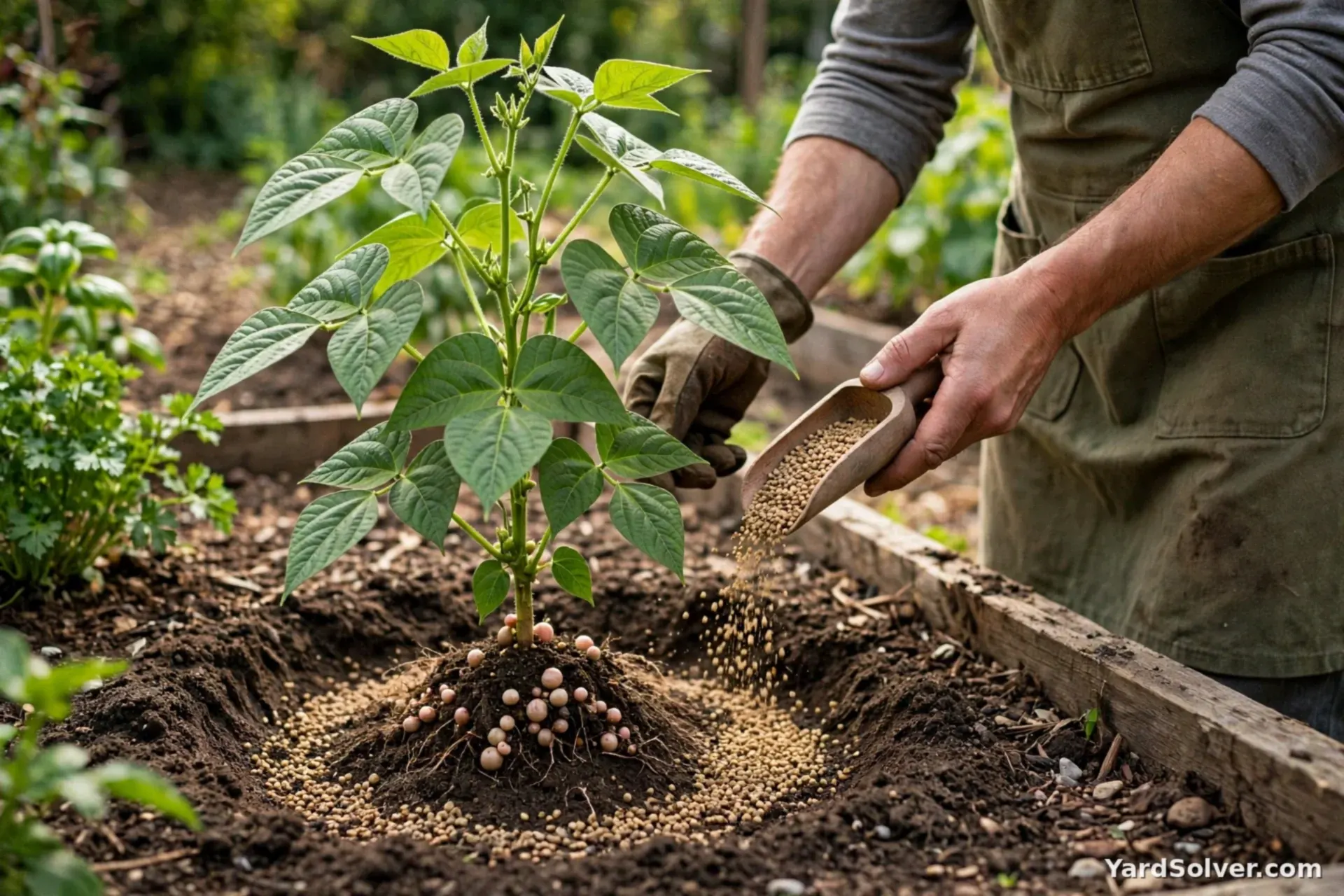
Beans fix some of their own nitrogen through root nodules, but in new, poor or very sandy soil they can still run hungry early on. Give a modest balanced feed at label rate — amounts by bed size from the Fertilizer Calculator — and resist the heavy nitrogen feeds used for leafy crops, which give you splendid leaves and disappointing pods. Yellow caused by hunger shows recovery in the new growth within a week or so; the old yellow leaves themselves will not re-green.
Step 3 — The vein pattern means check the soil, not the shelf
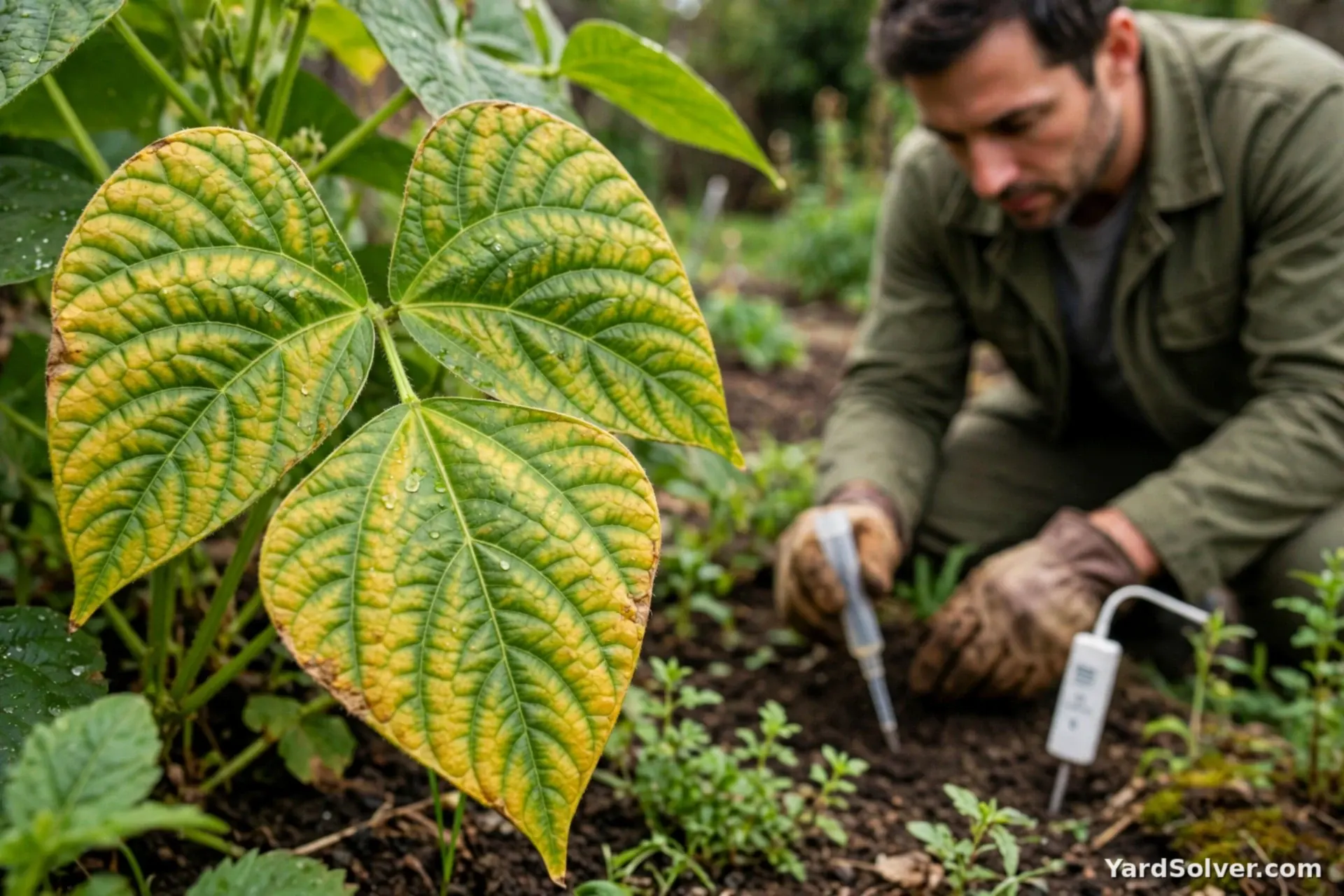
Yellowing between green veins is a mineral-access problem, and minerals get locked away chiefly by wrong pH. Before buying any tonic, run the test in How to Test Your Garden Soil and correct pH as the report directs. If the test shows a real magnesium shortage, that is when a magnesium feed is justified — targeted, measured, and confirmed, not folkloric.
Step 4 — Virus: remove, clean, and protect the rest
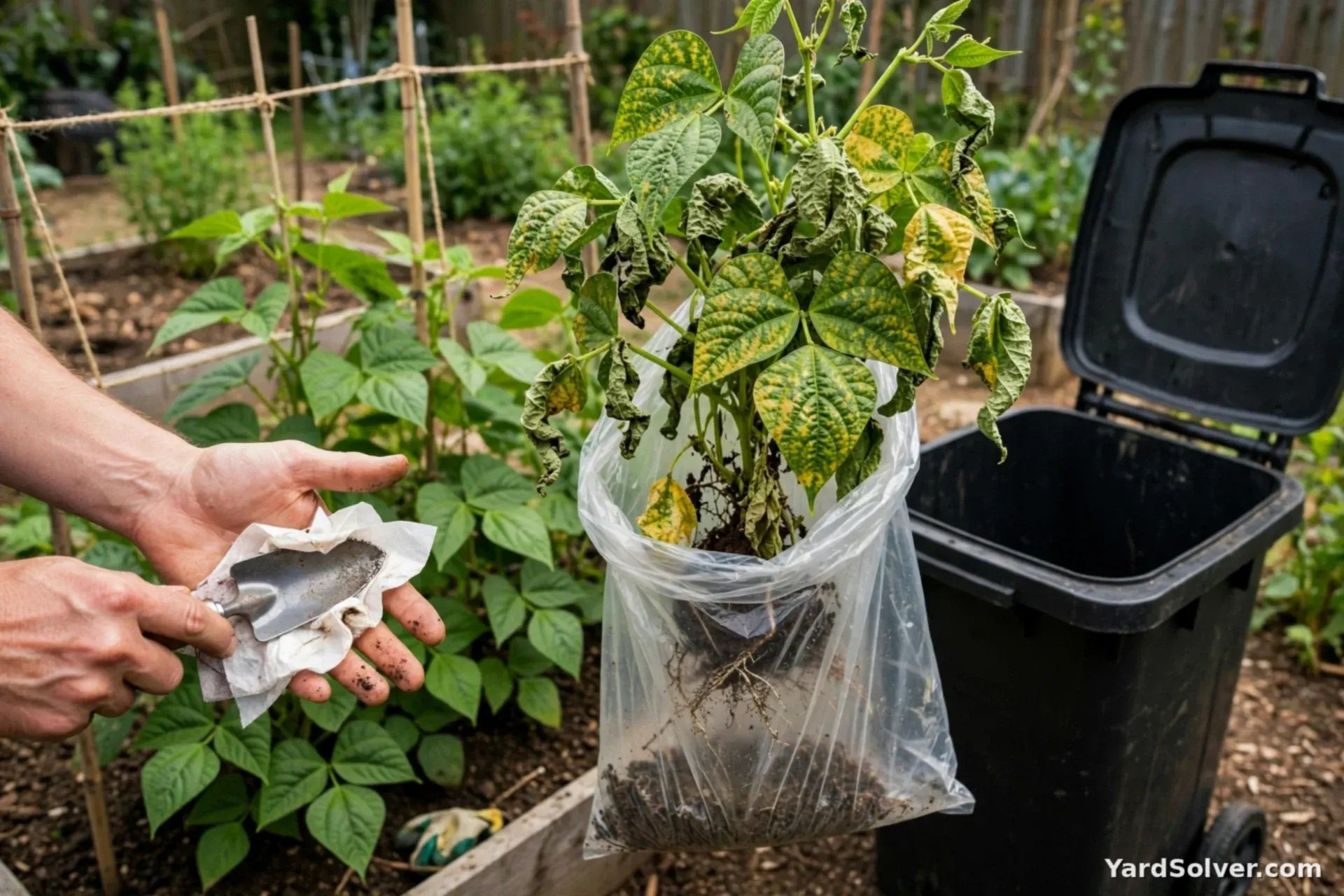
Mosaic-patterned, distorted plants cannot be cured and will infect neighbours via the aphids that feed on them. Pull those plants out promptly, bag and bin them (never compost), and wash hands and tools before touching healthy plants — the virus travels on sap. Then keep aphid numbers down on the remaining row with the water-jet routine from the aphid guide.
Step 5 — Set up next year's beans to skip all this
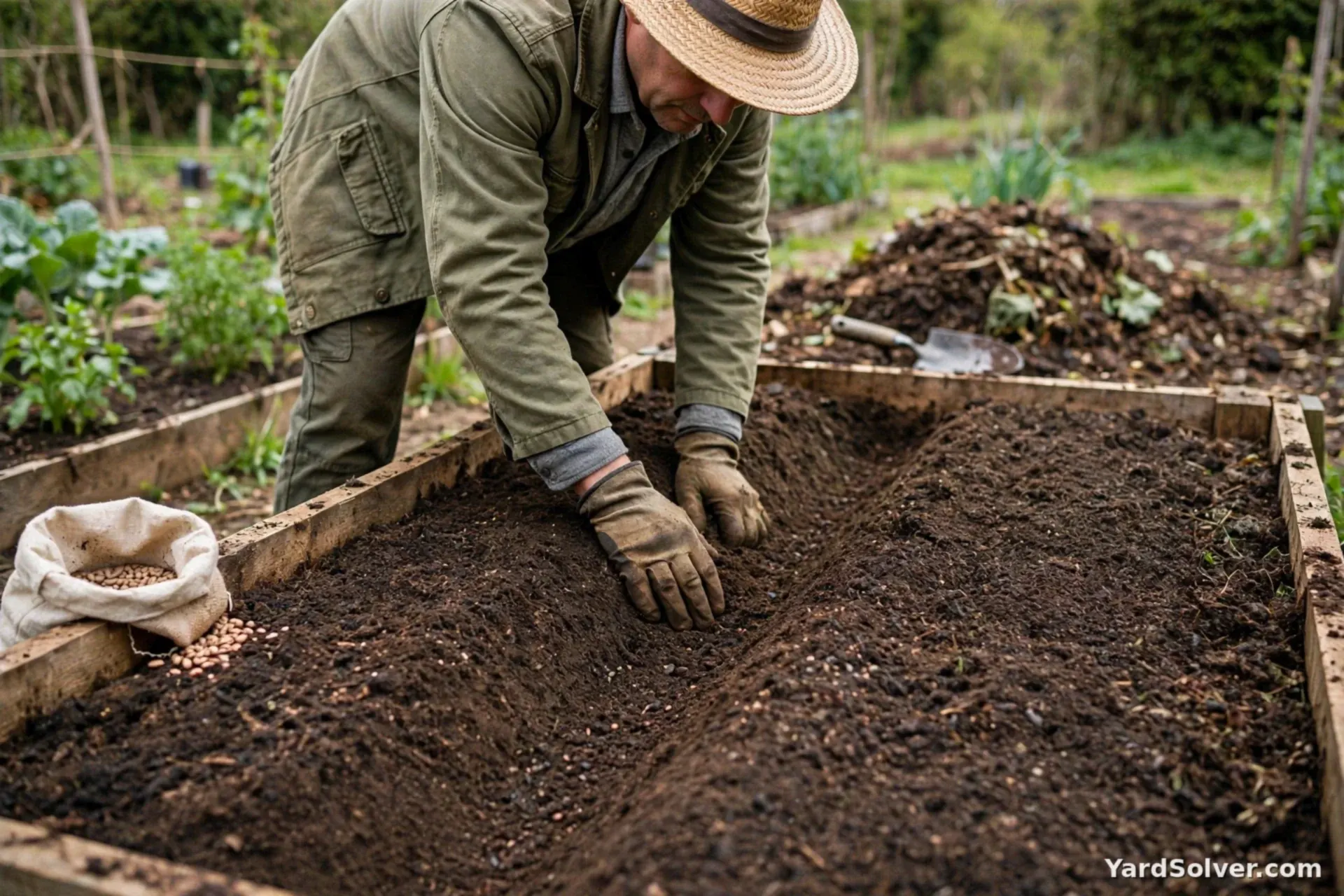
Rotate beans to a fresh bed (the pea-and-bean family should not follow itself), sow into soil that got compost in spring, and in brand-new beds use a pea-and-bean inoculant on the seed — it stocks the roots with the right nitrogen-fixing bacteria where the soil has never grown legumes. Keep the pattern sort in mind too: this same hunger-vs-mineral-vs-virus reading unlocks most yellow-leaf mysteries, including the tomato version in Why Are My Tomato Leaves Turning Yellow?
Keep going
The sister guide: Why Are My Tomato Leaves Turning Yellow? — the full method behind Step 3 is How to Test Your Garden Soil, and bean spacing and timing are in the Plant Library.
Questions people ask
Should I give yellow beans a big dose of nitrogen?
Usually no. Beans host nitrogen-fixing bacteria and need less nitrogen than other vegetables; a modest balanced feed is the right response to true hunger, and heavy nitrogen typically buys leaves at the expense of pods. If the pattern is mosaic or vein-yellowing, nitrogen is not the problem at all.
Is the yellowing contagious to my other vegetables?
Only the virus version spreads — bean common mosaic travels via aphids and on hands and tools, mainly within beans and peas. Hunger, mineral lockout and waterlogging are soil conditions, not infections; they will appear on neighbours only if the neighbours share the same soil problem.
Will the yellow leaves turn green again if I fix the cause?
Generally no — chlorotic leaf tissue does not recover its colour. Judge your fix by the new growth: if fresh leaves emerge green and growth resumes, you found the cause. The old yellow leaves finish their shortened shift and drop.
Yellow bean leaves are read from the bottom up — age, nitrogen and water sign differently
Beans yellow for reasons that announce themselves by pattern: the oldest, lowest leaves yellowing evenly as pods fill is usually the plant simply retiring its first foliage and moving nitrogen to the crop — a harvest sign, not a disease. Yellowing that starts low and climbs, on stunted plants in poor soil, is the nitrogen story with a legume's twist: beans fix their own nitrogen through root-nodule bacteria, but only once the nodules establish, and in new ground without the right bacteria, or in cold wet soil where nodulation stalls, a bean crop can starve in soil a fertilised crop would call adequate.
Water writes the other two signatures: waterlogged roots yellow the whole plant quickly and uniformly, because drowned roots cannot work at any nutrient level, while drought yellows from the leaf edges inward between waterings. Interveinal yellowing — green veins on yellow leaves — points to a mineral lockout, often in very alkaline soil, rather than a shortage in the soil itself. The diagnostic order in this guide is therefore pattern first, then soil moisture, then feed — because feeding a drowned plant and watering a hungry one are the two ways gardeners make yellow beans worse.
Sources
Key facts on this page cross-checked against Phaseolus vulgaris — Wikipedia — background on Phaseolus vulgaris — the common bean and Chlorosis — Wikipedia — background on chlorosis — yellowing from nutrient and root problems.
Related page
Read next: Fertilizer Numbers Explained: What NPK Means.
Comments & ratings
No comments yet.
Be the first to share your experience.