
Guides · Plant problems · Published November 1, 2026 · By Faizan Ahmad
Why Are My Tomato Leaves Turning Yellow?
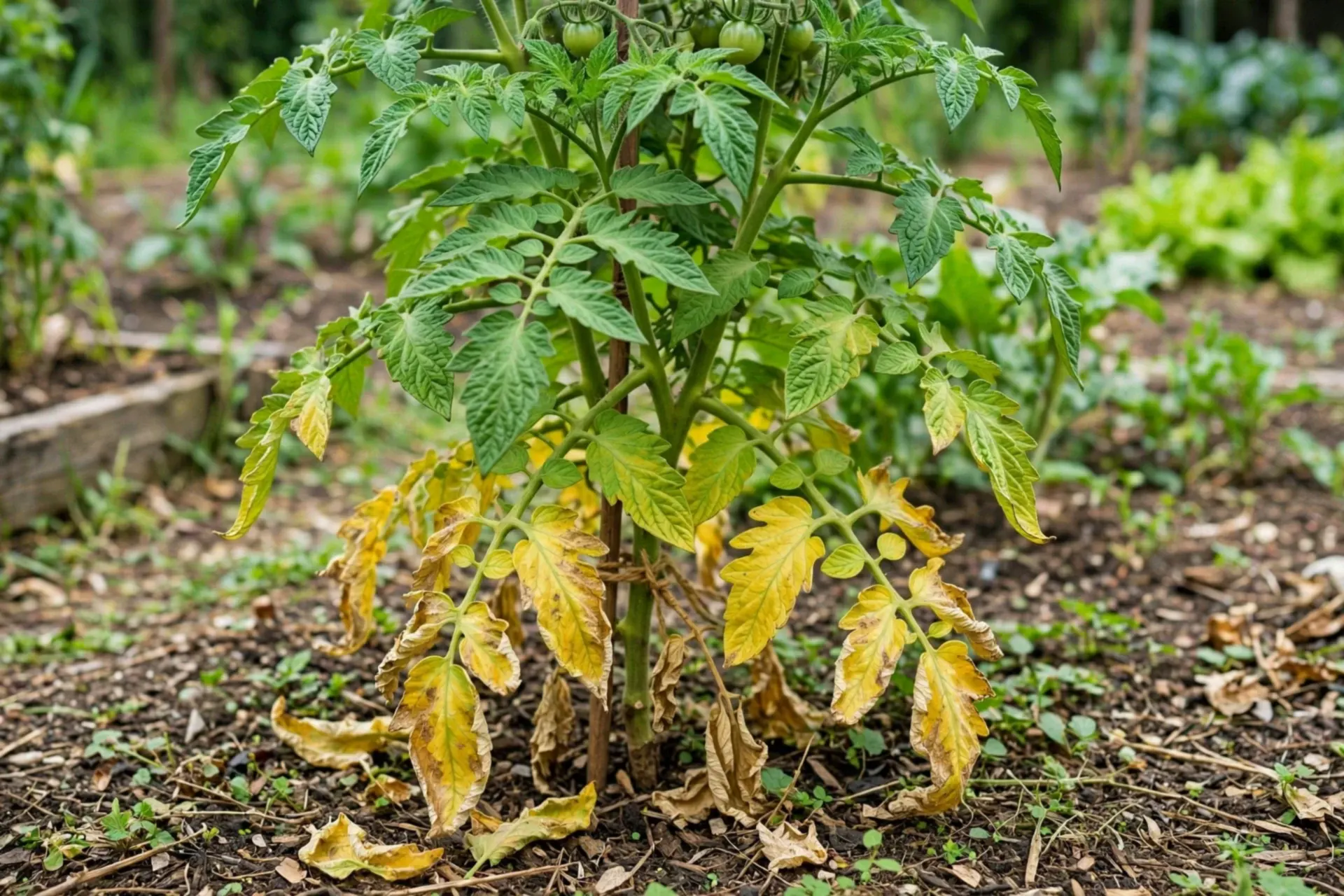
Yellow leaves on a tomato plant are a symptom, not a disease — at least six different problems produce them, and each has a different fix. The trick is that where the yellowing starts, and what it looks like, tells you which problem you have. Work through the patterns below before you feed, spray or give up on the plant.
Read the pattern first
- Oldest (lowest) leaves yellow evenly, plant otherwise growing: usually hunger — nitrogen running short — or simple age and shading of the bottom leaves
- Yellow patches with brown spots, starting low and climbing: a leaf disease such as early blight or septoria leaf spot, splashed up from the soil
- Yellowing between the veins, veins staying green: points to a nutrient uptake problem — magnesium or iron — often triggered by soil pH or cold, wet roots rather than true shortage
- Whole plant pale and stunted from early on: roots in trouble — soggy soil, a too-small pot, or cold soil locking nutrients away
- Yellowing plus wilting, even though the soil is wet: the serious one — a soil-borne wilt disease or root damage; see Step 5
Step 1 — Rule out water, the most common cause of all
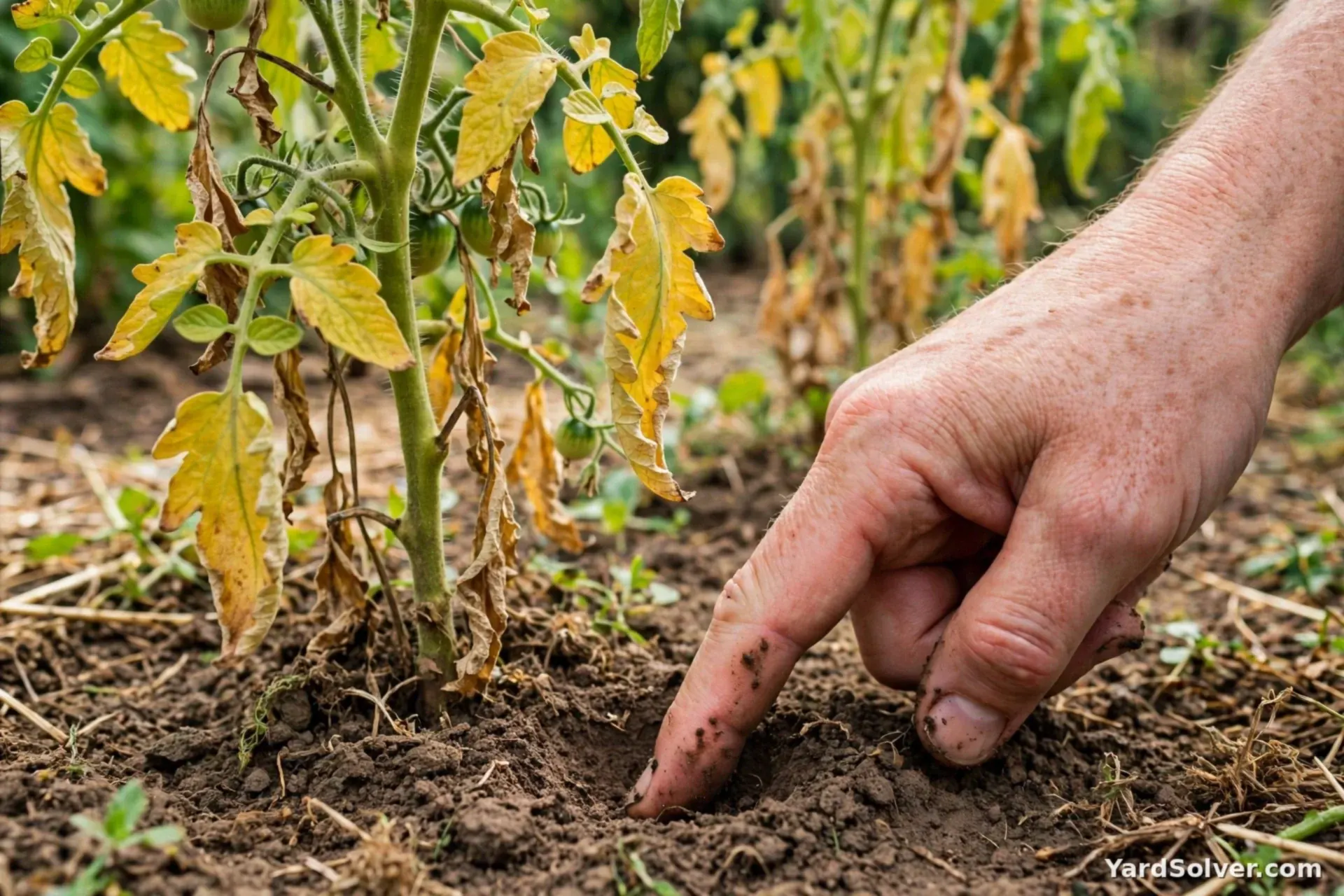
Both too much and too little water yellow tomato leaves, and overwatering is the sneakier of the two. Push a finger 2 inches into the soil: dust-dry means water deeply now; soggy a day after watering means drainage is the problem — ease off, and if the plant is in a pot, check the drainage holes are open. Tomatoes want deep, steady moisture, which is exactly what a 2–3 inch mulch layer protects: work out your bags with the Mulch Calculator.
Step 2 — Feed a hungry plant (and only a hungry one)
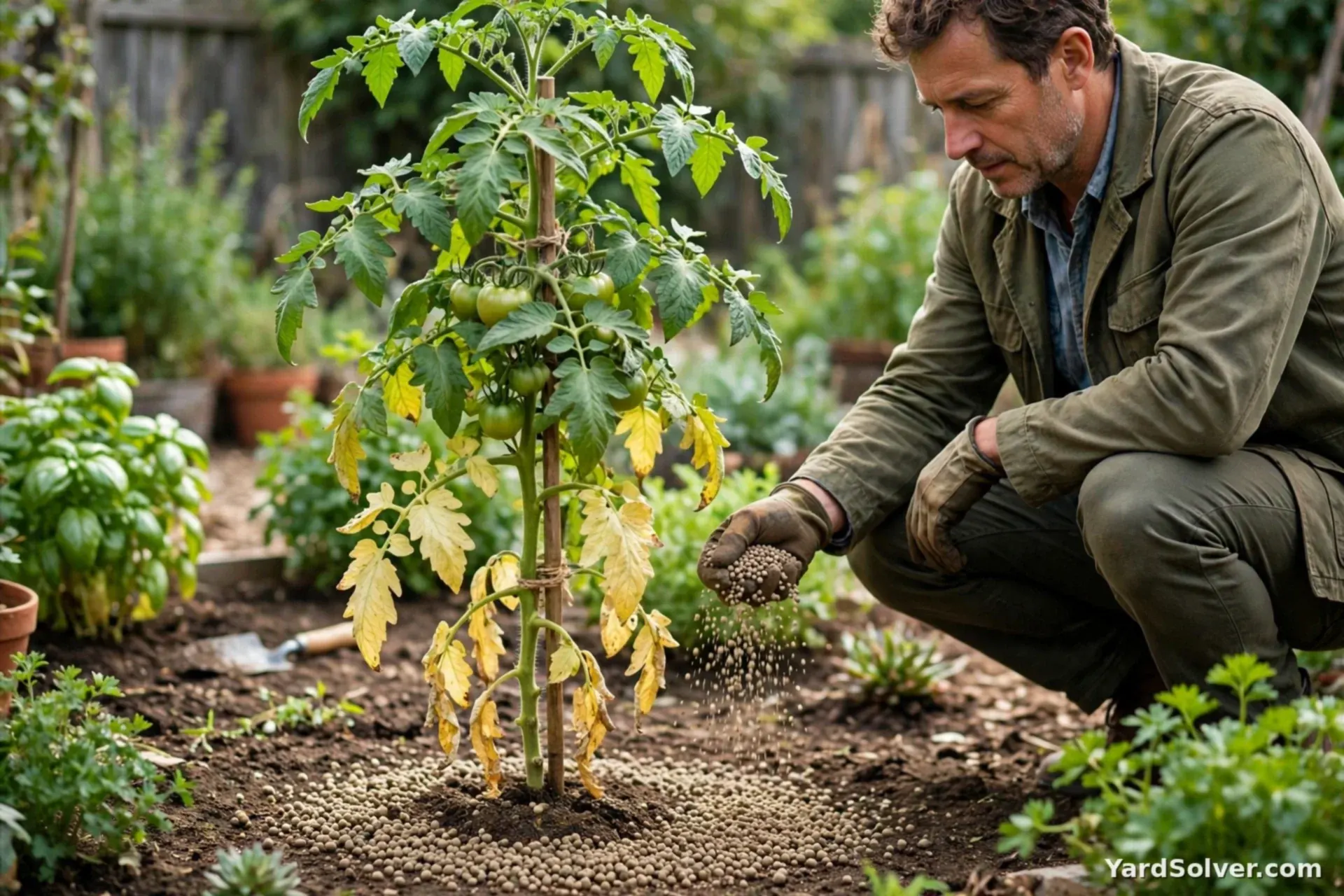
If the lowest leaves yellow evenly while growth slows, the plant is likely short of nitrogen — common mid-season when fruit is drawing hard on the plant, and in pots and grow bags where nutrients wash out. Feed with a balanced tomato fertilizer at the label rate; the Fertilizer Calculator works out how much your bed area actually needs, so you feed enough without burning roots by overdoing it.
Step 3 — Treat spotted yellowing as a leaf disease
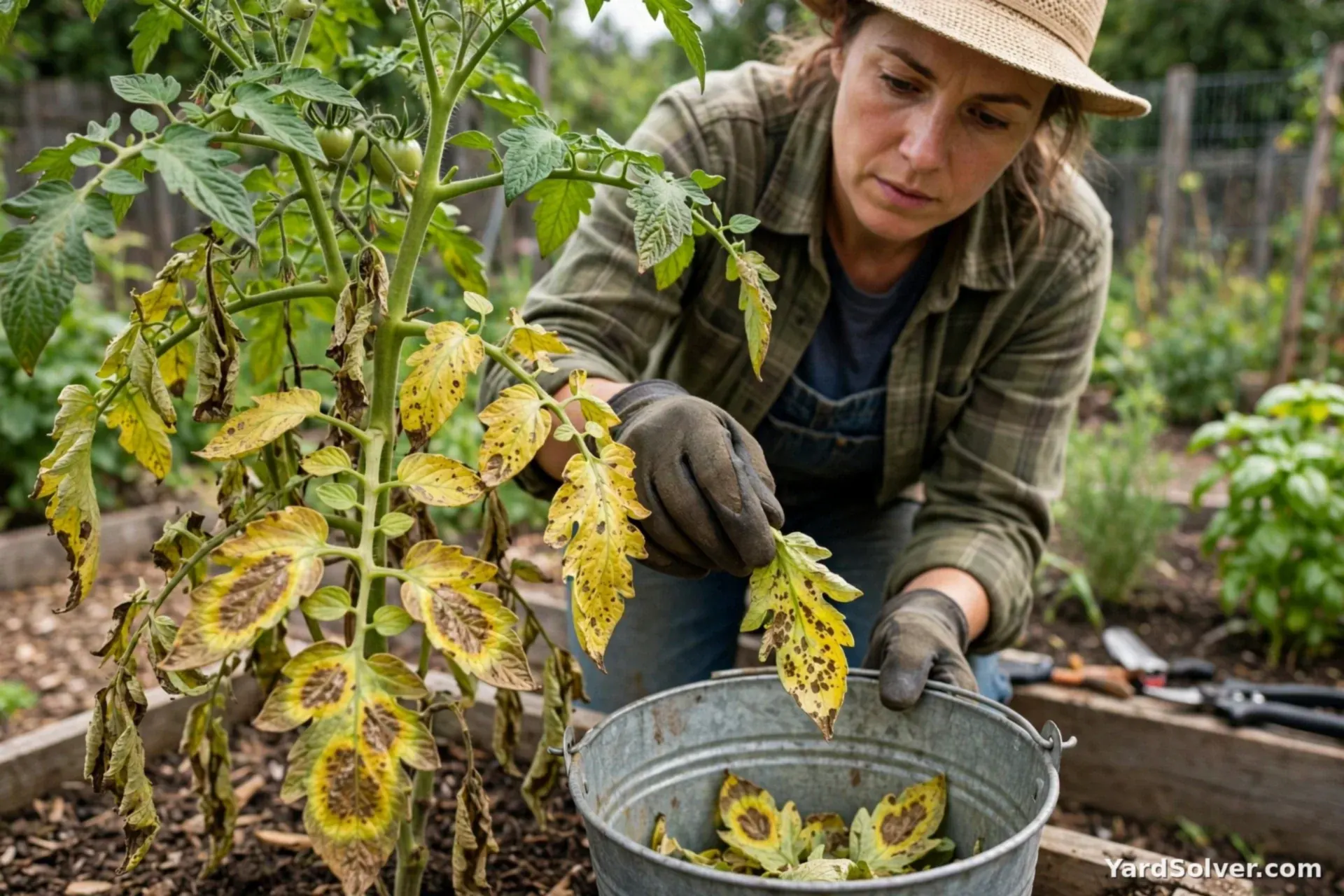
Yellow halos around brown spots, worst on the lowest leaves and spreading upward after rain, is the classic signature of soil-splashed fungal leaf diseases. Act the same day: strip the worst-affected lower leaves (bag them — never compost them), mulch under the plant if you have not already, water at the base only, and space or prune lightly for air flow — the Plant Spacing Calculator shows the spacing tomatoes actually need. A protectant fungicide spray (copper or sulfur based, used exactly as the label directs) can slow spread to healthy leaves; it cannot cure leaves already spotted.
Step 4 — Check the veins before reaching for remedies
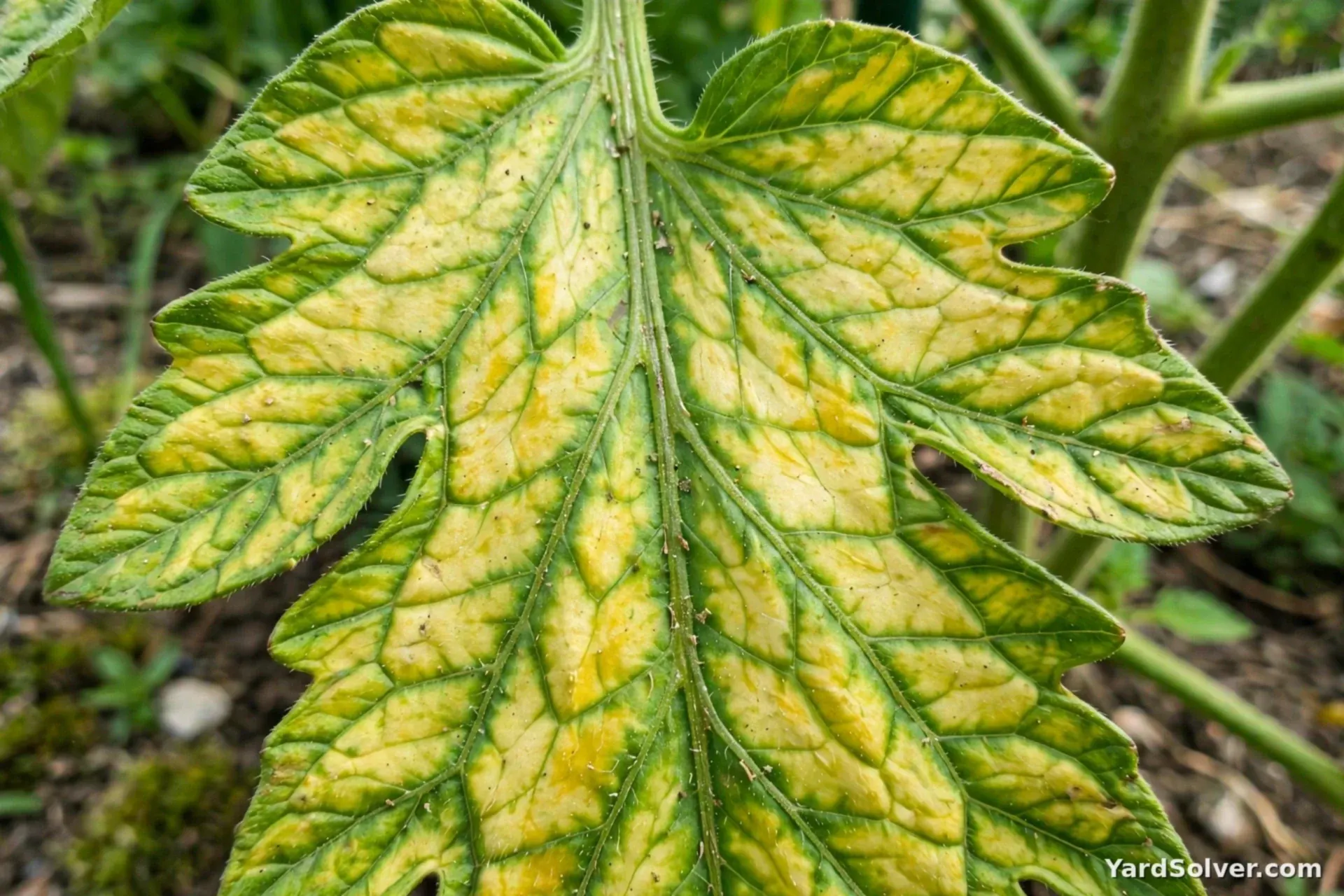
When leaf tissue yellows but the veins stay green, the plant usually cannot take up a nutrient that is present — cold soil, waterlogging and wrong soil pH all lock nutrients away. Adding more of that nutrient rarely helps until the root conditions are fixed. If several plants show it, a proper soil test is worth more than any bottle; your local extension office can test a sample and tell you exactly what your soil holds.
Step 5 — Know the pattern that means pull the plant
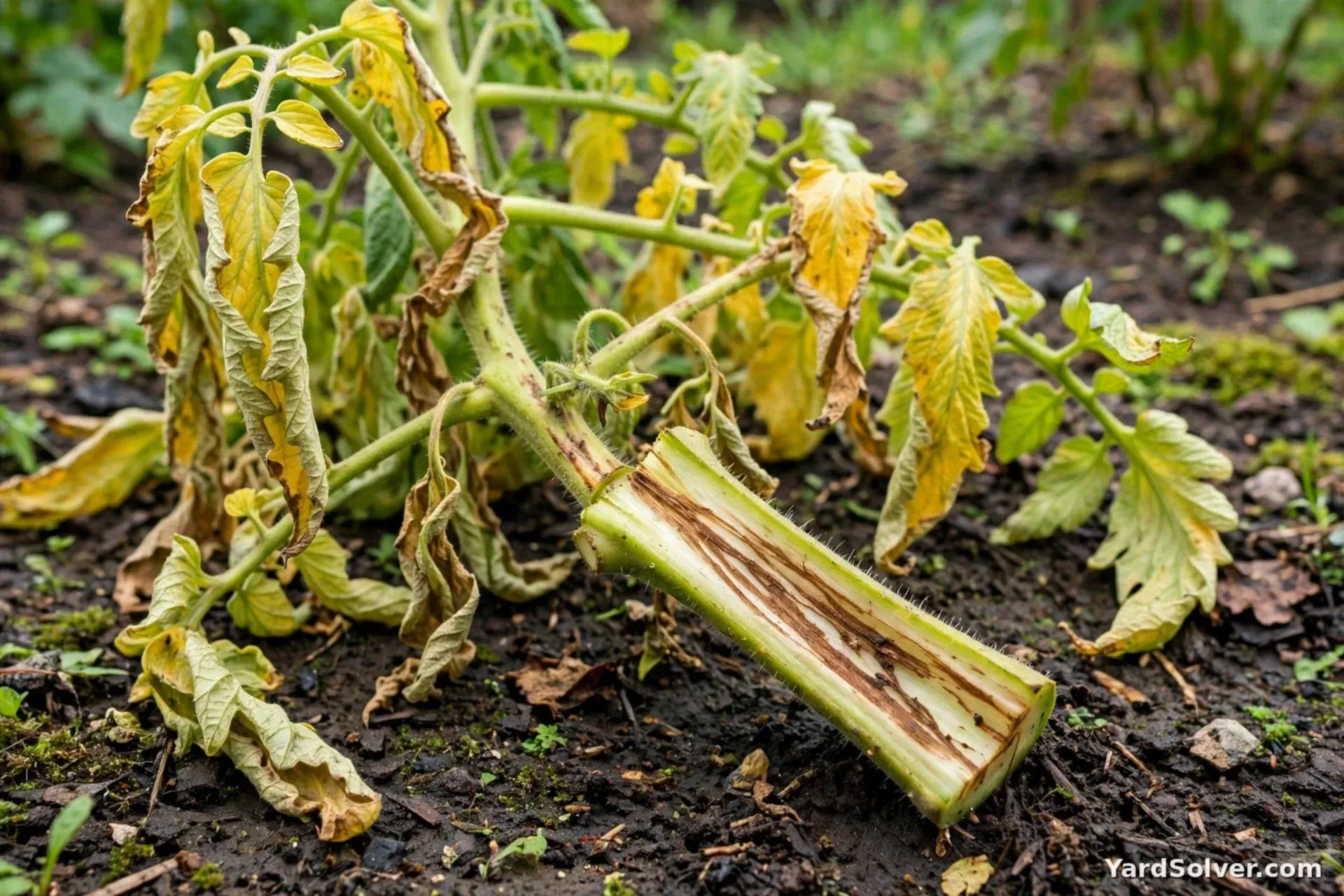
If a plant yellows and wilts while the soil is moist, cut a main stem near the base: brown streaking inside points to a soil-borne wilt (fusarium or verticillium). There is no cure and no spray; leaving the plant only spreads the problem in your soil. Pull it out with its roots, bin it (again — never compost), and plant tomatoes in a different spot next year. Honest limit: home diagnosis of wilts is pattern-matching, not certainty — an extension clinic can confirm from a sample if you need to be sure before changing your planting plan.
Keep going
More tomato trouble, sorted: Blossom End Rot on Tomatoes · Why Are My Tomato Leaves Curling? The full tomato profile is in the Plant Library.
Questions people ask
Should I remove yellow leaves?
Yes — prune yellowed and spotted lower leaves promptly, especially any touching the soil. It improves air flow and slows leaf diseases. Disinfect your pruners afterwards and never compost diseased leaves.
Can a yellow-leaf tomato plant recover?
If the cause is feeding, watering or an early-caught leaf disease, yes — new growth greens up once the cause is fixed. A plant wilting with brown streaks inside its stems will not recover.
Is Epsom salt the answer?
Only if your soil is genuinely short of magnesium, which is less common than the internet suggests. Test before treating — feeding by guesswork often makes the balance worse.
Yellow tomato leaves are triaged by position — old leaves, new leaves and patterns accuse differently
On a tomato, where the yellowing starts is the diagnosis: the lowest, oldest leaves yellowing and dropping as the plant grows is the plant's normal retirement programme and no treatment at all. Yellowing that begins low and climbs with a general fade accuses nitrogen or magnesium shortage — magnesium's signature being yellowing between the veins of older leaves while the veins stay green. Yellowing at the top, on new growth, points instead to iron lockout or root trouble, because those nutrients cannot be moved up from the old leaves to cover a shortage, so the newest growth reports it first.
Disease writes in spots rather than washes: yellow halos around dark spots, wilting of one side, or yellowing that races up a plant in wet weather are fungal and bacterial signatures that feeding will not cure and that demand leaf removal, airflow and hygiene instead. The working order is therefore observe, then check the soil's moisture (both drought and drowning yellow a tomato), then feed only if the pattern fits hunger. A tomato in a pot or grow-bag yellows from hunger sooner than one in open ground — its whole pantry is the bag — and liquid feeding on a schedule is the pot grower's standing answer.
Sources
Key facts on this page cross-checked against Chlorosis — Wikipedia — background on chlorosis and its patterns and Tomato — Wikipedia — background on tomatoes and their nutrition.
Related page
Read next: Fertilizer Burn: Spot Too Much Fertilizer & Save the Plant.
Comments & ratings
No comments yet.
Be the first to share your experience.