
Guides · Plant problems · Published November 1, 2026 · By Faizan Ahmad
Why Are My Tomato Leaves Curling?
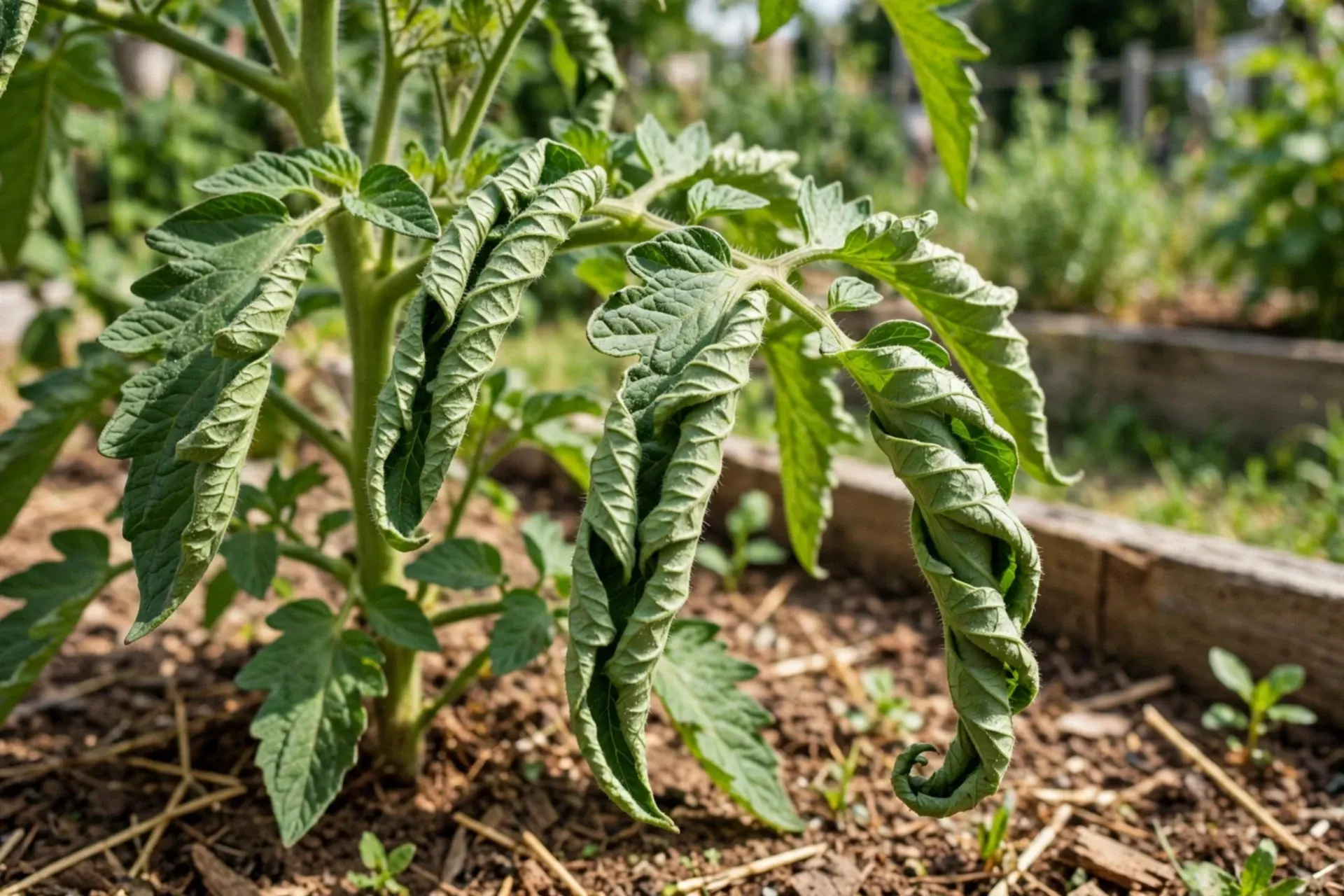
Rolled, twisted or cupped tomato leaves cause more unnecessary panic than almost any other garden sight — because most leaf curl is the plant protecting itself, and needs no treatment at all. But a few curls do signal real trouble. This guide sorts them by pattern, so you can relax about the harmless ones and act fast on the serious ones.
Match the curl
- Leaves roll inward along their length, mostly on hot afternoons, plant otherwise healthy: physiological leaf roll — a weather response, usually harmless
- Whole plant cups and wilts a little at midday, recovers by morning: heat and water demand racing the roots — check moisture before anything else
- New growth twisted, strappy and distorted, worse after lawn spraying nearby: suspect herbicide drift
- Curling with aphid clusters under the leaves: pest feeding — a different fix entirely
- Curling with yellow-green mottling, stunting and odd fruit: the virus pattern — rare, but the one to take seriously
Step 1 — Recognise harmless leaf roll (and leave it alone)
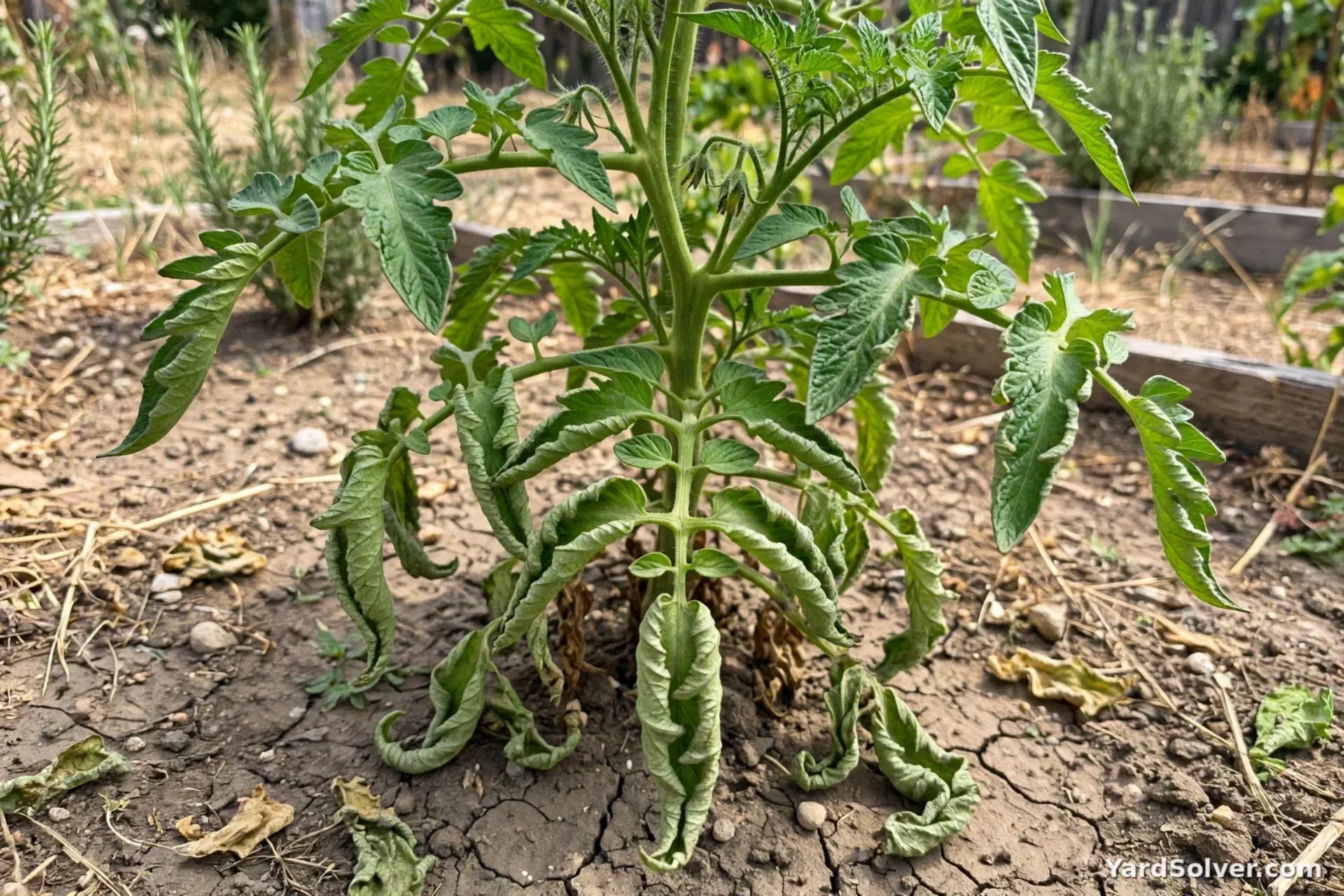
In hot, dry or windy weather, tomato leaves roll their edges inward to reduce the surface losing water. Lower and older leaves roll first; the plant keeps growing and fruiting normally. Some varieties — especially many paste and indeterminate types — roll at the slightest excuse. No spray, feed or extra water fixes a behaviour that is not a fault. At most, even out the watering and let it be.
Step 2 — Steady the water, don't flood it

Wild swings between dry and drenched soil are the biggest controllable trigger for curling (and for blossom end rot). Water deeply at the base on a regular rhythm, check moisture with a finger before watering rather than by the look of the leaves, and hold the moisture steady with a 2–3 inch mulch layer — bags worked out by the Mulch Calculator.
Step 3 — Look under the leaves
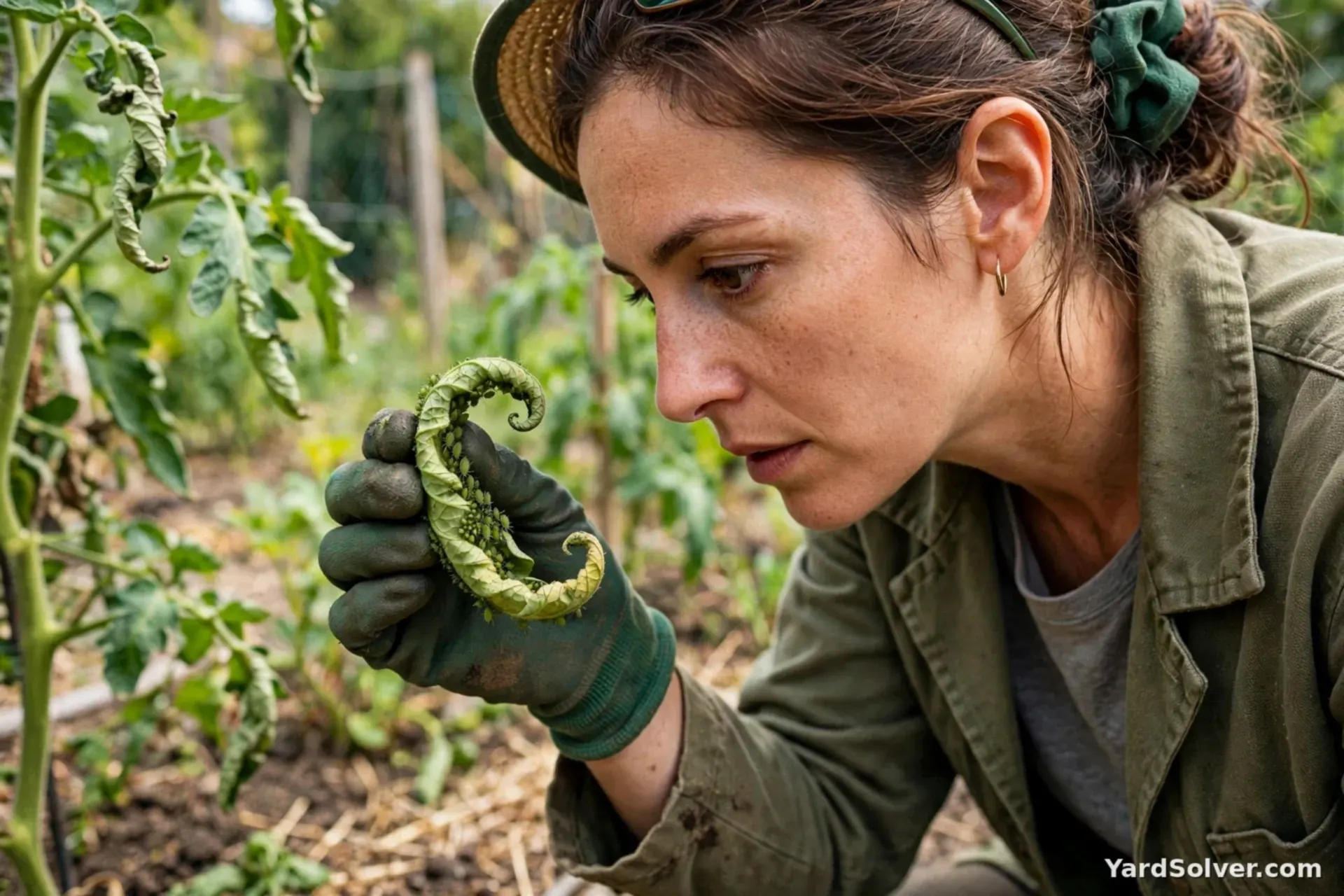
Before diagnosing anything exotic, turn a curled leaf over. Clusters of aphids feeding underneath curl and distort leaves as they feed, and their sticky honeydew gives them away. If you find them, the water-jet and soap routine in How to Get Rid of Aphids is the whole fix — no disease detective work needed.
Step 4 — Consider herbicide drift honestly
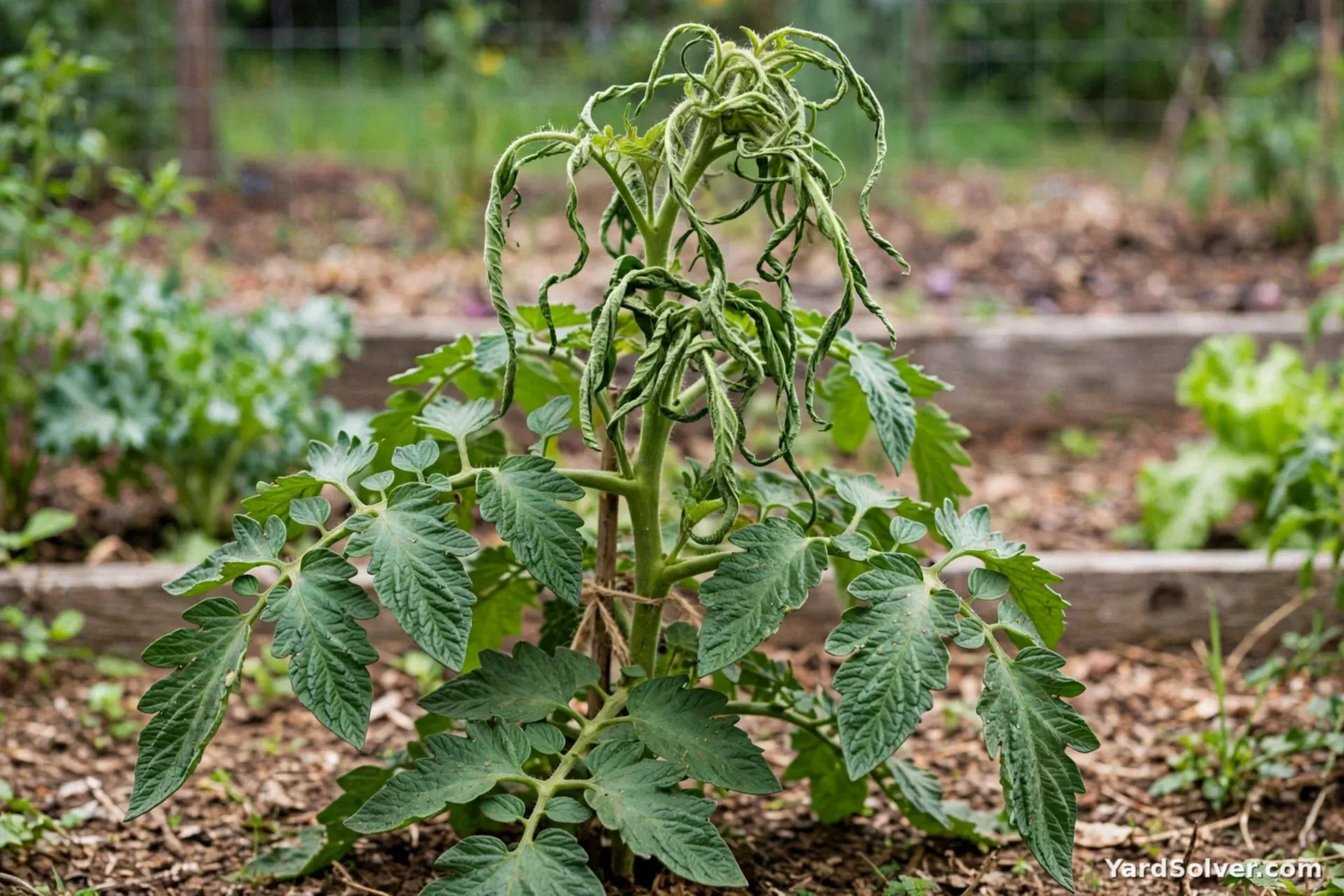
Tomatoes are exquisitely sensitive to lawn weedkillers of the growth-regulator type, and drift can arrive on the wind from a neighbour's spraying — or from your own mulch and compost if treated grass clippings or manure from treated pasture found their way in. The signature is new growth that comes out twisted, narrow and strap-like on plants that were fine last week. There is no antidote: provide shade cloth in harsh sun, water steadily, and wait — mild cases grow out over a few weeks. It is also the reason to be certain about the history of any manure or hay mulch before it goes near tomatoes.
Step 5 — The pattern that earns a lab test
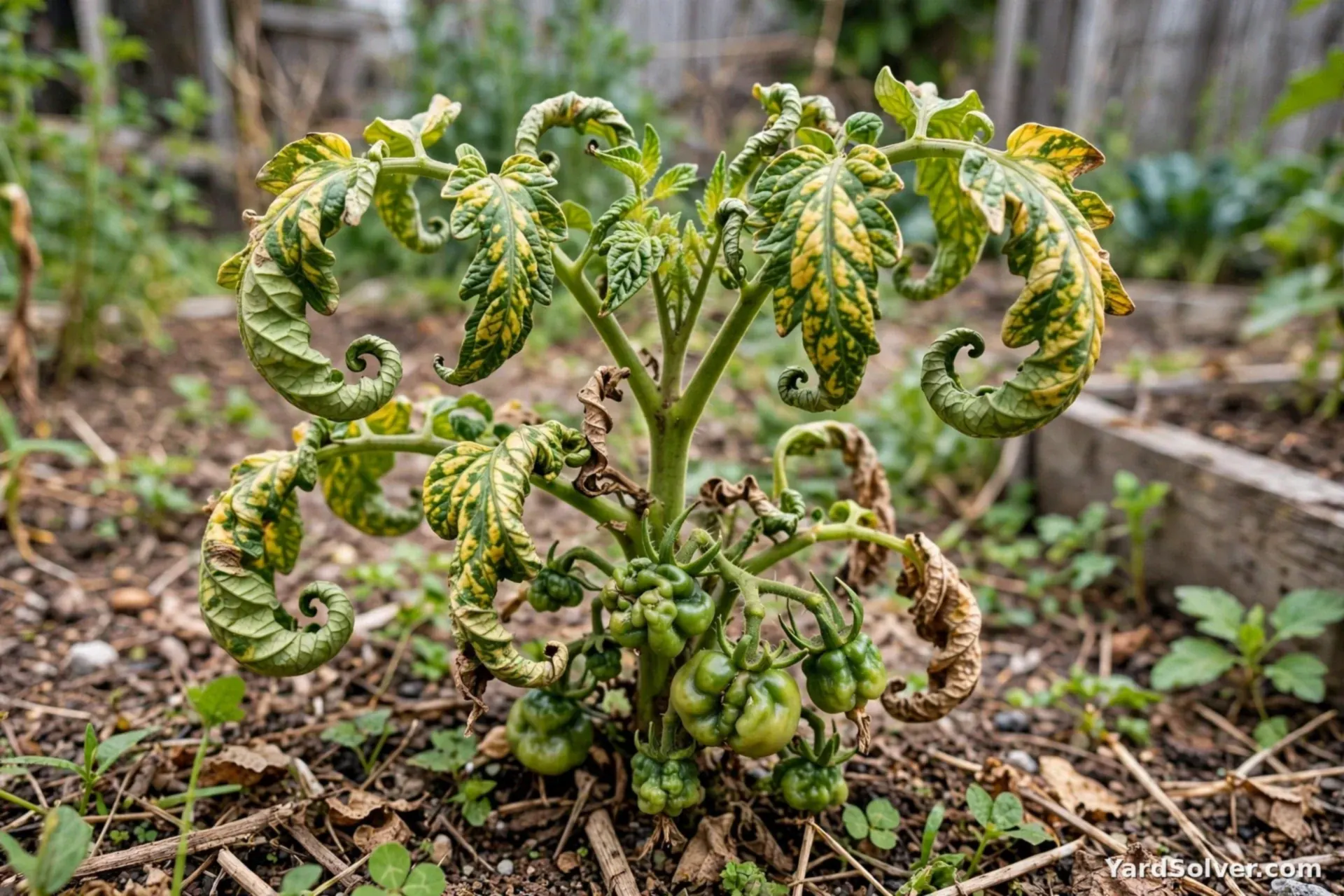
Curling combined with a yellow-green mosaic pattern, severe stunting, and distorted or oddly ripening fruit raises the possibility of a virus — and here the honest answer is that no gardener can confirm a virus by eye. Viruses have no cure; a confirmed infected plant is removed to protect the rest, and aphid and thrip control matters because insects carry viruses plant to plant. If several plants show the pattern, take clear photos and a sample to your local extension clinic — a lab confirmation is worth having before you pull plants or change next year's plans. Yellowing without the mosaic pattern is a different road: start with Why Are My Tomato Leaves Turning Yellow?
Keep going
More tomato trouble, sorted: Yellow Leaves · Blossom End Rot. The full tomato profile is in the Plant Library.
Questions people ask
Should I water more when leaves curl?
Only if the soil is actually dry a couple of inches down. Afternoon curl on moist soil is the plant protecting itself — extra water then harms roots. Finger-check first.
Can plants recover from herbicide drift?
Mild drift often grows out over a few weeks, with yield possibly reduced. There is no treatment — shade, steady water and patience.
Does leaf curl mean a virus?
Usually not — weather and water causes are far more common. Suspect a virus when mottled mosaic patterns, stunting and distorted fruit join the curling; only a lab test confirms it.
Tomato leaf curl is a symptom with benign and serious versions — read the whole plant
Tomato leaves curl for reasons ranging from the harmless to the terminal, and the leaf itself distinguishes them: leaves that roll inward lengthwise on an otherwise vigorous plant, worst in hot dry wind, are the plant protecting itself — reducing exposed surface while its roots catch up with the day's demand — and they unroll when conditions ease, needing water and mulch, not medicine. Leaves that curl with yellowing, stunting and a plant that stops growing tell a different story: virus, carried by sap-sucking insects, for which there is no cure and whose treatment is removal before it spreads.
Between those poles sit the correctable causes: herbicide drift from a neighbour's lawn spray, which twists new growth grotesquely while old growth stays clean; over-pruning and over-feeding, which curl leaves on a plant growing too fast for its own plumbing; and root trouble from waterlogging. The diagnostic habit this guide teaches is to read the pattern — which leaves, how fast, with what other signs — before reaching for any remedy, because the commonest tomato leaf curl in home gardens is the physiological kind, whose correct treatment is a drink, a mulch and the gardener standing down.
Sources
Key facts on this page cross-checked against Tomato — Wikipedia — background on tomatoes and their common disorders and Tomato yellow leaf curl virus — Wikipedia — background on tomato yellow leaf curl virus, the serious viral cause.
Related page
Read next: Why Are My Tomato Leaves Turning Yellow? Diagnosis.
Comments & ratings
No comments yet.
Be the first to share your experience.