
Plant Library · Vegetables · By Faizan Ahmad
🥒 How to Grow Cucumber
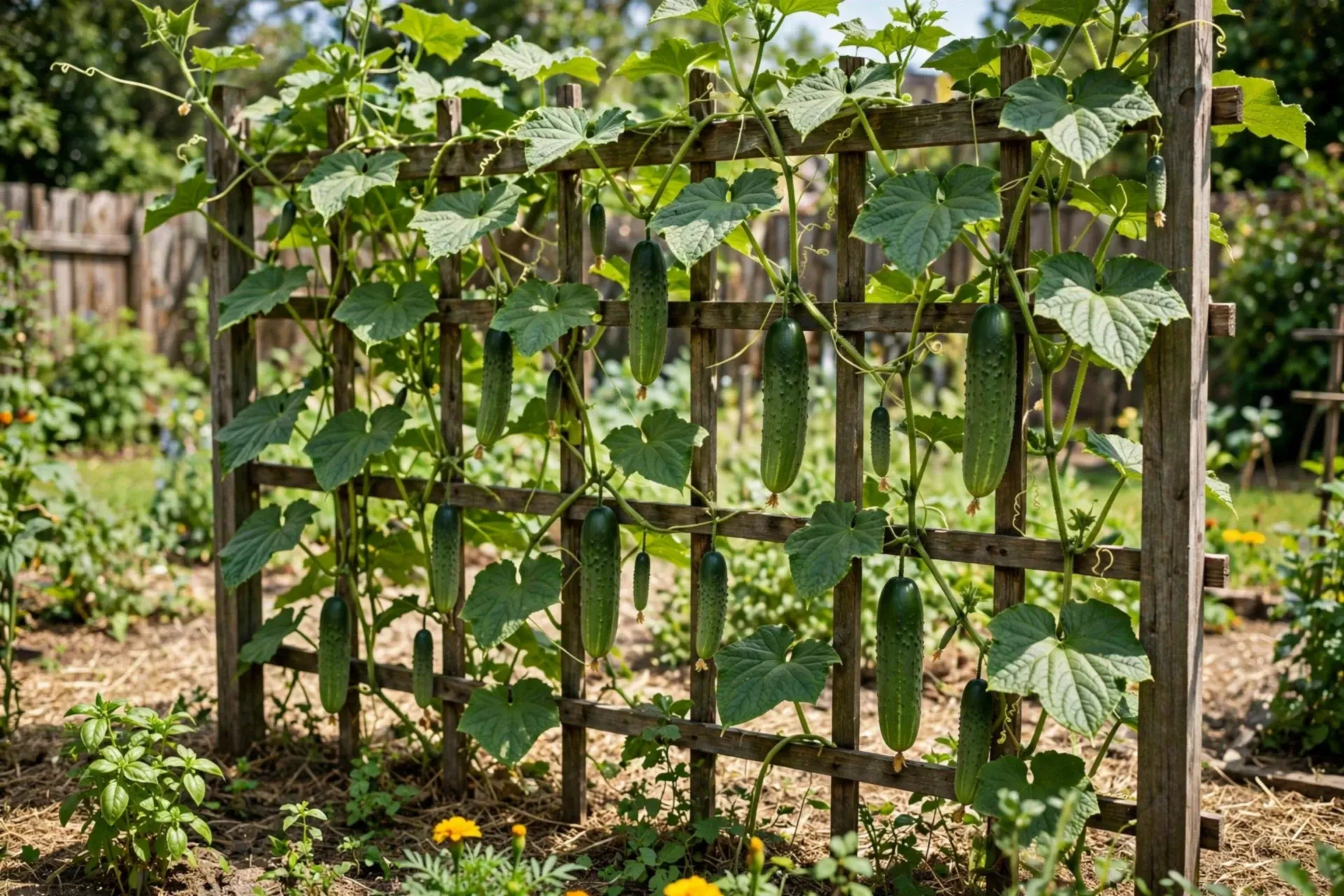
Hates root disturbance — direct sow where possible. Cucumbers love warmth: direct sow about a week after your last frost into warm soil, and give the vines a trellis to climb so the fruit stays clean and straight.
Grow Cucumber with us — step by step
Everything for this plant is written step by step below — what to do, and exactly when. Read it through first if you like: you can grow it entirely on your own with that guide. Or start with us here — tell us your planting day and we lay out your personal schedule on this page, every next step on its own day, counted from your planting date. No guessing, no forgetting.
Step 1 — today: Sow your Cucumber seeds today: 1/2 in deep, spaced 12–18 in apart on a trellis, in full sun. Water the row in well and keep it moist while seeds sprout.
Cucumber at a glance
Sow indoors: 3 weeks before last frost
Sow outdoors: 1 week after last frost
Spacing: 12–18 in, on a trellis · Seed depth: 1/2 in
Sun: Full sun
Water: Plenty and steady
Harvest: 50–70 days
Timing counts from your average last spring frost — get your own dates in the Planting Calendar. Guidance follows standard extension-service practice for Canada and the US.
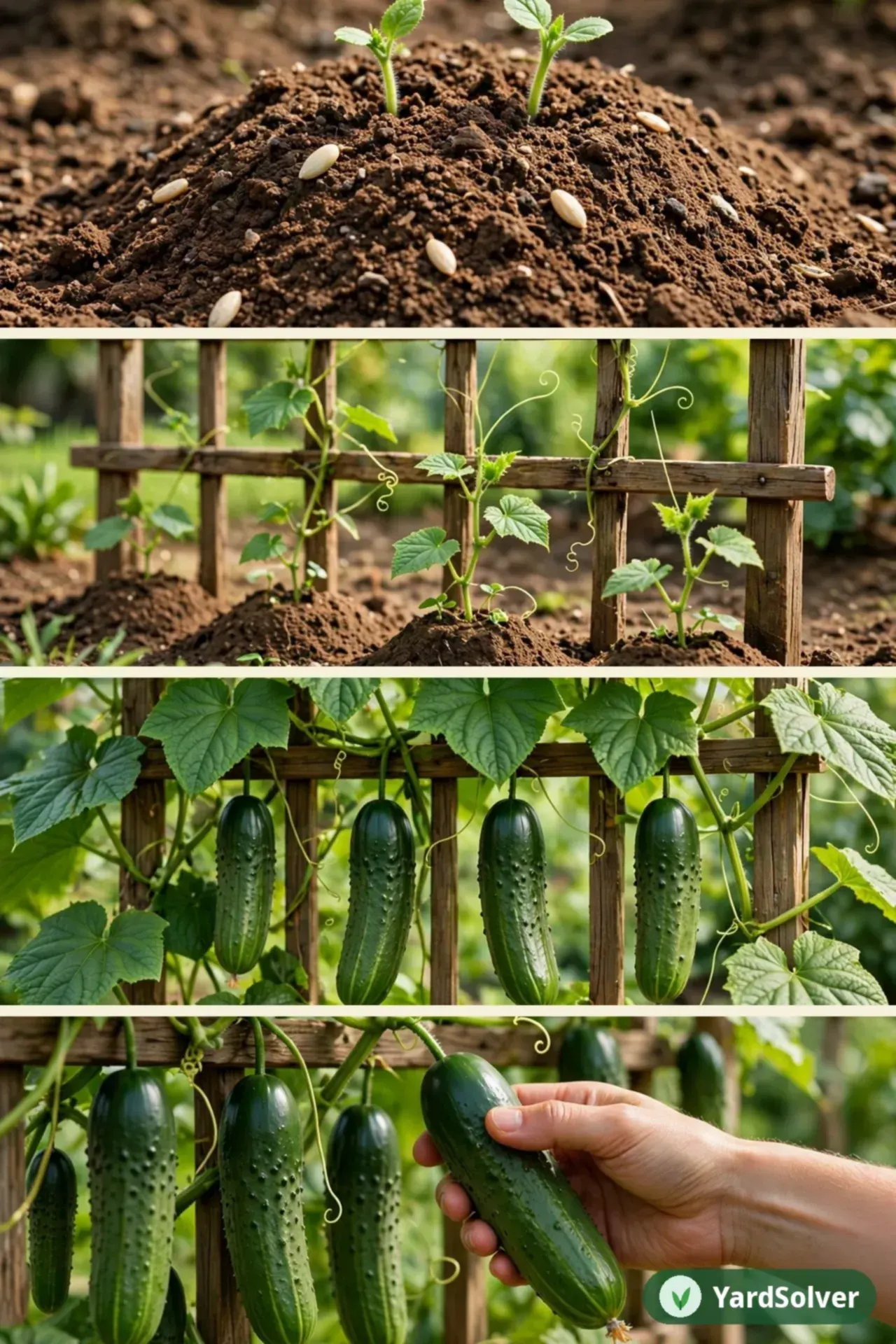
How to plant and grow cucumber, step by step
Step 1 — Time it right
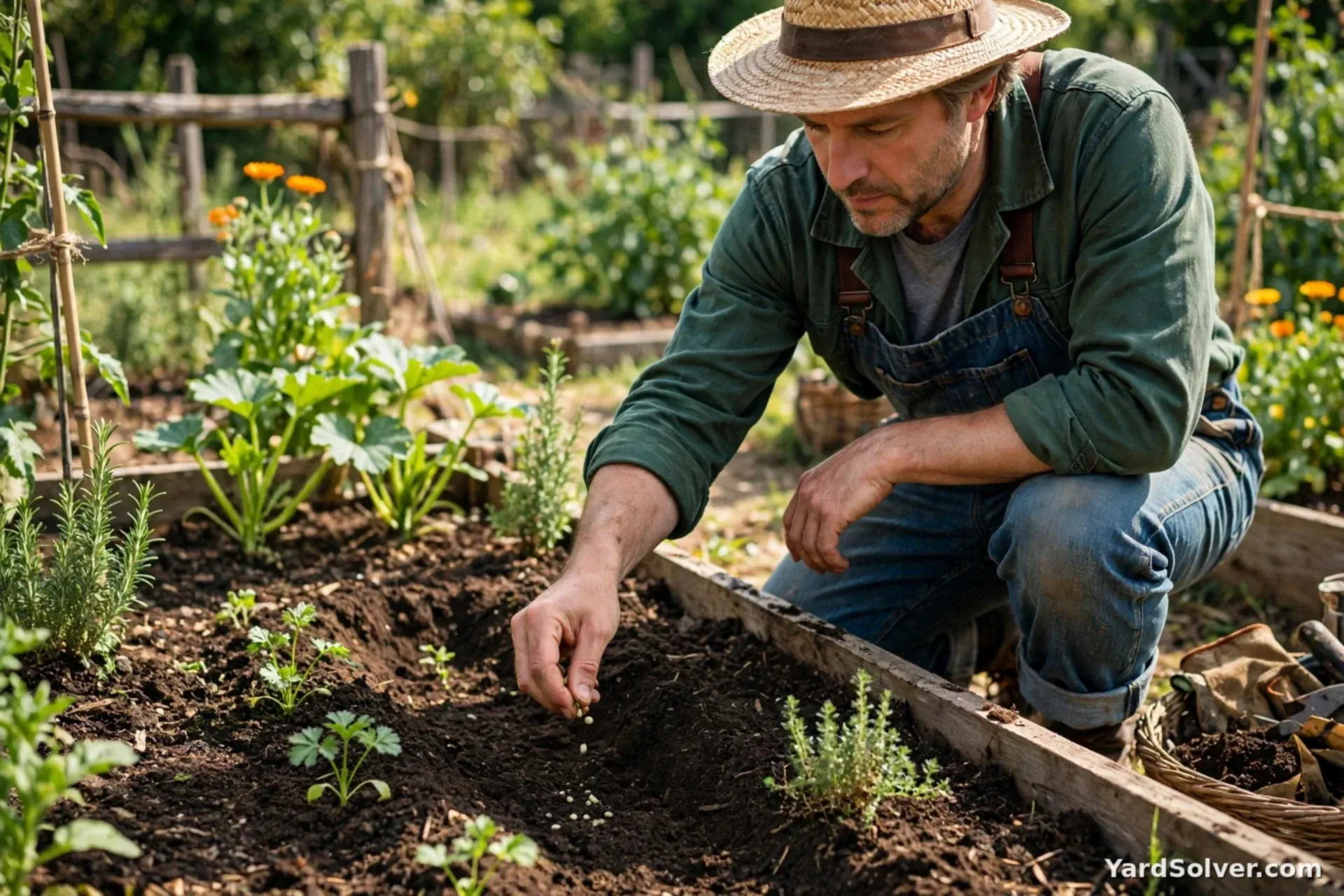
Sow indoors: 3 weeks before last frost; Sow outdoors: 1 week after last frost. All dates count from your average last spring frost — the Planting Calendar turns them into real dates for your garden. Cucumbers love warmth: direct sow about a week after your last frost into warm soil, and give the vines a trellis to climb so the fruit stays clean and straight.
Step 2 — Prepare the spot
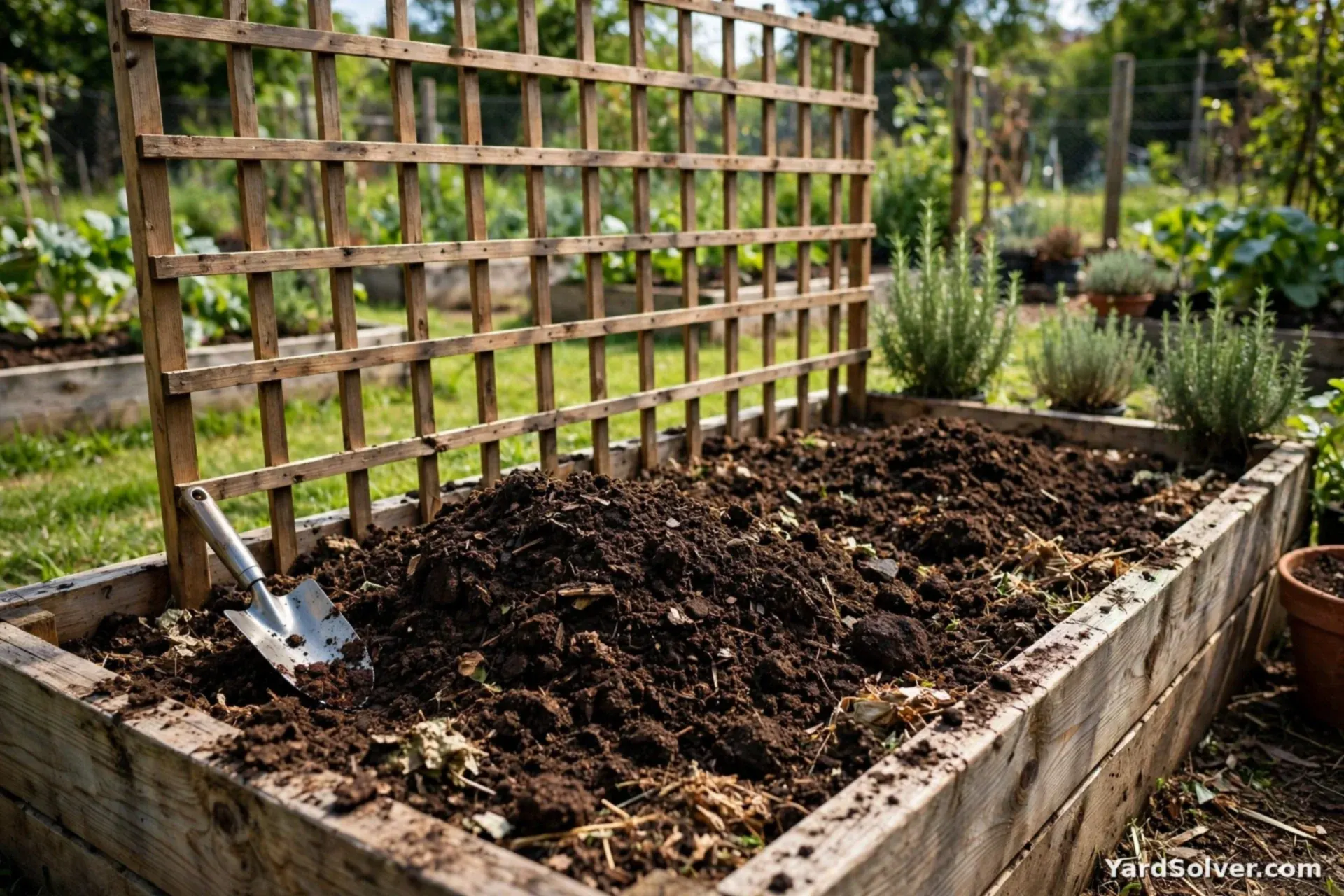
Sun: Full sun. Rich soil with compost worked in before planting, and a mulch on top once plants are growing. For these hungry, thirsty crops, steady moisture matters more than anything else. Work out how much you need with the Garden Mix Calculator or the Raised Bed Soil Calculator.
Step 3 — Sow and plant out
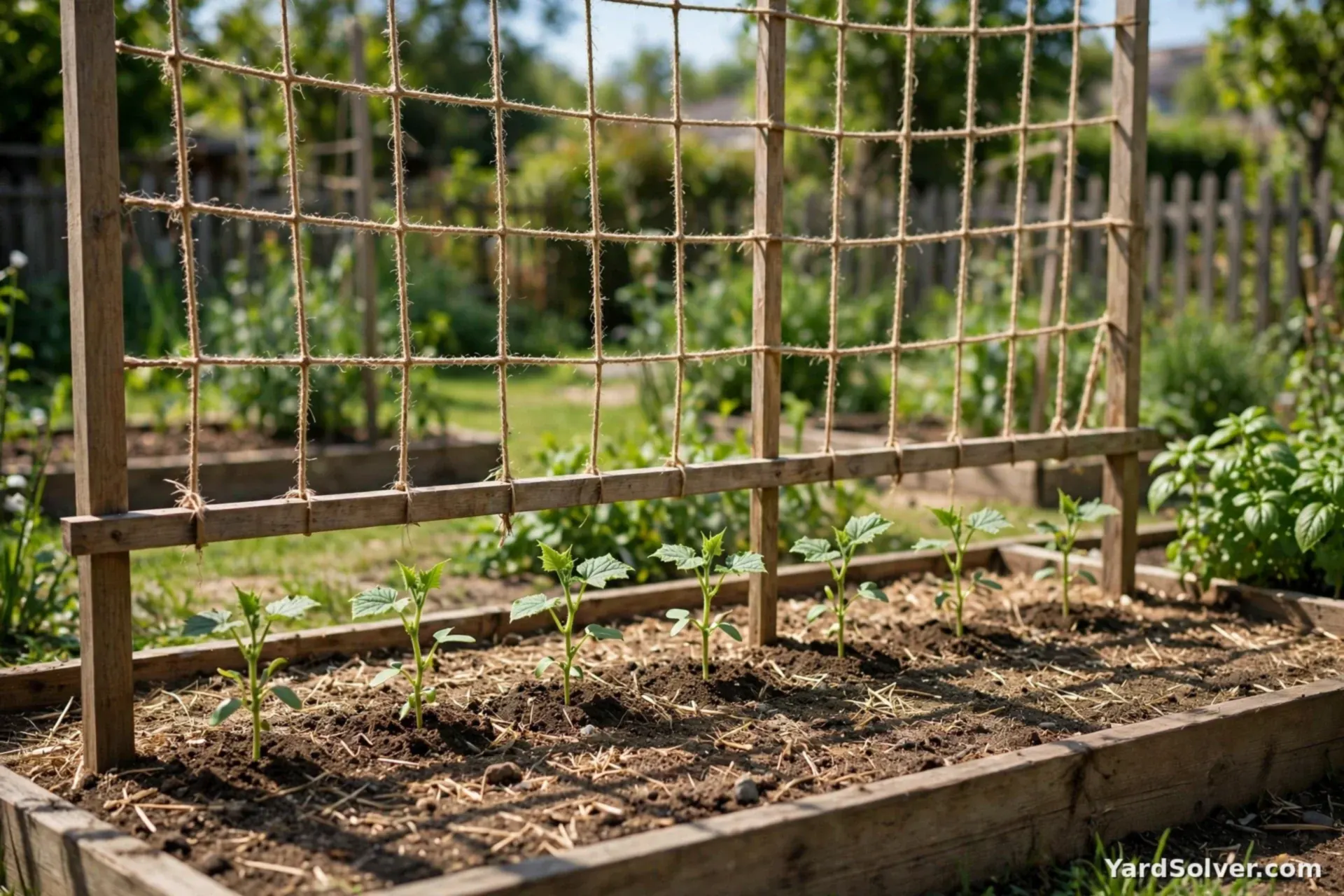
Start indoors 3 weeks before last frost at 1/2 in deep, or sow outdoors 1 week after last frost; plants finish spaced 12–18 in apart, on a trellis. Harden off indoor-started plants before they move out for good.
Step 4 — Water and feed
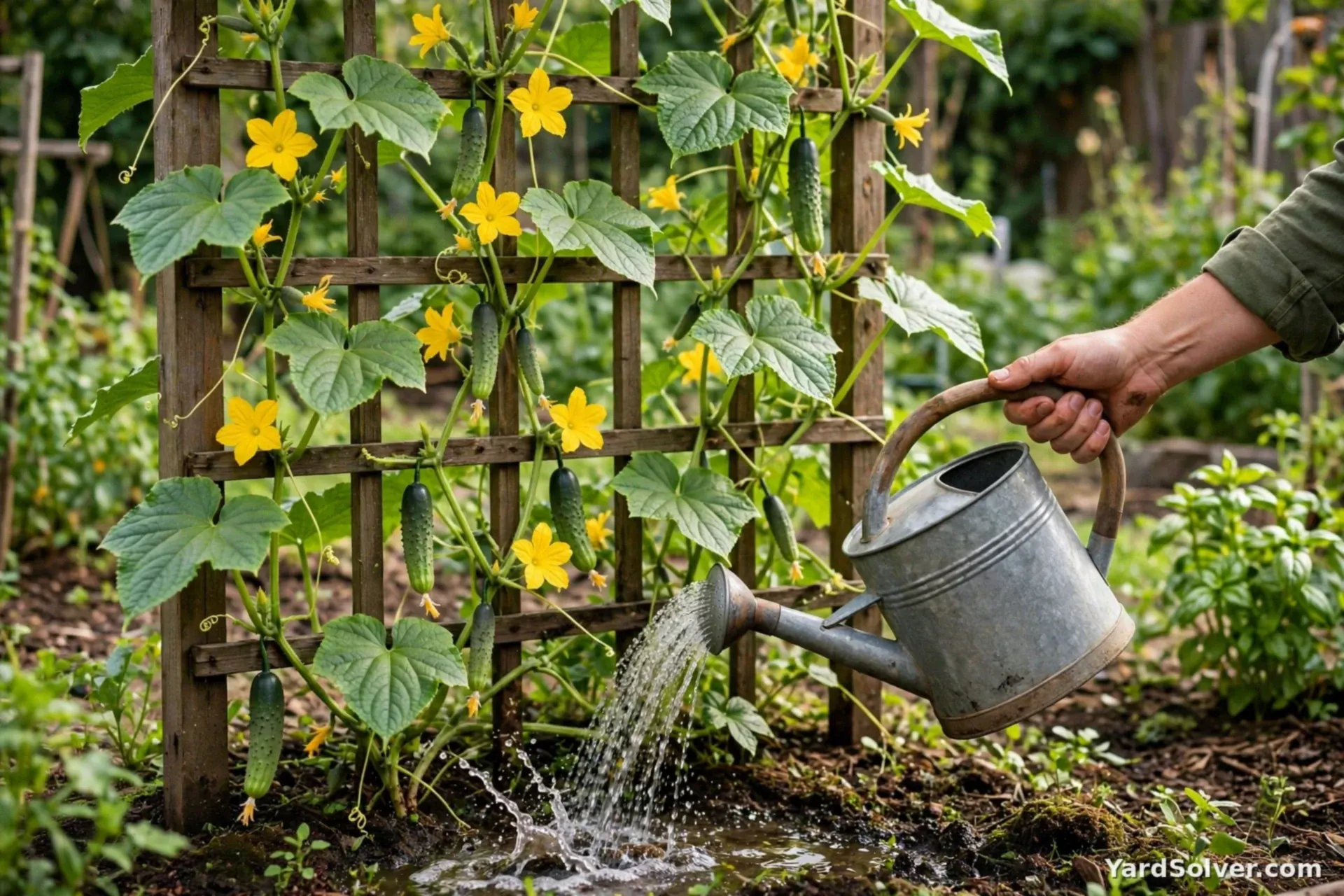
Water: Plenty and steady. First feed: around day 32 — Feed when the first flowers open, and keep the water coming — uneven watering makes bitter fruit. The Fertilizer Calculator turns a bed size into the right amount.
Step 5 — Care and the problems to watch for
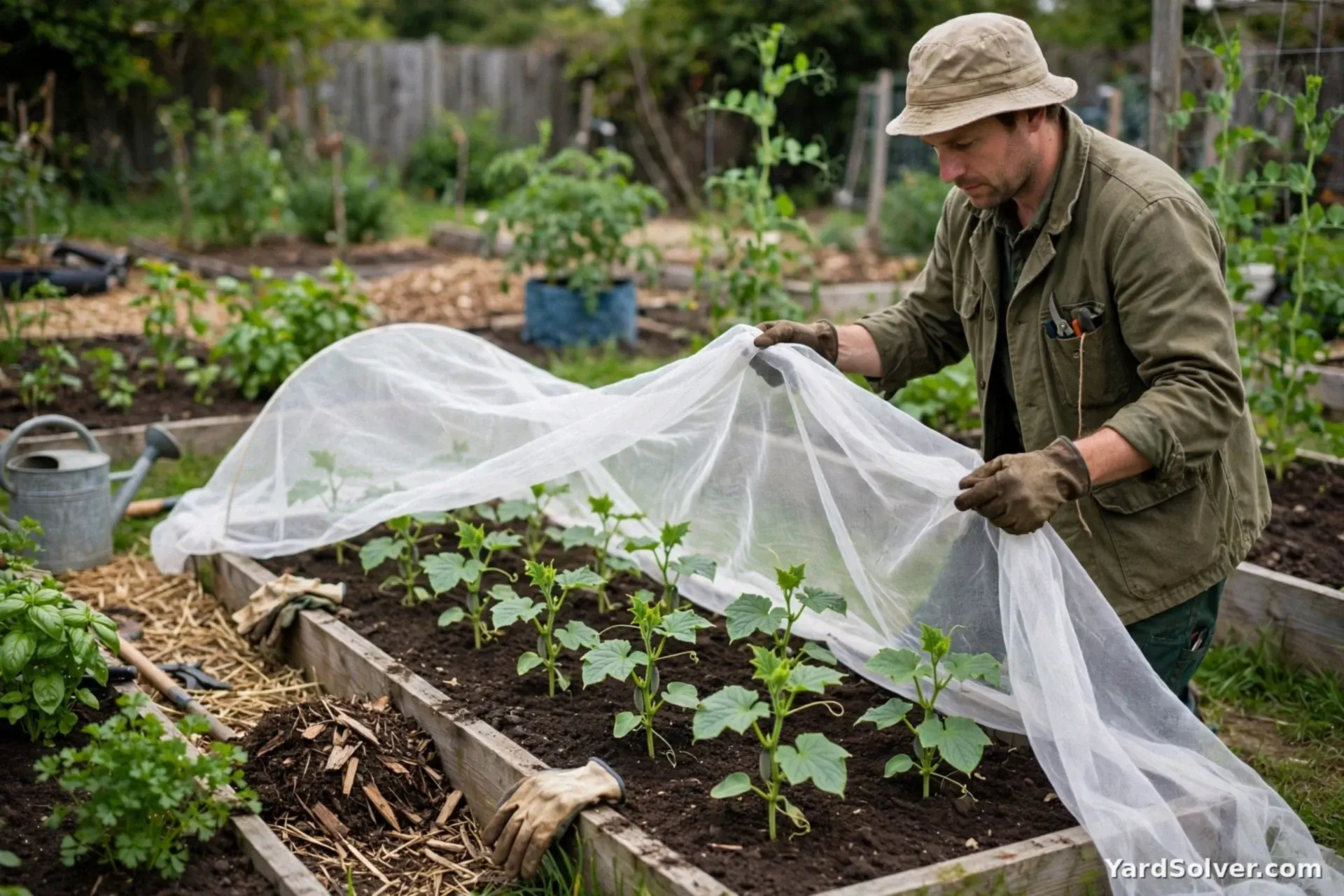
- Powdery mildew — white dusty leaves late in the season; space plants for airflow and water at the base.
- Cucumber beetles — they chew leaves and spread wilt; cover young plants with mesh until flowering.
- Bitter fruit — caused by drought stress; water steadily.
Take care: Some people find cucumbers cause gas, burping or indigestion. A cucumber that tastes very bitter is best not eaten — bitterness is the plant's natural warning sign.
Step 6 — Harvest
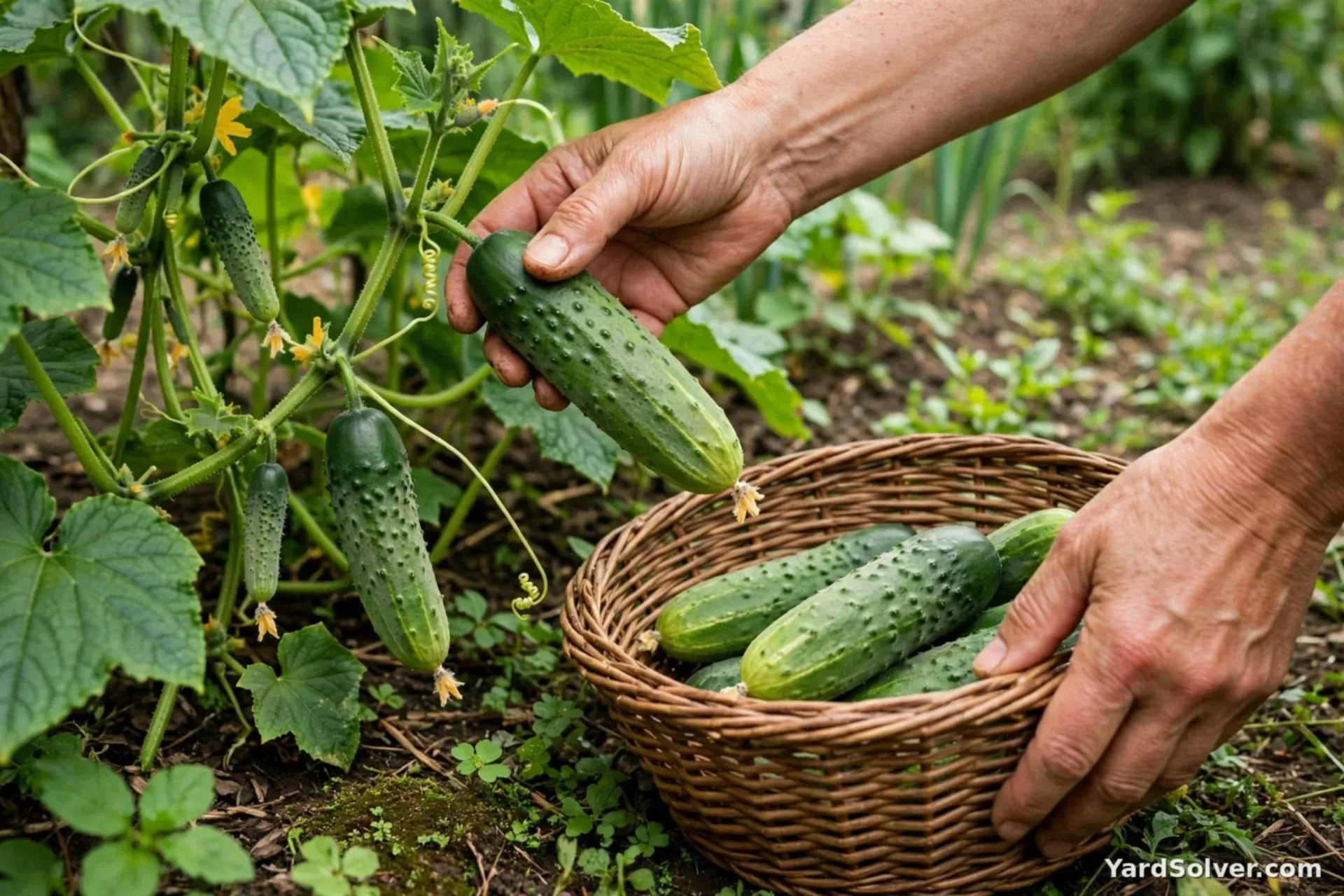
Ready in: 50–70 days. Harvest runs from about day 50 to 70 — pick often and never let fruit get big and yellow.
📅 Your personal Cucumber schedule
Counted from your planting day — not a generic calendar. Day 0 is the day the seed went in the ground or the young plant went out.
Varieties worth growing
| Variety | Colour | Why gardeners like it |
|---|---|---|
| Marketmore 76 | Dark green | A dependable slicing cucumber that keeps producing in most gardens |
| Straight Eight | Green | An old favourite that grows long, straight fruit for slicing |
| National Pickling | Green | Small and blocky, bred for jars of pickles |
| Lemon | Yellow | A round heirloom that looks like a lemon and tastes mild and never bitter |
| Spacemaster | Green | A compact bush type made for small gardens and large pots |
Good for you — and take care
Benefits
- Over 90 percent water, so they help you stay hydrated
- Provides vitamin K for healthy blood and bones
- Low in calories — a crunchy snack that fills you up
- Provides small amounts of vitamin C and potassium
- The skin provides fibre, so wash and eat it unpeeled when you can
Take care
- Some people find cucumbers cause gas, burping or indigestion
- A cucumber that tastes very bitter is best not eaten — bitterness is the plant's natural warning sign
A little history — and one good fact
Cucumbers come from South Asia, where they have been grown in India for thousands of years. They spread west long ago — the ancient Romans grew them and even built early greenhouses so their emperor could eat them year-round. Today cucumbers are grown almost everywhere and eaten fresh, pickled, or in cool summer drinks.
Fun fact: On a hot day the inside of a cucumber can be several degrees cooler than the air around it — that is where the saying 'cool as a cucumber' comes from.
Keep going
Guides: How to Grow Cucumbers Vertically · Companion Planting Basics · How to Protect Plants from Frost
Calculators: Plant Spacing Calculator · Seed Calculator · Garden Mix Calculator
More vegetables: Bitter Melon · Pepper · Zucchini · Chayote
← Back to the Plant Library · Get your personal planting dates
Questions people ask
When do I plant cucumber?
Count from your average last spring frost: sow indoors 3 weeks before last frost; sow outdoors 1 week after last frost. Cucumbers love warmth: direct sow about a week after your last frost into warm soil, and give the vines a trellis to climb so the fruit stays clean and straight.
How far apart do I space cucumber?
Space plants 12–18 in apart on a trellis, with seed sown 1/2 in deep. Sun: full sun.
When is cucumber ready to harvest?
50–70 days. Hates root disturbance — direct sow where possible.
Grow cucumbers upward: cleaner fruit, less disease, and more cucumbers from the same bed
A cucumber vine left to sprawl takes a square metre of bed, hides its fruit under leaves, and sits its crop in the damp air layer where powdery mildew starts. The same vine tied up a trellis, net or fence panel occupies a strip about 30 cm wide, hangs its fruit straight and visible, and dries within an hour of rain — which is the single cheapest disease control a cucumber grower has. Train the main stem upward twice a week, tying loosely or weaving it through netting; the tendrils do most of the gripping themselves once the vine is started.
Picking is the second half of the system. A cucumber left to swell and yellow on the vine tells the plant its job is done, and production slows within days. Pick slicing types at 15–20 cm and pickling types at 8–12 cm, check the vines every day in hot weather, and cut fruit off with scissors or a knife rather than twisting — a torn stem is an open door for disease. Water at the base, never over the leaves, and keep the moisture even: fruit that grows through a dry-then-soaked cycle comes out bitter and misshapen.
The worked example: a 1.2 × 2.4 m bed (about 4 × 8 ft) holds four trellised plants along its back edge and still leaves the front two-thirds free for a row of lettuce and radishes. Four healthy slicing plants picked daily commonly give 6–10 cucumbers a week at peak — the same four plants sprawled would fill the whole bed, hide a third of the fruit until it yellows, and usually lose leaves to mildew two to three weeks earlier in a humid summer.
Sources
Key facts on this page — timing, spacing and care — cross-checked against University of Minnesota Extension — Growing cucumbers in home gardens — spacing, trellising and harvest sizes.
Related page
Read next: How to Grow Cucumbers Vertically: Trellis Steps.
Comments & ratings
No comments yet.
Be the first to share your experience.