
Plant Library · Vegetables · By Faizan Ahmad
🫑 How to Grow Pepper
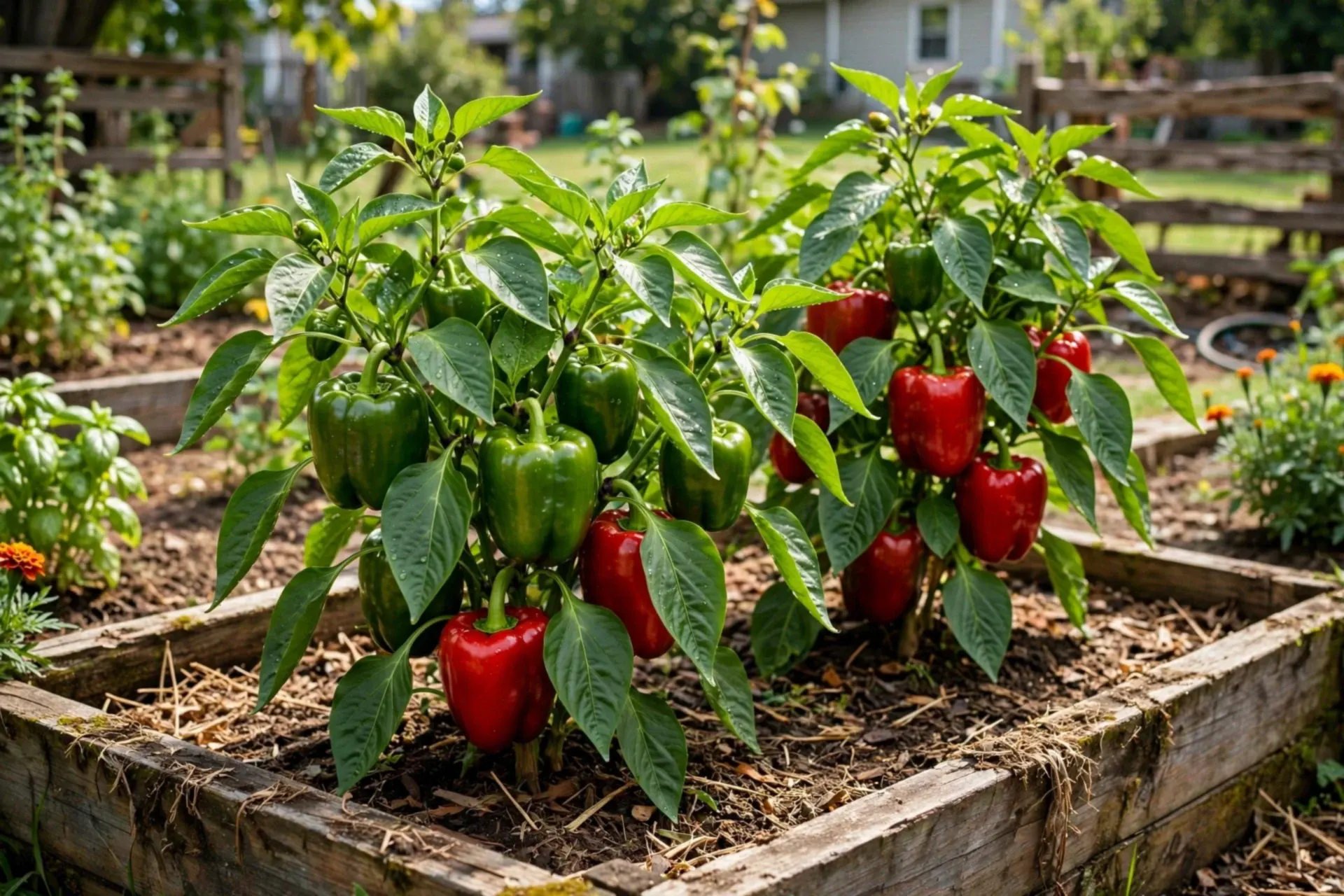
The slowest starter — sow indoors earliest of all. Peppers are the slowest starters in the garden: sow indoors about 10 weeks before your last frost and transplant about 3 weeks after it, into warm soil in full sun.
Grow Pepper with us — step by step
Everything for this plant is written step by step below — what to do, and exactly when. Read it through first if you like: you can grow it entirely on your own with that guide. Or start with us here — tell us your planting day and we lay out your personal schedule on this page, every next step on its own day, counted from your planting date. No guessing, no forgetting.
Step 1 — today: Plant out your young Pepper plants today (hardened off first), spaced 18 in apart, and water them in deeply. Starting from seed instead? Sow indoors now, 1/4 in deep, and this same schedule counts from transplant day.
Pepper at a glance
Sow indoors: 10 weeks before last frost
Move outside: 3 weeks after last frost
Spacing: 18 in · Seed depth: 1/4 in
Sun: Full sun
Water: Regular; mulch to hold moisture
Harvest: 60–90 days after transplant
Timing counts from your average last spring frost — get your own dates in the Planting Calendar. Guidance follows standard extension-service practice for Canada and the US.
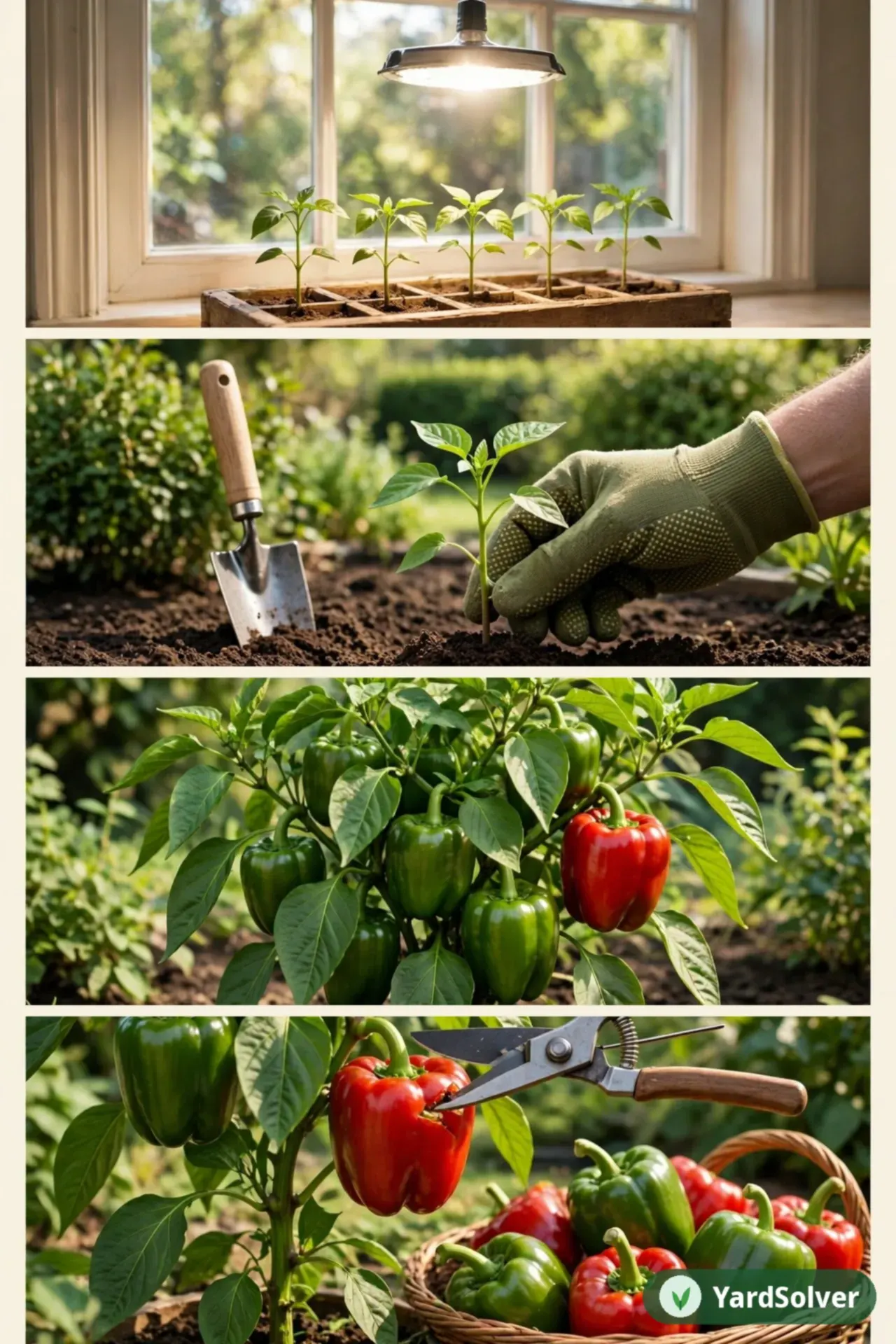
How to plant and grow pepper, step by step
Step 1 — Time it right
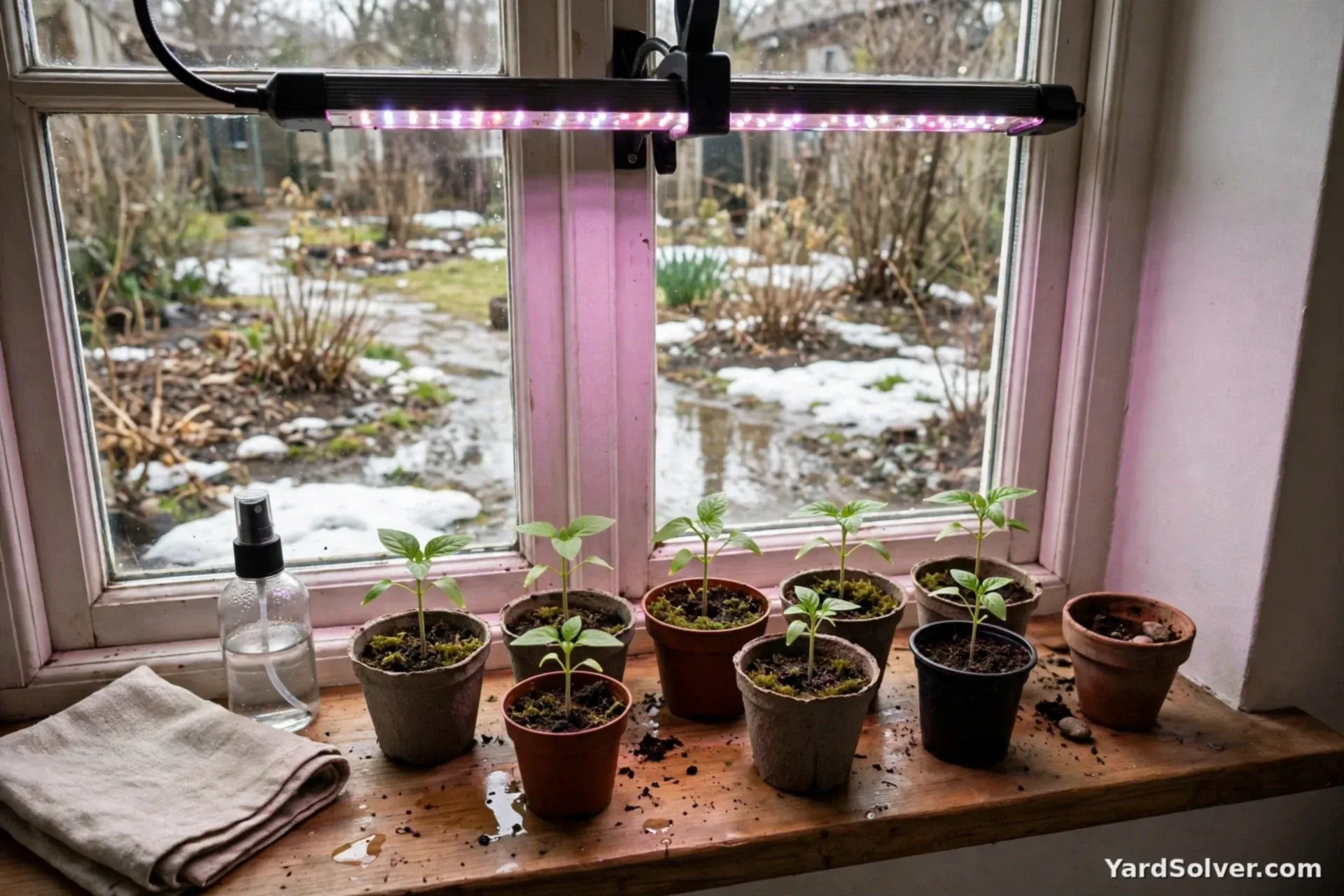
Sow indoors: 10 weeks before last frost; Move outside: 3 weeks after last frost. All dates count from your average last spring frost — the Planting Calendar turns them into real dates for your garden. Peppers are the slowest starters in the garden: sow indoors about 10 weeks before your last frost and transplant about 3 weeks after it, into warm soil in full sun.
Step 2 — Prepare the spot
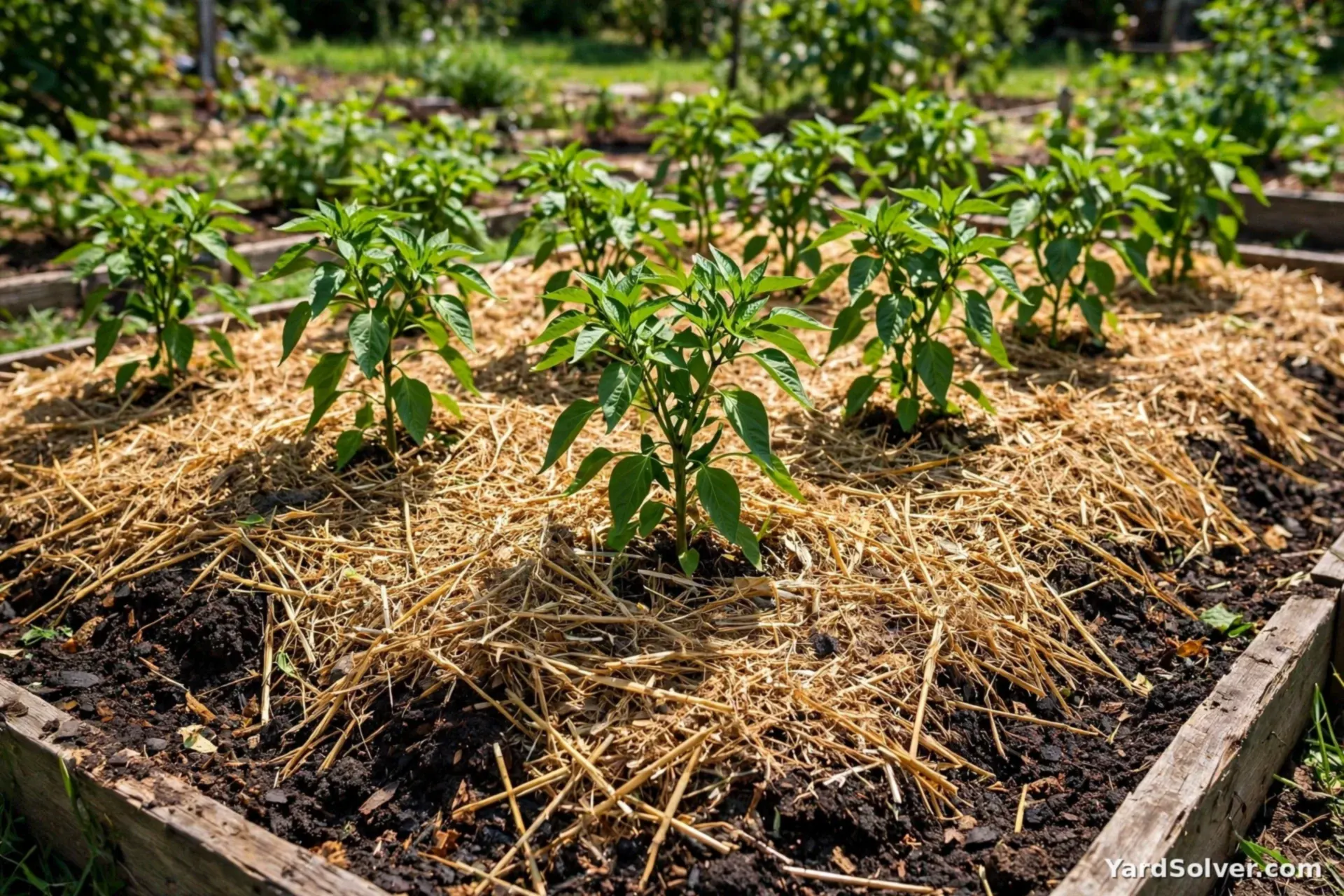
Sun: Full sun. Rich soil with compost worked in before planting, and a mulch on top once plants are growing. For these hungry, thirsty crops, steady moisture matters more than anything else. Work out how much you need with the Garden Mix Calculator or the Raised Bed Soil Calculator.
Step 3 — Sow and plant out
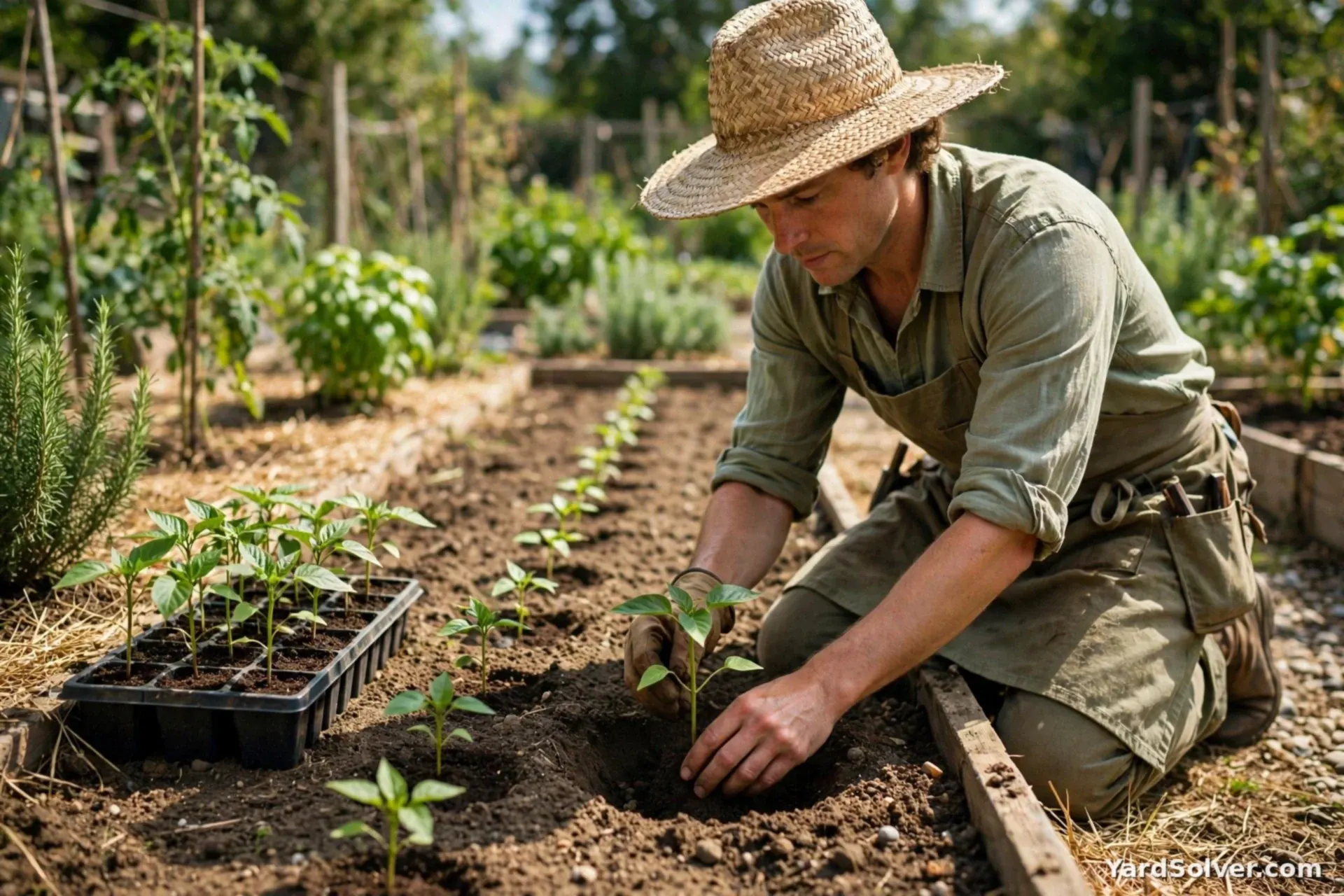
Start seed indoors 10 weeks before last frost, sowing 1/4 in deep. Grow seedlings on in strong light, then harden them off over 7–10 days (see How to Harden Off Seedlings) and move them outside 3 weeks after last frost, spaced 18 in apart. The Plant Spacing Calculator turns that spacing into plants-per-bed.
Step 4 — Water and feed
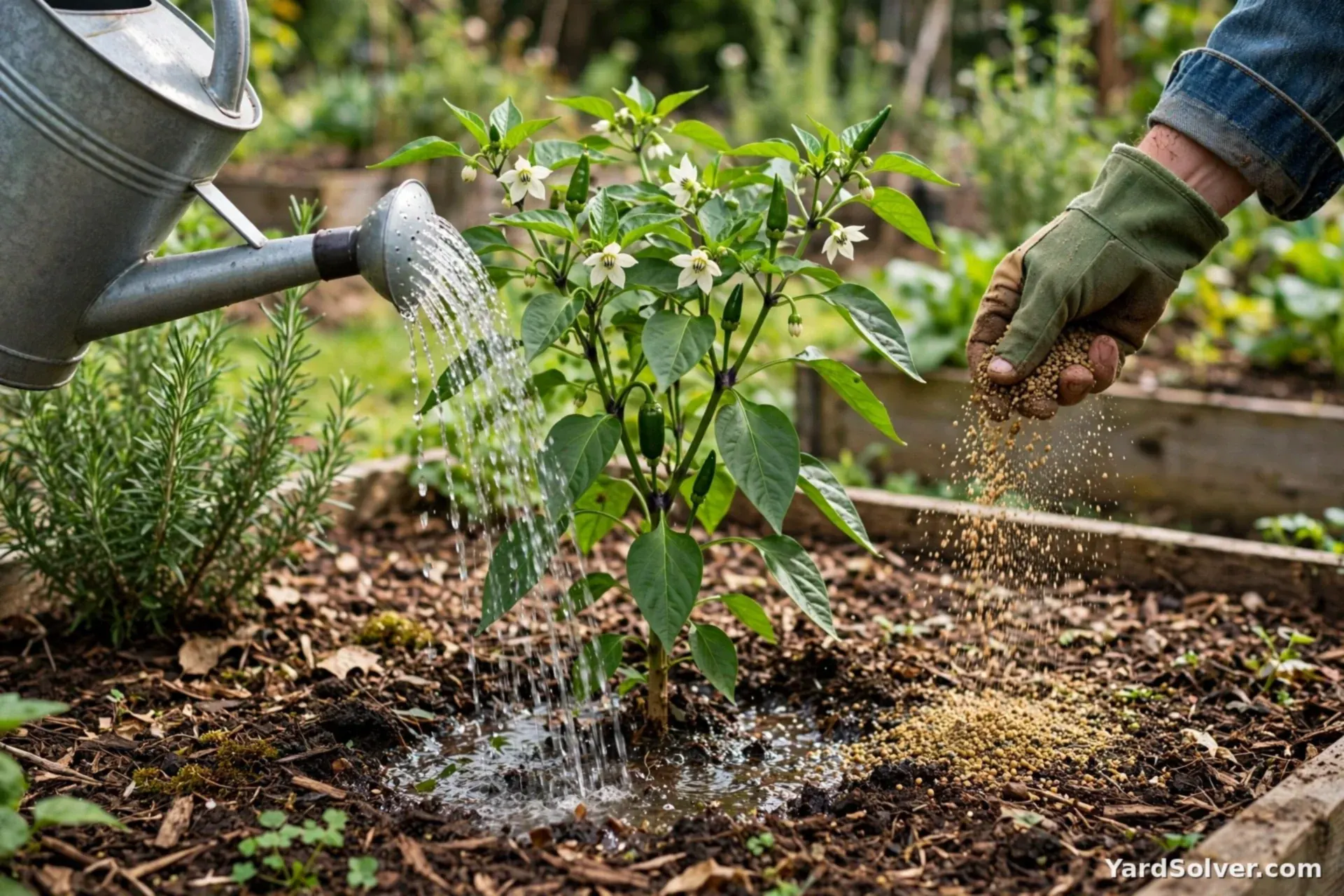
Water: Regular; mulch to hold moisture. First feed: around day 28 — Feed once flowering begins, about four weeks after transplanting, and top up the mulch. The Fertilizer Calculator turns a bed size into the right amount.
Step 5 — Care and the problems to watch for
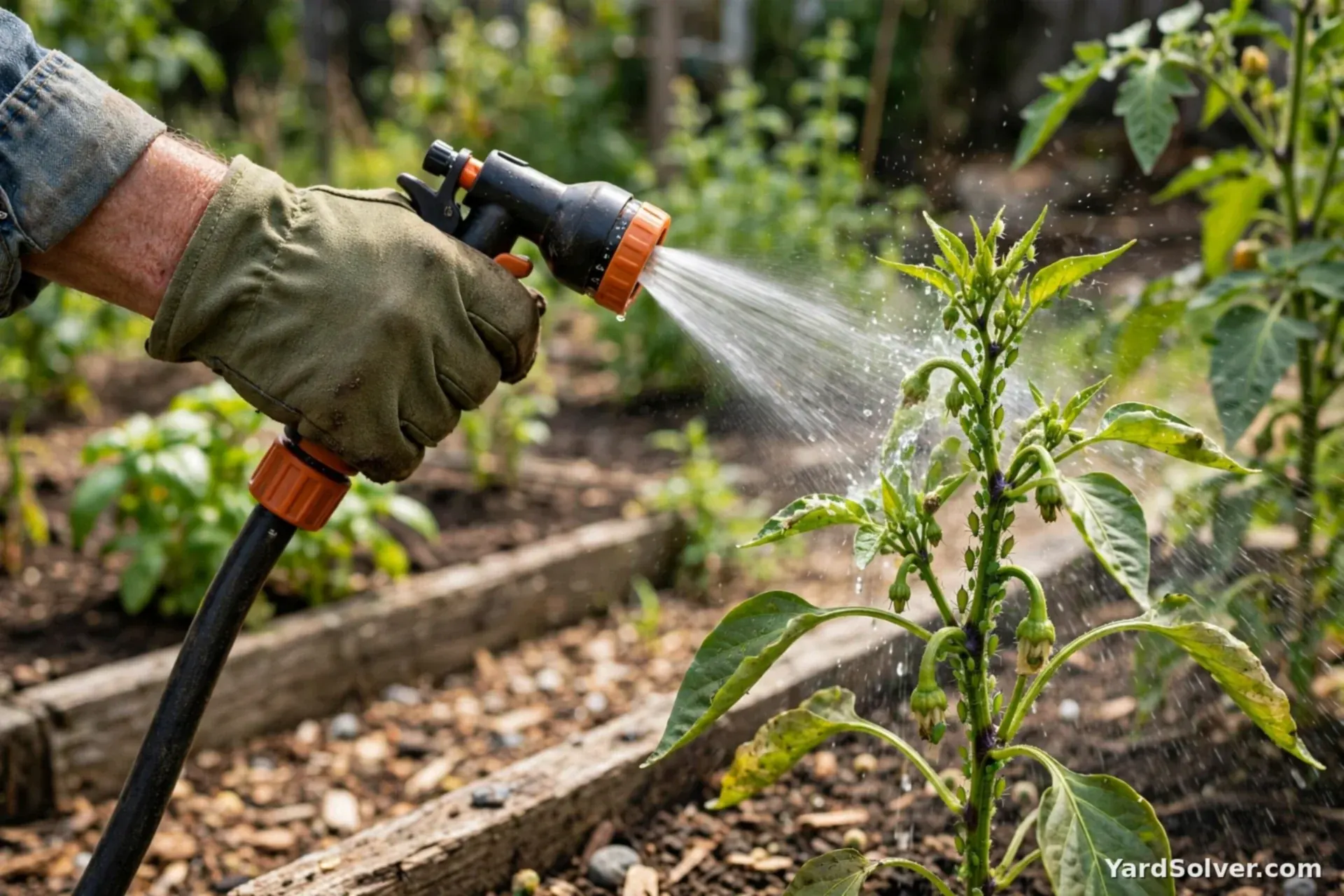
- Blossom end rot on fruit — keep watering even, especially in pots.
- Aphids on soft new growth — blast off with water or wipe away.
- Sunscald — pale patches on fruit in very hot sun; a little leaf cover protects them.
Take care: Hot peppers can irritate the stomach and trigger heartburn in some people. Peppers are in the nightshade family, and some people who are sensitive to nightshades choose to limit them. Wash hands after cutting hot chillies — the oils can burn eyes and skin.
Step 6 — Harvest
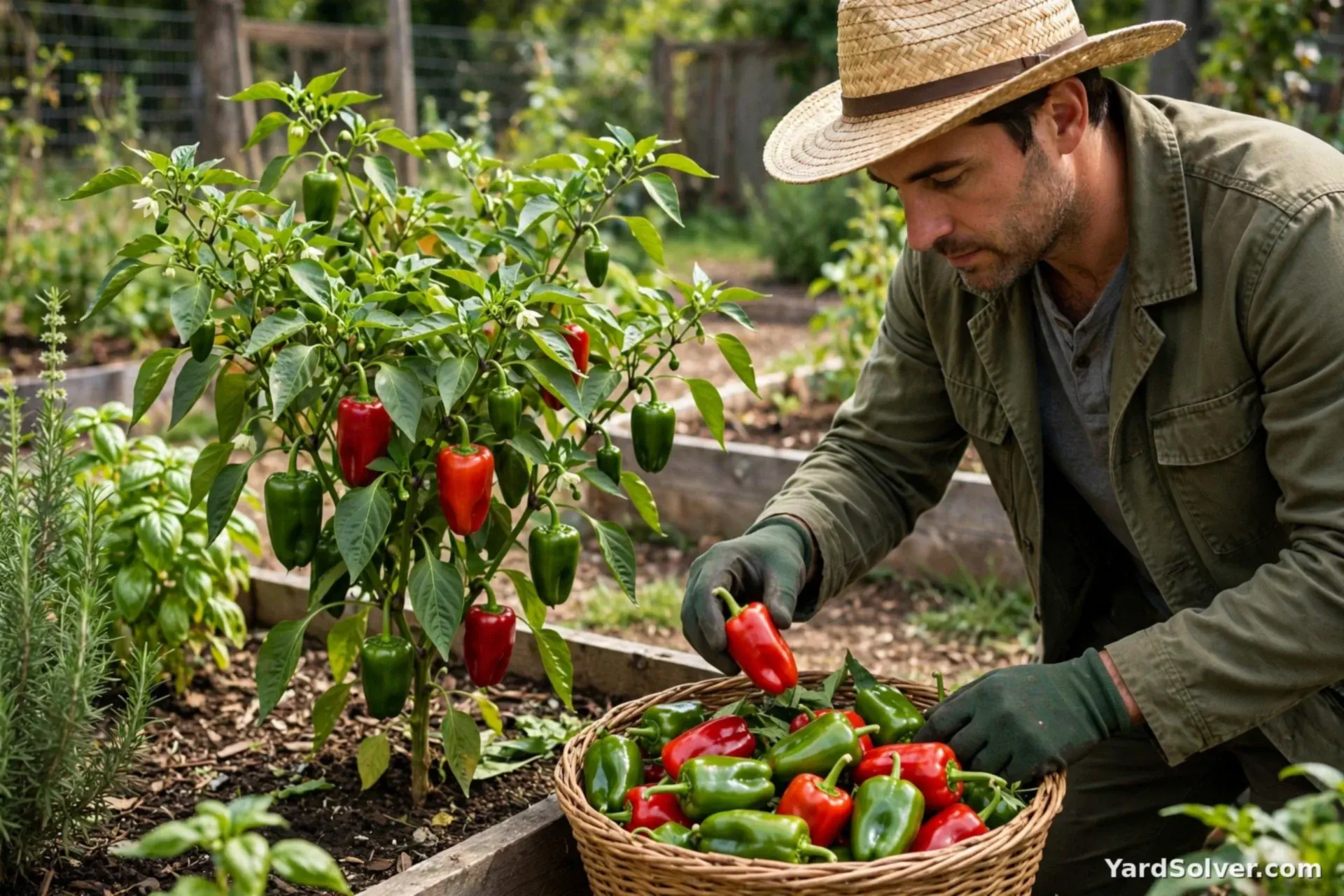
Ready in: 60–90 days after transplant. Harvest runs from about day 60 to 90 after transplant — pick green, or leave fruit to ripen red.
📅 Your personal Pepper schedule
Counted from your planting day — not a generic calendar. Day 0 is the day the seed went in the ground or the young plant went out.
Varieties worth growing
| Variety | Colour | Why gardeners like it |
|---|---|---|
| California Wonder | Green ripening to red | The classic blocky bell pepper, good picked green or left to sweeten red |
| King of the North | Green ripening to red | A bell bred for short northern summers — sets fruit early in cool weather |
| Jalapeño | Green ripening to red | Medium-hot and thick-walled, the standard chilli for salsa and pickling |
| Cayenne | Red | Long, thin and hot — easy to dry and grind into chilli powder |
| Sweet Banana | Yellow | Mild and tangy, great for frying, salads and pickling |
Good for you — and take care
Benefits
- Very high in vitamin C — a red pepper has more per bite than an orange
- Red and orange peppers provide vitamin A for healthy eyes
- Provides vitamin B6 and folate
- Low in calories and provides some fibre
- Full of natural plant antioxidants
Take care
- Hot peppers can irritate the stomach and trigger heartburn in some people
- Peppers are in the nightshade family, and some people who are sensitive to nightshades choose to limit them
- Wash hands after cutting hot chillies — the oils can burn eyes and skin
A little history — and one good fact
Peppers come from Central and South America, where people grew them for thousands of years before Columbus carried them back to Europe. Traders then spread peppers around the world, and they became central to cooking in Asia, Africa and Europe. The mild, thick-walled bell peppers we stuff and slice were bred much later from their spicy wild cousins.
Fun fact: Every bell pepper starts out green — red, orange and yellow peppers are the same fruit simply left on the plant to ripen longer.
Keep going
Guides: When to Start Seeds Indoors · How to Prepare Garden Soil in Spring · How to Harden Off Seedlings
Calculators: Plant Spacing Calculator · Seed Calculator · Fertilizer Calculator · Garden Mix Calculator
More vegetables: Tomato · Cucumber · Chilli Pepper · Tomatillo
← Back to the Plant Library · Get your personal planting dates
Questions people ask
When do I plant pepper?
Count from your average last spring frost: sow indoors 10 weeks before last frost; move outside 3 weeks after last frost. Peppers are the slowest starters in the garden: sow indoors about 10 weeks before your last frost and transplant about 3 weeks after it, into warm soil in full sun.
How far apart do I space pepper?
Space plants 18 in apart, with seed sown 1/4 in deep. Sun: full sun.
When is pepper ready to harvest?
60–90 days after transplant. The slowest starter — sow indoors earliest of all.
Related guide
Read next: What Seeds to Start Indoors in January: 8 Slow Crops.
Blossom end rot and sunscald: the two pepper problems a steady watering rhythm solves
The black, sunken patch on the bottom of an otherwise perfect pepper is blossom end rot, and it is rarely about how much calcium is in your soil. It is about delivery: the plant moves calcium to the fruit dissolved in water, so any week where the roots swing between dry and soaked starves the far end of the fruit even in rich soil. The fix is rhythm, not fertiliser — a deep watering on a regular schedule, and a 5–8 cm mulch layer to hold the moisture steady between waterings. Fruit that sets during a dry spell may still show the patch; fruit that sets after the rhythm steadies almost never does.
Sunscald is the partner problem: a pale, papery blister on the side of the fruit where hard afternoon sun hits a pepper that lost its leaf cover. Resist pruning peppers the way you prune tomatoes — every leaf above a fruit is its parasol. If a plant is defoliated by hail or pests, a piece of shade cloth over the worst of the afternoon sun for two weeks protects the exposed crop while the canopy regrows.
The worked example: two identical bell pepper plants, one watered deeply every third day under mulch, one watered lightly whenever it wilted. By the end of August the steady plant typically carries a dozen clean fruit; the wilt-and-soak plant loses its first flush — often 4–6 fruit — to blossom end rot before it settles, and its later fruit runs smaller. Same soil, same feed, same variety: the only difference was the rhythm of the water arriving.
Sources
Key facts on this page — timing, spacing and care — cross-checked against University of Minnesota Extension — Growing peppers in home gardens — watering, spacing and harvest guidance.
Related page
Read next: How to Overwinter Pepper Plants Indoors (Wake in Spring).
Comments & ratings
No comments yet.
Be the first to share your experience.