
Plant Library · Vegetables · By Faizan Ahmad
🍅 How to Grow Tomatillo
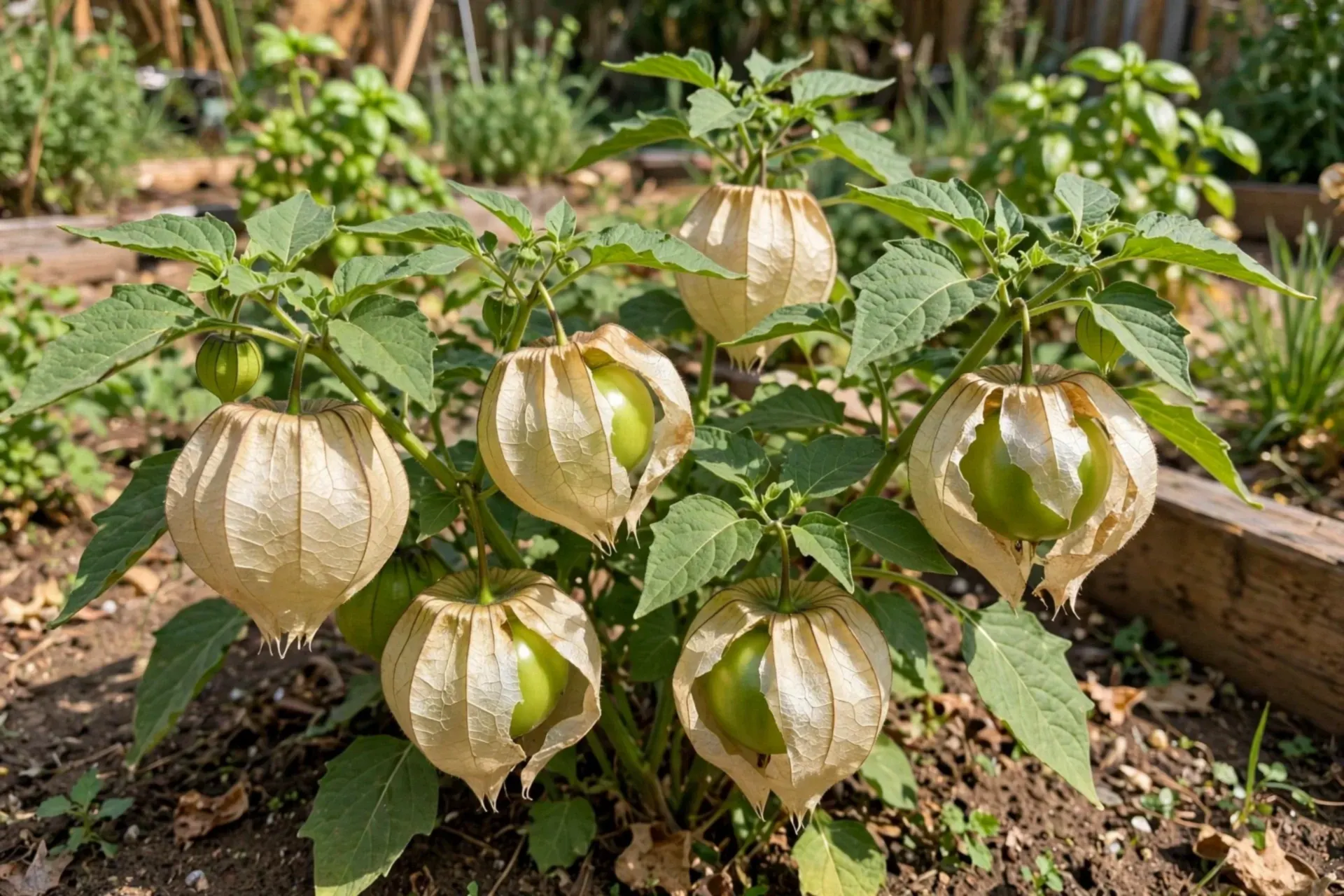
The papery-husked green tomato of Mexican cooking: always plant at least two — a lone tomatillo plant sets almost no fruit — and expect ripe fruit to drop to the ground still in its husk. Tomatillos grow like sprawling tomatoes, but the fruit hides inside a papery husk that splits as it ripens. One rule matters above all: plant two or more. Tomatillos cannot pollinate themselves well, and a single plant will flower all summer and set almost nothing.
Grow Tomatillo with us — step by step
Everything for this plant is written step by step below — what to do, and exactly when. Read it through first if you like: you can grow it entirely on your own with that guide. Or start with us here — tell us your planting day and we lay out your personal schedule on this page, every next step on its own day, counted from your planting date. No guessing, no forgetting.
Step 1 — today: Plant out your young Tomatillo plants today — at least two of them — spaced 24–36 in apart, and water them in well. Give them a cage or stakes now, while they are small.
Tomatillo at a glance
Sow indoors: 6 weeks before last frost
Move outside: 2 weeks after last frost
Spacing: 24–36 in · Seed depth: 1/4 in
Sun: Full sun
Water: Regular, especially while fruit sets
Harvest: 75–100 days after transplant
Timing counts from your average last spring frost — get your own dates in the Planting Calendar. Guidance follows standard extension-service practice for Canada and the US.
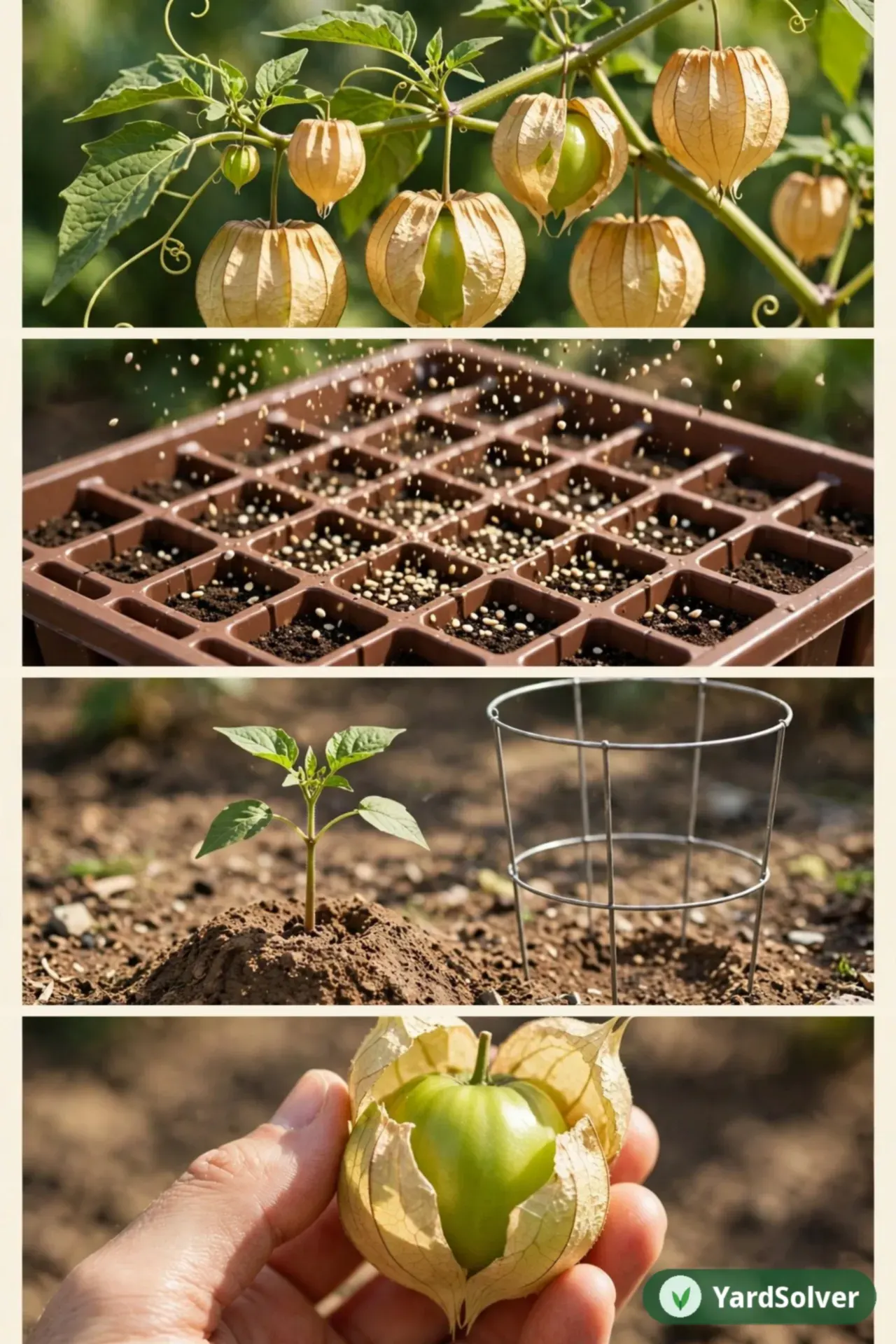
How to plant and grow tomatillo, step by step
Step 1 — Time it right
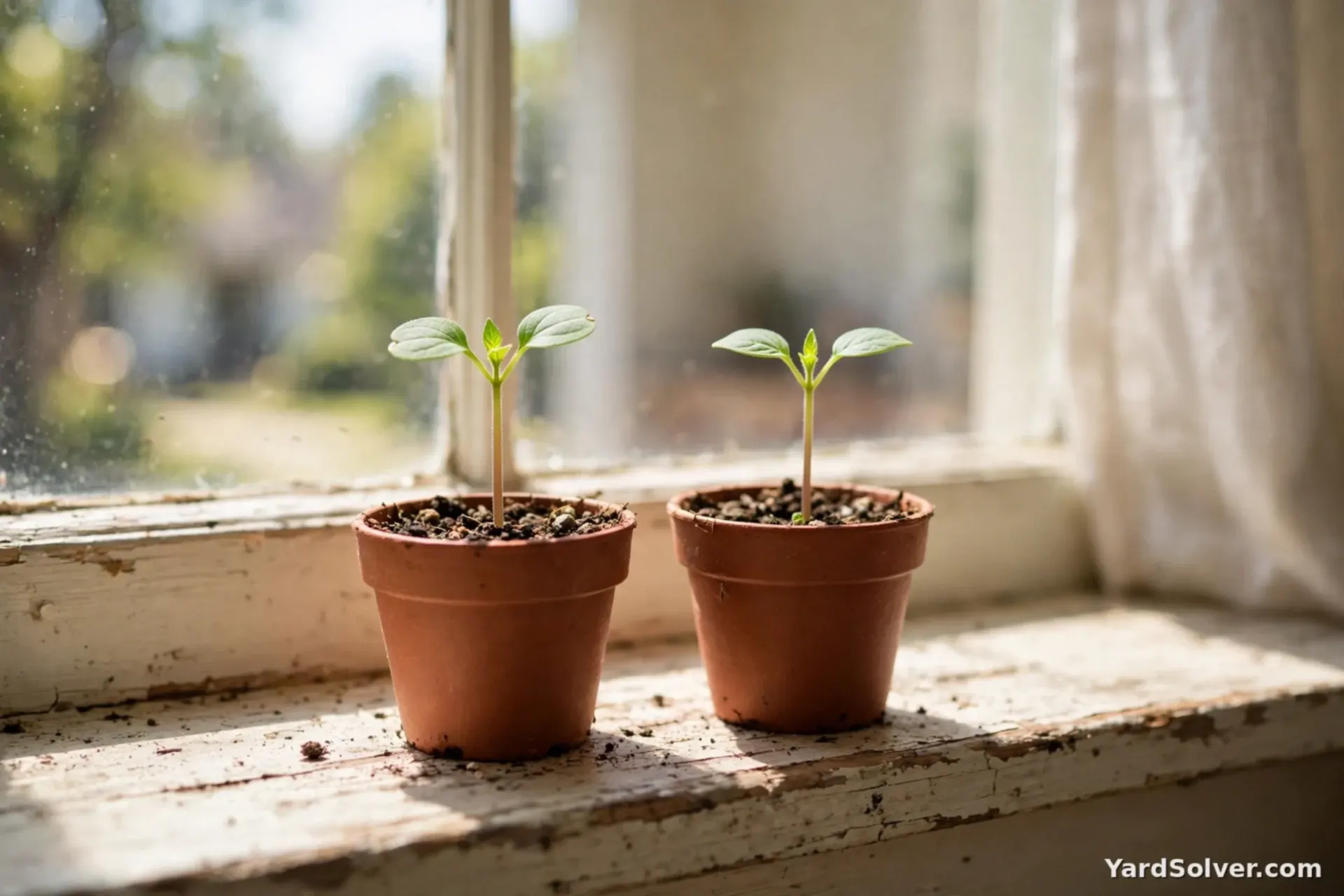
Sow indoors: 6 weeks before last frost; Move outside: 2 weeks after last frost. All dates count from your average last spring frost — the Planting Calendar turns them into real dates for your garden. Tomatillos grow like sprawling tomatoes, but the fruit hides inside a papery husk that splits as it ripens. One rule matters above all: plant two or more. Tomatillos cannot pollinate themselves well, and a single plant will flower all summer and set almost nothing.
Step 2 — Prepare the spot
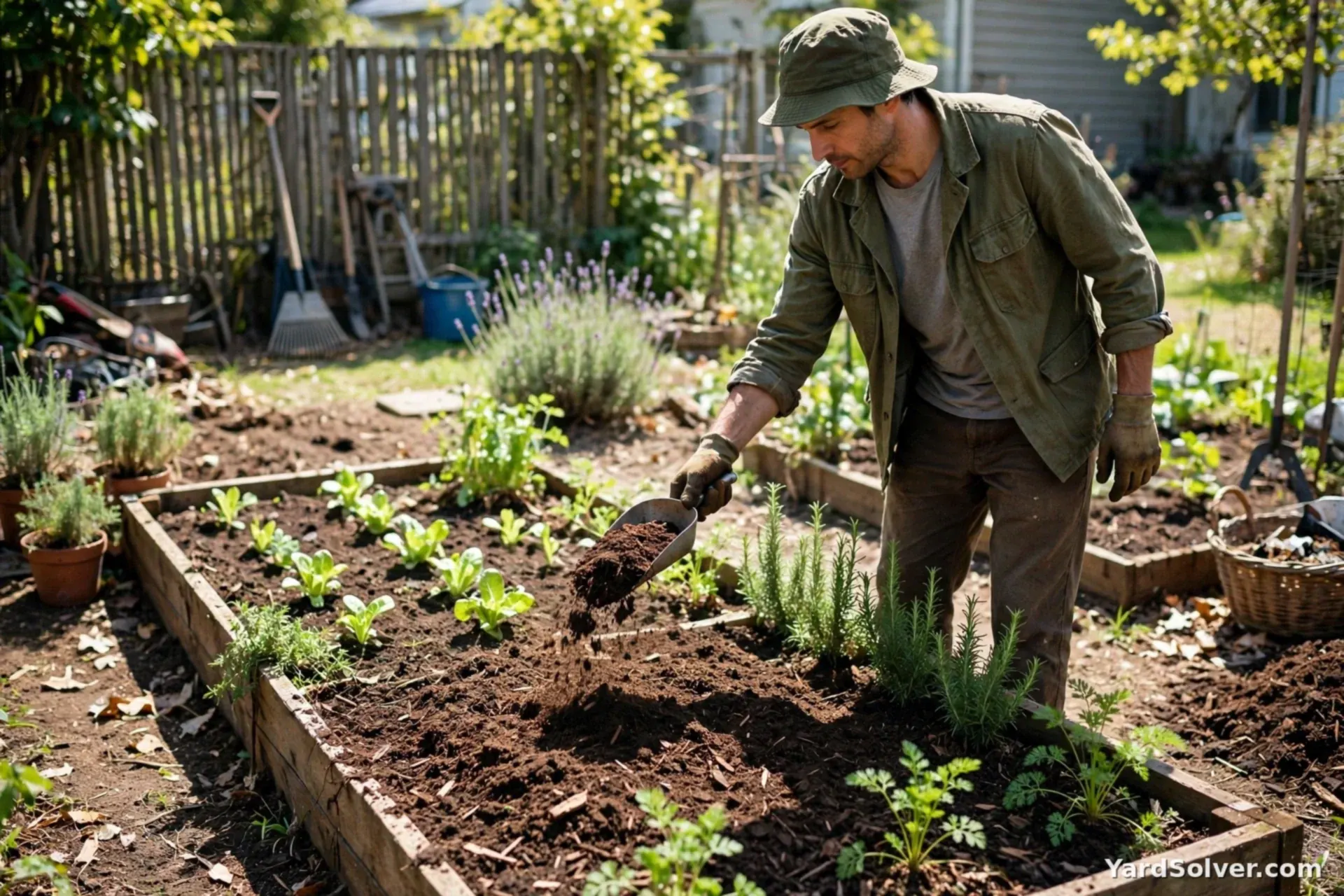
Sun: Full sun. Ordinary, well-drained garden soil — tomatillos are less fussy than tomatoes; work in compost before planting, but skip heavy feeding, which makes leaves instead of fruit. Work out how much you need with the Garden Mix Calculator or the Raised Bed Soil Calculator.
Step 3 — Sow and plant out
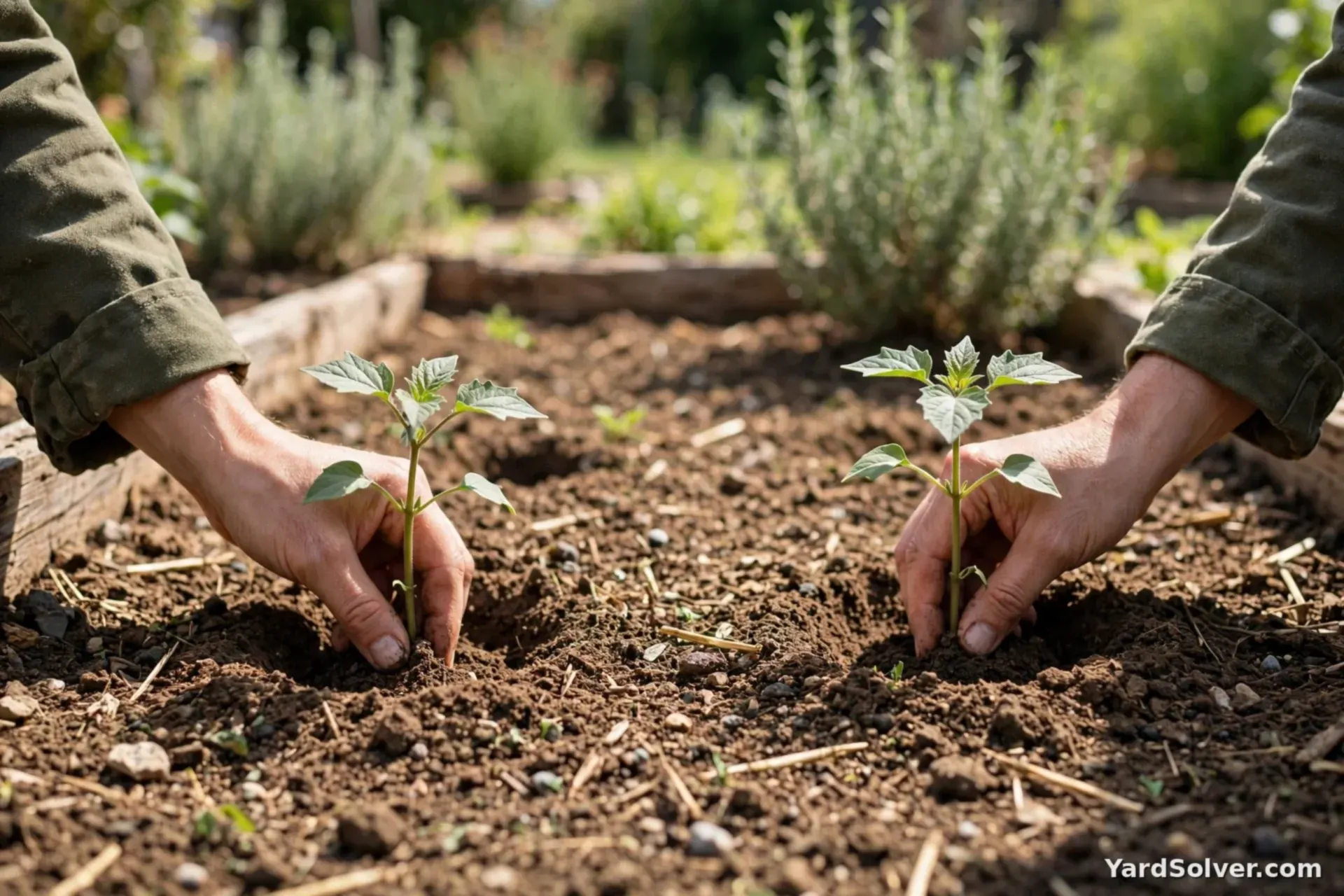
Start seed indoors 6 weeks before last frost, sowing 1/4 in deep. Grow seedlings on in strong light, harden them off over 7–10 days (see How to Harden Off Seedlings) and move them outside 2 weeks after last frost, spaced 24–36 in apart — and always plant two or more together. The Plant Spacing Calculator turns that spacing into plants-per-bed.
Step 4 — Water and feed
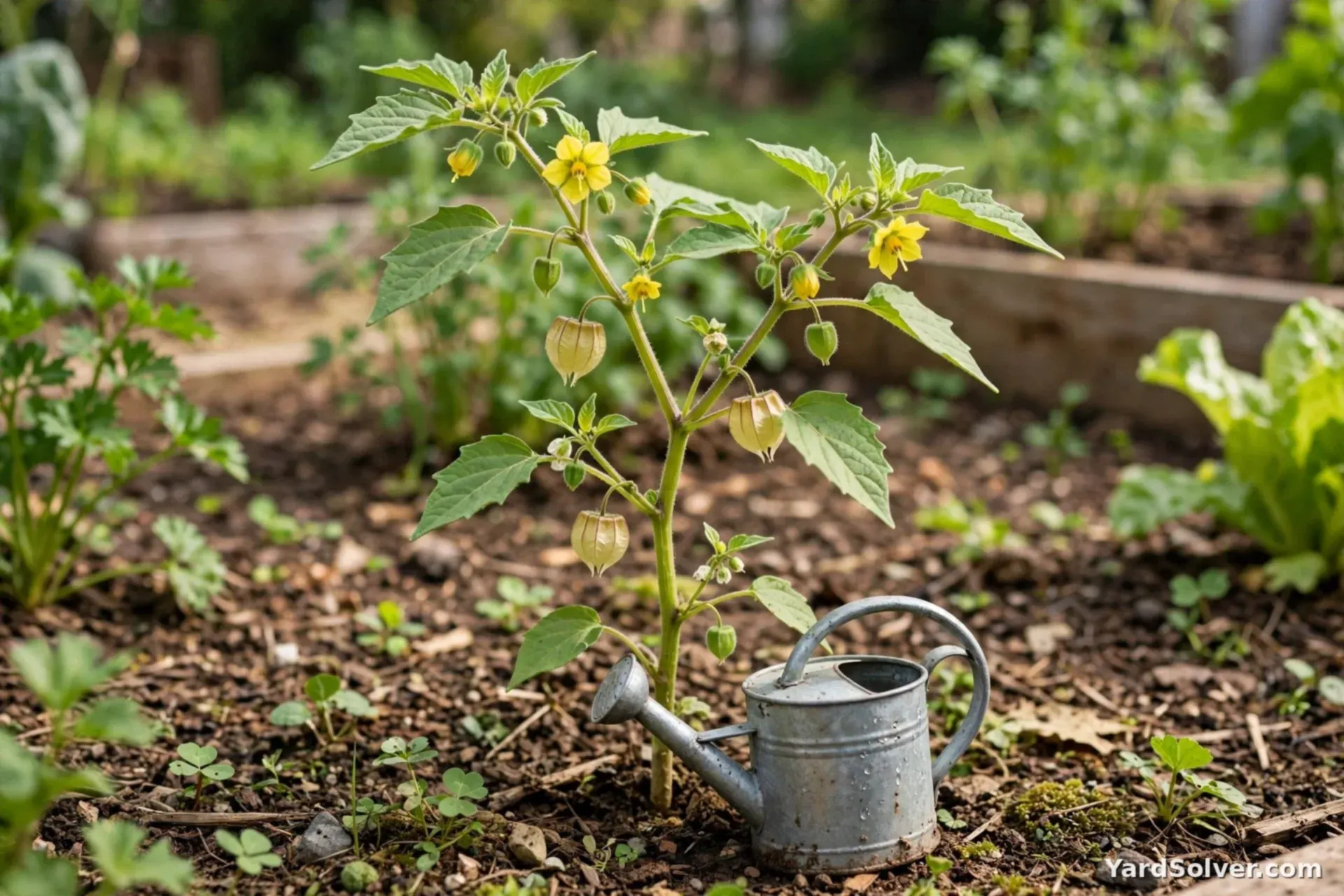
Water: Regular, especially while fruit sets. First feed: around day 30 — Feed about a month after transplanting, once the first lantern-like husks are forming, and keep the water steady in dry spells. The Fertilizer Calculator turns a bed size into the right amount.
Step 5 — Care and the problems to watch for
- Flowers but no fruit — almost always a single plant with no pollination partner; plant two or more next time.
- Fruit dropping unripe — check the ground daily: fallen fruit still in a clean husk is usually ripe and fine to use.
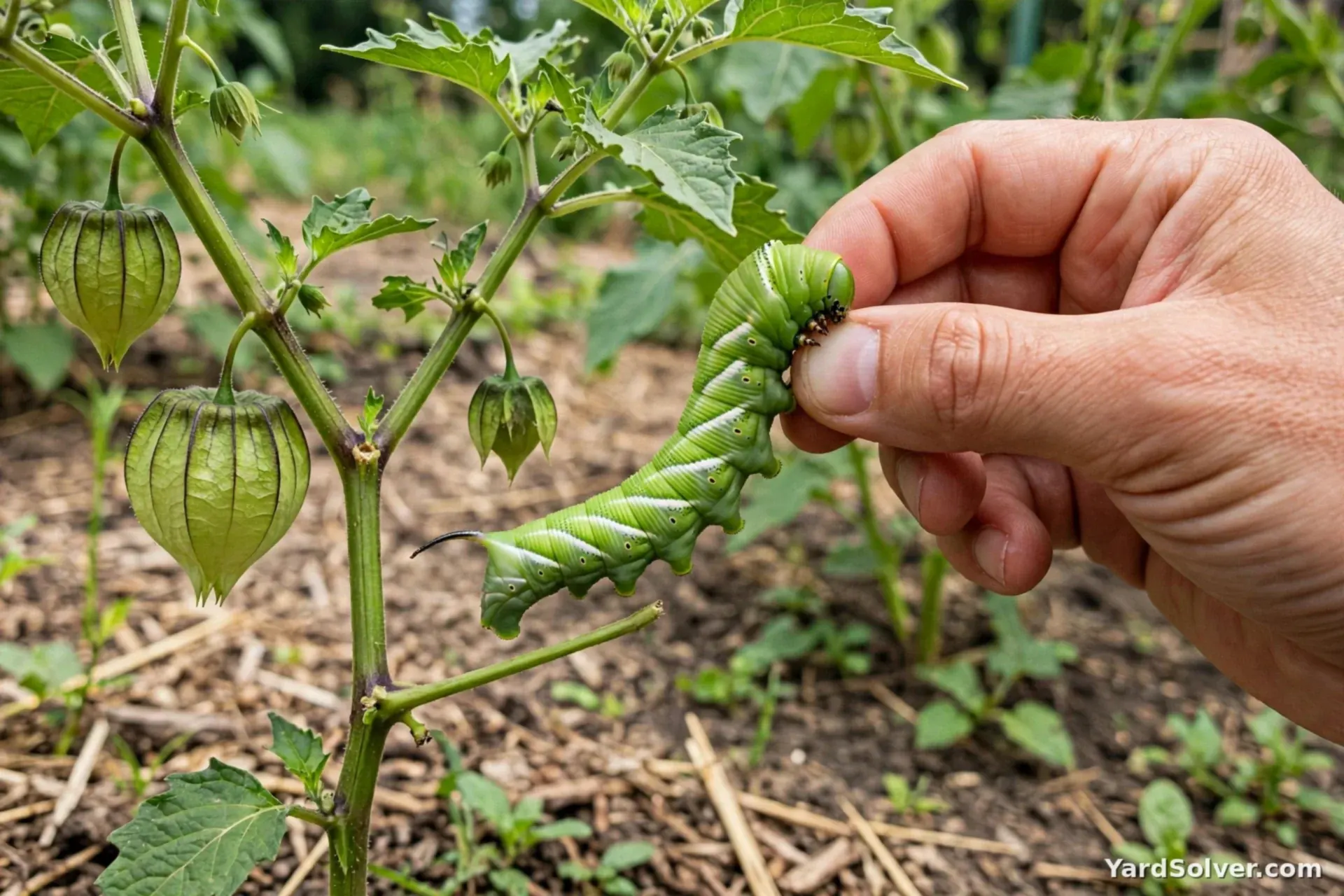
- Hornworms and flea beetles — pick hornworms off by hand; young plants can be covered with mesh against flea beetles.
Take care: Always remove the husk and wash the fruit — tomatillos have a sticky coating under the husk that needs rinsing off.
Step 6 — Harvest
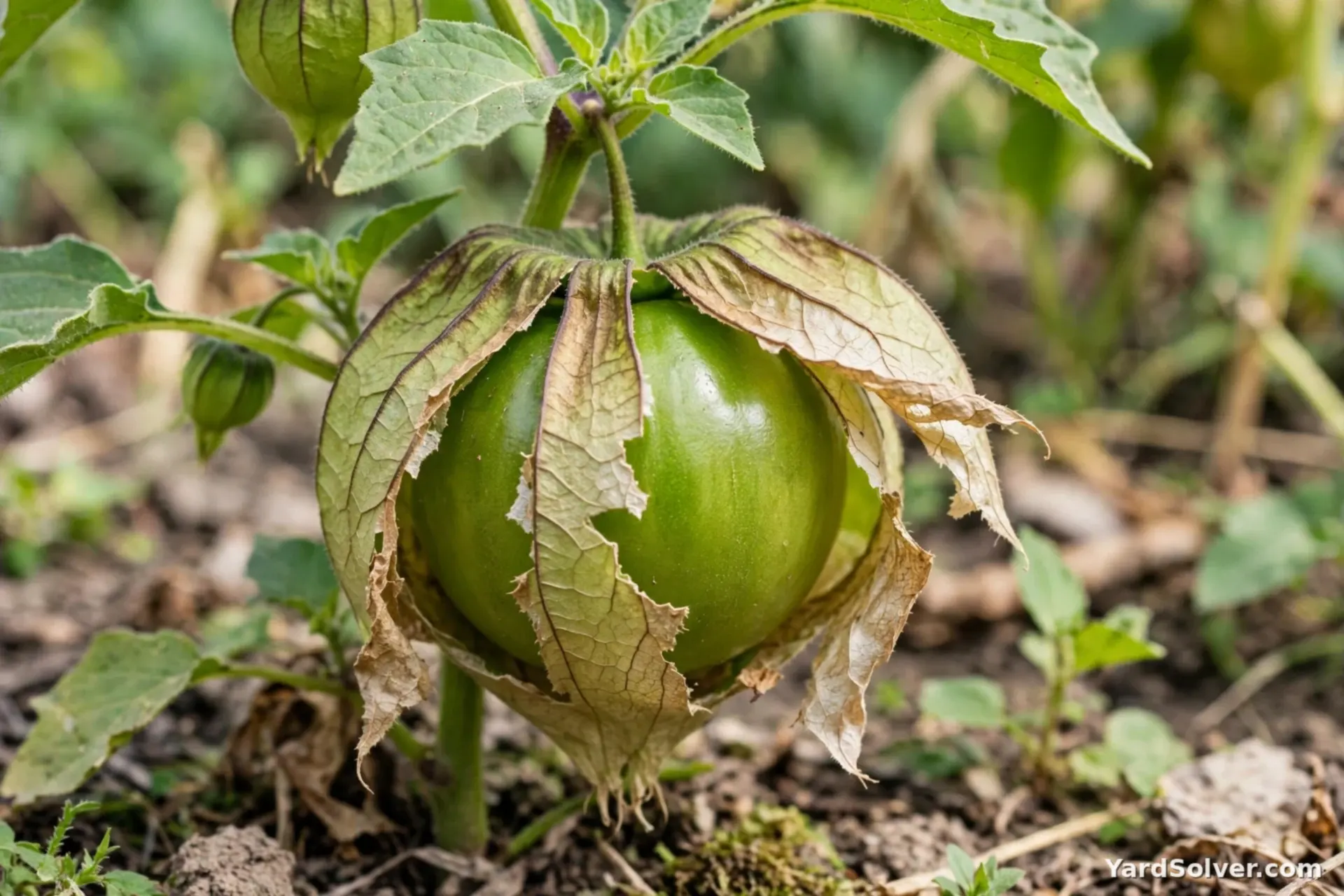
Ready in: 75–100 days after transplant. Pick from about day 75 once fruit fills or splits the husk; keep picking and the plants produce until frost.
📅 Your personal Tomatillo schedule
Counted from your planting day — not a generic calendar. Day 0 is the day the seed went in the ground or the young plant went out.
Varieties worth growing
| Variety | Colour | Why gardeners like it |
|---|---|---|
| Toma Verde | Green | The classic salsa verde tomatillo — big, tart, reliable fruit |
| Purple | Purple-blushed | Sweet enough to eat raw, with striking purple markings as it ripens |
| Pineapple | Golden | A small, golden and sweet tomatillo — almost a dessert fruit |
| Grande Rio Verde | Green | Large-fruited and heavy-yielding, bred for salsa batches |
| Cisineros | Green | An improved, uniform variety that sets fruit early |
Good for you — and take care
Benefits
- Provides vitamin C, which supports the immune system
- A source of potassium and fibre
- Low in calories for its size
- The tart flavour comes with very little natural sugar for a fruit
- Green salsa made from tomatillos keeps the harvest useful for months in the freezer
Take care
- Wash off the sticky film under the husk before eating
- Leaves and stems of tomatillo (like all tomato-family plants) are not for eating — the ripe fruit is the food
- Green (unripe-looking) is ripe for most varieties — judge by the filled husk, not the colour
A little history — and one good fact
Tomatillos were grown in Mexico long before the Spanish arrived — the Aztecs cultivated them alongside tomatoes, and the word tomatl covered both. They remain the base of salsa verde, and the plant still grows semi-wild around Mexican fields and gardens.
Fun fact: A tomatillo left on the ground in its husk often survives light frosts that kill the plant — gardeners find good fruit weeks after the vines blacken.
Keep going
Guides: How to Start Tomato Seeds Indoors · How to Harden Off Seedlings · Why Are My Tomato Leaves Curling?
Calculators: Plant Spacing Calculator · Seed Calculator · Fertilizer Calculator · Garden Mix Calculator
More vegetables: Tomato · Chilli Pepper · Ground Cherry
← Back to the Plant Library · Get your personal planting dates
Questions people ask
When do I plant tomatillo?
Count from your average last spring frost: sow indoors 6 weeks before last frost; move outside 2 weeks after last frost. Tomatillos grow like sprawling tomatoes, but the fruit hides inside a papery husk that splits as it ripens. One rule matters above all: plant two or more. Tomatillos cannot pollinate themselves well, and a single plant will flower all summer and set almost nothing.
How far apart do I space tomatillo?
Space plants 24–36 in apart, with seed sown 1/4 in deep. Sun: full sun.
When is tomatillo ready to harvest?
75–100 days after transplant. The papery-husked green tomato of Mexican cooking: always plant at least two — a lone tomatillo plant sets almost no fruit — and expect ripe fruit to drop to the ground still in its husk.
Tomatillos need a partner to fruit, and they tell you they are ripe by filling the husk
The tomatillo (Physalis philadelphica) is a tomato relative grown for the green, tart fruit inside its papery husk, and it has one rule newcomers miss: a single plant sets little or no fruit, because the flowers need pollen from a second plant. Grow at least two, give them the tomato treatment — full sun, rich soil, steady water — and support the sprawling branches before they layer themselves across the bed.
Harvest is judged by the husk, not the calendar: pick when the fruit has grown to fill and just split its husk, while it is still firm and green; left to yellow on the plant it turns sweet and loses the sharp acidity that salsa verde is built on. Plants self-sow freely, so one year's pair usually volunteers the next year's crop.
The worked example: two plants grown together in a sunny bed typically give kilos of fruit from midsummer to frost. The same plant grown alone typically flowers all summer and fruits barely at all — with tomatillos, company is not optional, it is the crop.
Sources
Key facts on this page — timing, spacing and care — cross-checked against NC State Extension Plant Toolbox — Physalis philadelphica — culture and care requirements and Tomatillo — Wikipedia — background on tomatillos and their use.
Related page
Read next: How to Grow Tomatoes from Seed to Harvest, Step by Step.
Comments & ratings
No comments yet.
Be the first to share your experience.