
Guides · Soil · Published October 31, 2026 · By Faizan Ahmad
How to Prepare Garden Soil in Spring
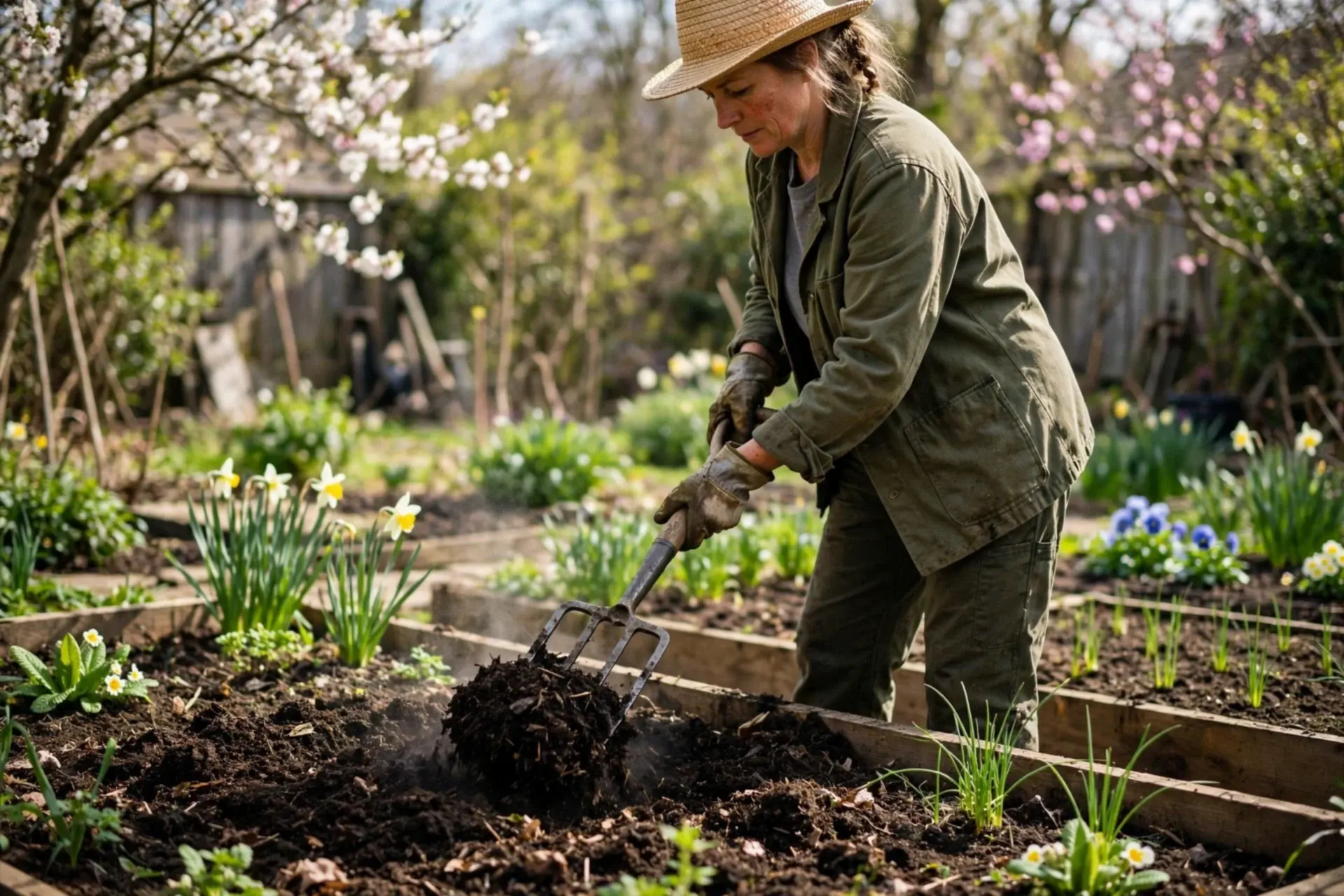
Everything you harvest this year is decided in the next hour of work. Spring soil prep is not complicated — wait until the soil is ready, feed it properly, disturb it as little as it needs — but each step has a wrong way that costs the whole season. Here is the right order.
Step 0 — The readiness test (do not skip this)
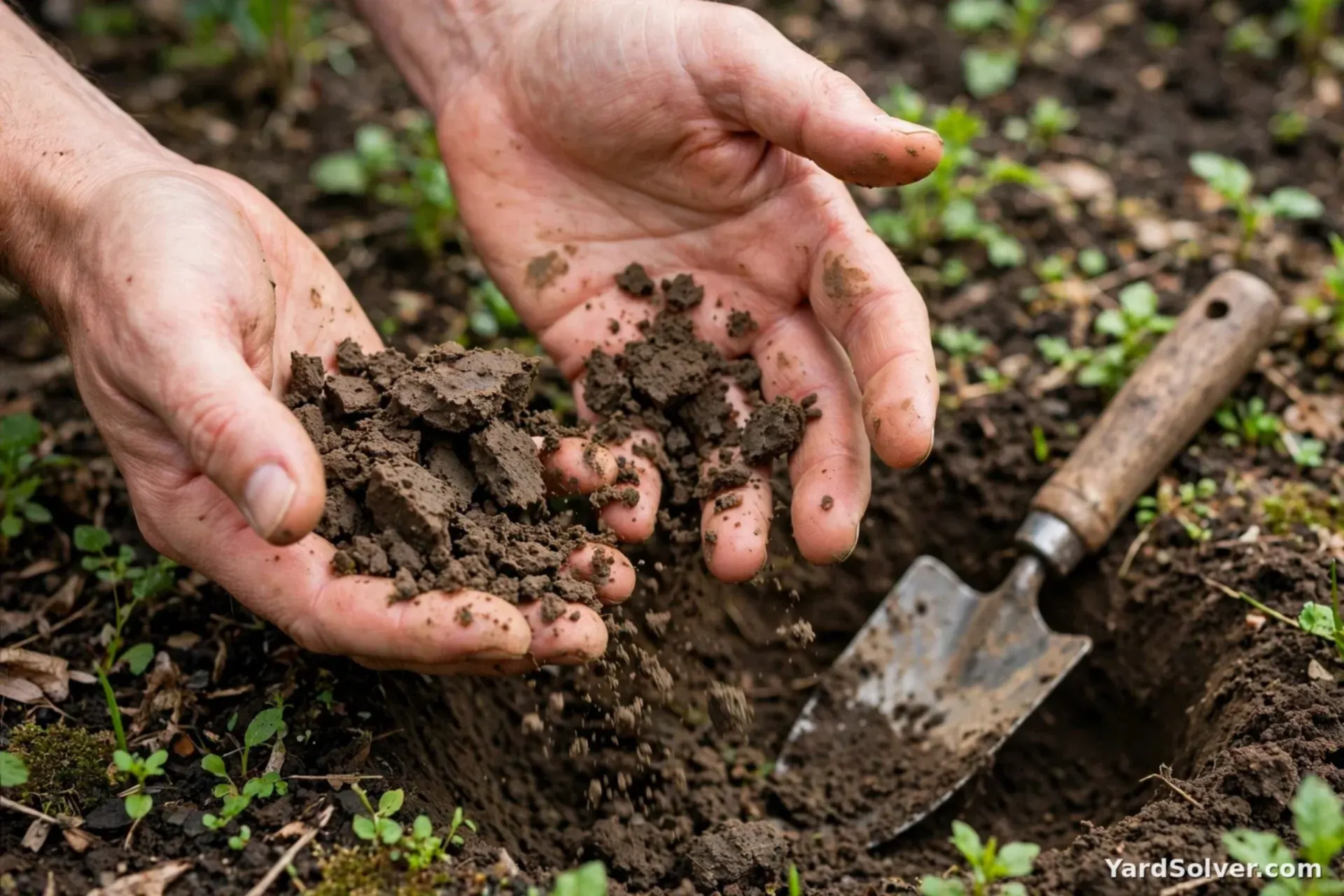
- Dig down about 6 inches and squeeze a handful of soil
- Sticky ball or dripping water = too wet. Working wet soil compacts it into hard clods that roots fight all season — wait a few more days
- Crumbles loosely = ready. Proceed
- A second sign: soil that no longer sticks to your boots in sheets is soil you can walk and work
Step 1 — Clear the bed
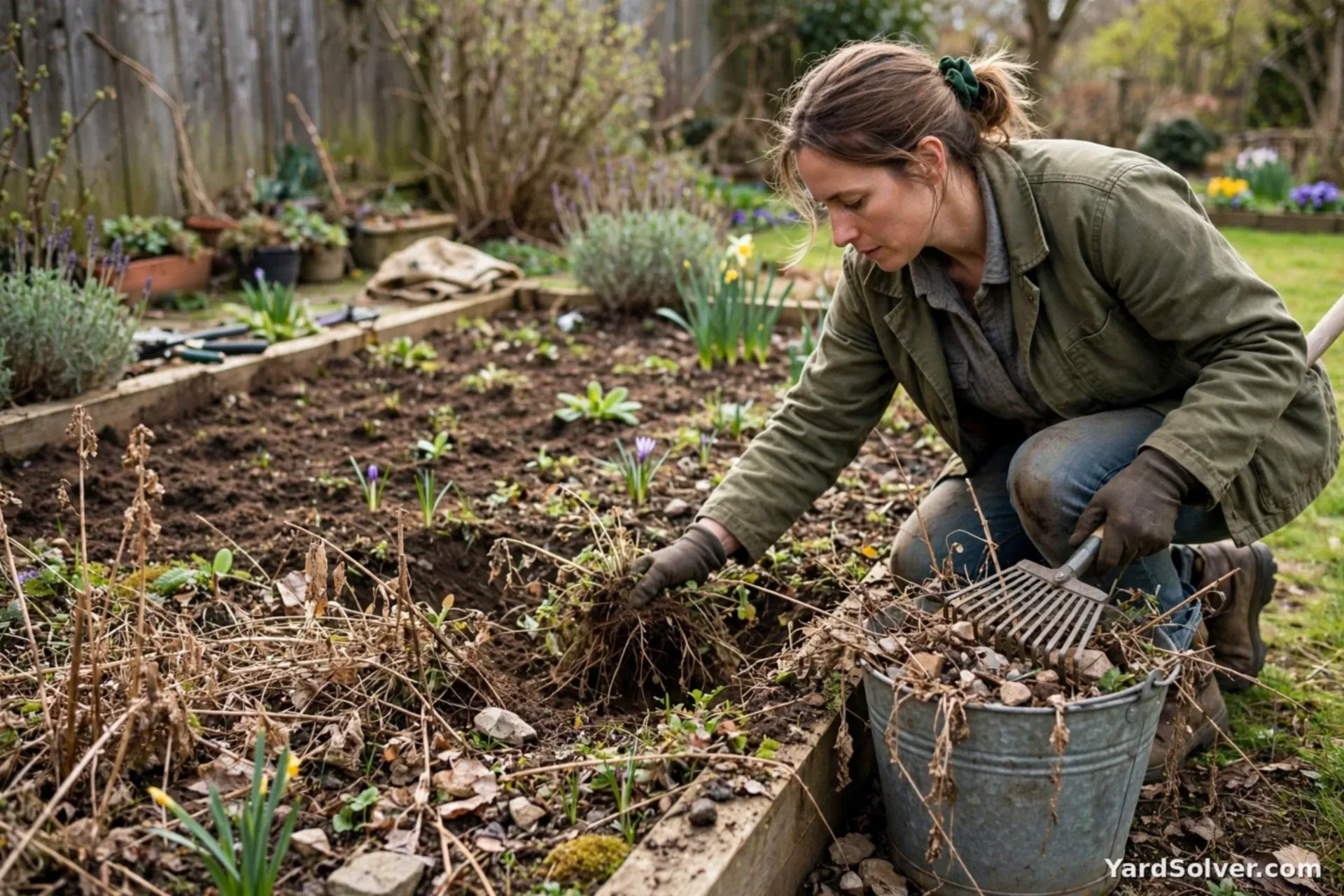
Pull winter weeds before they seed, remove dead annuals you left standing (anything diseased goes in the bin, not the compost — see Putting Your Garden to Bed), and rake off stones and debris. If you sowed a living cover over winter, cut it down now and leave the roots in the soil.
Step 2 — Add compost: 1–2 inches, every spring
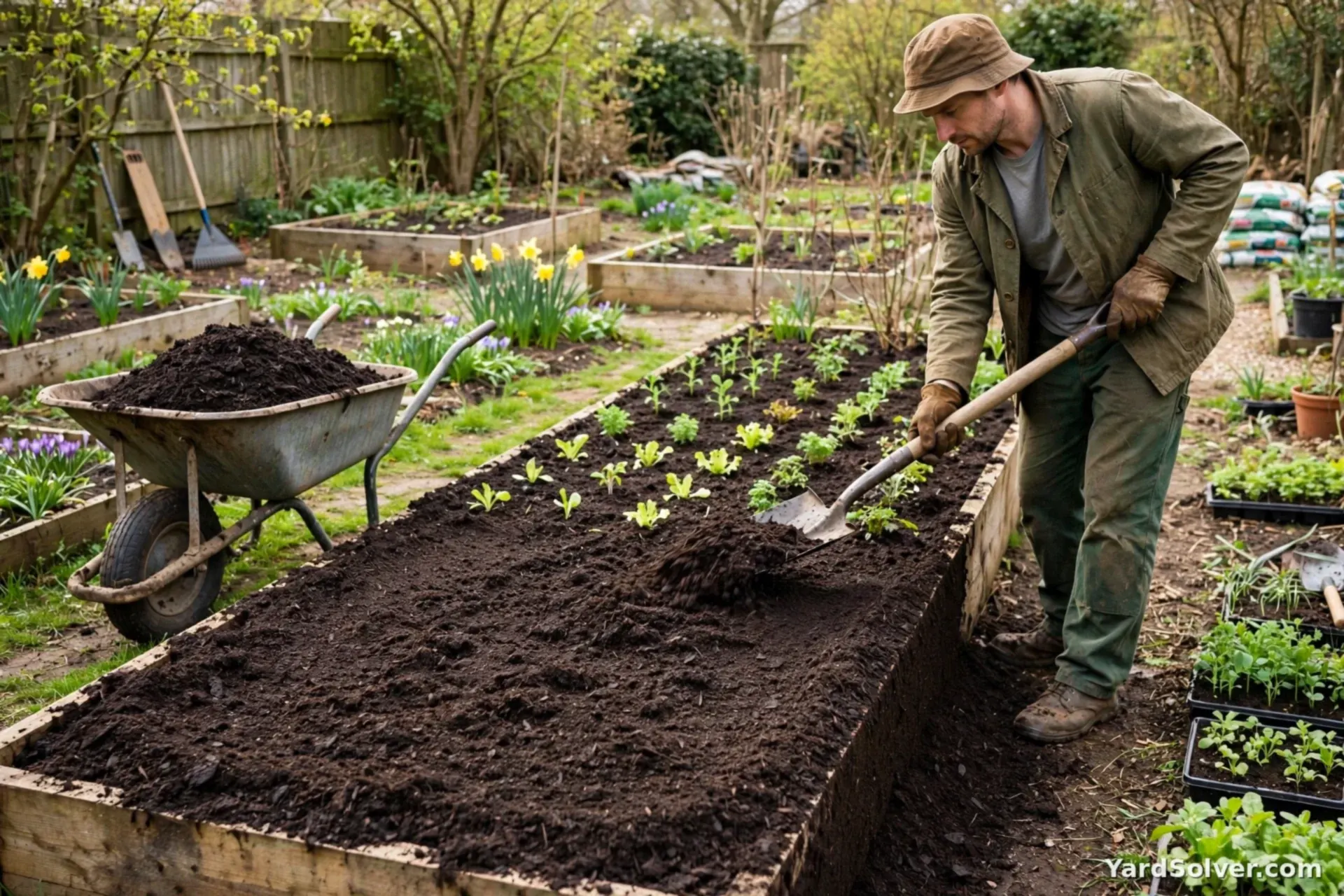
Spread 1–2 inches of finished compost over the whole bed. For an 8 × 4 bed that is about 3–5 cubic feet — get exact numbers for your beds from the Compost Calculator, and bag counts for fresh ground from the Topsoil Calculator. Compost is the one amendment that helps every soil type: it feeds clay and sand alike, holds water, and wakes up soil life. Your own pile's spring output works perfectly — this is where winter composting pays you back.
Step 3 — Loosen gently; dig only if you must
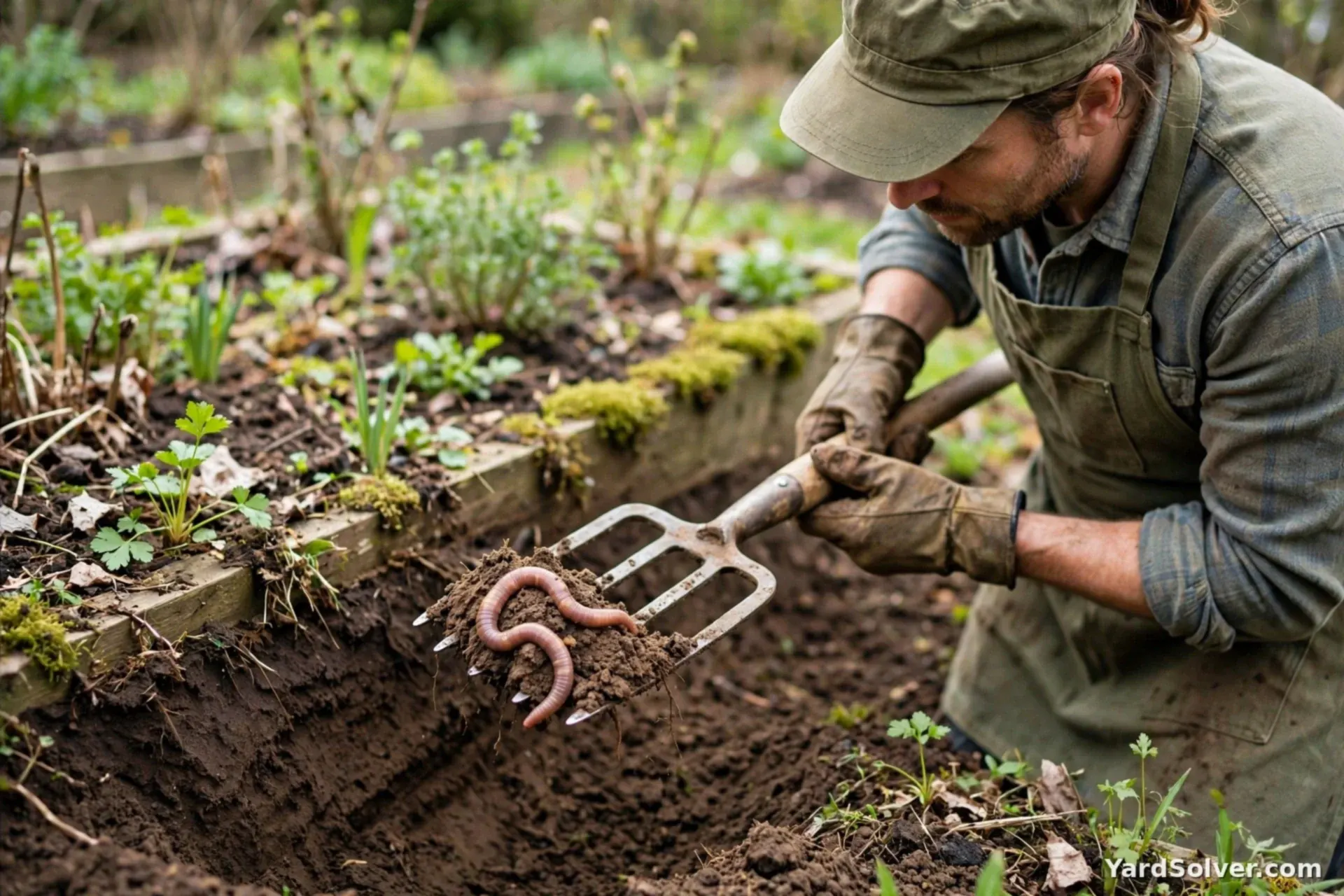
Fork the compost into the top 4–6 inches, or — for established beds — simply leave it on top and let planting holes and worms mix it (the no-dig way). Reserve deep digging and tilling for breaking new ground or rescuing truly compacted soil. Every unnecessary pass of the tiller chops soil structure and surfaces a fresh crop of weed seeds. One exception deserves its own warning: if a bed stays sticky and brick-like even when workable, you may be on heavy clay, which has its own rules and its own timeline — see How to Fix Clay Soil before reaching for sand or gypsum, the two famous shortcuts that make clay worse.
Step 4 — Feed by the numbers if you use fertiliser
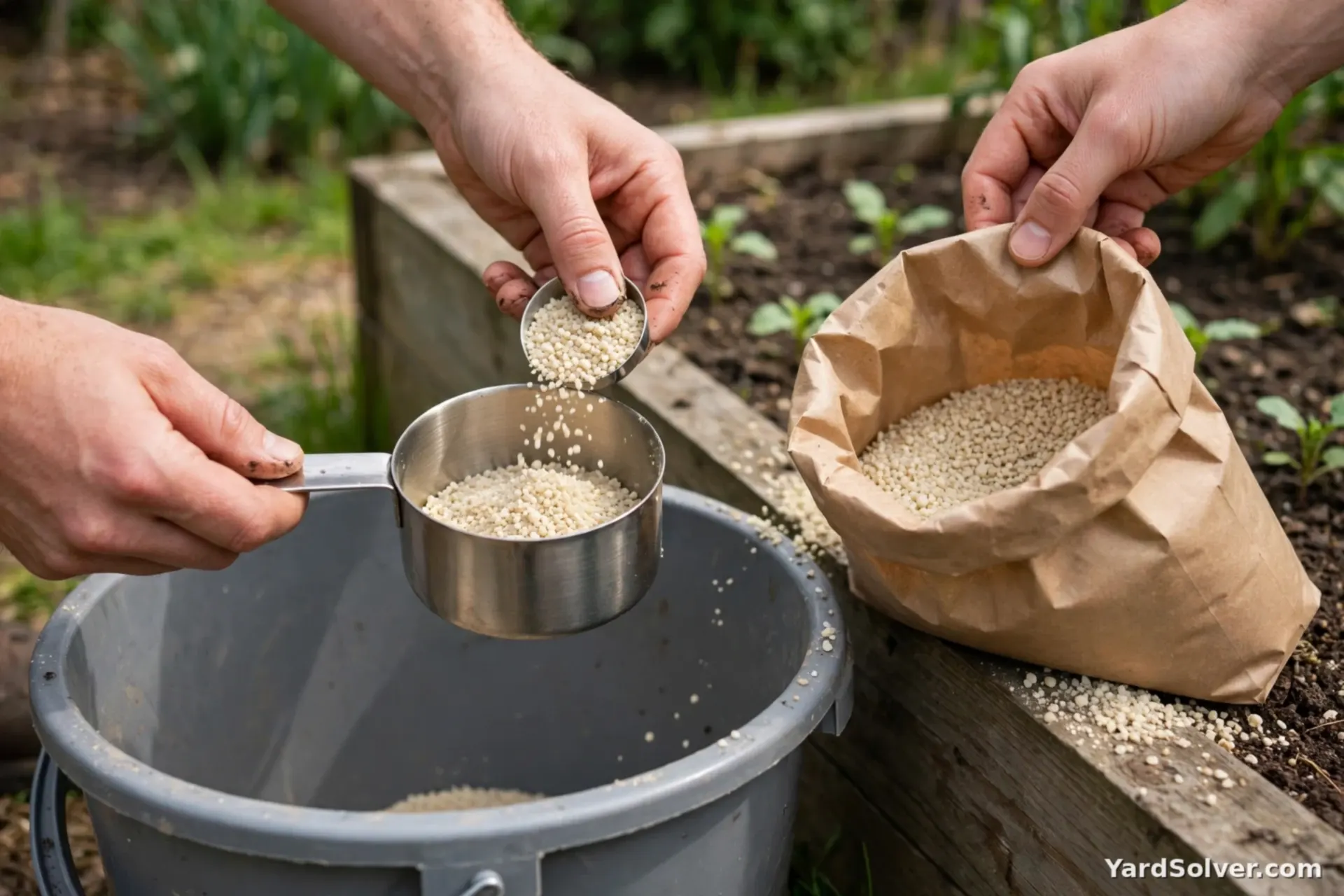
Compost alone grows good gardens. If you also use a general fertiliser, apply it by measurement, not by handful-and-hope: the Fertilizer Calculator turns your bed's area and the bag's own coverage into the exact amount. More is not better — excess nitrogen grows leaves at the expense of fruit and washes into waterways.
Step 5 — Rake level, then let it rest a few days
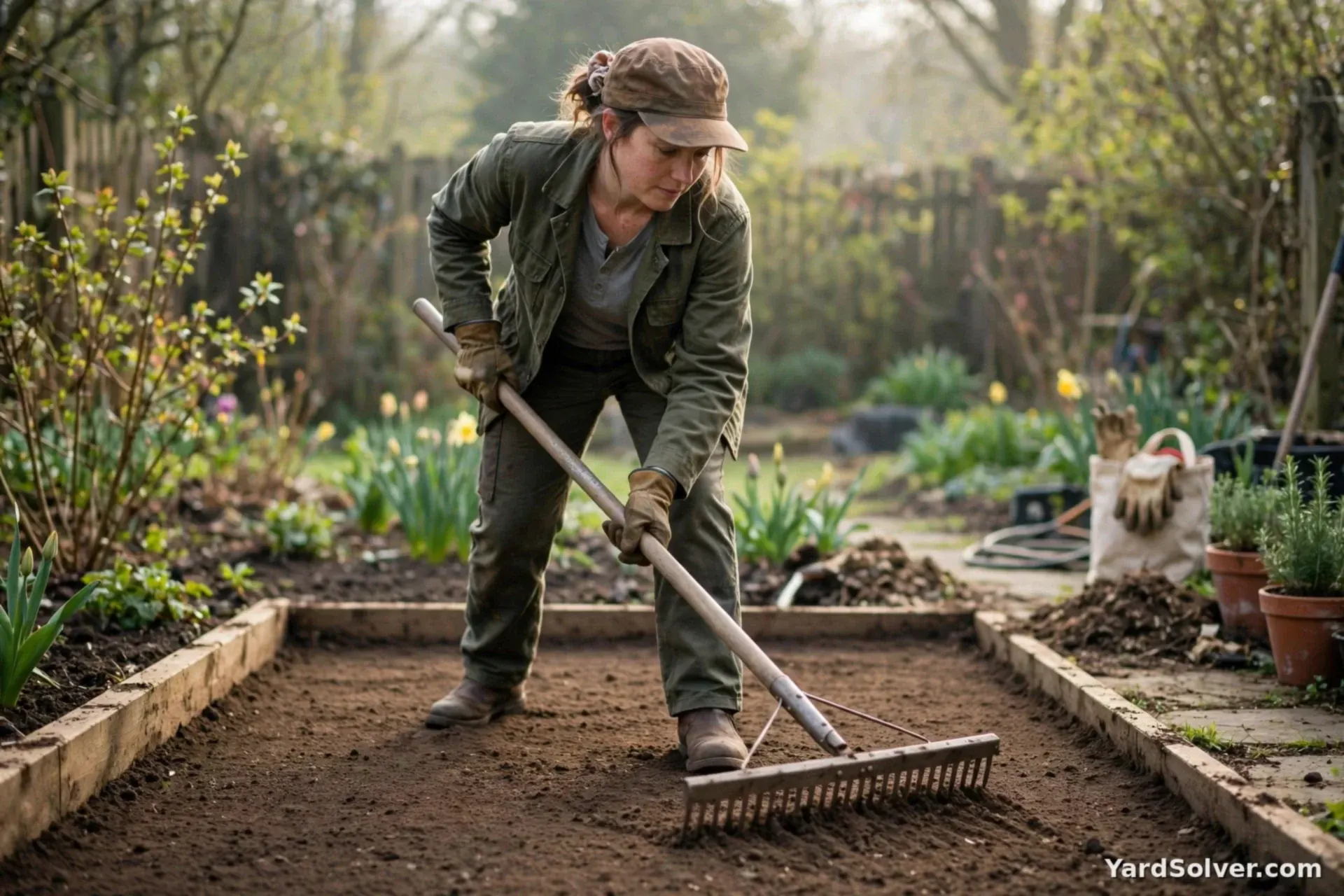
Rake the surface level and fine where seeds will go, firmer where transplants will go. If you can, prep a few days before planting: the soil settles, worms redistribute the compost, and early weed seeds that sprout can be hoed off in minutes — the "stale seedbed" trick that quietly cuts your weeding all season. Planting dates come from the Planting Calendar; raised-bed specifics are in Raised Bed Gardening for Beginners.
Spring Soil Preparation Checklist
The whole job on one list — tick each step off in order, and do not let a later step jump the queue (spreading compost on untested, too-wet soil wastes both the compost and the afternoon):
- ☐ Run the readiness test first: squeeze a handful from 6 inches down — crumbles loosely means go, sticky ball means wait a few days
- ☐ Clear the bed: winter weeds out before they seed, dead annuals removed, diseased material in the bin (never the compost), stones and debris raked off
- ☐ Test the soil every few years: a lab test for pH and nutrients tells you whether lime, sulfur or a specific feed is needed at all — how to test your garden soil covers sampling; if the result comes back too acidic, how to raise soil pH gives the lime rates by soil type
- ☐ Cut down any winter cover crop and leave its roots in the soil to rot in place
- ☐ Spread 1–2 inches of finished compost over the whole bed — the universal amendment, no test needed
- ☐ Loosen gently: fork compost into the top 4–6 inches, or top-dress and let worms mix it; deep digging only for new or badly compacted ground (heavy clay follows the clay soil method instead)
- ☐ Feed by the numbers if you use fertiliser: measure for your bed's area rather than handful-and-hope
- ☐ Rake level — fine where seed will go, firmer where transplants will go
- ☐ Rest the bed a few days if you can, then hoe off the first flush of sprouted weeds before planting
Keep going
The season plan: Companion Planting Basics · When to Start Seeds Indoors.
Questions people ask
How much compost each spring?
A layer 1–2 inches deep over the bed — roughly 3–5 cubic feet on an 8 × 4 bed. New or poor soil takes the deeper end in its first years.
Should I till every spring?
Usually not. Loosen the top few inches and add compost on top; reserve deep tilling for new ground or rescue work. Repeated tilling breaks structure and raises weed seeds.
How do I know the soil is ready?
The squeeze test: a handful from 6 inches down should crumble, not form a sticky ball. Working wet soil compacts it for the whole season.
Spring soil work starts with a squeeze test — worked wet, soil is ruined for the season
The first spring soil job is a judgement, not a task: squeeze a handful of soil — if it forms a sticky ball, it is too wet to work, and digging or walking on it now compacts it into a structure roots struggle through all season. Wait until it crumbles. Then the sequence is simple and old: clear spent growth, spread compost, fork it in lightly or leave it as a mulch for no-dig beds, and let the soil warm under its cover until sowing. Most gardens need organic matter, not products.
Test before amending: a soil test every few years directs lime, feed and money where a deficiency actually exists, instead of the annual ritual of adding everything and correcting nothing. Warm the earliest beds with cloches or black fabric if the season must start early, rake seedbeds to a fine tilth only where small seed needs it, and keep every footstep on paths and boards — the bed you compact in March is the bed that disappoints in July, and no summer remedy fully reopens it.
Sources
Key facts on this page cross-checked against Soil — Wikipedia — background on soil and its structure and Compost — Wikipedia — background on compost and its use in soil preparation.
Related page
Read next: How to Test Garden Soil (pH & Nutrients), Step by Step.
Comments & ratings
No comments yet.
Be the first to share your experience.