
Guides · Fall cleanup · Published October 31, 2026 · Updated November 17, 2026 · By Faizan Ahmad
Putting Your Garden to Bed: The Fall Cleanup Checklist
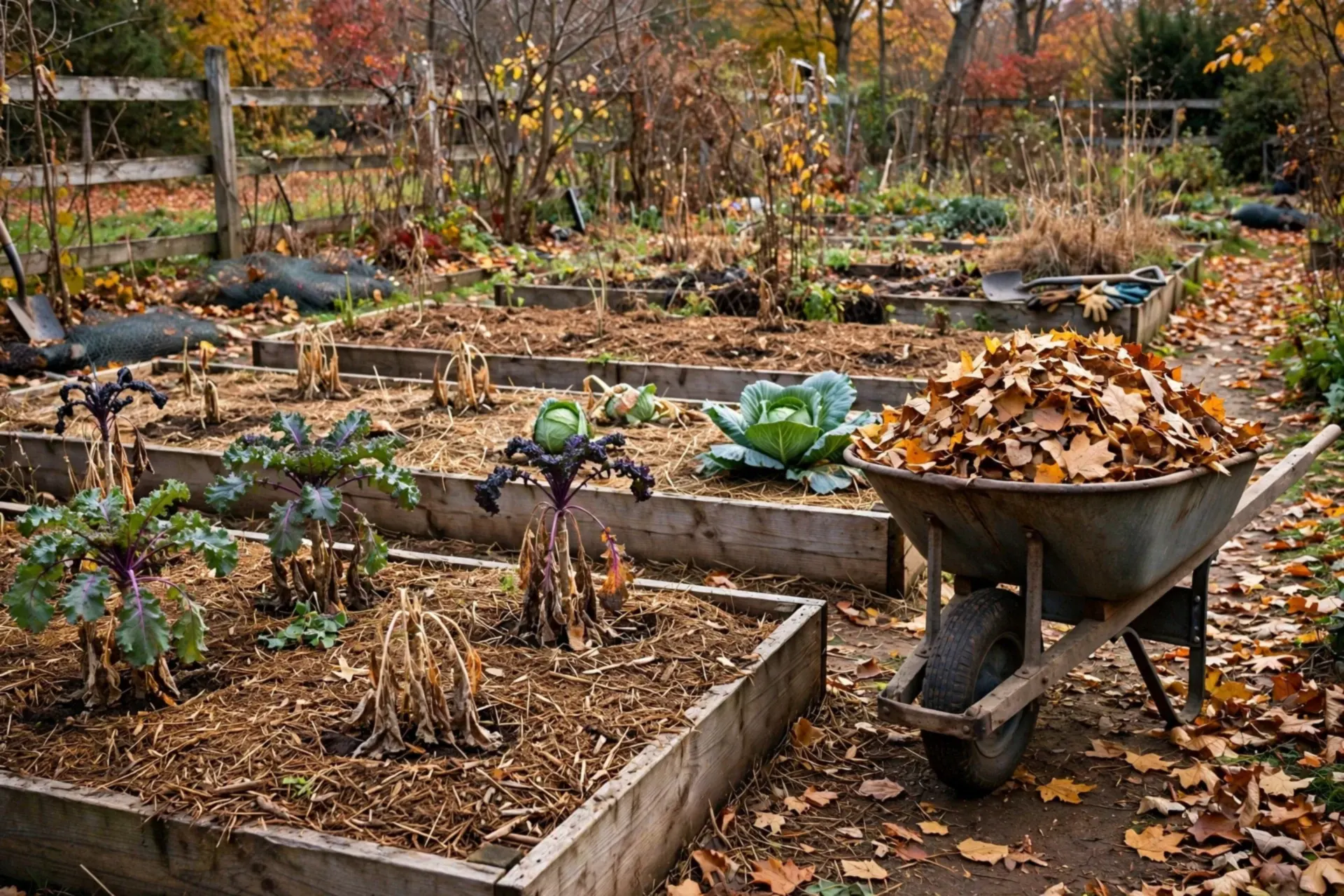
An hour or two of fall cleanup buys you a healthier, easier spring: fewer diseases, fewer weeds, soil that wakes up ready. The trick is doing the jobs in the right order — and knowing what not to tidy. Start after the first hard frost, finish before the ground freezes.
Step 1 — Pull the finished annuals, bag anything diseased
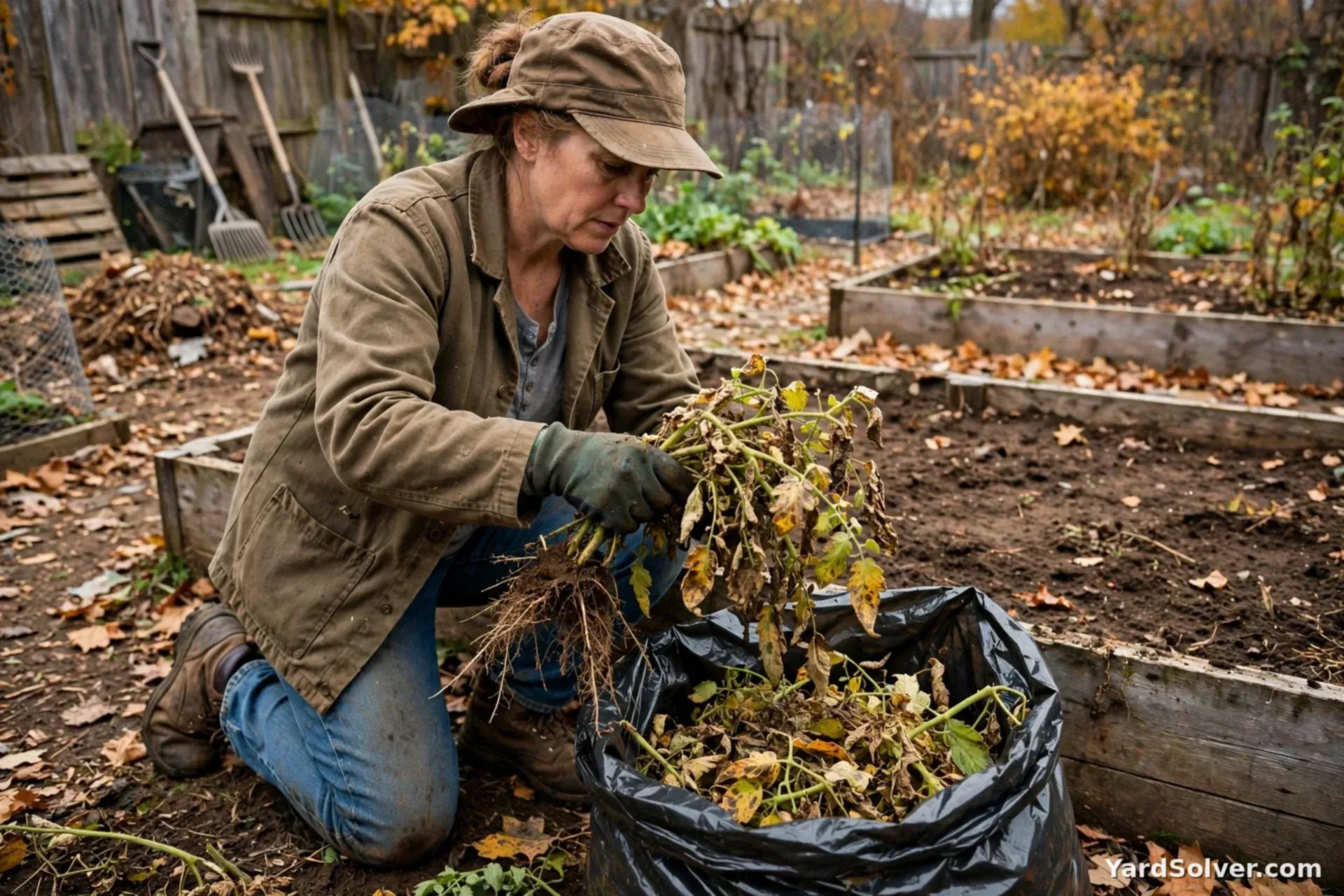
Tomatoes, peppers, beans, squash and other spent annuals come out, roots and all. Healthy material can be chopped and composted; anything with spots, mildew or blight goes in the garbage or municipal green waste — home compost does not get hot enough to kill those diseases, and leaving infected plants standing seeds next year's problems.
Step 2 — Cut perennials selectively, not bare
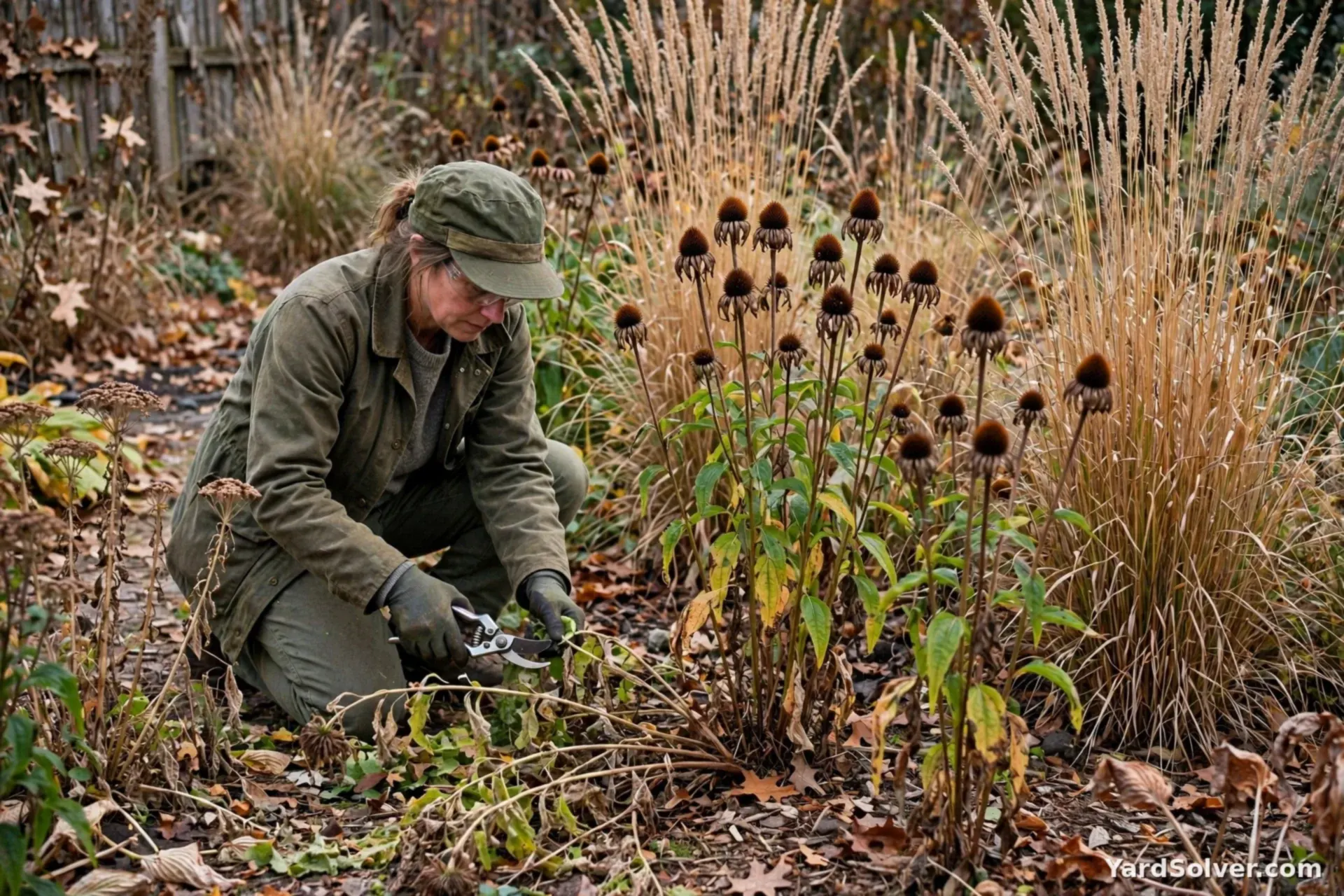
Cut back floppy, soggy or diseased perennial growth. But leave sturdy seed heads and hollow stems standing: coneflowers feed birds all winter, and many native bees sleep inside those stems. A garden put to bed is tidy — it is not scalped.
Step 3 — Weed one last time
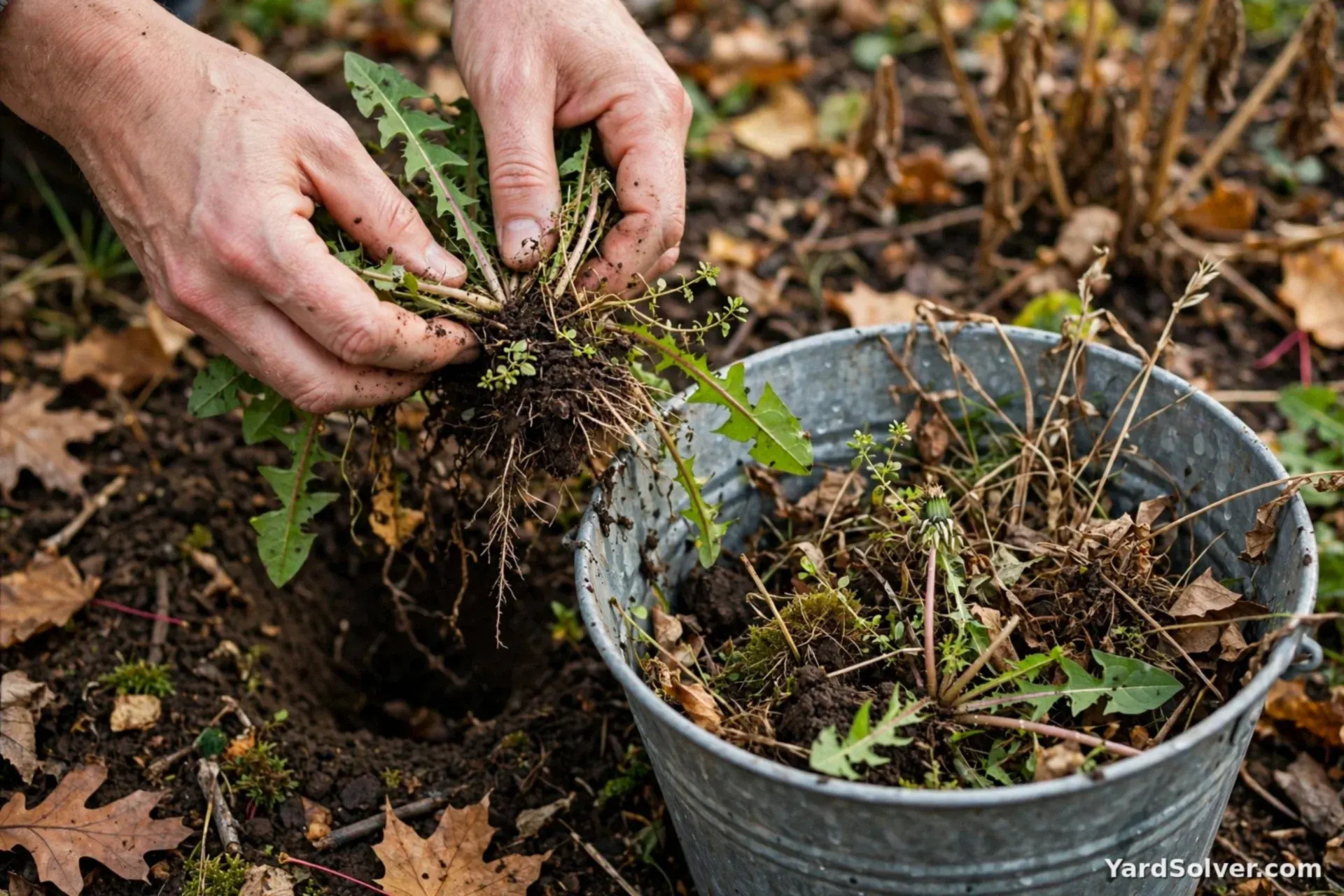
Fall weeds drop seeds that become spring's first chore. One pass now, while the soil is soft, removes thousands of future weeds. It is the highest-value ten minutes of the whole cleanup.
Step 4 — Plant the fall crops into the clean beds
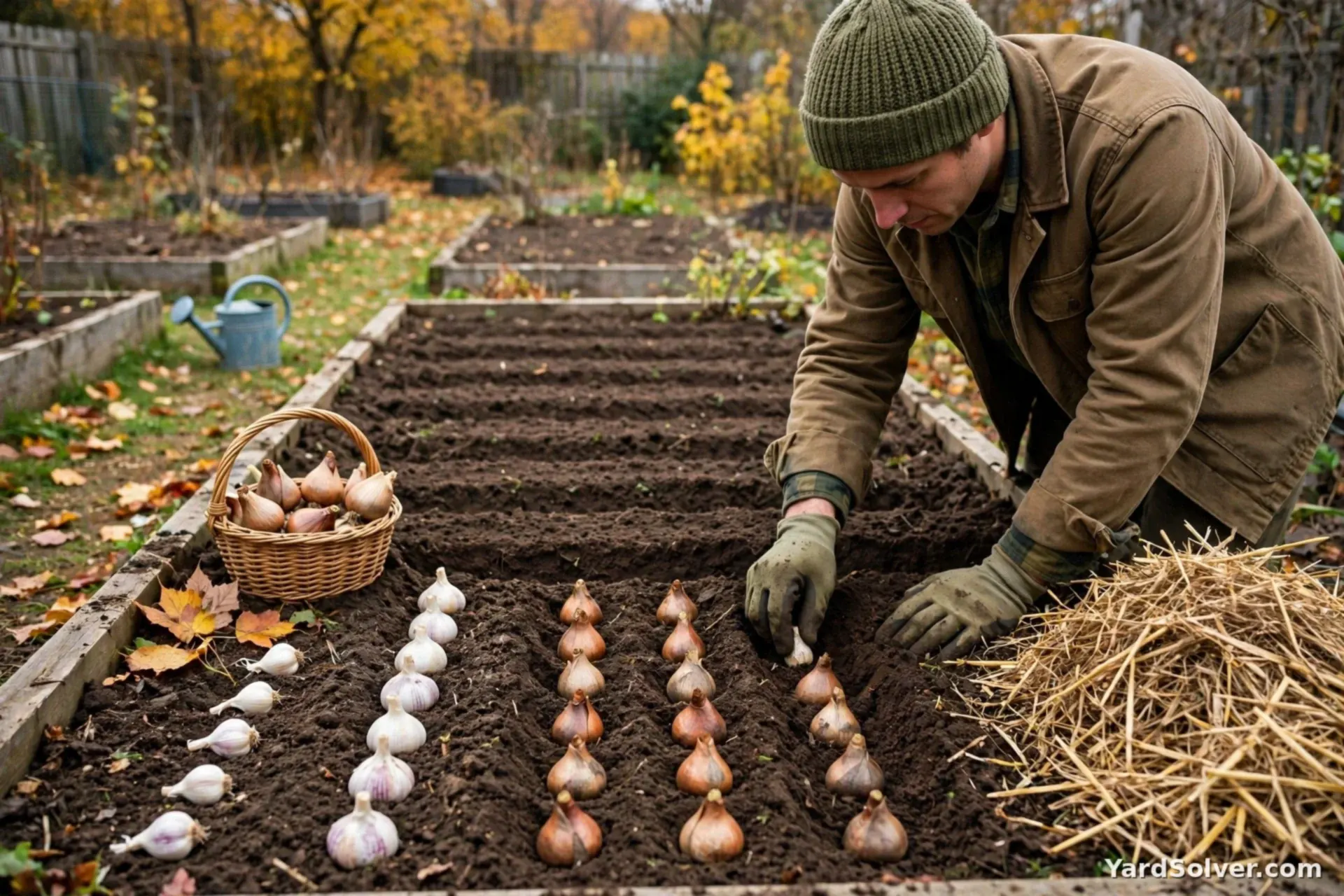
Clean beds are ready for the two best fall plantings: garlic and spring bulbs. Do those before the mulch step.
Step 5 — Mulch the beds 2–3 inches
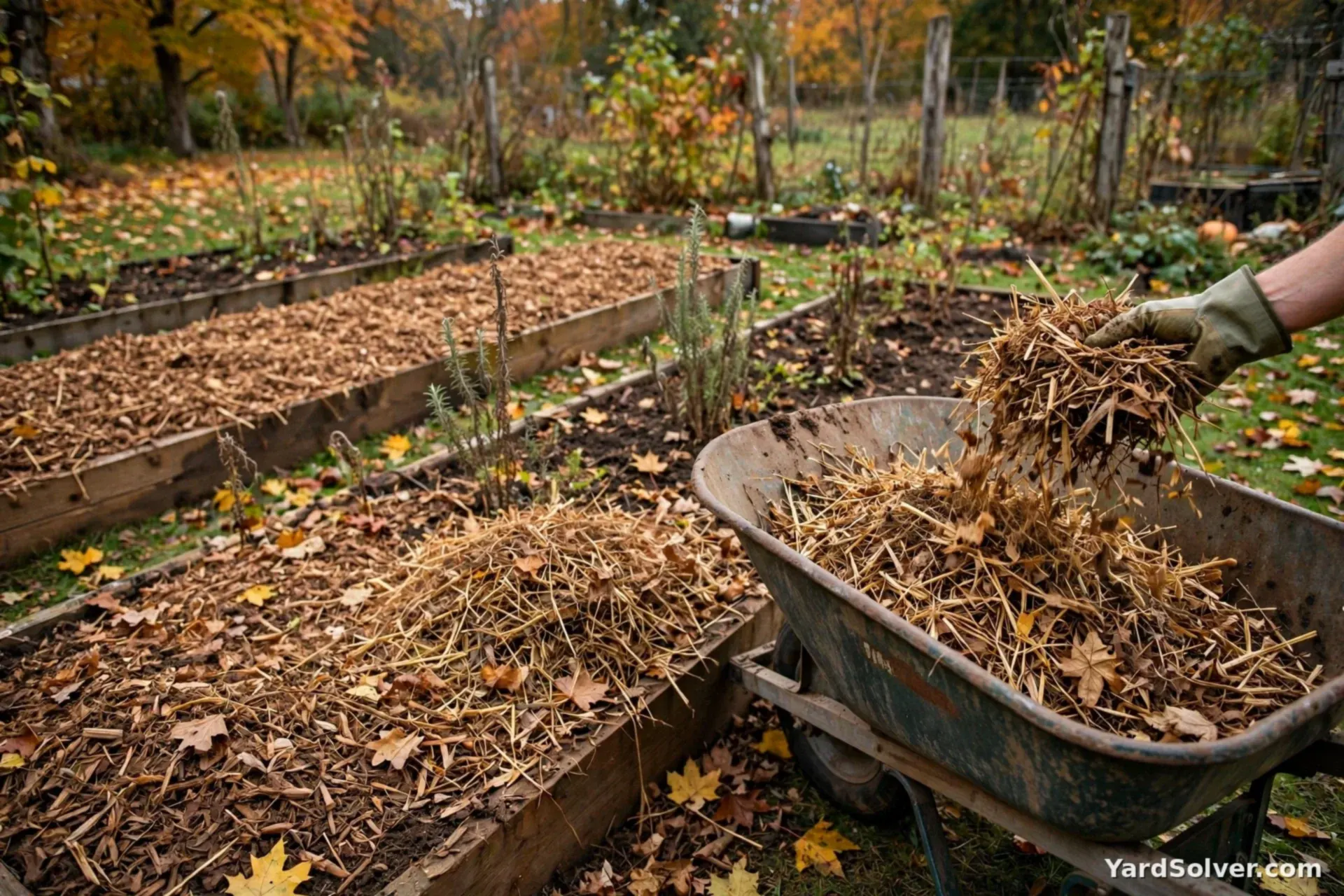
Once the ground starts to cool properly, cover bare soil with 2–3 inches of shredded leaves, straw or wood mulch. It stops erosion, holds moisture and keeps soil life working later into the season. Work out bags and yards with the Mulch Calculator; adding compost under the mulch is even better — amounts from the Compost Calculator.
Step 6 — Water evergreens deeply before freeze-up
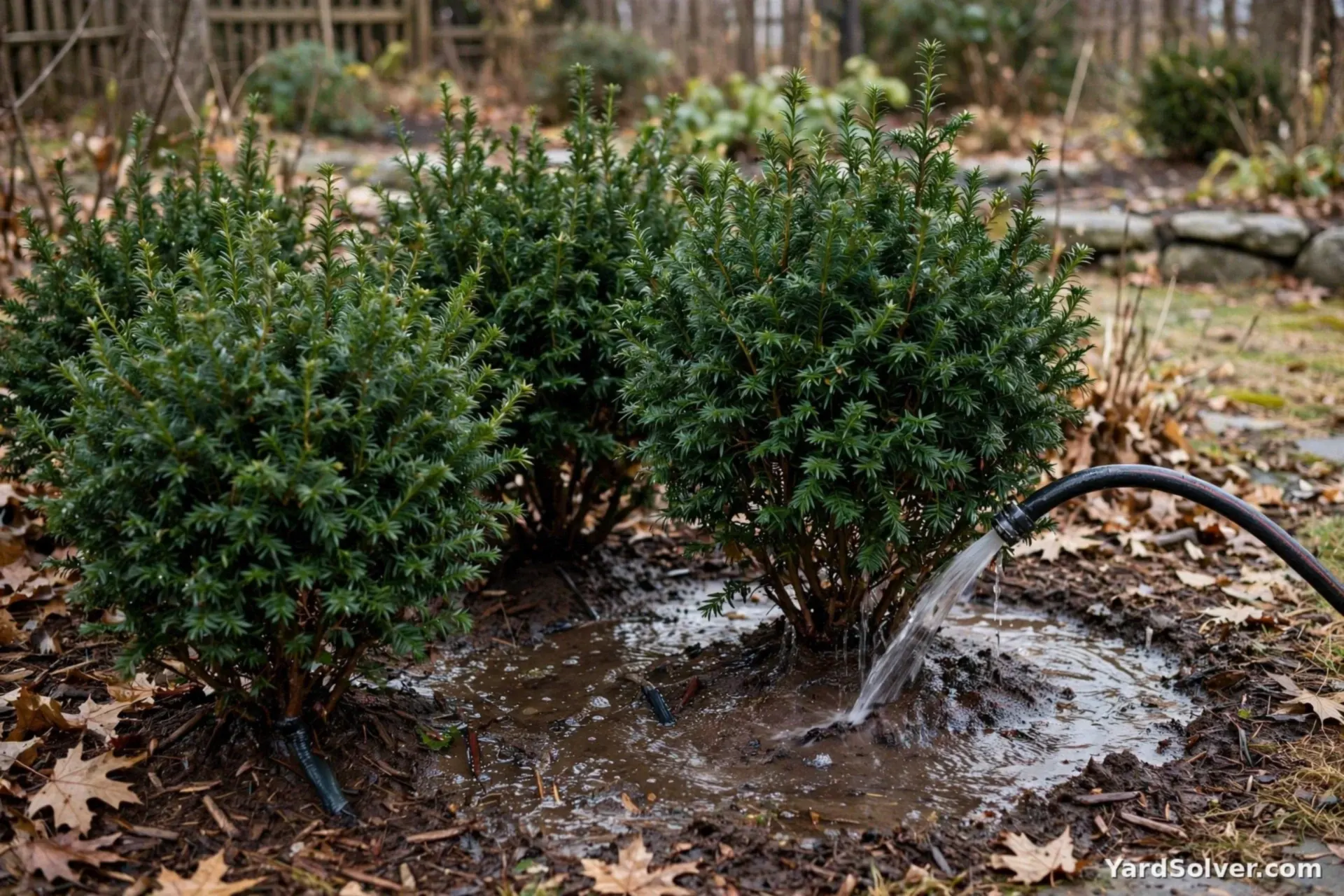
Evergreens keep losing water through winter but cannot replace it from frozen soil — that is what causes brown "winter burn" in spring. One deep watering before the ground freezes is their insurance.
Step 7 — Drain, store and put tools right
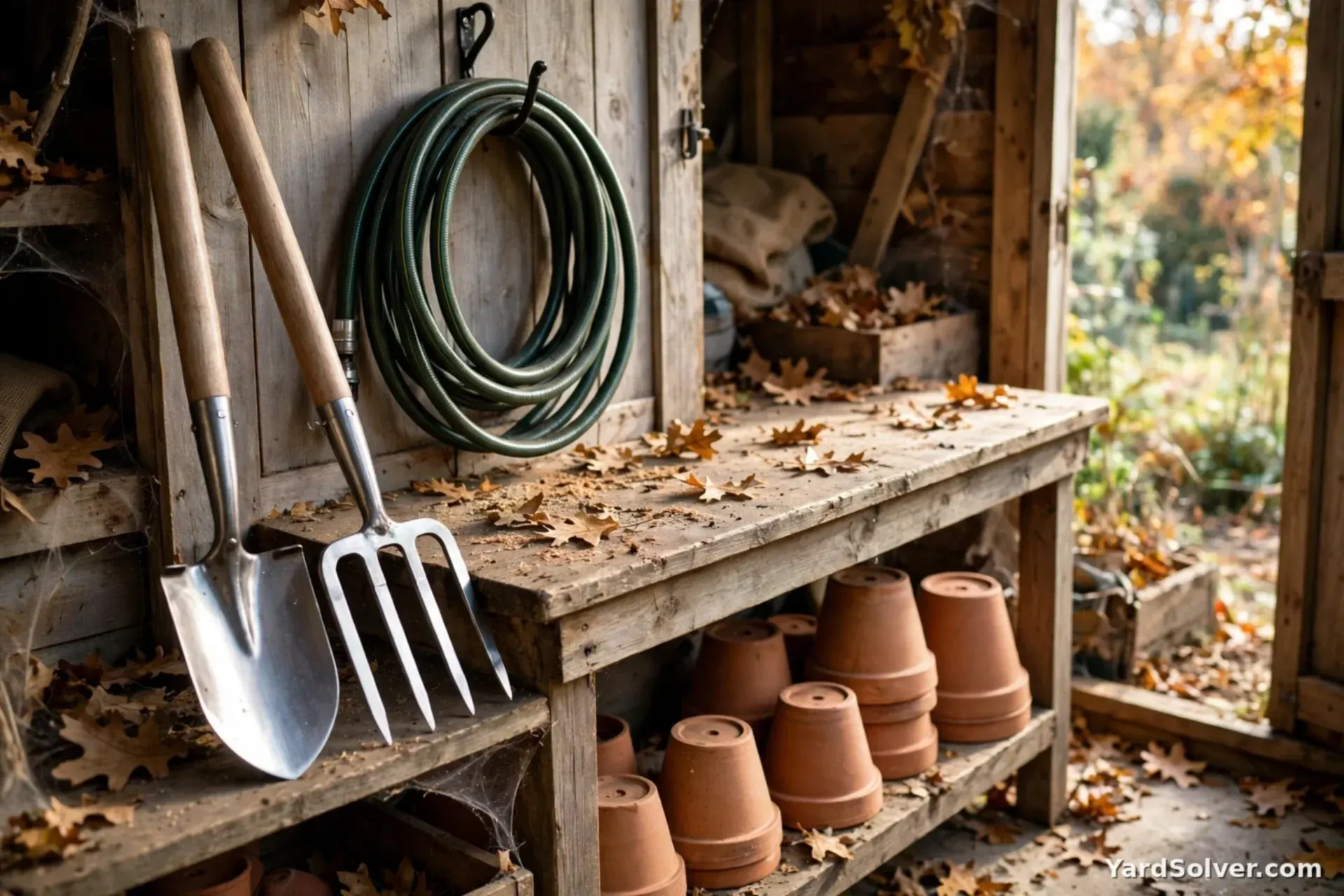
Disconnect and drain hoses, empty and store clay and ceramic pots (they crack frozen), and bring in anything glass or ceramic. Clean soil off tools, sharpen edges, wipe metal with oil, and store them dry — spring-you will be grateful.
Step 8 — Write down what worked

While it is fresh: which varieties produced, which bed struggled, what you ran out of. Five minutes of notes in October saves real money at seed-ordering time in January. Your frost dates for next season are already on the Planting Calendar.
The bed-by-bed closing checklist
The steps above run in order across the whole garden. This checklist runs the other way — bed by bed — so nothing ends up half-done. Walk it once, and each area is closed when its row is done:
| Area | Do | Don’t |
|---|---|---|
| Vegetable bed | Pull spent crops out with their roots; sow a cover crop or mulch bare soil 2–3 inches; note next year’s rotation so the same crop family does not repeat in this bed | Don’t leave tomato or squash debris lying on the surface, and don’t work soil that is wet enough to clump — compaction lasts all winter |
| Perennial border | Cut back only diseased or flopped growth; leave seed heads and sturdy stems standing; top up mulch around crowns, not over them | Don’t scalp the border bare, and don’t pile mulch against stems and crowns — it invites rot and voles |
| Lawn | Final mow a notch lower than summer height; clear leaves off the grass (mulch-mow them onto the beds instead); overseed bare patches in early fall while the soil is still warm | Don’t leave a leaf mat sitting on grass all winter — it smothers patches dead — and don’t walk or park on frozen turf |
| Tools | Clean, sharpen and oil metal; drain hoses; empty and store clay and ceramic pots; coil everything under cover, dry | Don’t store tools dirty in a damp shed corner, and don’t leave water in sprayers, hoses or rain barrels to freeze and split them |
Fallen leaves: the free resource most gardens throw away
Leaves are the one input your garden manufactures for free, in bulk, every fall. Shredded — just run the mower over them — they make the best winter bed mulch: they mat less than whole leaves, break down by spring, and feed the soil life that feeds your plants. Whole leaves belong on perennial beds and under shrubs, not on the lawn, where they smother grass. Surplus leaves make leaf mould: pack them damp into black bags with a few air holes, or pile them in a wire bin, and forget them for a year — the crumbly result is a free soil conditioner that holds water like nothing you can buy. The one exception: leaves from diseased plants — spotted tomato foliage, mildewed lilies — go in the green waste, not the leaf pile.
Two jobs that are genuinely better in fall
Fall is the best season to test your soil. Labs are quiet, results arrive before spring seed ordering, and amendments that shift soil pH — lime to raise it, sulphur to lower it — need months to work, so applied in fall they have done their job by planting time. Fall is also the last word in soil cover: a quick sowing of winter rye or crimson clover on empty vegetable beds protects soil structure all winter, holds nutrients that would otherwise wash away in winter rain, and turns into free organic matter when it is cut or dug in during spring. Even three or four weeks of growth before hard frost is worth having — roots in the ground beat bare soil every time.
Leave a little wildness on purpose
A garden put to bed is not a garden sterilized. A small brush pile in a corner shelters birds and beneficial insects; standing stems and seed heads are winter food and housing; a shallow water dish kept ice-free is used daily by birds when everything else is frozen. None of this conflicts with the cleanup — disease hygiene applies to crop debris and diseased growth, not to every fallen twig. Tidiness with a few deliberate exceptions is the whole philosophy of this page in one sentence.
Keep going
Next jobs: How to Protect Plants From Frost and How to Plant Garlic in Fall. And do not leave the empty beds bare — sow them down for winter with Winter Cover Crops Compared.
Pressurised water lines are the expensive thing to forget — How to Winterize a Sprinkler System is the blow-out checklist.
In Australia the same month is spring, not shutdown — What to Plant in November in Australia lists what goes in now.
Questions people ask
Should I cut everything down in fall?
No. Seed heads feed birds and hollow stems shelter overwintering bees. Cut back diseased and floppy growth, but leaving sturdy perennials like coneflowers and ornamental grasses standing does real ecological work — tidy them in spring instead.
Can I compost diseased tomato plants?
No — home compost rarely gets hot enough to kill blight and other pathogens. Bag diseased material and put it in the garbage or municipal green waste, never back on the beds.
When exactly should the cleanup happen?
After the first hard frost has finished the tender crops, and before the ground freezes solid — usually a 3 to 5 week window in cold climates.
Should I till or dig the beds in fall?
Lightly, or not at all. Working in compost and cover-crop residue is fine, but deep digging destroys soil structure and brings weed seeds to the surface. Most beds do best with surface compost under mulch — the worms do the mixing over winter.
What do I do with all the fallen leaves?
Shred them with the mower and use them as bed mulch, or pile them to make leaf mould. Keep whole leaves off the lawn, where they smother grass, and keep leaves from diseased plants out of the pile entirely.
Is it worth watering the garden this late in the year?
Yes for evergreens, new plantings and anything still growing — they enter winter far stronger when hydrated. Established perennials and dormant lawns need no extra water once fall rains are regular.
Putting the garden to bed is a negotiation with winter wildlife — tidy less than instinct says
The autumn garden clean-up has changed its mind in a generation: the old total clearance — every stem cut, every leaf removed, beds bare by November — stripped the garden of the overwintering habitat its own beneficial insects depend on, since many native bees nest in hollow stems, butterflies overwinter as chrysalises in leaf litter, and the ground beetles that eat next year's slugs shelter under the leaves the gardener was burning. The modern version of putting the garden to bed is selective: diseased material out and destroyed, paths and crowns cleared, but seed heads standing for birds and stems left until spring warmth wakes their tenants.
What genuinely must be done is short: mulch bare soil or sow a cover crop so winter rain cannot batter and leach an empty bed, plant and protect what autumn planting suits, drain and store what frost kills, and record the season while it is remembered — the notebook entry is an autumn task like any other. Tender plants are lifted or protected on the frost forecast, not the calendar. A garden put to bed this way wakes in spring already populated with its own pest control.
Sources
Key facts on this page cross-checked against Mulch — Wikipedia — background on mulch and soil protection and Cover crop — Wikipedia — background on cover crops for resting beds.
Related page
Read next: Composting in Winter: What Actually Works in the Cold.
Comments & ratings
No comments yet.
Be the first to share your experience.