
Guides · Fall planting · Published October 31, 2026 · Updated November 17, 2026 · By Faizan Ahmad
Planting Spring Bulbs in Fall: Depth Chart & Steps
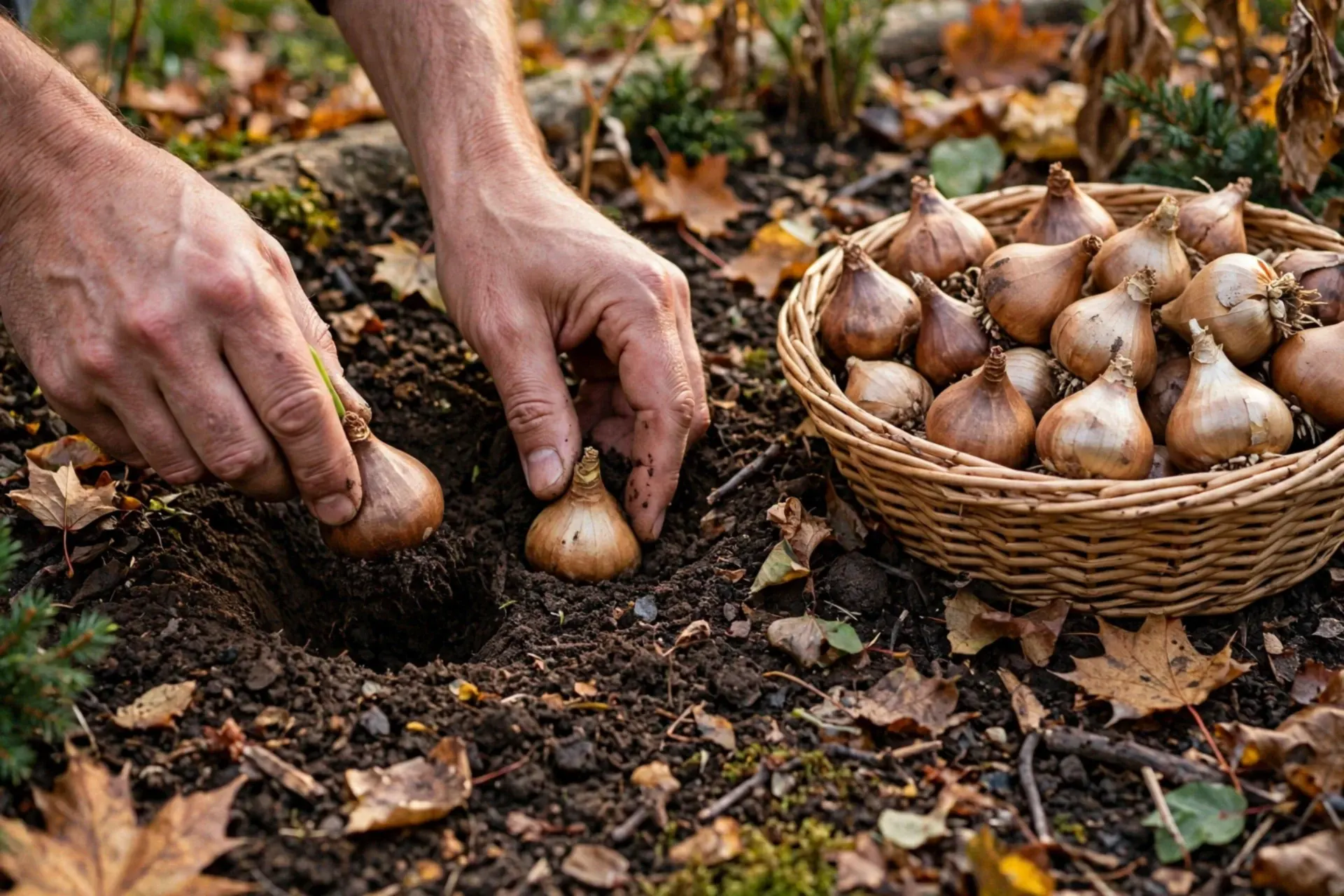
Spring bulbs are a promise you plant in autumn: tulips, daffodils, crocus and alliums all need winter's cold to bloom, so fall is the only planting window. Get the depth right — that is 90% of the job — and spring does the rest.
The depth rule: 3 times the bulb's height
Measure the bulb, multiply its height by three, and plant the base at that depth. In practice:
- Tulips: 6–8 in deep, 4–6 in apart
- Daffodils: 6 in deep, 4–6 in apart
- Alliums (large): 6–8 in deep, 6–8 in apart
- Crocus: 3–4 in deep, 3 in apart
- Hyacinths: 5–6 in deep, 5 in apart
- Snowdrops: 3 in deep, 3 in apart
Planting a touch too deep is safer than too shallow in cold climates — deep bulbs are safe from freeze-thaw heaving and from squirrels.
Step 1 — Plant before the ground freezes
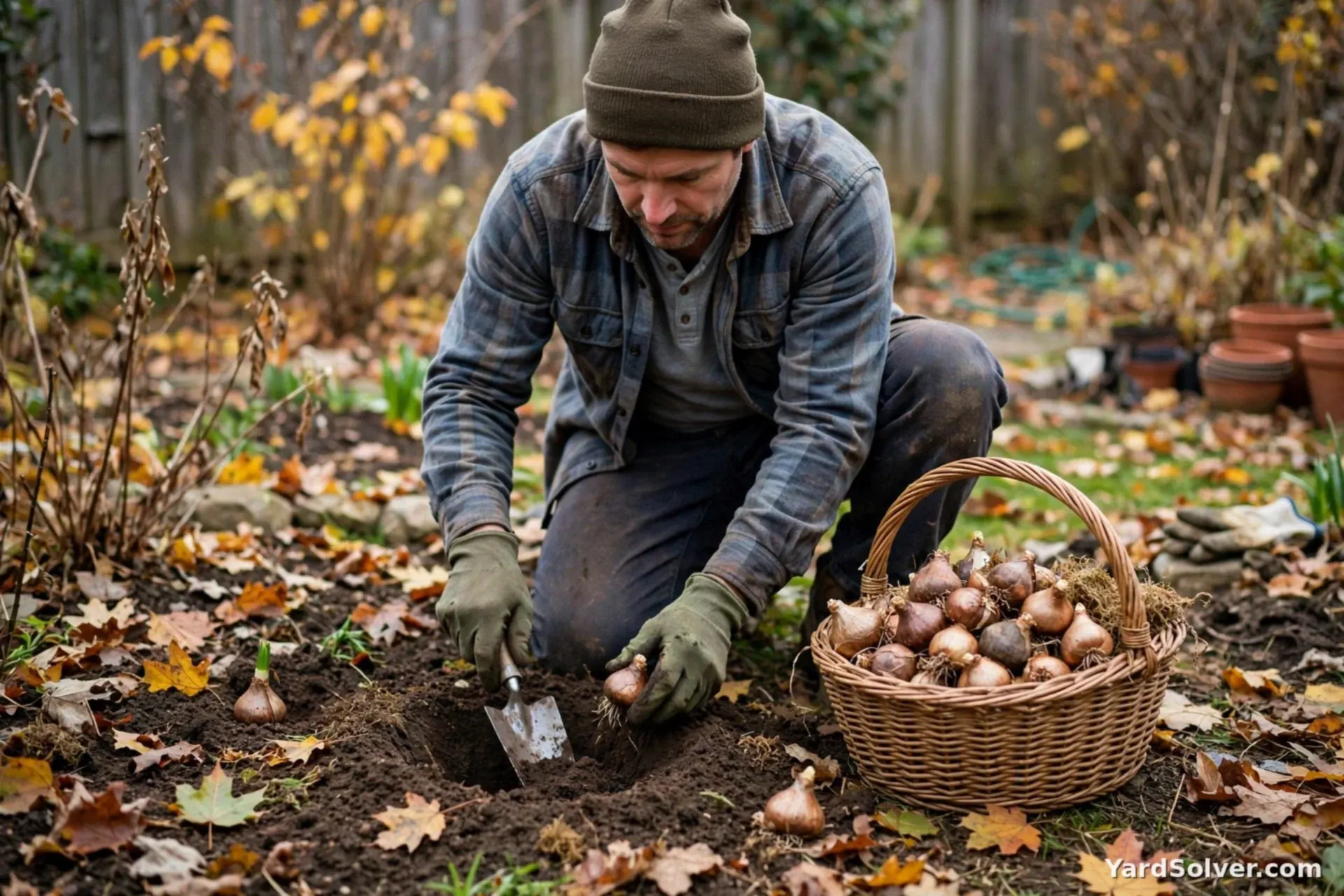
Any time from when nights cool properly until the soil is too hard to dig. Bulbs need a few weeks to root before deep freeze, so do not wait for the last weekend — check your frost dates on the Planting Calendar.
Step 2 — Choose a spot that drains
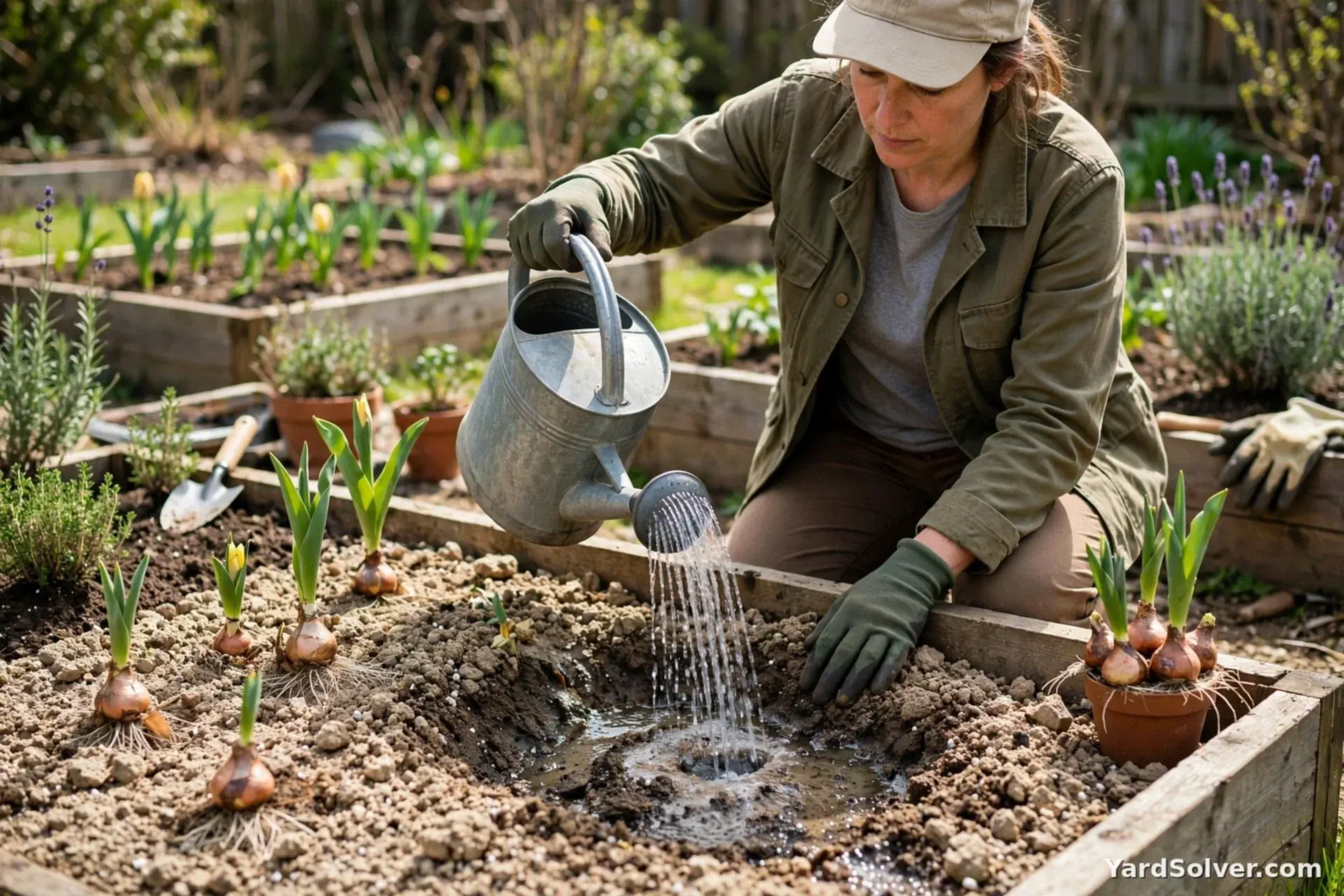
Bulbs rot sitting in wet winter soil. Full sun is best (in spring, before trees leaf out, most beds qualify), and any bed that puddles needs its drainage fixed first — or raise it: soil amounts from the Raised Bed Soil Calculator.
Step 3 — Plant in groups, pointy end up
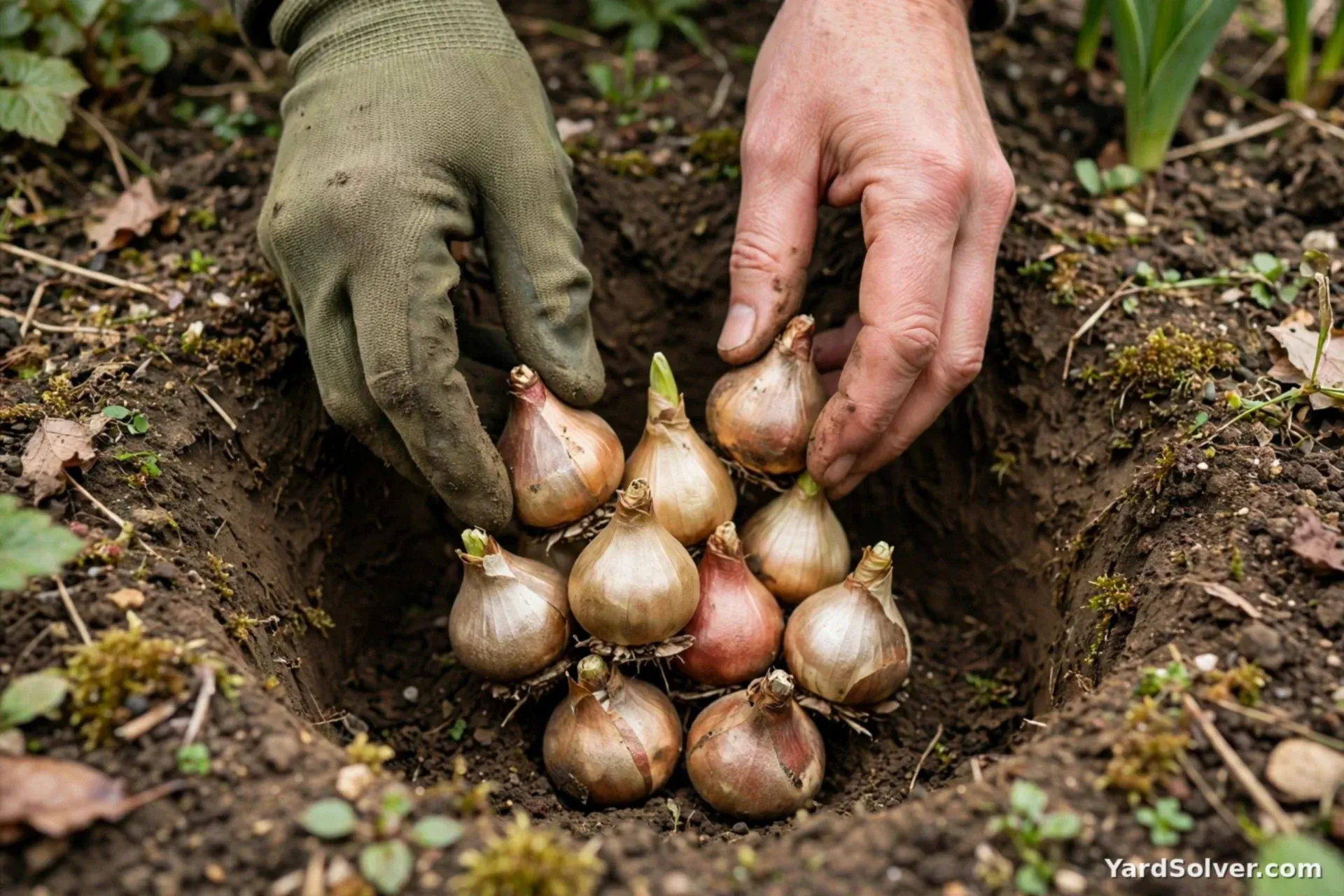
Dig a wide hole or trench and set bulbs in groups of 7 or more — drifts read as designed, single rows read as soldiers. Pointy end up, flat root plate down, at the chart depth and spacing. Firm the soil over them.
Step 4 — Water once
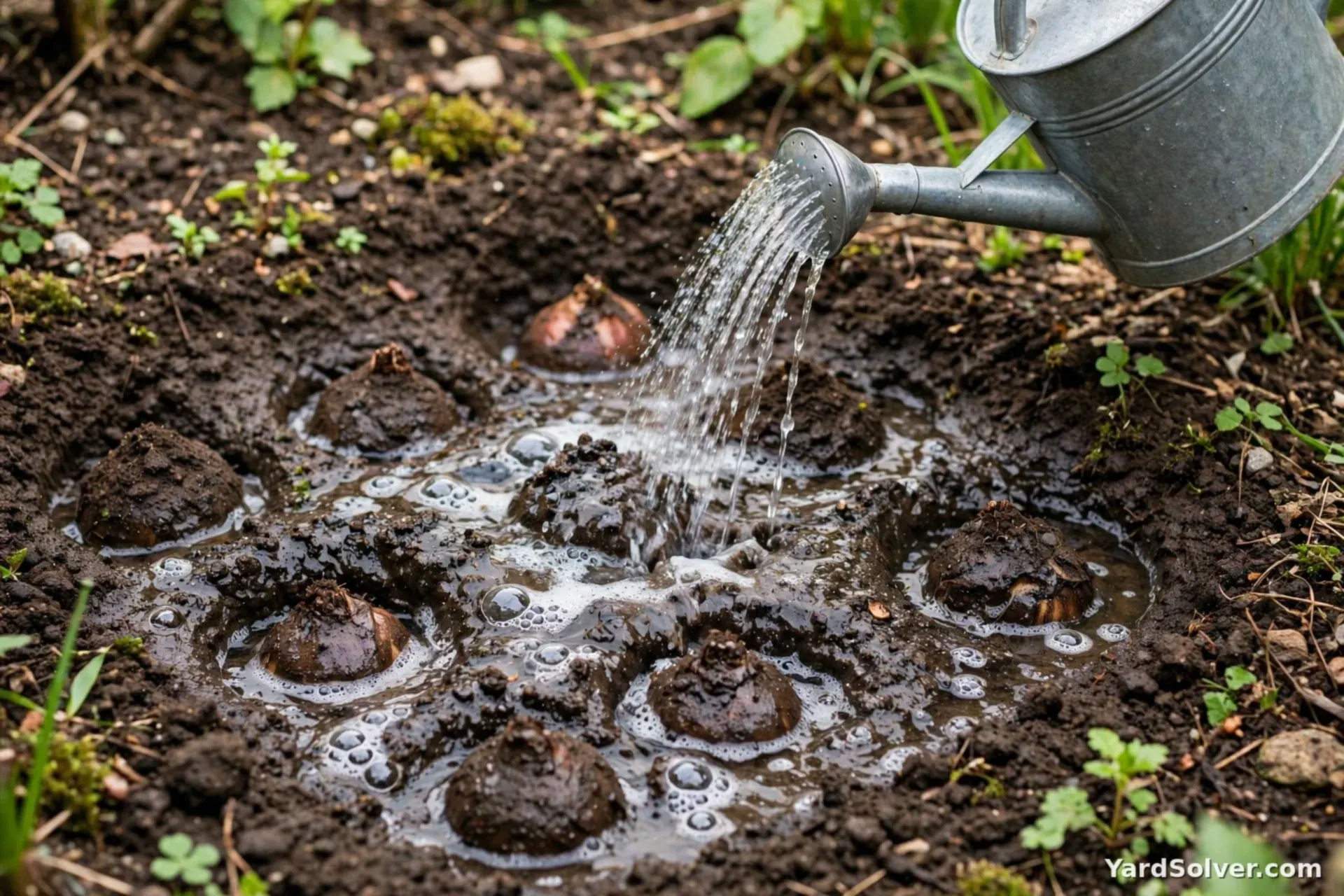
Water the planting well to close air pockets and start rooting. After that, autumn rain takes over.
Step 5 — Defend against squirrels
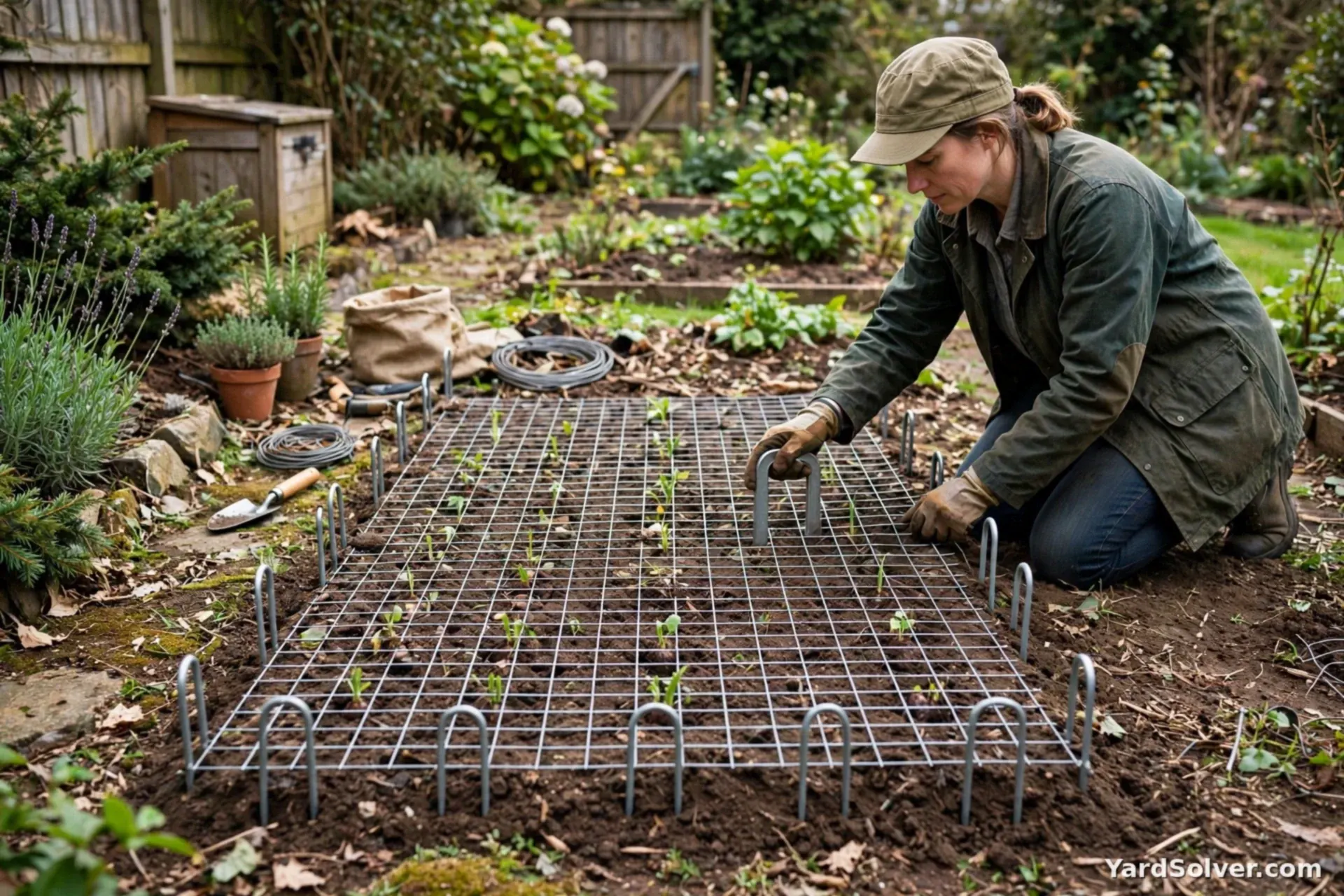
Squirrels dig freshly planted tulips and crocus (they largely ignore daffodils and alliums). Tricks that work: lay chicken wire flat over the bed until the ground freezes, plant among daffodils, and skip bone meal — its smell advertises dinner. Clean up bulb husks, which scent-mark the spot.
Step 6 — Mulch after the ground cools
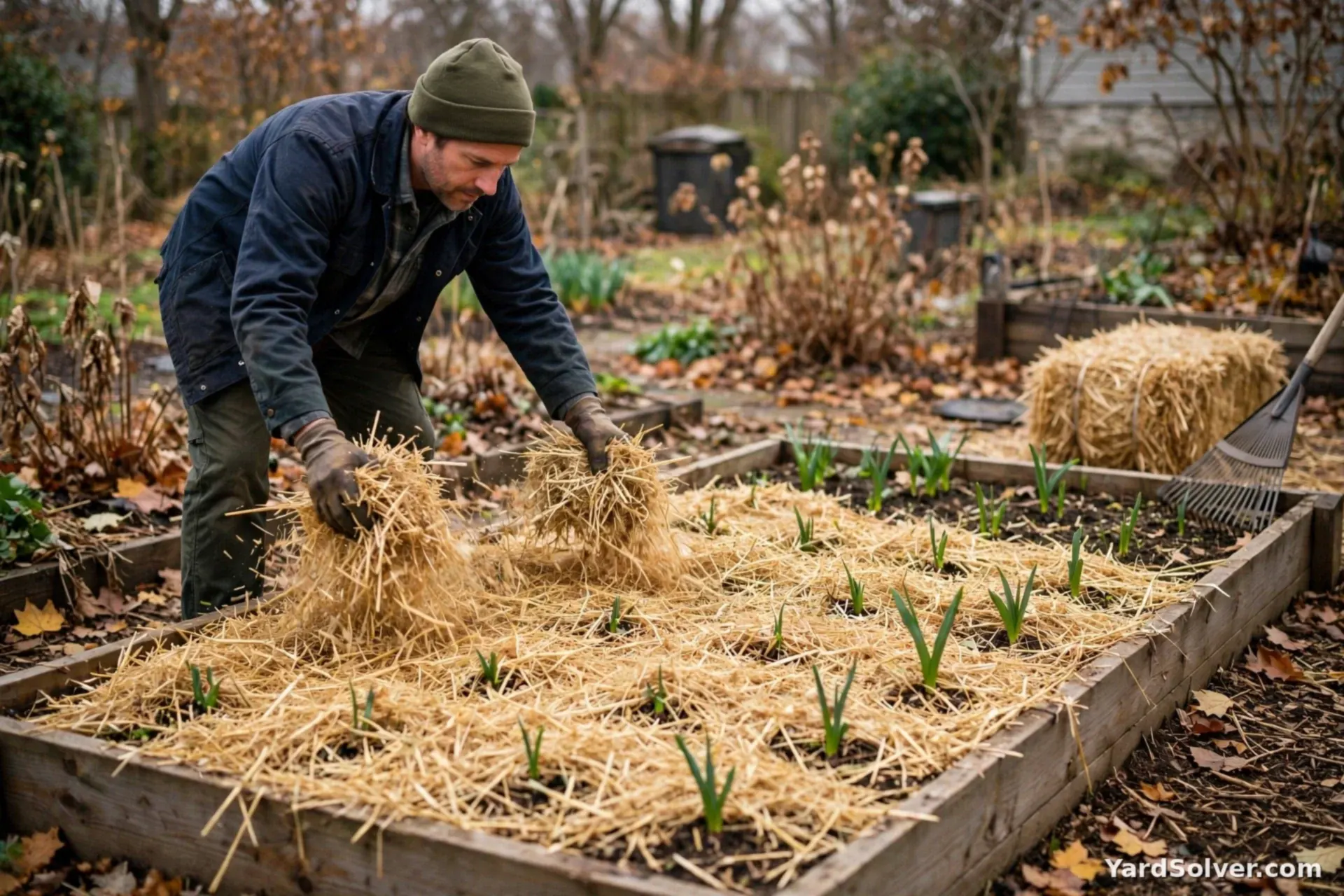
A 2–3 inch mulch once the soil is properly cold keeps temperatures even. Amounts from the Mulch Calculator. Then wait — the first crocus is winter's best news.
How much chill do bulbs actually need?
Blooming is triggered by weeks of cold — roughly 35–45°F (2–7°C) in the soil — and different bulbs need different amounts of it. This is why the same tulip thrives in a cold-winter garden and sulks in a mild one:
| Bulb | Weeks of chill needed | In warm winters (zones 8–10) |
|---|---|---|
| Tulips | About 12–16 weeks | Pre-chill bulbs in the fridge for 10–12 weeks before planting, and treat them as annuals |
| Daffodils | About 10–13 weeks | Choose low-chill types (often sold as Southern daffodils); many naturalize even in zone 8 |
| Hyacinths | About 11–13 weeks | Pre-chill like tulips; expect shorter stems in warm areas |
| Crocus | About 8–10 weeks | The most forgiving bulb; blooms in zone 8 in a cool site |
| Alliums | About 10–12 weeks | Large ornamental types need a real winter; smaller alliums cope with less |
| Snowdrops | About 8–10 weeks | Prefer cool, damp sites; struggle where winters are warm and dry |
Read the table by your winters, not just your zone number: a zone 7 garden in a cold valley may deliver more chill than a zone 6 garden beside a warm city. If bulbs came up blind — leaves but no flower — after a mild winter, short chill is the first suspect.
Worked depths: measure the bulb, not the packet
The 3-times rule is easy to say and easy to misjudge, so here it is worked out. Measure the bulb from base to tip, multiply by three, and plant so the base sits at that depth:
| Bulb height | Plant the base at | Common example |
|---|---|---|
| ½ inch (small bulblet) | 1½–2 inches | Snowdrops, small crocus species |
| 1 inch | 3 inches | Standard crocus, grape hyacinth |
| 1½ inches | 4½–5 inches | Hyacinths, small daffodils |
| 2 inches | 6 inches | Standard daffodils, most tulips |
| 2½ inches | 7–8 inches | Large tulips, large alliums |
| 3 inches | 8–9 inches | The biggest alliums, crown imperials |
In sandy soil, add about an inch — bulbs work themselves shallower there and dry out faster. In heavy clay, keep the standard depth but set each bulb on a thin layer of coarse sand or grit so its base never sits in water. And note what the depth is measured to: the base of the bulb, not the tip — the tip will sit one bulb-height closer to the surface.
Bulbs in pots, and the lasagna method
No bed space is no excuse: bulbs grow happily in containers, and pots solve the two worst bulb problems — soggy soil and squirrels — in one move. Use a pot at least 8–10 inches deep with drainage holes, plant at the same depths as in the ground, and keep the pot somewhere it experiences real winter cold (an unheated garage or against a shaded wall) without wild freeze-thaw swings; water just enough to keep the mix barely moist. For a long display, layer bulbs lasagna-style in a deep pot: tulips deepest, daffodils in the middle, crocus near the top, each layer covered with mix before the next goes in. The shoots find their way around each other, and one pot blooms in sequence for six weeks or more.
After the flowers: the six weeks that decide next year
What you do after blooming decides whether bulbs return. Deadhead spent flowers so the plant does not waste energy on seed, but leave every leaf standing until it yellows and collapses on its own — those leaves are next year’s flower being built. That usually means about six weeks of untidy foliage; plant bulbs among perennials whose new growth hides it. Do not braid, knot or band the leaves — an old myth, and it reduces the light they can gather. If a clump blooms less over the years, it is usually overcrowding: lift, divide and replant daffodils and crocus in fall, while their dying foliage still shows you where they are.
Keep going
Same week, same beds: How to Plant Garlic in Fall · the full routine in Putting Your Garden to Bed.
Forcing bulbs the indoor way instead? Force Amaryllis Bulbs Indoors for Winter Blooms runs the opposite season — a warm windowsill, no frost wanted at all.
Southern-hemisphere readers plant on the opposite calendar — What to Plant in November in Australia covers the spring list.
Questions people ask
Is it too late to plant bulbs if the ground is almost frozen?
Plant anyway, right up until the ground is too hard to dig. A bulb planted late still roots in any milder spell and almost always outperforms a bulb stored indoors all winter, which usually fails entirely.
Do bulbs need fertilizer at planting?
Usually no. A bulb carries a full season of food inside itself. If your soil is poor, a little balanced fertilizer or compost worked into the bed helps future years — skip bone meal, which mainly attracts digging animals.
Why did my tulips only bloom one year?
Many hybrid tulips are naturally short-lived and are treated as one or two-season flowers. Daffodils, crocus and alliums naturalize and return for years. For tulips that persist, choose Darwin hybrid types, plant deep, and let the foliage yellow fully before cutting it.
Can I plant spring bulbs in spring instead of fall?
For spring flowers, no — without weeks of winter chill, most spring bulbs produce leaves and no flowers. Plant spring-blooming bulbs in fall; the bulbs sold for summer flowers, such as gladiolus and dahlias, are the spring-planting ones.
What if my bulbs sprout during a warm spell in winter?
Do nothing — a few inches of green in a mild spell is normal, and the foliage tolerates cold well. The flower bud is still deep underground. Mulch keeps soil temperature steadier and reduces these false starts.
How do I stop bulbs rotting in heavy clay soil?
Plant each bulb on a layer of coarse grit, choose the best-drained spot you have, or grow them in pots or raised beds instead. Daffodils tolerate clay better than tulips and hyacinths, which rot fastest in wet winter soil.
Spring bulbs are planted in autumn because the flower is already inside, waiting for cold
A tulip or daffodil bulb bought in autumn is a finished package — leaves, flower and food store complete inside the scales — and its one unmet need is winter: weeks of cold that trigger root growth and licence the flower stem to extend in spring. Planted in autumn, the bulb roots into cool soil while the ground is still workable, sits through the cold it requires, and flowers on schedule; planted in spring, the same bulb produces leaves and disappointment. Timing follows soil temperature, not the calendar page: plant when nights are reliably cold but before the ground freezes hard.
Depth is the bulb's frost insurance and its stem support — the working rule is a hole three times the bulb's height, point up — and drainage is its survival, because a bulb sitting in winter wet rots silently and is discovered as an absence in April. Plant in groups rather than rows or singletons (bulbs evolved in drifts and look like it), water once to settle soil onto the roots, and mark the spot: the commonest bulb murder is a spring fork through a forgotten clump. Squirrels dig fresh plantings; a layer of grit or mesh over the surface until the soil settles defeats most of them.
Sources
Key facts on this page cross-checked against Bulb — Wikipedia — background on bulbs and their structure and Tulip — Wikipedia — background on tulips and their autumn planting.
Related page
Read next: How to Force Amaryllis Bulbs Indoors.
Comments & ratings
No comments yet.
Be the first to share your experience.