
Guides · Fall planting · Published October 31, 2026 · Updated November 17, 2026 · By Faizan Ahmad
When to Plant Garlic — and How to Plant It Right
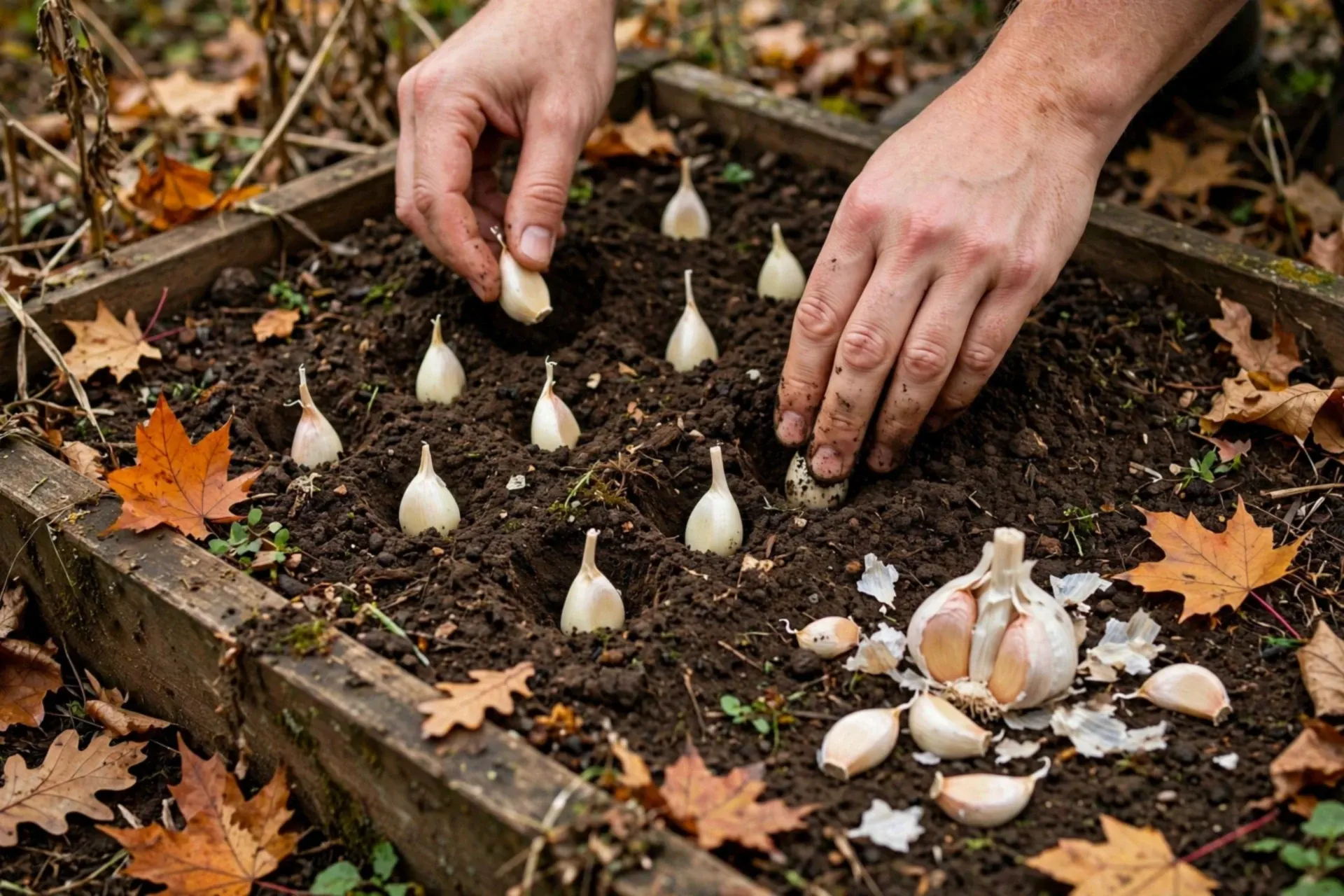
Garlic is the easiest win in the fall garden: plant it now, walk away for winter, and harvest full bulbs next summer. It works because garlic needs a cold spell to form proper cloves — fall planting gives it exactly that. Here is the whole job, in order.
When to plant garlic: the short answer
Plant garlic in fall, 4–6 weeks before your ground freezes hard, when the soil at planting depth is around 50°F (10°C). That window gives cloves time to grow roots — and only roots — before winter. Judge it by soil and season, not by a fixed calendar date:
| Zone | Plant in | What guides you |
|---|---|---|
| Zone 3 | Late September to mid-October | Hard frosts arrive early; mulch heavily once the ground cools |
| Zone 4 | Early to late October | Around the first frosts; the ground usually freezes by late November |
| Zone 5 | Mid-October to early November | The classic window — after nights turn cold, well before freeze-up |
| Zone 6 | Late October to mid-November | Soil near 50°F (10°C) is a better cue than the calendar |
| Zone 7 | November to early December | Wait for genuinely cool soil; warm soil sprouts tops too early |
| Zone 8 | Late November to December | Choose softneck types; they need less chill to bulb well |
| Zone 9 | December to early January | Softneck only; in very mild winters, pre-chill bulbs in the fridge for 6–8 weeks first |
Too early is the commoner mistake in a warm fall: cloves push up inches of top growth that winter then burns off, wasting the clove’s stored energy and sometimes killing it. Too late — into ground about to freeze — means few or no roots before winter, and cloves heave out in freeze-thaw cycles or rot in cold, wet soil. If you missed the window entirely, plant anyway the moment the ground can be worked: a late bulb almost always beats a bulb kept in a drawer until spring. For varieties, feeding and harvest signs, see the Garlic plant profile, and line your own dates up with the Planting Calendar. The steps below are the full how-to, in order.
What you need
- Seed garlic — about 1 bulb gives 5–8 cloves; each clove becomes one new bulb
- Compost to feed the bed — work out the amount with the Compost Calculator
- Straw or shredded leaves for mulch, 4–6 inches deep — amounts from the Mulch Calculator
- A fork or spade, a trowel, and a watering can
Step 1 — Pick the right type for your winters
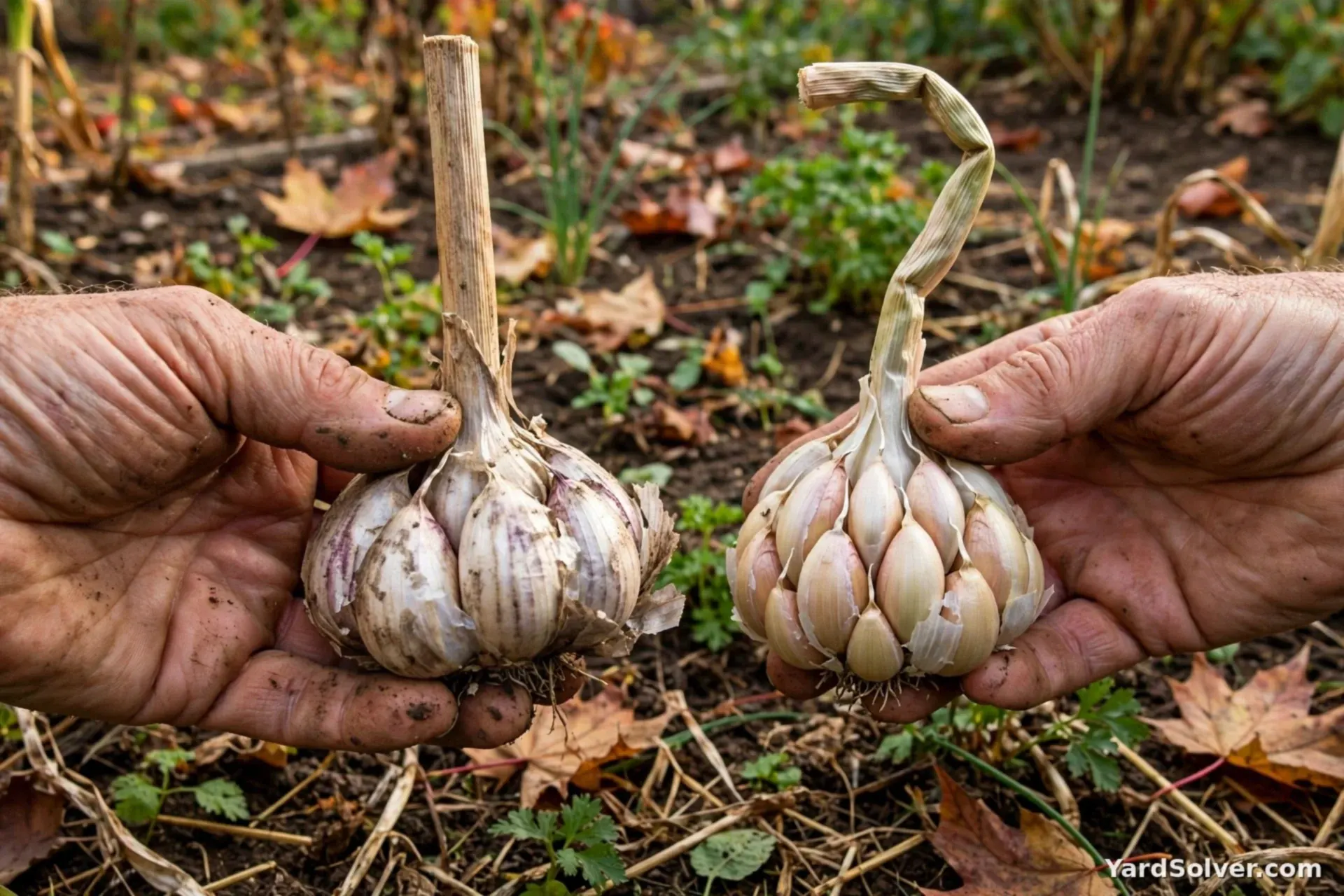
Hardneck garlic is the cold-climate choice (Canada and the northern US): it shrugs off deep freezes and makes the curly flower stalks called scapes in June. Softneck suits mild winters and stores longer. In a cold region, common hardneck names to look for are Music, German White and Russian Red.
Step 2 — Time it 4–6 weeks before the ground freezes
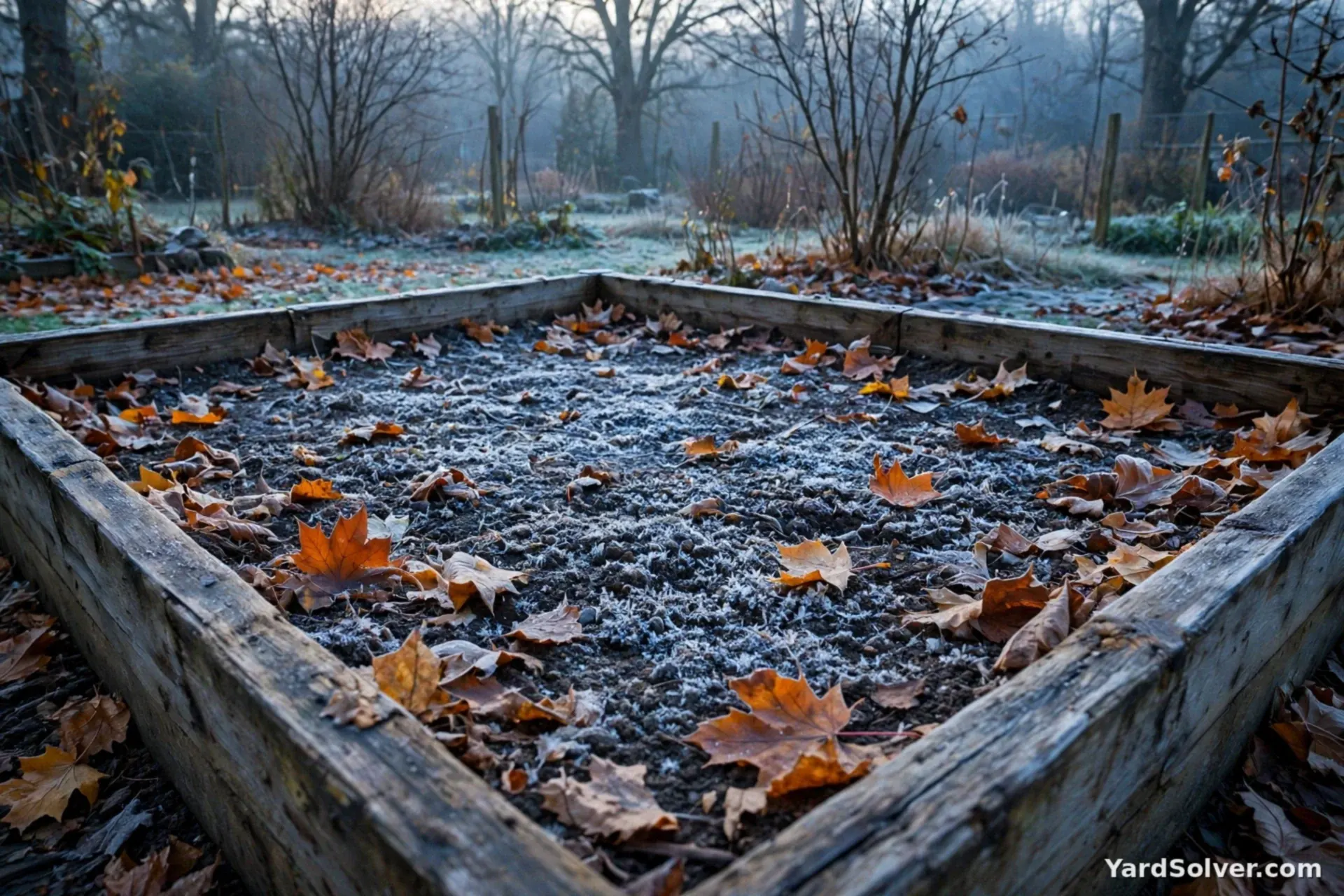
The cloves need time to grow roots — but not top growth — before winter locks in. For most of Canada and the northern US that means October to early November. Check your own frost dates on the Planting Calendar and count back from when your ground usually freezes hard.
Step 3 — Prepare the bed
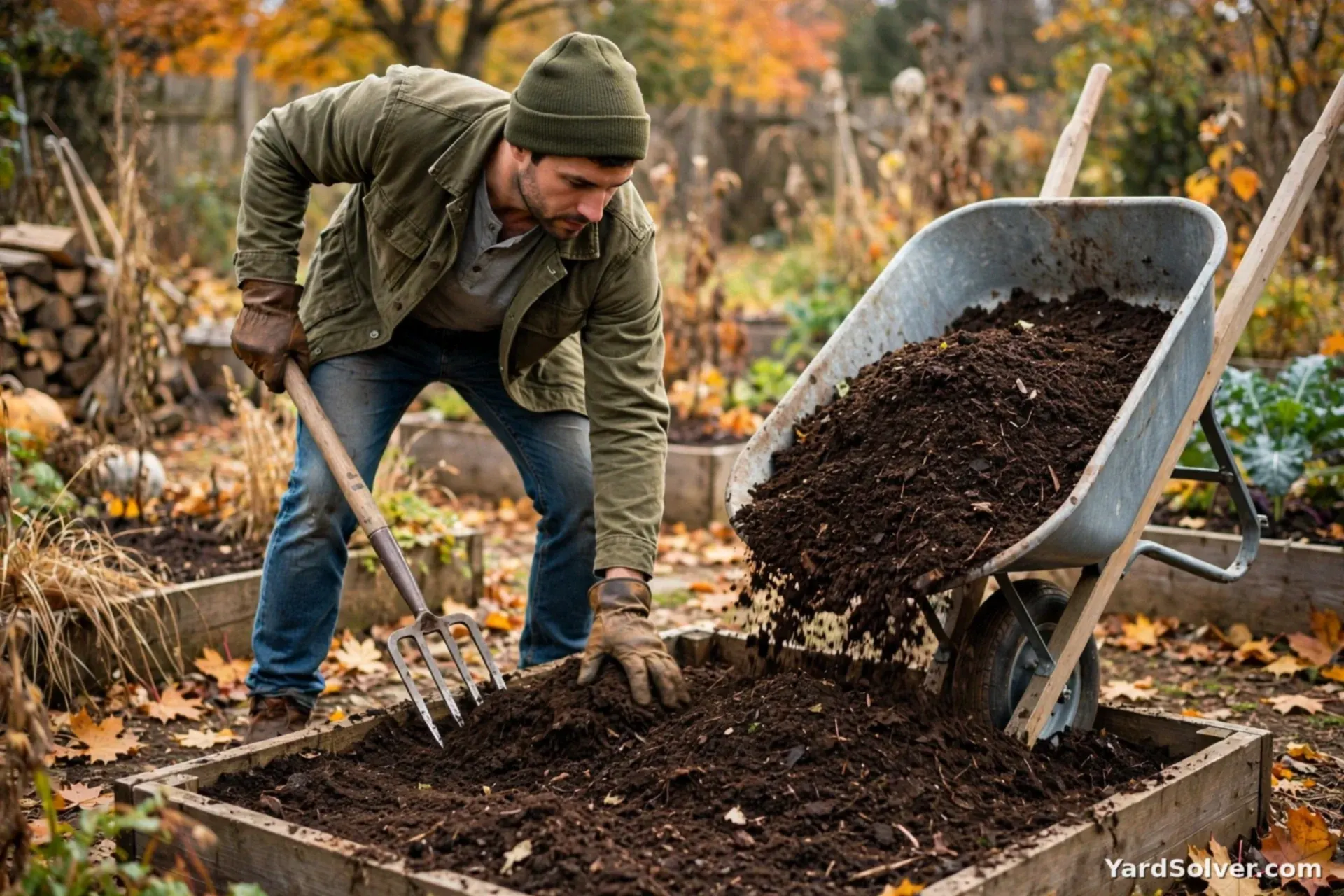
Garlic wants full sun and soil that drains. Loosen the bed, pull weeds, and work in 1–2 inches of compost. Filling or topping a raised bed? The Raised Bed Soil Calculator gives you exact bag counts.
Step 4 — Break the bulbs and plant pointy end up
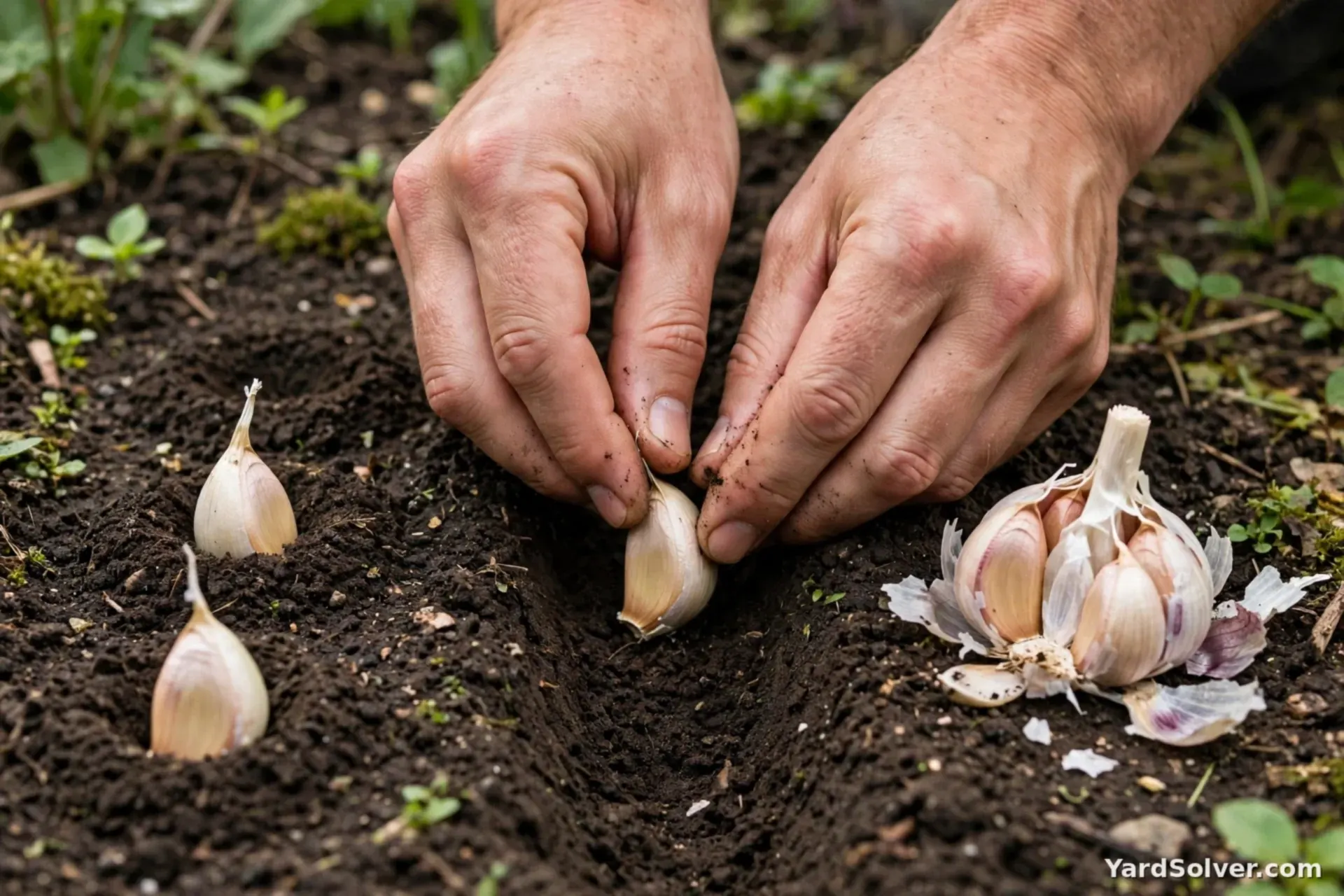
Split each bulb into cloves the day you plant, keeping the papery skin on. Plant each clove pointy end up:
- Depth: 2 inches in mild areas; 3–4 inches where winters are severe
- Spacing: 6 inches between cloves, 12 inches between rows — check how many fit with the Plant Spacing Calculator
A clove planted upside down usually still grows, but it fights its way up and makes a bent, smaller bulb — pointy end up is worth the second it takes.
Step 5 — Water once, deeply
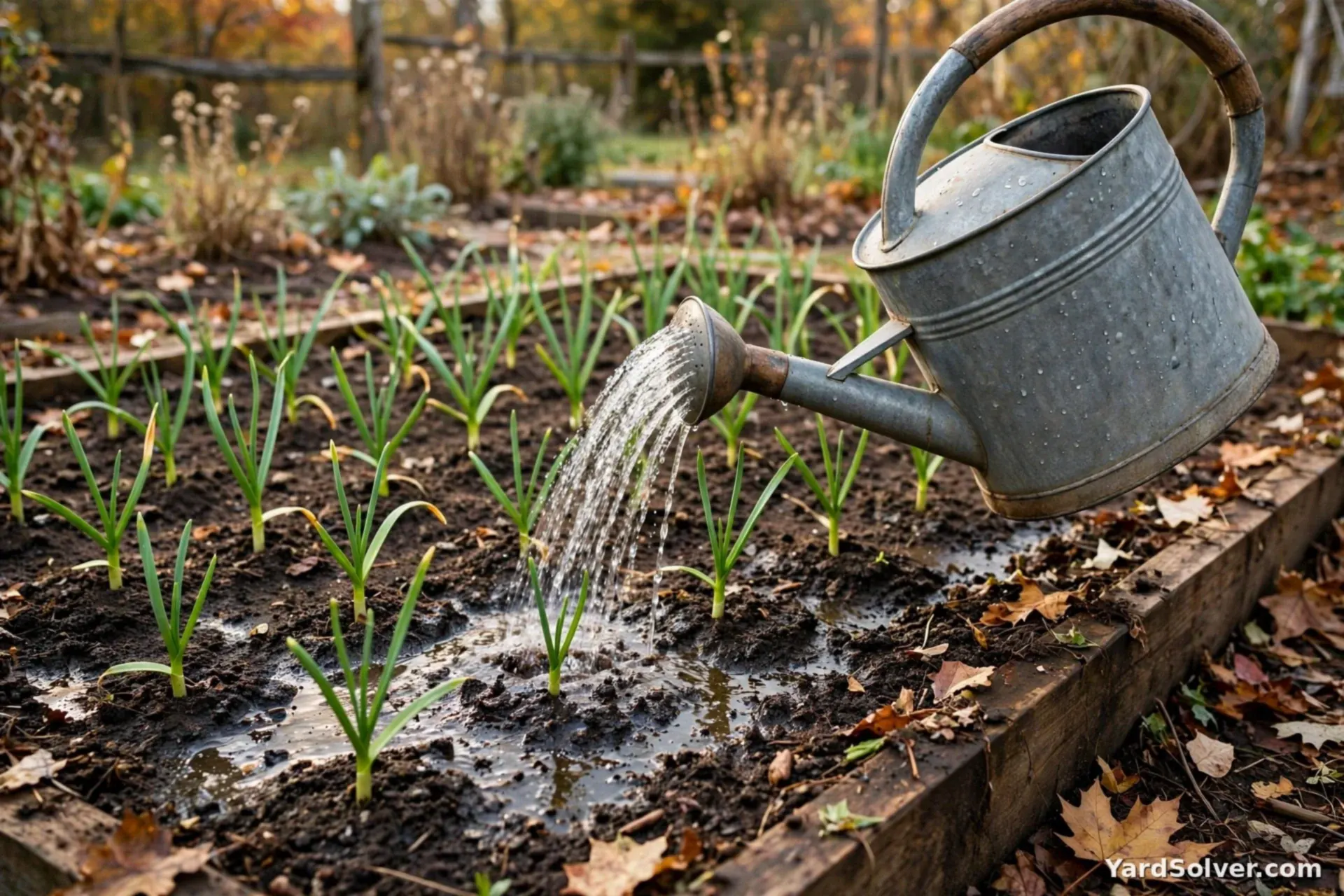
Water the bed well right after planting to settle the soil around the cloves and start the roots. After that, autumn rain is usually enough until the ground freezes.
Step 6 — Mulch 4–6 inches deep
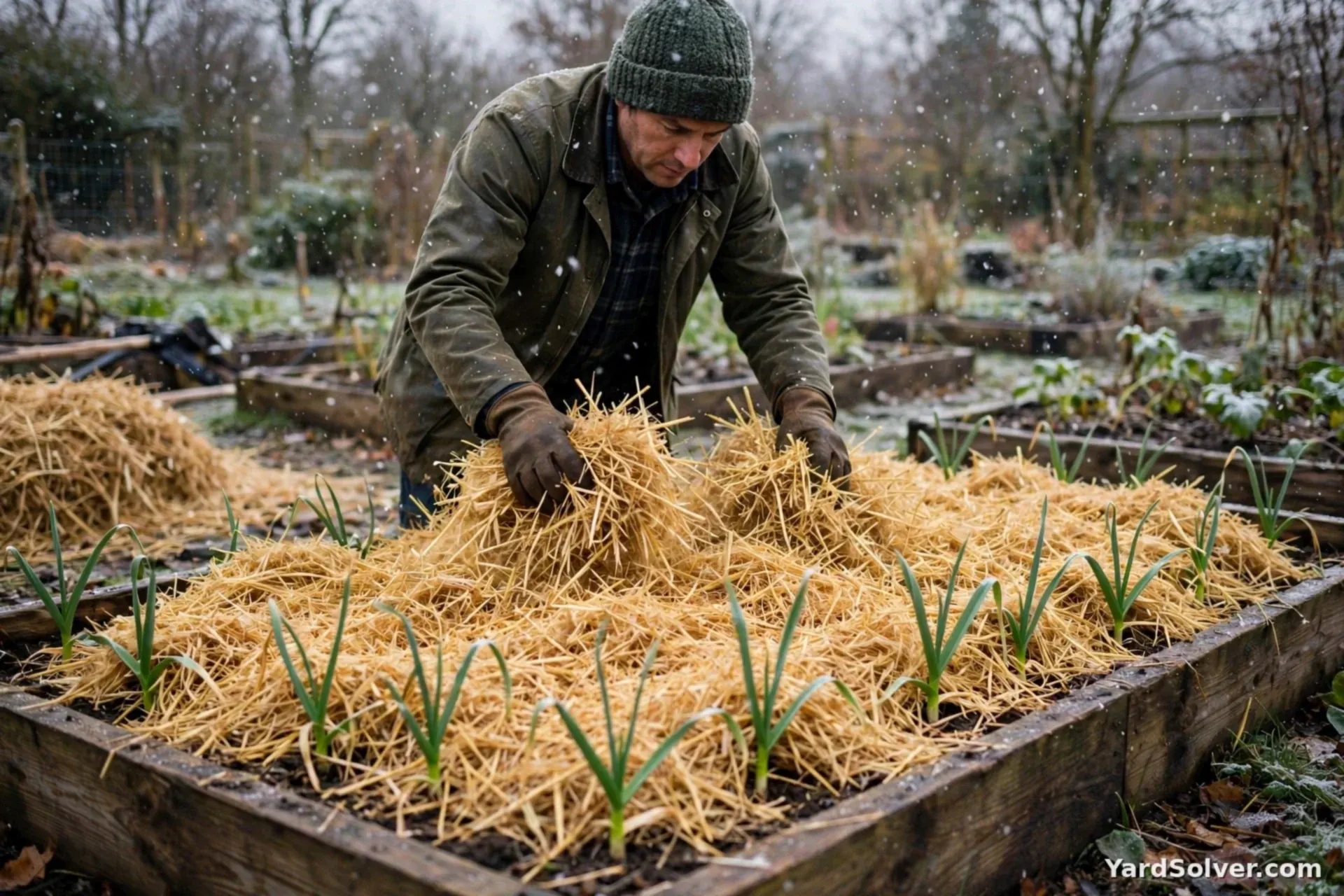
Once nights are regularly freezing (or right after planting in very cold areas), blanket the bed with 4–6 inches of straw or shredded leaves. The mulch's job is not warmth exactly — it stops the freeze-thaw cycles that heave cloves out of the ground. The Mulch Calculator tells you how many bags your bed needs.
Step 7 — Spring and harvest, briefly
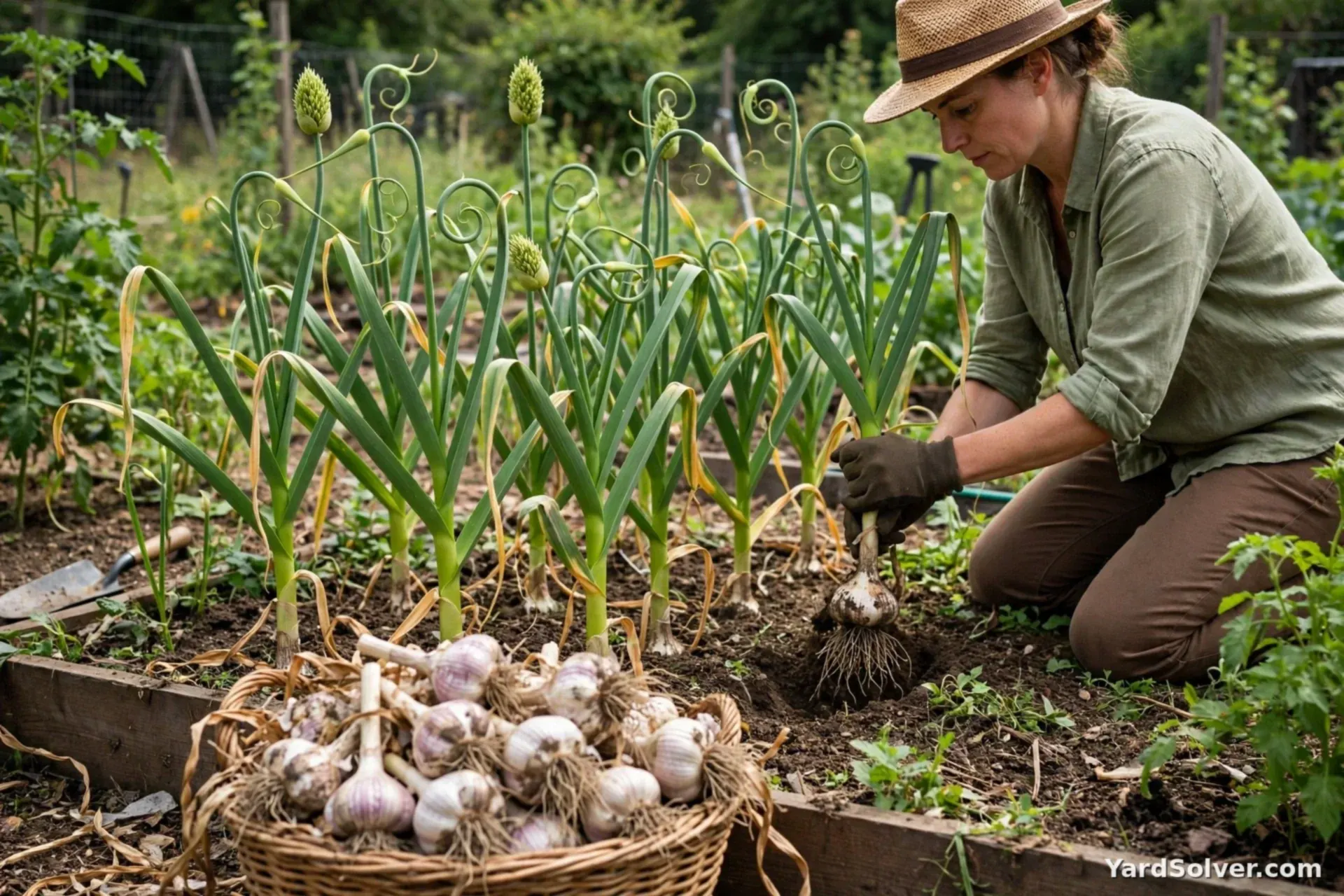
In spring, pull the mulch back a little as shoots emerge, water during dry spells, and cut the scapes when they curl (hardneck types). Harvest the following summer when the bottom 2–3 leaves have yellowed — usually July. Cure bulbs in a shady, airy spot for 2–3 weeks before storing.
Keep going
More fall jobs: Planting Spring Bulbs in Fall and Putting Your Garden to Bed. Garlic's full profile is in the Plant Library.
Questions people ask
When exactly should I plant garlic?
Plant 4–6 weeks before the ground freezes hard, when the soil at planting depth is around 50°F (10°C). In practice that is October to early November across most of Canada and the northern US, November in zone 7, and late November to December in zones 8–9. If a little top growth shows before winter, do not worry — roots are what matter, and mulch protects the rest.
Can I plant garlic in spring instead?
You can, but bulbs are usually much smaller because garlic needs a cold period to split into cloves properly. Fall planting is the reliable route in cold and temperate climates.
Can I plant grocery-store garlic?
It sometimes sprouts, but it is often a softneck type unsuited to cold winters and may be treated to delay sprouting. Seed garlic from a garden supplier is named, disease-checked and matched to your climate — it is the safer buy.
How deep should garlic be planted in a cold climate?
About 3 to 4 inches deep (to the base of the clove) where winters are severe, under a thick mulch blanket. In milder areas 2 inches is enough.
Garlic is planted in autumn because it must be cold — vernalisation makes the bulb
Garlic needs winter: a planted clove must experience weeks of cold — vernalisation — to trigger the bulb to divide into cloves rather than grow one round, onion-like single. That is why autumn planting, a few weeks before the ground freezes, is not tradition but physiology: roots establish in cool soil, the cold requirement is met, and the plant erupts in spring months ahead of any spring planting, which reliably produces smaller bulbs. In mild climates the fridge substitutes for the winter the garden cannot provide.
Plant the largest cloves from the largest bulbs, pointed end up, at twice their depth, into fertile, drained soil — garlic rots in winter wet, so raised beds carry it through clay. Mulch after the ground cools to prevent frost-heaving, feed in spring as growth surges, and harvest when the lower leaves have yellowed but several green leaves remain: that leaf count is the wrapper count on the stored bulb, and this guide's timing rule exists because a bulb dug late, wrappers gone, stores badly.
Sources
Key facts on this page cross-checked against Garlic — Wikipedia — background on garlic and its cultivation and Vernalization — Wikipedia — background on vernalization — the cold requirement that triggers bulbing and flowering.
Related page
Read next: Hardneck vs Softneck Garlic: Which Should You Grow?.
Comments & ratings
No comments yet.
Be the first to share your experience.